
Transync AI Virtual Microphone lets other participants in your meeting hear your translated voice directly through the meeting microphone input. Instead of playing translated audio from your speaker, Transync AI sends the translated playback to a virtual microphone device, which you can select in Zoom, Microsoft Teams, Google Meet, or other online meeting platforms.
Use this feature when you want to speak in one language and have meeting participants hear the translated voice as your microphone audio. For example, you can speak English, turn on English → Spanish Voice Playback, and choose Transync AI Translation Mic in your meeting app so others hear the Spanish playback directly.
Supported devices and meeting platforms #
Virtual Microphone is available in the Transync AI desktop app for macOS.
You can use it with online meeting platforms that allow you to choose a microphone input, including Zoom, Microsoft Teams, Google Meet, and other browser-based or desktop meeting apps.
Before you start #
If you are new to Transync AI, these guides may help:
- Quickstart
- How to Start Real-Time Translation
- How to Share Computer Audio
- How to Use Voice Playback in Transync AI
Important: Turn on only the playback direction you want others to hear #
For Virtual Microphone, we recommend enabling Voice Playback only for the language direction you want to broadcast.
- If you speak English and want others to hear Spanish, turn on Voice Playback only for English → Spanish.
- Do not also turn on Spanish → English playback unless you intentionally want that audio to be sent into the meeting too.
If both directions are enabled, the other participant’s Spanish speech may be translated into English and played back through your virtual microphone. This can make the other person hear their own speech translated back from your side.
1. Set up Virtual Microphone #
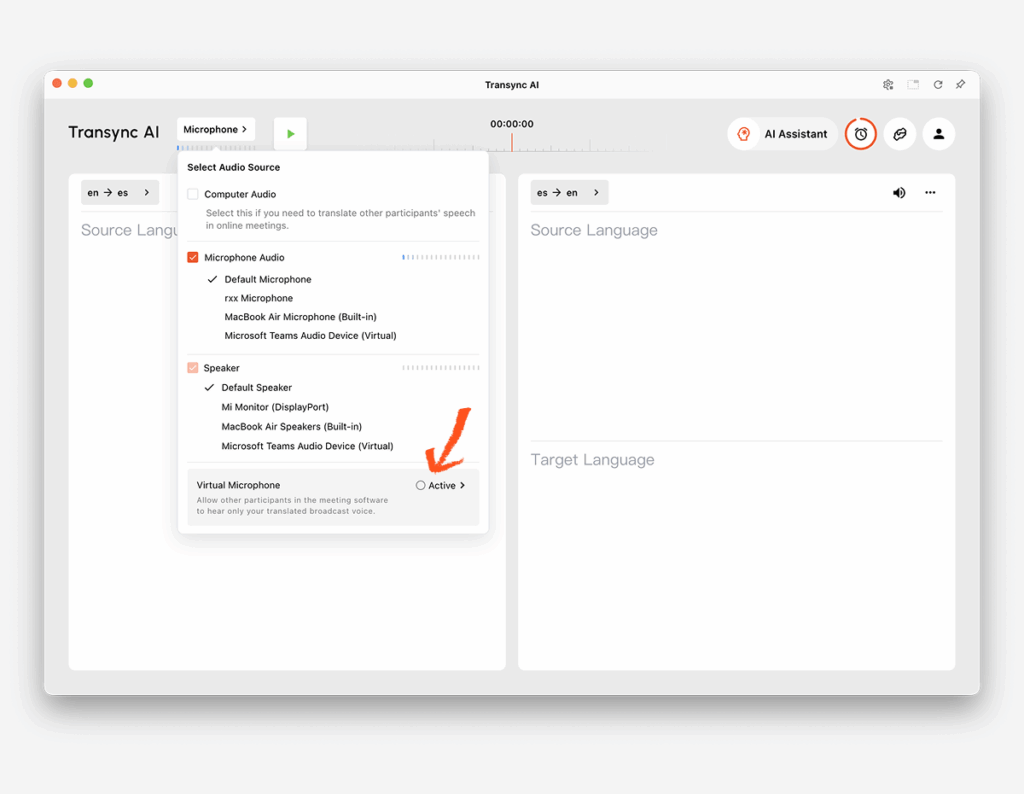
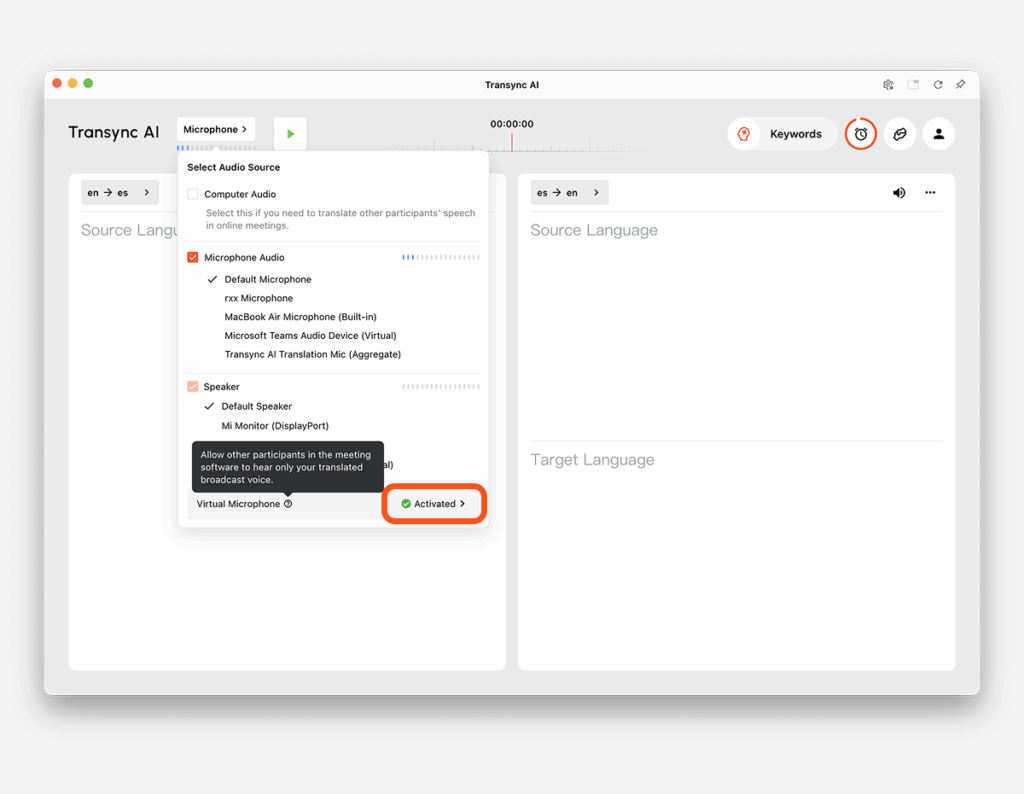
Open the Microphone menu in Transync AI. In the audio source panel, find Virtual Microphone and click Active to activate it.
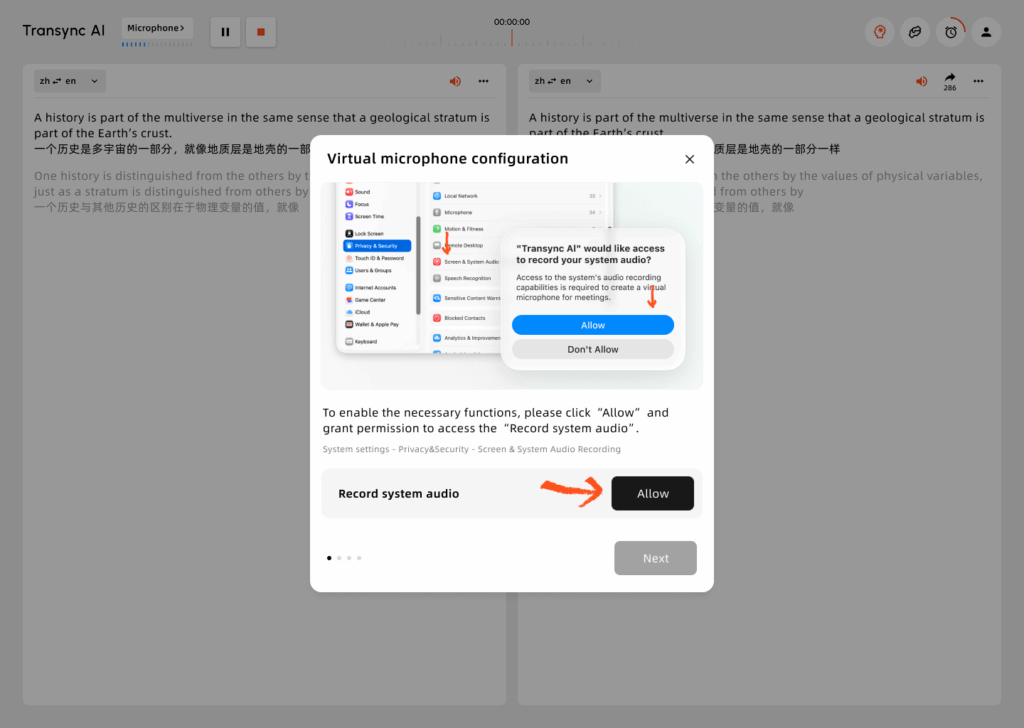
When the Virtual Microphone configuration window asks for permission, click Allow. This lets Transync AI create a virtual microphone output for translated voice playback.
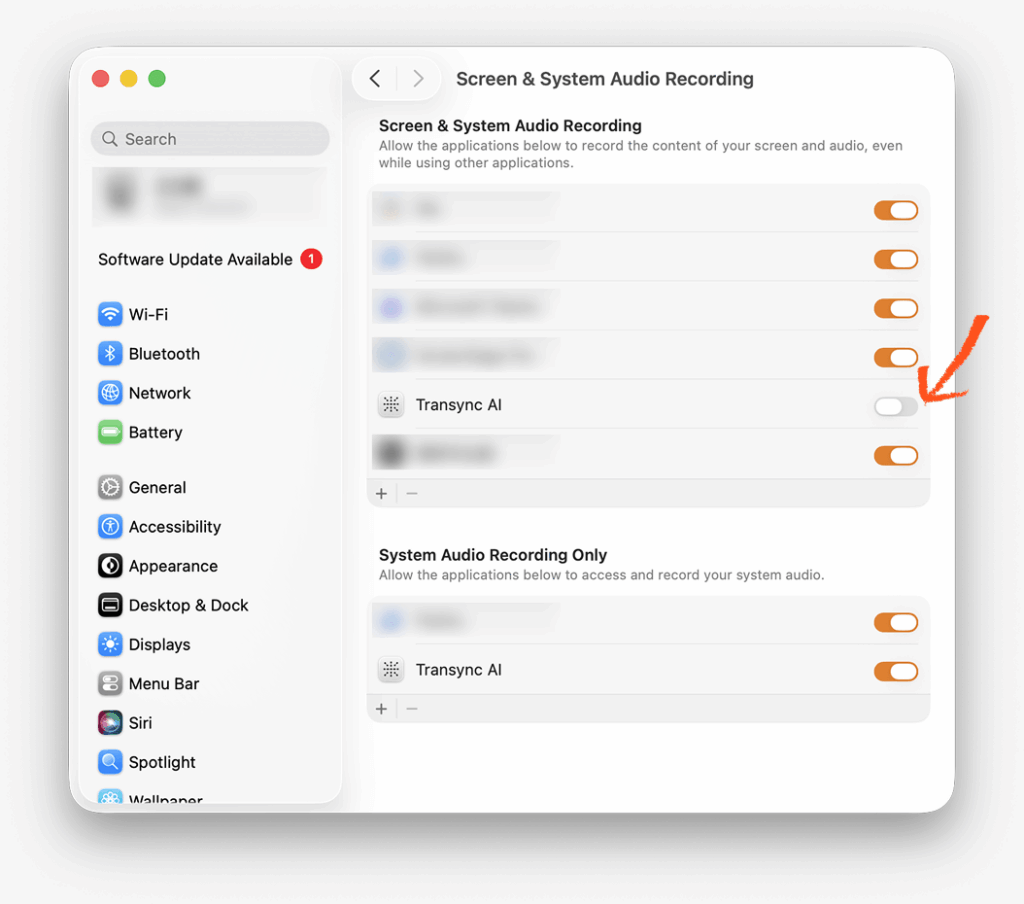
You may also need to confirm this permission in System Settings. Go to Privacy & Security → Screen & System Audio Recording, then enable Transync AI if macOS asks for confirmation.
Return to Transync AI and open the Microphone menu again. When Virtual Microphone shows Activated, the setup is complete.
2. Turn on Voice Playback for the language you want to broadcast #
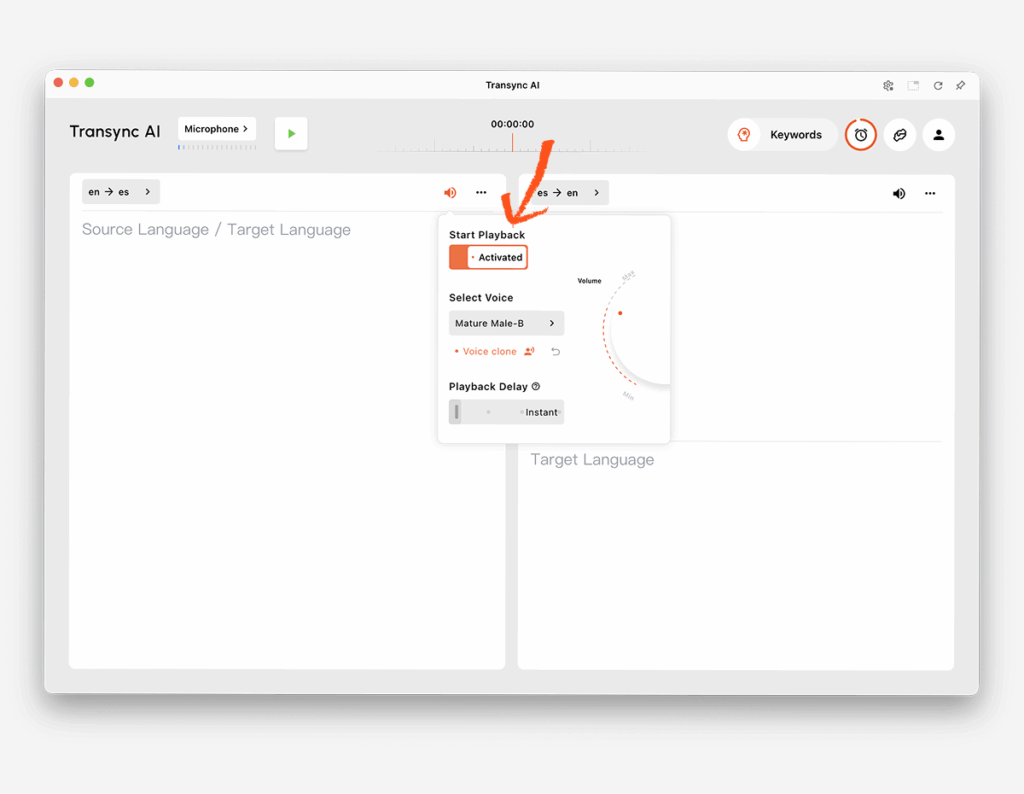
Open the Voice Playback settings for the direction other participants need to hear. For example, if you speak English and want the meeting to hear Spanish, open the English → Spanish side and turn on Voice Playback.
You can select a voice and adjust playback delay if needed. If you want the translated voice to sound closer to your own voice, see How to Use Voice Clone
After Virtual Microphone is enabled, we recommend setting the Voice Playback delay to Instant whenever possible. This sends translated speech to the virtual microphone as soon as it is generated and helps reduce lag for meeting participants.
3. Start the translation task #
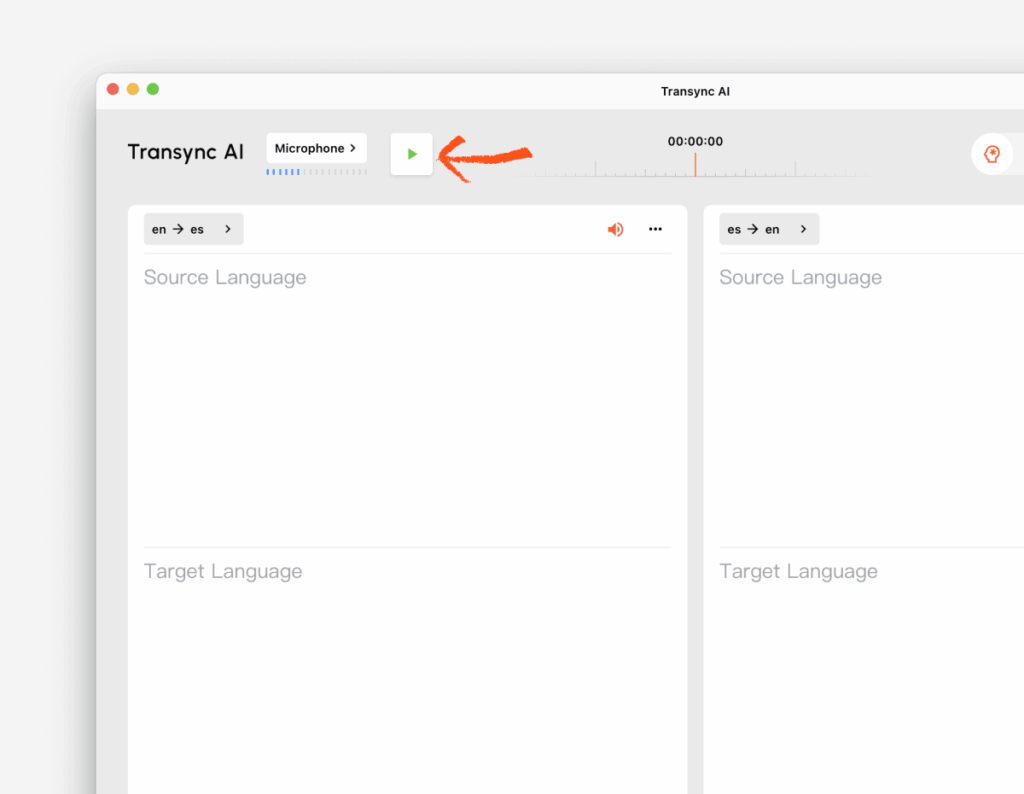
Click the Start button in Transync AI to begin the translation task. Keep Transync AI running while you are in the meeting.
4. Select Transync AI Translation Mic in your meeting software #
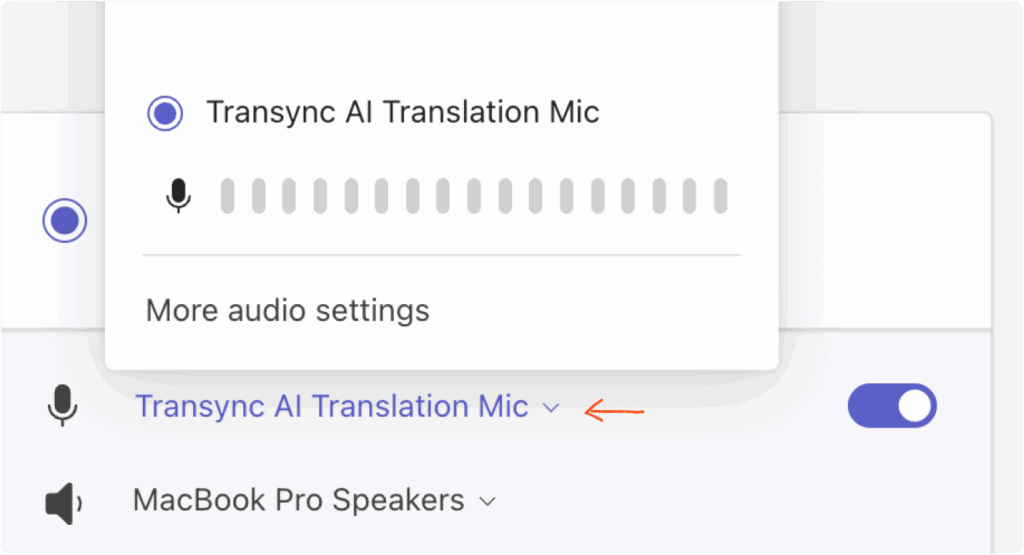
Open your meeting software, such as Zoom, Microsoft Teams, or Google Meet. In the meeting audio settings, select Transync AI Translation Mic as your microphone input.
After this, other participants will hear the translated playback from Transync AI through your meeting microphone.
Tips #
- Set up Virtual Microphone before the meeting starts, especially if this is your first time using it.
- Enable only the Voice Playback direction you want to broadcast.
- If other participants cannot hear the translated voice, check whether Transync AI Translation Mic is selected as the meeting microphone.
- If Transync AI cannot hear you, check your real microphone in the Transync AI microphone menu.
FAQs #
What is the difference between Virtual Microphone and Share Computer Audio? #
Virtual Microphone sends only the translated voice into the meeting as your microphone input. Other participants will not hear your original voice from your real microphone; they will hear the translated playback through Transync AI Translation Mic.
Share Computer Audio works differently. It lets other participants hear audio from your computer while you are sharing your screen, so they may hear both the original audio and the translated playback. Share Computer Audio also requires you to start screen sharing in the meeting platform.
Do I still need to select my real microphone in Transync AI? #
Yes. Transync AI needs your real microphone to capture your speech. The meeting software should use Transync AI Translation Mic, while Transync AI itself should use your actual microphone.
Should I turn on Voice Playback for both language directions? #
Usually no. For Virtual Microphone, we recommend turning on only the direction you want other participants to hear. For example, if you speak English and want others to hear Spanish, enable only English → Spanish playback.
Can I use Voice Clone with Virtual Microphone? #
Yes. If the target language supports Voice Clone, you can use it together with Virtual Microphone. See How to Use Voice Clone
What should I do if other participants cannot hear the translation? #
Check that Transync AI translation has started, Voice Playback is enabled for the correct language direction, Transync AI Translation Mic is selected as the microphone in your meeting software, and your real microphone is selected correctly inside Transync AI.


