

Guida multilingue alla traduzione: confronto tra strumenti per riunioni dal vivo, documenti, eventi, registrazioni audio, sottotitoli, traduzione vocale e note generate dall'intelligenza artificiale.
UN traduttore multilingue Non si tratta di un singolo tipo di strumento. Può tradurre un documento, supportare una riunione dal vivo, creare sottotitoli per un video, aiutare i viaggiatori a comunicare all'estero o fornire didascalie per una grande conferenza.
La difficoltà sta nel fatto che questi flussi di lavoro sono molto diversi.
Un traduttore di documenti può attendere la traduzione di un paragrafo completo. Un traduttore di riunioni in tempo reale deve rispondere prima che la conversazione prosegua. Uno strumento di traduzione multimediale necessita di timestamp e di esportazione dei sottotitoli. Una piattaforma per eventi deve supportare molti ascoltatori contemporaneamente.
Questa guida ti aiuta a scegliere un traduttore multilingue adattando lo strumento al problema di comunicazione.
Risposta rapida: Di quale traduttore multilingue hai bisogno?
| Bisogno principale | Miglior tipo di strumento | Strumenti da considerare |
|---|---|---|
| Riunioni di team in diretta | Traduttore di riunioni in tempo reale | Transync AI, JotMe, Talo |
| Contenuto scritto | Traduttore di testi e documenti | DeepL |
| Registrazione audio o video | Trascrizione e traduzione multimediale | Sonix, Maestra |
| Webinar e conferenze | Piattaforma di traduzione di eventi | Monda, Maestra |
| Viaggi e linguaggio informale | App di traduzione per dispositivi mobili | Talkao |
| Comunicazione ad alto rischio | Interprete umano | Servizi professionali |
Un bene traduttore multilingue dovrebbe adattarsi alla situazione, non solo supportare molte lingue.
Perché il conteggio delle lingue non è sufficiente
Molti strumenti pubblicizzano un ampio numero di lingue supportate. Questo è importante, ma è solo l'inizio.
Prima di scegliere un traduttore multilingue, chiedere:
- Il testo di input è testo, parlato dal vivo o audio registrato?
- Le persone devono rispondere in tempo reale?
- Sono necessari i sottotitoli, l'audio o entrambi?
- La conversazione include termini tecnici?
- La traduzione verrà revisionata in seguito?
- Quante persone necessitano di accedere?
- Cosa succede se la traduzione è errata?
Un'app di viaggio, un assistente per riunioni, una piattaforma per eventi e un traduttore di documenti possono supportare le stesse lingue, ma non risolvono lo stesso problema.
Confronto tra strumenti di traduzione multilingue
| Attrezzo | Posizionamento principale | Ideale per | Principale limitazione |
|---|---|---|---|
| Transync AI | Traduzione in tempo reale delle riunioni | Sottotitoli in tempo reale, traduzione vocale e note dell'IA | Non adatto alla traduzione di immagini o documenti. |
| DeepL | Testo, documenti, scrittura e voce | Traduzione scritta professionale | Le funzionalità delle riunioni dipendono dai prodotti vocali |
| JotMe | Assistente alla traduzione e alle riunioni | Traduzione in tempo reale con note e azioni da intraprendere | Principalmente incentrato sulle riunioni |
| Talo | Bot di interpretazione basato sull'IA | Traduzione vocale durante le videochiamate | Il bot appare come partecipante |
| Sonix | Trascrizione audio e video | File registrati, trascrizioni e sottotitoli | Non focalizzato su riunioni bidirezionali in tempo reale |
| Maestra | Traduzione di contenuti multimediali in diretta e registrati | Sottotitoli, doppiaggio, webinar e video | Più ampio di quanto alcune squadre necessitino |
| Mondano | Piattaforma di traduzione di eventi | Conferenze, webinar e un vasto pubblico | Più orientato agli eventi che personale |
| Talkao | Traduttore mobile per consumatori | Viaggi, voce, fotocamera e uso occasionale | Flusso di lavoro limitato per le riunioni di lavoro |
Transync AIIdeale per riunioni multilingue dal vivo
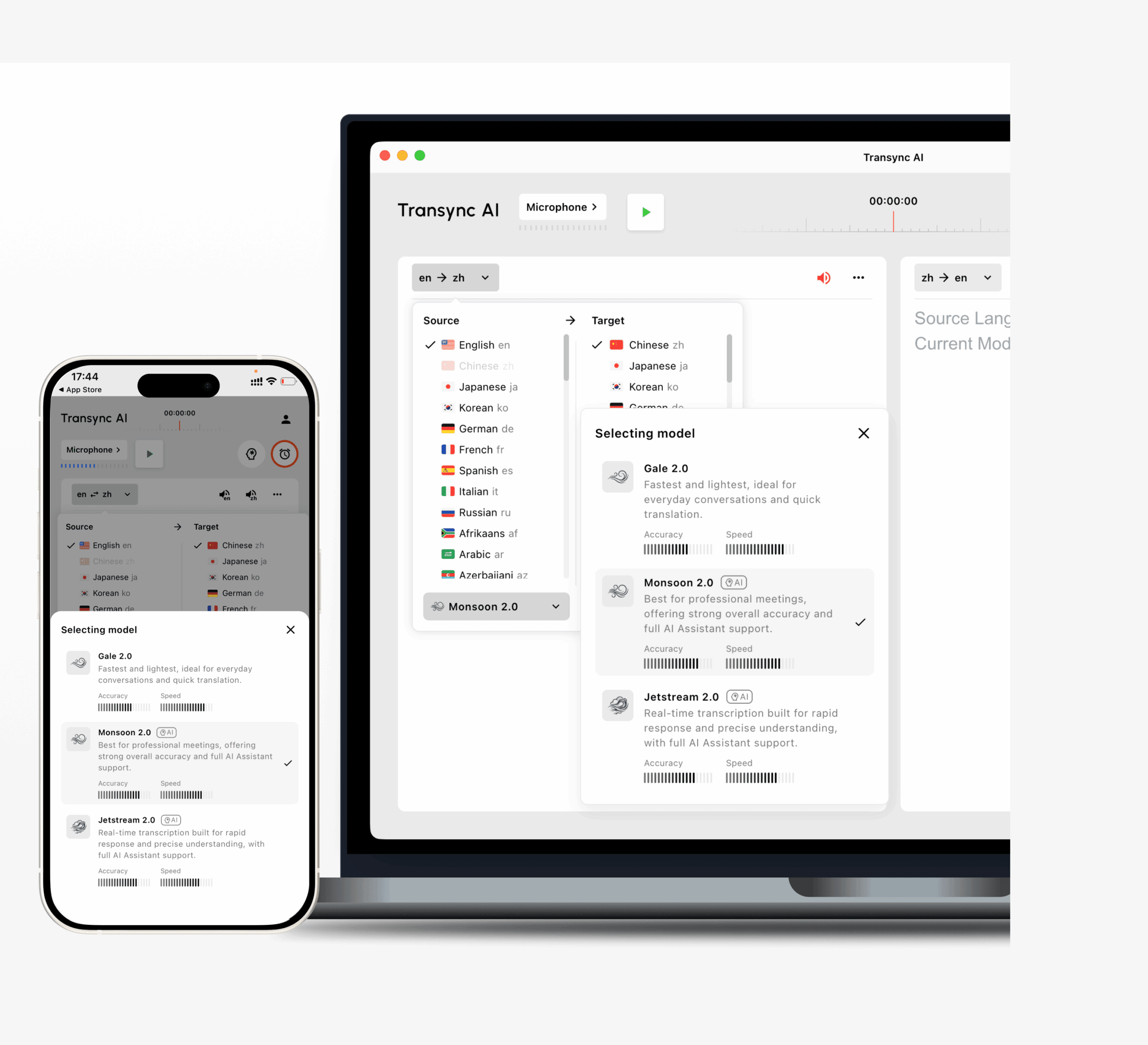 Transync AI è progettato per la comunicazione multilingue in tempo reale.
Funziona insieme Zoom, Microsoft Teams e Google Meet. Gli utenti possono leggere i sottotitoli bilingue e abilitare la traduzione. riproduzione vocale, aggiungere parole chiave e contesto, e generare note di riunione tramite intelligenza artificiale al termine della conversazione.
Questo rende Transync AI un forte traduttore multilingue per:
- Chiamate di vendita internazionali
- Incontri con i fornitori
- Discussioni di team a distanza
- Dimostrazioni di prodotto
- Corsi online
- interviste
- Sostegno transfrontaliero
Il suo principale vantaggio risiede nella completezza del flusso di lavoro della riunione. Gli utenti possono ascoltare, leggere, intervenire e rivedere la riunione in un secondo momento.
Transync AI è meno adatto per la traduzione da fotocamera, documenti scansionati, utilizzo offline o modifica dettagliata di registrazioni caricate.
DeepLIdeale per la traduzione scritta
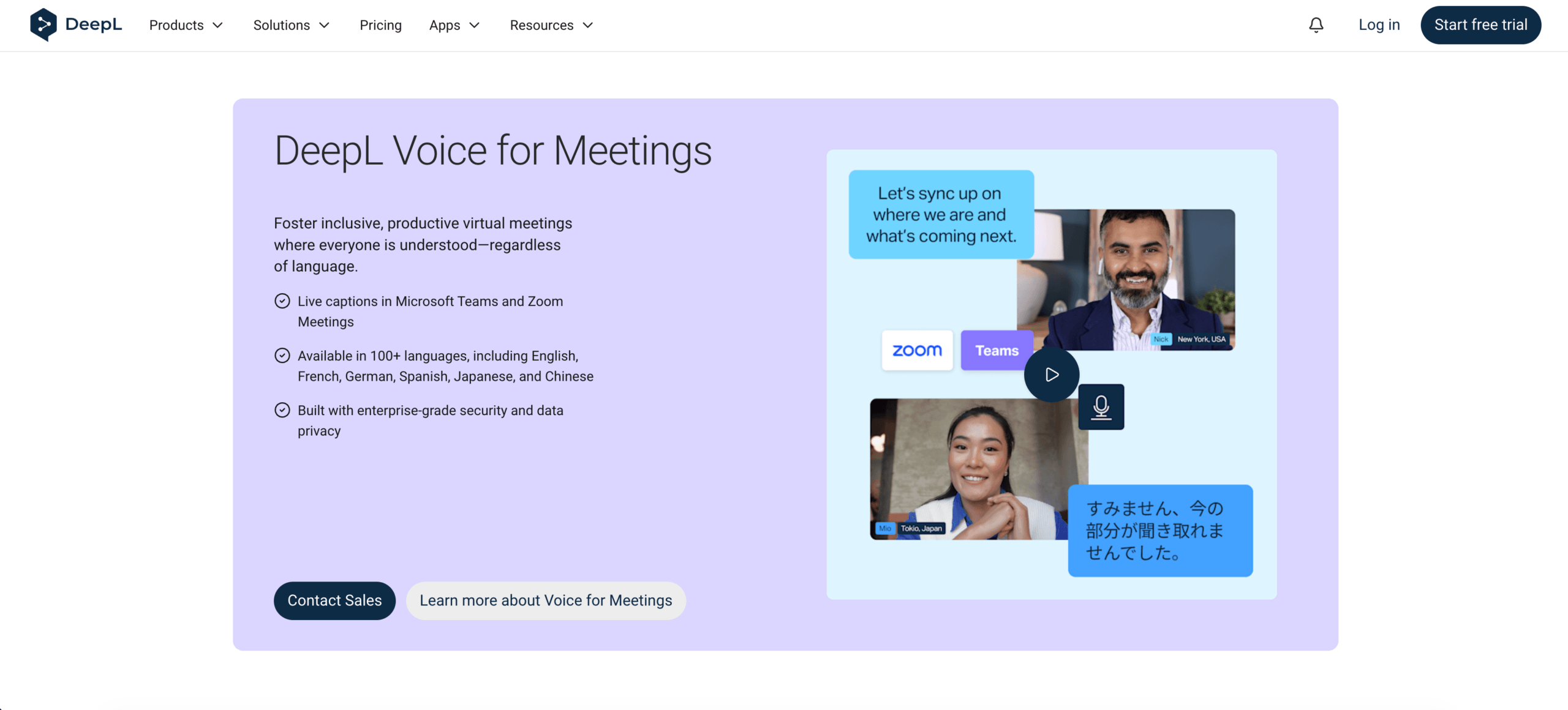 DeepL è più adatto quando l'output finale è un contenuto scritto.
Viene comunemente utilizzato per:
- Email aziendali
- Rapporti
- Presentazioni
- Documentazione del prodotto
- Testo del sito web
- Politiche interne
- Scrittura professionale
DeepL può anche supportare flussi di lavoro vocali selezionati tramite DeepL Voice, ma il suo utilizzo principale rimane la traduzione di testi e documenti.
Scegli DeepL quando il tuo traduttore multilingue La priorità è la scrittura curata, la qualità del documento e la revisione.
JotMe E TaloAlternative di traduzione per le riunioni
Sia JotMe che Talo supportano i flussi di lavoro per le riunioni, ma funzionano in modo diverso.
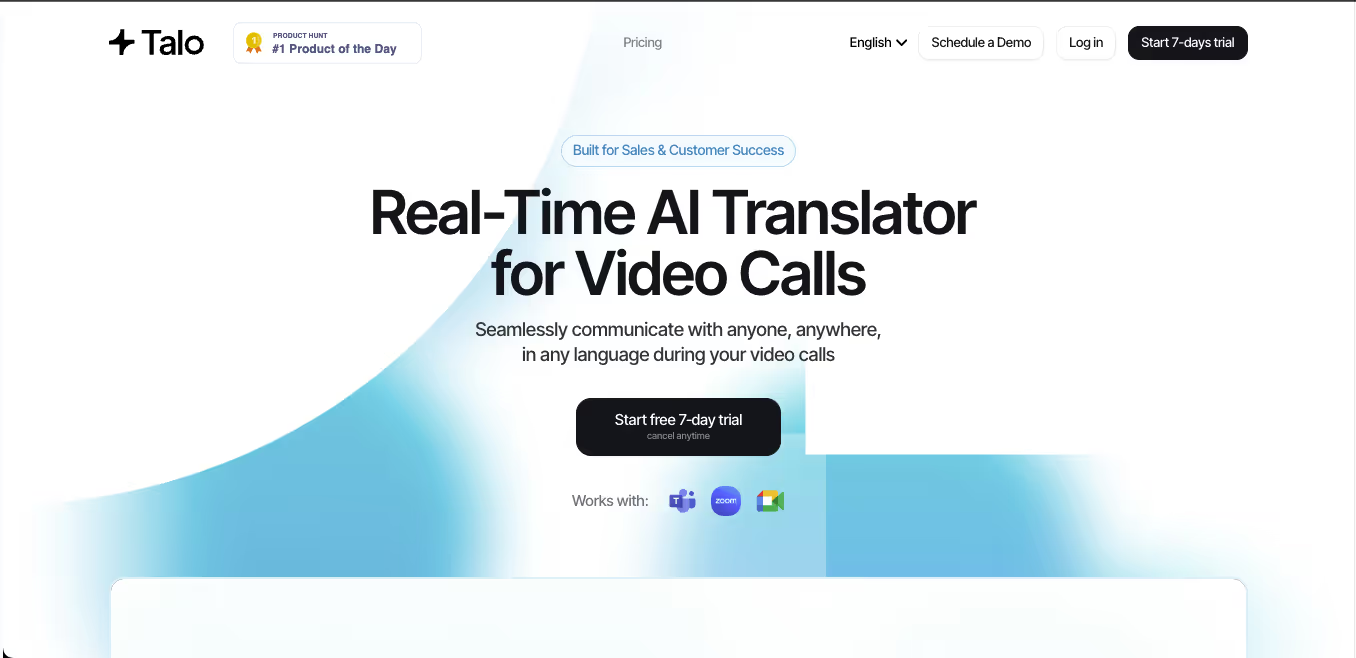
JotMe combina traduzione simultanea, trascrizione, assistenza tramite intelligenza artificiale e appunti di riunione. È utile quando gli utenti necessitano di documentazione oltre che di una comprensione immediata.
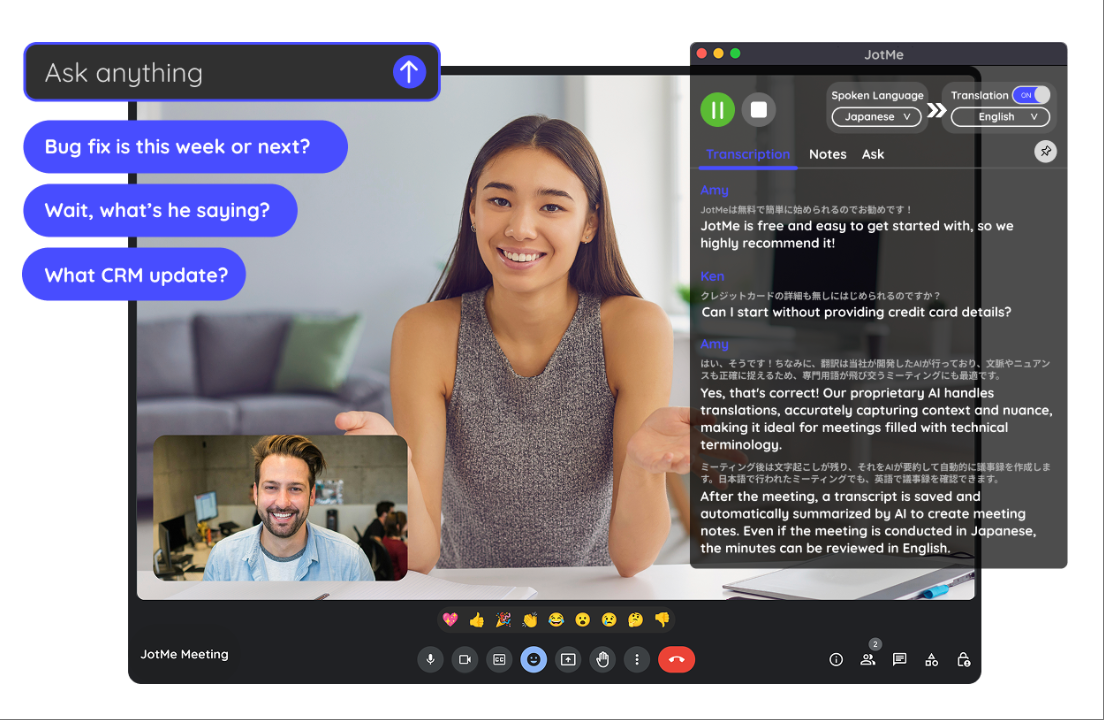
Talo utilizza un bot basato sull'intelligenza artificiale che partecipa alle videochiamate e fornisce l'interpretazione in tempo reale. Questo può semplificare la configurazione per i partecipanti, ma il bot è comunque presente durante la riunione.
| Caratteristica | Transync AI | JotMe | Talo |
|---|---|---|---|
| Traduzione in diretta della riunione | SÌ | SÌ | SÌ |
| conversazione bidirezionale | SÌ | SÌ | SÌ |
| Sottotitoli bilingue | SÌ | SÌ | Disponibile |
| Voce tradotta | SÌ | Dipendente dal prodotto | SÌ |
| Appunti della riunione | SÌ | SÌ | Dipendente dal prodotto |
| Flusso di lavoro senza bot | SÌ | Di solito sì | NO |
| Migliore vestibilità | Sottotitoli, voce, contesto, note | Traduzione e conservazione | Chiamate gestite dal bot |
Per le chiamate con clienti sensibili, alcuni team potrebbero preferire un sistema autonomo traduttore multilingue che non entra nella riunione come un bot. Per un onboarding più semplice, una configurazione basata su un bot potrebbe essere accettabile.
Sonix E Maestra: Migliore per i supporti registrati
Le registrazioni audio e video richiedono un flusso di lavoro diverso rispetto al parlato dal vivo.
Gli utenti potrebbero aver bisogno di:
- Trascrizione accurata
- Etichette degli altoparlanti
- Timestamp
- revisione della traduzione
- Sincronizzazione dei sottotitoli
- Formati di esportazione
- Archivi ricercabili
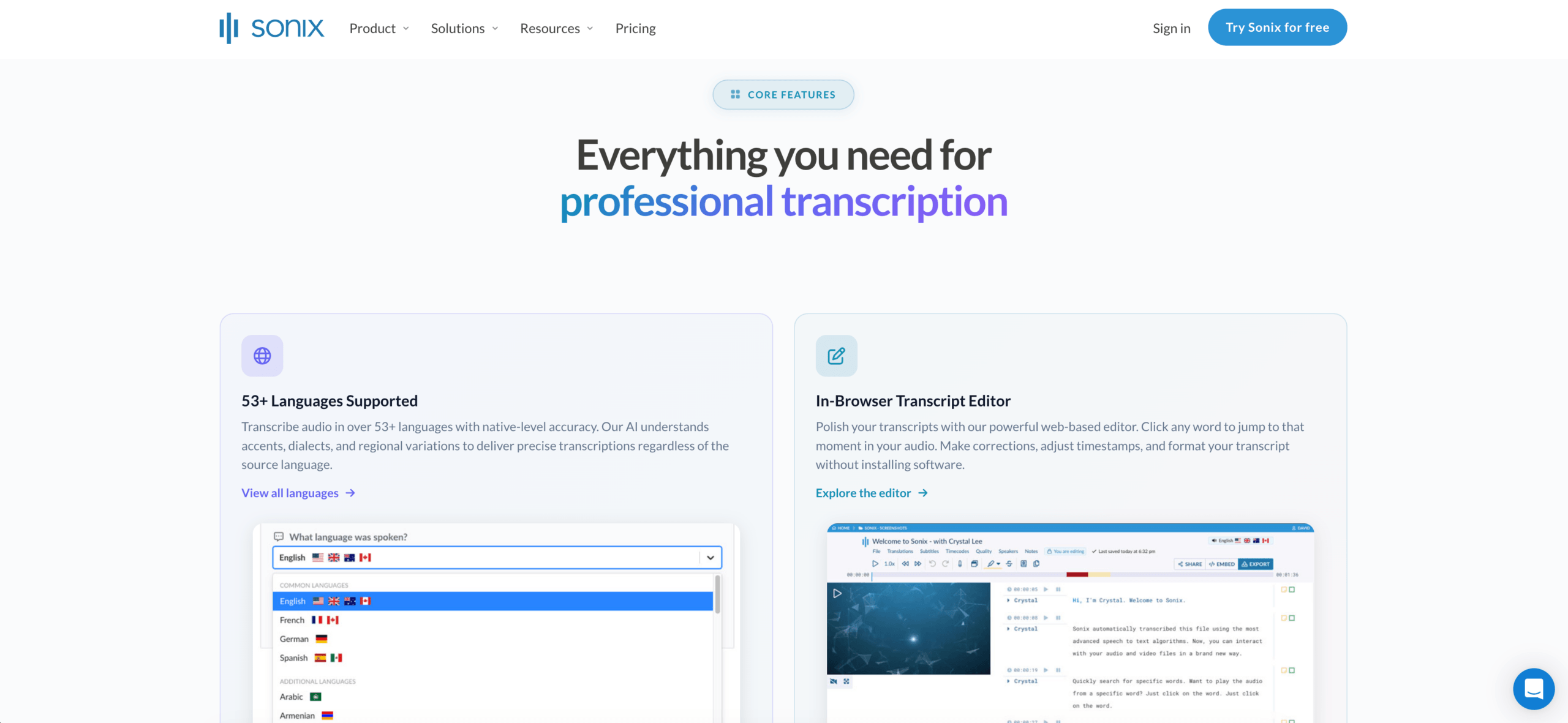
Sonix è ideale per registrazioni caricate online come interviste, podcast, lezioni, registrazioni di riunioni e video di formazione. Trasforma audio o video in trascrizioni modificabili e supporta la traduzione e la creazione di sottotitoli.
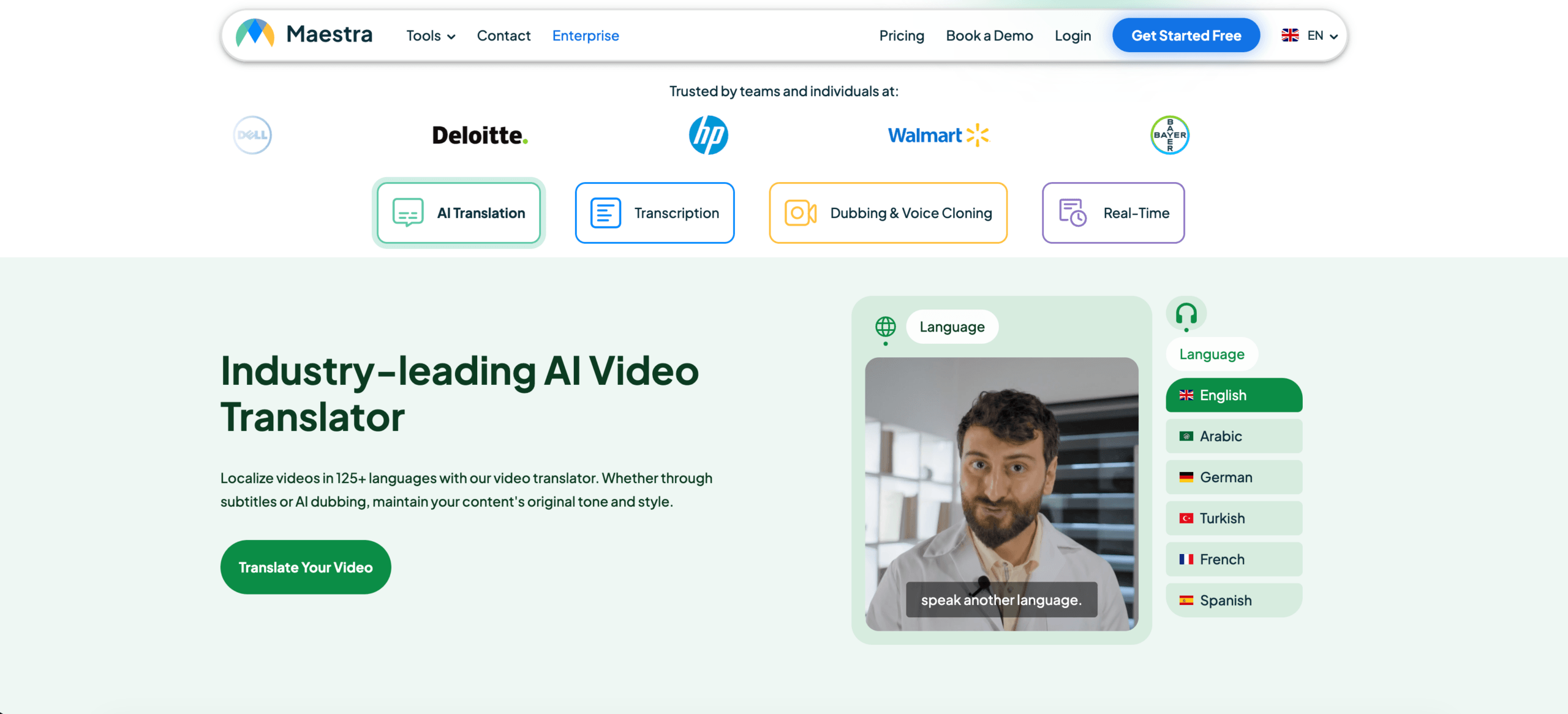
 Maestra copre un flusso di lavoro multimediale più ampio, che include sottotitoli in tempo reale, trascrizione, traduzione di sottotitoli, doppiaggio, clonazione vocale e localizzazione video.
| Caratteristica | Sonix | Maestra | Transync AI |
|---|---|---|---|
| File audio caricati | SÌ | SÌ | Non primario |
| Trascrizione video | SÌ | SÌ | Non primario |
| Esportazione sottotitoli | SÌ | SÌ | Non primario |
| Doppiaggio tramite intelligenza artificiale | Non primario | SÌ | Riproduzione vocale in diretta |
| Riunioni bidirezionali in diretta | Non primario | Disponibile | SÌ |
| Migliore vestibilità | Trascrizioni registrate | Localizzazione dei media | Comunicazione in diretta |
Utilizza Sonix o Maestra dopo aver registrato il contenuto. Utilizza Transync AI quando è necessaria la traduzione durante la conversazione.
MondanoIdeale per eventi e grandi pubblici.
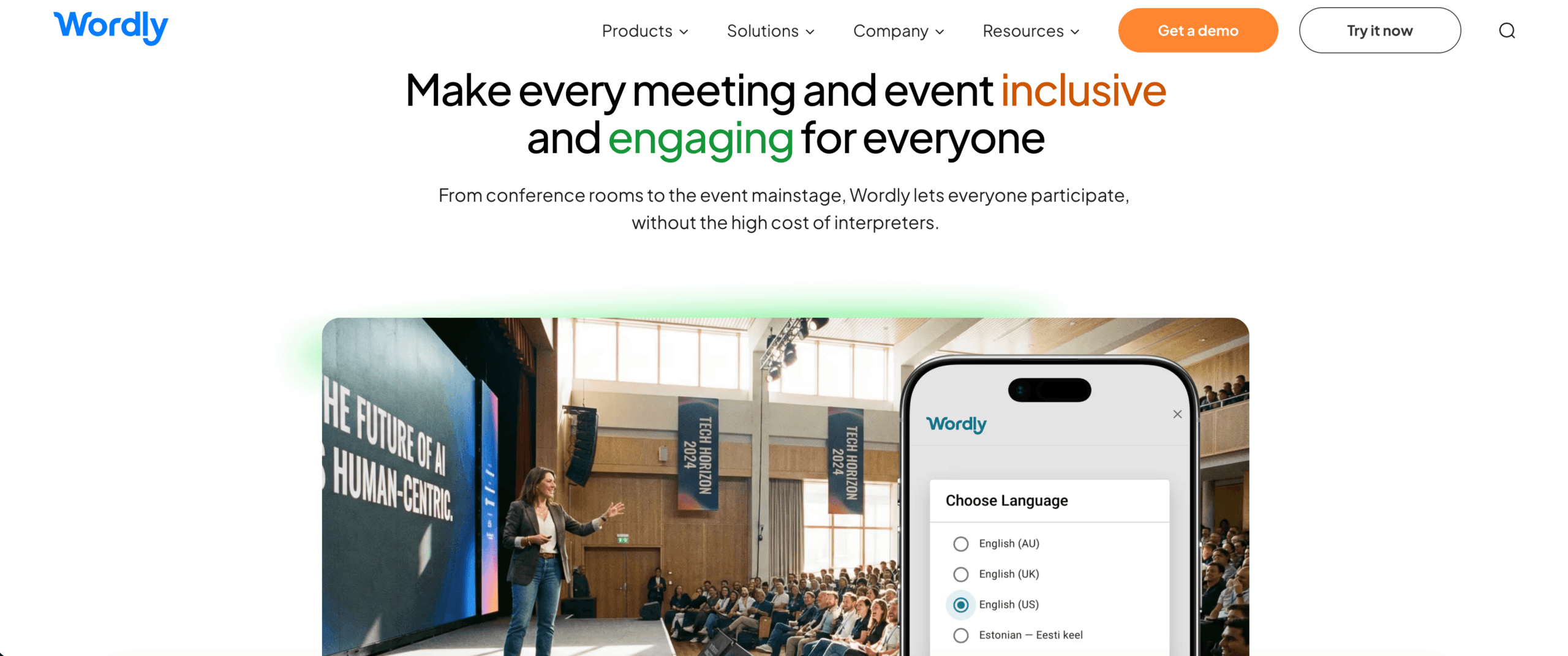 Worldly è più orientato agli eventi che alla sfera personale.
È progettato per conferenze, webinar, assemblee pubbliche, eventi ibridi e sessioni incentrate sull'accessibilità, dove molti partecipanti necessitano di sottotitoli o traduzione audio.
Una riunione di team potrebbe richiedere solo una o due combinazioni linguistiche. Un evento, invece, potrebbe necessitare che molti partecipanti scelgano lingue diverse contemporaneamente.
Scegli Worldly quando il tuo traduttore multilingue deve servire un vasto pubblico. Scegli uno strumento pensato per le riunioni quando la priorità è una conversazione dal vivo con un numero minore di partecipanti.
TalkaoIdeale per viaggi e traduzioni quotidiane.
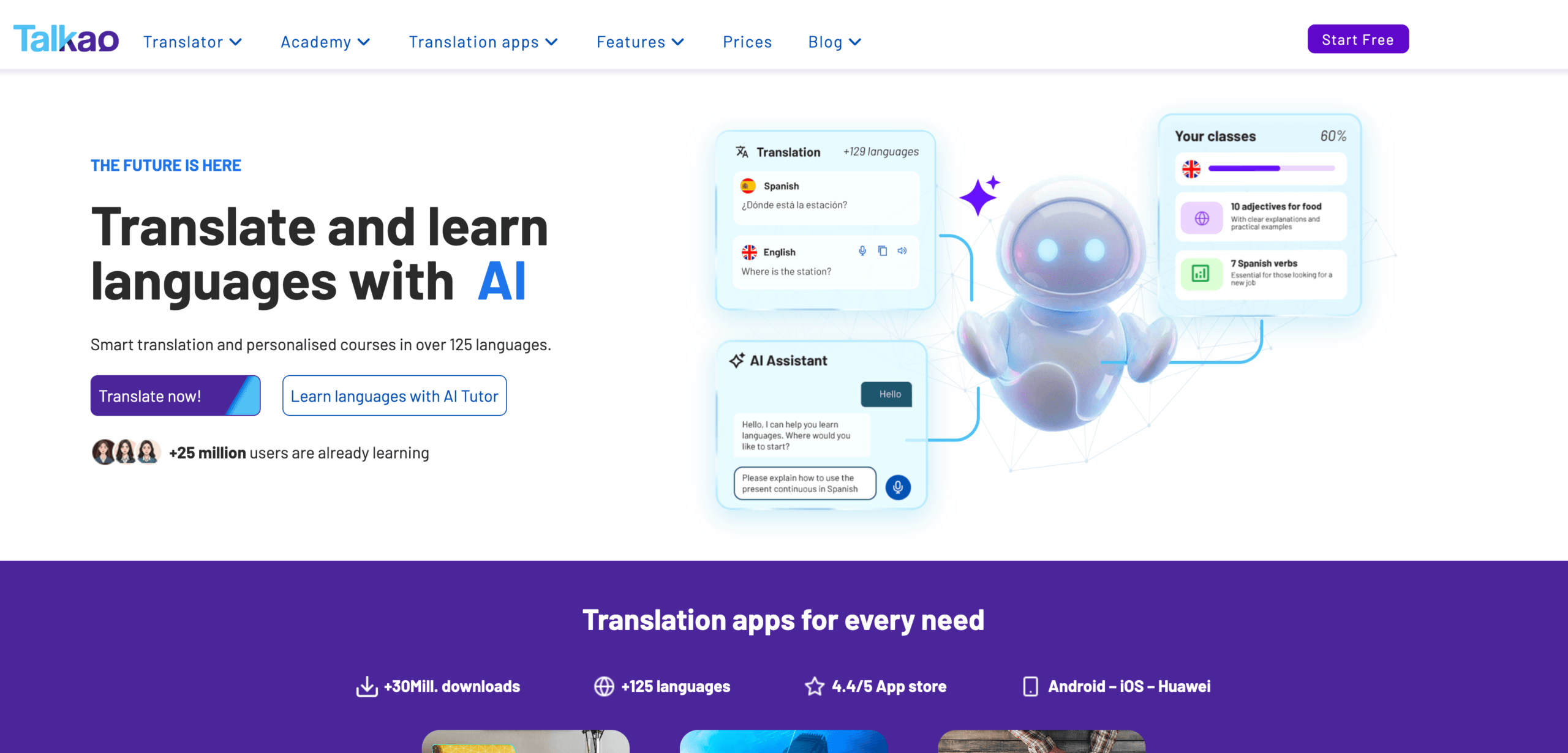 Talkao è più adatto alla traduzione su dispositivi mobili per i consumatori.
Può supportare:
- Traduzione vocale
- Traduzione del testo
- Traduzione della telecamera
- Conversazioni informali
- pratica di pronuncia
- Comunicazione di viaggio
- Apprendimento delle lingue
Questo lo rende utile per menu, cartelli, indicazioni stradali e brevi conversazioni faccia a faccia.
È meno incentrato su appunti di riunioni professionali, sottotitoli fluttuanti sul desktop, preparazione della terminologia e flussi di lavoro con microfono virtuale.
Confronto delle funzionalità: strumenti di traduzione multilingue
| Caratteristica | Transync AI | DeepL | JotMe | Talo | Sonix | Maestra | Mondano | Talkao |
|---|---|---|---|---|---|---|---|---|
| Traduzione del testo | Limitato | SÌ | Basato sulla trascrizione | Limitato | Basato sulla trascrizione | SÌ | Limitato | SÌ |
| Traduzione di documenti | NO | SÌ | Limitato | NO | Flusso di lavoro registrato | SÌ | Nessun obiettivo primario | Disponibile |
| Traduzione vocale in tempo reale | SÌ | Prodotti del cuore | SÌ | SÌ | Non primario | SÌ | SÌ | SÌ |
| Incontri bidirezionali | SÌ | Dipendente dal prodotto | SÌ | SÌ | NO | Disponibile | Dipendente dall'evento | Uso occasionale |
| Sottotitoli bilingue | SÌ | Dipendente dalla voce | SÌ | Disponibile | Flusso di lavoro dei sottotitoli | SÌ | SÌ | Dipendente dall'app |
| Voce tradotta | SÌ | Disponibile | Dipendente dal prodotto | SÌ | Non primario | SÌ | SÌ | SÌ |
| Appunti della riunione | SÌ | Non è fondamentale | SÌ | Dipendente dal prodotto | analisi dell'IA | Riassunti | Riassunti | NO |
| Audio caricato | NO | Limitato | Limitato | NO | SÌ | SÌ | Limitato | Limitato |
| Migliore vestibilità | Riunioni | Documenti | Riunioni e appunti | Chiamate basate su bot | supporti registrati | Media | Eventi | Viaggio |
Come scegliere il traduttore multilingue giusto
Utilizza questo semplice percorso decisionale.
Scegli Transync AI quando:
Hai bisogno di riunioni multilingue in tempo reale con sottotitoli, traduzione vocale, supporto terminologico e note di riunione generate dall'intelligenza artificiale.
Scegli DeepL quando:
Hai bisogno di traduzioni scritte impeccabili per documenti, relazioni, email o contenuti professionali.
Scegli JotMe quando:
Desideri la traduzione simultanea, oltre a verbali delle riunioni, riepiloghi e punti d'azione.
Scegli Talo quando:
Preferisci un bot che partecipi alla riunione e gestisca l'interpretazione vocale.
Scegli Sonix quando:
È necessario caricare registrazioni audio o video, creare trascrizioni, tradurle ed esportare i sottotitoli.
Scegli Maestra quando:
Ti occupi di sottotitoli, doppiaggio, webinar, video e localizzazione multimediale.
Scegli Wordly quando:
Per un pubblico numeroso, una conferenza, un webinar o un evento, è necessario l'accesso multilingue.
Scegli Talkao quando:
Hai bisogno di un traduttore mobile per i viaggi, per la traduzione vocale informale e per l'input tramite fotocamera.
Come testare un traduttore multilingue
Utilizza contenuti reali anziché una semplice frase dimostrativa.
Per le riunioni in diretta, eseguire il test:
- Due altoparlanti
- Nome del prodotto
- Il nome di un'azienda
- Un numero di modello
- Un appuntamento
- Un prezzo
- rumore di fondo
- Una correzione
- discorso in lingua mista
Per i supporti registrati, eseguire il test:
- Etichette degli altoparlanti
- accuratezza della trascrizione
- Qualità della traduzione
- Timestamp
- Esportazione sottotitoli
- Strumenti di modifica
Per i documenti, la formattazione dei test, il tono, la terminologia e le frasi ripetute.
Il migliore traduttore multilingue è quello che funziona nel tuo ambiente reale, non solo in una dimostrazione di prodotto pulita.
Problemi comuni
UN traduttore multilingue potrebbe avere difficoltà con:
- altoparlanti sovrapposti
- Microfoni deboli
- eco nella stanza
- Forti accenti regionali
- Discorso veloce
- Slang
- Frasi incomplete
- Internet instabile
- Abbreviazioni tecniche
- Nomi dei prodotti
- Molteplici significati per la stessa parola
Prezzi, date, quantità e impegni importanti vanno sempre verificati dopo la conversazione.
Domande frequenti
Che cos'è un traduttore multilingue?
Un traduttore multilingue è uno strumento che traduce tra più lingue. Può gestire testi, documenti, discorsi dal vivo, riunioni, registrazioni audio, sottotitoli o eventi.
Qual è il miglior traduttore multilingue?
La scelta migliore dipende dal flusso di lavoro. Transync AI è ideale per le riunioni dal vivo, DeepL per i documenti, Sonix per i contenuti multimediali registrati, Maestra per i video, Wordly per gli eventi e Talkao per i viaggi.
Quale traduttore multilingue è il migliore per le riunioni?
Scegli uno strumento pensato per le riunioni, con bassa latenza, traduzione bidirezionale, sottotitoli bilingue, voce tradotta, controlli terminologici e possibilità di prendere appunti durante la riunione.
Un singolo traduttore multilingue può gestire ogni incarico?
Alcuni strumenti coprono diversi flussi di lavoro, ma la maggior parte ha un caso d'uso principale in cui eccelle. Un traduttore di documenti potrebbe non essere adatto alle riunioni dal vivo, mentre un traduttore di riunioni potrebbe non essere in grado di modificare contenuti multimediali registrati.
L'intelligenza artificiale può sostituire gli interpreti umani?
L'intelligenza artificiale può essere utile per riunioni di routine, viaggi, lezioni, eventi e contenuti registrati. Gli interpreti umani rimangono la scelta più sicura per comunicazioni legali, mediche, finanziarie, diplomatiche e altre comunicazioni ad alto rischio.
Considerazioni finali
UN traduttore multilingue dovrebbe essere scelto in base al flusso di lavoro.
Per le riunioni dal vivo, dare priorità a bassa latenza, traduzione bidirezionale, sottotitoli, output vocale, terminologia e note. Per i documenti, dare priorità alla qualità della scrittura e alla formattazione. Per i contenuti multimediali registrati, dare priorità a trascrizioni, timestamp, sottotitoli e montaggio. Per gli eventi, dare priorità all'accessibilità del pubblico e alla sua portata.
Transync AI è più efficace nelle conversazioni multilingue in tempo reale. DeepL è più adatto al linguaggio scritto, JotMe alla documentazione delle riunioni, Talo alle chiamate gestite da bot, Sonix all'audio e al video registrati, Maestra ai flussi di lavoro multimediali, Wordly agli eventi e Talkao ai viaggi.
Il traduttore multilingue ideale non è quello con la lista di funzioni più lunga, ma quello che elimina la barriera linguistica proprio nel momento in cui la comunicazione è necessaria.
Se desideri un'esperienza di nuova generazione, Transync AI apre la strada alla traduzione in tempo reale basata sull'intelligenza artificiale, che mantiene le conversazioni fluide e naturali. Puoi provalo gratis Ora.
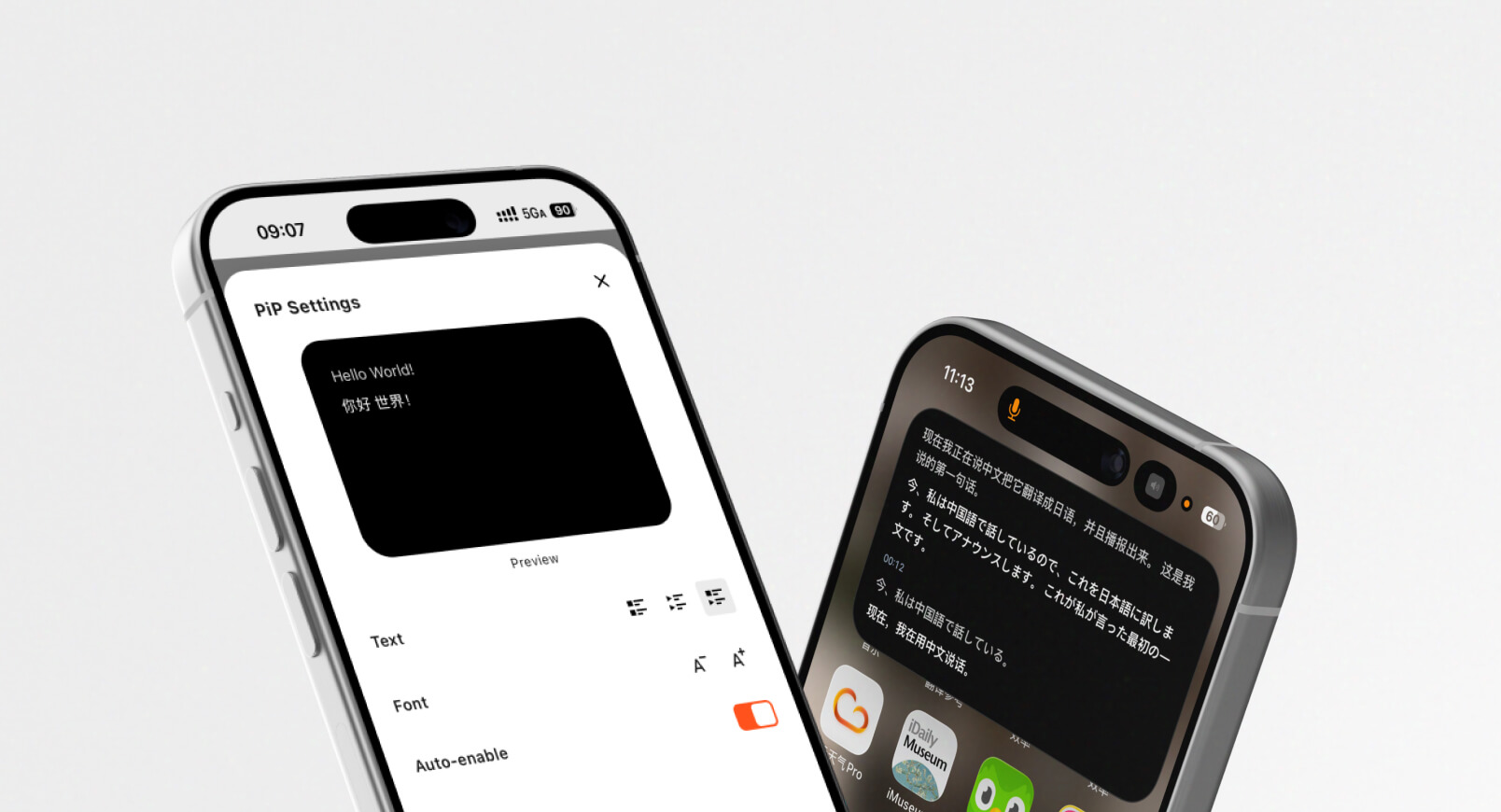
Aggiornamento Transync AI v1.12 | Clonazione vocale, supporto per microfono virtuale e PiP