

Confronta 7 strumenti di traduzione automatica basati sull'IA per riunioni, viaggi, eventi, media e API. Utilizza questa guida per scegliere il flusso di lavoro più adatto alle tue esigenze.
UN Traduttore linguistico basato sull'intelligenza artificiale Utilizza l'intelligenza artificiale per interpretare contenuti in una lingua e produrre un significato equivalente in un'altra. A seconda del prodotto, può tradurre testi, documenti, immagini, discorsi dal vivo, contenuti multimediali registrati o intere riunioni multilingue.
Questa varietà rende la scelta di uno strumento più difficile di quanto sembri a prima vista. Un traduttore di viaggio gratuito, un assistente per riunioni, una piattaforma per la sottotitolazione di eventi, una suite per la localizzazione di contenuti multimediali e un'API per sviluppatori risolvono tutti problemi diversi, anche quando ognuno di essi viene descritto come traduzione tramite intelligenza artificiale.
Questa guida parte dall'utente, non dall'elenco delle funzionalità. Segui il percorso decisionale, confronta sette opzioni principali e testa il flusso di lavoro che meglio si adatta alle tue reali esigenze di comunicazione.
Risposta rapida: di quale traduttore linguistico basato sull'intelligenza artificiale hai bisogno?
Partiamo dal risultato:
- Hai bisogno di frasi di viaggio veloci, immagini o testo informale? Considerare Talkao O Google Traduttore.
- Hai bisogno di sottotitoli bilingue, traduzione del discorso e verbali della riunione? Considerare Transync AI.
- Hai bisogno di sottotitoli e audio per un evento con molti partecipanti? Considerare Mondano.
- Hai bisogno di integrare la traduzione nel tuo prodotto? Considerare Sonox.
- Hai bisogno di sottotitoli, doppiaggio e localizzazione multimediale? Considerare Maestra.
- Hai bisogno di testi, documenti, strumenti di scrittura o flussi di lavoro linguistici aziendali? Considerare DeepL.
Nessun singolo traduttore linguistico basato sull'IA è il migliore per tutti e sei i compiti. La selezione in base al caso d'uso evita di pagare per un flusso di lavoro errato.
Come funziona un traduttore linguistico basato sull'intelligenza artificiale?
Il processo dipende dall'input.
Per i contenuti scritti, il sistema identifica i modelli linguistici, il contesto e il significato prima di generare il testo tradotto. Per la comunicazione orale, deve completare ulteriori passaggi:
Acquisizione audio → riconoscimento vocale → interpretazione del contesto → traduzione del significato → visualizzazione dei sottotitoli o generazione della voce
La riproduzione del parlato in diretta è particolarmente complessa perché lo strumento deve gestire accenti, pause, frasi incomplete, rumori di fondo e più interlocutori senza introdurre ritardi che possano disturbare il processo.
I prodotti moderni possono includere controlli terminologici, sintesi vocale, clonazione vocale, instradamento audio per piattaforme di riunione, trascrizioni, riepiloghi e API. Queste aggiunte determinano se lo strumento è adatto a una frase informale o a un flusso di lavoro aziendale completo.
Confronto tra traduttori linguistici basati sull'intelligenza artificiale: 7 opzioni
La tabella confronta il posizionamento tipico di un prodotto. Funzionalità, lingue supportate e piani tariffari possono variare, pertanto si consiglia di verificare i requisiti fondamentali sui siti web ufficiali dei prodotti.
| Attrezzo | Ideale per | Ingresso principale | Uscita audio in diretta | flusso di lavoro della riunione | Valore post-sessione |
|---|---|---|---|---|---|
| Transync AI | Riunioni, chiamate e conversazioni di persona multilingue | Audio di discorsi e riunioni in diretta | SÌ | Sottotitoli bilingue, instradamento audio e strumenti contestuali | Trascrizioni e appunti della riunione sull'IA |
| Talkao | Viaggi, traduzione mobile e apprendimento delle lingue | Input vocali, testuali, tramite fotocamera e dispositivi mobili. | SÌ | Non è il suo obiettivo principale | Strumenti di traduzione per i consumatori |
| Mondano | Conferenze, webinar e grandi riunioni | Discorso in diretta durante un evento | SÌ | Incentrato sull'evento e sui partecipanti | Trascrizioni e riassunti |
| Sonox | Prodotti vocali per sviluppatori | API e audio dell'app | Funzionalità TTS/API | Dipendente dall'implementazione | Produzione di prodotti personalizzati |
| Maestra | Video, audio, sottotitoli, doppiaggio e contenuti in diretta | File multimediali e discorso in diretta | SÌ | Disponibile per contenuti in diretta | Localizzazione e riutilizzo dei media |
| DeepL | Testi, documenti, lavori in linguaggio aziendale e casi d'uso vocali selezionati | Prodotti testuali, documenti, API e vocali | Dipendente dal prodotto | Dipendente dal prodotto vocale | Flussi di lavoro scritti e aziendali |
| Google Traduttore | Traduzione gratuita ogni giorno | Testo, immagini, siti web, documenti e discorso | Riproduzione della traduzione | Non prima di tutto l'incontro | Traduzione personale rapida |
Percorso decisionale 1: State traducendo riunioni dal vivo?
Se la risposta è sì, concentratevi sulla fluidità della conversazione piuttosto che sulla qualità del solo testo. Le funzionalità più utili sono la bassa latenza, il riconoscimento bidirezionale della lingua, i sottotitoli bilingue, la traduzione vocale, l'instradamento audio delle riunioni, il supporto terminologico e le registrazioni post-chiamata.
Transync AI è progettato attorno a questi requisiti. strumento di traduzione in tempo reale Visualizza il discorso originale e la traduzione affiancati durante una conversazione.
IL Traduttore vocale AI pronuncia ad alta voce il risultato tradotto, consentendo ai partecipanti di ascoltare oltre che di leggere. Funzione per le note delle riunioni basate sull'IA Successivamente, crea una trascrizione e degli appunti strutturati al termine della chiamata.
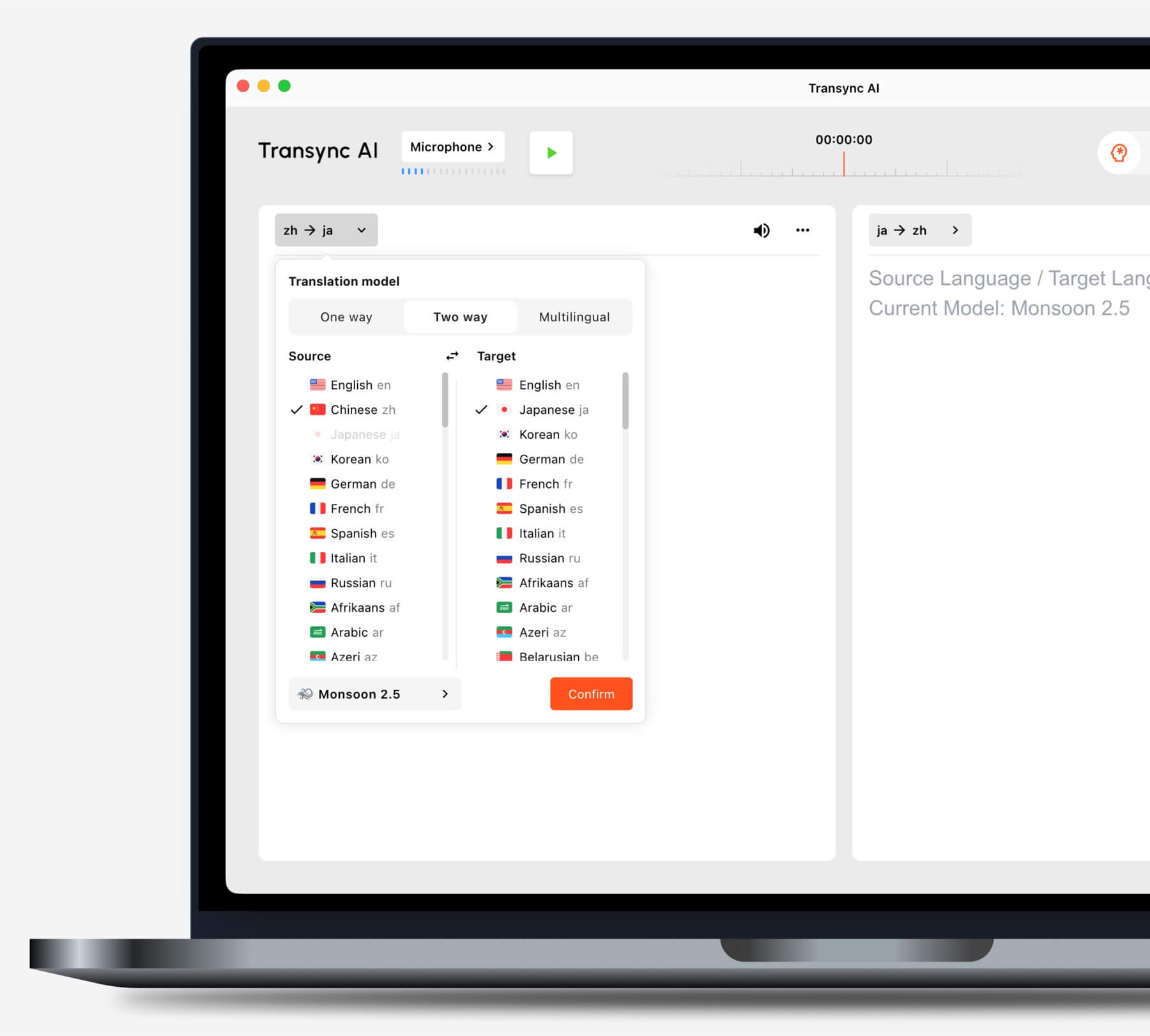
Prima di iniziare un'attività, scegli la modalità di traduzione più adatta al tuo scenario.
Utilizzate piattaforme comuni per le videoconferenze?
IL funzione di traduzione in tempo reale delle riunioni lavora a fianco Zoom, Microsoft Teams, E Google Meet. Transync AI Si tratta di un software autonomo, non di un plugin specifico per una determinata piattaforma.
IL funzione di condivisione audio del computer cattura il parlato dei partecipanti remoti. funzione microfono virtuale Consente di inviare la traduzione vocale alla riunione.
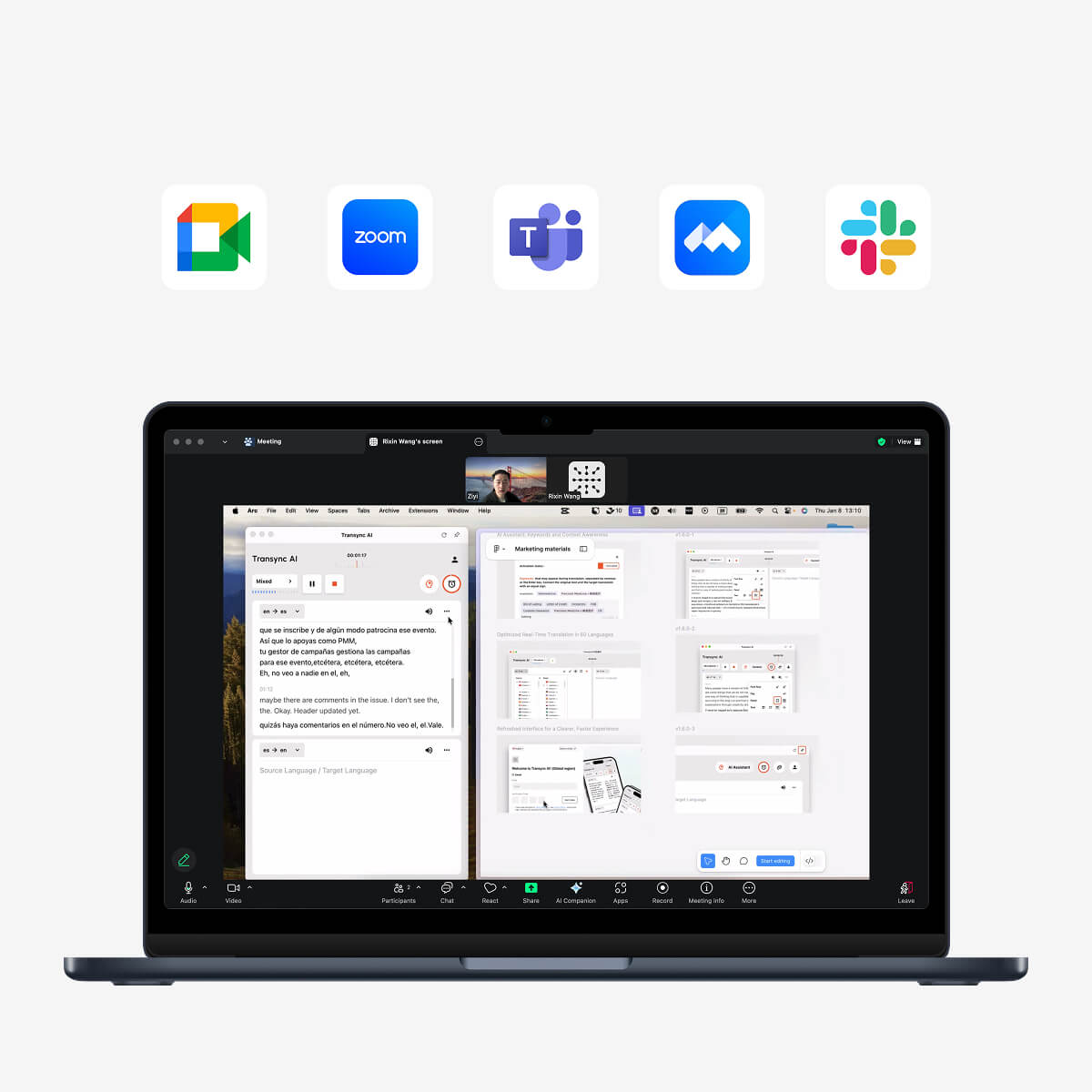
Compatibile con le principali piattaforme per riunioni online, per una traduzione in tempo reale senza interruzioni.
Utilizzi delle diapositive per le presentazioni o lavori con un'altra applicazione?
IL Funzione Picture-in-Picture con sottotitoli bilingue Sui dispositivi supportati, mantiene visibili i sottotitoli originali e tradotti sopra le altre applicazioni. Questo aiuta gli utenti a seguire la traduzione durante presentazioni, dimostrazioni di software o prendendo appunti.
Percorso decisionale 2: Stai traducendo un evento di grande portata?
Quando centinaia di partecipanti necessitano di accesso linguistico, la distribuzione diventa la sfida principale. I partecipanti potrebbero dover aprire i sottotitoli o l'audio tradotto sui propri dispositivi senza dover creare account individuali o installare uno strumento per le riunioni.
Mondano È pensato per conferenze, webinar, eventi ibridi e grandi riunioni. I partecipanti possono accedere alla traduzione tramite un link o un codice QR, il che lo rende più adatto a una diffusione su larga scala.
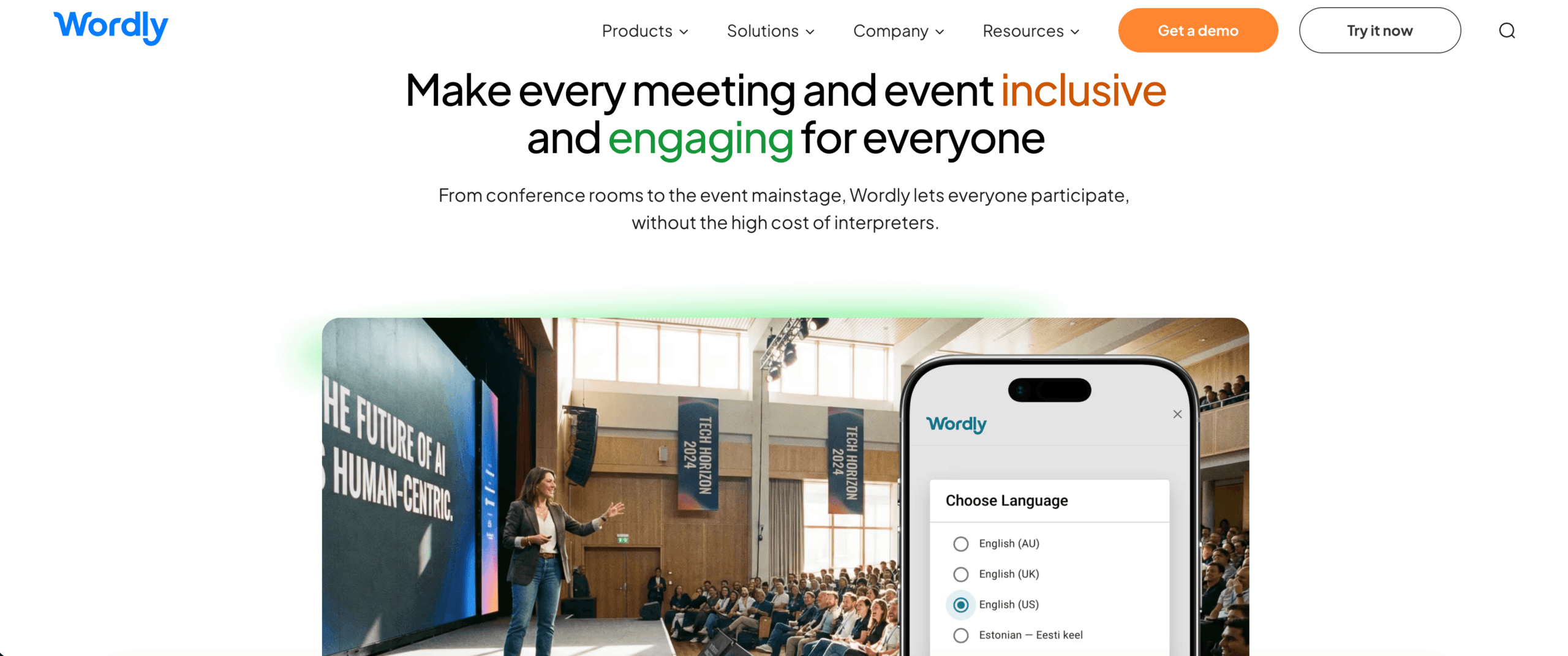 Scegliere Transync AI per la traduzione di riunioni individuali e di gruppo. Scegli Mondano quando un organizzatore deve fornire un servizio di traduzione a un gruppo numeroso.
Percorso decisionale 3: Stai traducendo contenuti di viaggio o contenuti di vita quotidiana?
Per chi viaggia, le funzionalità più importanti possono essere la praticità da dispositivo mobile, la traduzione tramite fotocamera, l'inserimento di testo e la riproduzione vocale rapida. Le note delle riunioni e i microfoni virtuali sono generalmente superflui.
Talkao Offre strumenti di traduzione e apprendimento linguistico orientati al consumatore, tra cui funzionalità vocali, fotografiche e per dispositivi mobili. Google Traduttore è ampiamente disponibile per testi, immagini, siti web, documenti e traduzioni orali informali.
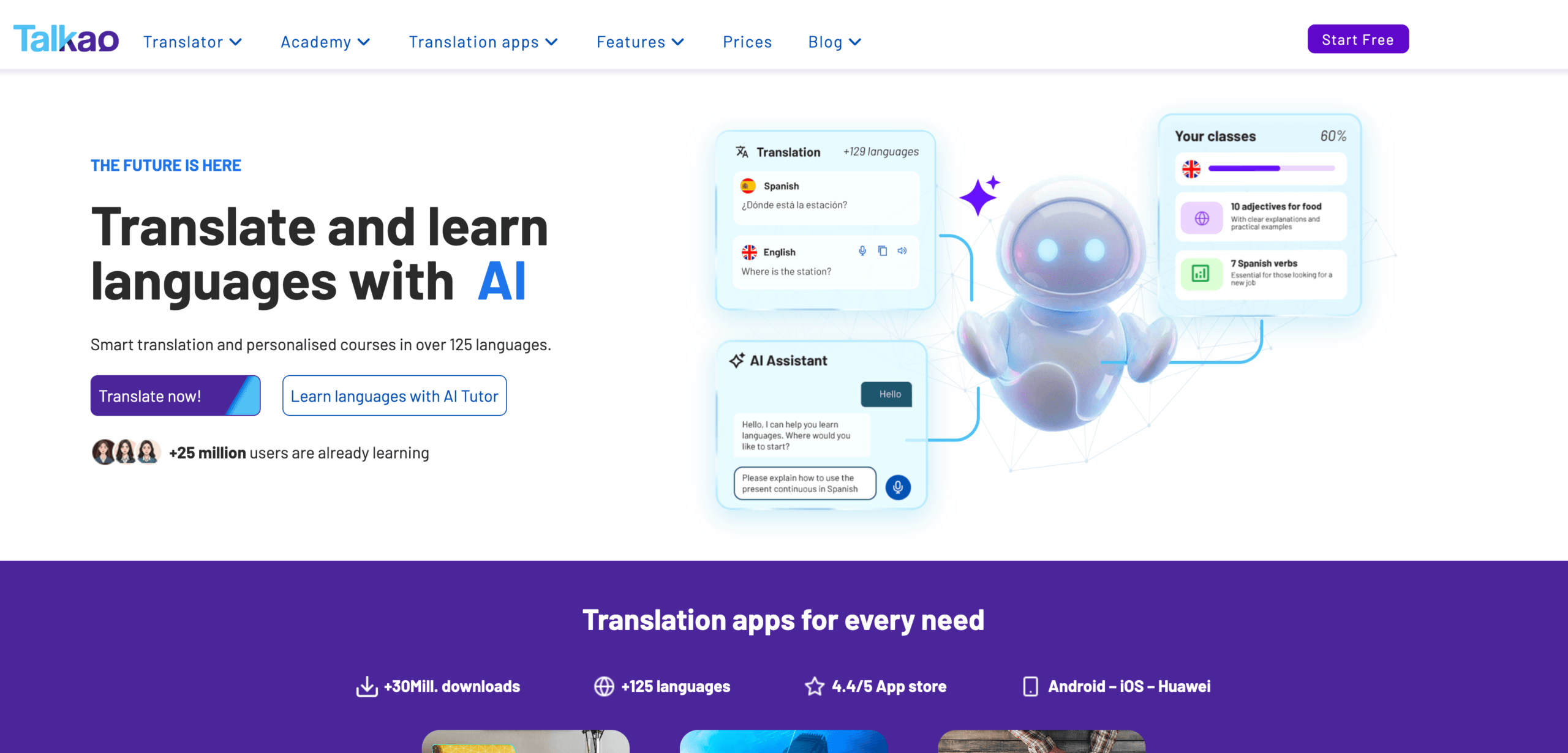 Transync AI Può essere utile per conversazioni orali più lunghe di persona, ma non supporta la modalità offline, il riconoscimento delle immagini o la traduzione di documenti di solo testo.
Percorso decisionale 4: Stai localizzando i contenuti multimediali?
La produzione video e audio richiede più della semplice comprensione del parlato sul momento. I team potrebbero aver bisogno di sottotitoli modificabili, doppiaggio, sincronizzazione, trascrizione, traduzione e opzioni di esportazione.
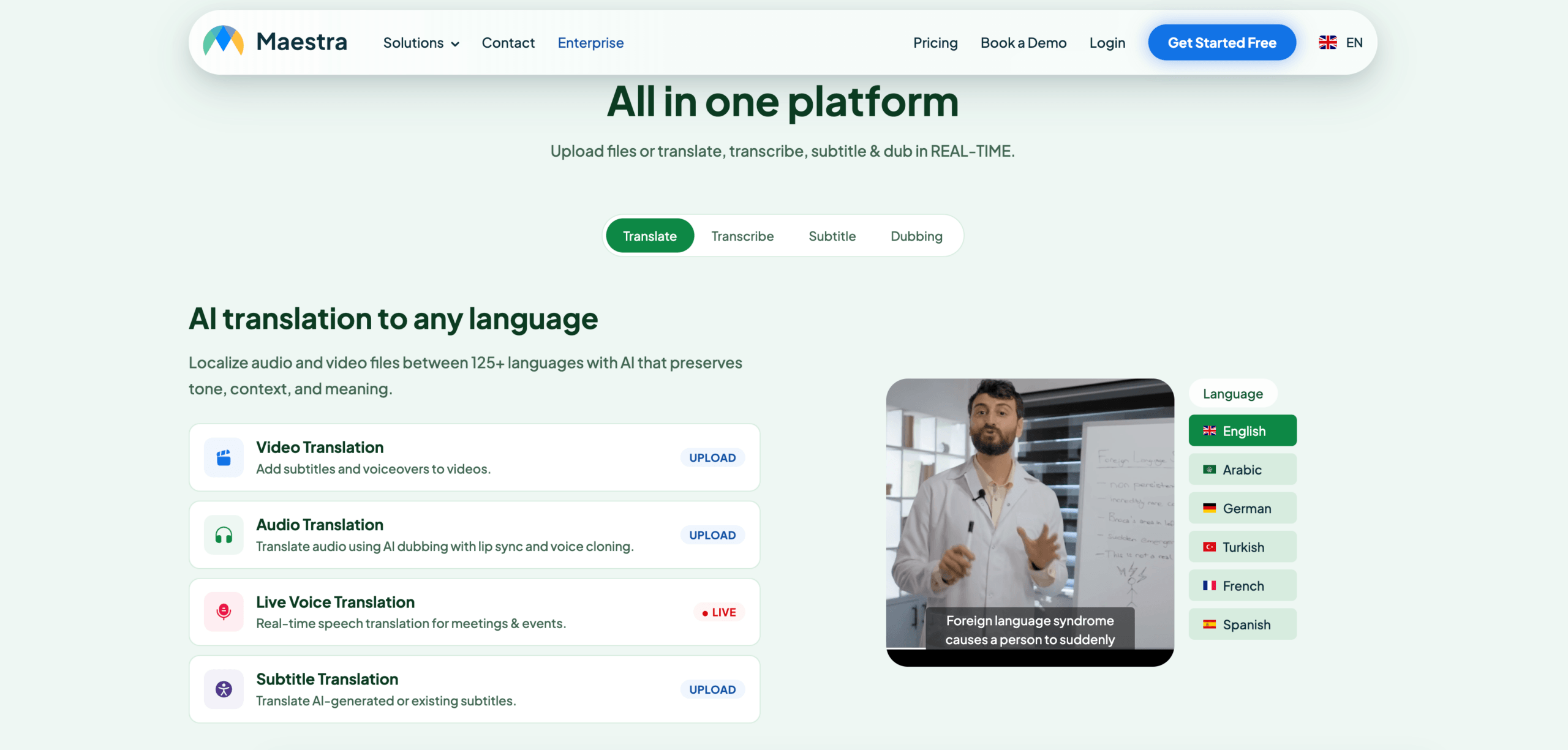
Maestra Si colloca in un contesto che spazia dalla traduzione multimediale alla trascrizione, dai sottotitoli al doppiaggio, dai webinar ai contenuti live. Risulta particolarmente efficace quando la traduzione diventa parte integrante del flusso di lavoro di produzione e pubblicazione.
 Scegliere Transync AI quando l'obiettivo principale è una conversazione bidirezionale dal vivo. Scegli Maestra quando il contenuto tradotto deve essere modificato e riutilizzato come file multimediale.
Percorso decisionale 5: Stai sviluppando un prodotto di traduzione?
Un team di prodotto necessita di infrastrutture programmabili, documentazione, controlli di latenza e flessibilità di integrazione. In genere non ha bisogno di un'interfaccia per le riunioni con gli utenti finali.
Sonox Offre funzionalità di riconoscimento vocale, traduzione e sintesi vocale per gli sviluppatori che creano prodotti vocali.
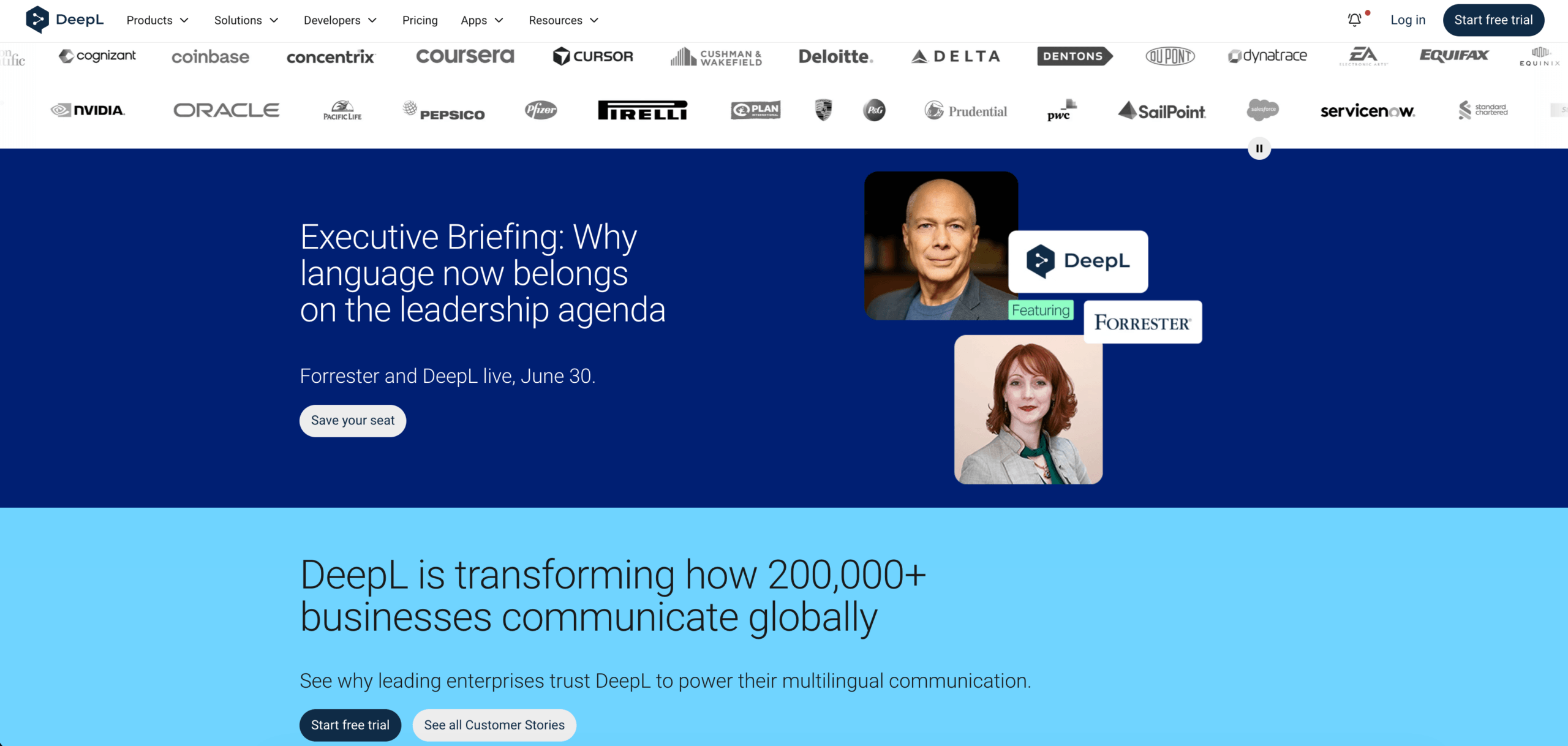
 DeepL Fornisce API e servizi linguistici aziendali per testo, documenti, scrittura e flussi di lavoro vocali selezionati.
 Scegliere Transync AI Quando dipendenti o clienti necessitano di un servizio di traduzione per riunioni completo, è preferibile optare per una piattaforma API quando gli ingegneri si occuperanno della progettazione e della manutenzione dell'intera esperienza.
Percorso decisionale 6: Testi e documenti sono la priorità?
La traduzione scritta premia la conservazione della formattazione, la coerenza terminologica, la revisione, il supporto documentale e l'integrazione con gli strumenti di lavoro esistenti. Le funzionalità di sottotitoli e voce in tempo reale possono essere secondarie.
DeepL è ampiamente posizionato per la traduzione di testi e documenti, il supporto alla scrittura, le API e i flussi di lavoro linguistici aziendali. Google Traduttore è utile per attività rapide di tipo testuale, web, immagine e documento per i consumatori.
Transync AI Non è un traduttore di soli documenti testuali. Il suo utilizzo principale è nella comunicazione multilingue in tempo reale.
Perché Transync AI Adatto a conversazioni multilingue
Transync AI Collega le fasi di una conversazione dal vivo: ascoltare l'altra persona, leggere la traduzione, rispondere e tenere traccia di quanto detto.
Riconoscimento automatico bidirezionale
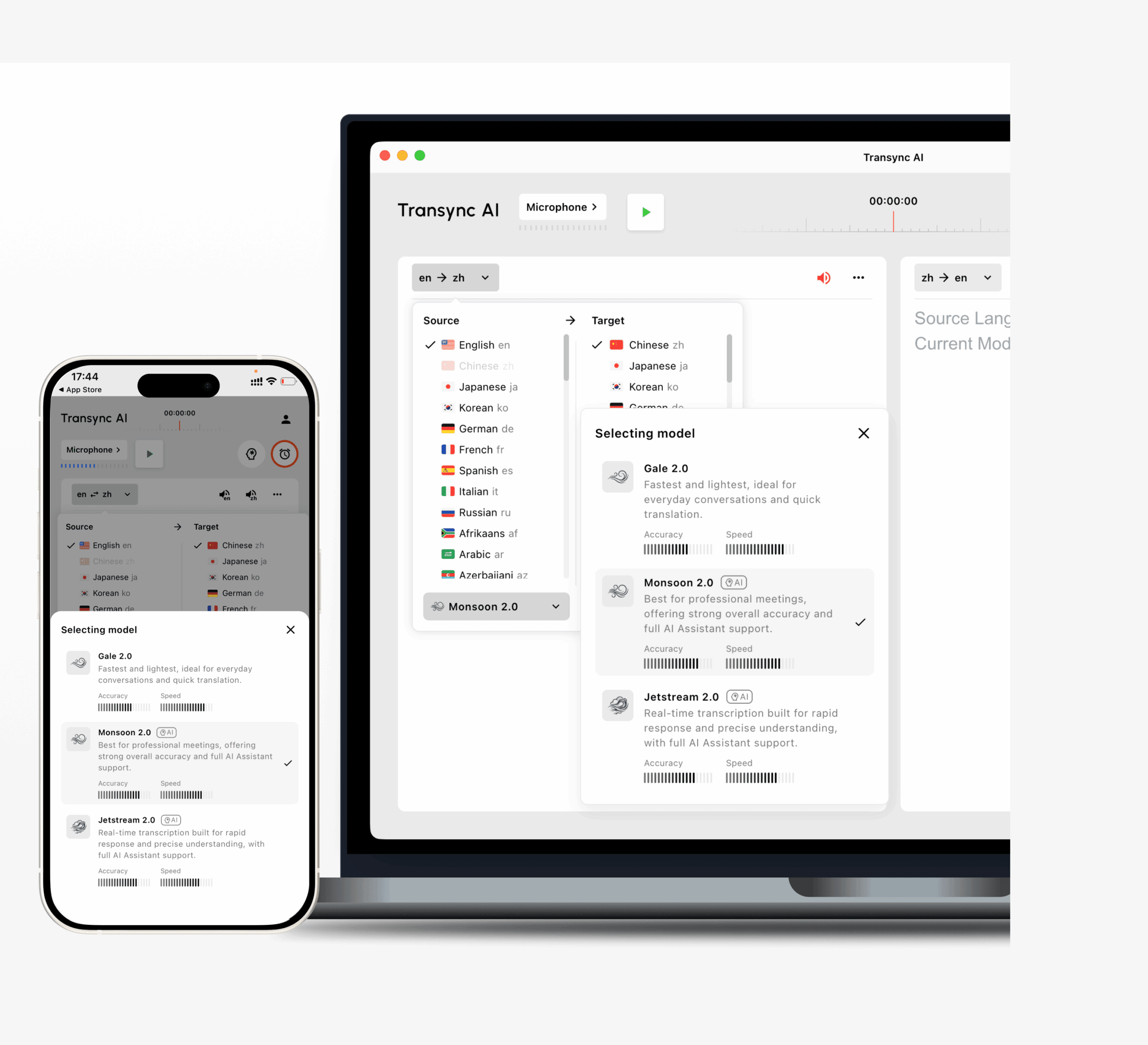
All'interno di una coppia di lingue supportate selezionata, strumento di traduzione in tempo reale È in grado di distinguere la lingua parlata. Gli utenti non devono premere un pulsante per cambiare lingua dopo ogni turno.
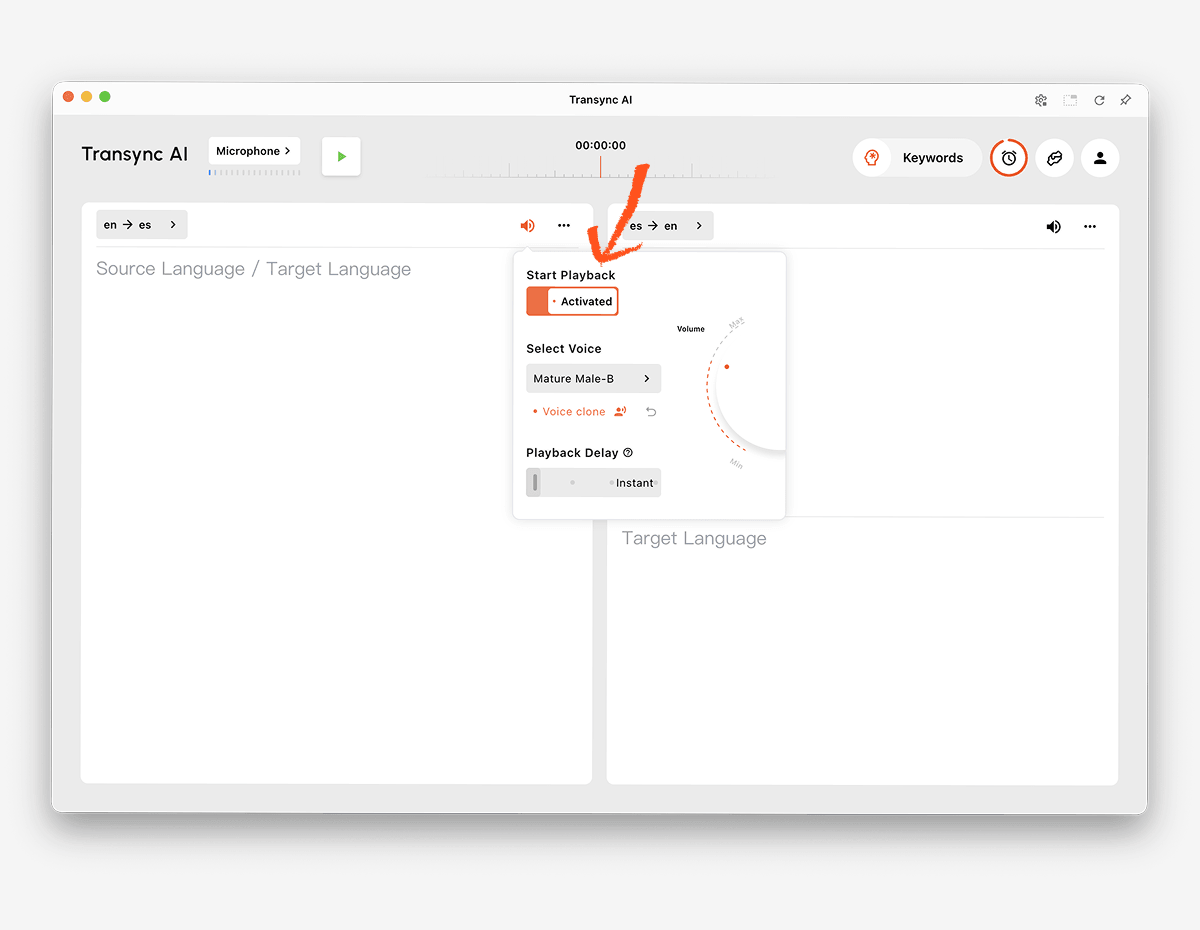
 Riproduzione vocale naturale e clonazione vocale
 Riproduzione vocale naturale e clonazione vocale
IL Traduttore vocale AI offre diversi stili vocali e velocità di riproduzione. funzione di clonazione vocale È in grado di generare la traduzione vocale con una voce modellata su quella dell'utente, rendendo lezioni, presentazioni e chiamate ai clienti più personali.
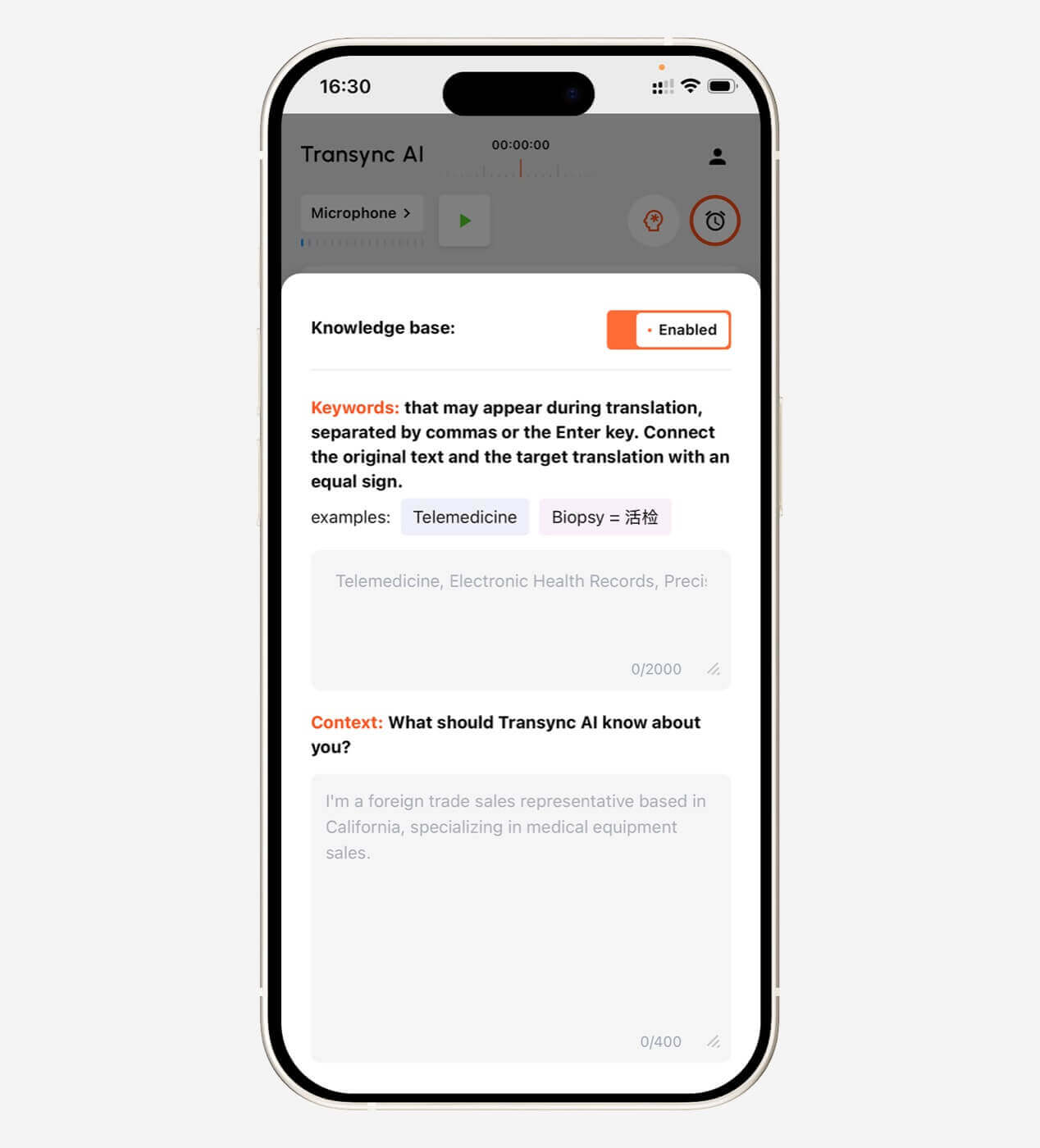
 Parole chiave e contesto di riferimento
 Parole chiave e contesto di riferimento
Nomi, marchi, acronimi e termini specialistici sono fonti comuni di errori di traduzione. Funzionalità di parole chiave e contesto dell'assistente AI Consente agli utenti di definire il vocabolario importante e di spiegare l'argomento prima di una sessione.
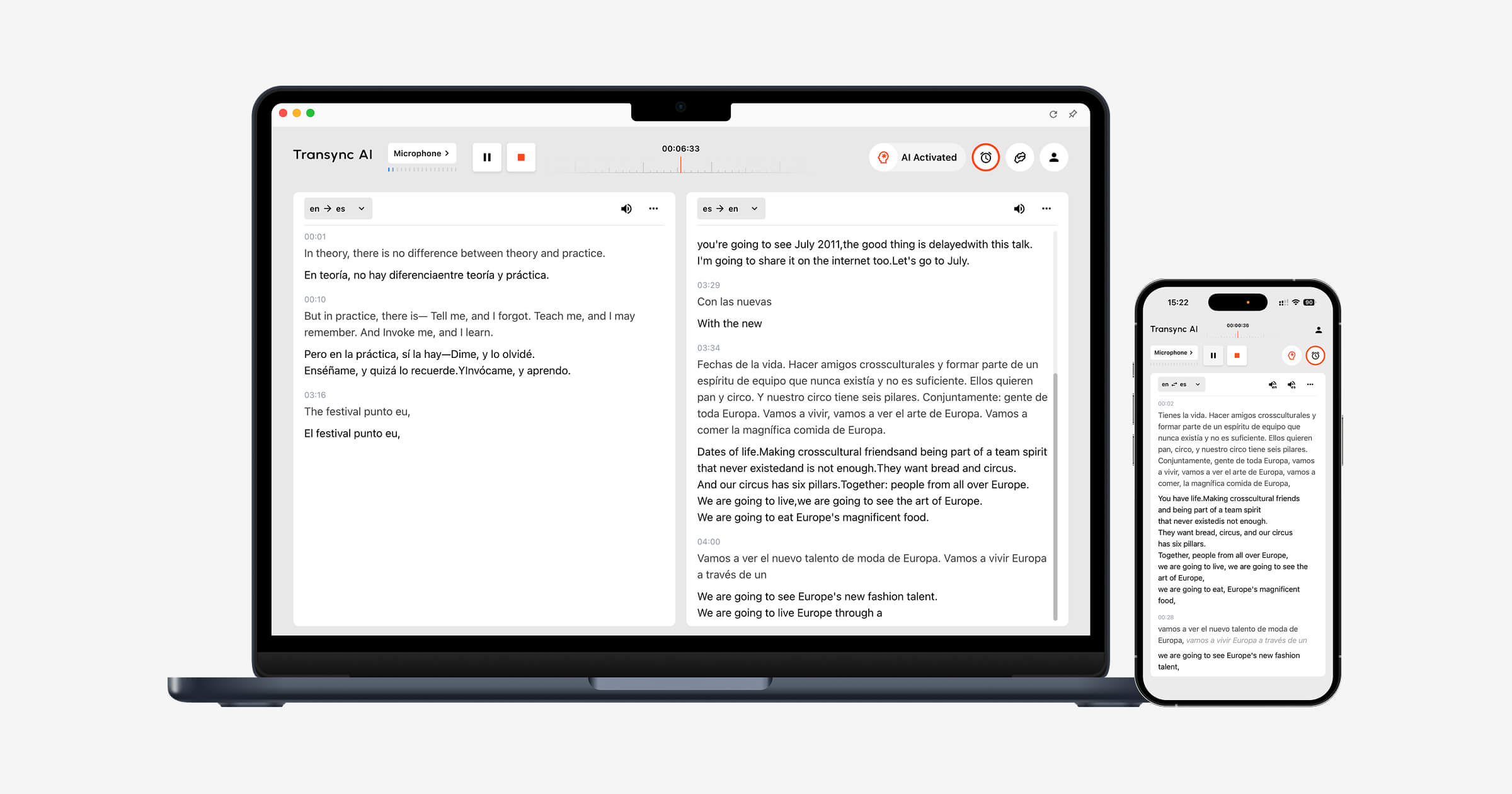
 Accesso tra dispositivi
 Accesso tra dispositivi
Transync AI Supporta flussi di lavoro web, Windows, macOS, iOS e Android. Ciò consente agli utenti di selezionare il dispositivo più adatto a una conversazione online o di persona.
Più di 60 lingue
La piattaforma supporta più di 60 lingue e oltre 1.000 coppie di lingue. La disponibilità delle lingue può variare, quindi controlla pagina delle lingue supportate per la coppia esatta richiesta.
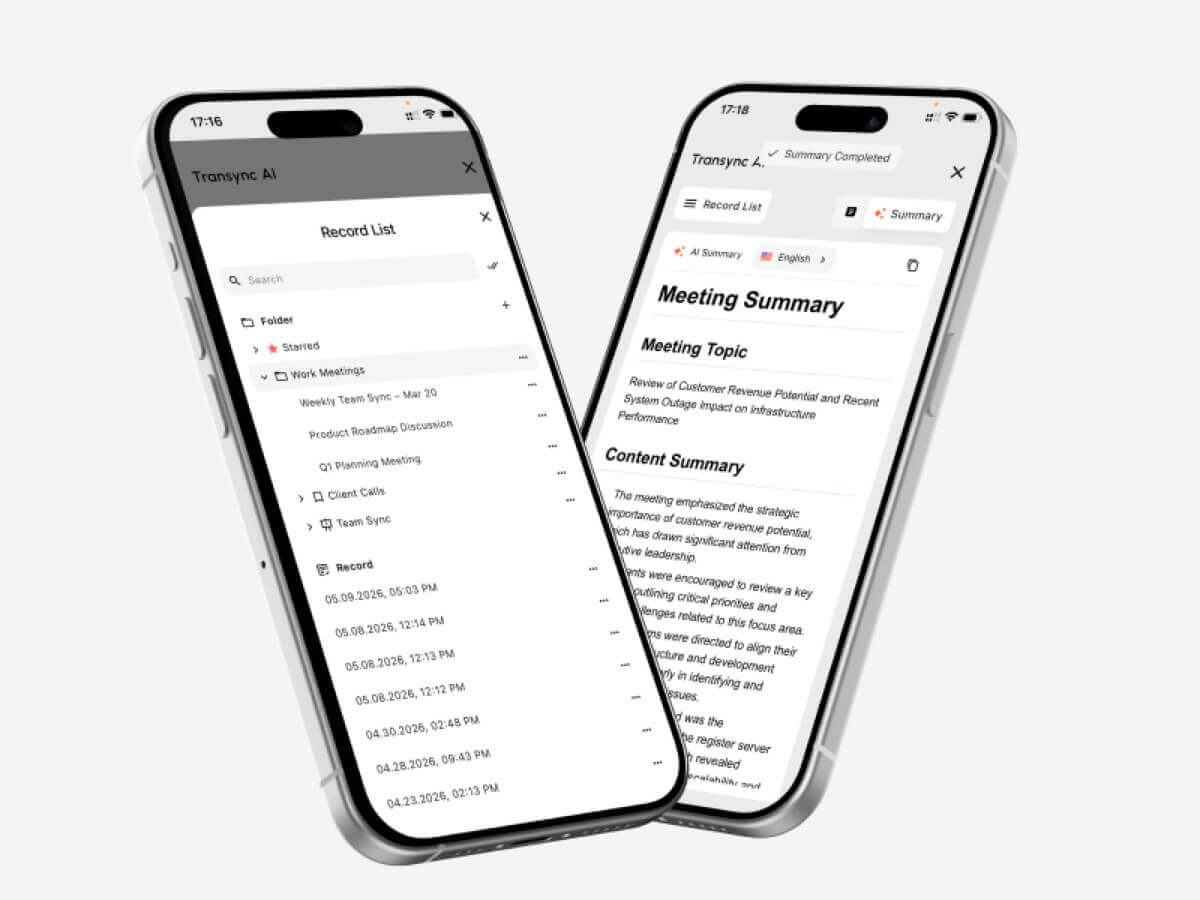
Registrazione dopo la conversazione
IL Funzione per le note delle riunioni basate sull'IA crea trascrizioni e note strutturate. guida alla gestione dei record di traduzione Spiega come gli utenti possono accedere e organizzare le sessioni precedenti.
 Come testare un traduttore linguistico basato sull'intelligenza artificiale
 Come testare un traduttore linguistico basato sull'intelligenza artificiale
Eseguire il test nello stesso ambiente in cui verrà utilizzato il prodotto.
Verifica la coppia di lingue attuale
Non affidatevi solo al conteggio totale delle lingue. Verificate entrambe le direzioni della coppia richiesta, utilizzando accenti regionali e velocità di eloquio realistiche.
Verifica la terminologia importante
Crea un elenco di nomi, prodotti, acronimi e termini specialistici. Confronta i risultati prima e dopo l'aggiunta del contesto. Verifica se la traduzione preserva il significato anziché limitarsi a riconoscere le parole.
Ritardo di prova nella conversazione
Chiedete a due persone di intavolare una conversazione spontanea. Osservate se il ritardo nella traduzione provoca interruzioni, confusione o pause innaturali.
Prova i sottotitoli e l'audio insieme
Alcuni partecipanti preferiscono l'audio, mentre altri si affidano al testo. Verificate la leggibilità dei sottotitoli, la chiarezza della voce, il ritmo e la facilità di riconoscimento di nomi e numeri.
Verifica la configurazione della riunione
Utilizza la piattaforma di riunione, il microfono, gli altoparlanti, il sistema operativo e la rete reali. Verifica che l'audio remoto venga ricevuto dal traduttore e che la traduzione raggiunga i destinatari previsti.
Verifica l'output dopo la chiamata
Rivedete la trascrizione e gli appunti per individuare decisioni mancanti, nomi errati e azioni da intraprendere poco chiare. Un'esperienza dal vivo senza intoppi non garantisce automaticamente una registrazione accurata.
Rivedere la politica sulla privacy e sul trattamento dei dati.
Verifica come vengono elaborati audio, trascrizioni, modelli vocali e dati dell'account. Transync AI afferma che i dati dei clienti non vengono utilizzati per l'addestramento dell'IA per impostazione predefinita e che l'audio viene eliminato dopo l'elaborazione. Le organizzazioni dovrebbero rivedere Centro fiduciario e le condizioni attuali rispetto ai loro requisiti.
Come avviare una sessione di traduzione in diretta
- Aprire Transync AI su un dispositivo supportato.
- Seleziona le due lingue utilizzate nella conversazione.
- Scegli il microfono o la sorgente audio del computer corretta.
- Aggiungi la terminologia attraverso il Funzionalità di parole chiave e contesto dell'assistente AI.
- Inizia il strumento di traduzione in tempo reale.
- Verifica che i sottotitoli bilingue si aggiornino correttamente.
- Abilitare il Traduttore vocale AI quando i partecipanti necessitano di traduzione audio.
- Utilizzare il Funzione Picture-in-Picture con sottotitoli bilingue mentre lavoro in un'altra applicazione.
- Per una chiamata online, configura il funzione di condivisione audio del computer E funzione microfono virtuale.
- Rivedi il risultato con il Funzione per le note delle riunioni basate sull'IA.
Prima di una riunione importante, effettuate una breve prova per verificare la direzione linguistica, l'instradamento audio, la qualità della rete e la terminologia.
Domande frequenti sul traduttore linguistico basato sull'intelligenza artificiale
Che cos'è un traduttore linguistico basato sull'intelligenza artificiale?
Un traduttore linguistico basato sull'intelligenza artificiale utilizza modelli di apprendimento automatico per interpretare testi, discorsi, immagini, documenti o contenuti multimediali in una lingua e generare un significato equivalente in un'altra. Le funzionalità del prodotto variano in base all'input e al caso d'uso.
Qual è il miglior traduttore linguistico basato sull'intelligenza artificiale per le riunioni?
Transync AI è un'opzione forte da concordare in anticipo perché combina traduzione bilingue in tempo reale, riproduzione vocale tradotta, sottotitoli fluttuanti, contesto terminologico e Appunti della riunione di intelligenza artificiale.
La scelta migliore dipende ancora dalle lingue richieste, dalla piattaforma, dalle norme sulla privacy e dalla durata prevista della sessione.
L'intelligenza artificiale è in grado di tradurre il parlato durante una riunione video?
Sì. Il Funzione di traduzione simultanea per riunioni in tempo reale offerta da Transync AI. lavora a fianco Zoom, Microsoft Teams, E Google Meet. Può fornire sottotitoli bilingue e traduzione vocale durante una chiamata in diretta.
È in grado di riconoscere automaticamente entrambe le lingue?
IL Strumento di traduzione in tempo reale di Transync AI È in grado di distinguere la lingua dell'interlocutore all'interno della coppia di lingue supportate selezionata, riducendo il passaggio manuale tra le lingue nelle conversazioni bidirezionali.
La traduzione automatica tramite intelligenza artificiale funziona offline?
Il supporto offline dipende dal fornitore e dalla lingua. Transync AI Richiede una connessione a Internet e al momento non offre la modalità offline.
L'intelligenza artificiale è in grado di tradurre immagini e documenti?
Alcuni prodotti possono. Google Traduttore supporta un ampio input da parte dei consumatori, comprese immagini e documenti, mentre DeepL è ben posizionato per i flussi di lavoro di testo e documenti. Transync AI Si concentra sulla sintesi vocale in tempo reale e non offre riconoscimento di immagini o traduzione di documenti di solo testo.
Un traduttore basato sull'intelligenza artificiale può sostituire un interprete umano?
L'intelligenza artificiale può supportare molte conversazioni di routine, educative, di viaggio e commerciali, ma non può garantire accuratezza, giudizio o sfumature culturali perfetti. Le discussioni di natura medica, legale, relative alla sicurezza e contrattuali potrebbero richiedere un interprete umano qualificato.
Decisione finale
Scegliere in base al flusso di lavoro principale:
- Scegliere Talkao O Google Traduttore per viaggi informali e traduzioni quotidiane.
- Scegliere Mondano per conferenze multilingue ed eventi rivolti ai partecipanti.
- Scegliere Sonox per API e prodotti vocali personalizzati.
- Scegliere Maestra per sottotitoli, doppiaggio e localizzazione multimediale.
- Scegliere DeepL per testi, documenti, lavoro in linguaggio aziendale e flussi di lavoro vocali selezionati.
- Scegliere Transync AI per riunioni dal vivo che richiedono sottotitoli bilingue, traduzione vocale naturale, contesto terminologico, instradamento audio e note utili a posteriori.
Il diritto Traduttore linguistico basato sull'intelligenza artificiale Non si tratta necessariamente del prodotto con il maggior numero di input o la lista di funzionalità più lunga. È quello che si adatta alle persone, ai contenuti, ai dispositivi e al lavoro di follow-up necessari per il reale compito di comunicazione.
Se desideri un'esperienza di nuova generazione, Transync AI apre la strada alla traduzione in tempo reale basata sull'intelligenza artificiale, che mantiene le conversazioni fluide e naturali. Puoi provalo gratis Ora.
 🤖
🤖