
Guia de software de tradução para chinês em 2026: compare recursos de texto, voz, reuniões, terminologia, preços e privacidade antes de escolher uma ferramenta.
Escolhendo Software de tradução para chinês Parece simples até você tentar usar em uma conversa real.
Uma frase curta como "A remessa chegará na próxima sexta-feira" pode ser fácil de traduzir. Uma reunião presencial com um fornecedor é diferente. Os participantes podem usar códigos de produtos, nomes de empresas, números, sotaques regionais, frases incompletas e termos técnicos. Podem alternar entre chinês e inglês sem aviso prévio ou esperar uma resposta antes que a frase traduzida esteja completa.
Portanto, o melhor software nem sempre é aquele com a maior lista de idiomas. É aquele que melhor se adapta ao conteúdo, ao contexto de comunicação e ao nível de risco envolvido.
Este guia do comprador explica os principais tipos de software de tradução para chinês, os recursos importantes na comunicação em tempo real, as limitações comuns e como decidir se uma ferramenta como o Transync AI se adequa ao seu fluxo de trabalho.
Resposta rápida: O que é um software de tradução para chinês?
Software de tradução para chinês Converte chinês escrito ou falado para outro idioma, ou traduz outro idioma para chinês.
Dependendo do produto, pode suportar:
- Texto em chinês simplificado
- Texto em chinês tradicional
- Fala em mandarim
- fala cantonesa
- Tradução do inglês para o chinês
- Tradução do chinês para o inglês
- Legendas bilíngues em tempo real
- Saída de voz traduzida
- Tradução de documentos ou páginas web
- Tradução de reuniões online
- Transcrições e atas de reuniões sobre IA
Essas funções não são intercambiáveis.
Uma ferramenta de tradução de documentos pode ser útil para contratos ou relatórios, mas inadequada para uma chamada de vídeo ao vivo no Zoom. Um tradutor online pode responder a perguntas rápidas, mas não oferece a estabilidade, o controle terminológico ou o fluxo de trabalho necessários para uma discussão técnica.
Antes de comparar marcas, defina o que você realmente precisa traduzir.
De que tipo de software de tradução para chinês você precisa?
A categoria correta depende da entrada e da saída desejada.
| Tipo de software | Entrada principal | Saída principal | Melhor uso |
|---|---|---|---|
| Tradutor de texto | Texto digitado ou colado | Texto traduzido | Mensagens e pequenos trechos |
| Tradutor de documentos | Arquivos PDF, Word ou de apresentação | Documento traduzido | Relatórios e arquivos comerciais |
| Tradutor de sites | Conteúdo da página web | Página web localizada | Sites de leitura ou publicação |
| Tradutor de imagens | Fotos, placas e capturas de tela | Texto visual traduzido | Viagens e materiais impressos |
| Tradutor de voz chinês | Discurso ao vivo | Texto ou áudio traduzido | Conversas presenciais |
| Tradutor de reunião chinês | Áudio da reunião | Legendas, voz e notas ao vivo | Zoom, Teams e Google Meet |
| Tradutor ou intérprete humano | Linguagem escrita ou falada | Tradução profissional | Comunicação de alto risco ou altamente matizada |
O Transync AI concentra-se principalmente em fala ao vivo, reuniões, legendas bilíngues, tradução de voz, suporte a terminologia e anotações pós-reunião. Não foi projetado como um tradutor de imagens ou uma plataforma geral de tradução de documentos estáticos.
Por que a tradução para chinês é mais complicada do que simplesmente substituir palavras?
A tradução para chinês envolve mais do que simplesmente combinar palavras individuais.
O chinês não usa espaços da mesma forma que o inglês.
Na escrita chinesa, normalmente não se separam todas as palavras com um espaço. O software de tradução precisa identificar onde uma palavra ou frase termina e outra começa.
Uma sequência de caracteres pode ser interpretada de maneiras diferentes dependendo do contexto. Uma segmentação incorreta pode alterar o significado de uma frase inteira.
Os assuntos são frequentemente omitidos
Falantes de chinês podem omitir o sujeito quando este já estiver subentendido pelo contexto.
Por exemplo, uma frase pode significar efetivamente:
- “Já enviei.”
- “Ela já enviou.”
- “A equipe já enviou.”
Uma ferramenta de tradução deve inferir o assunto pretendido a partir da conversa circundante.
O tom e a cortesia podem ser implícitos.
O inglês frequentemente sinaliza tom por meio de frases explícitas como "could you", "would you mind" ou "please". O chinês pode expressar polidez por meio do contexto, da escolha de palavras, de partículas e da relação entre os falantes.
Uma tradução literal pode ser tecnicamente correta, mas soar muito direta, formal demais ou artificial.
Um termo pode ter várias traduções válidas.
Os termos comerciais e técnicos muitas vezes dependem do setor.
Por exemplo, “modelo” pode se referir a:
- Um modelo de IA
- Um modelo de produto
- Um modelo de negócio
- Um modelo estatístico
- Um protótipo físico
Sem contexto, o software pode escolher o significado errado.
O mandarim e o cantonês não são a mesma entrada de fala.
“"Chinês" é um termo muito amplo. O mandarim e o cantonês diferem na pronúncia, no vocabulário e nas expressões do dia a dia.
Um usuário que trabalha com fornecedores da China continental pode precisar de tradução para mandarim. Um usuário que se comunica com pessoas em Hong Kong ou em partes do sul da China também pode precisar de suporte em cantonês.
Ao avaliar um software, verifique as variantes linguísticas exatas que ele suporta, em vez de se basear apenas na palavra "chinês".“
Lista de verificação para compra de software de tradução para chinês
Utilize a seguinte lista de verificação antes de escolher uma ferramenta.
1. Ele atende exatamente às suas necessidades específicas em chinês?
Comece com quatro perguntas:
- Você está traduzindo para o chinês ou do chinês?
- Você precisa de chinês simplificado, chinês tradicional, mandarim ou cantonês?
- A entrada é um texto escrito, fala ao vivo, áudio gravado ou um documento?
- A tradução precisa ser feita em tempo real?
Por exemplo:
| Exigência | Ferramenta adequada |
| Traduzir um e-mail em inglês para chinês | Tradutor de texto |
| Traduzir um PDF chinês para inglês | Tradutor de documentos |
| Fale com um cliente que fala mandarim. | tradutor de voz bidirecional |
| Acompanhe uma reunião online em cantonês. | Tradutor de voz ao vivo com suporte para cantonês |
| Traduzir um manual de produto chinês | Fluxo de trabalho de documentos profissionais |
| Traduzir uma negociação jurídica | Intérprete humano qualificado |
Um produto pode oferecer suporte ao chinês sem, no entanto, oferecer suporte a todos os formatos ou variedades regionais de fala.
2. Ele consegue traduzir em ambas as direções?
A tradução unidirecional é suficiente para a leitura. A conversação exige tradução bidirecional.
Em uma reunião bilíngue (chinês-inglês), um participante pode falar mandarim enquanto outro responde em inglês. Se o software traduzir apenas em uma direção, a reunião ainda dependerá da troca de idiomas por um dos participantes.
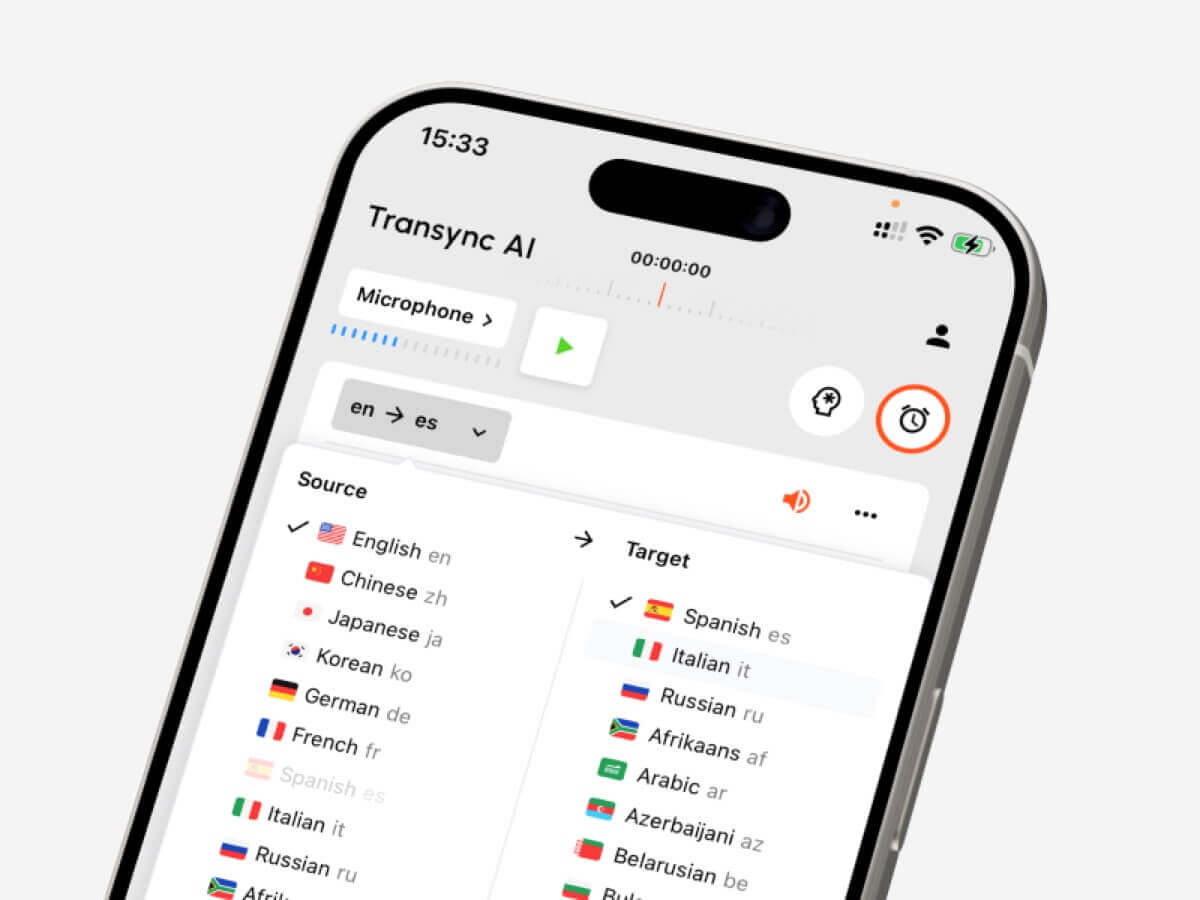
A Transync AI oferece suporte à tradução bidirecional entre os pares de idiomas suportados. Chinês, inglês, japonês, coreano, cantonês, espanhol, francês, alemão, italiano, russo e outros idiomas podem ser usados em fluxos de trabalho de comunicação em tempo real.
Os usuários podem analisar as opções disponíveis em Idiomas suportados pela IA Transync página.
 3. A tradução é rápida o suficiente para uma conversa?
 3. A tradução é rápida o suficiente para uma conversa?
Latência é o atraso entre a entrada de voz e a saída traduzida.
Alguns segundos podem não fazer diferença na tradução de um parágrafo. Em uma reunião, o atraso pode causar:
- Pessoas para interromper a saída traduzida
- As perguntas chegarão após a mudança de assunto.
- Os oradores devem repetir-se.
- Os participantes devem parar de contribuir.
- A reprodução de voz deve sobrepor-se à do próximo orador.
Para tradução em chinês em tempo real, avalie as legendas e a saída de voz separadamente. A saída de voz geralmente leva mais tempo porque a ferramenta precisa reconhecer a fala, traduzi-la e gerar um novo áudio.
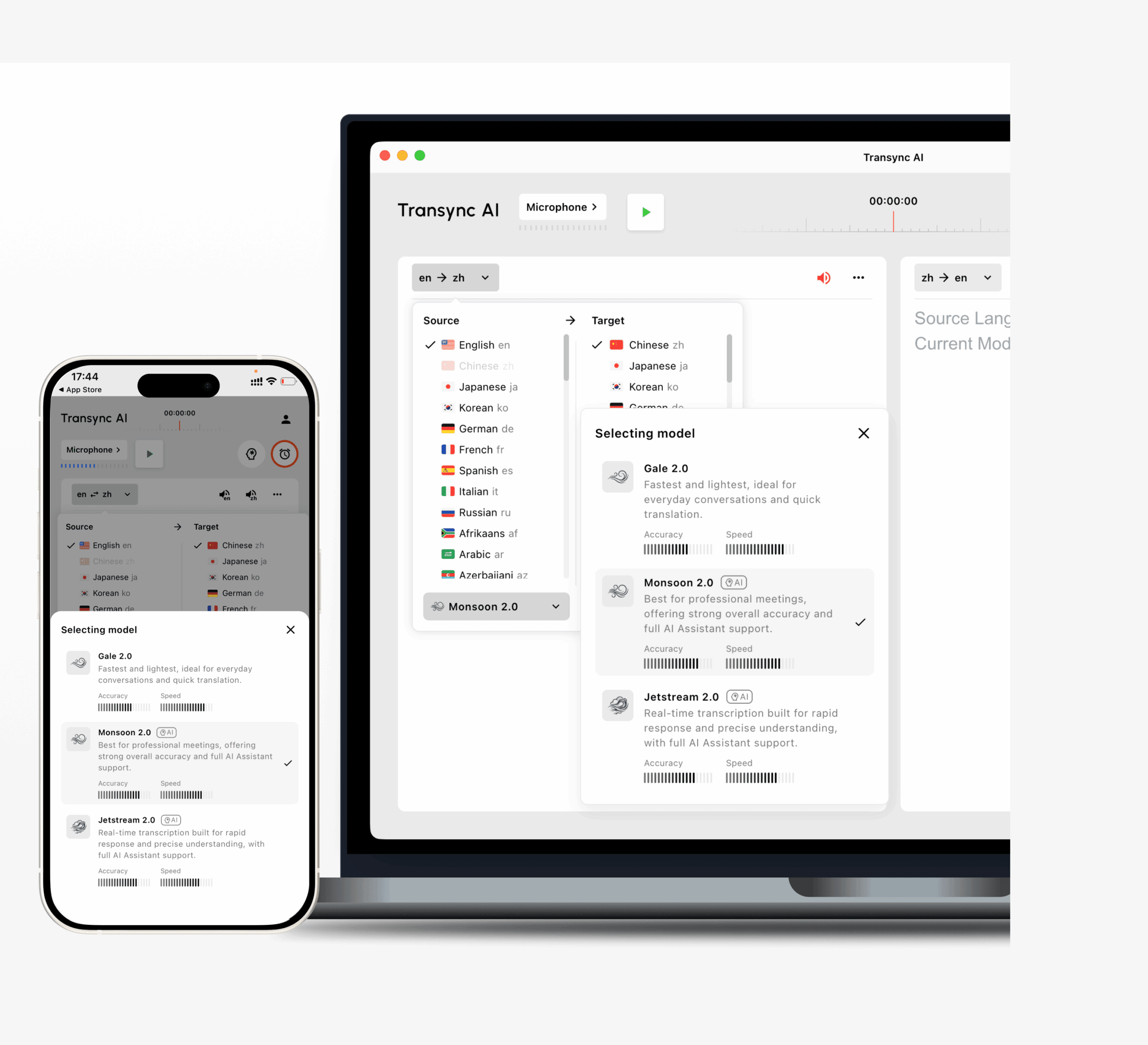
A Transync AI utiliza tecnologia de modelagem de fala de ponta a ponta para saída bilíngue de baixa latência. Seus modelos Gale 2.0, Monsoon 2.0 e Jetstream 2.0 são projetados para melhorar a velocidade, a estabilidade e a continuidade em conversas reais, incluindo frases curtas, fala em idiomas mistos, ruído e pausas irregulares.
4. É capaz de lidar com a alternância de códigos entre chinês e inglês?
Em ambientes de trabalho internacionais, os falantes frequentemente misturam idiomas.
Uma frase em chinês pode conter:
- Um nome de produto em inglês
- Uma abreviação técnica
- O nome de uma pessoa
- Um nome de departamento internacional
- Uma funcionalidade de software
- Um número de modelo ou componente
Por exemplo:
我们需要让 Equipe APAC na sexta-feira 之前确认 Modelo X200 的 versão de firmware。
Um sistema fraco pode traduzir incorretamente as palavras em inglês, tratar um número de produto como fala comum ou quebrar a frase em fragmentos sem relação entre si.
Ao testar softwares de tradução para chinês, inclua frases em vários idiomas em vez de apenas textos formais monolíngues.
5. Suporta palavras-chave e contexto?
O controle da terminologia é uma das características mais importantes para a tradução profissional.
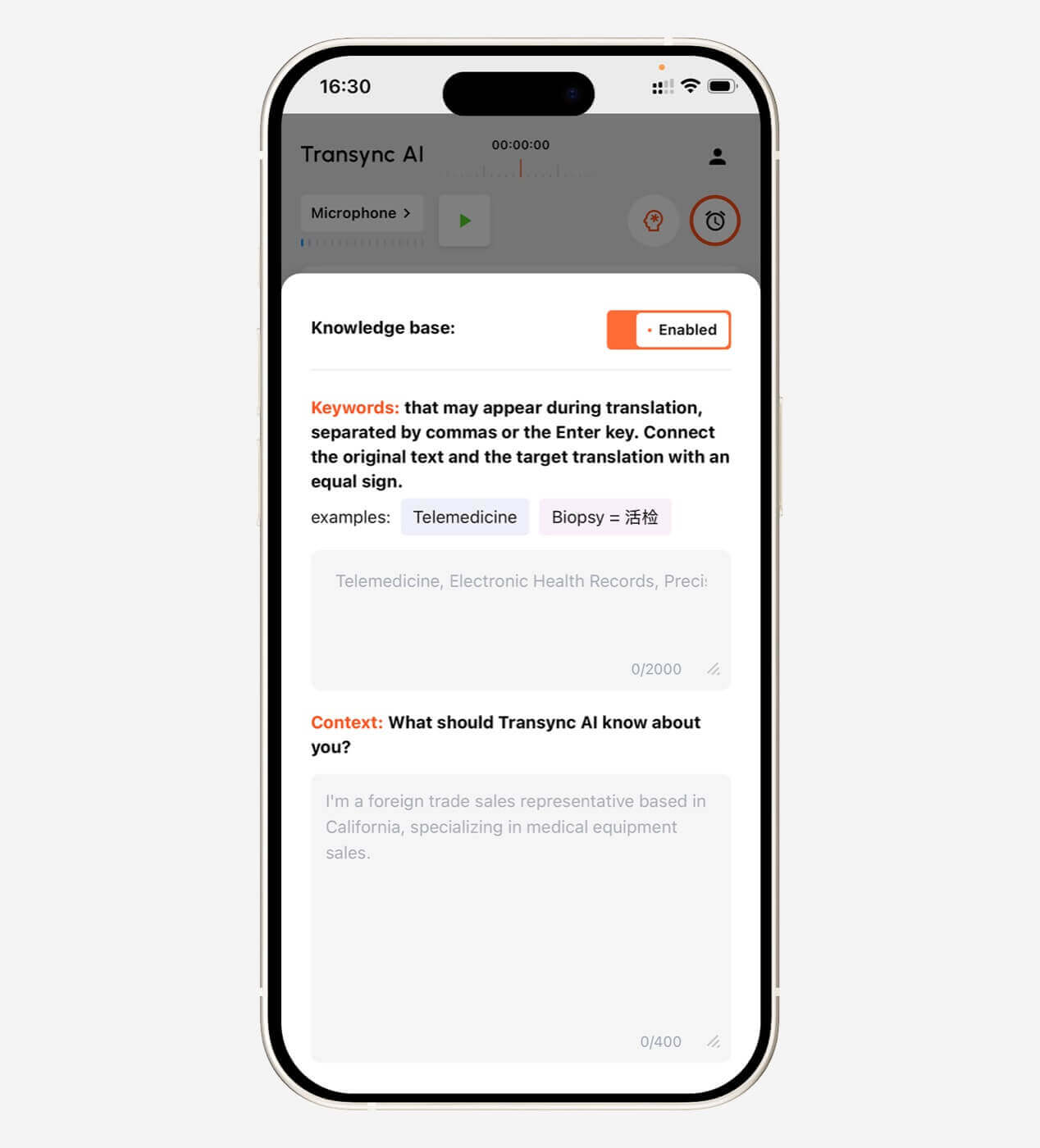
Antes de uma reunião, os usuários do Transync AI podem adicionar palavras-chave como:
- Transync AI = 同言翻译
- semicondutor = semicondutor
- inversor fotovoltaico = 光伏逆变器
- Modelo X200
- João Smith
- APAC
- otimização da cadeia de suprimentos
Os usuários também podem fornecer informações contextuais, por exemplo:
Esta é uma reunião de fornecedores sobre embalagens de semicondutores, capacidade de produção, inspeção de qualidade e cronogramas de entrega.
O contexto ajuda o sistema a determinar qual significado é mais provável quando uma palavra tem várias traduções possíveis.
Isso é especialmente útil para:
- Fabricação
- Tecnologia
- Pesquisa acadêmica
- Administração de saúde
- Financiar
- Energia renovável
- Vendas internacionais
- Treinamento de produto
Saiba mais em Contexto de palavras-chave do assistente de IA.
 6. Oferece legendas e saída de voz?
 6. Oferece legendas e saída de voz?
Alguns usuários preferem ler as traduções. Outros precisam ouvi-las.
Legendas bilíngues são úteis quando:
- A conversa inclui nomes e números.
- Os usuários querem comparar o original com a tradução.
- O ambiente é barulhento.
- Os participantes precisam de um registro visual.
- A reprodução de voz interromperia o orador.
A tradução de voz é útil quando:
- Os usuários não podem ficar olhando para uma tela o tempo todo.
- A tradução deve ser ouvida por outro participante.
- Uma apresentação precisa de tradução oral.
- O ouvinte lê chinês ou inglês lentamente.
- A conversa precisa fluir de forma mais natural.
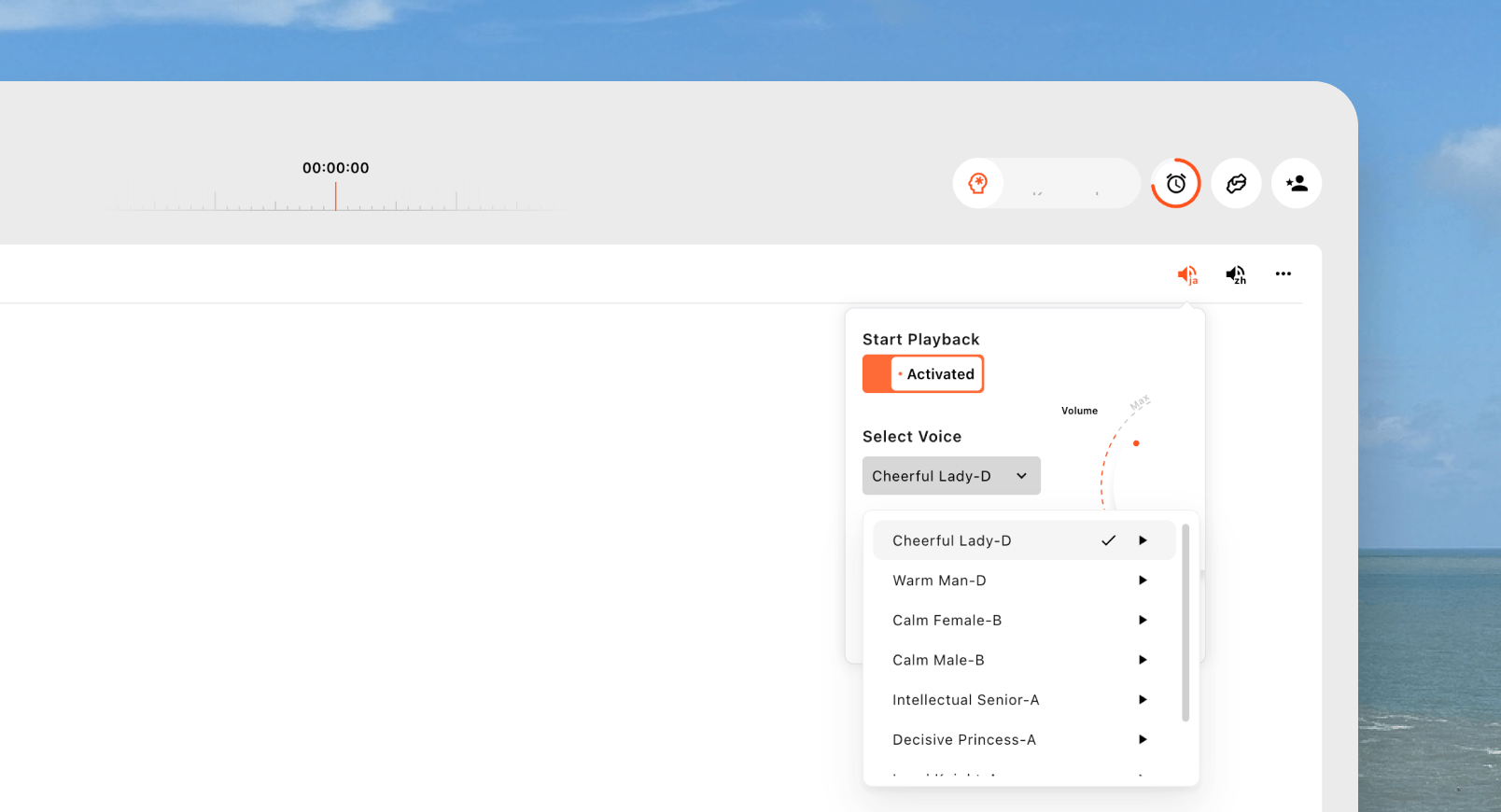
O Transync AI suporta legendas bilíngues lado a lado e transmissão de voz por IA. Ele também oferece diversas opções de voz, pré-visualização de voz e clonagem de voz para fluxos de trabalho compatíveis.
Mais detalhes estão disponíveis em Tradutor de voz com IA e saída de fala página.
 7. É compatível com a sua plataforma de reuniões?
 7. É compatível com a sua plataforma de reuniões?
Um tradutor de voz chinês pode funcionar bem em um telefone, mas mal em uma reunião online.
Para uso comercial, confirme se o software é compatível com:
- Zoom
- Microsoft Teams
- Google Meet
- Software de apresentação
- Webinars
- Plataformas de sala de aula online
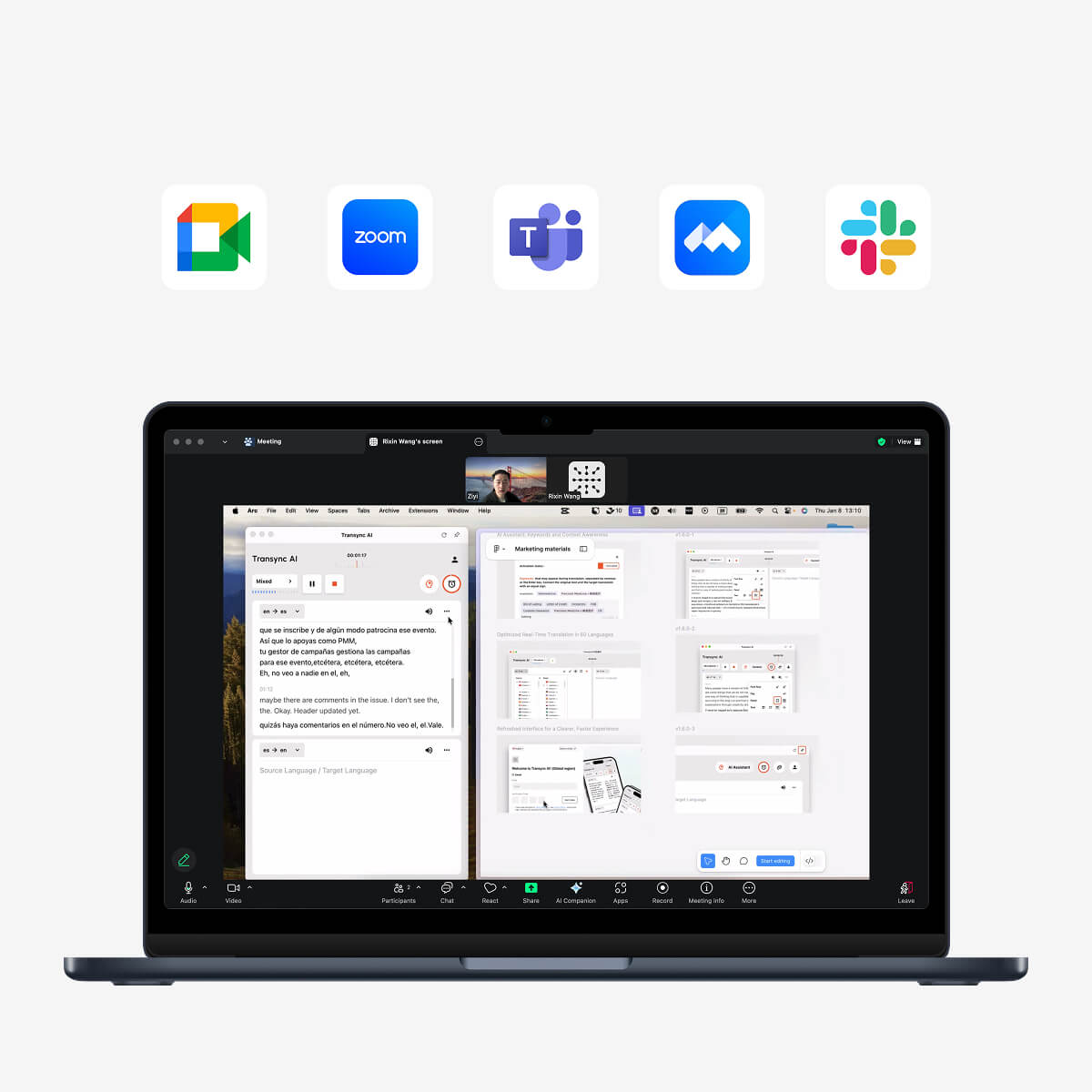
O Transync AI funciona como um software independente, e não como um plugin para reuniões. Ele pode ser executado em conjunto com o Zoom, Teams e Google Meet para fornecer legendas em tempo real e fluxos de trabalho de voz traduzidos.
Para reproduzir áudio em uma reunião, os usuários podem precisar configurar o áudio do sistema ou um microfone virtual.
Ver Tradução de reuniões ao vivo com IA para Zoom, Teams e Google Meet para o fluxo de trabalho da reunião.
8. Preserva informações úteis após a reunião?
A tradução simultânea resolve o problema imediato do idioma. As equipes ainda precisam de um registro posteriormente.
Algumas funções úteis para depois da reunião incluem:
- Transcrições
- Resumos
- Decisões importantes
- Itens de ação
- Registros pesquisáveis
- Revisão de terminologia
- Opções de exportação
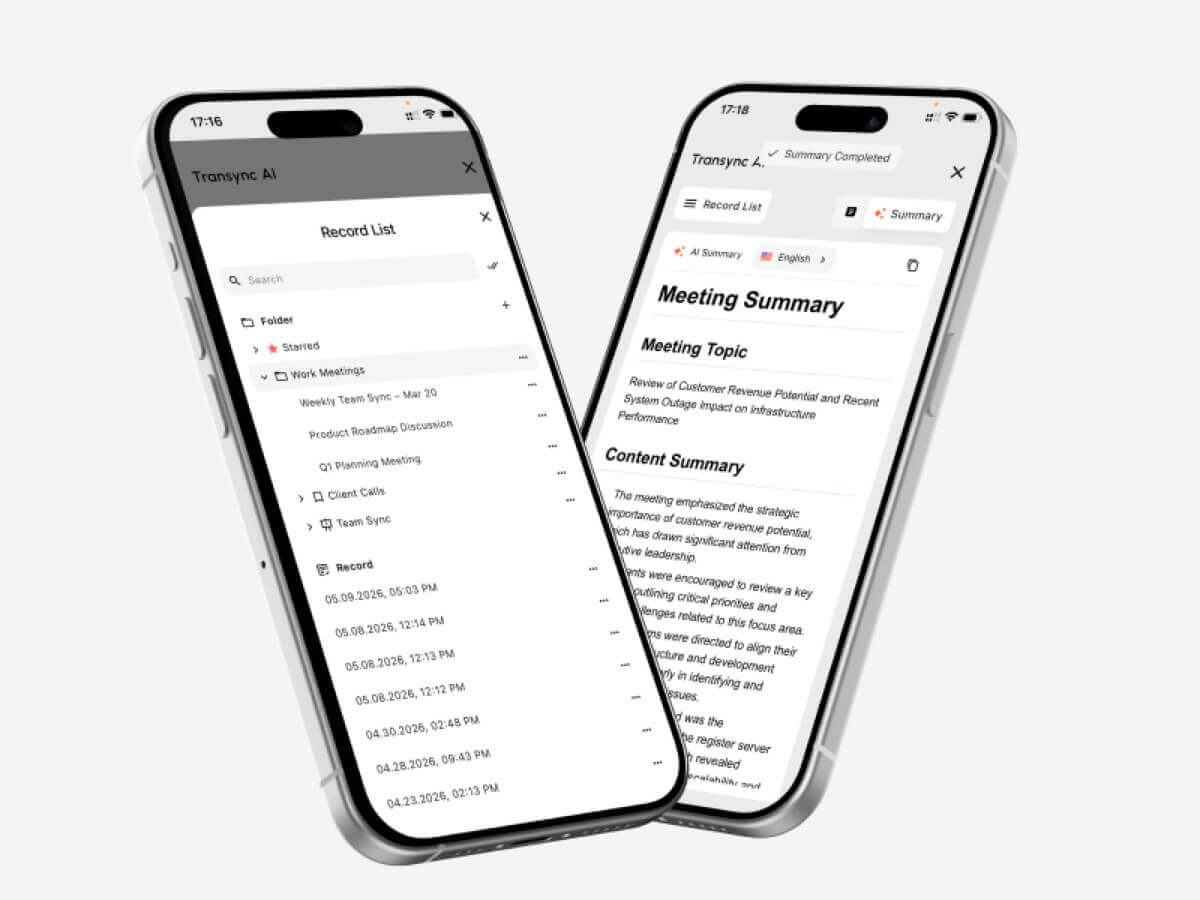
A Transync AI pode gerar notas de reunião automatizadas a partir de conversas traduzidas, ajudando os usuários a revisar os pontos principais em vez de tentar traduzir e fazer anotações ao mesmo tempo.
Visita Anotações de reuniões com IA e tradução em tempo real. Para mais detalhes.
 9. O preço é adequado ao seu uso real?
 9. O preço é adequado ao seu uso real?
O software de tradução para chinês pode cobrar da seguinte forma:
- Personagem
- Palavra
- Página
- Minuto de áudio
- Hora da tradução
- Assinatura mensal
- Licença de usuário ou empresarial
Para reuniões em tempo real, compare as horas incluídas em vez de olhar apenas para o preço mensal.
| Plano de IA da Transync | Preço | Tempo de tradução incluído | Melhor para |
| Livre | $0 | 40 minutos para novos usuários | Testes iniciais |
| Premium Pessoal | $8,99/mês | 10 horas durante o período de adesão ativa | Indivíduos e reuniões regulares |
| Empresa | $24,99/mês/assento | Até 40 horas por mês por assento | Equipes e organizações |
| Cartão de ponto | A partir de $0,70/hora | Tempo adicional de tradução | Usuários com demanda mensal variável |
As horas do cartão de ponto não expiram, mas só podem ser usadas enquanto a assinatura estiver ativa.
Antes de assinar, estime o volume mensal de suas reuniões. Um usuário com duas chamadas curtas para fornecedores tem necessidades diferentes de uma equipe que realiza reuniões multilíngues diárias.
Software de tradução de chinês da Scenario
A tabela abaixo resume quais características são mais importantes em diferentes situações.
| Cenário | Desafio principal | Funcionalidades prioritárias |
| Ligação de fornecedor chinês | Termos do produto, números, datas de entrega | Palavras-chave, legendas, baixa latência |
| reunião de vendas bilíngue (chinês-inglês) | Conversa bidirecional e resposta natural | Tradução bidirecional, saída de voz |
| Aula de mandarim online | Explicações rápidas e sessões longas. | Legendas fixas, notas, legendas flutuantes |
| conversa com cliente cantonês | Suporte regional à fala | Reconhecimento e tradução bidirecional de cantonês |
| Treinamento técnico | Terminologia especializada | Contexto, glossário, exibição bilíngue |
| Webinar internacional | Discurso contínuo e slides de apresentação | Legendas flutuantes e tradução estável para sessões longas. |
| Reunião legal ou médica | Graves consequências dos erros | Intérprete humano profissional |
Um teste prático antes de comprar
Não avalie um software de tradução para chinês apenas com base em uma breve demonstração promocional.
Execute um teste que simule o seu uso real.
Roteiro de teste
Incluir:
- Uma breve introdução
- Uma explicação técnica ou sobre o produto
- discurso misto chinês-inglês
- Nomes e termos da empresa
- Datas, preços, percentagens e números de modelo.
- Uma troca de perguntas e respostas
- Um orador com fala mais rápida
- Ruído de fundo mínimo
Cartão de avaliação
| Métrica | O que verificar |
| Reconhecimento | O software captou a fala original corretamente? |
| Significado | A tradução preservou a mensagem pretendida? |
| Latência | O resultado chegou com rapidez suficiente para que pudéssemos discuti-lo? |
| Terminologia | Os nomes e os termos técnicos foram tratados de forma consistente? |
| Legendas | As legendas eram fáceis de ler? |
| Voz | A saída foi clara e natural? |
| Estabilidade | O desempenho se manteve consistente durante uma sessão mais longa? |
| Fluxo de trabalho | Será que os usuários poderiam se concentrar na reunião em vez de gerenciar a ferramenta? |
Teste as direções do chinês para o inglês e do inglês para o chinês. O desempenho pode não ser idêntico em ambas as direções.
Chinês simplificado vs. Chinês tradicional
O chinês simplificado e o chinês tradicional compartilham grande parte da mesma língua, mas usam sistemas de caracteres diferentes e, às vezes, vocabulário regional diferente.
Para traduções escritas, verifique se o software permite que os usuários selecionem a saída apropriada.
Exemplos de diferenças regionais podem aparecer em:
- Termos tecnológicos
- Vocabulário de transporte
- Texto oficial
- Terminologia de produto
- Expressões do dia a dia
Na tradução de áudio, o idioma falado e o formato da legenda escrita são considerações separadas. Um falante de mandarim pode preferir legendas em chinês simplificado ou chinês tradicional, dependendo do público.
Quando essa distinção for importante, confirme as opções exatas de idioma e script do software antes da compra.
Tradução de mandarim para cantonês
O mandarim e o cantonês não são simplesmente dois sotaques de uma mesma língua falada.
Eles diferem em:
- Pronúncia
- Sistemas de tons
- Vocabulário comum
- Partículas de frase
- Expressões do dia a dia
- Gramática falada
Uma ferramenta desenvolvida principalmente para mandarim pode apresentar desempenho ruim com áudio em cantonês.
A Transync AI lista o chinês e o cantonês separadamente entre os idiomas suportados, o que é útil para usuários que se comunicam na China continental, em Hong Kong e em comunidades de língua cantonesa.
Mesmo assim, as equipes devem testar os palestrantes, microfones e vocabulário que esperam encontrar.
Limitações comuns dos softwares de tradução para chinês
Nenhum tradutor de IA é preciso em todos os ambientes.
O desempenho pode cair quando:
- Várias pessoas falam ao mesmo tempo.
- O microfone está longe da caixa de som.
- O quarto tem um eco forte.
- A conexão com a internet está instável.
- A fala contém gírias locais.
- As frases estão incompletas.
- Os falantes alternam entre idiomas rapidamente.
- Os nomes não estão incluídos na lista de palavras-chave.
- Os termos técnicos têm múltiplos significados.
- Falta contexto importante.
A Transync AI também apresenta diversas limitações específicas do produto:
- O modo offline não está disponível.
- O reconhecimento de imagem não é suportado.
- A tradução de texto estático não é seu principal caso de uso.
- É um software independente, e não um plugin para reuniões.
- O uso é contabilizado cumulativamente em todos os dispositivos da mesma conta.
- A qualidade do áudio e as condições da rede ainda afetam o desempenho.
Essas limitações fazem com que seja mais adequado para tradução simultânea de fala e reuniões do que para documentos digitalizados, tradução de imagens ou localização completa de sites.
Quando você deve usar um intérprete humano de chinês?
O software de IA pode auxiliar em reuniões de rotina, aulas, ligações de vendas e discussões internas. No entanto, não deve substituir automaticamente um intérprete qualificado quando erros puderem ter consequências graves.
Utilize um intérprete profissional para:
- Diagnóstico ou tratamento médico
- Processos judiciais
- Entrevistas de imigração
- Assinatura de contrato
- Discussões regulatórias
- negociações de alto valor
- Instruções de segurança
- Conflitos delicados entre funcionários
- Comunicação diplomática
Uma abordagem híbrida costuma ser prática: usar IA para comunicação rotineira frequente e intérpretes humanos para eventos selecionados de alto risco.
Perguntas frequentes: Software de tradução para chinês
Qual é o melhor software de tradução para chinês?
O melhor software depende da tarefa. Tradutores de texto funcionam bem para conteúdo escrito curto, ferramentas de documentos são ideais para arquivos e tradutores de voz em tempo real são mais adequados para reuniões e conversas. O Transync AI foi projetado principalmente para fala ao vivo, legendas bilíngues, voz traduzida e anotações de reuniões.
É possível que um software de tradução para chinês traduza reuniões ao vivo?
Sim. Um tradutor online em tempo real pode processar a fala durante reuniões no Zoom, Microsoft Teams ou Google Meet e exibir legendas traduzidas. Algumas ferramentas também podem gerar saída de voz traduzida.
O Transync AI oferece suporte à tradução de chinês para inglês?
Sim. O Transync AI oferece suporte à tradução bidirecional em tempo real entre chinês, inglês e outros idiomas compatíveis.
O Transync AI oferece suporte ao cantonês?
Sim. O cantonês está listado separadamente do chinês entre os idiomas suportados.
O software consegue lidar com termos técnicos chineses?
Sim, é possível, mas a terminologia especializada deve ser testada. O Transync AI permite que os usuários adicionem palavras-chave e informações contextuais para melhorar o tratamento de nomes de produtos, nomes pessoais, abreviações e termos da indústria.
É possível traduzir chinês simplificado e tradicional?
As ferramentas de idioma podem lidar com ambos os sistemas de caracteres, mas as opções exatas de exibição e seleção variam de acordo com o produto e a plataforma. Confirme o roteiro necessário no software antes de uma reunião importante.
A tradução automática de chinês é adequada para uso jurídico ou médico?
A IA pode auxiliar na compreensão geral, mas a interpretação humana profissional é recomendada quando erros podem afetar direitos legais, saúde, finanças ou segurança.
O Transync AI funciona offline?
Não. O Transync AI requer uma conexão com a internet e atualmente não oferece tradução offline.
Decisão final: Escolha o software com base na conversa.
A direita Software de tradução para chinês Deve corresponder ao problema de comunicação que você realmente enfrenta.
Para frases curtas, um tradutor de texto geral pode ser suficiente. Para documentos, escolha uma ferramenta projetada para preservar a formatação. Para reuniões com fornecedores, aulas online, demonstrações de produtos e colaboração entre falantes de chinês e inglês, priorize baixa latência, tradução bidirecional, legendas legíveis, saída de voz, controle de terminologia, compatibilidade com diferentes formatos de reunião e anotações pós-reunião.
A Transync AI combina tradução em tempo real em 60 idiomas com suporte para chinês e cantonês, legendas bilíngues, transmissão de voz por IA, clonagem de voz, palavras-chave e contexto, anotações de reuniões por IA e legendas flutuantes.
Isso torna o recurso mais relevante quando a tradução para chinês precisa ocorrer durante uma conversa ao vivo, e não depois que a conversa já terminou.
Para começar, visite Transync AI, explore o ferramenta de tradução em tempo real, Ou faça o download do aplicativo para o seu dispositivo preferido.