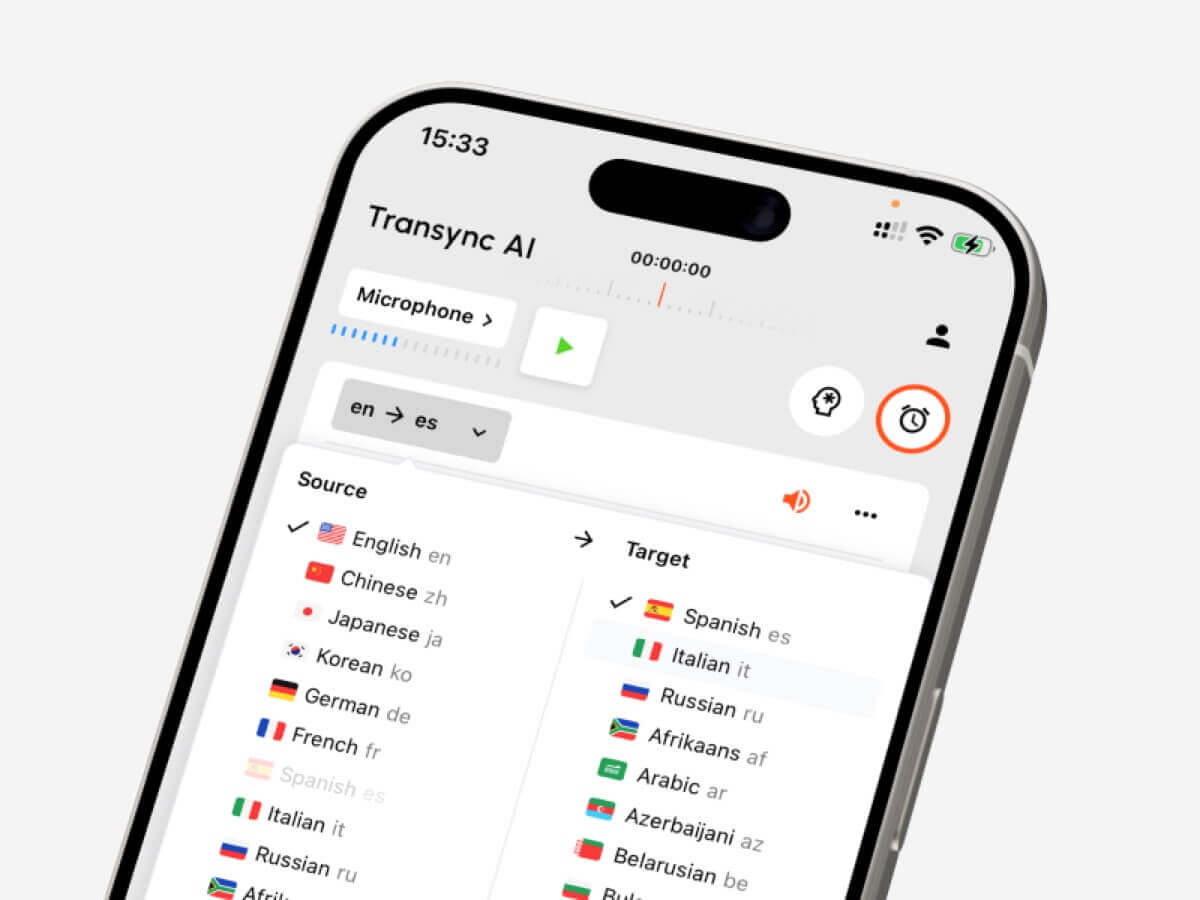

Panduan perangkat lunak penerjemahan bahasa Mandarin untuk tahun 2026: bandingkan fitur teks, suara, rapat, terminologi, harga, dan privasi sebelum memilih alat.
Memilih Perangkat lunak penerjemahan bahasa Mandarin Terdengar sederhana sampai Anda mencoba menggunakannya dalam percakapan nyata.
Kalimat pendek seperti “Pengiriman akan tiba Jumat depan” mungkin mudah diterjemahkan. Pertemuan langsung dengan pemasok berbeda. Pembicara mungkin menggunakan kode produk, nama perusahaan, angka, aksen daerah, kalimat yang tidak lengkap, dan istilah teknis. Mereka mungkin beralih antara bahasa Mandarin dan Inggris tanpa peringatan atau mengharapkan jawaban sebelum kalimat yang diterjemahkan selesai.
Oleh karena itu, perangkat lunak terbaik bukanlah selalu alat dengan daftar bahasa terpanjang. Yang terbaik adalah alat yang sesuai dengan konten, konteks komunikasi, dan tingkat risiko yang terlibat.
Panduan pembeli ini menjelaskan jenis-jenis utama perangkat lunak terjemahan bahasa Mandarin, fitur-fitur penting dalam komunikasi langsung, keterbatasan umum, dan cara menentukan apakah alat seperti Transync AI sesuai dengan alur kerja Anda.
Jawaban Singkat: Apa Itu Perangkat Lunak Penerjemahan Bahasa Mandarin?
Perangkat lunak penerjemahan bahasa Mandarin Mengonversi bahasa Mandarin tertulis atau lisan ke bahasa lain, atau menerjemahkan bahasa lain ke bahasa Mandarin.
Tergantung pada produknya, mungkin mendukung:
- Teks Bahasa Mandarin Sederhana
- Teks Tionghoa Tradisional
- pidato bahasa Mandarin
- Bahasa Kanton
- Terjemahan Bahasa Inggris ke Bahasa Mandarin
- Terjemahan dari bahasa Mandarin ke bahasa Inggris
- Teks terjemahan dwibahasa secara real-time
- Hasil terjemahan suara
- Terjemahan dokumen atau halaman web
- Terjemahan rapat daring
- Transkrip dan catatan rapat AI
Fungsi-fungsi ini tidak dapat saling menggantikan.
Alat penerjemahan dokumen mungkin berguna untuk kontrak atau laporan, tetapi tidak cocok untuk panggilan Zoom langsung. Penerjemah perjalanan mungkin dapat menangani pertanyaan singkat, tetapi kurang stabil, kurang memiliki kontrol terminologi, atau alur kerja rapat yang dibutuhkan untuk diskusi teknis.
Sebelum membandingkan merek, tentukan terlebih dahulu apa yang sebenarnya perlu Anda terjemahkan.
Jenis Perangkat Lunak Terjemahan Bahasa Mandarin Apa yang Anda Butuhkan?
Kategori yang tepat bergantung pada input dan output yang diinginkan.
| Jenis perangkat lunak | Masukan utama | Keluaran utama | Penggunaan terbaik |
|---|---|---|---|
| Penerjemah teks | Teks yang diketik atau ditempel | Teks terjemahan | Pesan dan kutipan singkat |
| Penerjemah dokumen | File PDF, Word, atau presentasi | Dokumen terjemahan | Laporan dan berkas bisnis |
| Penerjemah situs web | Konten halaman web | Halaman web yang dilokalkan | Membaca atau menerbitkan situs web |
| Penerjemah gambar | Foto, tanda, dan tangkapan layar | Teks visual yang diterjemahkan | Perjalanan dan materi cetak |
| Penerjemah suara bahasa Mandarin | Siaran langsung | Teks atau audio terjemahan | Percakapan tatap muka |
| Penerjemah rapat bahasa Mandarin | Audio rapat | Teks langsung, suara, dan catatan | Zoom, Teams, dan Google Meet |
| Penerjemah atau juru bahasa manusia | Bahasa tertulis atau lisan | Terjemahan profesional | Komunikasi berisiko tinggi atau sangat rumit. |
Transync AI berfokus terutama pada percakapan langsung, rapat, subtitle dwibahasa, output suara terjemahan, dukungan terminologi, dan catatan pasca-rapat. Platform ini tidak dirancang sebagai penerjemah gambar atau platform penerjemahan dokumen statis umum.
Mengapa Penerjemahan Bahasa Mandarin Lebih Rumit daripada Mengganti Kata?
Penerjemahan bahasa Mandarin melibatkan lebih dari sekadar mencocokkan kata demi kata.
Bahasa Mandarin tidak menggunakan spasi dengan cara yang sama seperti bahasa Inggris.
Bahasa Mandarin tertulis biasanya tidak memisahkan setiap kata dengan spasi. Perangkat lunak penerjemahan harus mengidentifikasi di mana satu kata atau frasa berakhir dan kata atau frasa lain dimulai.
Serangkaian karakter dapat diinterpretasikan secara berbeda tergantung pada konteksnya. Segmentasi yang salah dapat mengubah makna keseluruhan kalimat.
Topik-topik Sering Diabaikan
Penutur bahasa Mandarin mungkin menghilangkan subjek ketika hal itu sudah dipahami dari konteks.
Sebagai contoh, sebuah kalimat secara efektif dapat berarti:
- “Saya sudah mengirimkannya.”
- “Dia sudah mengirimkannya.”
- “Tim sudah mengirimkannya.”
Alat penerjemahan harus dapat menyimpulkan subjek yang dimaksud dari percakapan di sekitarnya.
Nada dan Kesopanan Mungkin Tersirat
Bahasa Inggris sering kali mengisyaratkan nada melalui frasa eksplisit seperti "could you," "would you mind," atau "please." Bahasa Mandarin mungkin mengekspresikan kesopanan melalui konteks, pilihan kata, partikel, dan hubungan antar penutur.
Terjemahan harfiah mungkin secara teknis benar tetapi terdengar terlalu lugas, terlalu formal, atau tidak alami.
Satu Istilah Dapat Memiliki Beberapa Terjemahan yang Sah
Istilah bisnis dan teknis seringkali bergantung pada industrinya.
Sebagai contoh, "model" dapat merujuk pada:
- Model AI
- Model produk
- Model bisnis
- Model statistik
- Prototipe fisik
Tanpa konteks, perangkat lunak mungkin memilih arti yang salah.
Bahasa Mandarin dan Kanton Tidak Sama (Input Suara)
“Bahasa Tionghoa” adalah label yang luas. Bahasa Mandarin dan Kanton berbeda dalam pengucapan, kosakata, dan ekspresi sehari-hari.
Pengguna yang bekerja dengan pemasok dari Tiongkok daratan mungkin memerlukan terjemahan bahasa Mandarin. Pengguna yang berkomunikasi dengan orang-orang di Hong Kong atau beberapa bagian Tiongkok selatan mungkin juga memerlukan dukungan bahasa Kanton.
Saat mengevaluasi perangkat lunak, periksa variasi bahasa lisan yang didukungnya secara tepat, jangan hanya mengandalkan kata "Bahasa Mandarin".“
Daftar Periksa Pembeli untuk Perangkat Lunak Penerjemahan Bahasa Mandarin
Gunakan daftar periksa berikut sebelum memilih alat.
1. Apakah Ini Mendukung Kasus Penggunaan Khusus Anda di Bahasa Mandarin?
Mulailah dengan empat pertanyaan:
- Apakah Anda menerjemahkan ke dalam bahasa Mandarin atau dari bahasa Mandarin?
- Apakah Anda membutuhkan Bahasa Mandarin Sederhana, Bahasa Mandarin Tradisional, Bahasa Mandarin, atau Bahasa Kanton?
- Apakah inputnya berupa teks tertulis, ucapan langsung, rekaman audio, atau dokumen?
- Apakah penerjemahan perlu dilakukan secara real-time?
Misalnya:
| Persyaratan | Alat yang sesuai |
| Terjemahkan email berbahasa Inggris ke dalam bahasa Mandarin. | Penerjemah teks |
| Terjemahkan PDF berbahasa Mandarin ke dalam bahasa Inggris. | Penerjemah dokumen |
| Berbicaralah dengan klien yang berbahasa Mandarin. | Penerjemah suara dua arah |
| Ikuti rapat online berbahasa Kanton. | Penerjemah ucapan langsung dengan dukungan bahasa Kanton. |
| Terjemahkan manual produk berbahasa Mandarin | Alur kerja dokumen profesional |
| Terjemahkan negosiasi hukum | Penerjemah manusia yang berkualifikasi |
Suatu produk mungkin mendukung bahasa Mandarin tanpa mendukung setiap format atau variasi tuturan regional.
2. Bisakah alat ini menerjemahkan ke kedua arah?
Penerjemahan satu arah sudah cukup untuk membaca. Percakapan membutuhkan penerjemahan dua arah.
Dalam rapat berbahasa Mandarin dan Inggris, satu peserta mungkin berbicara dalam bahasa Mandarin sementara peserta lain menjawab dalam bahasa Inggris. Jika perangkat lunak hanya menerjemahkan satu arah, rapat tersebut tetap bergantung pada salah satu peserta yang beralih bahasa.
Transync AI mendukung penerjemahan dua arah di antara pasangan bahasa yang didukungnya. Bahasa Mandarin, Inggris, Jepang, Korea, Kanton, Spanyol, Prancis, Jerman, Italia, Rusia, dan bahasa lainnya dapat digunakan dalam alur kerja komunikasi waktu nyata.
Pengguna dapat meninjau opsi yang tersedia pada Bahasa yang didukung oleh Transynch AI halaman.
 3. Apakah Terjemahannya Cukup Cepat untuk Percakapan?
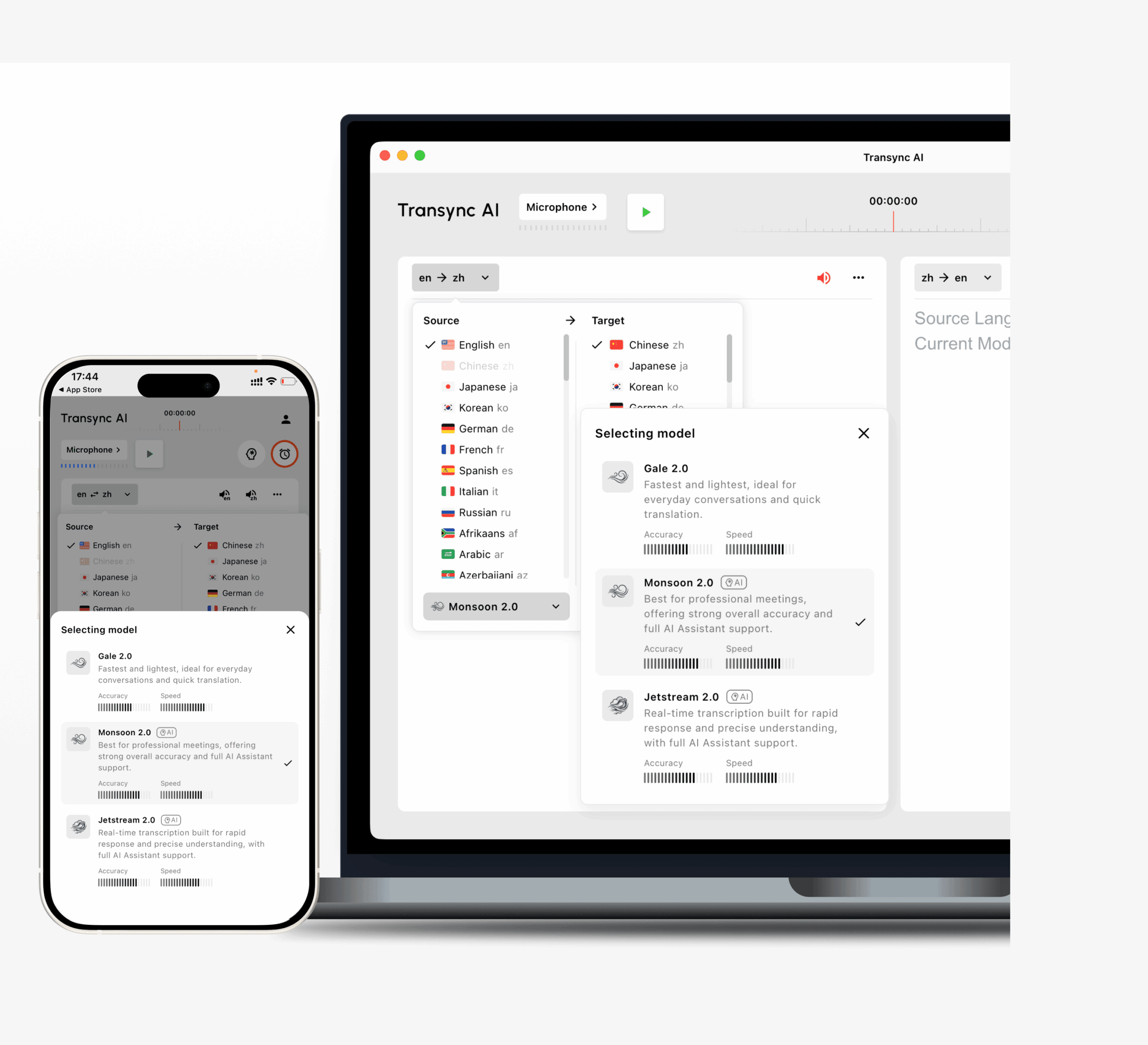 3. Apakah Terjemahannya Cukup Cepat untuk Percakapan?
Latensi adalah penundaan antara input suara dan output terjemahan.
Beberapa detik mungkin tidak menjadi masalah saat menerjemahkan sebuah paragraf. Dalam sebuah rapat, keterlambatan dapat menyebabkan:
- Orang-orang menginterupsi hasil terjemahan.
- Pertanyaan akan diajukan setelah topik berubah.
- Para pembicara diminta untuk mengulangi ucapan mereka.
- Para peserta diminta untuk berhenti memberikan kontribusi.
- Pemutaran suara akan tumpang tindih dengan pembicara berikutnya.
Untuk terjemahan bahasa Mandarin secara real-time, evaluasi subtitle dan output suara secara terpisah. Output suara biasanya membutuhkan waktu lebih lama karena alat tersebut harus mengenali ucapan, menerjemahkannya, dan menghasilkan audio baru.
Transync AI menggunakan teknologi model ucapan ujung-ke-ujung untuk keluaran dwibahasa dengan latensi rendah. Model Gale 2.0, Monsoon 2.0, dan Jetstream 2.0 dirancang untuk meningkatkan kecepatan, stabilitas, dan kontinuitas dalam percakapan nyata, termasuk kalimat pendek, ucapan campuran bahasa, kebisingan, dan jeda yang tidak teratur.
4. Bisakah Sistem Ini Menangani Alih Kode Bahasa Mandarin-Inggris?
Di lingkungan kerja internasional, penutur sering mencampuradukkan bahasa.
Sebuah kalimat bahasa Mandarin dapat berisi:
- Nama produk dalam bahasa Inggris
- Singkatan teknis
- Nama seseorang
- Nama departemen internasional
- Fitur perangkat lunak
- Nomor model atau komponen
Misalnya:
我们需要让 Tim APAC 在 Friday 之前确认 Model X200 的 versi firmware。
Sistem yang lemah dapat salah menerjemahkan kata-kata bahasa Inggris, memperlakukan nomor produk sebagai ucapan biasa, atau memecah kalimat menjadi fragmen yang tidak berhubungan.
Saat menguji perangkat lunak penerjemahan bahasa Mandarin, sertakan kalimat campuran bahasa, bukan hanya naskah formal monolingual.
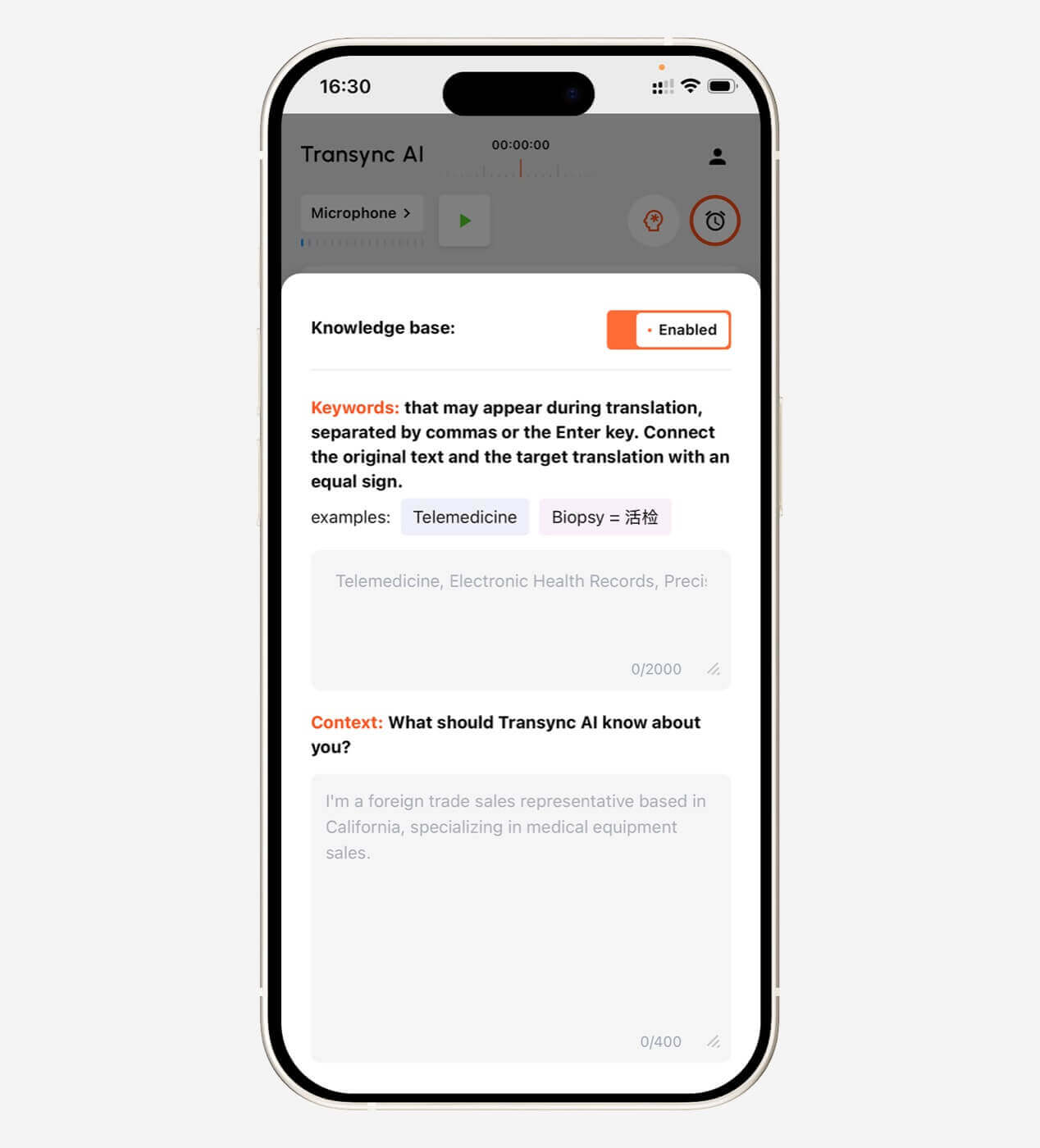
5. Apakah Mendukung Kata Kunci dan Konteks?
Pengendalian terminologi adalah salah satu fitur terpenting untuk penerjemahan profesional.
Sebelum rapat, pengguna Transynch AI dapat menambahkan kata kunci seperti:
- Transync AI = 同言翻译
- semikonduktor = 半导体
- inverter fotovoltaik = 光伏逆变器
- Model X200
- John Smith
- APAC
- optimalisasi rantai pasokan
Pengguna juga dapat memberikan latar belakang kontekstual, misalnya:
Ini adalah pertemuan pemasok mengenai pengemasan semikonduktor, kapasitas produksi, inspeksi kualitas, dan jadwal pengiriman.
Konteks membantu sistem menentukan makna mana yang paling mungkin ketika sebuah kata memiliki beberapa kemungkinan terjemahan.
Ini sangat berguna terutama untuk:
- Manufaktur
- Teknologi
- Penelitian akademis
- Administrasi perawatan kesehatan
- Keuangan
- Energi terbarukan
- Penjualan internasional
- Pelatihan produk
Pelajari lebih lanjut dari Kata Kunci Asisten AI Konteks.
 6. Apakah menyediakan teks terjemahan dan output suara sekaligus?
 6. Apakah menyediakan teks terjemahan dan output suara sekaligus?
Sebagian pengguna lebih suka membaca terjemahan. Sebagian lainnya perlu mendengarnya.
Teks terjemahan dwibahasa berguna ketika:
- Percakapan tersebut mencakup nama dan angka.
- Pengguna ingin membandingkan teks asli dengan terjemahannya.
- Lingkungannya berisik
- Peserta membutuhkan catatan visual.
- Pemutaran suara akan mengganggu pembicara.
Output suara yang diterjemahkan berguna ketika:
- Pengguna tidak dapat terus-menerus menatap layar.
- Terjemahan tersebut harus didengar oleh peserta lain.
- Presentasi membutuhkan terjemahan lisan.
- Pendengar membaca bahasa Mandarin atau Inggris dengan perlahan.
- Percakapan perlu mengalir lebih alami.
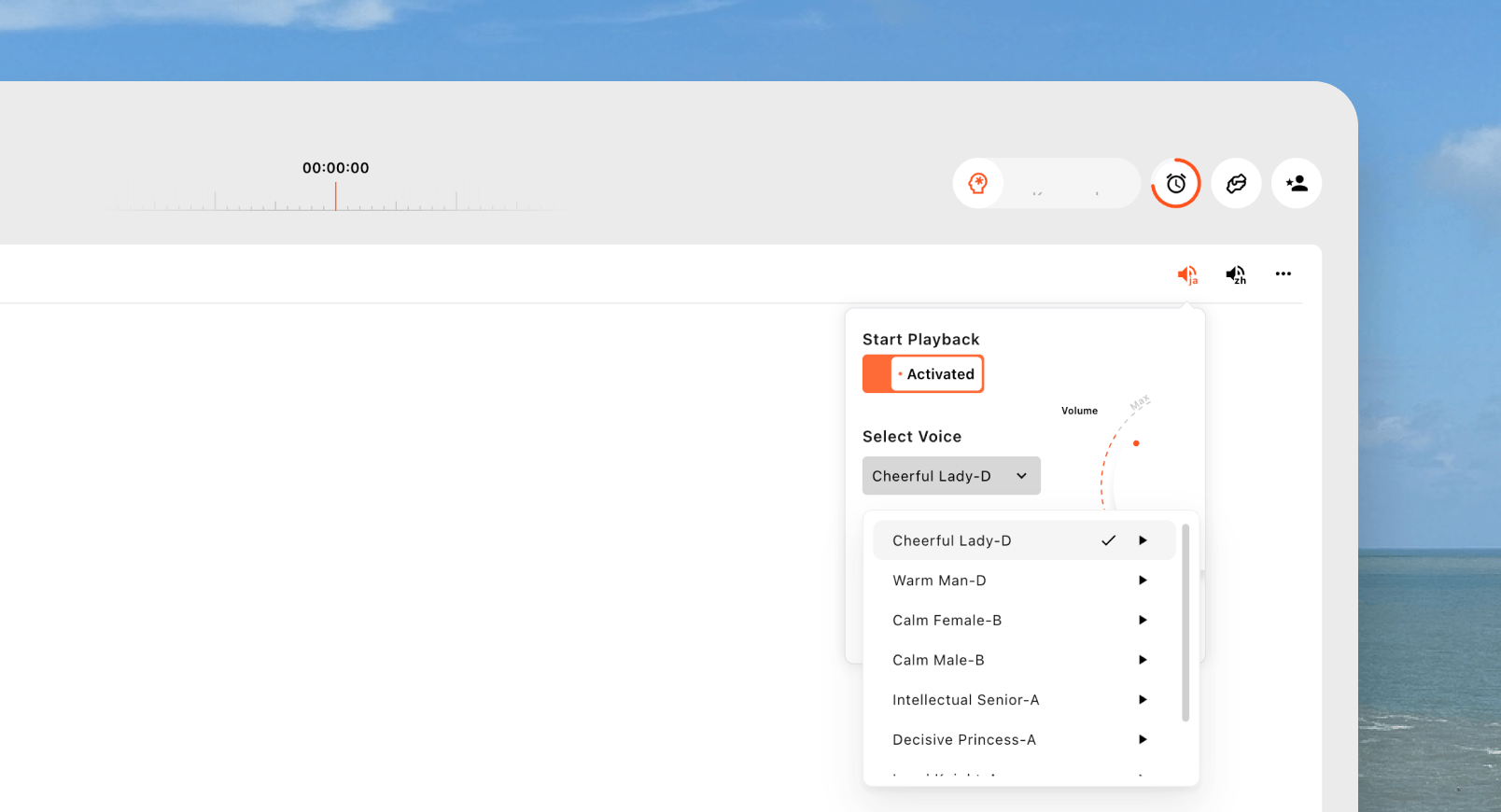
Transync AI mendukung subtitle berdampingan dwibahasa dan siaran suara AI. Ia juga menyediakan berbagai pilihan suara, pratinjau suara, dan kloning suara untuk alur kerja yang didukung.
Informasi lebih detail tersedia di Penerjemah Suara AI & Keluaran Ucapan halaman.
 7. Apakah Ini Dapat Digunakan dengan Platform Rapat Anda?
 7. Apakah Ini Dapat Digunakan dengan Platform Rapat Anda?
Penerjemah suara bahasa Mandarin mungkin berfungsi dengan baik di telepon tetapi kurang efektif dalam rapat daring.
Untuk penggunaan bisnis, pastikan apakah perangkat lunak tersebut dapat bekerja bersamaan dengan:
- Zoom
- Microsoft Teams
- Google Meet
- Perangkat lunak presentasi
- Seminar Web
- Platform kelas daring
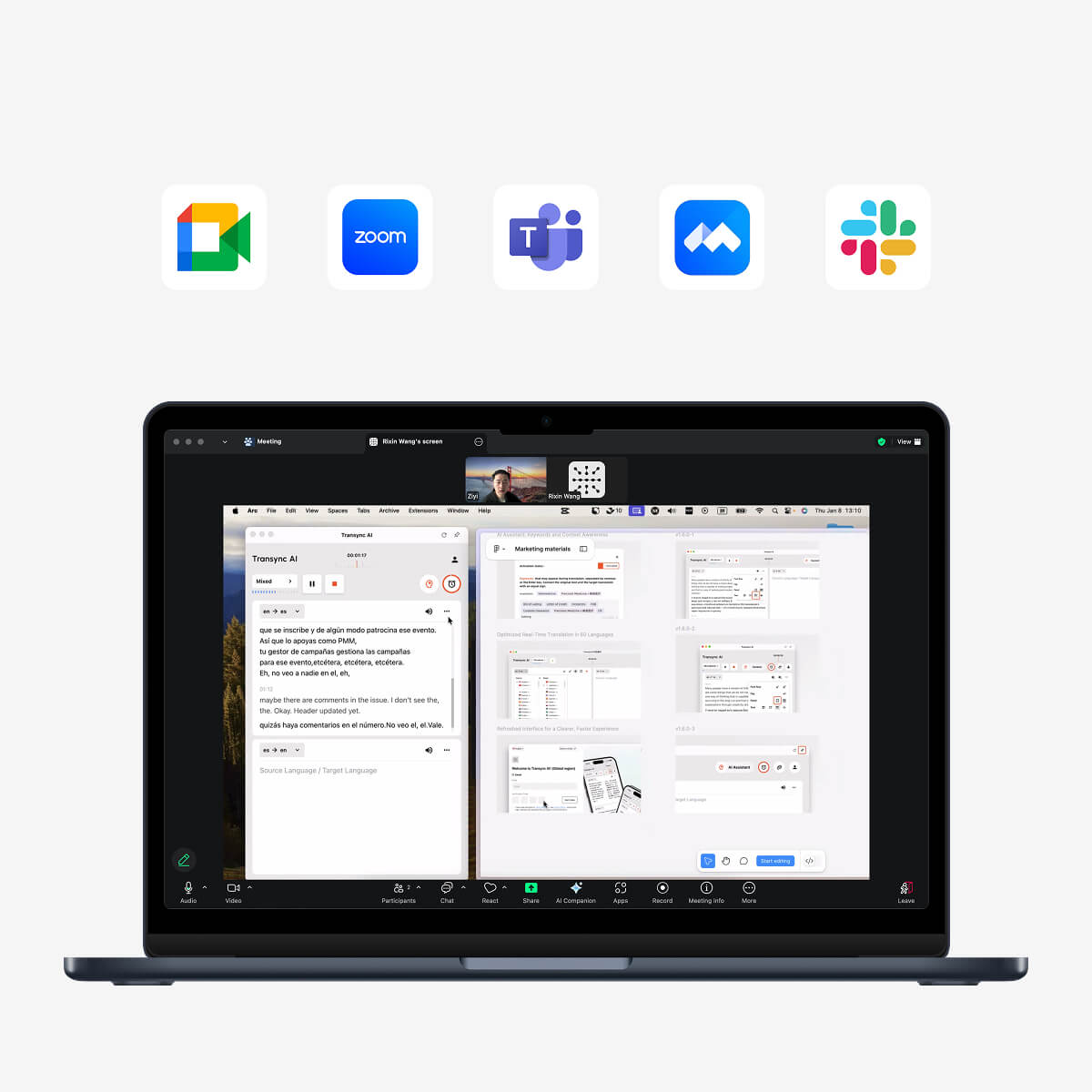
Transync AI beroperasi sebagai perangkat lunak mandiri, bukan sebagai plugin rapat. Ia dapat berjalan bersama Zoom, Teams, dan Google Meet untuk menyediakan teks terjemahan dan alur kerja suara secara real-time.
Untuk pemutaran suara dalam rapat, pengguna mungkin perlu mengkonfigurasi audio sistem atau mikrofon virtual.
Melihat Terjemahan Rapat Langsung AI untuk Zoom, Teams, dan Google Meet untuk alur kerja rapat.
8. Apakah Informasi yang Berguna Tersimpan Setelah Pertemuan?
Terjemahan langsung menyelesaikan masalah bahasa yang ada saat itu juga. Tim tetap membutuhkan catatan setelahnya.
Fungsi-fungsi bermanfaat setelah rapat meliputi:
- Transkrip
- Ringkasan
- Keputusan penting
- Tindakan yang perlu dilakukan
- Catatan yang dapat dicari
- Tinjauan terminologi
- Opsi ekspor
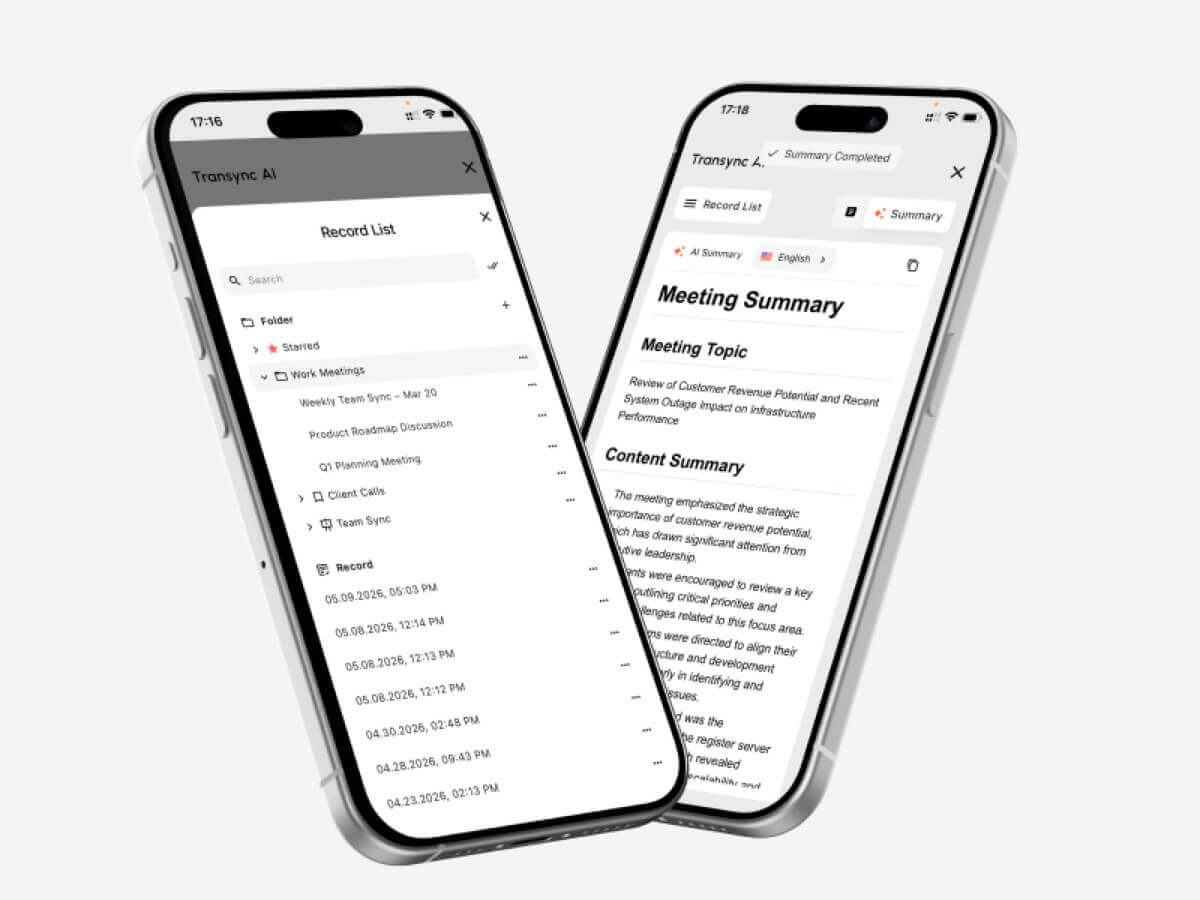
Transync AI dapat menghasilkan catatan rapat berbasis AI dari percakapan yang telah diterjemahkan, membantu pengguna meninjau poin-poin penting tanpa perlu menerjemahkan dan mencatat secara bersamaan.
Mengunjungi Notulen Rapat AI dengan Terjemahan Waktu Nyata untuk detail selengkapnya.
 9. Apakah Harga Sesuai dengan Kebutuhan Penggunaan Anda?
 9. Apakah Harga Sesuai dengan Kebutuhan Penggunaan Anda?
Perangkat lunak penerjemahan bahasa Mandarin mungkin mengenakan biaya dengan cara:
- Karakter
- Kata
- Halaman
- Audio menit
- Jam penerjemahan
- Langganan bulanan
- Pengguna atau pemegang lisensi perusahaan
Untuk rapat waktu nyata, bandingkan jam yang termasuk di dalamnya, jangan hanya melihat harga bulanan.
| Rencana AI Transynch | Harga | Termasuk waktu penerjemahan | Terbaik untuk |
| Bebas | $0 | 40 menit untuk pengguna baru | Pengujian awal |
| Premi Pribadi | $8.99/bulan | 10 jam selama periode keanggotaan aktif | Individu dan pertemuan rutin |
| Perusahaan | $24.99/bulan/kursi | Hingga 40 jam per bulan per kursi | Tim dan organisasi |
| Kartu waktu | Mulai dari $0.70/jam | Waktu penerjemahan tambahan | Pengguna dengan permintaan bulanan yang berubah-ubah |
Jam kerja yang tercatat di kartu absensi tidak akan hangus, tetapi hanya dapat digunakan selama keanggotaan masih aktif.
Sebelum berlangganan, perkirakan volume rapat bulanan Anda. Pengguna dengan dua panggilan singkat ke pemasok memiliki kebutuhan yang berbeda dari tim yang mengadakan rapat multibahasa setiap hari.
Perangkat Lunak Penerjemahan Bahasa Mandarin oleh Scenario
Tabel di bawah ini merangkum fitur mana yang paling penting dalam berbagai situasi.
| Skenario | Tantangan utama | Fitur prioritas |
| Pemasok Tiongkok menelepon | Ketentuan produk, jumlah, tanggal pengiriman | Kata kunci, keterangan, latensi rendah |
| Pertemuan penjualan berbahasa Mandarin-Inggris | Percakapan dua arah dan respons alami | Terjemahan dua arah, keluaran suara |
| Kelas Bahasa Mandarin Online | Penjelasan cepat dan sesi panjang. | Teks tetap, catatan, subtitel mengambang |
| Diskusi klien berbahasa Kanton | Dukungan bicara regional | Pengenalan bahasa Kanton dan penerjemahan dua arah |
| Pelatihan teknis | Terminologi khusus | Konteks, glosarium, tampilan dwibahasa |
| Webinar internasional | Pidato berkelanjutan dan slide presentasi | Teks terjemahan mengambang dan terjemahan stabil untuk sesi panjang. |
| Pertemuan hukum atau medis | Konsekuensi kesalahan yang tinggi | Penerjemah manusia profesional |
Uji Coba Praktis Sebelum Anda Membeli
Jangan menilai perangkat lunak penerjemahan bahasa Mandarin hanya berdasarkan demonstrasi promosi singkat.
Lakukan pengujian yang menyerupai penggunaan Anda yang sebenarnya.
Skrip Pengujian
Termasuk:
- Pengantar singkat
- Penjelasan produk atau teknis.
- Percakapan campuran bahasa Mandarin dan Inggris
- Nama dan istilah perusahaan
- Tanggal, harga, persentase, dan nomor model
- Sesi tanya jawab
- Satu pembicara dengan kecepatan bicara lebih cepat
- Suara latar belakang ringan
Kartu Skor Evaluasi
| Metrik | Apa yang perlu diperiksa |
| Pengakuan | Apakah perangkat lunak tersebut berhasil merekam suara aslinya dengan benar? |
| Arti | Apakah terjemahan tersebut berhasil mempertahankan pesan yang dimaksud? |
| Latensi | Apakah hasilnya keluar cukup cepat untuk didiskusikan? |
| Terminologi | Apakah nama dan istilah teknis ditangani secara konsisten? |
| Keterangan | Apakah teks terjemahannya mudah dibaca? |
| Suara | Apakah hasilnya jelas dan alami? |
| Stabilitas | Apakah performa tetap konsisten selama sesi yang lebih panjang? |
| Alur kerja | Bisakah pengguna fokus pada rapat alih-alih mengelola alat tersebut? |
Uji coba baik dari bahasa Mandarin ke bahasa Inggris maupun dari bahasa Inggris ke bahasa Mandarin. Kinerja mungkin tidak identik di kedua arah.
Bahasa Mandarin Sederhana vs. Bahasa Mandarin Tradisional
Bahasa Mandarin Sederhana dan Tradisional memiliki banyak kesamaan, tetapi menggunakan sistem karakter yang berbeda dan terkadang kosakata regional yang berbeda.
Untuk terjemahan tertulis, periksa apakah perangkat lunak tersebut memungkinkan pengguna untuk memilih keluaran yang sesuai.
Contoh perbedaan regional dapat terlihat pada:
- Istilah-istilah teknologi
- Kosakata transportasi
- Kata-kata resmi
- Terminologi produk
- Ungkapan sehari-hari
Untuk penerjemahan suara, bahasa lisan dan format teks terjemahan tertulis merupakan pertimbangan yang terpisah. Penutur bahasa Mandarin mungkin menginginkan teks terjemahan dalam aksara Tionghoa Sederhana atau Tionghoa Tradisional, tergantung pada audiensnya.
Jika perbedaan ini penting, pastikan pilihan bahasa dan skrip perangkat lunak yang tepat sebelum membeli.
Terjemahan Bahasa Mandarin vs. Bahasa Kanton
Bahasa Mandarin dan Kanton bukanlah sekadar dua aksen dari bahasa lisan yang identik.
Perbedaan di antara mereka adalah:
- Pengucapan
- Sistem nada
- Kosakata umum
- Partikel kalimat
- Ungkapan sehari-hari
- Tata bahasa lisan
Alat yang dilatih terutama untuk bahasa Mandarin mungkin akan berkinerja buruk dengan audio bahasa Kanton.
Transync AI mencantumkan bahasa Mandarin dan Kanton secara terpisah di antara bahasa-bahasa yang didukungnya, yang berguna bagi pengguna yang berkomunikasi di seluruh Tiongkok daratan, Hong Kong, dan komunitas berbahasa Kanton.
Meskipun demikian, tim tetap harus menguji pembicara, mikrofon, dan kosakata yang diperkirakan akan mereka temui.
Keterbatasan Umum Perangkat Lunak Penerjemahan Bahasa Mandarin
Tidak ada penerjemah AI yang akurat di setiap lingkungan.
Kinerja dapat menurun ketika:
- Beberapa orang berbicara bersamaan.
- Mikrofon berada jauh dari pembicara.
- Ruangan ini memiliki gema yang kuat.
- Koneksi internet tidak stabil
- Ucapan tersebut mengandung bahasa gaul lokal.
- Kalimat-kalimatnya tidak lengkap
- Penutur bahasa berganti bahasa dengan cepat.
- Nama tidak termasuk dalam daftar kata kunci.
- Istilah teknis memiliki banyak arti.
- Konteks penting hilang.
Transynch AI juga memiliki beberapa keterbatasan khusus produk:
- Mode offline tidak tersedia
- Pengenalan gambar tidak didukung.
- Penerjemahan teks statis bukanlah penggunaan utamanya.
- Ini adalah perangkat lunak mandiri, bukan plugin rapat.
- Penggunaan dihitung secara kumulatif di seluruh perangkat pada akun yang sama.
- Kualitas audio dan kondisi jaringan masih memengaruhi kinerja.
Keterbatasan ini berarti bahwa perangkat lunak ini lebih cocok untuk penerjemahan percakapan langsung dan rapat daripada dokumen hasil pemindaian, penerjemahan gambar, atau lokalisasi situs web secara menyeluruh.
Kapan Sebaiknya Anda Menggunakan Penerjemah Bahasa Mandarin Manusia?
Perangkat lunak AI dapat mendukung rapat rutin, kelas, panggilan penjualan, dan diskusi internal. Namun, perangkat lunak ini tidak boleh secara otomatis menggantikan penerjemah yang berkualifikasi ketika kesalahan dapat menimbulkan konsekuensi serius.
Gunakan penerjemah profesional untuk:
- Diagnosis atau pengobatan medis
- Proses pengadilan
- Wawancara imigrasi
- Penandatanganan kontrak
- Diskusi regulasi
- Negosiasi bernilai tinggi
- Instruksi keselamatan
- Perselisihan karyawan yang sensitif
- Komunikasi diplomatik
Pendekatan hibrida seringkali praktis: gunakan AI untuk komunikasi rutin yang sering dilakukan dan penerjemah manusia untuk peristiwa berisiko tinggi tertentu.
Pertanyaan yang Sering Diajukan (FAQ): Perangkat Lunak Penerjemahan Bahasa Mandarin
Apa perangkat lunak penerjemahan bahasa Mandarin terbaik?
Perangkat lunak terbaik bergantung pada tugasnya. Penerjemah teks cocok untuk konten tertulis pendek, alat dokumen cocok untuk file, dan penerjemah suara waktu nyata lebih baik untuk rapat dan percakapan. Transync AI dirancang terutama untuk ucapan langsung, subtitle dwibahasa, suara terjemahan, dan catatan rapat.
Bisakah perangkat lunak penerjemahan bahasa Mandarin menerjemahkan rapat langsung?
Ya. Penerjemah rapat langsung dapat memproses ucapan selama Zoom, Microsoft Teams, atau Google Meet dan menampilkan teks terjemahan. Beberapa alat juga dapat menghasilkan output suara terjemahan.
Apakah Transync AI mendukung terjemahan dari bahasa Mandarin ke bahasa Inggris?
Ya. Transynch AI mendukung terjemahan dua arah secara real-time antara bahasa Mandarin, Inggris, dan bahasa lain yang didukung.
Apakah Transynch AI mendukung bahasa Kanton?
Ya. Bahasa Kanton tercantum secara terpisah dari bahasa Mandarin di antara bahasa-bahasa yang didukung.
Apakah perangkat lunak tersebut dapat menangani istilah-istilah teknis berbahasa Mandarin?
Hal itu mungkin, tetapi terminologi khusus perlu diuji. Transync AI memungkinkan pengguna untuk menambahkan kata kunci dan informasi kontekstual untuk meningkatkan penanganan nama produk, nama pribadi, singkatan, dan istilah industri.
Bisakah aplikasi ini menerjemahkan aksara Mandarin Sederhana dan Tradisional?
Perangkat lunak penerjemah bahasa mungkin dapat menangani kedua sistem karakter, tetapi tampilan dan opsi pemilihan yang tepat bervariasi tergantung produk dan platform. Konfirmasikan aksara yang dibutuhkan dalam perangkat lunak sebelum pertemuan penting.
Apakah terjemahan AI bahasa Mandarin cocok untuk penggunaan hukum atau medis?
AI dapat membantu pemahaman umum, tetapi interpretasi manusia profesional disarankan ketika kesalahan dapat memengaruhi hak hukum, kesehatan, keuangan, atau keselamatan.
Apakah Transync AI bekerja secara offline?
Tidak. Transync AI membutuhkan koneksi internet dan saat ini tidak menawarkan terjemahan offline.
Keputusan Akhir: Pilih Perangkat Lunak yang Sesuai dengan Percakapan
Hak Perangkat lunak penerjemahan bahasa Mandarin harus sesuai dengan masalah komunikasi yang sebenarnya Anda alami.
Untuk frasa tertulis pendek, penerjemah teks umum mungkin sudah cukup. Untuk dokumen, pilih alat yang dirancang untuk mempertahankan format. Untuk pertemuan pemasok, kelas daring, demonstrasi produk, dan kolaborasi bahasa Mandarin-Inggris, prioritaskan latensi rendah, terjemahan dua arah, teks terjemahan yang mudah dibaca, keluaran suara, kontrol terminologi, kompatibilitas rapat, dan catatan pasca-rapat.
Transync AI menggabungkan terjemahan waktu nyata dalam 60 bahasa dengan dukungan bahasa Mandarin dan Kanton, subtitle dwibahasa, siaran suara AI, kloning suara, kata kunci dan konteks, catatan rapat AI, dan teks berjalan.
Hal ini menjadikannya paling relevan ketika terjemahan bahasa Mandarin perlu dilakukan selama percakapan berlangsung—bukan setelah percakapan berakhir.
Untuk memulai, kunjungi Transink AI, jelajahi alat penerjemahan waktu nyata, atau unduh aplikasinya untuk perangkat pilihan Anda.