

Find the best translation program by comparing 7 specialists for meetings, documents, CAT workflows, localization, events, and recorded media.
The best translation program is rarely the product with the longest feature page. It is the product whose main workflow matches the material entering your organization and the result people need afterward. A live meeting, a legal document, software strings, a conference, and a recorded interview all require translation—but they create different technical and human work.
This procurement memo evaluates seven specialists: Transync AI for real-time meetings and presentations, 딥엘 for text and documents, memoQ for professional CAT work, Smartcat for AI translation with review workflows, 구절 for enterprise localization, 세속적인 for meetings and larger events, and 소닉스 for recorded audio and video.
You will not find the familiar consumer translation apps at the center of this shortlist. This evaluation focuses on more specialized programs that organizations, localization teams, event managers, and language professionals may choose for sustained work.
Executive Recommendation
| Primary Requirement | 최고의 신입 후보자 | Why It Belongs on the Shortlist |
|---|---|---|
| Live business meetings with translated voice and notes | Transync AI | Bilingual captions, voice playback, terminology context, and post-meeting records |
| Text and full-document translation | 딥엘 | File translation, formatting, glossaries, translation memory, and style controls |
| Freelance or professional segment-level translation | memoQ | Translation memories, term bases, QA, reference corpora, and local Windows workflow |
| Multi-format AI translation with human review | Smartcat | Engine routing, linguistic assets, many file types, and reviewer workflows |
| Continuous software and enterprise localization | 구절 | TMS, strings, orchestration, integrations, quality controls, and analytics |
| Multilingual meetings and large audience events | 세속적인 | Live captions and audio on attendee devices, support, transcripts, and summaries |
| Prerecorded podcasts, interviews, and videos | 소닉스 | Transcribe first, translate time-coded text, edit, subtitle, and export |
If your organization needs several rows, the best translation program may be a stack rather than a single purchase. The important decision is which system owns each content type and where human approval enters the process.
What Does “Translation Program” Mean?
The phrase can refer to at least five different product categories:
- A real-time speech translator for meetings or in-person conversations.
- A document engine that translates complete files.
- A computer-assisted translation environment for professional linguists.
- A translation management and localization platform for teams.
- A transcription-and-translation editor for recorded media.
These categories may share AI, glossaries, captions, or APIs, but they do not produce the same deliverable. A best translation program search becomes useful only after the buyer separates these categories. Before choosing the best translation program, complete this sentence:
“The source is _, and after translation the user must be able to _.”
Examples include “live speech / answer immediately,” “a DOCX contract / approve a bilingual draft,” “software strings / ship a localized release,” and “a recorded webinar / publish edited subtitles.”
Seven Non-Negotiable Procurement Questions
| 질문 | Why It Matters | Evidence to Request |
|---|---|---|
| Does it accept the real input? | Text-box demos hide file, audio, and integration problems | Representative file, device, or meeting test |
| Does it preserve facts? | Fluent output can change names, numbers, conditions, or intent | Parallel source-target review |
| Can terminology be controlled? | Product and legal language must remain consistent | Glossary, term-base, or context demonstration |
| Can humans review efficiently? | Important output needs correction and approval | Editor, bilingual view, QA, history, and roles |
| Does it fit the delivery channel? | A subtitle file cannot replace live voice, and vice versa | Participant or end-user test |
| Can data be governed? | Translation content may be confidential or regulated | Terms, retention, deletion, access, region, and audit evidence |
| What does real usage cost? | Subscription headlines omit review, setup, storage, and integration | Scenario-based monthly cost model |
The best translation program should survive these questions without relying on a polished sample selected by the vendor.
1. Transync AI: Best for Live Meetings and Presentations
Transync AI is the meeting-first specialist. Its 실시간 번역 currently supports 60 languages, and its 실시간 회의 통역 워크플로 works alongside Zoom, Microsoft Teams, Google Meet, and other meeting environments.
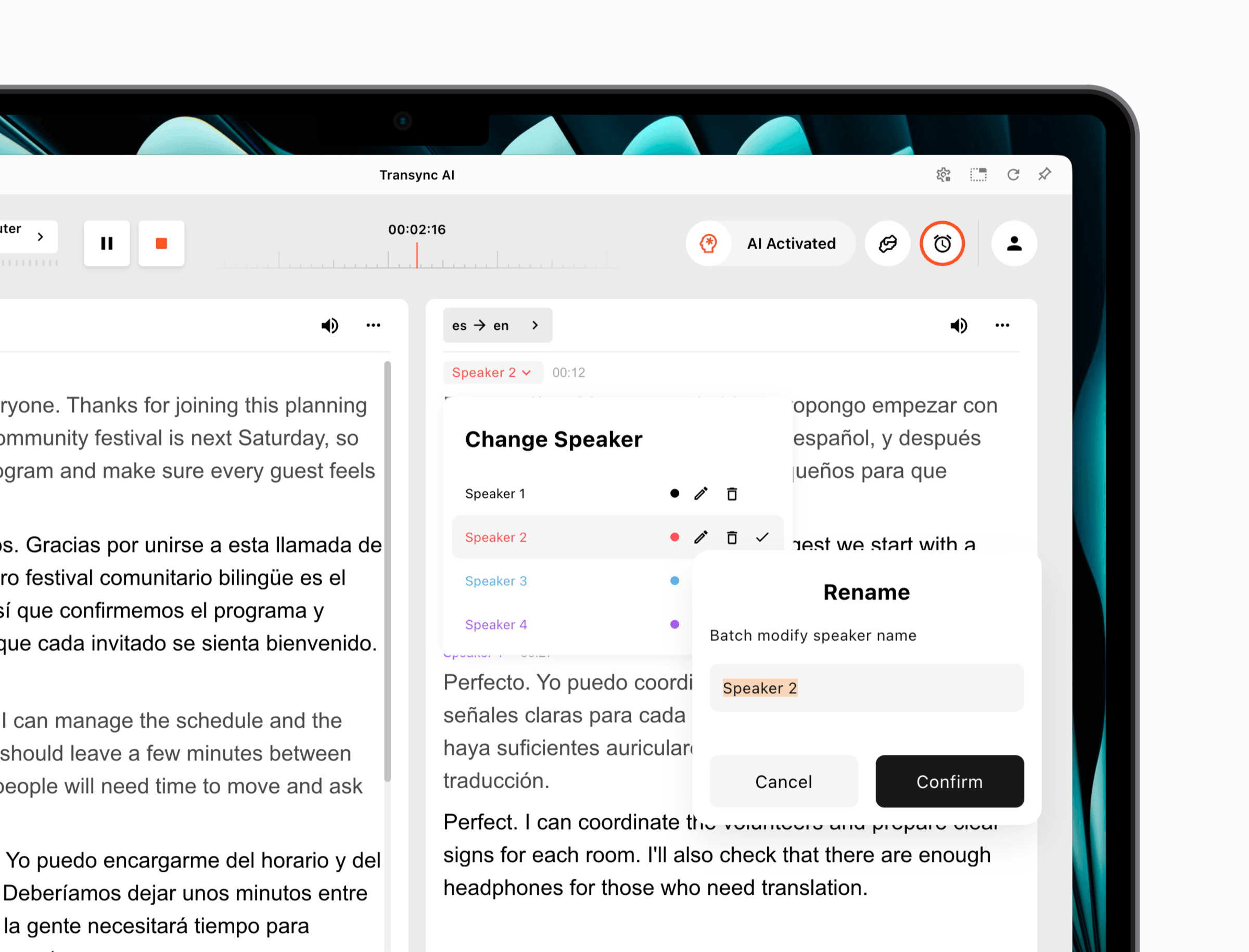
During a session, users can read bilingual captions and enable an AI 음성 번역기 for spoken output. 화면 속 화면 자막 can remain visible over supported applications. Before the call, teams can prepare names, specialist terms, and background using 키워드와 문맥.
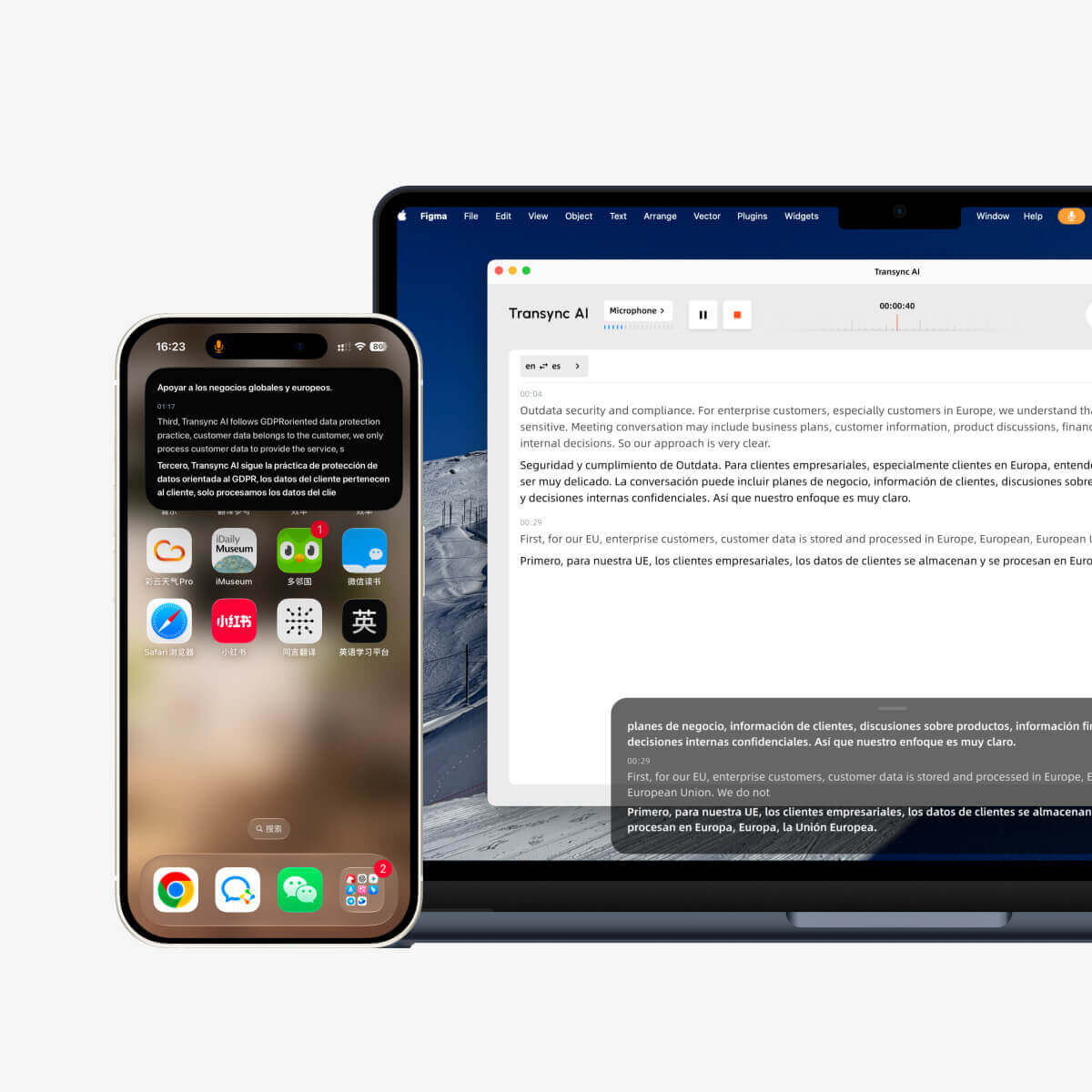
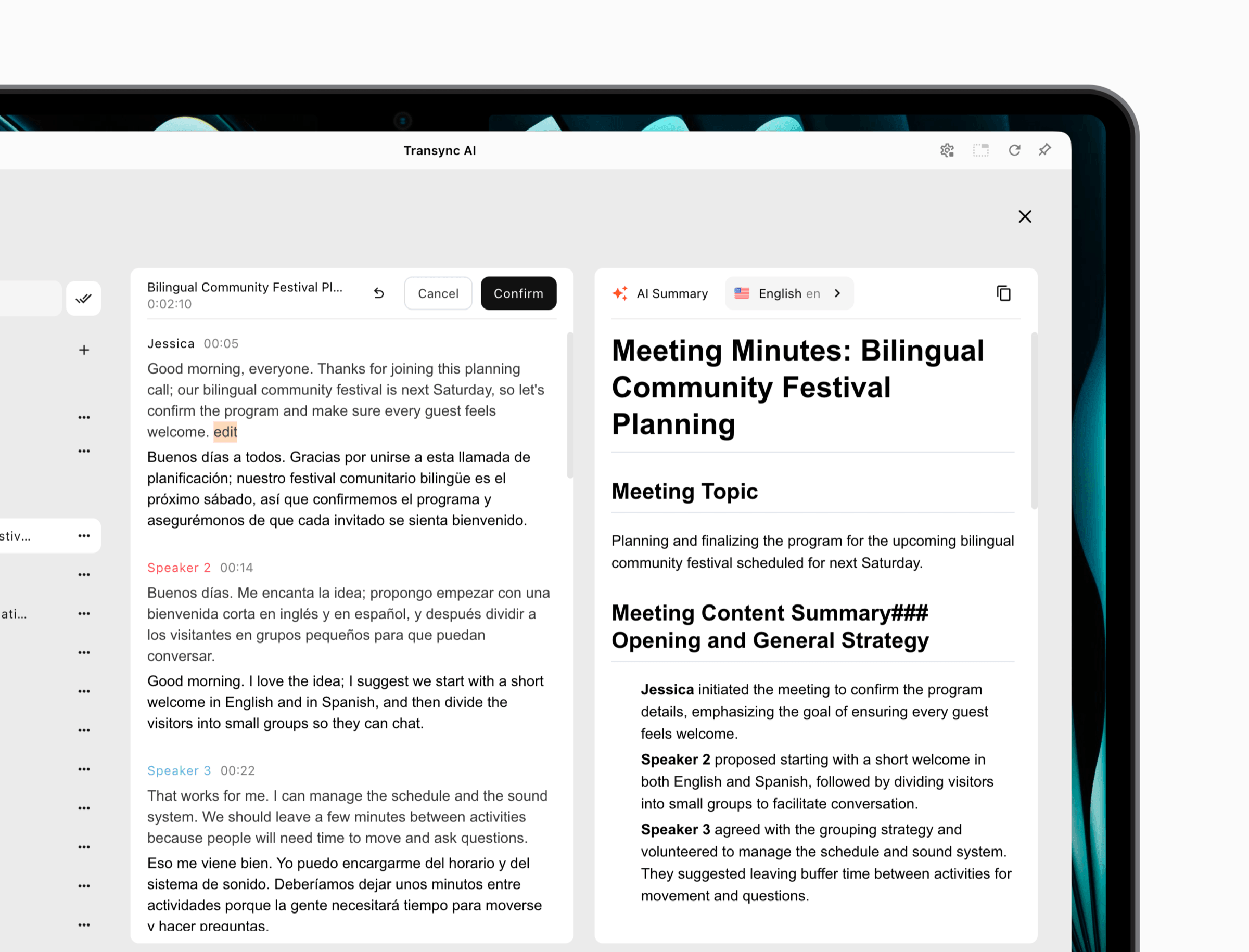
Afterward, AI 회의 노트 can provide a transcript and structured summary. That continuity is valuable when participants need to recover decisions, responsibilities, and next steps rather than discard the translation when the call ends.
 In beta 프레젠테이션 모드, a host can configure up to 10 target languages. Audience members join on their own phones or computers through a QR code, shareable link, or Room ID. They do not need to install software, but they must register or sign in to a Transync AI account. Attendees can read or listen in an enabled language but cannot send voice input into the host’s one-way translation task.
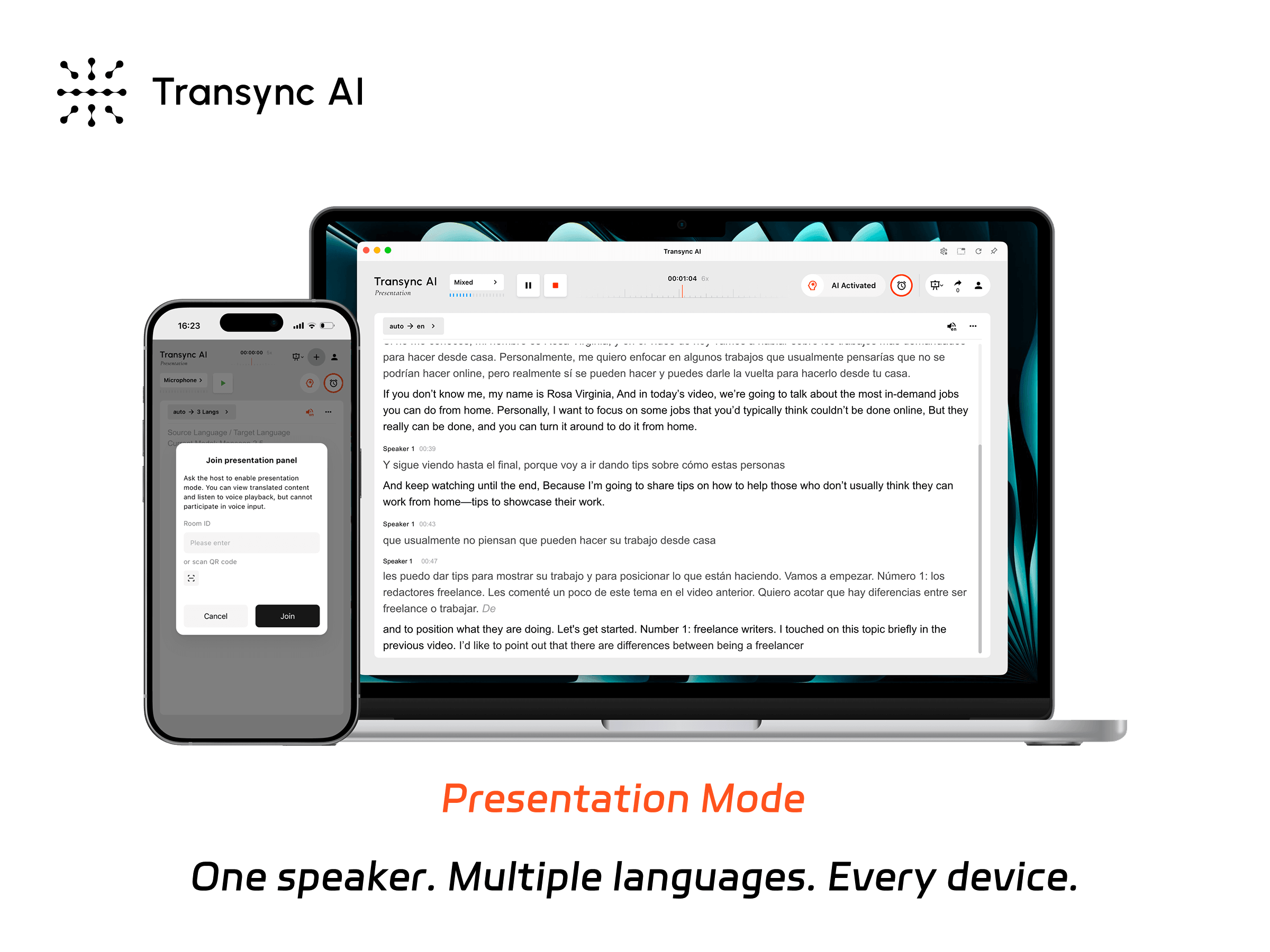
프레젠테이션 모드를 사용하면 호스트 한 명이 청중 구성원들의 기기에서 실시간 번역 내용을 공유할 수 있습니다.
강점
- Real-time bilingual subtitles and translated voice.
- Cross-platform meeting use rather than one meeting vendor only.
- Terminology and context preparation.
- Transcript and AI notes after the session.
- One-to-many audience delivery through Presentation Mode.
제한 사항
- Not a CAT environment for segment-level document translation.
- Not intended for offline camera or scanned-document work.
- Microphone, computer-audio routing, network, and headphones require testing.
- High-risk legal, medical, or formal interpretation still needs qualified professionals.
Current listed pricing includes 40 free minutes after registration, Personal Premium at 8.99 per month with 10 hours, and Enterprise at 24.99 per month per seat with up to 40 hours. Multilingual and Presentation Mode usage may be metered differently, so verify 현행 가격 규정.
Choose this best translation program candidate when: People must understand, speak, and retain information during recurring multilingual meetings or one-to-many presentations.
2. 딥엘: Best for Documents and Controlled Language
딥엘 is the document specialist in this shortlist. Its current official information covers text, complete-file translation, glossaries, translation memory, style rules, bulk files, and preservation of formatting and visual context across common document types.
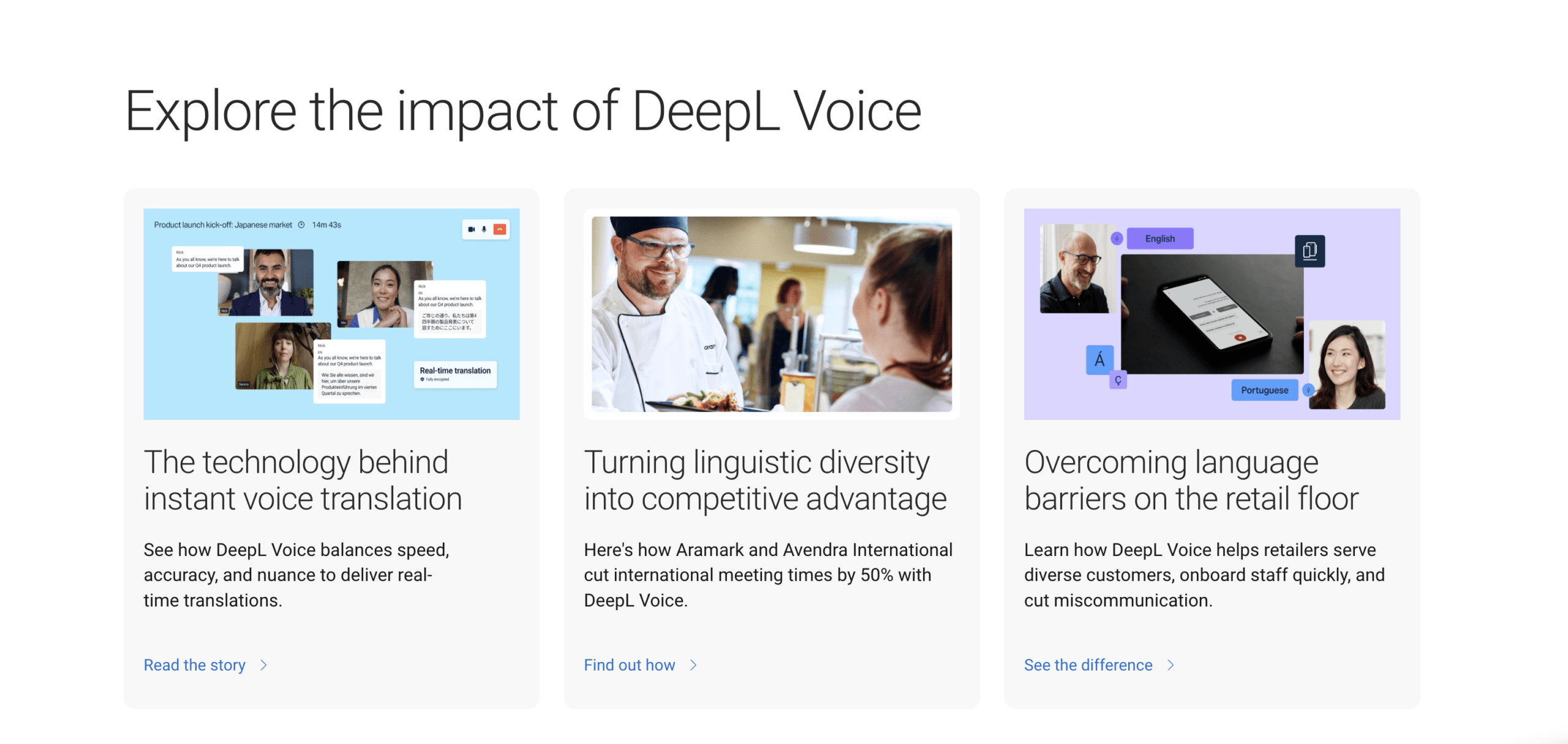
이것은 만든다 딥엘 useful when a proposal, report, presentation, spreadsheet, PDF, HTML page, subtitle file, or other supported document must become an editable translation draft. Glossaries can help keep brand and technical terminology consistent, while formality and style controls may support market-specific review.
The crucial word is “draft.” Preserved formatting can make a translated document look approved before anyone has checked it. A human reviewer should still inspect completeness, facts, terminology, tone, layout, links, tables, and image-based text.
강점
- Fast text and file translation.
- Formatting and layout preservation for supported files.
- Glossary, translation-memory, and style customization.
- Bulk and enterprise document workflows.
- Apps, integrations, and API options.
제한 사항
- Written fluency does not prove suitability for live interpreting.
- File limits and advanced controls depend on plan and product.
- Market adaptation and consequential statements require human approval.
- Voice products are separate and should be evaluated separately.
Choose this best translation program candidate when: The main deliverable is a reviewable translated file rather than a live conversation or managed software release.
3. memoQ: Best for Professional CAT Work
memoQ translator pro is a Windows-based computer-assisted translation environment designed for freelance translators. Its current documentation lists translation memories, term bases, LiveDocs, concordance, machine-translation plug-ins, quality assurance, tag management, bilingual files, live preview, and support for many common formats.
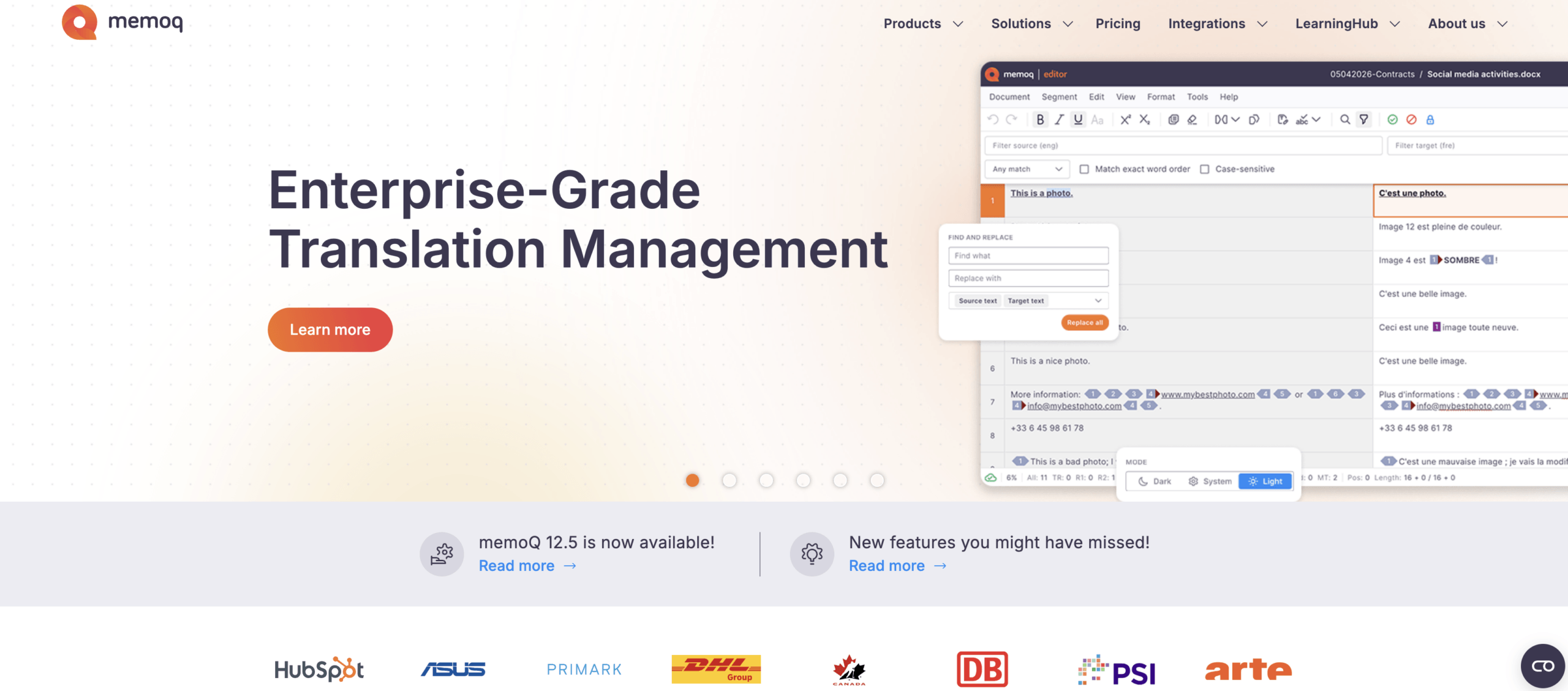
Unlike a one-click document translator, memoQ centers the linguist’s segment-by-segment decisions. Previously approved translations can be reused through translation memory; terminology can be stored with context; and machine-detectable problems such as missing tags, spacing, punctuation, and inconsistent terms can be flagged.
The standalone translator pro product stores work locally and does not include general server access or browser-based collaboration. A linguist can connect to a client’s memoQ server when the client supplies credentials, but organizations seeking centralized team management should compare the separate TMS offering.
강점
- Detailed translator workspace with source-target control.
- Translation memory and terminology management.
- QA, tagging, concordance, reference, and preview features.
- Compatibility with bilingual formats and external tools.
- Local workflow for translators who prefer desktop control.
제한 사항
- Windows-based desktop workflow.
- Learning and resource setup are required.
- Standalone translator pro is not a general web collaboration platform.
- Not a live meeting or audience interpretation product.
Choose this best translation program candidate when: A professional translator needs reusable linguistic assets, segment-level editing, QA, and control over complex files.
4. Smartcat: Best for AI Translation With Human Review
Smartcat describes its translator as a platform that routes content through multiple machine-translation engines and language models rather than binding every project to one engine. Its current page says it can apply glossaries and translation memories, support more than 80 file formats, and send content to human reviewers.
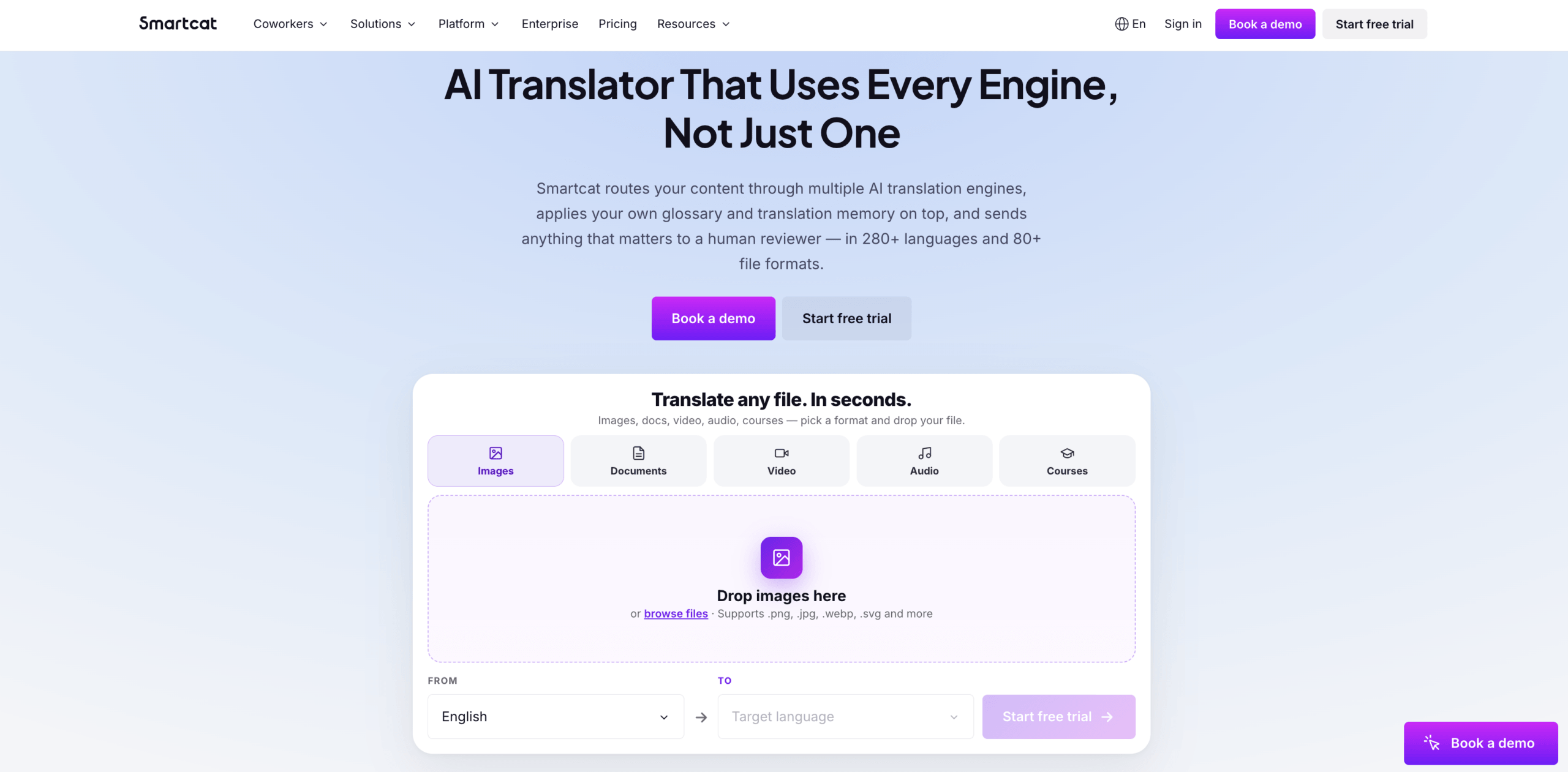
This model suits organizations translating documents, websites, video, audio, courses, software, and other content types through a shared environment. Approved edits can feed future work, and review can occur within the same workflow rather than through emailed files.
Engine routing is not proof that every result is optimal. The buyer should test language pairs, content domains, glossary behavior, review permissions, file filters, integration reliability, and the economics of the platform’s usage model.
강점
- Multiple engines and models within one platform.
- Glossary and translation-memory use.
- Broad file and content-format coverage.
- Human-review routing and marketplace access.
- Centralized workflow for teams.
제한 사항
- Requires configuration and governance to realize the benefits.
- Quality can still vary by language pair and content type.
- Usage credits and plan pricing need scenario-based modeling.
- Broader content workflows may be more than a solo user needs.
Choose this best translation program candidate when: A team wants AI drafting, varied content formats, linguistic assets, and optional human review inside one cloud workflow.
5. 구절: Best for Enterprise Localization
구절 is built for continuous localization rather than isolated translation requests. Its current platform combines a TMS, software-string management, model routing, translation memories, term bases, style guides, quality profiles, workflow orchestration, integrations, APIs, analytics, and media localization.
For product teams, 구절 Strings can keep interface copy connected to software delivery. The TMS manages content, vendors, handoffs, and quality gates. The broader platform can route work by language, content type, cost, and quality requirements while applying brand and market context.
This depth brings implementation work. A company translating a few documents each month may not need enterprise orchestration, hundreds of integrations, analytics, and continuous-delivery connections. A growing software company may consider those the entire reason to buy.
강점
- Enterprise translation and localization orchestration.
- Translation memories, terminology, style, and quality controls.
- Software-string and continuous-localization workflows.
- Broad integrations, APIs, and automation.
- Analytics and governance across teams and vendors.
제한 사항
- More complex than a simple translator or freelance CAT tool.
- Requires process design, integration, and stakeholder ownership.
- Pricing and implementation should be evaluated with the full program scope.
- Not primarily a standalone live meeting interpreter.
Choose this best translation program candidate when: Translation is part of a continuous product, software, content, and release operation involving multiple teams.
6. 세속적인: Best for Meetings and Large Events
세속적인 focuses on AI translation and captions for meetings and events. Its current official pages describe live translated text and audio in dozens of languages, attendee access through personal devices, customized glossaries, support, transcripts, summaries, subtitles, dubbing, and post-event content management.
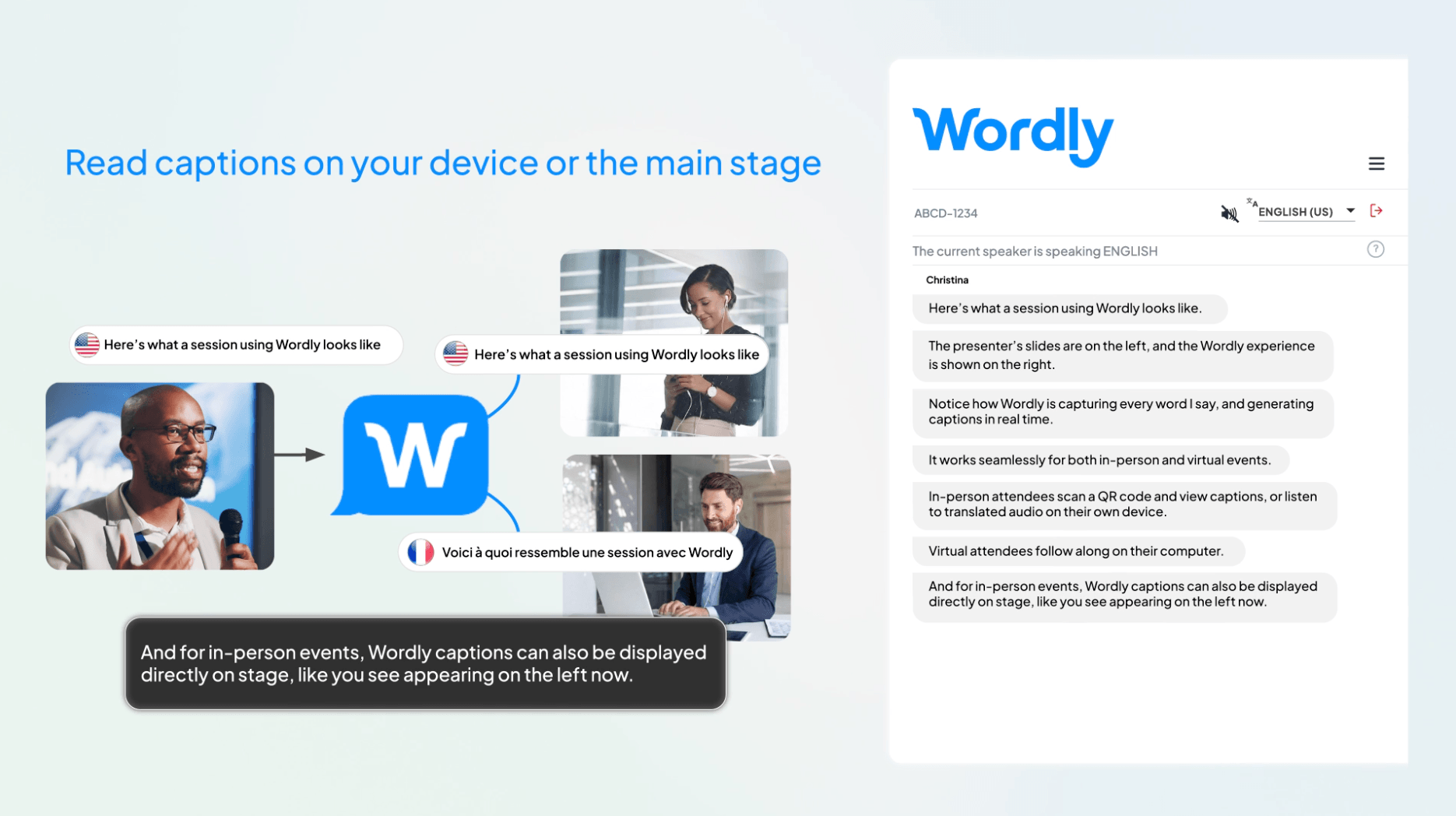
이것은 만든다 세속적인 relevant for conferences, associations, webinars, town halls, and organizations that want a supported event workflow. Attendees can read captions or listen to audio, while organizers can reuse transcripts and summaries after the session.
For smaller teams comparing 세속적인 ~와 함께 Transync AI, the decision is less about whether both translate live speech and more about operating model. 세속적인 emphasizes managed meetings and events, attendee access, onboarding, and event-content lifecycle. Transync AI emphasizes a lower-friction cross-platform meeting app, two-way voice translation, personal or team use, and host-operated Presentation Mode.
강점
- Live captions and audio for meetings and events.
- Attendee access on personal devices.
- Pre-event glossary and onboarding support.
- Transcripts, summaries, subtitles, and post-event content.
- Suitable for larger audience programs.
제한 사항
- More event-oriented than document or CAT workflows.
- Price must be evaluated for event scale and service requirements.
- Organizations still need connectivity, audio, attendee instructions, and backup planning.
- Automated interpretation may not suit high-risk formal events.
Choose this best translation program candidate when: A meeting or event organizer prioritizes audience access, live captions and audio, and support across the event lifecycle.
7. 소닉스: 오디오 및 비디오 녹음에 가장 적합합니다.
소닉스 follows a transcript-first workflow. Users upload recorded audio or video, create and edit the source transcript, translate it, and preserve timestamps for subtitles and other exports. Its current translation page lists 54 languages and supports common audio and video formats.
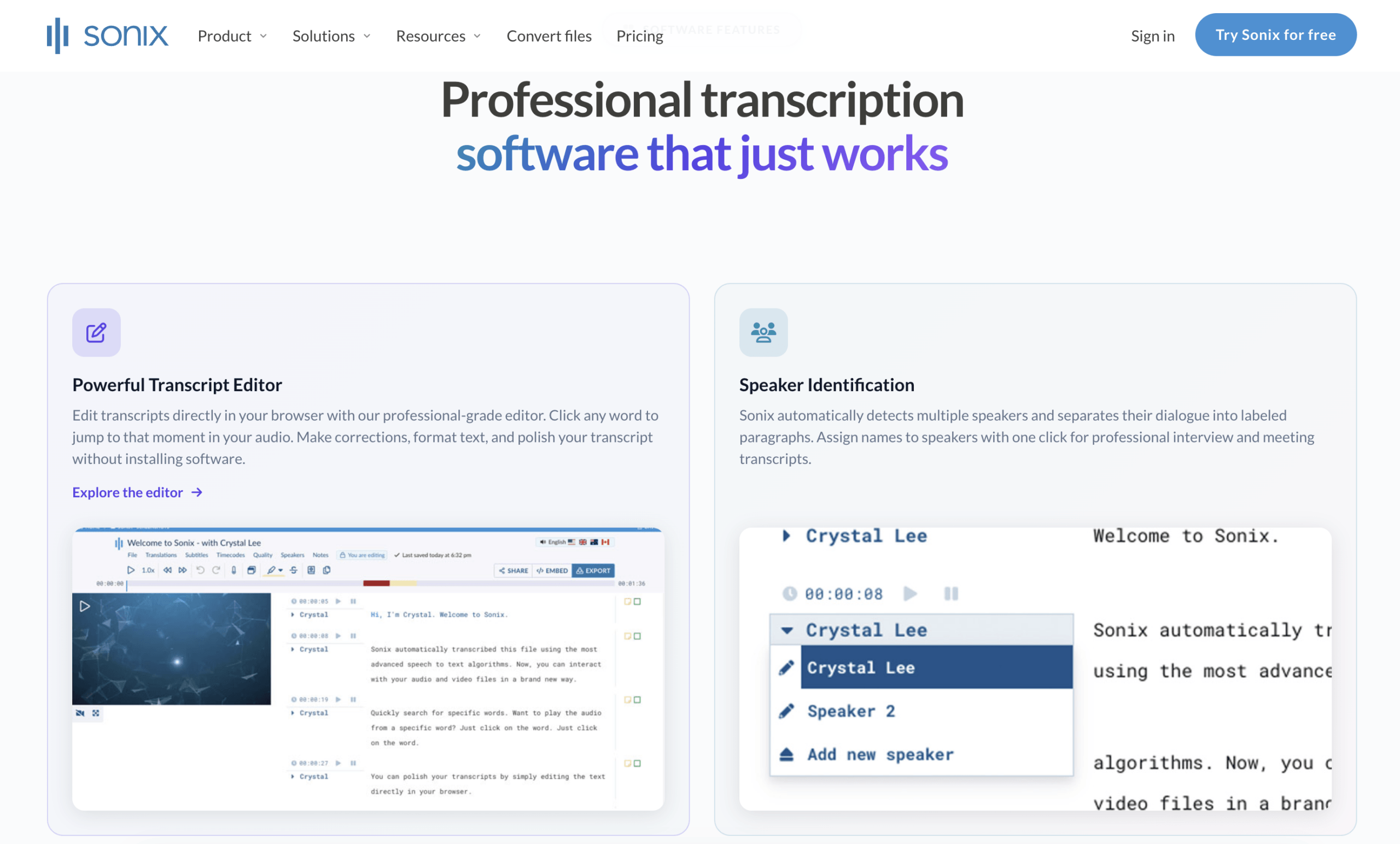
The source transcript is important: recognition mistakes should be fixed before translation so they do not spread into every target language. 소닉스 provides a side-by-side editor that keeps the original and translated transcript aligned with timestamps, making review easier for interviews, podcasts, training recordings, and video subtitles.
Current listed translation pricing is 10 per audio hour for pay-as-you-go use and 5 per hour on Premium, with translation included in that audio-hour rate. Buyers should verify current plan details and calculate review, subtitle formatting, storage, and export costs as well.
강점
- Purpose-built recorded audio and video workflow.
- Source transcription before translation.
- Time-coded side-by-side editing.
- Subtitle and common media export paths.
- Transparent usage-oriented pricing information.
제한 사항
- Not designed primarily for live two-way meetings.
- Accuracy depends heavily on the source recording.
- Transcripts and translated subtitles still need human review.
- Dubbing and live interpretation are separate requirements.
Choose this best translation program candidate when: The source already exists as an audio or video file and the deliverable is a reviewed transcript, translation, or subtitle set.
Best Translation Program Comparison Table
| 도구 | Core Category | 라이브 스피치 | 서류 | CAT/TM Control | Software Localization | 이벤트 | Recorded Media | 인간 대상 검토 | Main Buyer |
|---|---|---|---|---|---|---|---|---|---|
| Transync AI | Meeting translation app | 코어 근력 | Not document-first | Context rather than CAT workflow | 아니요 | Presentation Mode for host-led audiences | Transcript after live session | Review transcript and notes | Individuals, teams, educators, presenters |
| 딥엘 | Language and document platform | Separate Voice products | 코어 근력 | Glossary, memory, and customization | API/integrations | No dedicated event workflow | SRT and selected media formats | External or connected review | Professionals and enterprises |
| memoQ | CAT and TMS ecosystem | 아니요 | Strong professional file support | 코어 근력 | TMS option available | 아니요 | Subtitle support varies by workflow | Built around linguist editing | Translators, LSPs, localization teams |
| Smartcat | AI translation platform | Content-dependent | Strong multi-format support | Glossaries, TM, adaptive workflow | 예 | Not its clearest specialization | Audio and video content | Integrated reviewers and marketplace | Enterprise content teams |
| 구절 | 현지화 플랫폼 | 먼저 만나지 않음 | Broad managed content | TM, term bases, quality profiles | 코어 근력 | No dedicated interpretation workflow | Phrase Studio | Workflow and quality gates | Enterprise localization programs |
| 세속적인 | 회의 및 행사 통역 | 코어 근력 | 아니요 | Glossary rather than CAT workflow | 아니요 | 코어 근력 | Post-event subtitles and dubbing | Transcript/content review | Event and association teams |
| 소닉스 | Audio/video transcription and translation | Recorded, not live-first | Transcript and subtitle outputs | No traditional CAT workspace | 아니요 | Post-event media use | 코어 근력 | Side-by-side transcript editor | Media, research, legal, training teams |
The comparison does not declare one universal best translation program because the rows solve different problems. Instead, it turns the best translation program decision into a fit analysis, making the boundaries visible so a buyer does not purchase an event platform for document localization or a CAT tool for live interpreted speech.
Which Product Wins by Scenario?
Best translation program for recurring multilingual meetings: Transync AI
선택하다 Transync AI when bilingual captions, translated voice, terminology preparation, meeting-platform flexibility, and notes are required in one app. Test the remote participant experience and audio routing before an important call.
Best translation program for full documents: 딥엘
선택하다 딥엘 when supported files need a fast translated draft with formatting and terminology controls. Require a qualified reviewer before consequential use or publication.
Best translation program for a freelance translator: memoQ
선택하다 memoQ when translation memories, term bases, reference corpora, segment-level editing, and QA are central. Confirm Windows compatibility and whether client-server access is needed.
Best translation program for hybrid AI and human review: Smartcat
선택하다 Smartcat when many formats and language pairs move through AI drafting and human review in one cloud environment. Test the usage model with real monthly volume.
Best translation program for continuous localization: 구절
선택하다 구절 when translation connects to code, content systems, vendors, quality gates, analytics, and release automation. Budget for implementation and ownership, not only licensing.
Best translation program for larger events: 세속적인
선택하다 세속적인 when attendees need live captions or audio on their devices and organizers want onboarding, event support, and post-event content. Compare audience scale and service requirements.
Best translation program for recorded media: 소닉스
선택하다 소닉스 when audio or video should become an editable source transcript, translated text, and time-coded subtitles. Correct the source transcript before translating it.
A 45-Minute Procurement Trial
Do not let each vendor choose a different demonstration. A best translation program trial should give competing products the same representative evidence pack, then route the relevant part to each specialist.
- A 750-word document containing a table, links, names, numbers, and 20 approved terms.
- A five-minute meeting clip with two speakers, accents, an interruption, and a correction.
- A five-minute video needing a source transcript and translated subtitles.
- Ten software strings containing placeholders, character limits, and interface context.
- A short presentation that a five-person test audience joins on separate devices.
Score each applicable workflow from one to five:
| 표준 | What to Observe |
|---|---|
| Factual accuracy | Names, numbers, actions, conditions, and omissions |
| 술어 | Approved terms, prohibited variants, and context |
| Editing effort | Time and steps required to reach approval |
| 배달 | File quality, participant audio, captions, subtitles, or software output |
| 회복 | Correction, reconnecting, re-export, and version history |
| 통치 | Roles, retention, deletion, audit, contracts, and regional requirements |
| Total cost | Licenses, usage, setup, reviewers, support, and integration |
The best translation program is the one that minimizes total approved-work cost, not simply generation time.
When a Human Professional Must Lead
AI translation is useful for speed, access, and scale, but it does not accept responsibility. Even the best translation program cannot replace accountable judgment. Use qualified human translators or interpreters for legal effect, medical consent, medication, immigration, regulatory filings, safety procedures, financial commitments, or other high-consequence communication.
Human review is also necessary when humor, persuasion, cultural adaptation, brand identity, poetry, or political sensitivity determines whether a translation succeeds. Technology may provide a draft, terminology support, or record, but professional judgment governs the result.
자주 묻는 질문
What is the best translation program overall?
모두에게 승리가 있는 것은 아닙니다. Transync AI is strongest here for live meetings and presentations; 딥엘 for documents; memoQ for professional CAT work; Smartcat for AI-plus-review workflows; 구절 for enterprise localization; 세속적인 for events; and 소닉스 for recorded media.
What is the best translation program for a small business?
Start with the primary content. A team holding international calls may prefer Transync AI. A company translating proposals may begin with 딥엘 plus human review. A software product with continuous releases may eventually need 구절 or another localization platform.
Can one translation program handle meetings and documents?
Some platforms span several formats, but meeting and document requirements remain different. Meetings prioritize audio capture, latency, voice delivery, and turn-taking. Documents prioritize formatting, terminology, revision, and approval. Evaluate each workflow independently.
Is CAT software the same as AI translation?
No. A CAT tool such as memoQ organizes human translation with segments, memories, terminology, reference material, and QA. It may connect to machine-translation engines, but the professional editing environment is the core product.
Which program is best for translated subtitles?
소닉스 is a strong candidate when a prerecorded audio or video file needs transcription, translation, editing, timestamps, and subtitle export. 구절 그리고 세속적인 may fit broader media or event workflows depending on the source and delivery requirements.
Which program supports multilingual audiences?
세속적인 is designed around meeting and event audiences. Transync AI Presentation Mode lets one host distribute live translation to attendees who join by link, QR code, or Room ID and select an enabled language.
How should translation software be priced?
Calculate subscription or license costs, metered words or hours, reviewers, setup, integration, support, storage, and correction work. The cheapest interface may create the highest total cost if its output needs extensive repair.
The Final Procurement Decision
The best translation program is not the one that promises to translate everything. It is the one that fits the source, delivery channel, human-review model, risk, and repeatability of the work.
For meetings and host-led multilingual presentations, start with Transync AI. For full documents, test 딥엘. For professional CAT work, evaluate memoQ. For cloud-based AI translation with review, consider Smartcat. For continuous enterprise localization, assess 구절. For larger meetings and events, compare 세속적인. For recorded audio and video, trial 소닉스.
If several workflows matter, build a governed stack and define which product may process each kind of content. That is a stronger procurement outcome than forcing every translation job through one impressive but mismatched program.
차세대 경험을 원하신다면, Transync AI 자연스러운 대화 흐름을 유지하는 실시간 AI 기반 번역으로 선두를 달리고 있습니다. 무료로 사용해 보세요 지금.