

Compare Transync AI and KUDO across two-way meetings, AI speech translation, human interpreters, events, platforms, support, and pricing.
Not every multilingual meeting carries the same risk. A weekly team call can tolerate a clarification. A product webinar needs consistent one-to-many delivery. A board meeting, legal discussion, or international summit may require a professional interpreter who understands nuance and can intervene when meaning is uncertain.
That risk ladder is the most useful way to understand Transync AI and KUDO. Transync AI is a self-serve meeting translator built for frequent two-way conversations. KUDO is a broader language-access environment offering AI speech translation, professional human interpretation, platform integrations, and technical delivery for meetings and events.
This evaluation of Transync AI and KUDO is organized around five buying decisions: meeting risk, interaction direction, AI or human delivery, audience access, and total procurement cost.
The Practical Answer on Transync AI and KUDO
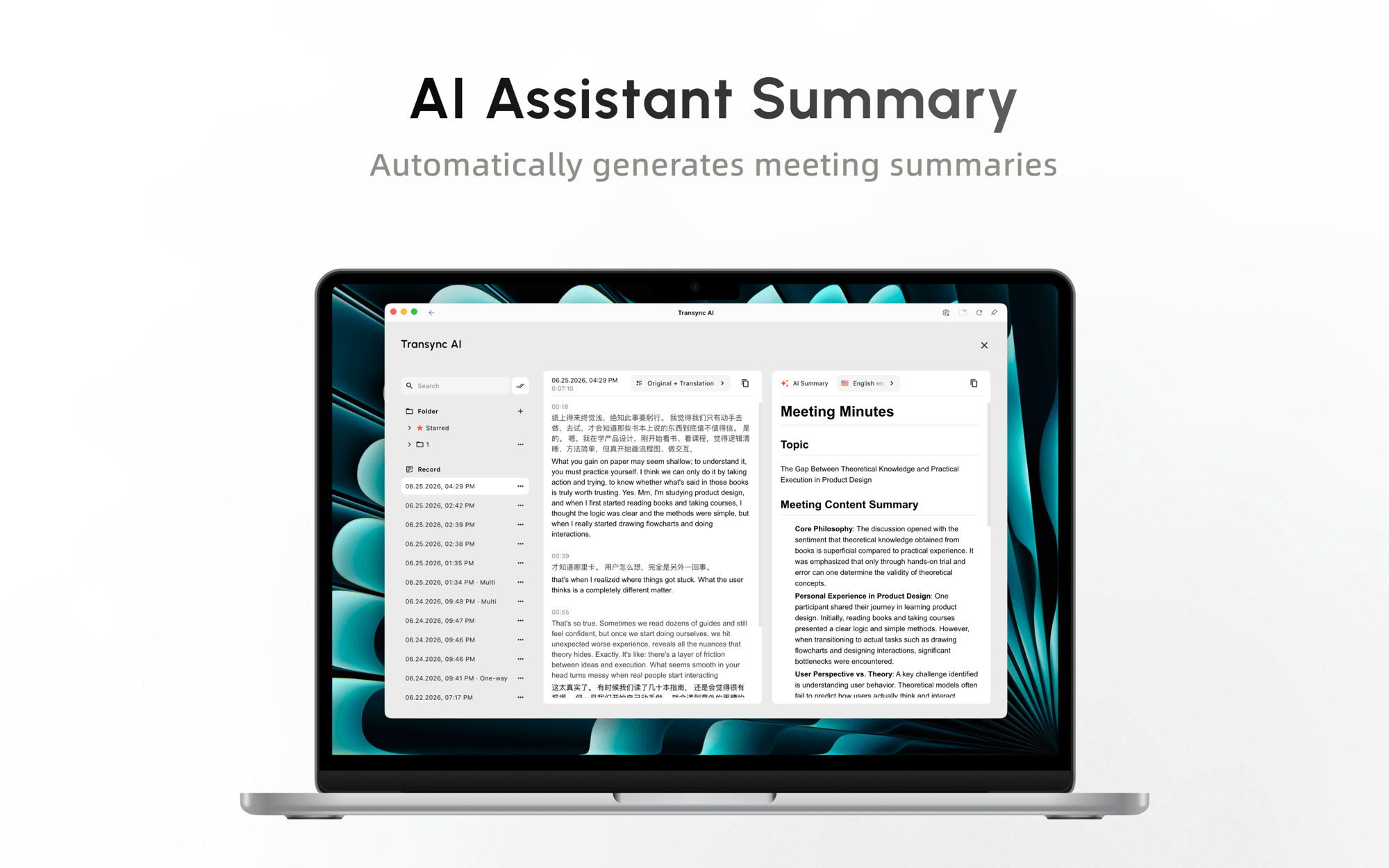
Choose Transync AI when people need to speak back and forth across languages during recurring calls, classes, demonstrations, support conversations, or in-person meetings. It combines bilingual subtitles, translated voice playback, terminology context, floating captions, and meeting notes in a transparent monthly plan.
Choose KUDO when an organization needs to deliver translated audio and captions to an audience, integrate interpretation into an event platform, add technical support, or switch from AI to professional human interpreters for higher-risk communication.
The central Transync AI and KUDO distinction is not simply “AI tool or AI tool.” It is a choice between a participant-operated meeting companion and an organization-operated interpretation service that can combine technology, people, and event delivery.
Decision Summary
| Decision area | Transync AI | KUDO |
|---|---|---|
| Primary operating model | Self-serve AI translation for participants and teams | AI speech translation, human interpretation, platform, and support services |
| Best-fit meeting | Recurring two-way calls plus self-managed one-to-many presentations | Managed events, enterprise programs, and high-stakes interpreted sessions |
| AI interaction pattern | One-way, two-way, and multilingual translation modes | AI Speech Translator is positioned for one-way communication; human interpretation supports interactive communication |
| Live output | Bilingual subtitles and translated voice playback | Translated captions and audio powered by AI or human interpreters |
| Human interpreters | Not provided | Marketplace of professional interpreters plus bring-your-own-interpreter options |
| Language positioning | 60+ languages and 1,700+ pairs | 70+ AI languages; 200+ spoken and sign languages through human interpretation |
| Audience scale | Presentation Mode with up to 10 target languages and access by link, QR code, or Room ID | Platform and integration-based audience delivery with AI or human interpretation |
| Platform approach | Standalone companion across meeting apps and devices | Native integrations, embedded widgets, proprietary platform, and attendee access |
| Published individual price | $8.99/month for Personal Premium | Dollar pricing not publicly listed; Marketplace, Pay As You Go, and Annual Plan routes |
| Strongest advantage | Two-way meetings, self-service presentation delivery, adoption speed, and price transparency | Human interpreters, event infrastructure, integrations, and technical support |
Product and pricing information checked in August 2026. Plans, language coverage, integrations, and allowances can change; verify the current provider page or quote before purchasing.
Use this Transync AI and KUDO summary to identify the right operating model before comparing secondary features.
Decision 1: How Much Communication Risk Can the Meeting Tolerate?
Risk is the best starting point for a Transync AI and KUDO decision because it determines whether automated translation is appropriate at all.
Routine internal calls, customer discovery, product demonstrations, lessons, and operational meetings often benefit from AI translation. Participants can ask for clarification, repeat a number, correct a name, or check the bilingual transcript when something sounds uncertain. For these repeatable conversations, Transync AI provides a practical balance of speed, availability, and cost.
High-stakes communication creates a different requirement. Legal negotiations, medical discussions, investor meetings, diplomatic sessions, safety instructions, and executive announcements may depend on nuance, subject-matter judgment, confidentiality procedures, or accountability that software alone cannot guarantee.
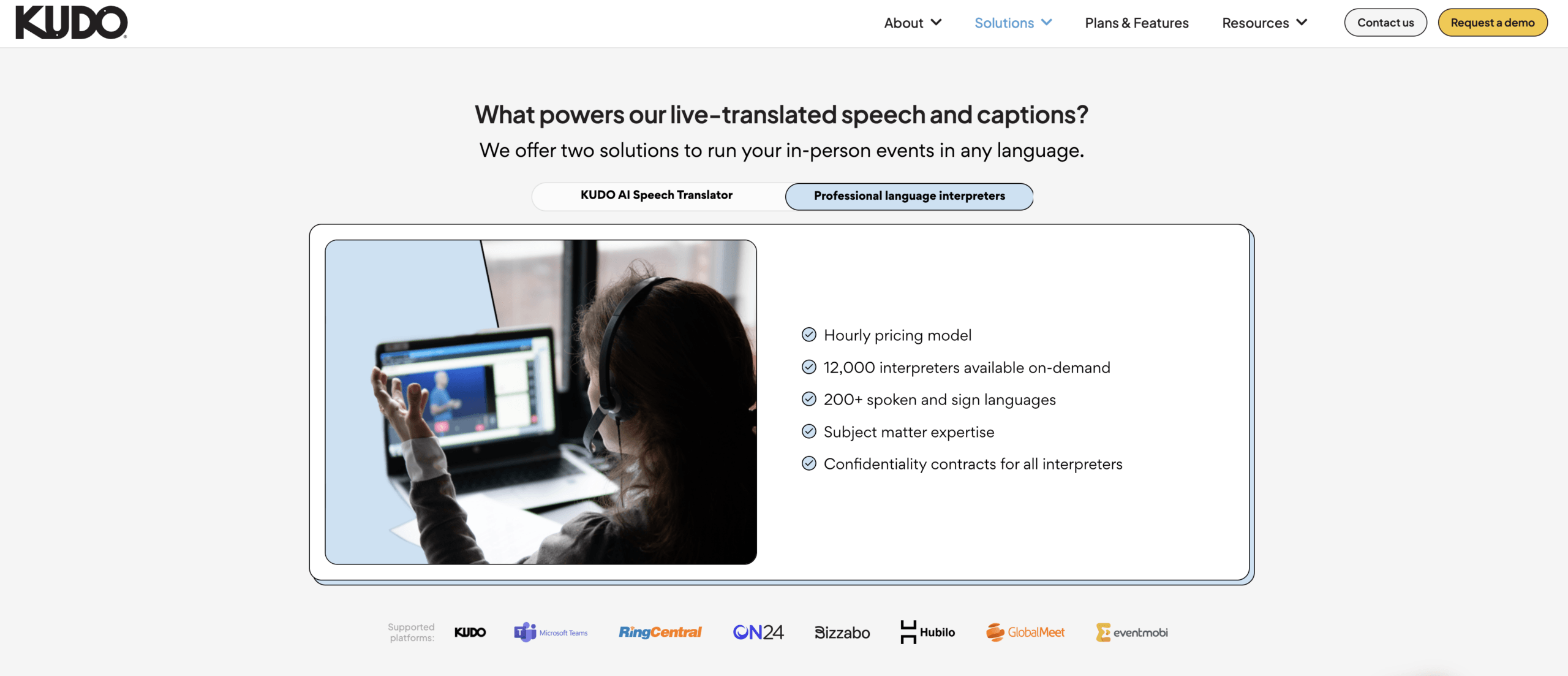
 KUDO can serve those higher-risk scenarios through professional interpreters. Its Marketplace lets organizations book specialists by language and subject matter, while its wider platform can deliver their interpretation to online, in-person, or hybrid audiences. Organizations may also bring their own interpreters into supported workflows.
The decision rule is straightforward:
- Use self-serve AI for frequent, recoverable conversations where clarification is possible.
- Consider managed AI delivery for structured one-to-many communication.
- Use qualified human interpreters when an error could create legal, medical, financial, reputational, or safety consequences.
This risk-based view prevents Transync AI and KUDO from being treated as identical subscriptions when one provider also offers professional interpretation services.
A team evaluating Transync AI and KUDO should document which meetings can use AI and which must be escalated to a qualified interpreter.
Decision 2: Is the Communication One-Way or Two-Way?
Interaction direction is one of the clearest functional differences between Transync AI and KUDO.
The Transync AI Conversation Model
The real-time translation tool supports one-way, two-way, and multilingual modes for different conversation patterns. In a two-way meeting, the system can distinguish the supported languages in the selected pair and provide original and translated text as people take turns speaking.
The AI voice translator adds natural voice playback so users do not have to read every line. This design is useful when both sides must ask questions, answer immediately, negotiate details, or correct misunderstandings during the session.
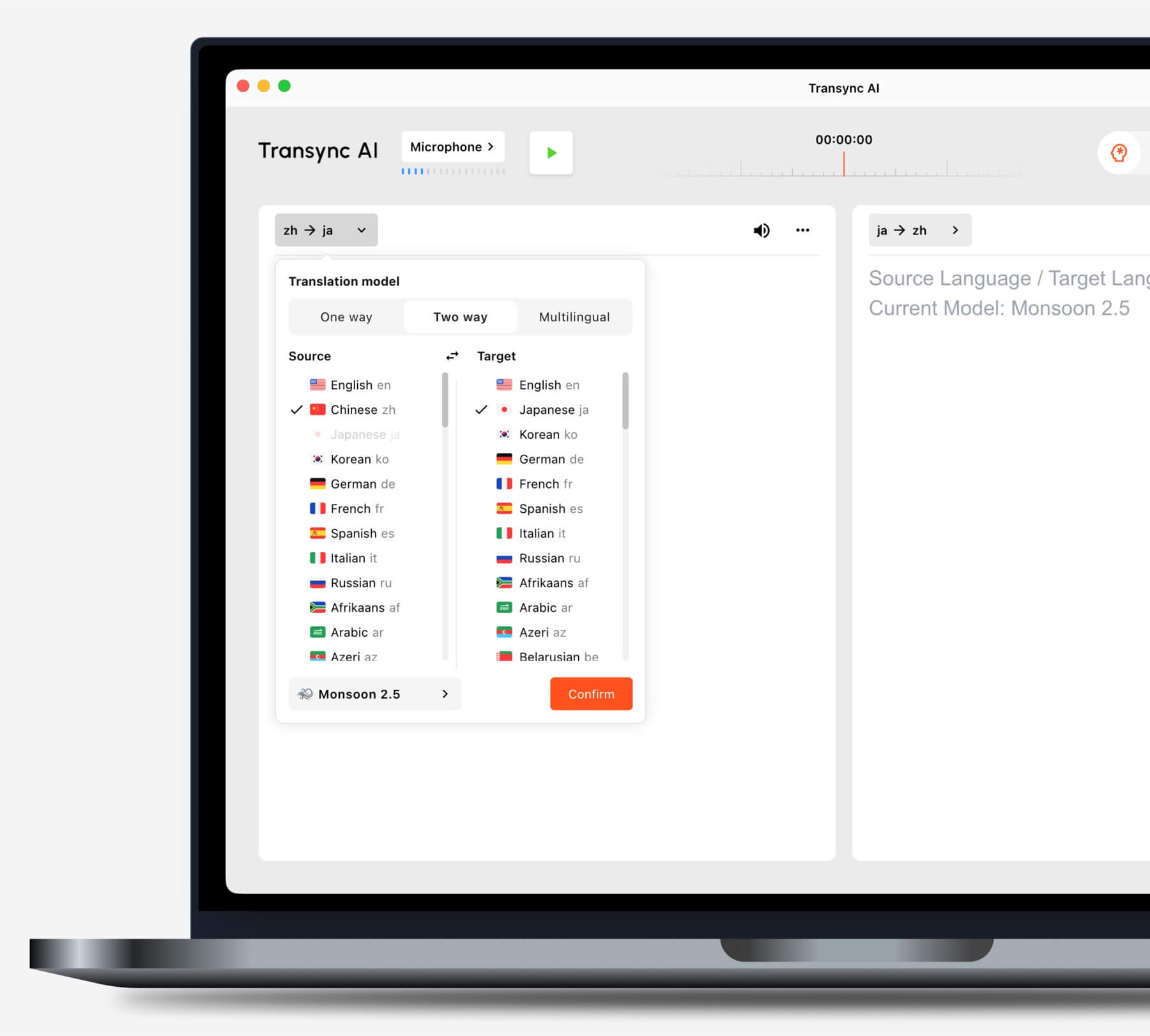
Choose the translation mode that matches your scenario before starting a task.
The KUDO Delivery Model
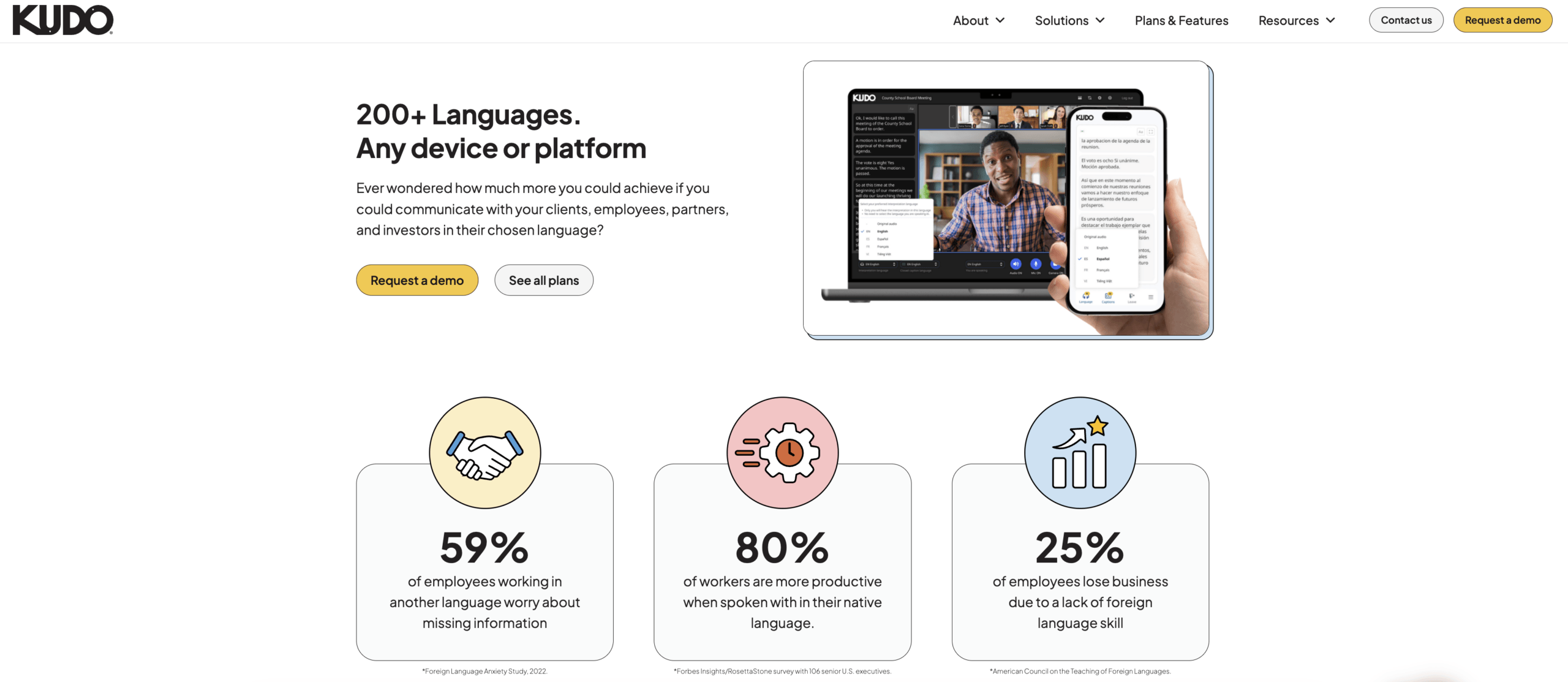
KUDO describes its AI Speech Translator as a one-way communication solution for translated captions and audio. That model fits presentations, webinars, town halls, training, announcements, and conference sessions where one speaker or stage delivers content to listeners.
For interactive communication, KUDO positions professional human interpreters as the more suitable route. Human interpreters can support questions, back-and-forth discussion, subject-matter nuance, and interactive meeting formats across the platform or supported integrations.
This does not make one model universally better. It means the buyer must map the product mode to the meeting format. A bilingual customer interview and a multilingual keynote are both live, but they do not need the same translation architecture. For this reason, Transync AI and KUDO should be tested with their intended interaction patterns rather than one generic script.
Decision 3: Should AI or a Human Interpreter Deliver the Translation?
The AI-or-human choice gives Transync AI and KUDO different boundaries.
Transync AI is designed around AI translation. Its strengths are immediate availability, consistent product behavior, and a low recurring price. Users can prepare the meeting with the AI Assistant Keywords and Context feature, helping the system recognize company names, industry terms, abbreviations, and the subject of the conversation.
KUDO gives organizations both AI and human routes. Its AI Speech Translator provides live captions and audio in more than 70 languages, with glossary upload and selected voice options. Its professional network covers more than 200 spoken and sign languages and includes subject-matter specialists.
The practical selection can be expressed as a risk ladder:
| Meeting type | Recommended starting route | Why |
|---|---|---|
| Weekly multilingual team sync | Transync AI | Frequent two-way use with low setup and predictable cost |
| International sales or support call | Transync AI | Participants need immediate questions, answers, and terminology context |
| Product webinar or employee announcement | KUDO AI | Structured one-to-many translated audio and captions |
| Multilingual conference or hybrid event | KUDO | Audience delivery, integrations, and optional technical support |
| Board, investor, or diplomatic meeting | KUDO Human Interpretation | Human judgment, nuance, and subject expertise |
| Legal, medical, or safety-critical discussion | Qualified human interpreter | Consequences of error exceed the appropriate risk tolerance for general AI translation |
A buyer does not always need to make one permanent choice. An organization could use AI for routine communication and reserve professional interpretation for high-risk sessions. KUDO supports that mixed procurement model directly; Transync AI offers a simpler self-serve option for the routine layer.
Decision 4: How Will Participants Join and Follow the Translation?
The participant journey often decides whether Transync AI and KUDO will work in the real environment.
Personal and Team Access with Transync AI
The live meeting translation feature works alongside common conferencing software rather than requiring one native meeting ecosystem. Users can operate it through web, Windows, macOS, iOS, or Android and apply it to online calls or face-to-face conversations.
During a call, remote speech can be captured through computer-audio sharing, and translated voice can be played locally or routed into supported meeting workflows. The Picture-in-Picture bilingual subtitles feature keeps original and translated captions visible over other applications on supported devices.
This is valuable for a participant who moves between Zoom, Microsoft Teams, Google Meet, other calling tools, and in-person conversations.
For one-to-many sessions, the Presentation Mode feature lets one Transync AI host enable up to 10 target languages and distribute the live experience by link, QR code, or Room ID. Audience members join from their own devices, select an enabled language, and receive translated subtitles or optional voice playback.
Audience members do not need to install software, but they must register or sign in to a Transync AI account. They can read, listen, and switch among the languages enabled by the host, but they cannot contribute voice input to the presentation task. The mode is currently in beta, and usage varies with the peak audience and target-language multipliers.
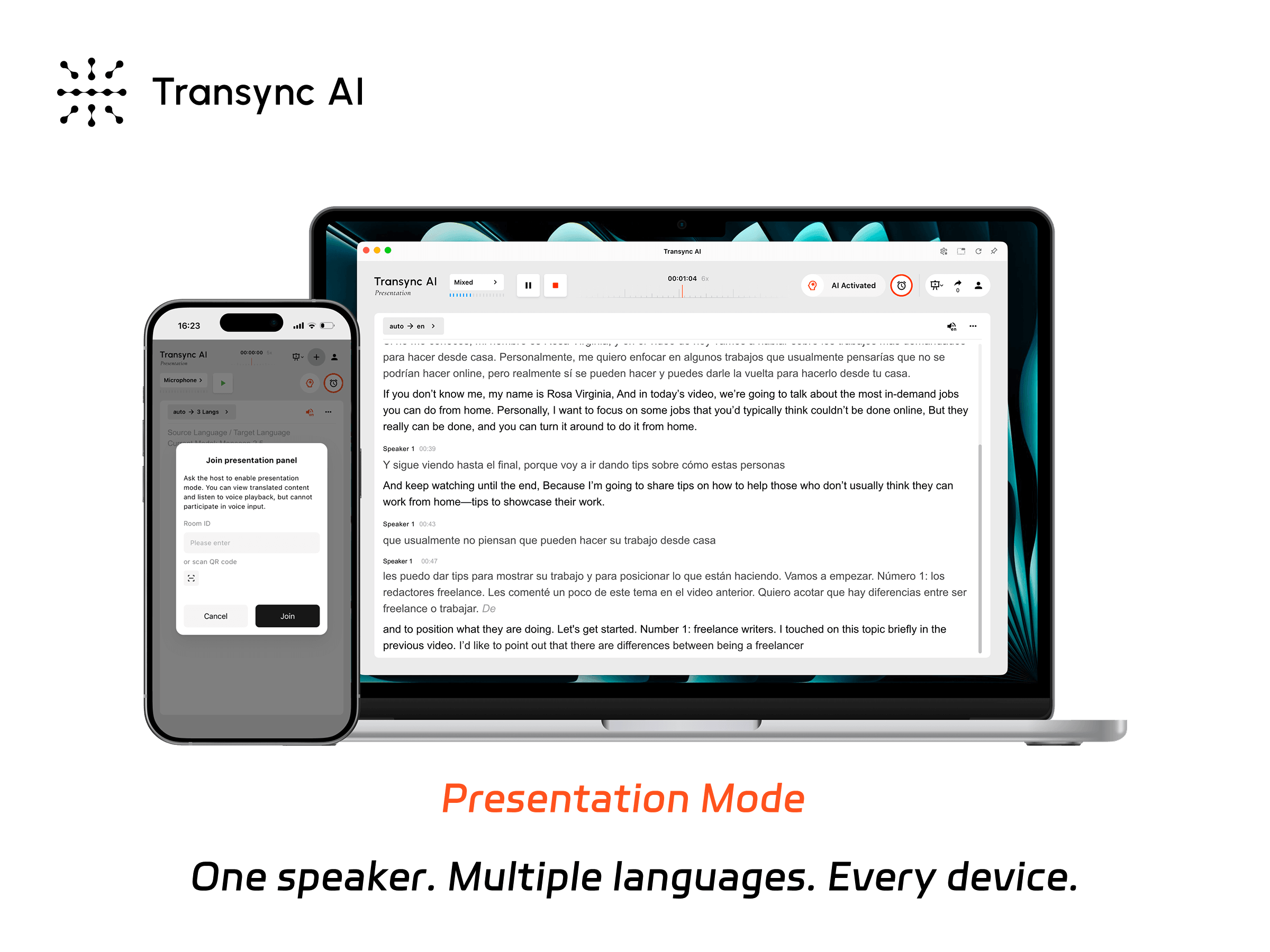
Presentation Mode lets one host share live translation with audience members on their own devices.
Platform and Audience Access with KUDO
KUDO can operate through its own meeting environment, a native Microsoft Teams integration, embedded widgets, or integrations with meeting and event platforms. Its official online-platform materials describe selected integrations supporting audiences of up to 3,000 users per meeting or event, subject to platform capacity and configuration.
For in-person and hybrid events, organizers can provide QR codes or web links. Attendees open the interface on their device, connect headphones if they want translated audio, or read subtitles without downloading an application. Technical support can be added for more complex delivery.
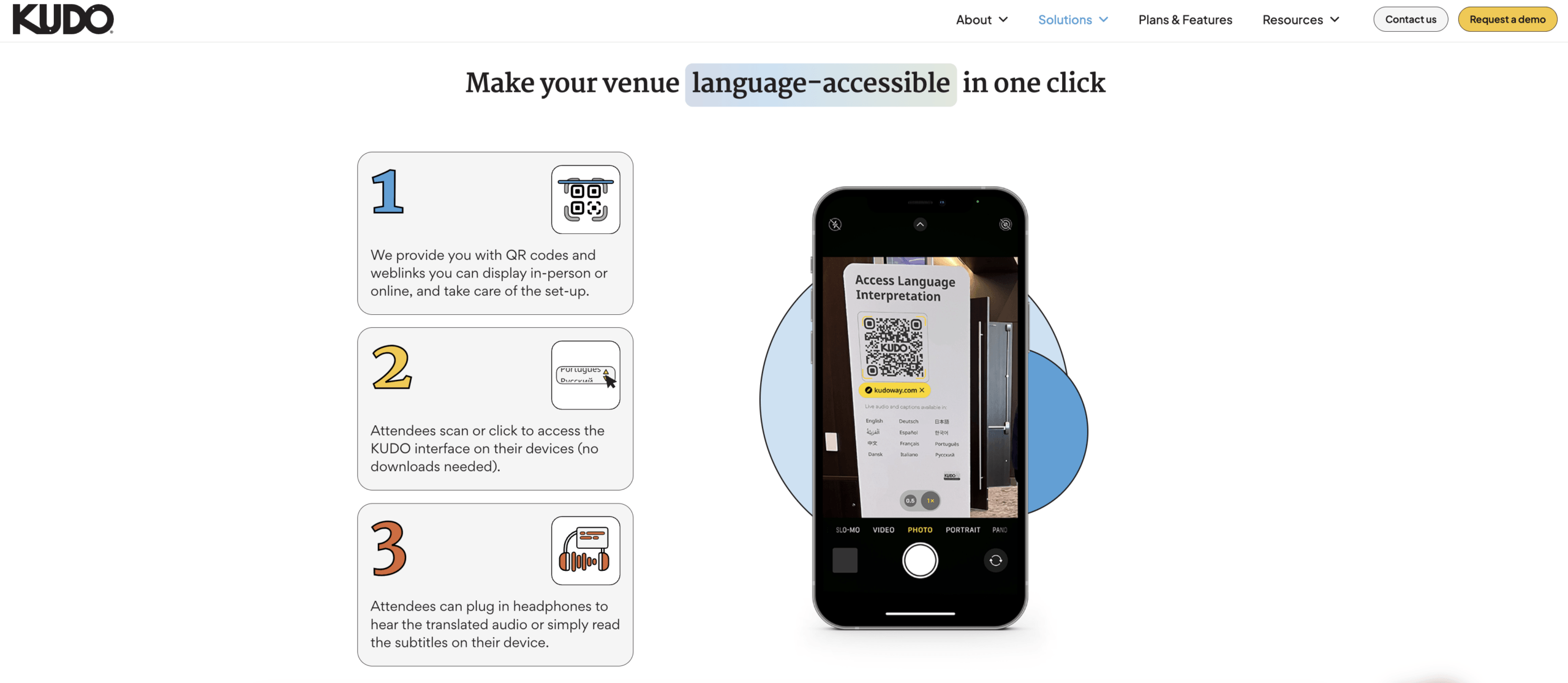
The platform decision is therefore no longer personal access versus audience access. Both Transync AI and KUDO can distribute translated audio and captions to personal devices. Transync AI provides a self-operated Presentation Mode without adding a meeting bot, while KUDO extends further into professional interpreters, native integrations, embedded widgets, technical support, sign-language interpretation, and managed online, onsite, or hybrid delivery.
Decision 5: What Will the Full Translation Program Cost?
The pricing comparison between Transync AI and KUDO must separate software subscription cost from event and professional-service cost.
Published purchasing structure
| Product or route | Public dollar price | Usage or commitment | Best purchasing fit |
|---|---|---|---|
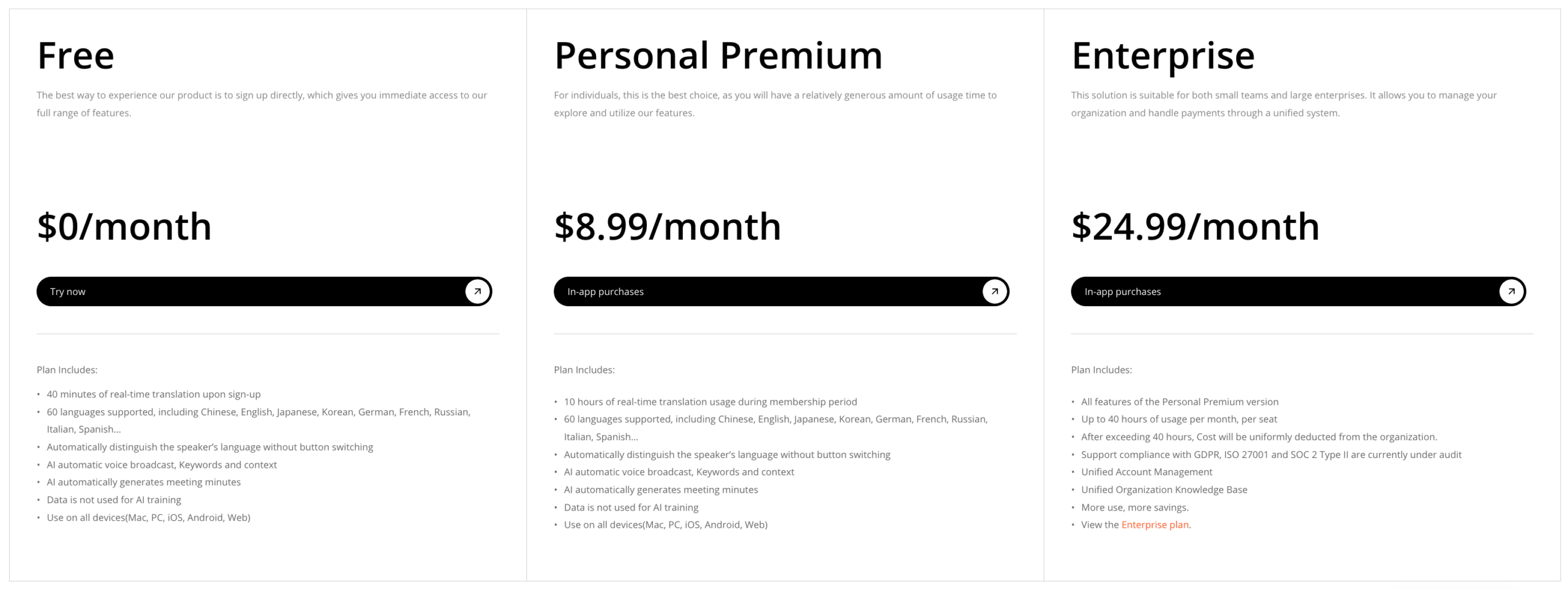
| Transync AI Free | $0 | 40 minutes after sign-up | Testing the real meeting workflow |
| Transync AI Personal Premium | $8.99/month | 10 hours of real-time translation during the membership period | Individuals and frequent meeting users |
| Transync AI Enterprise | $24.99/month per seat | Up to 40 hours per month per seat | Teams wanting organization management and predictable seat pricing |
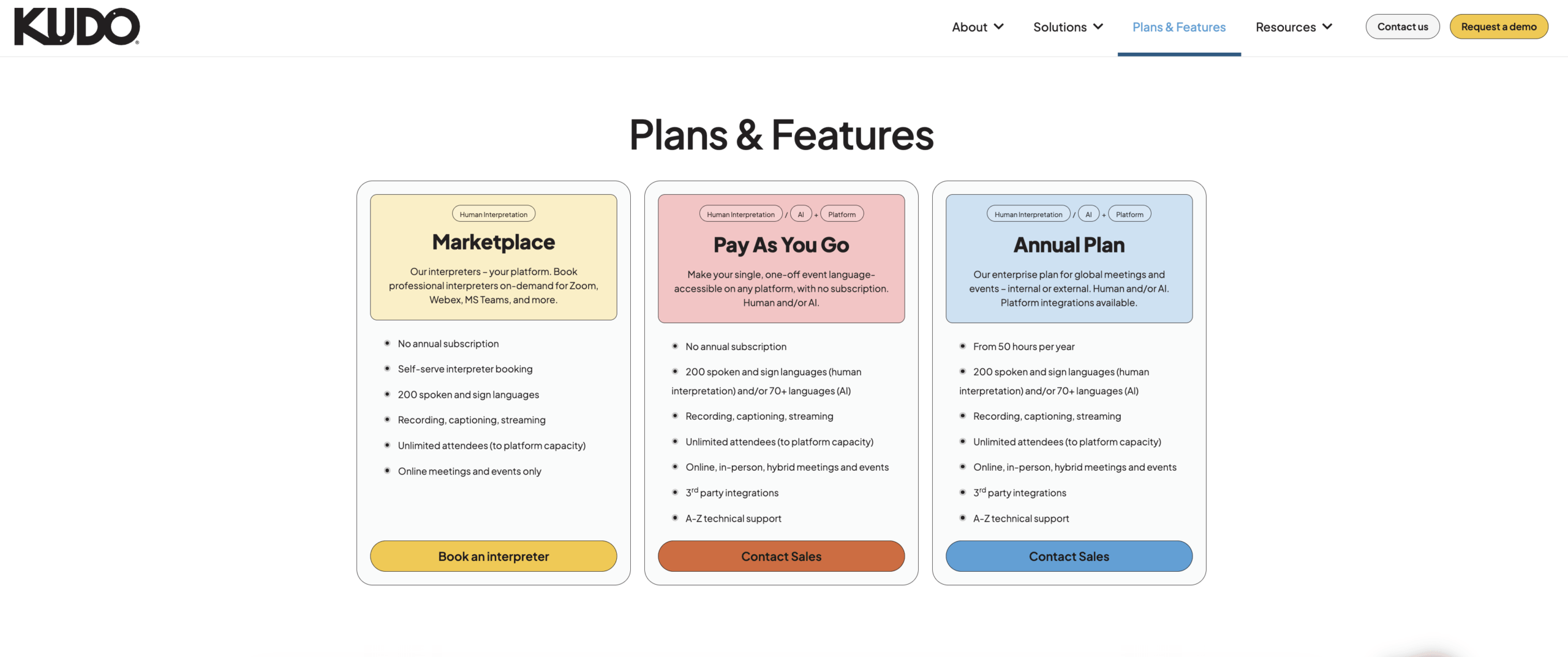
| KUDO Marketplace | Interpreter fee shown during booking | No annual subscription; book professional interpreters on demand | Ad-hoc high-stakes online meetings and events |
| KUDO Pay As You Go | Contact sales | No annual subscription; AI and/or human interpretation for one-off meetings and events | A single event requiring platform and support options |
| KUDO Annual Plan | Contact sales | Annual enterprise plan based on language-access needs | Recurring internal and external meeting or event programs |
Sources: Transync AI official pricing page and KUDO official plans and features. Checked in August 2026.
A complete cost model for Transync AI and KUDO should separate recurring software usage from interpretation, event delivery, and technical-service costs.
Where Does Transync AI Have the Price Advantage?
Transync AI publishes a 8.99 monthly individual plan containing 10 hours of real-time translation. If all included time is used, the effective cost is approximately 0.015 per minute. New users can test the product with 40 free minutes after registration.
KUDO does not publish a comparable fixed dollar amount for its AI Pay As You Go or Annual Plan on the current public page. Cost depends on the selected technology, session recurrence, duration, languages, platform, human interpreters, and required support. Marketplace users see the interpreter fee during booking.
 This gives Transync AI a strong advantage for buyers who want transparent, low-commitment pricing for regular AI-translated meetings. A person or small team can subscribe without planning an event, contacting sales, or purchasing professional services.
An exact savings percentage against KUDO would be unreliable without a quote for the same meeting. The broader KUDO cost may include capabilities that Transync AI does not sell, such as professional interpreters, event-platform delivery, multilingual recording, and technical support.
A responsible Transync AI and KUDO budget should include:
- Number and duration of sessions.
- One-way AI delivery or interactive human interpretation.
- Number of languages and audience members.
- Platform integration or venue requirements.
- Interpreter preparation and minimum booking rules.
- Technical rehearsal and live support.
- Transcripts, recordings, captions, and reporting.
- Internal staff time required to operate the workflow.
For daily calls, the low monthly software price usually matters most. For an executive summit, reducing delivery risk may matter more than the lowest hourly rate.
What Happens After the Meeting?
Post-meeting output is not the primary difference between Transync AI and KUDO, but it can influence procurement.
The AI meeting notes feature turns a translated conversation into a transcript and structured follow-up summary. That output fits routine sales, support, teaching, consulting, and team workflows where participants need decisions and next steps.
KUDO provides multilingual recording and downloadable transcriptions for supported client workflows. Its platform also includes event-oriented features such as reports, analytics, multilingual recording, polling, voting, screen sharing, and other meeting controls depending on the selected setup.
Ask whether the post-session deliverable is a personal action record, an enterprise archive, a multilingual event recording, or a document that must be distributed to an audience. The answer may change which operating model creates more value.
A Fair Transync AI and KUDO Test
Testing Transync AI and KUDO fairly requires more than running the same sentence through two AI engines, because KUDO also sells human interpretation and managed delivery.
Test the routine conversation
Use a five-minute two-way call containing names, acronyms, figures, fast turn-taking, and a clarification. Measure setup time, language detection, bilingual subtitle readability, voice delay, terminology accuracy, and the usefulness of meeting notes.
Test the one-to-many session
Use a presenter, multiple listeners, at least two target languages, and the actual event platform. Measure how participants join, select a language, receive captions or audio, and recover when the network becomes unstable.
Test the high-risk route
If considering human interpretation, provide the interpreter with the real agenda and terminology. Assess subject expertise, preparation, handoffs, confidentiality procedures, interaction quality, and technical support—not only word-level translation.
Compare complete operating cost
Record subscription fees, quote amounts, interpreter charges, platform requirements, rehearsal hours, support, and staff time. This creates a meaningful Transync AI and KUDO comparison instead of equating unlike products.
Transync AI and KUDO FAQ
Is Transync AI Cheaper Than KUDO?
In a public-price review of Transync AI and KUDO, Transync AI has the clearer and lower entry price for self-serve AI meetings: $8.99 per month for Personal Premium. KUDO does not publish fixed AI or annual-plan dollar prices on its current plans page, and human interpreter fees vary by booking. A precise comparison requires a KUDO quote for the same session.
Which product is better for two-way meetings?
Transync AI is the more direct AI option for routine two-way conversations. KUDO identifies its AI Speech Translator as one-way communication and uses professional human interpretation for interactive formats requiring higher assurance.
Which product is better for conferences?
Transync AI is a practical self-service option for one-to-many conferences, training, lectures, and presentations that use up to 10 target languages. The host can invite the audience through a link, QR code, or Room ID and provide subtitles or optional voice playback on personal devices.
KUDO is the stronger starting point when a conference requires professional interpreters, sign-language access, native platform integrations, larger managed delivery, technical support, or human judgment for high-risk content. Its advantage is the combination of AI, people, and event infrastructure—not simply audience language channels.
Can KUDO Combine AI and Human Interpretation?
Yes. Its plans include routes for AI speech translation, professional human interpreters, or combined delivery. Organizations can use the Marketplace, Pay As You Go, or an Annual Plan according to session frequency and risk.
Does KUDO Support Sign Language?
Its human interpretation network covers more than 200 spoken and sign languages according to current official materials. AI speech translation should not be treated as a substitute for a qualified sign-language interpreter.
Can Attendees Join KUDO Without Installing an App?
For supported in-person and hybrid workflows, attendees can scan a QR code or open a web link, then listen to translated audio or read subtitles on their devices without downloading an application.
Which product is easier to start using?
For an individual meeting user, Transync AI has the simpler self-serve path and transparent monthly price. KUDO can be purchased for one-off or recurring use, but platform configuration, sales contact, interpreter booking, or event support may be part of the workflow.
Final Recommendation
The most useful conclusion about Transync AI and KUDO is based on meeting risk and delivery responsibility.
Choose Transync AI for frequent multilingual conversations where participants need to speak in both directions, follow bilingual subtitles, hear translated voice, prepare terminology, and retain meeting notes at a predictable monthly cost.
Choose KUDO AI for structured one-to-many translation delivered through meeting or event infrastructure. Choose KUDO’s professional interpretation route when the session is interactive, high-stakes, or dependent on human judgment and subject expertise.
Choose Transync AI for frequent multilingual conversations and self-managed presentations where users need two-way meeting translation, bilingual subtitles, translated voice, terminology preparation, meeting notes, or audience access at a predictable monthly price. Presentation Mode extends the product to one-to-many sessions through personal-device subtitles and voice playback.
If you want a next-generation experience, Transync AI leads the way with real-time, AI-powered translation that keeps conversations flowing naturally. You can try it free now.