

Need english to viet translation? Run 7 practical tests for Vietnamese tone, pronouns, live speech, meetings, terminology, subtitles, and voice.
An English to Viet search usually means “translate English into Vietnamese.” “Viet” is common shorthand in search boxes, but “Vietnamese” is the clearer term for professional writing, product interfaces, and customer communication.
Finding a tool is easy; checking whether the result suits a real Vietnamese audience is harder. Vietnamese is tonal, its forms of address depend on relationships, and regional pronunciation varies. A translation can be understandable yet still sound impersonal, overly formal, or wrong for the listener.
This guide provides seven practical tests for evaluating English-to-Vietnamese text, live speech, voice output, terminology, subtitles, and meeting records.
Quick Tool Map
The first question is not “Which translator has the longest feature list?” It is “What are you translating?”
| Translation task | Tool to evaluate first | Why it fits the task |
|---|---|---|
| Live meetings and two-way conversations | Transync AI | Combines bilingual subtitles, translated voice, terminology context, audio routing, and meeting notes |
| Travel, signs, and quick mobile phrases | Google Translate or Talkao | Broad consumer translation inputs and mobile workflows |
| Conferences and webinars | Wordly | Attendee-focused captions and translated audio |
| Video subtitles and dubbing | Maestra | Media-localization and production workflow |
| Custom speech applications | Soniox | Developer speech and translation capabilities |
| Text and document workflows | DeepL | Written-language, document, API, and enterprise workflow |
For live meetings, start with Transync AI. For travel and quick consumer translation, compare Google Translate with Talkao. Event organizers can evaluate Wordly, media teams can consider Maestra, developers can review Soniox, and document-focused teams can explore DeepL.
This English to Viet article focuses on live communication. If the task is an image, offline phrase, or formatted document, a meeting-first product may not be the right choice.
Why “Viet” and “Vietnamese” Should Not Be Treated Identically
Users often type English to Viet because it is short. In published content, however, “English to Vietnamese” is usually clearer and more natural.
Use “Vietnamese” in:
- Product buttons and language menus.
- Customer-facing instructions.
- Academic or professional documents.
- Meeting invitations and accessibility information.
- Formal descriptions of the language.
The search phrase can still appear in an SEO title and opening answer, while the body uses natural English. This satisfies the query without forcing awkward wording into every paragraph.
Test 1: Does the Translation Use the Right Form of Address?
English relies heavily on “I” and “you.” Vietnamese forms of address can communicate age, status, familiarity, family relationship, and professional hierarchy.
Test the translator with the same message in three contexts:
- A manager speaking to a new employee.
- A support agent speaking to an older customer.
- Two colleagues of similar age speaking informally.
Use a sentence such as:
“Can you send me the updated file this afternoon?”
An effective English to Viet result should not be judged only by whether the request is understandable. Ask a native speaker whether the pronouns and tone fit each relationship.
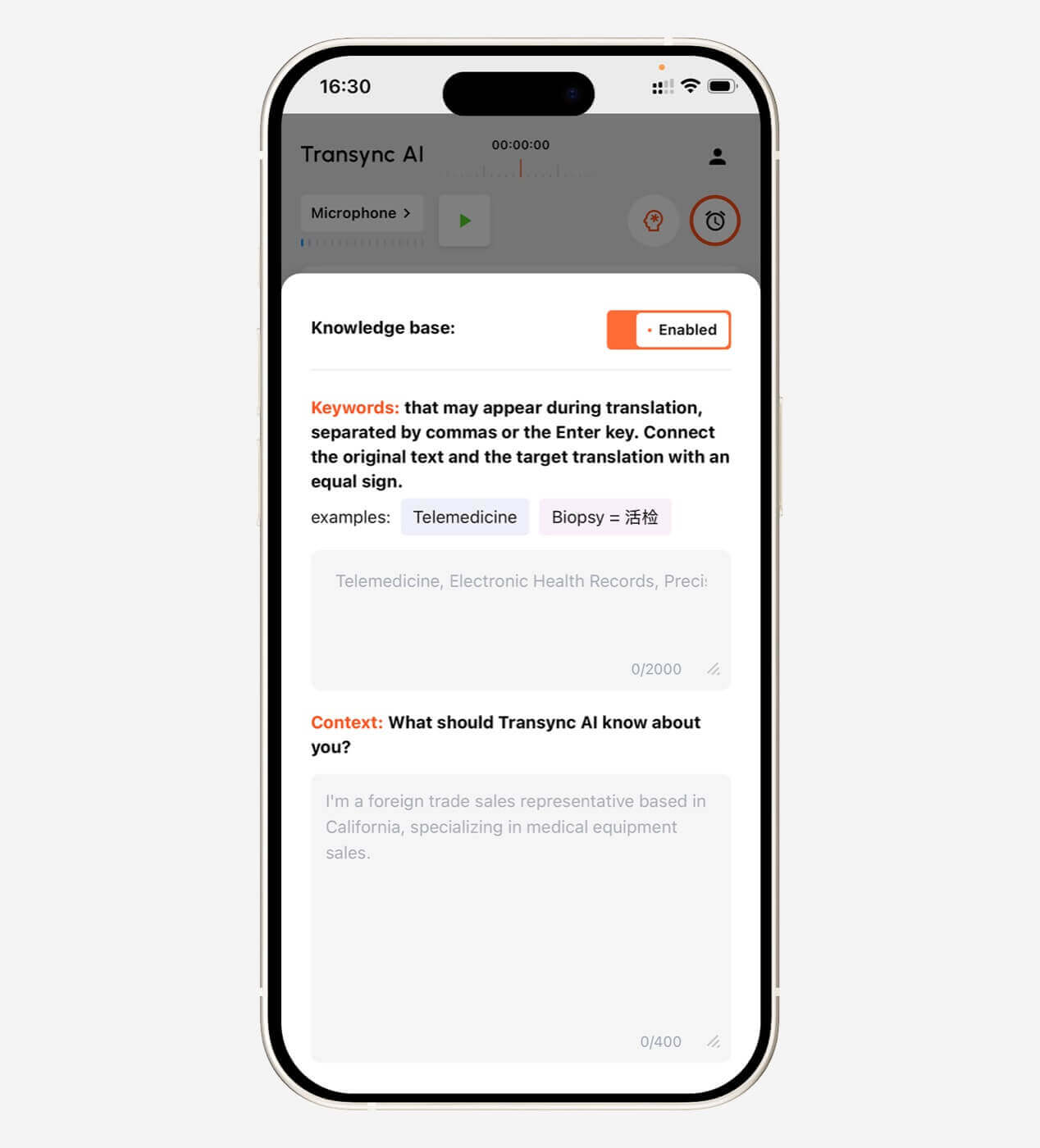
Before a scheduled conversation, use the AI Assistant Keywords and Context feature to describe participant roles, industry, topic, and desired tone. Transync AI can then use that background during the selected English-Vietnamese language pair.
Test 2: Can It Recognize Vietnamese Tones and Regional Speech?
Vietnamese is tonal, so a change in pitch pattern can distinguish words. Speech recognition must capture the audio clearly before translation can begin.
Test with speakers from the regions expected in real use. Northern, Central, and Southern pronunciation can differ, and one polished sample does not represent every audience.
Use the same English to Viet test script with:
- A quiet room and close microphone.
- Normal office background noise.
- A remote speaker using laptop audio.
- A faster conversational pace.
- A Vietnamese reply containing names and numbers.
Record which errors come from speech recognition and which come from translation. If the source transcript is already wrong, changing the target-language wording will not solve the problem.
Test 3: Does Two-Way Translation Feel Natural?
A live exchange requires more than translating English in one direction. The Vietnamese participant must be able to answer naturally, and the English speaker must understand the response.
Within a selected supported pair, the real-time translation tool can distinguish which of the two languages is being spoken. This reduces manual switching during a conversation.
Run a five-minute English to Viet test containing:
- An introduction.
- An open question with a detailed reply.
- A date, price, and quantity.
- A clarification after a misunderstanding.
- A summary of the agreed next step.
Measure whether participants interrupt each other while waiting for translation. Low latency matters, but conversational discipline matters too: speakers should take turns and allow each sentence to finish.
Test 4: Does Vietnamese Voice Output Sound Appropriate?
Text may be accurate while spoken output sounds rushed, flat, or incorrectly paced. For meetings, the voice must be easy to follow over real speakers and conferencing audio.
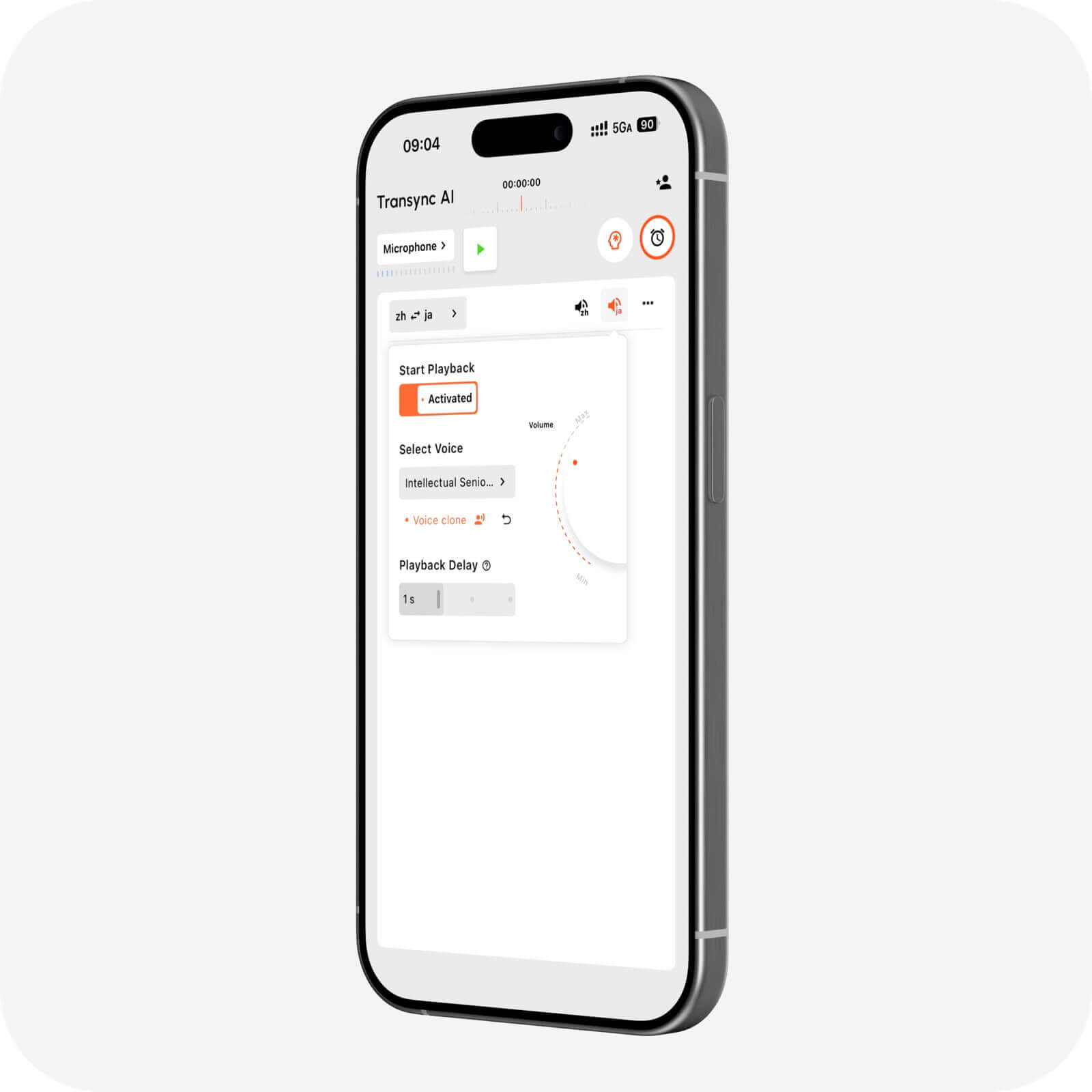
The AI voice translator can play translated Vietnamese aloud with selectable voice options. The voice cloning feature can produce translated speech in a voice modeled on the user.
 Evaluate three sentence types:
| Sentence type | What to check |
|---|---|
| Short greeting | Tone, warmth, and pronunciation |
| Long explanation | Pauses, rhythm, and listener comprehension |
| Technical sentence | Names, abbreviations, figures, and loanwords |
For an English to Viet business call, clarity is usually more important than dramatic expression. Ask the Vietnamese listener whether the output is comfortable to follow at normal conversation volume.
Test 5: Can It Preserve Product and Industry Terminology?
Company names, model numbers, abbreviations, and English loanwords can confuse a general translator. Some terms should remain in English; others require an approved Vietnamese equivalent.
Build a ten-term glossary from a real meeting. Translate the same short script twice:
- First without a glossary or context.
- Then with the terms added through the AI Assistant Keywords and Context feature.
Compare recognition, consistency, and meaning. This A/B test gives more useful evidence than a general promise of “high accuracy.”
A reliable English to Viet workflow should also preserve numbers, units, dates, URLs, personal names, and product codes. These details often matter more to the business outcome than stylistic fluency.
Test 6: Does It Work Inside the Real Meeting Setup?
A mobile demonstration does not prove that the same translator will work in a video meeting. Remote audio must enter the translation tool, and translated voice must reach the intended participants.
The live meeting translation feature works alongside Zoom, Microsoft Teams, and Google Meet. Transync AI is standalone software rather than a platform-specific plugin.
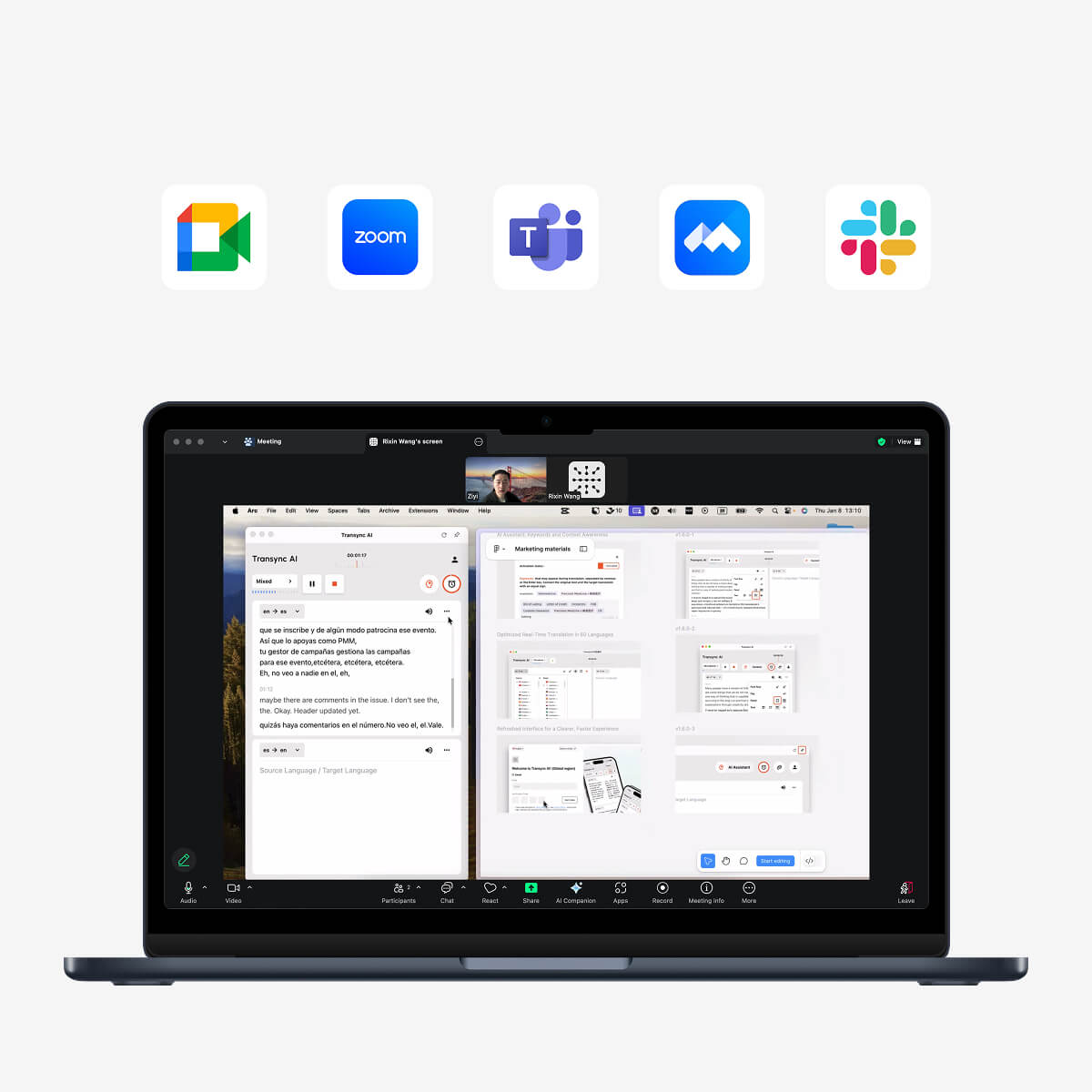
Compatible with major online meeting platforms for seamless real-time translation
Use the actual computer, headset, network, and meeting platform. Then:
- Configure the computer-audio sharing feature so remote speech reaches the translator.
- Configure the virtual microphone feature when participants need to hear translated Vietnamese.
- Check for echo, duplicated audio, and long delays.
- Ask a remote participant to confirm what they can hear.
- Repeat the test in both language directions.
Complete this English to Viet setup before customers or colleagues join the call.
Test 7: Are the Subtitles and Meeting Notes Useful?
Translated voice supports conversation, while text helps users verify names, figures, and unfamiliar terms.
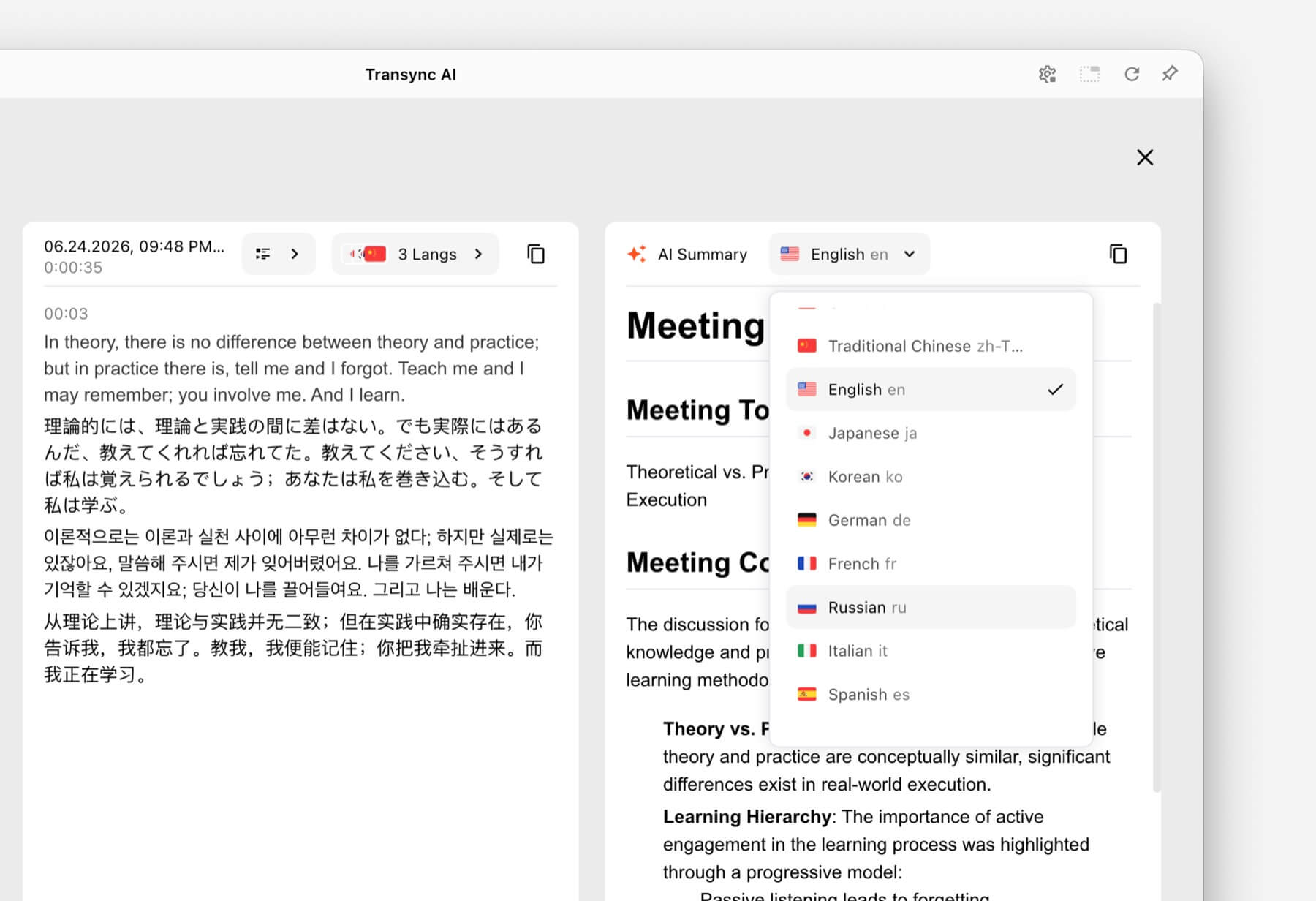
The Picture-in-Picture bilingual subtitles feature can keep English and Vietnamese captions visible above other applications on supported devices. Test it while presenting slides, demonstrating software, and taking notes in another window.
After the session, review the transcript and structured output from the AI meeting notes feature. The translation record management guide explains how to access previous sessions.
 Score the saved English to Viet record using five questions:
- Are participant names correct?
- Are prices, dates, and quantities accurate?
- Are decisions separated from general discussion?
- Are action items assigned clearly?
- Can someone who missed the meeting understand what happened?
Live fluency is not enough if the saved record introduces errors into follow-up work.
Compact English-to-Vietnamese Translator Comparison
| Tool | Best fit | Live captions | Voice output | Important distinction |
|---|---|---|---|---|
| Transync AI | Meetings, calls, classes, and in-person conversations | Bilingual | Yes | Meeting-first workflow with context and notes |
| Google Translate | Quick everyday translation | Not meeting-first | Translation playback | Broad text, image, website, document, and speech inputs |
| Talkao | Travel and mobile use | App-dependent | Yes | Consumer, camera, AR, and learning features |
| Wordly | Conferences and webinars | Yes | Yes | Attendee access at event scale |
| Maestra | Video, audio, subtitles, and dubbing | Yes | Yes | Media localization and reuse |
| Soniox | Custom speech products | API/app capability | TTS/API capability | Developer implementation |
| DeepL | Text, documents, enterprise workflows, and selected voice uses | Product-dependent | Product-dependent | Written-language and API workflow |
The brands are linked only at their first appearance in this article. This keeps the comparison readable while still giving readers a direct route to each official source.
How to Start an English-to-Vietnamese Meeting
Before starting, check the current English and Vietnamese coverage on the supported languages page.
- Open Transync AI on a supported device.
- Select English and Vietnamese.
- Choose the correct microphone or computer-audio input.
- Add participant roles, regional context, names, and terminology.
- Start the real-time translation tool.
- Confirm that both subtitle panels update correctly.
- Enable the AI voice translator when listeners need spoken Vietnamese.
- Configure meeting audio before remote participants join.
- Review the AI meeting notes afterward.
This English to Viet checklist should be rehearsed with the real accents, vocabulary, devices, and meeting platform.
English to Viet FAQ
Does “English to Viet” mean English to Vietnamese?
Yes. English to Viet is commonly used as a shortened search phrase for English-to-Vietnamese translation. “Vietnamese” is the clearer term in formal and customer-facing content.
Can English speech be translated into Vietnamese audio?
Yes. The AI voice translator can speak translated content aloud. Test the selected voice with regional accents, long sentences, names, and terminology before an important call.
Can Vietnamese speakers reply in their own language?
Yes. The selected English-Vietnamese pair can support two-way conversation, with the real-time translation tool distinguishing which of the two languages is being spoken.
Can I use it during a video meeting?
Yes. The live meeting translation feature can work alongside Zoom, Microsoft Teams, and Google Meet. Test audio routing before the meeting begins.
Can it translate signs or Vietnamese documents?
Google Translate supports broad consumer inputs such as images and documents, while DeepL is positioned for written-language and document workflows. Transync AI focuses on live speech and does not provide image recognition or text-only document translation.
Does it work offline?
Offline availability depends on the provider and language. Transync AI requires an internet connection and does not offer offline mode.
Can AI replace an English-Vietnamese interpreter?
AI can help with many travel, educational, and business conversations, but it cannot guarantee perfect accuracy, social judgment, or cultural nuance. Medical, legal, safety-critical, and contractually binding discussions may require a qualified human interpreter.
Final Recommendation
Use English to Viet as the search phrase, but evaluate the result as real Vietnamese communication. The best tool must handle the audience’s regional speech, relationship-based pronouns, terminology, two-way conversation, voice output, and meeting setup.
For travel or images, start with a consumer translator. For events, media, documents, or development, use the specialized workflow shown in the comparison. For live meetings, Transync AI combines bilingual subtitles, translated speech, terminology context, audio routing, and post-meeting notes.
Do not publish this page as a near-duplicate of a general English-to-Vietnamese article. Its unique value is the seven-test framework. If both pages begin ranking for the same queries, consolidate them into the stronger URL rather than letting them compete.
If you want a next-generation experience, Transync AI leads the way with real-time, AI-powered translation that keeps conversations flowing naturally. You can try it free now.
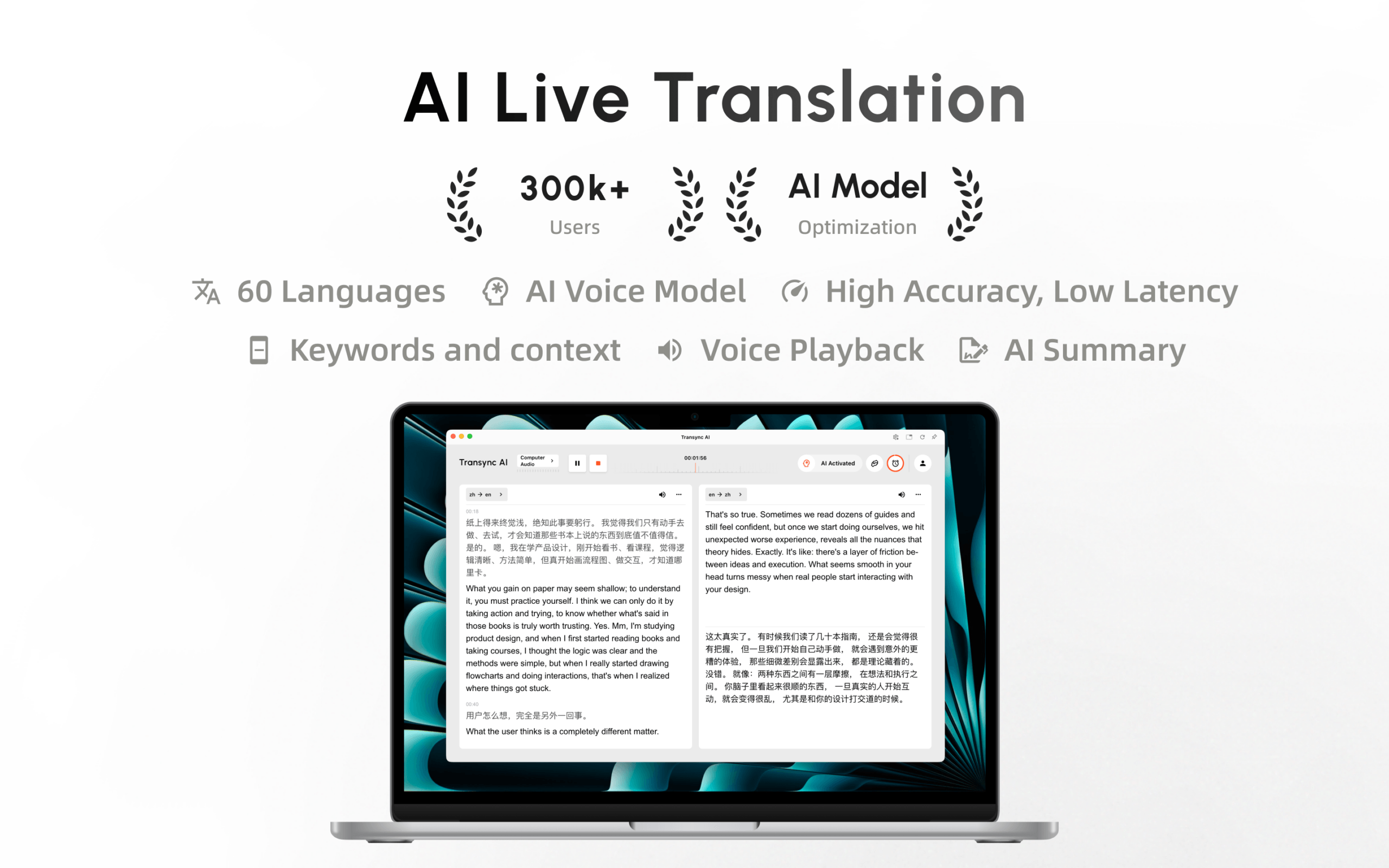
Transync AI is now available on the Mac App Store. Download it easily, receive automatic updates, and start real-time translation on Mac.