

English to Portugal localization means using European Portuguese, not a generic translation. Learn the vocabulary, tone, tools, and meeting workflow.
An English to Portugal request is not really about translating English into a country. It usually means adapting English for people in Portugal—and that means using European Portuguese, appropriate local vocabulary, and a tone that fits the audience.
This distinction matters. A translation written for Brazil may be understandable in Portugal, but words, pronunciation, sentence patterns, and forms of address can make it feel imported rather than local. In a customer email, product interface, class, or live meeting, that difference affects trust.
This guide is structured as a localization brief rather than another generic translator list. It shows what to decide before translation, what to listen for in a live conversation, and which workflow fits meetings, documents, events, quick phrases, or media.
The 30-Second Answer
If you need English to Portugal translation:
- Select European Portuguese, not simply “Portuguese,” when the option exists.
- Define the audience, relationship, and purpose.
- Replace Brazilian vocabulary with Portugal-appropriate terms.
- Test spoken output with a listener from Portugal.
- Use a meeting translator for live calls and a document tool for written files.
- Ask a qualified reviewer to check high-stakes or public-facing content.
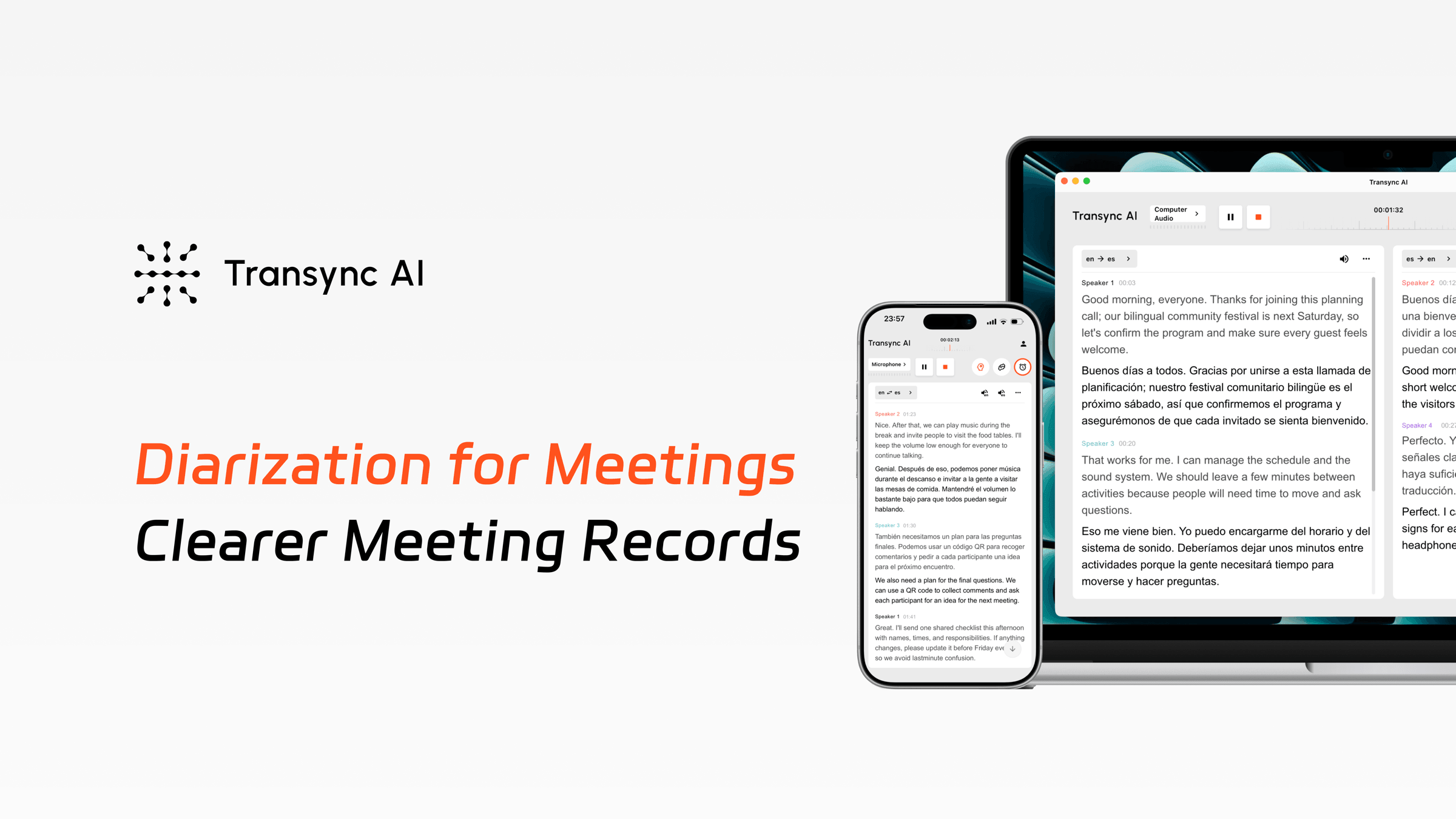
For live conversations, start by evaluating Transync AI.
 For text and documents, consider DeepL.
 For quick consumer translation, compare Google Translate.
Event organizers can assess Wordly, while media teams can review Maestra.
 Start with a Localization Brief, Not a Translation Box
 Start with a Localization Brief, Not a Translation Box
Imagine an English-speaking software company preparing a product demonstration for a client in Lisbon. The team could paste each sentence into a translator and hope for the best. A stronger approach is to prepare a short brief that tells the translator what “correct” means.
Use this template:
| Brief field | Example for a Portugal audience |
|---|---|
| Target variety | European Portuguese |
| Audience | Operations managers in Portugal |
| Relationship | Professional, first meeting |
| Desired tone | Clear, respectful, confident, not overly formal |
| Content type | Live product demonstration and follow-up notes |
| Terms to preserve | Product name, feature names, API terms |
| Terms to localize | Interface actions, dates, times, common business language |
| Spoken output needed | Yes |
| Bilingual captions needed | Yes |
| Human review needed | Pricing, contractual language, and final proposal |
An English to Portugal workflow becomes more consistent when everyone uses the same brief. It also gives a human reviewer something concrete to evaluate.
European Portuguese Is Not a Cosmetic Setting
Brazilian and European Portuguese are part of the same language, but localization is not just a flag change.
Everyday vocabulary can reveal the wrong market
Several common concepts use different everyday words. Examples often cited in localization work include:
| English concept | Common in Portugal | Common in Brazil |
|---|---|---|
| Mobile phone | telemóvel | celular |
| Train | comboio | trem |
| Screen | ecrã | tela |
| Bathroom | casa de banho | banheiro |
| Ice cream | gelado | sorvete |
The Brazilian term may still be understood in Portugal, but a page filled with Brazilian vocabulary will not feel locally written.
Spoken rhythm and pronunciation differ
European Portuguese often reduces unstressed vowels more strongly than Brazilian Portuguese. The two varieties also differ in rhythm and pronunciation. Speech translation should therefore be tested with the voices and accents expected in the real meeting.
Formality requires context
English “you” does not tell the translator enough about status, familiarity, or politeness. Portuguese offers several ways to address someone, and a word-for-word choice may sound too distant or too casual.
For an English to Portugal customer interaction, define whether the speaker is addressing one person, a group, a senior client, or an established colleague. When in doubt, ask a Portugal-based reviewer to confirm the tone.
A Lisbon Meeting, Before the Call
The quality of live translation is often decided before anyone speaks.
First, confirm that the required European Portuguese option is available on the supported languages page. Then prepare names, product terminology, abbreviations, and background information with the AI Assistant Keywords and Context feature.
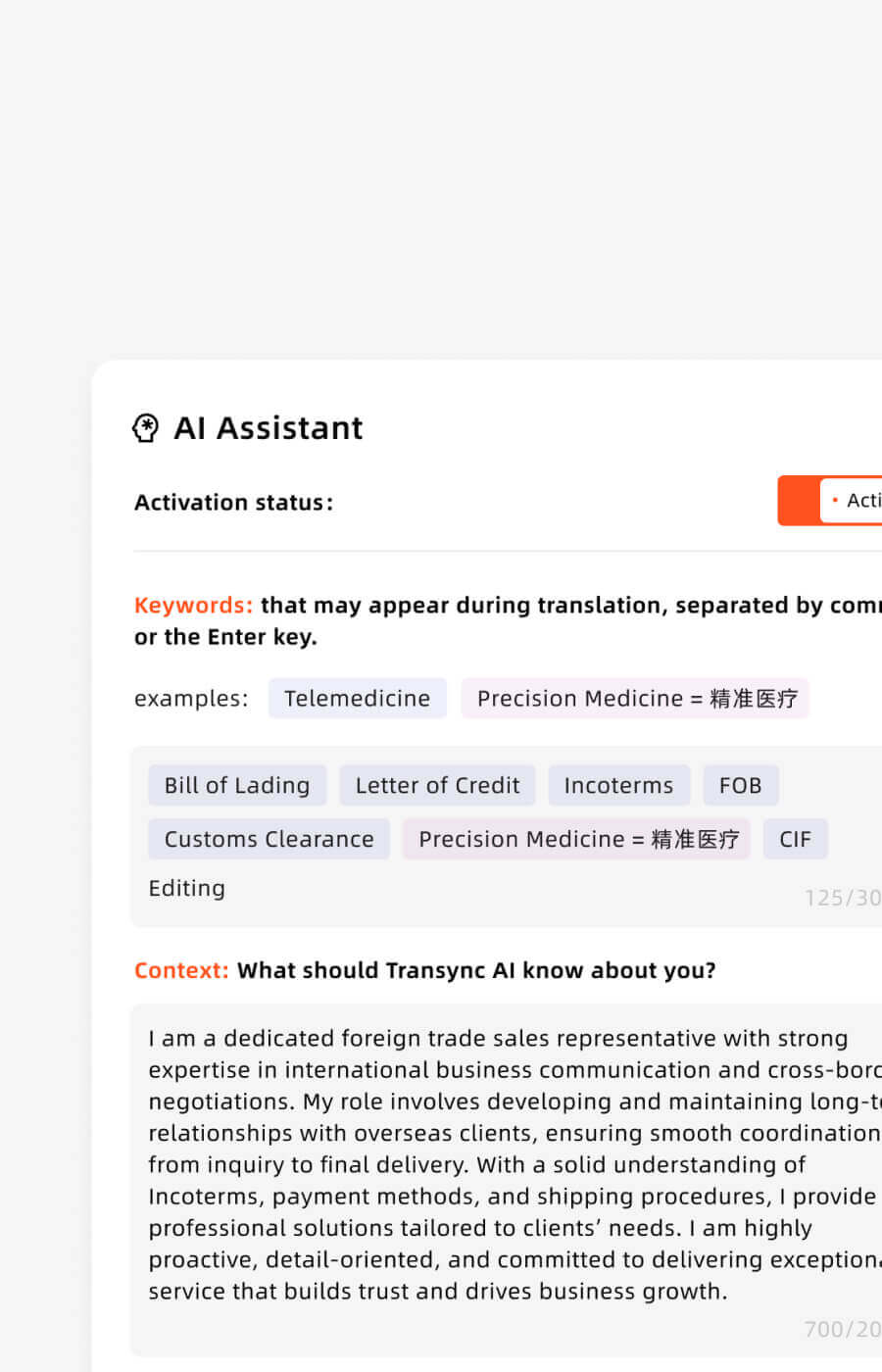
Use the AI Assistant in Transync AI to add custom keywords and contextual information for more accurate real-time translation.
For the product demonstration, the team might add:
- The client’s company and participant names.
- The product name and names of key features.
- Approved translations for recurring interface terms.
- A note that the audience is in Portugal.
- The purpose of the meeting.
- The desired professional tone.
This preparation is more useful than repeating the English to Portugal keyword throughout the meeting material. The system needs semantic context, not SEO phrasing.
During the Call: Let People Listen and Verify
In a live meeting, participants should not have to choose between translated audio and readable evidence.
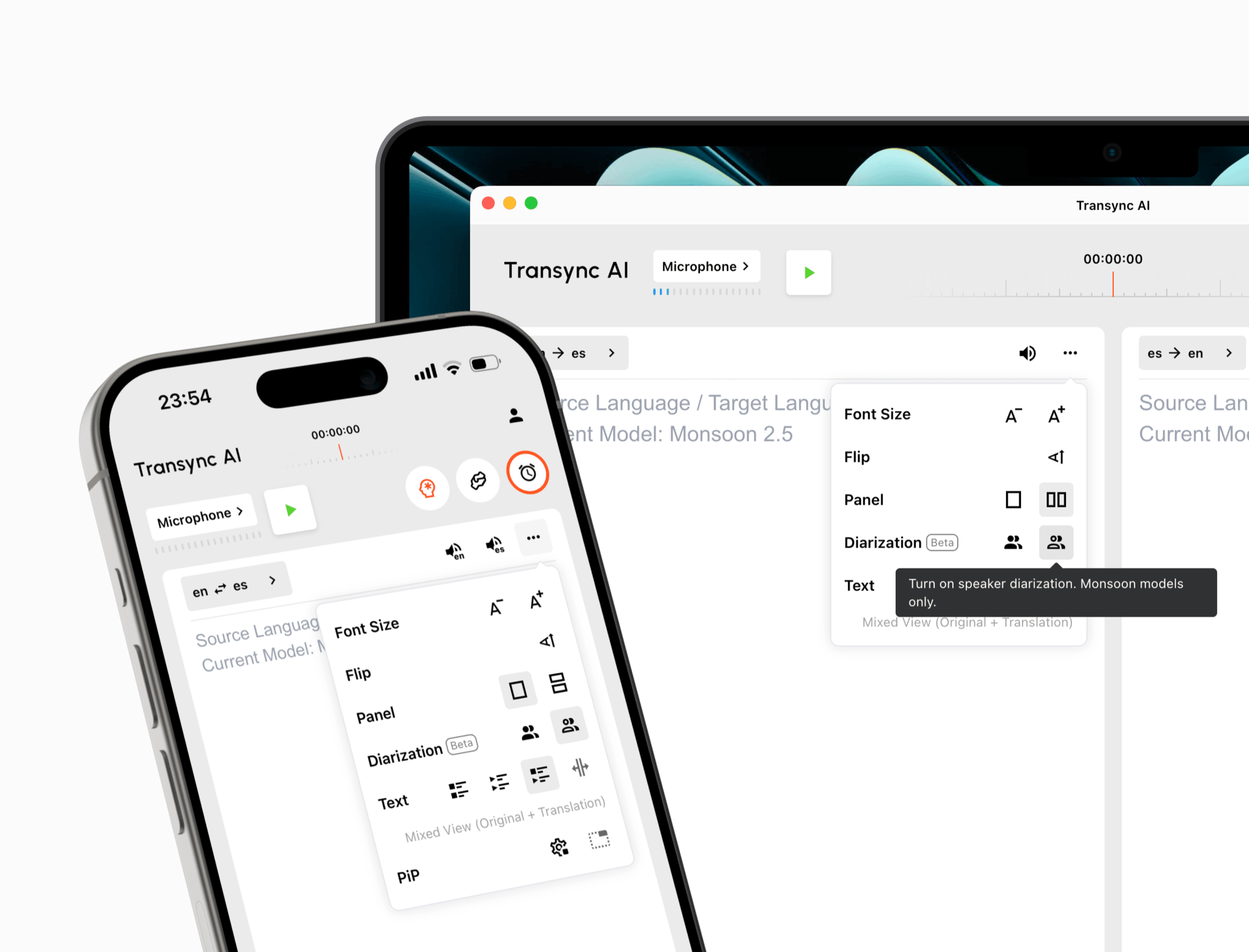
The real-time translation tool can display original and translated speech side by side. Within the selected language pair, it can distinguish which of the two languages is being spoken, reducing manual switching during a two-way conversation.
The AI voice translator can play the translated result aloud. Bilingual text remains useful for checking prices, dates, names, and technical vocabulary.
If the presenter needs to keep the translation visible over slides, the Picture-in-Picture bilingual subtitles feature can keep captions above other applications on supported devices.
For calls on Zoom, Microsoft Teams, or Google Meet, the live meeting translation feature supports the meeting workflow. Transync AI is standalone software rather than a platform-specific plugin.
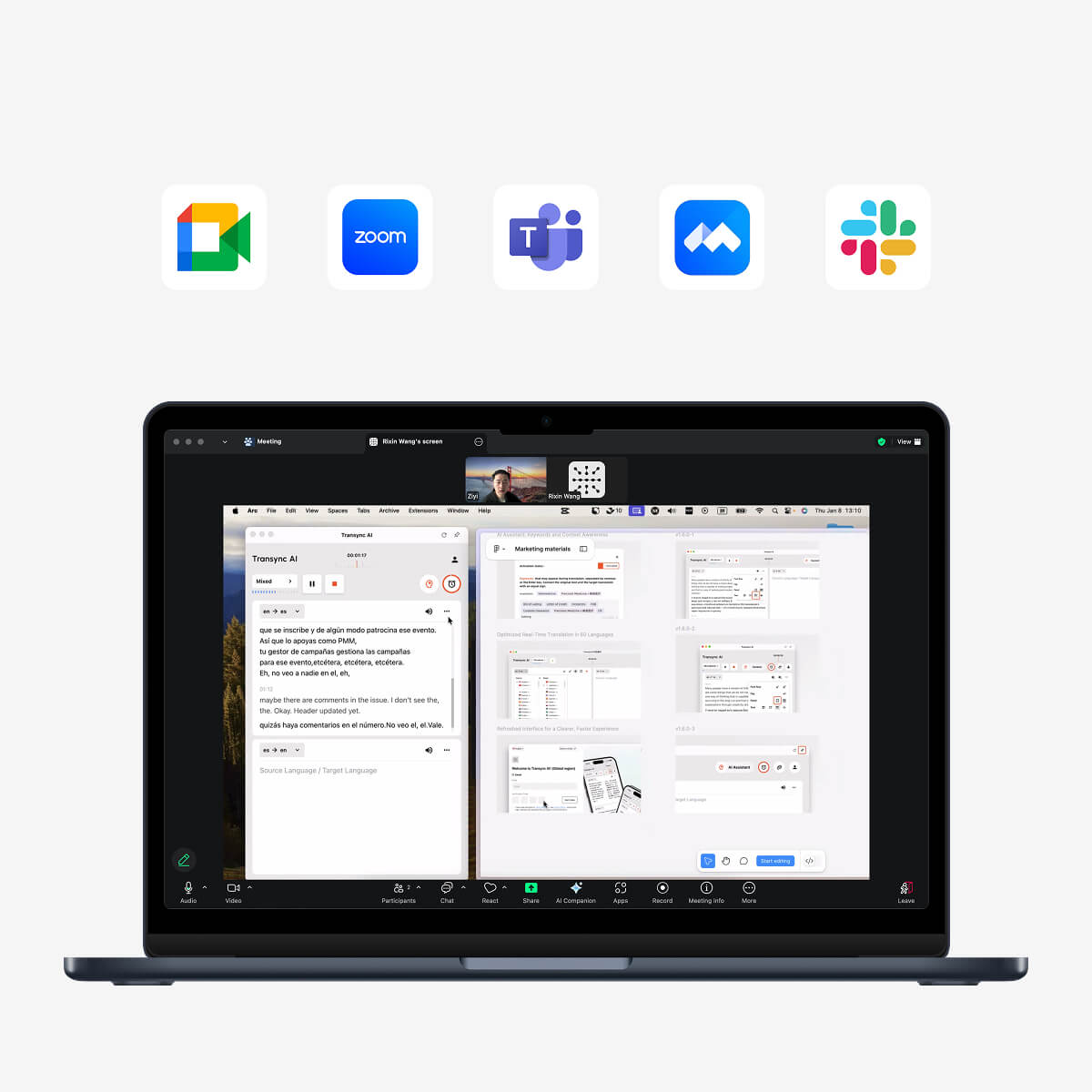
Compatible with major online meeting platforms for seamless real-time translation
The computer-audio sharing feature captures remote participant speech, while the virtual microphone feature helps send translated output into the call.
The best English to Portugal meeting test is not a prepared monologue. Ask two people to interrupt politely, request clarification, mention a price, use a product term, and agree on a next step. That reveals whether the conversation remains usable under realistic conditions.
After the Call: Check Meaning, Not Just Fluency
A smooth conversation can still produce a poor record. Review the AI meeting notes feature output for:
- Participant names.
- Dates, prices, quantities, and currencies.
- Decisions and unresolved questions.
- Action owners and deadlines.
- Portuguese terminology that should remain consistent.
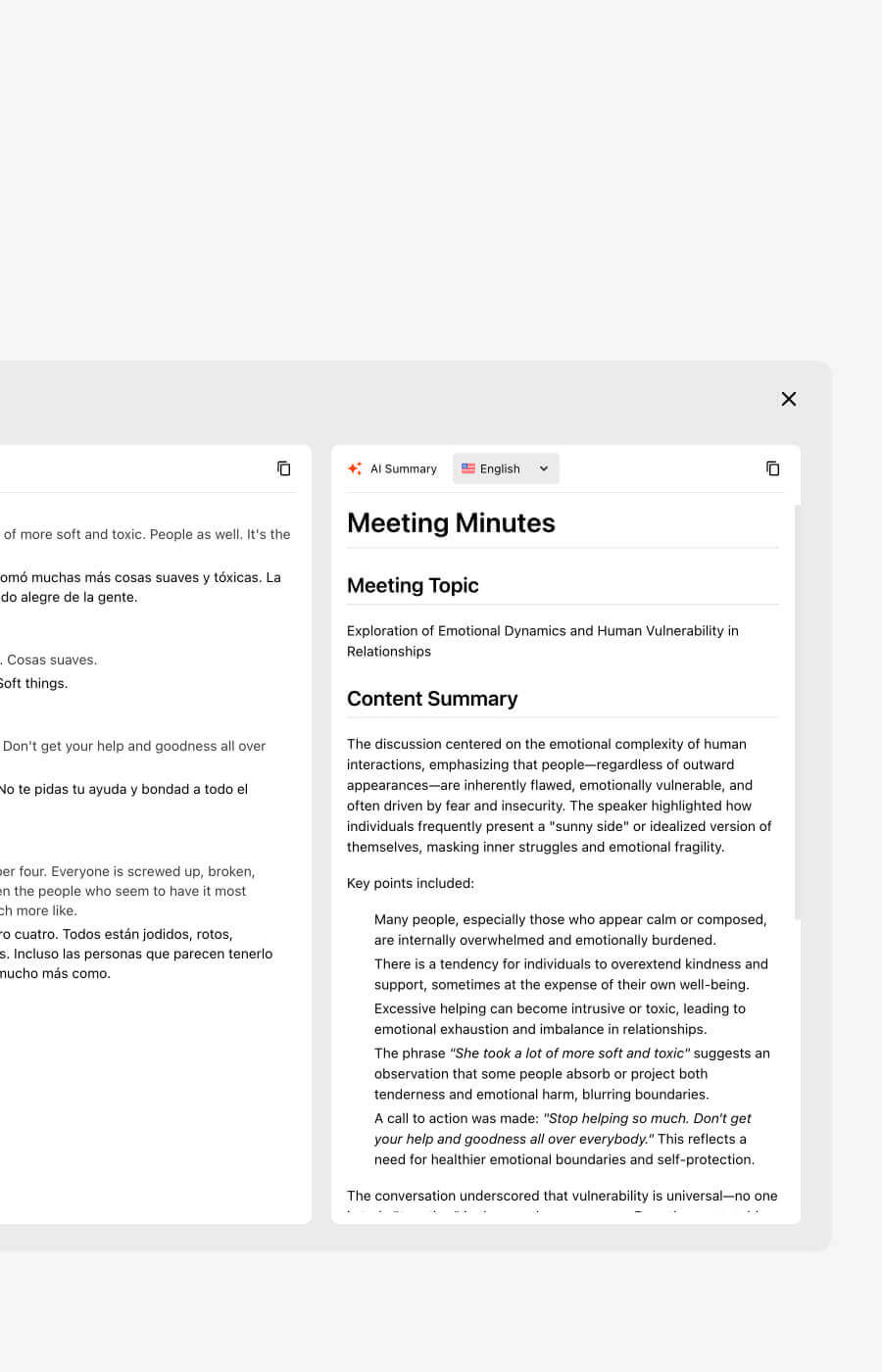
Transync AI automatically generates clear meeting minutes and content summaries after live conversations.
Do not send an automated summary directly to a client when it contains contractual, financial, legal, or safety-critical information. Human review remains appropriate.
An effective English to Portugal process should leave both sides with the same understanding of what was agreed—not merely a fluent-looking transcript.
Choose a Workflow, Not a “Winner”
The products below serve different jobs. Brand links appear in the earlier natural paragraph; the table remains link-free for readability.
| Tool | Use it when | Do not choose it only because |
|---|---|---|
| Transync AI | You need live bilingual meetings, translated voice, context, audio routing, and notes | You also need image or offline translation |
| DeepL | Written text, documents, APIs, and enterprise language work are central | Your primary need is a complete meeting workflow |
| Google Translate | You need quick consumer translation for text, speech, images, or everyday tasks | A free general tool automatically meets business-meeting requirements |
| Wordly | Many conference or webinar attendees need translated captions or audio | You only need a personal translator for recurring calls |
| Maestra | Video, audio, subtitles, dubbing, and media reuse are the main job | Your use case is only a two-way sales conversation |
For a live product demonstration, Transync AI is the meeting-first option in this group. For a proposal document, DeepL may fit the written workflow better. Google Translate is practical for quick checks. Wordly addresses audience-scale event access, while Maestra is aligned with media localization.
The Portugal Read-Aloud Check
Before publishing or presenting translated content, ask a native European Portuguese speaker to read it aloud.
Listen for:
- Vocabulary that sounds Brazilian rather than Portuguese.
- Forms of address that do not fit the relationship.
- Sentences that are grammatically correct but too literal.
- Unnatural pauses in synthesized speech.
- Product terms translated inconsistently.
- Dates, decimal separators, currency, and time formats.
- Calls to action that sound imported from English.
This check makes the English to Portugal workflow human-centered. It evaluates how the language lands with the audience, not only whether a model produced a plausible sentence.
A Copyable Pre-Meeting Checklist
Use this before an English-Portuguese call:
- Target variety confirmed as European Portuguese.
- Participant roles and preferred formality defined.
- Names and product terms added.
- English and Portuguese directions tested.
- Remote audio input confirmed.
- Translated voice output confirmed.
- Subtitle window readable over presentation content.
- A Portugal-based reviewer available for sensitive material.
- Meeting notes reviewed before external sharing.
The checklist is deliberately short. A useful English to Portugal process should be repeatable by the team, not dependent on one translation specialist remembering every setting.
English to Portugal FAQ
Does “English to Portugal” mean European Portuguese?
Usually, yes. English to Portugal is an informal search phrase for translating or localizing English for a Portugal-based audience. The clearer language name is European Portuguese.
Will Brazilian Portuguese be understood in Portugal?
Often, but understanding is not the same as localization. Vocabulary, pronunciation, grammar preferences, and tone can make Brazilian copy feel out of place in Portugal.
Can English speech be translated into European Portuguese audio?
The AI voice translator can produce spoken translation for a supported language option. Confirm current language availability and test the voice with a listener from Portugal before an important meeting.
Can people speak in both directions?
The real-time translation tool can distinguish between the two selected languages during a conversation, which reduces manual switching. Speakers should still take turns and avoid overlapping audio.
Can this work during an online meeting?
Yes. The live meeting translation feature can work alongside Zoom, Microsoft Teams, and Google Meet. Test the audio path before participants join.
Is Transync AI suitable for documents and images?
Transync AI focuses on live spoken communication. It does not offer image recognition, text-only document translation, or offline mode. Use the workflow table to choose a tool designed for those inputs.
Can AI replace a Portuguese translator or interpreter?
AI can help with routine travel, education, support, and business communication, but it cannot guarantee perfect local tone or high-stakes accuracy. Public campaigns, legal documents, medical communication, and binding agreements may require a qualified professional.
Final Takeaway
Treat English to Portugal as a localization task, not a destination setting. Specify European Portuguese, define the audience and relationship, test the spoken output with someone from Portugal, and choose a tool based on the content type.
For live meetings, Transync AI brings bilingual subtitles, translated speech, terminology context, meeting audio, and post-call notes into one workflow. For documents, events, media, and quick consumer tasks, use the specialist alternatives described above.
The result should not merely be Portuguese that people in Portugal can decode. It should sound as though the communication was prepared for them.
If you want a next-generation experience, Transync AI leads the way with real-time, AI-powered translation that keeps conversations flowing naturally. You can try it free now.
 🤖
🤖