

Transync AI and Mirai Translate face 6 critical compliance gates for Japan: residency, deletion, certifications, controls, workflow, and cost.
For a Japanese company, buying translation software is rarely a feature-demo decision. The internal approval route may involve the business owner, information-security team, legal department, procurement, and a privacy officer. Each reviewer asks a different question: Where does speech go? Is it retained? Can the vendor prove its controls? Who can access records? What happens when personal data crosses a border?
That is the right way to compare Transync AI e Mirai Translate. Transync AI is a meeting-first service for live multilingual communication across devices, while Mirai Translate offers a broader Japanese enterprise translation portfolio spanning text, files, APIs, and live meeting speech. The products overlap, but they are not identical substitutes.
The short answer is unusually clear. Mirai Translate presents the stronger public compliance package for a Japan-based enterprise that requires domestic processing: its security materials state that multilingual translation is processed on servers in Japan, translation data is automatically deleted, customer logs are not reused to improve its AI, and the company holds ISO 27001 and ISO 27017 certifications. It also announced a SOC 2 Type 2 report covering the Security category for its FLaT/Mirai Translator service.
Transync AI has the more accessible route for global teams that primarily need live meeting translation, audible output, bilingual captions, notes, and presentation delivery at a low published monthly price. Its privacy policy says customer data is not used for model training by default and raw meeting audio is deleted after translation. However, its Global service data is hosted in the United States, not Japan. That difference can become decisive when an internal rule requires Japan-only data residency.
This review sends Transync AI and Mirai Translate through six approval gates. It is a practical procurement memo, not legal advice. Japanese organizations should have their privacy and legal teams confirm APPI obligations, cross-border transfer arrangements, processor terms, and the exact certification scope before signing.
The One-Page Transync AI and Mirai Translate Approval View
| Approval question | Transync AI | Mirai Translate | Initial procurement reading |
|---|---|---|---|
| Função principal | Real-time multilingual meetings, conversations, presentations, and follow-up notes | Enterprise text/file translation, APIs, and live meeting translation through Listening Assistant | Define the workload before comparing features |
| Processing location | Global service production and business data hosted in the United States; China service separately hosted in mainland China | Official security page states multilingual translation processing occurs on servers in Japan | Mirai has the clearer fit for Japan-only processing requirements |
| AI training | Customer data is not used to train AI by default; contracted API providers are required not to use it for training | Translation data is not secondarily used to improve translation models | Both publish a no-training position, but contracts still matter |
| Audio and translation deletion | Raw meeting recordings/audio are deleted after translation; text records may remain until the user deletes them | Translation data is automatically deleted; Listening Assistant says audio, source text, and translated text are deleted after processing | Retention behavior is materially different and must match the record policy |
| Public assurance | Encryption, access controls, MFA/RBAC, privacy terms, DPA on request, and Trust Center materials | ISO 27001, ISO 27017, and SOC 2 Type 2 Security report for specified services; report available through sales | Mirai publishes a more procurement-ready assurance package |
| Live meeting languages | 60 languages, subject to current supported-language list | Listening Assistant lists 10 languages | Transync covers a broader multilingual meeting set |
| Meeting experience | Bilingual captions, translated voice, context, PiP, notes, standalone cross-platform use | Browser-based End-to-End meeting translation, terminology support, and downloadable minutes | Test both with actual Japanese terminology and audio |
| One-to-many delivery | Presentation Mode with up to 10 target languages; audience joins by link, QR code, or Room ID | Listening Assistant supports meetings and group viewing; verify current audience onboarding for the intended plan | Transync offers a clearly documented self-service audience route |
| Published entry price | 40-minute free allowance; Personal Premium 8.99/month; Enterprise 24.99/month per seat | Listening Assistant ¥150,000/month; FLaT from ¥250,000/month; lower-cost Plus plans serve text/file work | Prices describe different scopes, not a like-for-like bargain |
| Best early fit | International teams wanting affordable, broad-language live communication | Japanese enterprises prioritizing domestic processing and formal assurance evidence | Compliance requirements may determine the shortlist before a demo |
Information checked in September 2026. Product scopes, prices, certifications, and policies can change. Obtain current documents and a written quote before purchase.
Trate isto Transync AI and Mirai Translate table as a routing sheet, not a final security approval. Every green cell still needs evidence for the exact service and contract under review.
Gate 1: Can Transync AI and Mirai Translate Pass the Data Map?
Before asking which interface looks better, draw one line from the speaker’s microphone to the final record. Mark every country, processor, storage location, administrator, retention period, and deletion action. If a vendor cannot be placed on that diagram, it should not yet pass security review.
Para Transync AI and Mirai Translate, the first gate produces the largest compliance difference.
O Transync AI data path
O real-time translation feature captures speech and returns live source text and translation. According to the current privacy policy, production and business data for the Global service is hosted in the United States. The China version is hosted separately in mainland China. The policy does not advertise a Japan-resident hosting option.
This does not mean a Japanese organization is automatically prohibited from using Transync AI. It means the buyer must treat the workflow as a potential cross-border data arrangement and examine the purpose, categories of data, recipients, safeguards, notices, contracts, and internal rules that apply. Japan’s Personal Information Protection Commission explains that providing personal data to a third party in a foreign country can trigger APPI Article 28 requirements, subject to the applicable structure and exceptions.
The useful procurement question is therefore not “Is the product compliant?” Compliance is shared between the customer, its configuration, its notices, its lawful basis, and the vendor agreement. Ask Transync AI for the current DPA, subprocessor information, security evidence, incident terms, deletion commitments, and any architecture options that apply to your account. Do not assume Japan residency unless it is written into the order form and technical design.
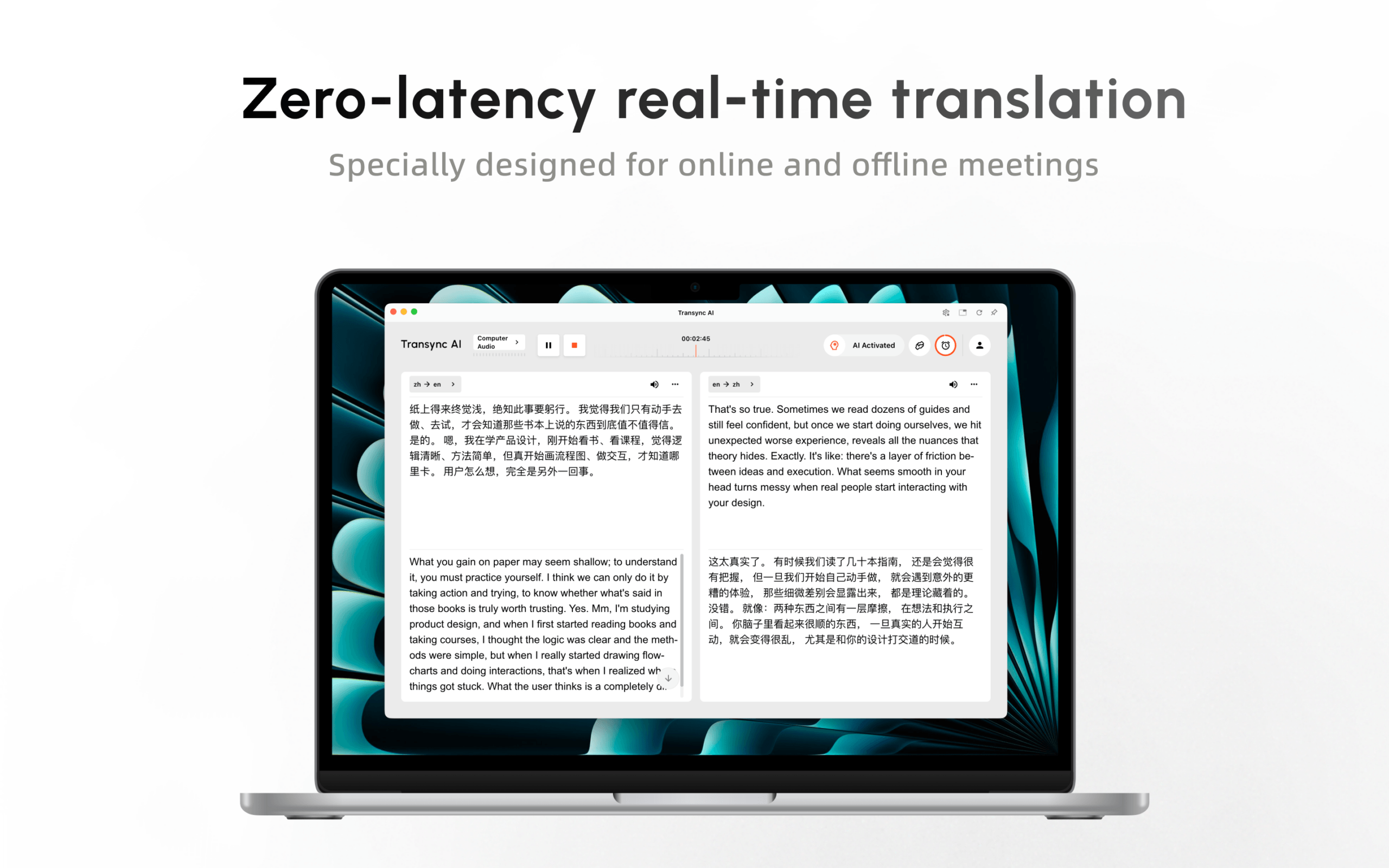
Experimente o Transync AI gratuitamente
O Mirai Translate data path
Mirai Translate states that its multilingual translation processing occurs on servers located in Japan. Its security page also describes domestic processing for its services and specific security measures. For Japanese enterprises with a strict domestic-processing condition, this is a major procurement advantage because the architecture aligns more directly with the stated requirement.
The company’s meeting product, Listening Assistant, is built for online and face-to-face conversations. Its published specifications describe processing under Japanese law and domestic infrastructure. Buyers should still confirm where identity data, support tickets, analytics, backups, optional integrations, and any subcontracted operations sit; “translation processing in Japan” should not be stretched into an unsupported claim that every data category follows exactly the same route.
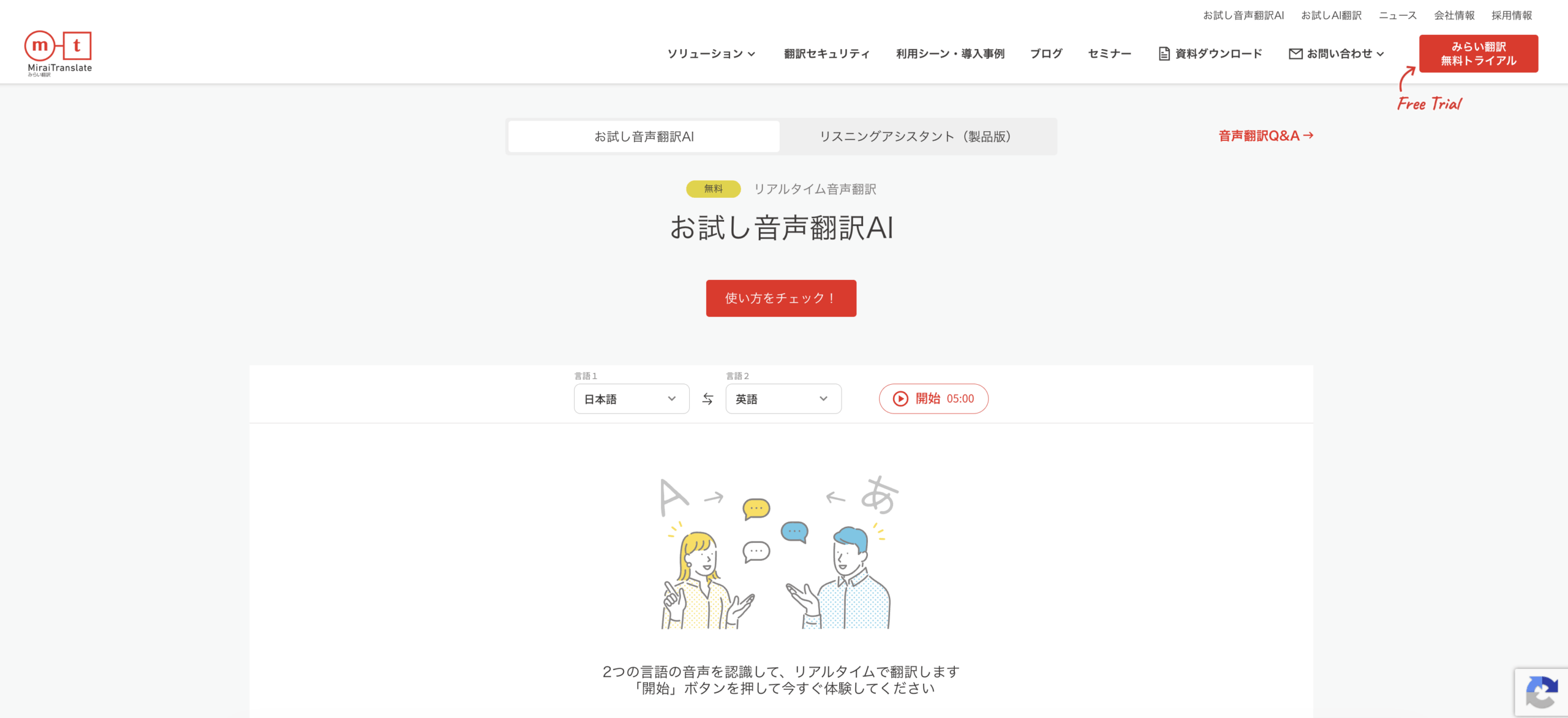
Transync AI and Mirai Translate — Gate decision: Give Mirai Translate the advantage when Japan-only translation processing is mandatory. Keep Transync AI in the evaluation when overseas hosting is permitted under the organization’s legal and security framework and its meeting capabilities solve the stronger business need.
Gate 2: What Do Transync AI and Mirai Translate Retain?
“We do not keep recordings” is not the same as “we retain no data.” Live translation can create audio buffers, source transcripts, translated text, summaries, user dictionaries, billing records, diagnostic logs, and shared meeting histories. Each object needs its own answer.
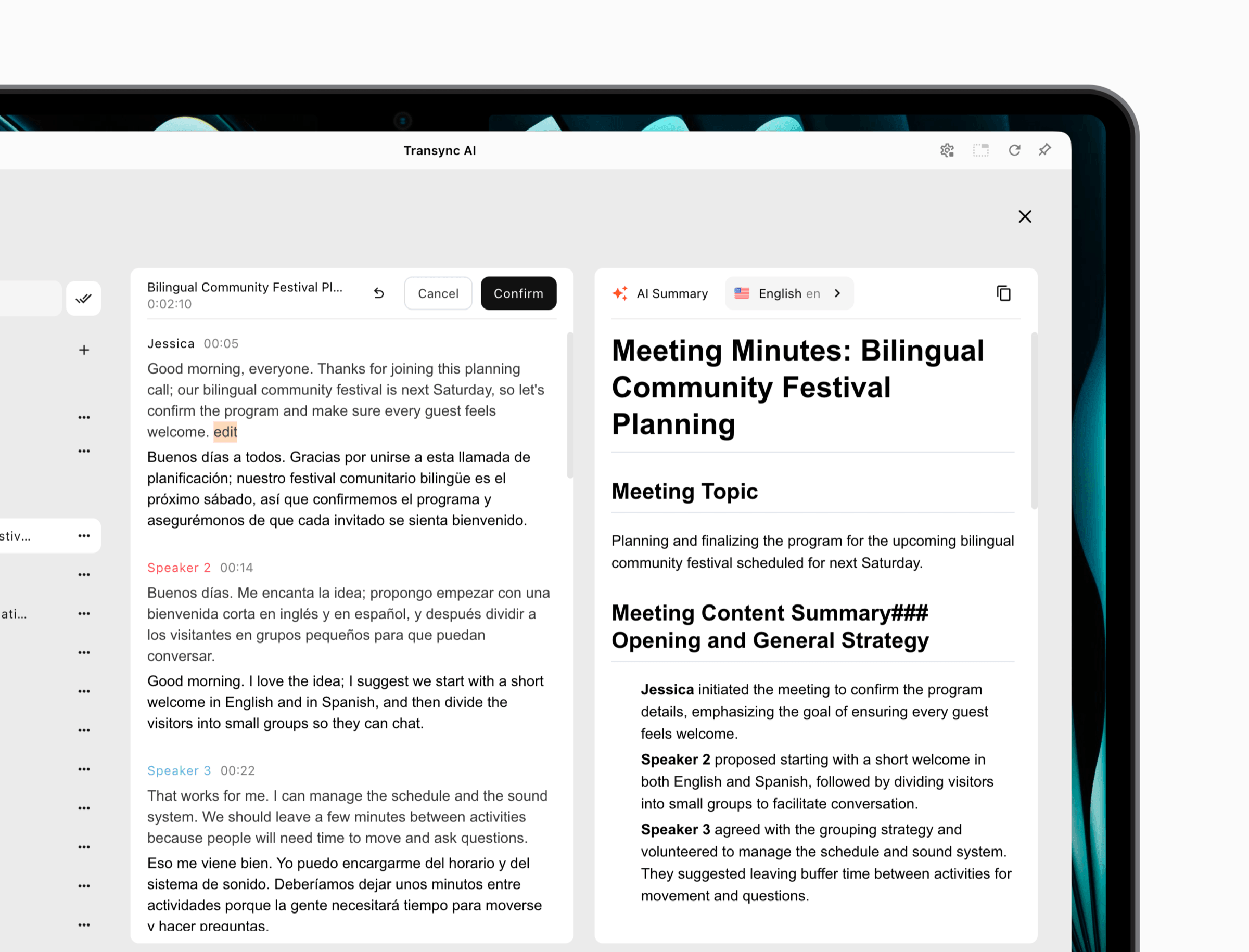
O actual Transync AI policy says raw meeting recording or audio files are destroyed immediately after translation. It also explains that original and translated text can be retained to provide translation records and summaries until the user deletes them. That can be useful when a team wants searchable follow-up, but it also creates a record that must be governed.
O Recurso de anotações de reuniões com IA adds structured follow-up. Before deployment, decide whether notes may contain customer names, employee opinions, health information, unreleased financial figures, or legal advice. Define who may generate, view, export, share, and delete them. A short audio retention period does not remove the risk in a long-lived transcript.
 Mirai Translate says translation data is automatically deleted and is not secondarily used for model improvement. Its security documentation distinguishes service workflows: file-translation results may remain available for download for a limited period, while the Listening Assistant specifications say audio, source text, and translated text are deleted after processing. The buyer should request the exact retention matrix for the selected product and options rather than applying one product’s rule to the entire portfolio.
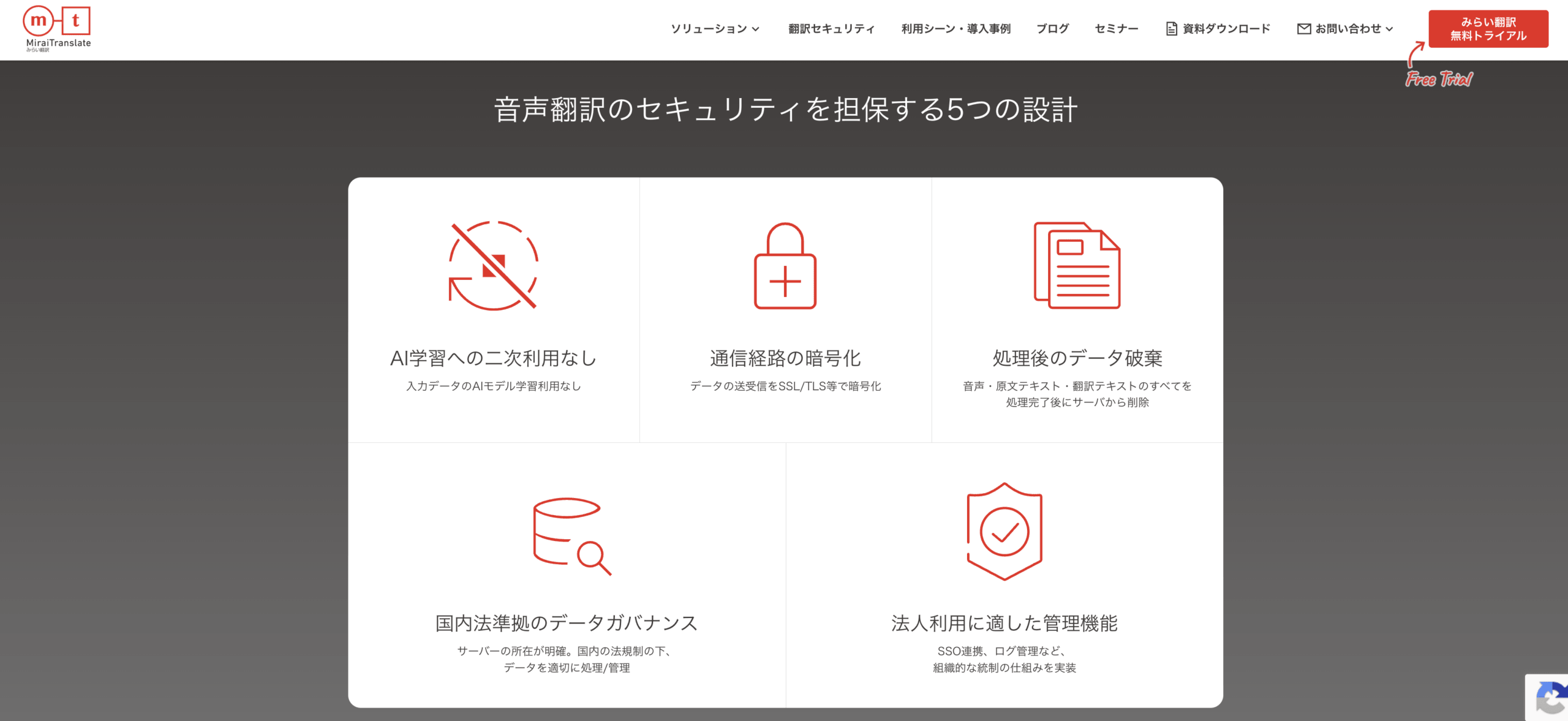 That distinction changes the Transync AI and Mirai Translate choice. Transync AI is convenient when a live meeting should naturally become a translation history and AI summary. Mirai Translate is easier to explain when the policy objective is ephemeral meeting translation with no post-processing speech or transcript retained by the service. Neither model is universally safer; the safer model is the one that matches the approved record lifecycle.
Transync AI and Mirai Translate — Gate decision: Approve retention only after the owner can name every saved object, its purpose, retention period, deletion method, and authorized audience.
Gate 3: Can Transync AI and Mirai Translate Supply Audit Evidence?
Japanese enterprise procurement often asks for more than a privacy-page promise. Reviewers may want certification details, an audit report, control scope, penetration-test summaries, incident procedures, business-continuity evidence, and answers to a security questionnaire.
Mirai Translate publishes the more specific assurance story. Its official materials identify ISO/IEC 27001 for information-security management and ISO/IEC 27017 for cloud-security controls. In November 2025, the company announced completion of a SOC 2 Type 2 report in the Security category for FLaT/Mirai Translator, with the report available to current and prospective customers through sales.
Scope is crucial. A certification held by a company, or a SOC 2 report naming particular services, does not automatically cover every product, feature, integration, and operating process. A buyer evaluating Listening Assistant should request the current certificate, statement of applicability where available, SOC report scope, bridge letter if needed, exceptions, and confirmation of whether the meeting service is included.
Transync AI publishes encryption, role-based access, multi-factor authentication, periodic security assessment, and contractual data-processing information across its privacy, enterprise, and Trust Center materials. The correct next step is to obtain the current evidence package and confirm which legal entity, service environment, period, and controls it covers. This article does not treat a Trust Center logo or a generic security claim as equivalent to a scoped audit report.
The evidence gap does not by itself measure translation quality. It measures how much work an internal reviewer must do to support the purchase. In a compliance-heavy Transync AI and Mirai Translate procurement, Mirai Translate currently gives the reviewer more concrete public assurance anchors, while Transync AI should be assessed through its current Trust Center and contract package.
Transync AI and Mirai Translate — Gate decision: Never record “ISO certified” or “SOC 2 compliant” in an approval memo without attaching the document, checking dates, and matching its scope to the service being purchased.
Gate 4: Can Transync AI and Mirai Translate Control Access?
The fourth gate asks what happens after a successful pilot. A personal login may be enough for one bilingual call, but enterprise deployment needs joiner-mover-leaver controls, role boundaries, authentication policy, usage visibility, logs, support escalation, and repeatable account closure.
Mirai Translate documents controls such as optional two-factor authentication, IP-address restrictions, encrypted dictionaries and translation memories, and enterprise identity or log-management options in relevant offerings. FLaT is positioned as an organizational translation environment with unlimited IDs and usage under its published starting plan, while Listening Assistant advertises SSO and log-management capabilities for enterprise operation. Confirm which controls are standard, optional, or plan-dependent.
Transync AI describes role-based access and MFA in its security materials and provides enterprise account administration, usage, billing, and invoice management. Its standalone design can also reduce dependency on a single conferencing platform: a user runs the translation companion alongside the meeting rather than requiring a bot to join. That is operationally useful, but endpoint permissions, audio routing, account ownership, and local device policy still need review.
Presentation governance is especially relevant. The Recurso Modo de Apresentação lets a host enable up to 10 target languages and invite an audience by link, QR code, or Room ID. Audience members can read translations and, when enabled, listen to translated voice. The host controls whether the transcript is shared after the session. The feature is currently beta, and the audience workflow may require registration or sign-in.
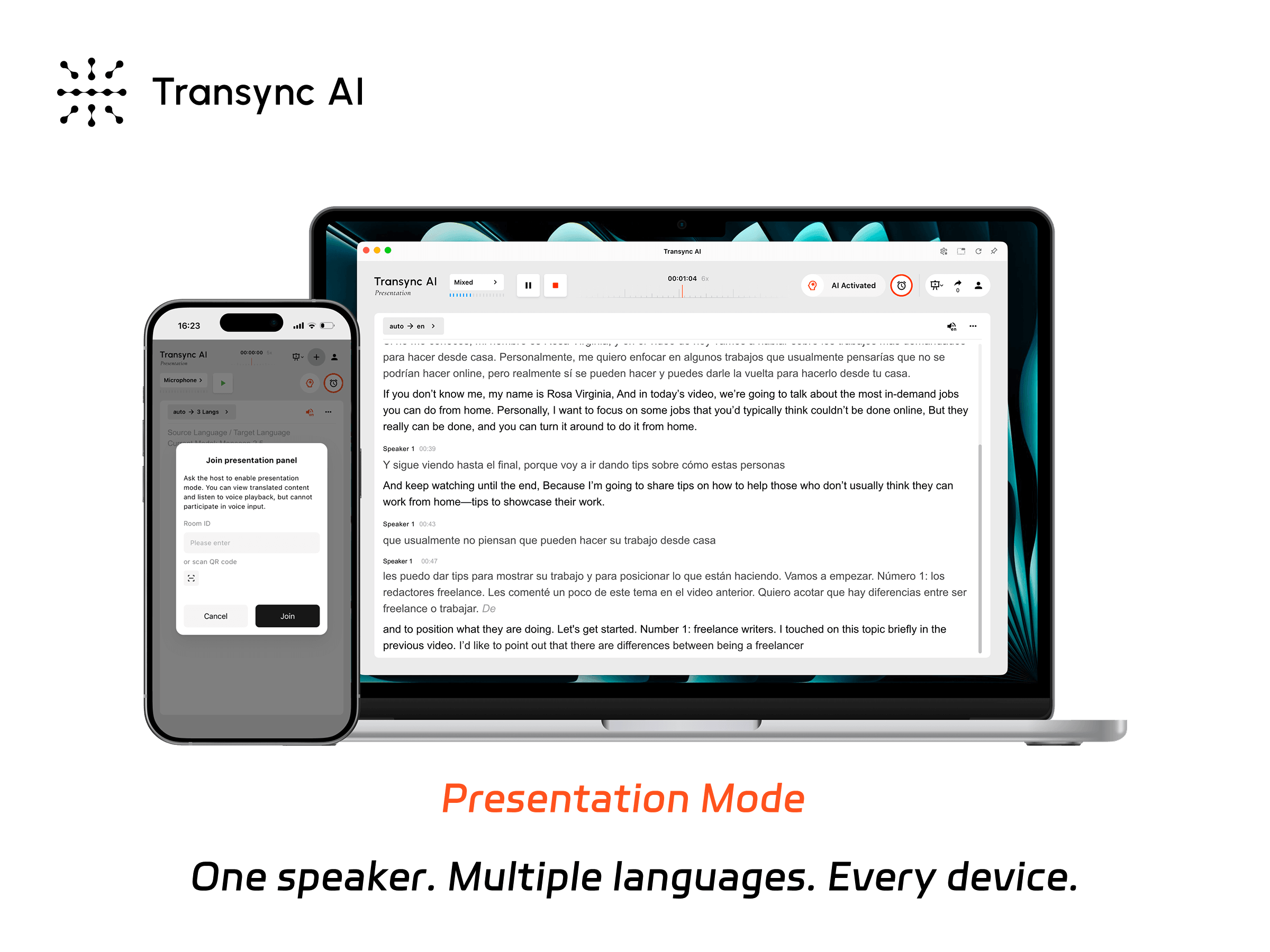
O Modo de Apresentação permite que um apresentador compartilhe a tradução ao vivo com os membros da audiência em seus próprios dispositivos.
Para Transync AI and Mirai Translate, run an administrator exercise rather than only a speaker demo. Create a user, change a role, simulate a departing employee, inspect available logs, revoke access, delete a record, and export evidence. If a required action depends on emailing support, put the response time and responsibility into the operating procedure.
Transync AI and Mirai Translate — Gate decision: The preferred product is the one whose actual plan—not its highest-tier brochure—supports the organization’s identity, logging, deletion, and evidence requirements.
Gate 5: Do Transync AI and Mirai Translate Fit Japanese Work?
Compliance can clear a product for use; it cannot make the product useful. The fifth gate tests the speech patterns, terminology, documents, meeting habits, and audience structure found in the real organization.
Mirai Translate is rooted in Japanese enterprise translation. Its portfolio supports text and Office-style file translation, user dictionaries, translation memories, and specialized models for fields such as legal, finance, and patents. Listening Assistant lists Japanese plus nine other languages and allows terminology customization for meeting speech. The service therefore deserves serious consideration when Japanese is the organizational center and consistent internal terminology crosses documents and meetings.
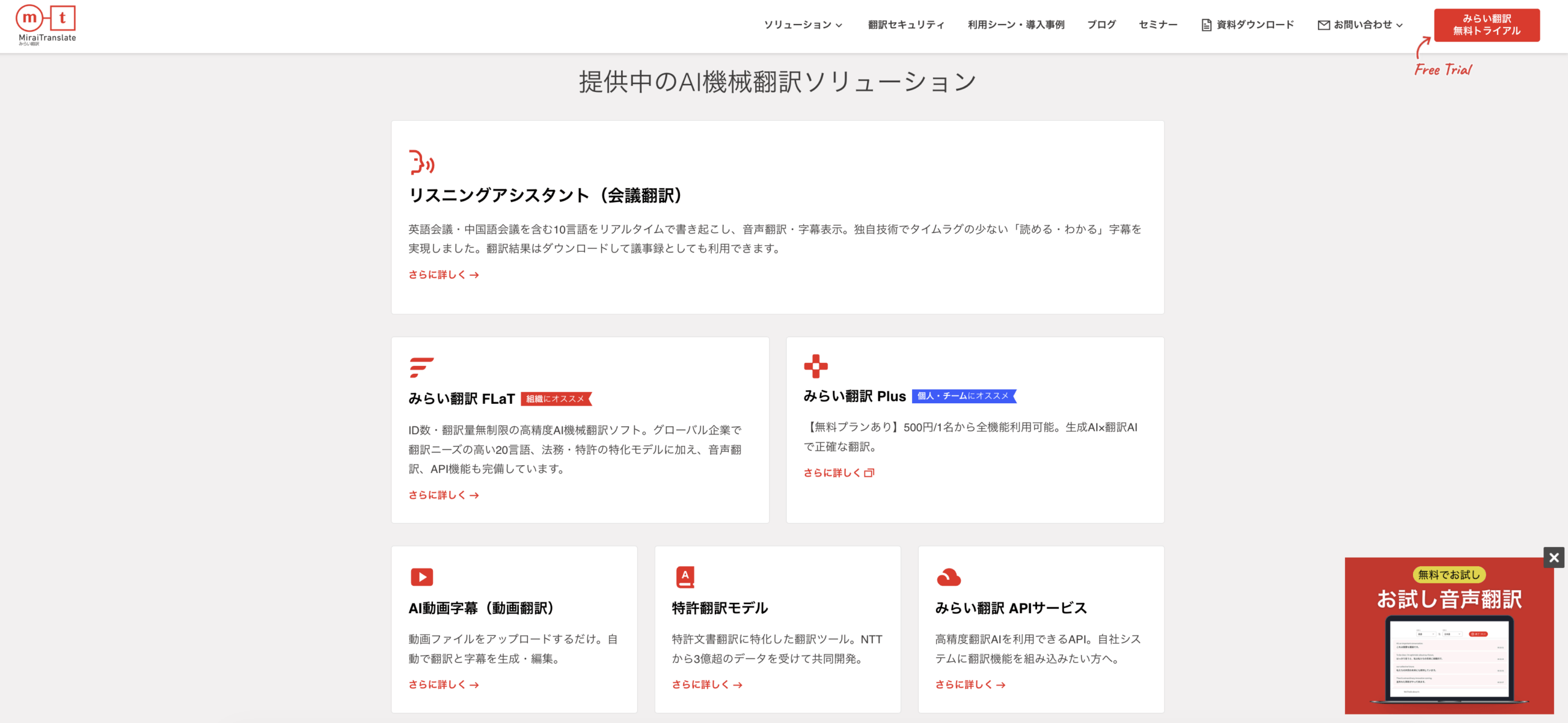 The limitation is breadth. Listening Assistant’s published meeting list contains 10 languages. A Japanese company dealing regularly with markets outside that set should test the complete route before assuming the wider translation portfolio and the live meeting product support the same languages in the same way.
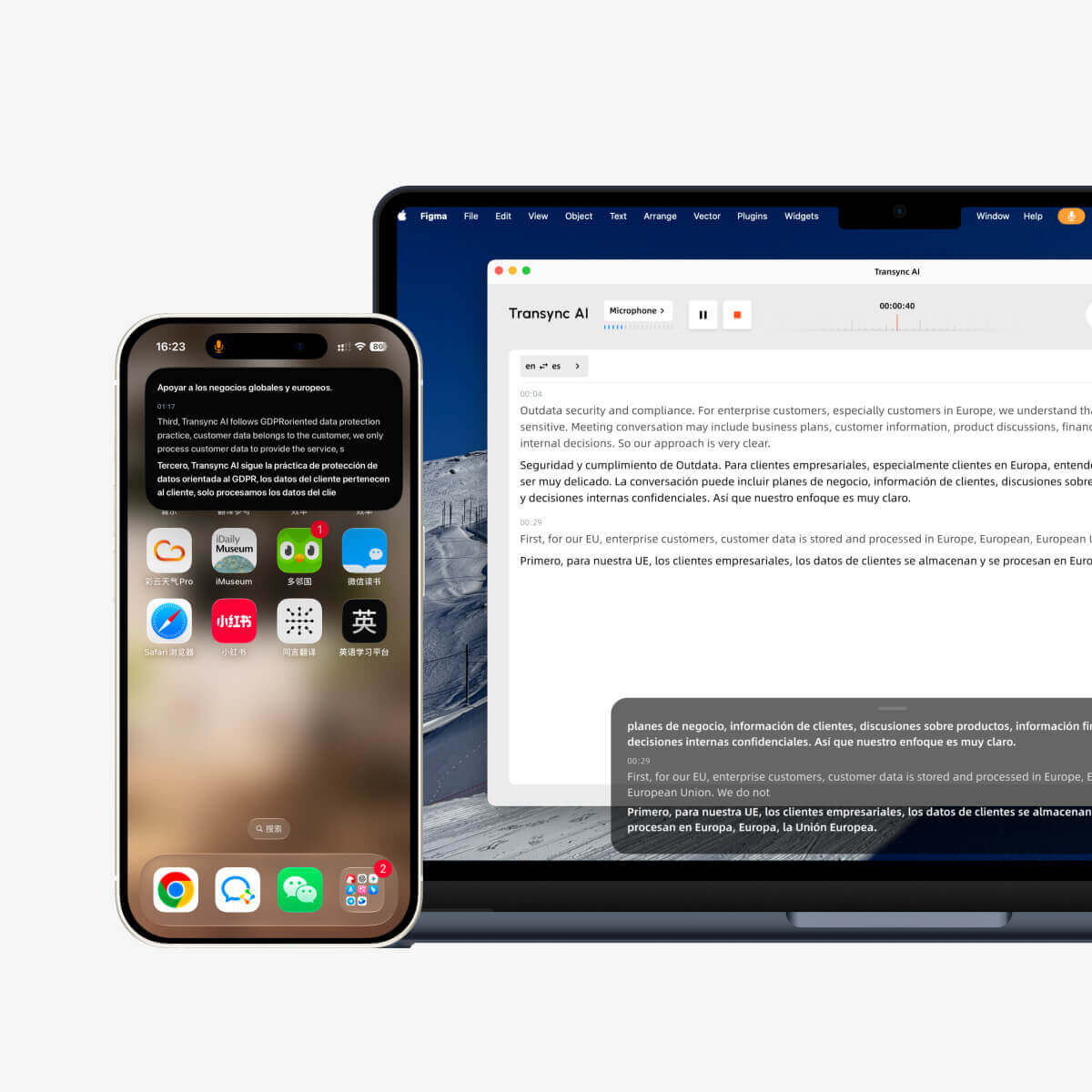
Transync AI supports 60 languages for live translation, subject to the current language list. Its Keywords and Context feature lets a user prepare names, acronyms, product codes, and meeting background. The bilingual view keeps recognized source speech beside the translation, which helps a participant catch incorrect numbers or names instead of trusting a single translated sentence.
It also offers translated voice through the Tradutor de voz de IA and can keep captions visible through Imagem em Imagem on supported devices. These features make Transync AI compelling for international sales, support, research, training, and recurring calls where participants need to listen, read, respond, and retain the outcome.
Neither product should be approved from a scripted greeting. Build a Japanese enterprise test pack containing honorific speech, an indirect refusal, two speakers talking over each other, English acronyms spoken with Japanese pronunciation, ten internal terms, a product number, a monetary amount, a date, and one confidential scenario. Score recognition, meaning, tone, delay, terminology, recovery, and record handling separately.
 That test turns Transync AI and Mirai Translate from a marketing comparison into an observable business decision. Keep the script, recordings permitted for the test, reviewer notes, and scoring method in the procurement file.
The strongest Transync AI and Mirai Translate pilot uses the same microphones, network, meeting platform, speakers, and test script. It also includes a human reviewer from the relevant department. Legal Japanese, factory terminology, pharmaceutical vocabulary, and customer-support language cannot be judged by a generic accuracy percentage.
Transync AI and Mirai Translate — Gate decision: Favor Mirai Translate when Japan-centered terminology and an integrated text/file/meeting portfolio matter most. Favor Transync AI when broad language coverage, cross-platform live meetings, translated voice, bilingual verification, and flexible audience delivery carry more weight.
Gate 6: Is Transync AI and Mirai Translate Pricing Comparable?
Price is where a misleading comparison is easiest. Transync AI and Mirai Translate publish numbers for different units, audiences, and product scopes.
| Published route | Current public price | What the number represents | Cost question to ask |
|---|---|---|---|
| Transync AI Grátis | $0 | 40 minutes after registration | Is the allowance enough to test the approved device and language pair? |
| Transync AI Personal Premium | $8,99/mês | 10 horas durante o período de adesão | Will one owner operate the meeting workflow? |
| Transync AI Enterprise | $24,99/mês por assento | Up to 40 hours/month per seat | What admin, support, contract, and security terms are included? |
| Mirai Listening Assistant | ¥150,000/month | Unlimited use and IDs under the published standard route | Are SSO, logs, support, and required options included? |
| Mirai FLaT | From ¥250,000/month | Unlimited IDs and translation volume for enterprise text/file translation | Does the organization need document translation as well as meetings? |
| Mirai Translate Plus | From free to paid individual tiers | Text and file translation with tier limits | This is not a substitute for Listening Assistant meeting use |
Prices checked on official pages in September 2026 and may exclude tax, options, implementation, support, or contractual changes. Currency conversion is intentionally omitted because exchange rates change.
At the public entry level, Transync AI has a substantial price advantage for an individual or small global team. A user can run a real pilot with the free allowance and move to a transparent monthly plan without beginning a large enterprise contract.
Mirai Translate prices Listening Assistant as an organizational service with unlimited use and IDs, so a simple monthly-price comparison understates its different buying model. It may become economically sensible when many employees use meeting translation frequently, when domestic processing avoids internal remediation work, or when centralized controls reduce operating friction. FLaT serves a still broader document workload and should not be charged to a meeting-only business case unless that workload is genuinely required.
Create three cost models for Transync AI and Mirai Translate: a five-user pilot, normal monthly adoption, and peak organization-wide use. Include licenses, minutes, audience consumption, optional identity controls, security review, support, onboarding, document translation, unused capacity, and the internal cost of satisfying cross-border transfer requirements.
Transync AI and Mirai Translate — Gate decision: Transync AI wins the visible entry-price comparison. Mirai Translate may win total approval cost for a large Japan-centered deployment when domestic processing and enterprise assurance are mandatory inputs rather than optional benefits.
A Japan Procurement Packet for Transync AI and Mirai Translate
Do not send only a feature table to the approval committee. Assemble one packet with evidence that every reviewer can use:
- Purpose and data categories: Define whether the tool will process ordinary business speech, employee data, customer information, trade secrets, or regulated records.
- Architecture map: Identify source devices, processing countries, subprocessors, temporary buffers, stored text, summaries, logs, exports, and deletion points.
- Contract set: Attach the order form, DPA, privacy terms, security schedule, incident obligations, support terms, and deletion commitments.
- Assurance evidence: Verify current certificates, audit-report scope, report period, exceptions, and any bridge letter.
- Access model: Document SSO or MFA, roles, administrators, user removal, logs, transcript sharing, and record deletion.
- APPI review: Ask privacy counsel to assess the actual data flow, including any provision to a foreign third party and required information or safeguards.
- Pilot results: Include Japanese terminology scores, delay, speaker overlap, failure behavior, and user feedback from the intended devices.
- Exit plan: Define how accounts, dictionaries, transcripts, summaries, logs, and exports will be returned or deleted when the contract ends.
This packet makes the Transync AI and Mirai Translate recommendation auditable. It also prevents a common failure: approving a vendor’s general security posture without confirming the exact service, plan, data flow, and configuration being purchased.
Three Transync AI and Mirai Translate Decisions, Not One Winner
Decision A: a Japanese regulated or highly confidential organization
Comece com Mirai Translate when domestic translation processing is a hard condition, the procurement team expects named assurance documents, or Japanese text and file translation must sit beside meeting speech. Its published Japan-based processing, deletion stance, no-secondary-training position, ISO certifications, and scoped SOC 2 report form a stronger initial evidence chain.
That is not blanket approval. Confirm that the chosen product is within every claimed scope, obtain the documents, test the retention behavior, and put requirements in the contract.
Decision B: a Japanese team working globally
Comece com Transync AI when the primary job is affordable multilingual meetings across many languages and devices. Its bilingual captions, translated voice, meeting context, notes, and Presentation Mode create a versatile working environment for international sales, support, training, and presentations.
The team must be comfortable with, and properly govern, the Global service’s United States hosting. If company policy requires all translation processing to remain in Japan, the current public architecture makes Transync AI a difficult fit unless the vendor provides a separately documented solution.
Decision C: the organization needs both workloads
The most realistic answer may be controlled coexistence. A company could use Mirai Translate for sensitive Japan-centered documents or meetings that require domestic processing, while allowing Transync AI for approved lower-risk international meetings that benefit from broader languages and lower entry cost.
If adopting two tools, publish a classification rule that employees can understand. “Use the secure one for confidential meetings” is too vague. Define allowed data classes, departments, countries, account types, and record settings, then enforce the rule through training and administration.
Transync AI and Mirai Translate Perguntas frequentes
Which product has the stronger compliance position for Japan?
For buyers requiring domestic translation processing and readily named assurance evidence, Mirai Translate has the stronger public position. It states that multilingual translation is processed on Japanese servers and publishes ISO 27001, ISO 27017, deletion, no-training, and scoped SOC 2 Type 2 information. The final decision still depends on service scope and contract terms.
É Transync AI compliant with Japan’s APPI?
No responsible article can issue a universal legal conclusion. Transync AI publishes privacy, security, deletion, training, and DPA information, but its Global service is hosted in the United States. A Japanese customer must assess its actual role, data flow, foreign-transfer structure, notices, safeguards, and contracts under APPI with qualified counsel.
Does either product use customer translations to train AI?
Both publish restrictive positions. Transync AI says customer data is not used for AI training by default and contracted API providers are required not to use it for training. Mirai Translate says customer translation logs are not secondarily used to improve its models. Confirm that the contract for the selected product preserves the same rule.
Which one deletes meeting data faster?
The object matters. Transync AI says raw meeting audio is deleted after translation, while translated and original text may remain for records and summaries until user deletion. Mirai Translate says Listening Assistant deletes audio, source text, and translated text after processing. Ask both vendors for a field-by-field retention schedule and deletion evidence.
Which product is better for live multilingual meetings?
Transync AI is the stronger starting point for broad language coverage, bilingual verification, voice playback, flexible devices, follow-up notes, and self-service Presentation Mode. Mirai Translate is highly relevant when Japanese enterprise terminology, domestic processing, and centralized organizational deployment outweigh the need for 60 meeting languages.
Qual produto é mais barato?
For individuals and small teams, Transync AI has the lower published entry price. Mirai Translate Listening Assistant has a much higher monthly price but includes unlimited use and IDs under its public route. Compare expected users, usage, options, compliance work, and document requirements rather than monthly sticker prices alone.
Should a Japanese company choose only one?
Not necessarily. A risk-based policy can assign different approved tools to different data classes and workloads. The organization must make that rule specific enough that employees know which meetings and documents belong in each environment.
Final Transync AI and Mirai Translate Approval Note
O final Transync AI and Mirai Translate choice turns on one question before all others: is domestic Japanese processing a mandatory control or merely a preference?
Escolher Mirai Translate when the organization needs a Japan-centered enterprise translation platform, domestic processing, a clearly stated deletion and no-training posture, and formal assurance evidence that procurement can inspect. Its higher price may be justified when those controls remove a blocking risk and its document translation capabilities are also required.
Escolher Transync AI when the workload is primarily live global communication and the team values 60 languages, bilingual captions, translated voice, contextual preparation, meeting notes, cross-device operation, and low-cost self-service adoption. Its Global service’s United States hosting must be accepted and governed explicitly; it should never be hidden in a footnote.
That is the honest conclusion. Transync AI and Mirai Translate are not separated by a generic “better translator” label. One currently offers the clearer domestic compliance path for Japanese enterprise procurement. The other offers the more flexible and affordable live-meeting experience for multilingual teams. The right approval follows the data, the evidence, and the workload.
Se você quer uma experiência de última geração, Transync AI lidera o caminho com tradução em tempo real, impulsionada por IA, que mantém as conversas fluindo naturalmente. Você pode experimente grátis agora.