

Explore AI for translators through a 6-desk professional workflow covering intake, terminology, drafting, review, live speech, and delivery.
AI for translators works best as a studio full of specialized workstations—not as a button that replaces professional judgment. One desk prepares terminology, another produces a draft, a third checks consistency, and a live desk helps people communicate while speech is still happening. The translator remains the person who understands the brief, weighs risk, resolves ambiguity, and accepts responsibility for the finished work.
Our studio contains memoQ for computer-assisted translation, DeepL for text and document drafts, Smartcat for AI translation and human-review workflows, Frase for enterprise localization orchestration, and Transync AI for real-time meetings, translated voice, and multilingual presentations.
These products are not interchangeable. A freelance translator editing a legal document, a localization team shipping software strings, and an interpreter supporting an international meeting need different inputs, controls, and evidence. The right use of AI for translators begins by assigning each system a bounded role.
The Studio Floor Plan
| Desk | Human Decision | Useful AI Assistance | Main Risk if Unsupervised |
|---|---|---|---|
| 1. Intake | Define purpose, audience, risk, and deliverable | Extract content, classify files, identify languages | Sensitive or unsupported material enters the wrong tool |
| 2. Terminology | Approve terms, names, and style | Suggest candidates, detect repeated phrases, apply glossaries | A plausible but unapproved term spreads everywhere |
| 3. Drafting | Select strategy and acceptable automation | Machine translation, document translation, reuse | Fluent output hides omissions or changed facts |
| 4. Review | Resolve meaning, tone, and cultural fit | QA checks, consistency flags, error suggestions | Reviewer accepts AI confidence as proof |
| 5. Live Speech | Manage speakers, clarification, and risk | Captions, voice translation, speaker separation | Delay or audio failure disrupts communication |
| 6. Delivery | Approve, document, secure, and learn | Export, workflow routing, notes, analytics | Draft content is delivered without accountable sign-off |
The floor plan matters because AI for translators should reduce repetitive work while increasing visibility. If it simply creates more text faster, it may also create more errors faster.
Desk 1: Intake and Risk Triage
Every translation begins with questions that no generic engine can answer by itself. Responsible AI for translators starts with this intake conversation, not with uploading the file:
- Who will use the content?
- What action will they take because of it?
- Is the output for understanding, internal review, publication, or legal reliance?
- Which locale, reading level, terminology, and tone are required?
- Does the source contain personal, confidential, or regulated information?
- Is a human translator, editor, interpreter, subject expert, or legal reviewer mandatory?
- What must be delivered: bilingual file, final layout, subtitles, live speech, transcript, or localized software?
Create three lanes before selecting a tool.
| Risk Lane | Ejemplo | Appropriate Automation |
|---|---|---|
| Bajo | Internal gist, research, disposable message | AI draft with proportionate spot checks |
| Controlled | Website, training, product content, customer support | AI plus terminology, full human review, and QA |
| Alto | Contract, diagnosis, consent, safety, immigration, financial commitment | Qualified professional remains responsible; automation is limited and documented |
AI for translators becomes safer when the project manager records why automation is allowed, which tool is approved, and who signs off. “The model sounded good” is not a risk assessment.
At intake, inspect privacy terms and the exact plan—not only the brand. Ask whether content is stored, used for training, processed in a required region, available to administrators, and deletable. Free and paid versions of the same service may have different controls.
Desk 2: Terminology and Context Preparation
A model cannot follow terminology it has never been given. At this desk, AI for translators depends on linguistic assets that define the client’s world:
- Approved bilingual terms.
- Do-not-translate names and trademarks.
- Previous translations that remain valid.
- Style guide and tone examples.
- Product descriptions and audience context.
- Forbidden wording and legal disclaimers.
- Locale conventions for dates, units, currency, and punctuation.
memoQ is a professional CAT environment designed to help translators reuse prior work, maintain term bases, consult reference material, and receive suggestions while translating. Its official product page emphasizes translation memory, terminology, concordance, LiveDocs, and warnings when approved terms are not used.
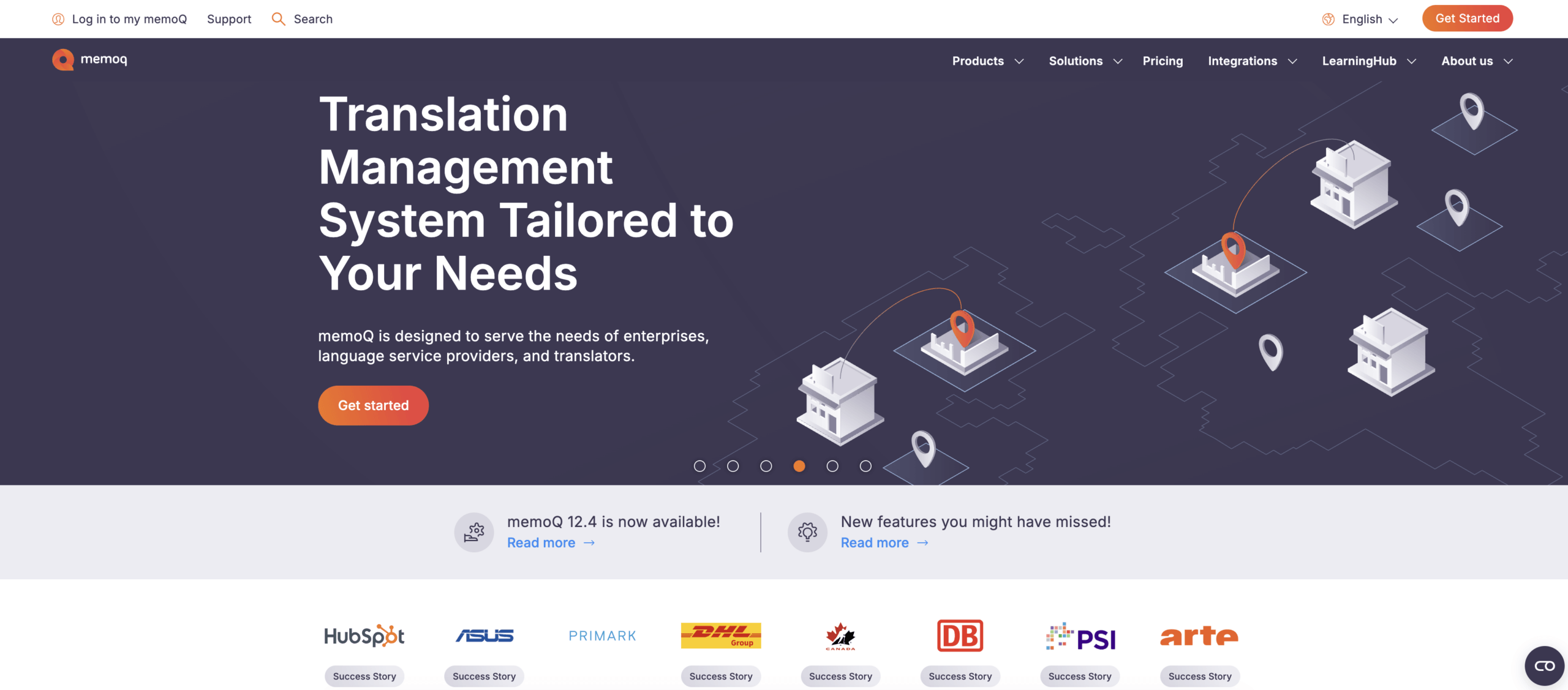
A translation memory is evidence of earlier human decisions, not an infallible authority. Old segments may belong to another product version, market, audience, or legal context. The translator should confirm provenance, client, date, and domain before reuse.
DeepL supports glossaries that apply preferred terms with grammatical context. Its current feature information also covers document translation, formality, dictionary alternatives, and writing controls. These functions can reduce repetitive correction when the glossary has been approved first.
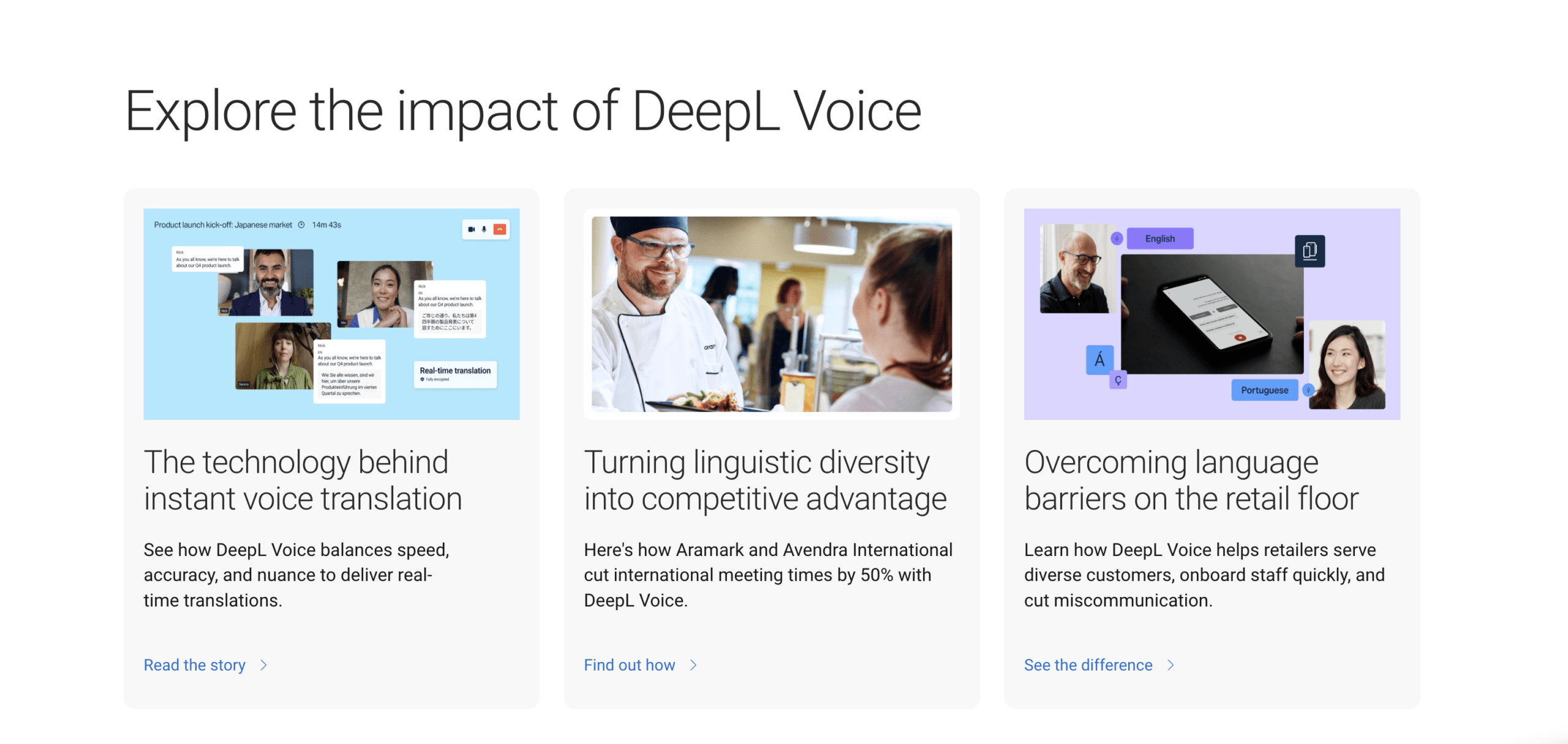
The essential principle of AI for translators is “prepare, then generate.” A five-minute terminology review can prevent the same wrong brand term from appearing in hundreds of segments.
Desk 3: Draft Creation and Content Routing
The drafting desk decides how much material AI should produce and where that output goes next. AI for translators may generate one segment, a document, software strings, subtitles, or an entire content collection, but the assigned review path should be known before generation begins.
Smartcat describes its AI translator as a platform that routes content across multiple translation engines and models rather than relying on one engine. Its current official page says it can apply translation memories and glossaries, handle more than 80 file formats, and send important content to human reviewers. It also says approved edits can improve later output within the workflow.
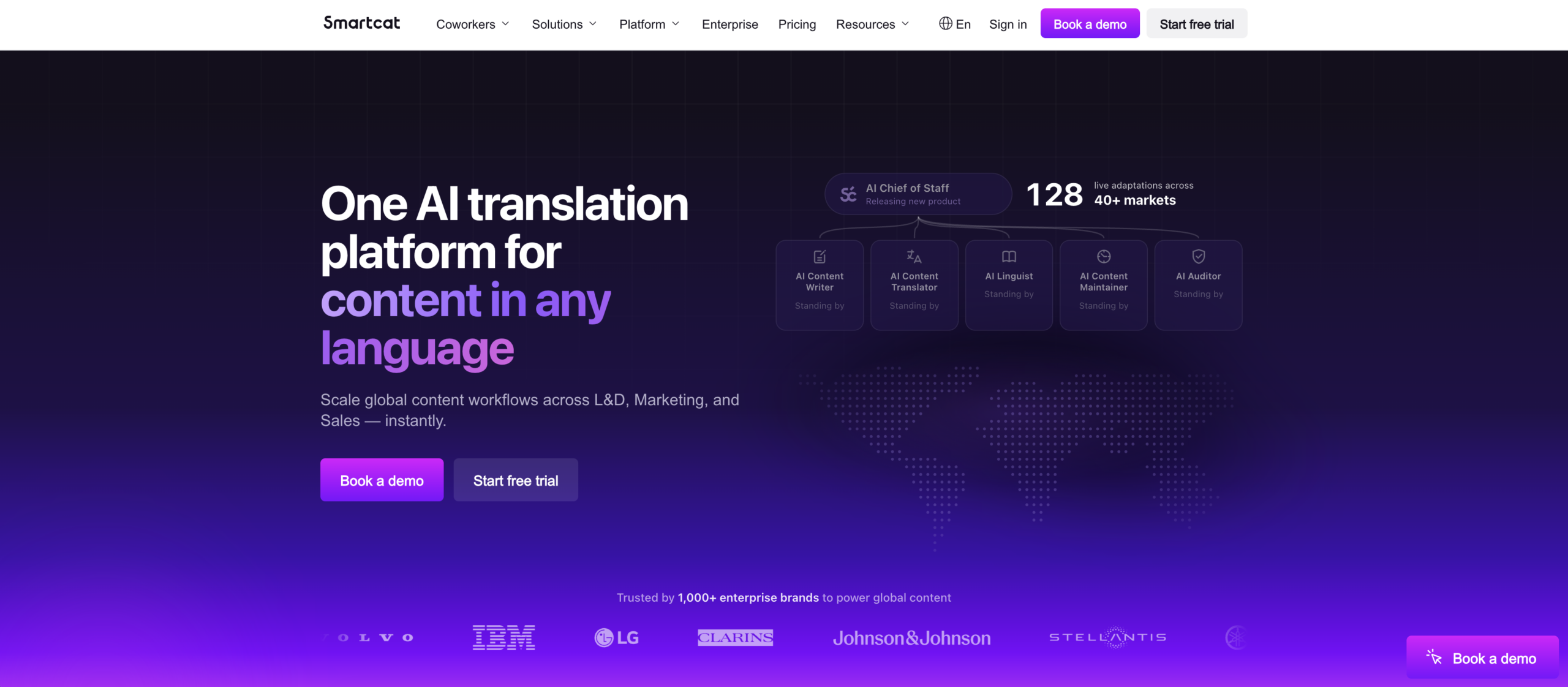
That architecture is useful when a team manages many formats and language pairs. It does not remove the need to validate vendor claims, configure assets correctly, define review thresholds, and measure quality on representative content.
Frase positions its platform around enterprise localization, combining translation memories, terminology, style guidance, quality data, integrations, and workflow orchestration. Its current platform information describes AI model selection, context, quality evaluation, APIs, and connections across localization systems.
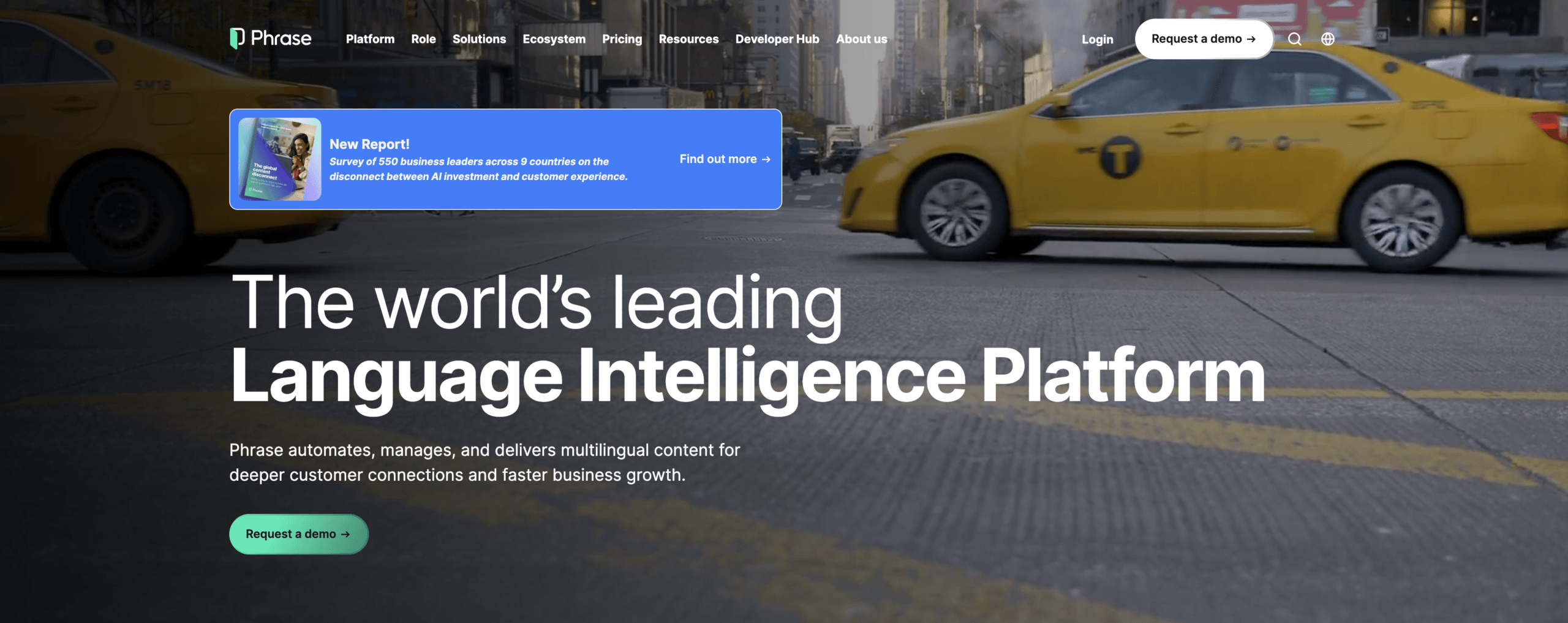
Esto hace que Frase relevant when localization is an ongoing product operation rather than an occasional file. A software team may need strings pulled from repositories, assigned to linguists, reviewed, tested in context, and returned without breaking placeholders or release schedules.
For a straightforward document, DeepL may offer a shorter path. Its current feature page says full files can be translated while maintaining original formatting, with glossary support available for terminology consistency. The translator should still compare the output with the source and inspect headers, tables, text boxes, numbers, hyperlinks, and image-based text.
AI for translators should produce a draft that is easier to inspect, not a black-box “final.” Preserve the source, tool configuration, model or engine where available, glossary version, timestamp, and ownership of the next review step.
Desk 4: Human Review and Quality Assurance
Post-editing is not merely correcting grammar. Quality-focused AI for translators supports a professional reviewer who checks several layers that automated metrics may combine or miss.
| Review Layer | Pregunta | Typical Defect |
|---|---|---|
| Lo completo | Is every source idea represented once? | Omission, duplication, untranslated segment |
| Factual meaning | Are people, actions, dates, and conditions preserved? | 15 becomes 50; “not” disappears |
| Terminología | Are approved terms applied consistently? | Product name translated as an ordinary noun |
| Locale | Does the output fit the market? | Wrong currency, date format, or regional word |
| Tono | Does the relationship sound appropriate? | Casual wording in a formal notice |
| Mechanics | Are spelling, punctuation, tags, and placeholders correct? | Broken variable or misplaced tag |
| Layout | Does the final medium remain usable? | Overflow, clipped subtitle, broken table |
| Riesgo | Does the wording create a new obligation or unsafe instruction? | Stronger promise than the source |
memoQ can flag terminology and consistency issues while retaining translation memory and reference context. Smartcat supports human review inside its platform. Frase brings quality data and workflow controls into an enterprise localization environment. None of these systems makes the reviewer optional; they make review more organized.
Use AI for translators to propose an error category, alternate wording, or consistency check—but require the reviewer to inspect the source. An AI evaluator can share the same blind spot as the AI draft, especially when both are influenced by similar training data or prompts.
A practical review sequence
- Read the target alone for logic and natural flow.
- Compare every target segment with the source.
- Verify names, numbers, units, negation, and conditions.
- Run terminology and mechanical QA.
- Review the translation in its final visual context.
- Ask a subject expert to resolve domain questions.
- Record corrections that should update the glossary, memory, or instructions.
The fastest workflow is not the one with the shortest generation time. It is the one with the lowest total time from intake to approved delivery.
Desk 5: Live Speech and Meeting Translation
Written translation can wait for a reviewer. Live communication cannot. In this setting, AI for translators must deliver enough correct meaning for a meeting participant to respond while the discussion is still moving.
Transync AI is the specialist at this desk. Its traducción en tiempo real supports 60 languages, while its traducción de reuniones en vivo works alongside Zoom, Microsoft Teams, Google Meet, and other meeting environments. Users can see bilingual captions and enable an Traductor de voz con IA for spoken output.
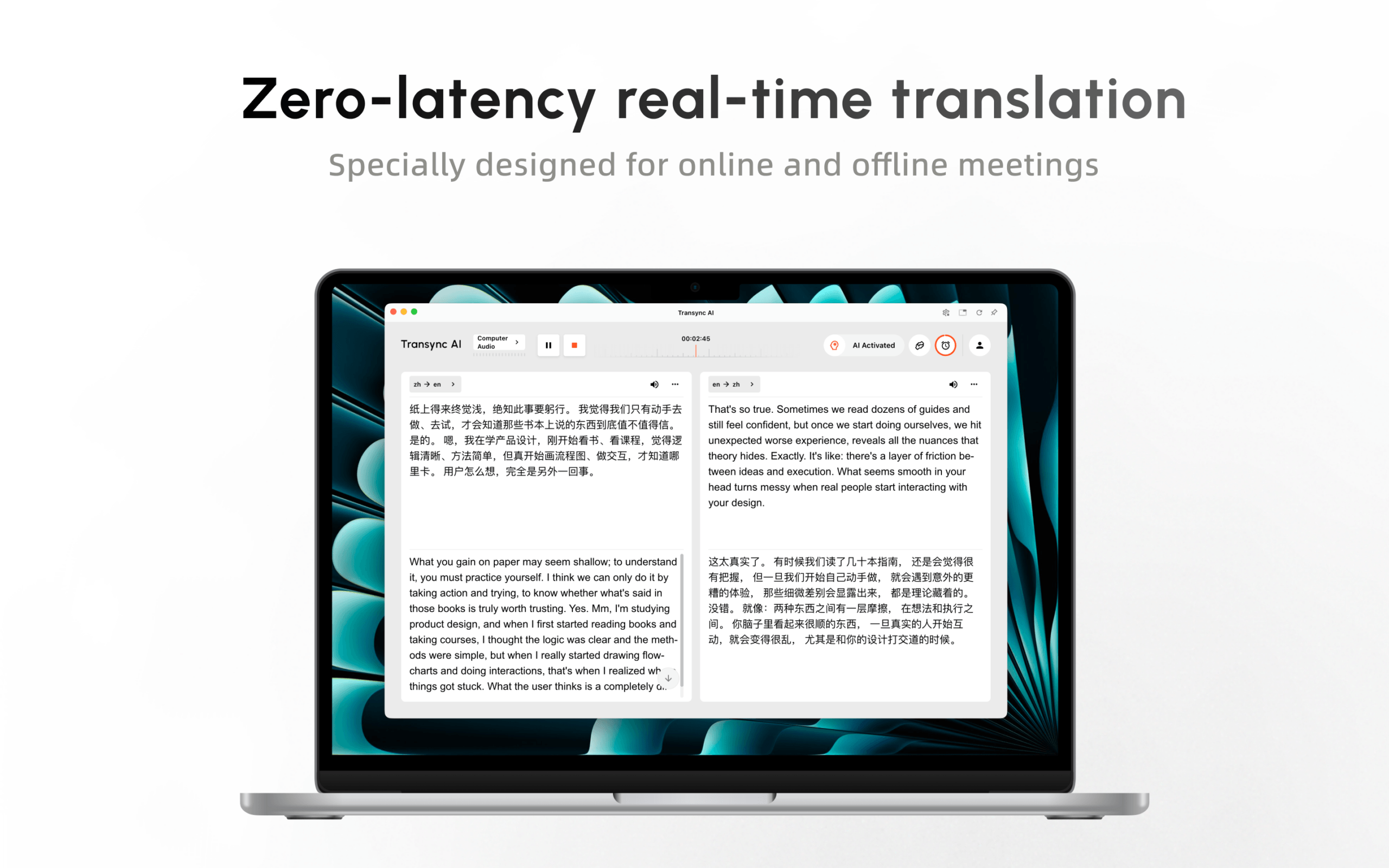
Before a session, translators or meeting organizers can add names, terms, and background through Palabras clave y contexto. During the session, Subtítulos en modo imagen dentro de imagen can remain visible over supported applications. Afterward, Notas de la reunión de IA Puede proporcionar una transcripción y un resumen estructurado para su revisión.
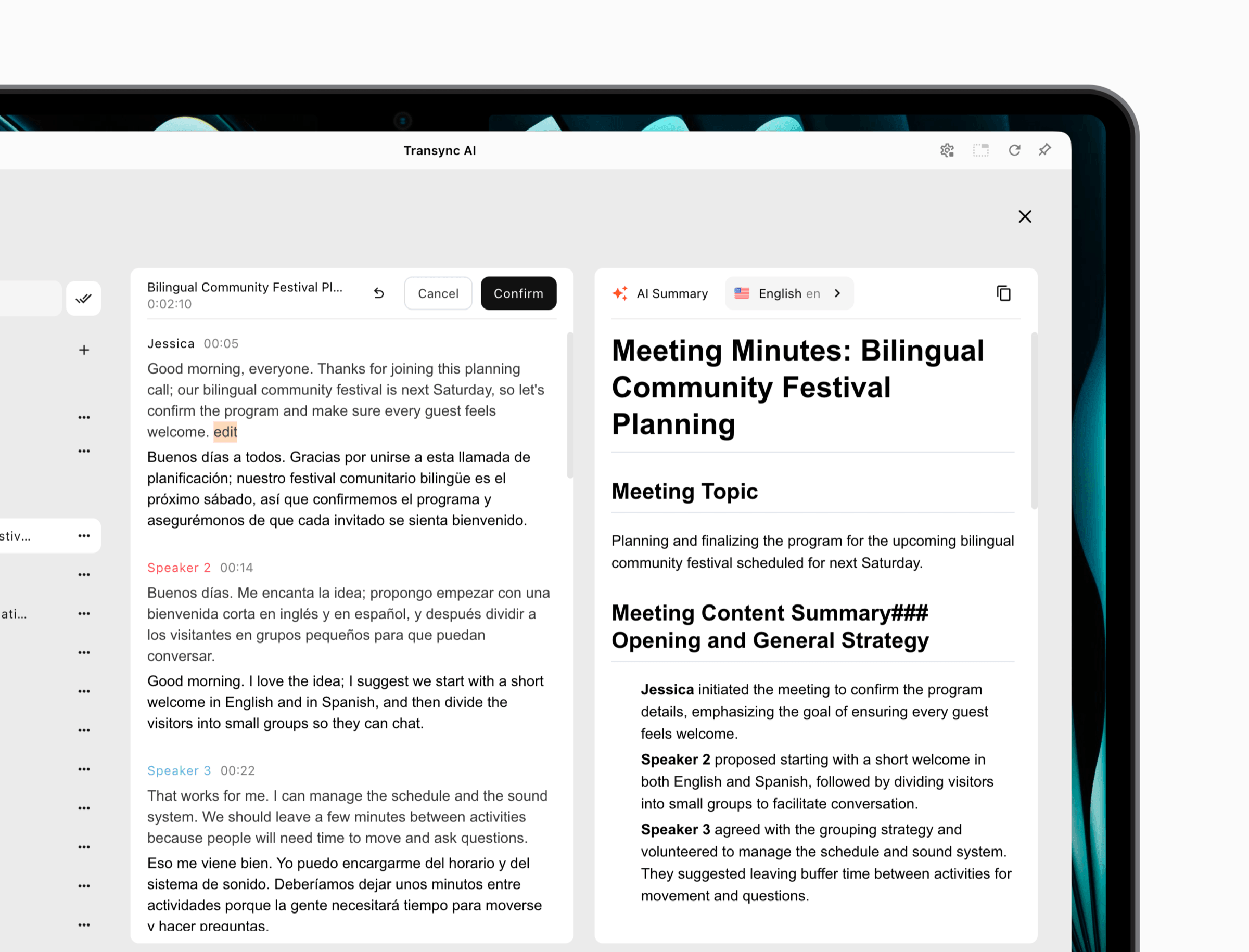 This is where AI for translators expands beyond documents. A language professional can prepare terminology, monitor bilingual output, identify consequential errors, clarify ambiguous statements, and review the transcript after the call. The tool handles rapid conversion; the professional manages meaning and risk.
Transync AI is not a document CAT tool, offline camera translator, or substitute for a qualified interpreter in legal, medical, regulatory, or safety-critical settings. Its output also depends on microphone quality, audio routing, network conditions, accent, and turn-taking.
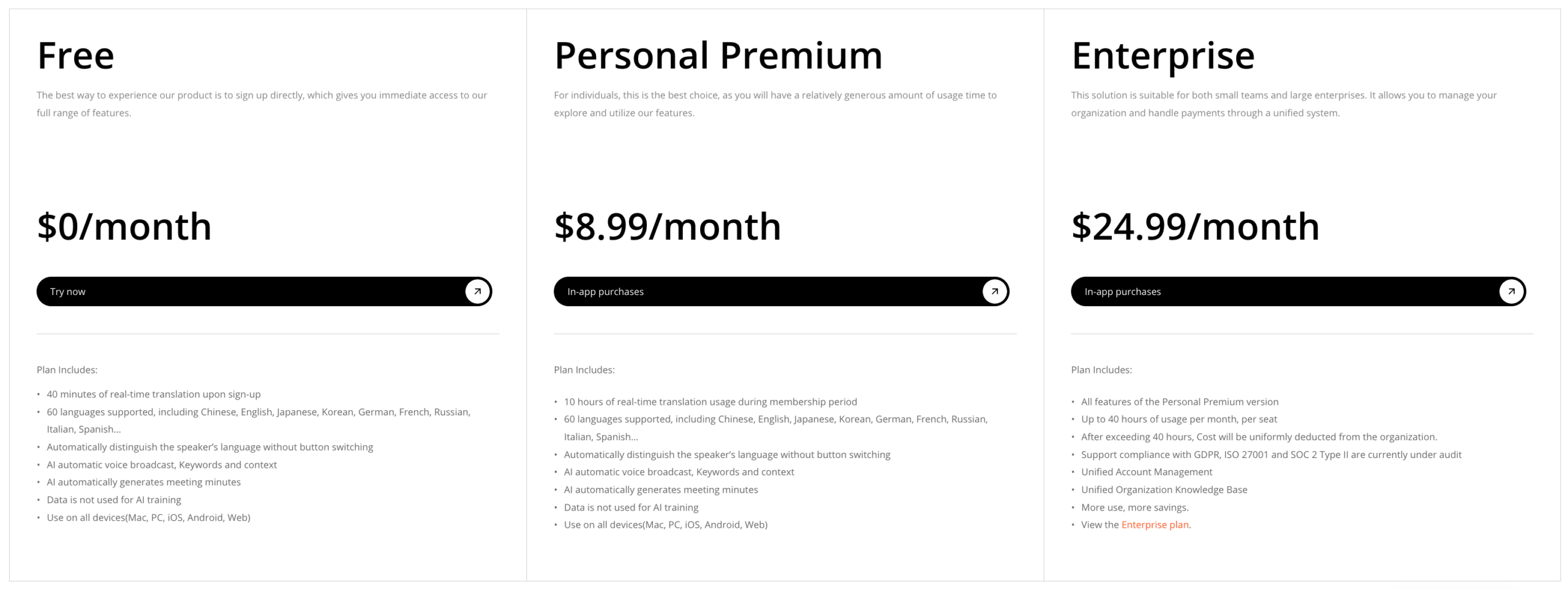
For recurring lower-risk business meetings, current listed pricing includes 40 free minutes after registration, Personal Premium at 8.99 per month with 10 hours, and Enterprise at 24.99 per month per seat with up to 40 hours. Verify current pricing and multilingual usage rules for the planned workload.
 Desk 6: Presentation, Delivery, and Learning
 Desk 6: Presentation, Delivery, and Learning
Delivery is the moment when a draft becomes an accountable artifact—or when live language reaches its real audience. AI for translators can automate routing and access, but the translator should control the final file, version, approval status, and distribution.
For one speaker addressing many listeners, beta Modo de presentación deja un Transync AI host enable up to 10 target languages. Audience members join from phones or computers using a QR code, shareable link, or Room ID. No software installation is required, but attendees must register or sign in to a Transync AI cuenta.
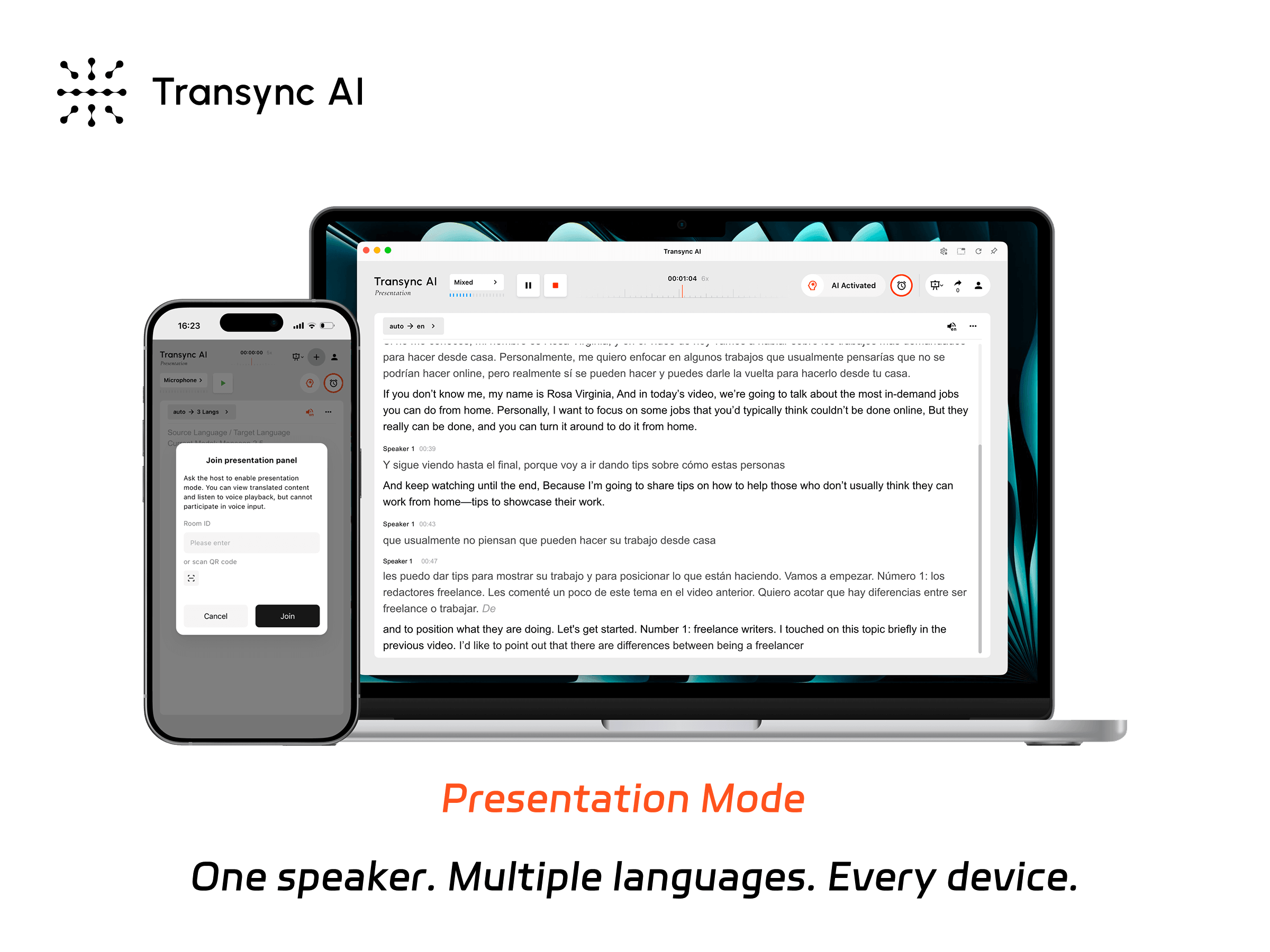
El modo presentación permite que un anfitrión comparta la traducción en directo con los miembros de la audiencia en sus propios dispositivos.
Attendees choose an enabled language and can read live subtitles or listen to translated voice. They cannot send voice input in this one-way mode. The host decides whether to share the original transcript and AI-generated notes afterward.
The language professional’s role can include terminology preparation, a speaker briefing, monitoring, correction notes, accessibility planning, and post-event transcript review. AI for translators provides distribution at scale; professional preparation improves the chance that the audience receives the intended message.
For written localization, delivery should also feed learning back into the studio:
- Approved edits update the translation memory where appropriate.
- Confirmed terms enter the term base with context and ownership.
- Rejected suggestions become negative guidance.
- Recurring errors update QA rules.
- Client feedback is linked to the correct project and locale.
- Model or engine performance is tracked by language pair and content type.
Do not let every edit train every workflow automatically. A legal correction for one jurisdiction may be wrong for another. A campaign slogan may be intentionally inconsistent with the corporate glossary. Human governance decides which lessons deserve reuse.
AI for Translators: Product Comparison
| herramientas | Primary Workspace | Best Contribution | Human-Control Features | Live Speech | Strongest Fit | Limitación principal |
|---|---|---|---|---|---|---|
| memoQ | Desktop CAT environment | Translation memory, term bases, reference and QA | Segment editing, concordance, terminology warnings | Not the central workflow | Freelance and professional document translation | Windows-focused; workflow requires setup and asset discipline |
| DeepL | Traducción de textos y documentos | Fast drafts, files, glossaries, tone and alternatives | Glossary choices and post-editing | Separate Voice products | Documents and language drafting | A fluent draft still needs contextual review |
| Smartcat | Cloud AI translation platform | Engine routing, formats, memories, glossaries, reviewers | Human-review routing and editable workflow | Broader content platform rather than meeting specialist | Multi-format content and review operations | Platform configuration and metered usage must be assessed |
| Frase | Enterprise localization platform | Orchestration, context, quality data, integrations | TMS workflow, governance and quality controls | Supports broader media/localization capabilities | Continuous product and software localization | More infrastructure than a solo translator may need |
| Transync AI | Real-time speech and meetings | Bilingual captions, translated voice, context and notes | Prepared terms, visible source/target, transcript review | Core strength | Meetings, calls, classes and presentations | Not a document CAT or offline file-layout tool |
No table can identify the best AI for translators without a real project sample. Language pair, domain, file format, risk, client requirements, existing linguistic assets, platform access, and budget can change the result.
Who Owns Each Decision?
| Decisión | AI May Assist | Human Must Own |
|---|---|---|
| Determine source language | Detection and confidence signals | Resolve mixed or ambiguous language |
| Select terminology | Suggest repeated terms and alternatives | Approve meaning, scope, and locale |
| Produce a first draft | Translate at scale | Decide whether automation is permitted |
| Judge factual equivalence | Highlight potential inconsistencies | Confirm source meaning and consequences |
| Adapt culture and tone | Offer variants | Choose what is appropriate for the audience |
| Approve a legal or medical statement | Surface risks or missing elements | Qualified professional accepts responsibility |
| Traducir discurso en vivo | Generate captions and voice | Manage clarification and escalation |
| Release content | Automate routing and export | Authorized person signs off |
This ownership model protects both quality and the profession. AI for translators should increase a linguist’s leverage, not erase the chain of responsibility.
A 30-Minute Tool Audition
Prepare one evidence pack before evaluating any product:
- A 500-word document containing headings, a table, names, numbers, and specialist terms.
- A 20-entry approved glossary with definitions and forbidden variants.
- Five previous bilingual segments that are valid for the same client and domain.
- A two-minute audio sample with two speakers, one correction, and one interruption.
- A written description of audience, purpose, privacy level, and final deliverable.
Then score:
- Setup time.
- Source-format handling.
- Factual accuracy.
- Terminology adherence.
- Editing effort.
- QA visibility.
- Live latency where relevant.
- Export quality.
- Privacy and access controls.
- Total cost for the real monthly volume.
The best AI for translators is not necessarily the product with the highest raw draft score. A slightly weaker draft inside a transparent, reusable, and well-governed workflow may require less total work than an impressive output that cannot be traced or corrected efficiently.
Common Studio Mistakes
The following mistakes turn AI for translators from a productivity advantage into a quality or confidentiality problem.
Mistake 1: Sending client content to an unapproved tool
Convenience does not create permission. Check the contract, plan, retention, training, access, and regional requirements first.
Mistake 2: Treating fluency as accuracy
Read names, numbers, negation, conditions, and omissions against the source. AI often sounds most convincing where review is most necessary.
Mistake 3: Building no terminology before drafting
An empty glossary forces repeated correction and allows inconsistent product language to spread.
Mistake 4: Using one engine for every language pair
Performance varies by language, domain, and content type. Run representative tests and keep results by scenario.
Mistake 5: Asking AI to review its own work without source evidence
Automated QA is a second signal, not independent professional accountability.
Mistake 6: Confusing meeting captions with complete interpretation
Live captions, translated voice, two-way participation, audience broadcasting, and human interpreting are different services. Define the communication architecture before purchasing.
Preguntas frecuentes
Will AI replace professional translators?
AI changes task allocation, pricing pressure, and client expectations, but professional value remains in source analysis, terminology, cultural adaptation, domain knowledge, quality control, risk management, and accountable approval. High-stakes and creative work particularly require human judgment.
What is the best AI for translators working with documents?
No existe un ganador universal. memoQ suits CAT workflows and linguistic assets; DeepL is useful for document drafts and glossaries; Smartcat combines AI translation with review routing; and Frase serves continuous enterprise localization. Test the actual language pair and files.
What is the best AI for translators working with live meetings?
Transync AI is the meeting-first option in this comparison. It combines bilingual captions, translated voice, terminology context, cross-platform use, and notes. A qualified interpreter remains necessary for high-stakes events.
Should translators disclose AI use?
Follow the client contract, professional standards, confidentiality commitments, and applicable law. When AI use affects privacy, process, pricing, or responsibility, clarify it before processing the content rather than after delivery.
What skills become more important with AI?
Source analysis, terminology management, post-editing, quality evaluation, domain expertise, prompt and tool configuration, data governance, client communication, and the ability to explain risk become more valuable.
Can AI for translators improve income?
It can reduce repetitive work and expand capacity when pricing, review effort, and tool costs are managed well. It can also create unpaid cleanup if poor drafts are accepted blindly. Measure total project time, not generated word count.
Keep the Translator at the Center
The strongest studio does not ask whether humans or machines should do everything. It assigns work intelligently. AI detects repetition, generates drafts, applies linguistic assets, checks patterns, translates live speech, and moves content through systems. The translator interprets the brief, resolves meaning, protects the client, and decides what is ready.
Usar memoQ when reusable linguistic assets and segment-level control matter. Use DeepL for tested text and document drafting. Use Smartcat for multi-format AI workflows with review. Use Frase for enterprise localization orchestration. Use Transync AI for real-time meetings, voice translation, and multilingual presentations.
That is the practical future of AI for translators: six connected desks, clear human ownership, and technology that earns its place through evidence rather than hype.
Si quieres una experiencia de próxima generación, Transync AI lidera el camino con la traducción en tiempo real impulsada por IA que permite que las conversaciones fluyan con naturalidad. Puedes Pruébalo gratis ahora.