

Learn how to use live translate in 7 steps for conversations, meetings, and presentations, with clearer audio, captions, voice playback, and records.
Vědomí how to use live translate is less about finding a button and more about building a clean path from the speaker to the listener. The right setup changes with the room: two people sharing a phone, colleagues in an online meeting, and an audience following a presentation all need different inputs and outputs.
Here is the shortest useful version. Choose the conversation type, select the languages, connect the audio that actually contains the speech, decide whether people will read or hear the result, and run a 90-second rehearsal. If that rehearsal handles names, numbers, and a correction, the real session is far more likely to work.
Before You Start: Picture the Listening Moment
Imagine the person who needs the translation. Where are they, and what will they do while someone else speaks?
- At a café counter, they may look at a phone placed between two people.
- In an online meeting, they may read bilingual captions while watching a shared screen.
- During a sales call, the other participant may need translated speech routed into the call.
- At a lecture, every audience member may want a different language on their own device.
This is the question many tutorials skip. Learning how to use live translate begins with the listener’s experience, because that determines the device, audio source, translation mode, and delivery method.
How to Use Live Translate in 7 Steps
1. How to Use Live Translate by Naming the Room
Start by placing the conversation in one of four rooms.
The shared-phone room: Two people are standing together and can take turns. A mobile conversation translator is usually enough.
The listening room: One speaker talks for several minutes while another person follows. Use one-way translation, headphones, or translated captions that do not require constant turn-taking.
The meeting room: Several people speak through conferencing software. The translator must receive both microphone audio and the voices coming from the computer.
The presentation room: One host speaks to many people. The audience needs a link, QR code, or similar way to choose languages independently.
Write down one sentence before configuring anything: “The speaker will talk through _, and the listener will receive the translation through _.” That sentence prevents the most common setup mistake—choosing an appealing feature that cannot hear the source or reach the audience.
2. How to Use Live Translate in the Right Room
There is no universal “live translate” workflow. These four routes solve meaningfully different tasks.
For a short, face-to-face conversation, Překladač Google offers Listening, Conversation, Text only, Custom settings, and Face-to-face modes on supported phones and tablets. In Conversation mode, people take turns and translations can play through the phone speaker or headphones. Face-to-face mode divides the display so both people can read.
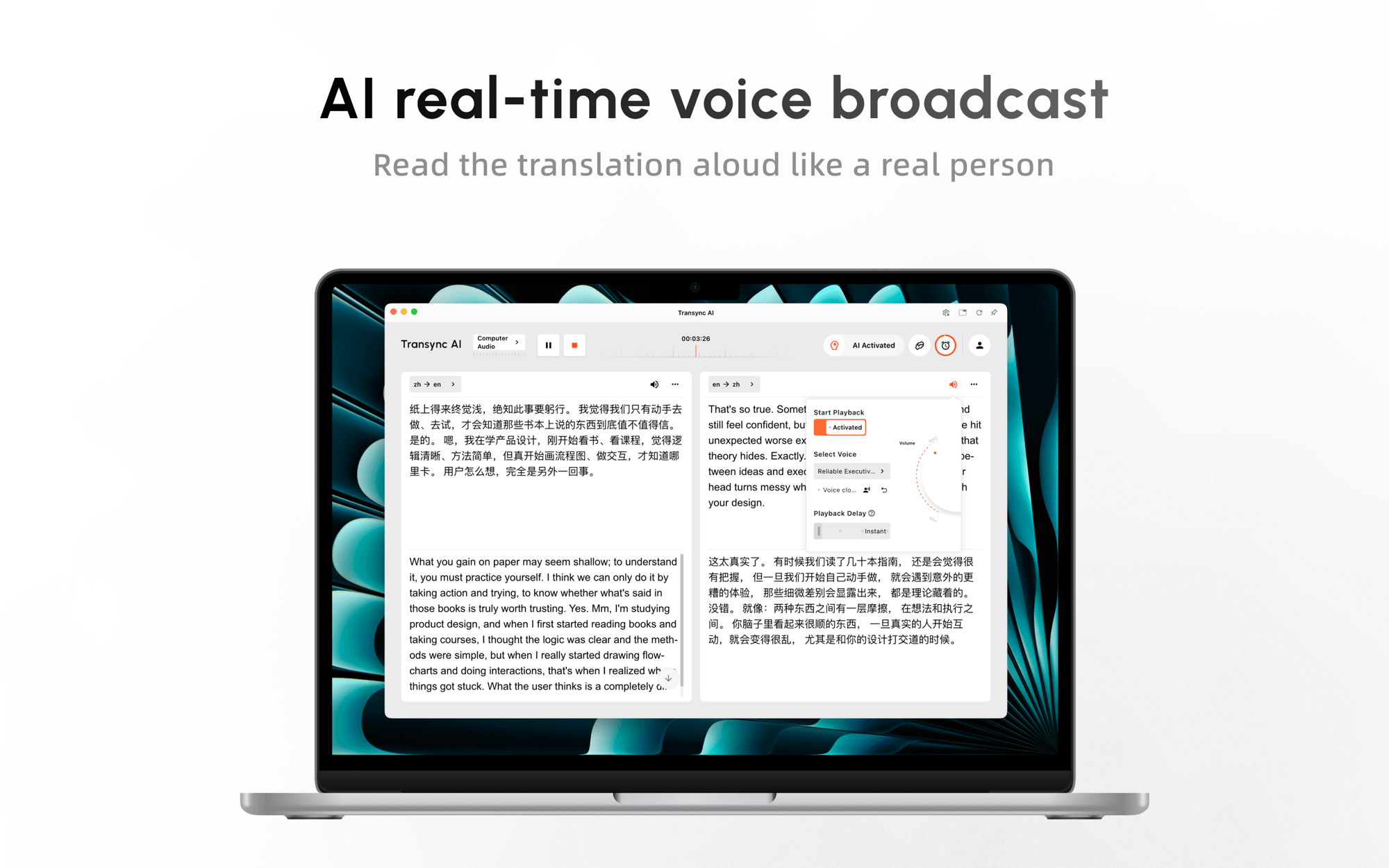
For recurring calls and meetings across different platforms, Transync AI poskytuje překlad v reálném čase with bilingual captions and optional translated voice. It can work alongside Zoom, Microsoft Teams, Google Meet, browser content, and in-person conversations rather than requiring every conversation to remain inside one meeting product.
Vyzkoušejte Transync AI zdarma
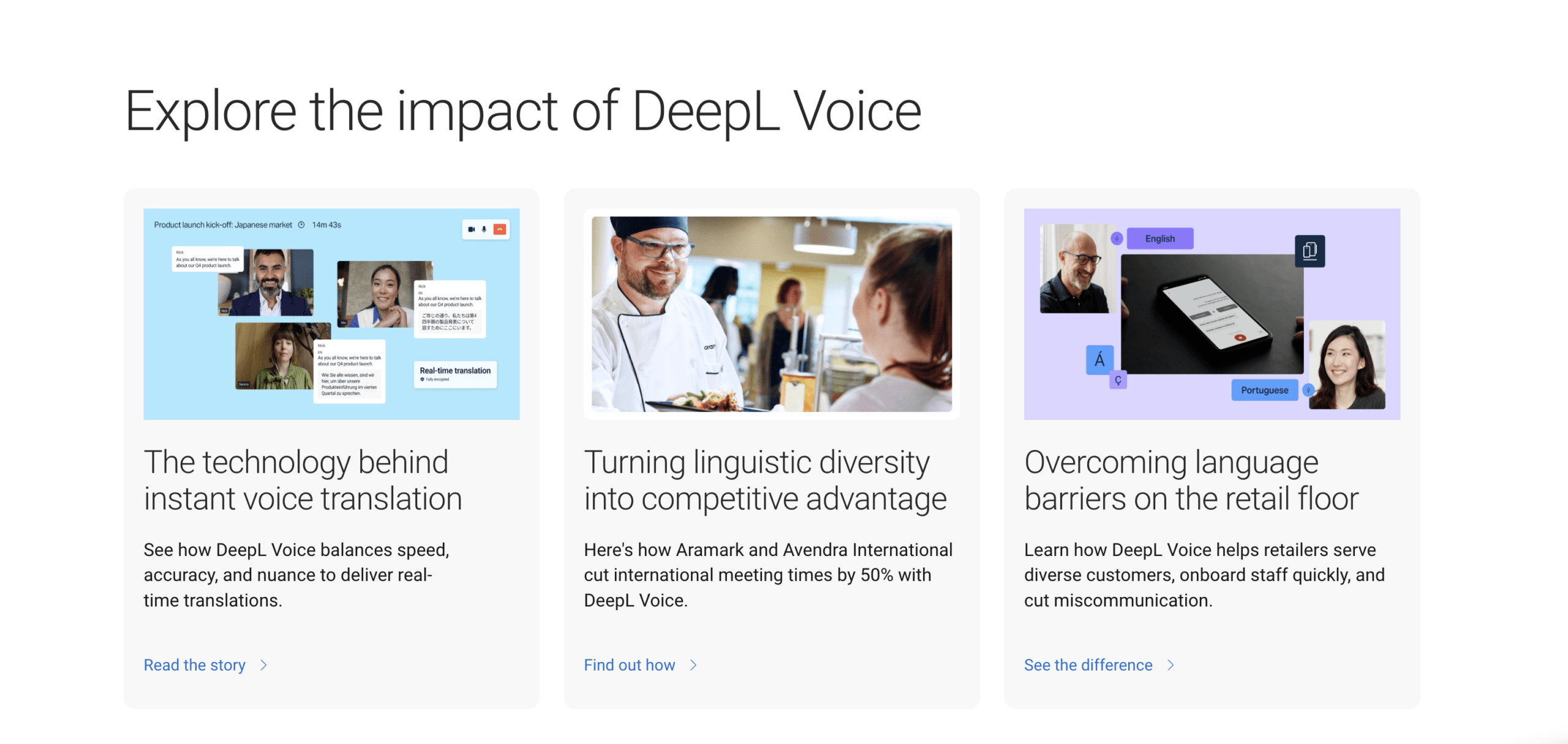
For organizations that prefer an enterprise meeting layer, Hlas DeepL supports live translated captions in compatible meeting workflows and offers voice translation in its current desktop experience. Available features depend on the Voice plan and workflow; browser-based meeting translation may use a meeting bot and participant link, while the desktop app provides a different setup.
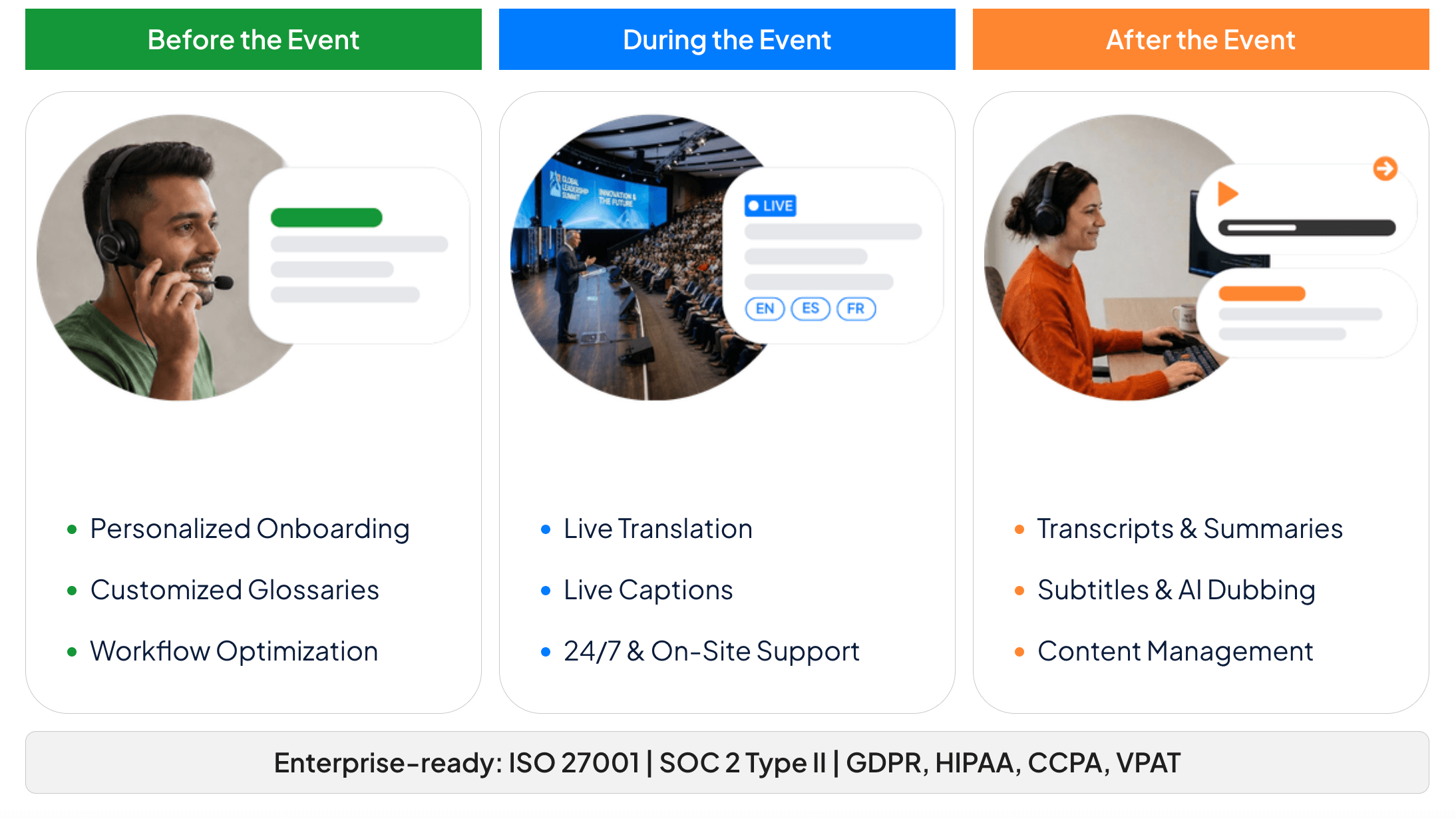
For conferences and managed events, Slovní lets an organizer create a session and distribute access through a URL or QR code. Attendees can join from their own devices, choose an available language, and read captions or listen to translated audio without creating an attendee account.
Which Live Translate Route Fits Your Task?
| Produkt | Best Starting Point | How Speech Enters | What the Listener Receives | Main Setup Boundary |
|---|---|---|---|---|
| Překladač Google | Short face-to-face conversation or personal listening | Phone or tablet microphone | Přeložený text a volitelný zvuk | Device, mode, and language support vary |
| Transync AI | Opakující se schůzky, hovory, kurzy a prezentace | Microphone, supported computer-audio workflow, or room audio | Bilingual captions, translated voice, records, or audience view | Requires internet and correct audio routing |
| Hlas DeepL | Licensed enterprise meeting workflows | Desktop meeting detection or meeting-bot workflow | Translated captions and plan-dependent voice features | License, platform, bot, and administrator requirements vary |
| Slovní | Conferences, webinars, and attendee-facing sessions | Presenter or event audio feed | Personal captions or translated audio by link/QR | Organizer setup and reliable venue/network audio |
The table is not a ranking. If you are learning how to use live translate for a hotel desk, a shared phone may be the cleanest answer. If you need recurring business meetings, terminology, translated voice, and notes, a meeting-first workflow is more appropriate. If hundreds of attendees must join without accounts, event access may decide the choice before translation quality is tested.
3. Select the Languages—and the Shape of the Conversation
Do not choose languages by looking only at country names. Confirm the language variety your speakers will actually use, such as Brazilian or European Portuguese, and test whether the product distinguishes the variation that matters to your conversation.
The next part of how to use live translate is deciding whether speech moves in one direction, two directions, or from one speaker toward several language groups.
Next, choose a mode.
- One-way translation: Best when one person is speaking and another is primarily listening.
- Obousměrný překlad: Best for a conversation in which both sides respond in their own languages.
- Multilingual translation: Best when the same source must reach several target languages.
- Presentation delivery: Best when one host distributes live translation to audience devices.
V Transync AI, the mode should be selected before the session. Two-way translation fits back-and-forth meetings, One-Way Translation keeps lectures and listening tasks simpler, and Multilingual Translation can produce several target languages in one task. More languages may increase usage, so enable only the languages people actually need.
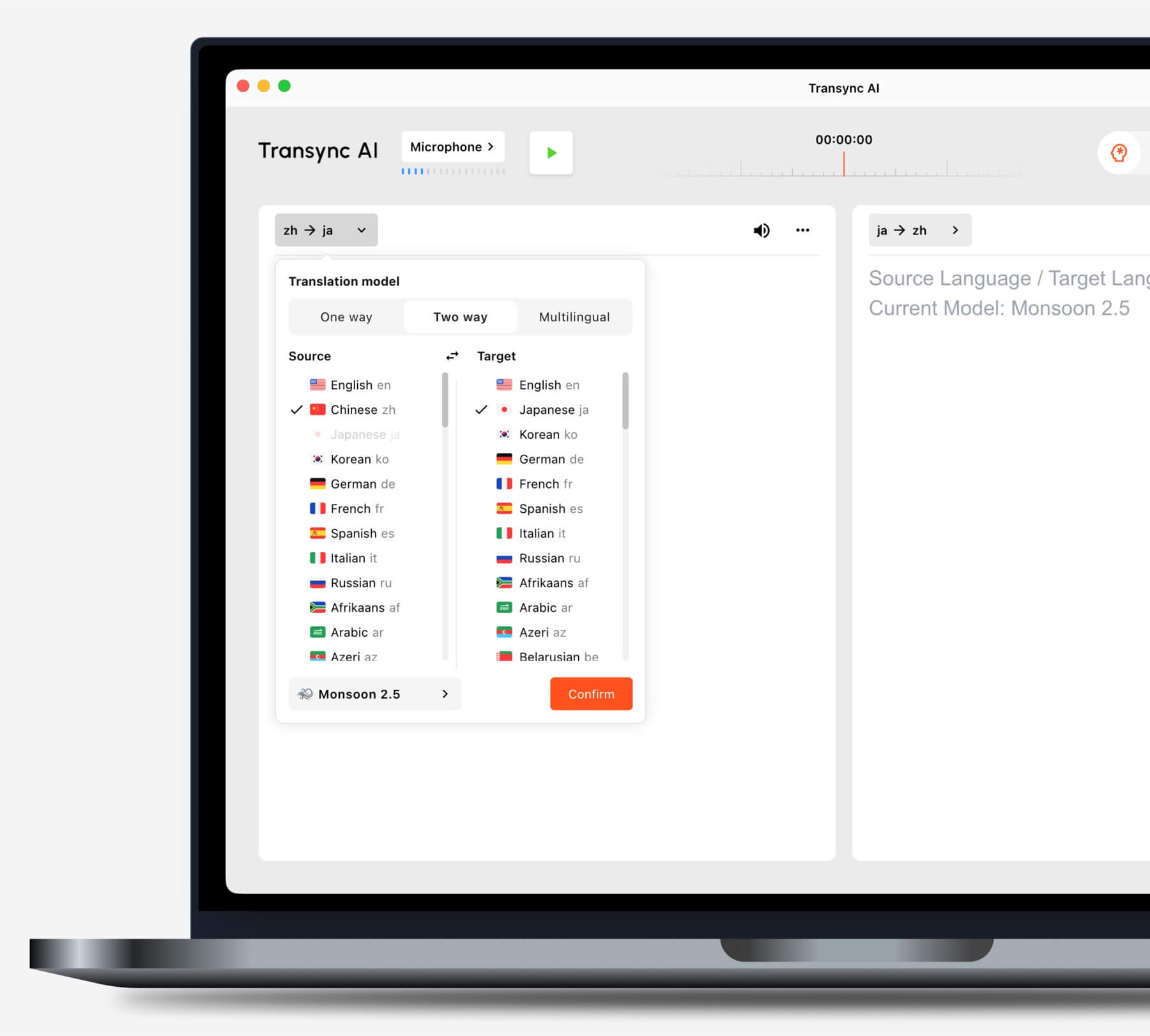
Před zahájením úkolu vyberte režim překladu, který odpovídá vašemu scénáři.
V Překladač Google, select the Live Translate mode and language pair after opening the app. Listening is designed for hearing translation, Conversation plays translations as people take turns, Text only removes audio, and Face-to-face changes how both sides read the screen.
Lidé hledají how to use live translate often enable automatic detection without testing it. Automatic detection is convenient, but a fixed source language can be safer when the speaker will remain in one language and names or short technical phrases might be mistaken for another language.
4. How to Use Live Translate with the Correct Audio
Live translation cannot translate sound it never receives. Before thinking about model quality, watch the input meter or source transcript and confirm that the correct voice appears.
For an in-person conversation, move the microphone close enough to both speakers without placing it beside a loud speaker. Reduce television noise, music, overlapping conversations, and echo. Encourage natural turn-taking instead of holding the phone directly against one person’s mouth.
For an online meeting, separate the two audio paths:
- Microphone audio carries your own speech.
- Computer audio carries the remote participants, videos, and other sound playing through the computer.
Ten/Ta/To pracovní postup překladu živých schůzek v Transync AI can use these sources in supported setups. Configure both before joining an important call, then ask a remote participant to speak while you verify that their words—not only your microphone—appear in the source transcript.
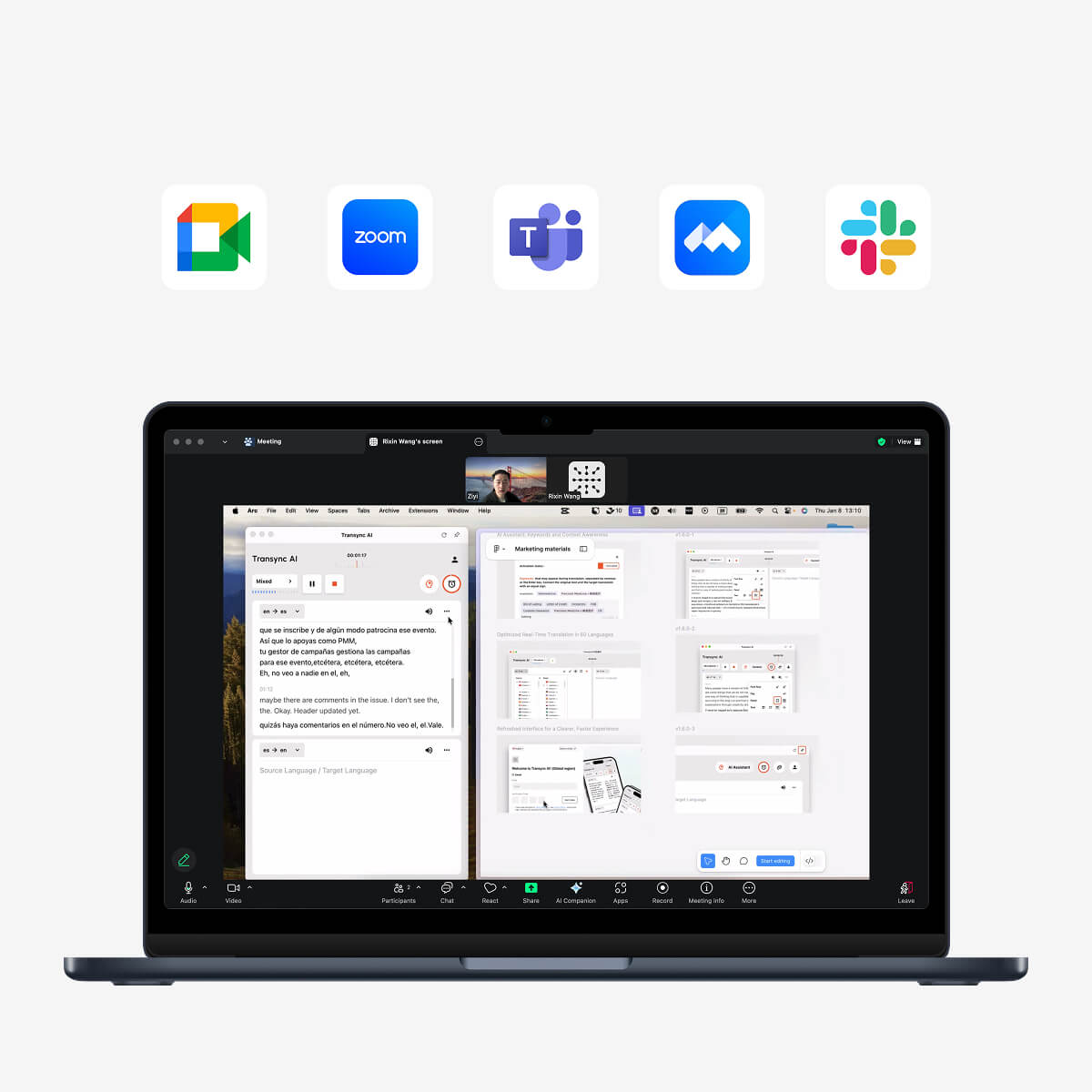
Kompatibilní s hlavními platformami pro online schůzky pro bezproblémový překlad v reálném čase
If the other participants must hear translated speech, merely turning on playback on your computer may not send it into the meeting. Depending on the setup, use the meeting platform’s computer-audio sharing controls or a virtual microphone workflow. Headphones reduce echo but can also change how playback must be routed.
This audio check is the practical heart of how to use live translate. If the source transcript is wrong, changing the translated voice or target language will not repair the input.
5. Give the Translator the Words That Cannot Be Guessed
Names, product codes, acronyms, place names, and specialized terms are disproportionately expensive when they are mistranslated. Prepare them before the conversation.
A dependable approach to how to use live translate treats this preparation as part of setup, not as a correction attempted halfway through the call.
V Transync AI, Klíčová slova a kontext let users enter short terms and a description of the meeting background. A keyword can also be paired with a preferred translation using an equals sign. Keep keywords short; put longer explanations in the context field.
Například:
Keywords: Oriona X4, Jun Chen, SLA, photovoltaic inverter
Preferred term: gross margin = margen bruto
Context: Quarterly supplier review for a solar equipment company.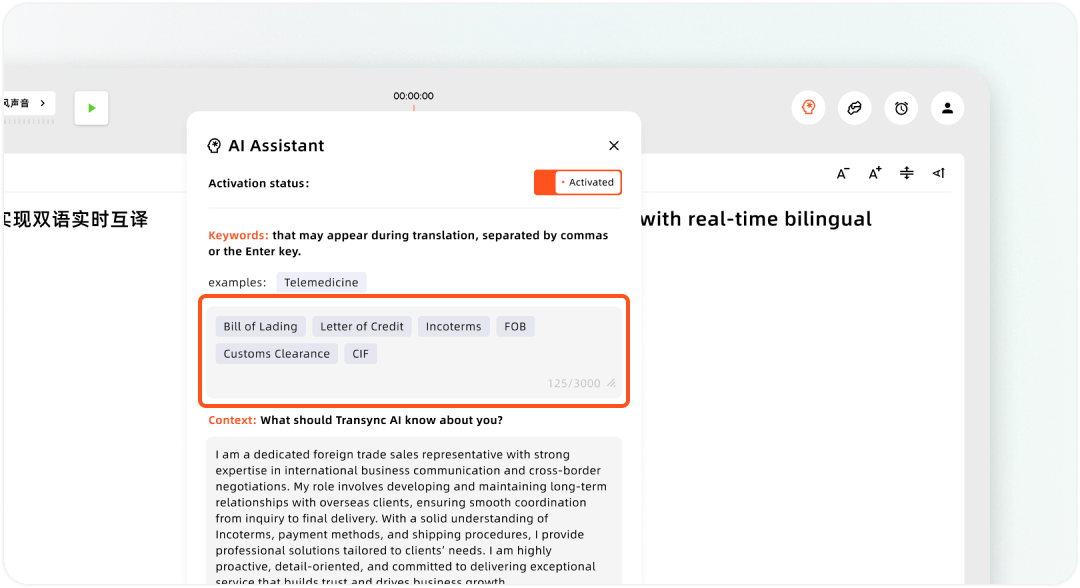
Nastavení vlastních klíčových slov a kontextu uživatele v nástroji Transync AI Assistant
Other products may call this feature a glossary, spoken terms, custom vocabulary, or terminology management. Hlas DeepL offers plan-dependent glossaries and spoken terms in its meeting product. Whatever the label, use the same test list in every product so the comparison is fair.
If the live translator has no terminology control, introduce uncommon names slowly, place them in meeting chat, or confirm them verbally. Knowing how to use live translate includes knowing when the system needs help rather than expecting it to infer every proper noun from one syllable.
6. How to Use Live Translate as Text, Voice, or Audience View
A translated sentence can arrive in four useful forms: text on the main screen, floating captions, spoken audio, or a personal audience view. Choose one primary output and one backup.
Keep text beside the work
Titulky v režimu obraz v obraze v Transync AI can keep translated text visible above supported desktop applications or in a mobile floating window. This is useful when the listener must follow slides, a spreadsheet, or another meeting window without constantly switching back to the translator.
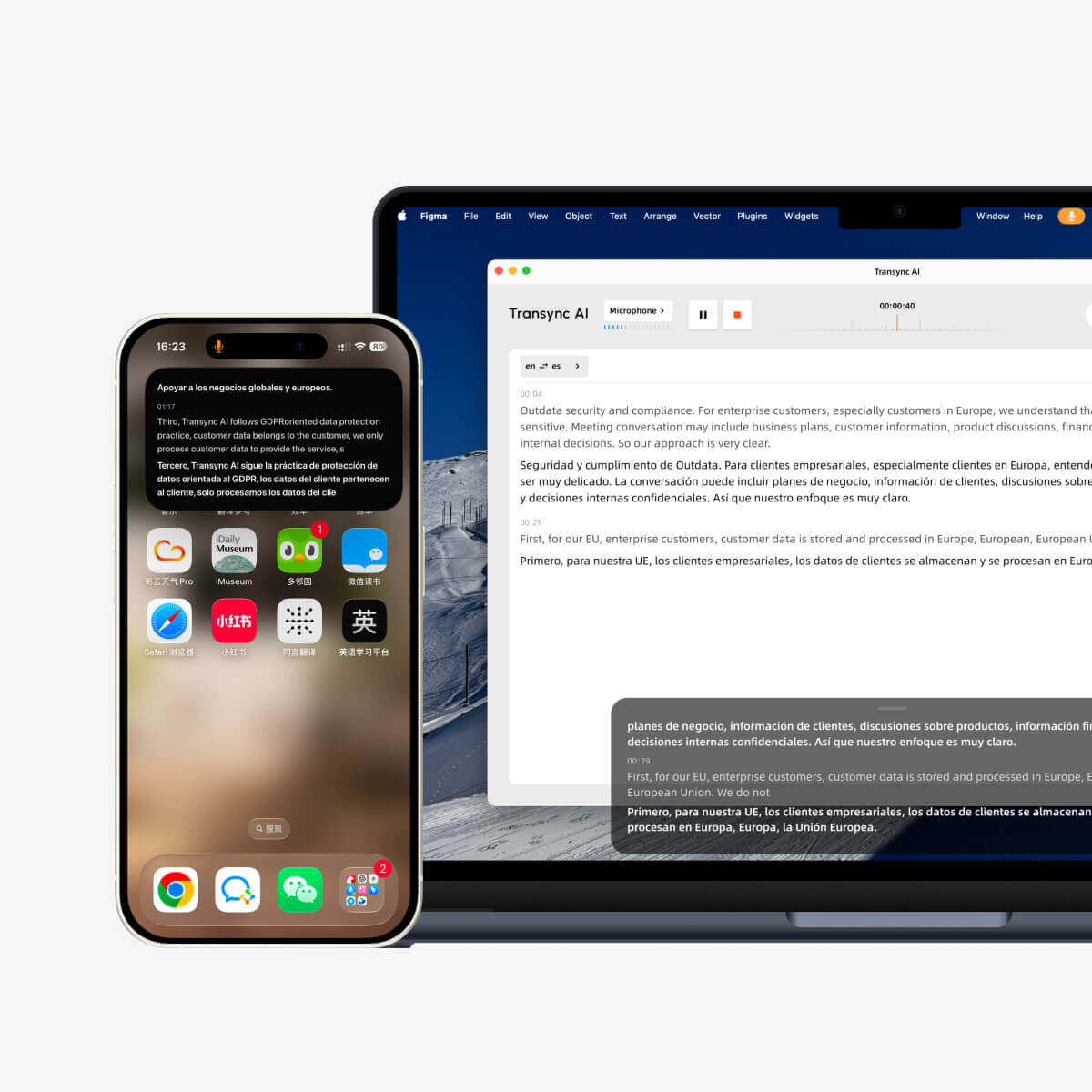
Plovoucí titulky v reálném čase na stolních počítačích a mobilních zařízeních
Use original-only view when checking recognition, translation-only view for a cleaner reading experience, or a mixed view when someone needs to compare both. Increase font size before screen sharing; do not wait until the meeting begins.
Let people hear the result
An Hlasový překladač s umělou inteligencí can read the translated output aloud in Transync AI. Start with a one-second playback delay for a balance between speed and complete phrases. Use Instant when response speed matters more, or a longer delay when speakers pause frequently in the middle of sentences.
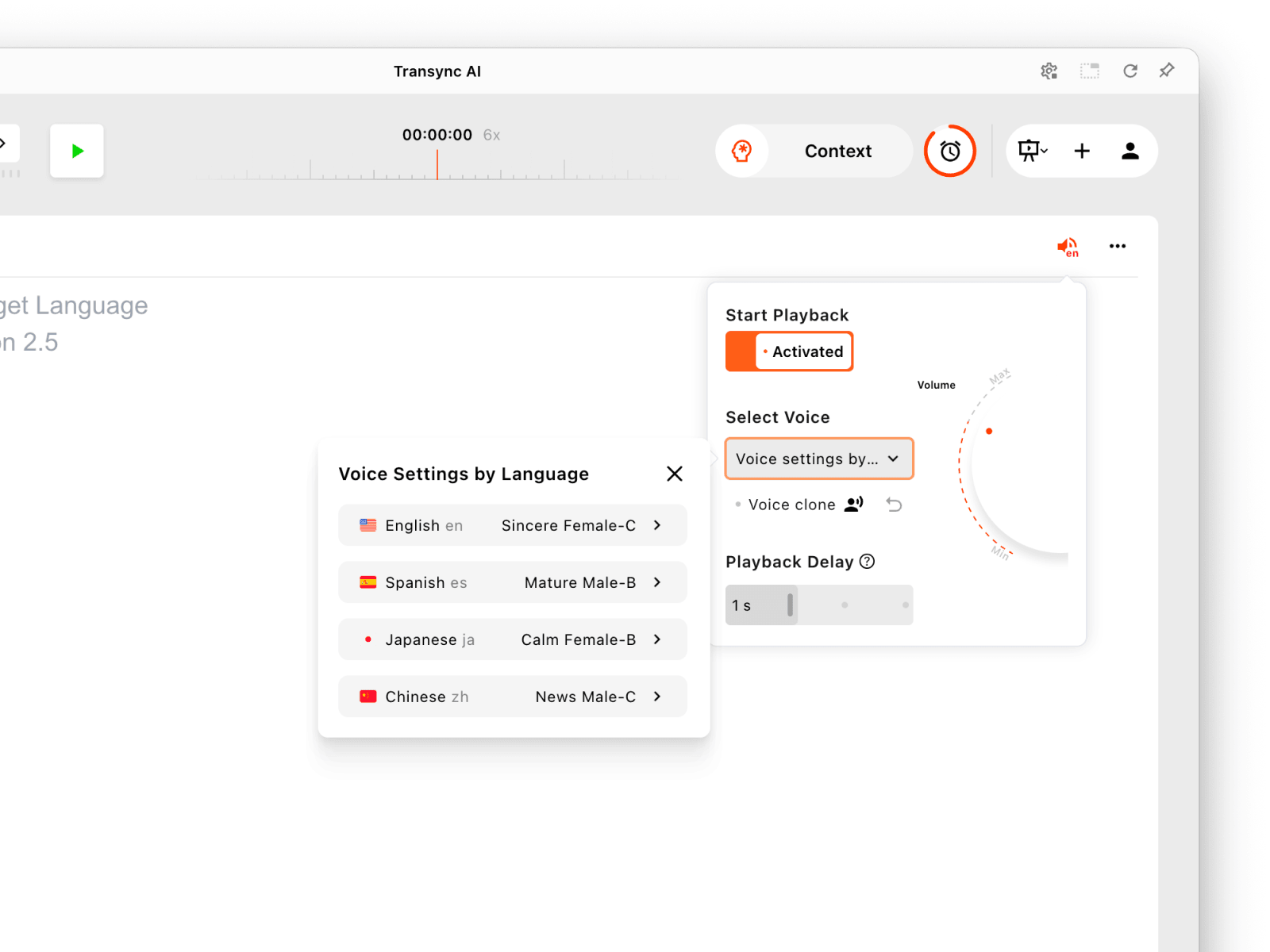
Configure voice playback separately for each presentation language.
If two sides broadcast translated speech at once, repeated sound or echo may occur. Enable playback on one side first, use headphones where appropriate, and add the second direction only after testing.
Give an audience its own language view
V beta verzi Prezentační režim, a Transync AI host can enable up to 10 target languages. Audience members join through a link, QR code, or Room ID and select from the enabled languages on their own devices. They can read live text and use voice playback when available, but they cannot send voice input into the host’s task. A sign-in step may appear in the current joining flow.
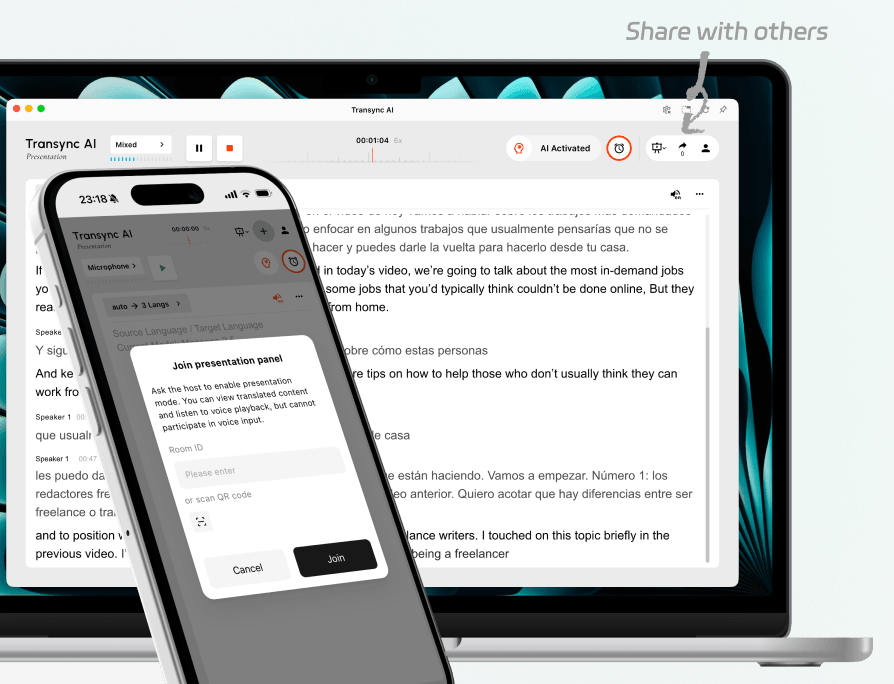
Pozvěte účastníky z publika i vzdálené posluchače na stejnou živou prezentaci.
Slovní also uses attendee links or QR codes for event delivery. Its current public information says attendees can join through a modern browser without downloading an app or creating an account. That difference may matter when a large public audience must enter quickly.
The best answer to how to use live translate is sometimes not a better translation model. It is a delivery method that puts the result where the listener can actually use it.
7. Run a 90-Second Rehearsal, Then Save What Matters
Do not test with “Hello, how are you?” Use a script that exposes real failure points:
This rehearsal turns how to use live translate from a list of settings into an observable communication test.
Good morning. I’m Jun Chen from Oriona Systems. The revised order is 1,450 units—not 1,540—and delivery moves from Tuesday to Thursday, September 24. Please keep the gross margin above 18.5%. Sorry, correction: the call starts at 9:30, not 9:13.
Read it at normal speed. Then score five things:
| Kontrola | Podmínka pro úspěšné provedení |
|---|---|
| Zachycení | The source transcript hears the intended speaker and does not loop playback |
| Facts | Names, dates, numbers, negatives, and corrections remain accurate |
| Význam | The translation preserves who must do what and by when |
| Načasování | The listener receives the result soon enough to respond naturally |
| Dodání | The correct person can read or hear the translation without assistance |
If the source transcript fails, fix the microphone, computer-audio source, distance, noise, or speaker overlap. If recognition is good but a name fails, add terminology or slow the introduction. If phrases are too fragmented, adjust playback delay and ask speakers to finish a thought before interrupting.
At the end of a Transync AI task, stop the session and review the transcript. Poznámky ze schůzky s umělou inteligencí can organize the discussion into a more useful record for follow-up. In Presentation Mode, the host controls whether the transcript is shared with audience members.
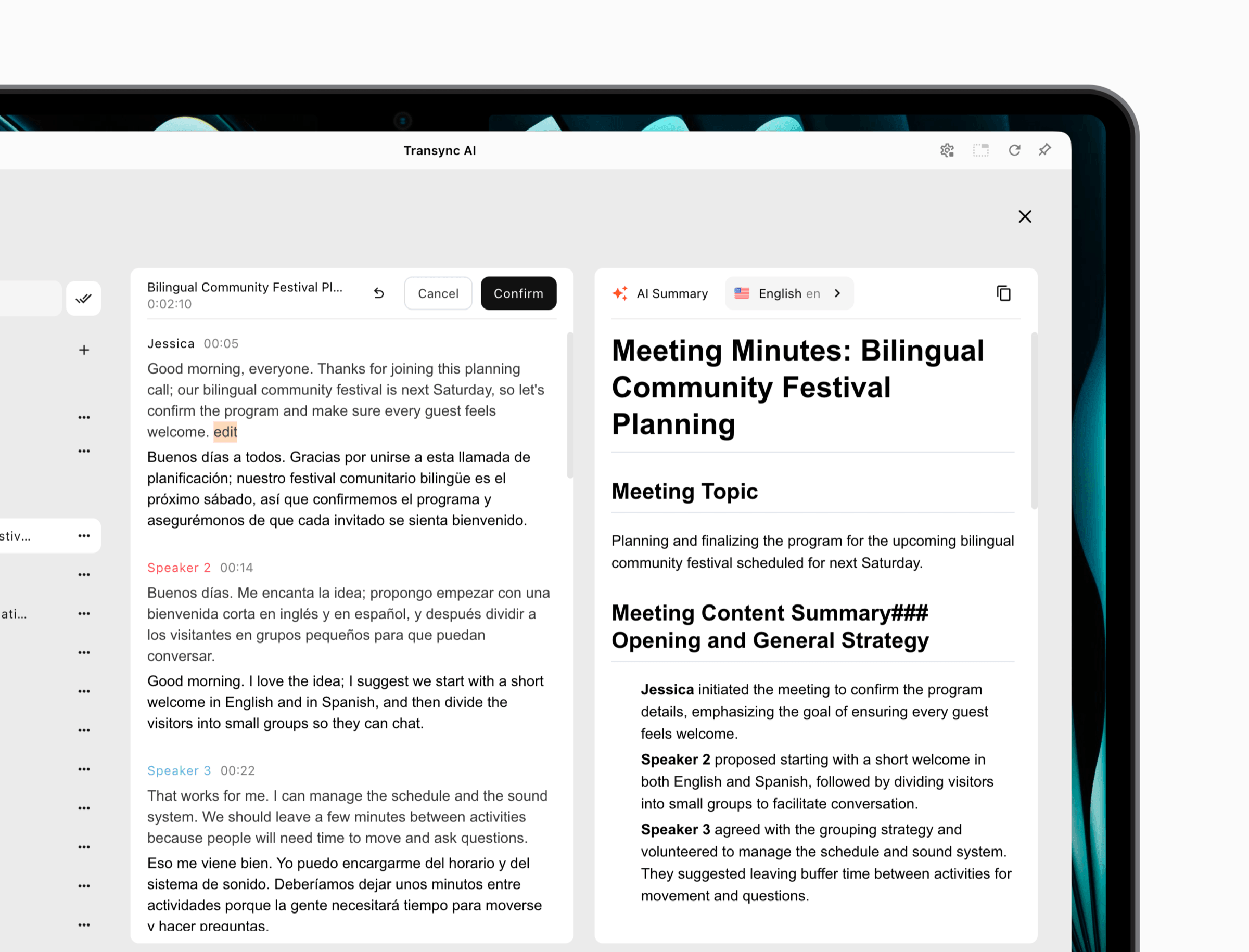 Other products handle records differently. DeepL makes transcript download plan-dependent, while a personal Překladač Google conversation is not designed as a complete meeting-record workflow. Decide before the session whether participants need a durable transcript, a summary, or no retained record at all.
This final step completes how to use live translate: the translation should either disappear appropriately or become a controlled record that supports the next action.
A Five-Minute Troubleshooting Map
The app hears you but not the remote participant
The translator is probably using only the microphone. Enable the supported computer-audio or tab-audio path, then ask the remote person to speak while you watch the source text.
Captions are accurate but translated voice is missing
Confirm that voice playback is enabled for the target direction, the correct voice is selected, device volume is audible, and the meeting receives shared computer audio or virtual-microphone output when needed.
Translation repeats itself
The microphone may be hearing the translated playback and feeding it back into the translator. Use headphones, lower speaker volume, move the microphone, or broadcast only one direction.
Names and numbers keep changing
Add names and terminology before starting, reduce background noise, speak numbers in complete groups, and repeat consequential details. Always confirm prices, dates, medication names, legal terms, and safety instructions through an appropriate professional process.
The audience joined but sees the wrong language
Confirm that the host enabled the required target language. Ask the attendee to open the language selector. If the language is unavailable, the host may need to restart or reconfigure the task depending on the product and current app behavior.
Use this map whenever someone knows how to use live translate in theory but the real session still fails. Most problems belong to input, configuration, delivery, or echo—not translation alone.
Privacy Is Part of the Setup
Before starting, tell participants that automated translation is active and explain whether audio, transcripts, or summaries will be retained. Check the product’s current privacy documentation and your organization’s rules.
Privacy belongs inside any responsible explanation of how to use live translate, because the same spoken content may be processed and retained differently across products and modes.
Transync AI states that customer data is not used for AI training by default. Translation records can contain sensitive business information, so use account controls and delete records when they are no longer needed. Review the Centrum důvěryhodnosti for current security information.
Hlas DeepL documentation states that customer meeting data is not used to train DeepL language models and describes temporary processing and local retention behavior for its meeting workflow. Slovní a Překladač Google have their own processing and account models; do not transfer a privacy conclusion from one route to another.
For legal, medical, financial, immigration, regulatory, or safety-critical conversations, use a qualified human interpreter or reviewer when professional responsibility is required. Live AI translation can improve access, but it cannot assume that responsibility.
Často kladené otázky
How to use live translate on a phone?
For a short face-to-face exchange, open a supported translation app, choose the two languages, select Conversation or Face-to-face mode, grant microphone access, and speak in turns. Keep the phone between the speakers and test audio playback before discussing important details.
How to use live translate in an online meeting?
Choose a meeting-capable translator, select the language pair and mode, enable your microphone plus the meeting’s computer audio, and verify both sides in the source transcript. Then configure captions or translated voice and run a short rehearsal before participants join.
Can live translate work with several languages at once?
Yes, some products support multilingual output. Transync AI offers Multilingual Translation and Presentation Mode workflows, while Slovní lets event attendees choose from organizer-supported languages. Usage, plan, and language availability vary, so enable only the languages required.
Should I use subtitles or translated voice?
Use subtitles when participants need to verify wording, watch a meeting quietly, or compare source and target text. Use translated voice when reading would distract from the conversation or presentation. For important sessions, keep captions available as a backup even when voice is the primary output.
Does live translate work offline?
It depends on the product and mode. Transync AI requires an online connection. Some consumer translation functions may support downloaded languages, but do not assume that a feature described as offline includes the same live audio, meeting, or conversation workflow. Test the exact device and mode before travel.
What is the most important live translate test?
Confirm that the system hears the correct audio source. Then test a real name, a number, a negative statement, and a correction. A polished voice cannot compensate for missing or incorrectly captured source speech.
The Better Way to Think About Live Translate
Učení how to use live translate is a small exercise in communication design. The model matters, but so do the microphone, language mode, screen, headphones, meeting policy, audience access, and record after the conversation.
For two people sharing a phone, keep the setup light. For recurring meetings, build a repeatable audio and terminology workflow. For presentations, give each listener a personal language path. In every case, test the real names and numbers before they carry consequences.
That is how to use live translate reliably: capture the right voice, preserve the meaning, deliver it in time, and leave behind only the record people actually need.
Pokud chcete zážitek nové generace, Transync AI Jste průkopníkem v oblasti překladů v reálném čase s využitím umělé inteligence, které zajišťují přirozený tok konverzací. Můžete vyzkoušejte to zdarma teď.