
Translate English to Spanish application guide comparing tools for text, live meetings, voice conversations, recorded audio, subtitles, and notes.
A translate English to Spanish application may be used for a short message, a face-to-face conversation, an international meeting, or a recorded video.
Those tasks sound similar, but they require different technology. A text translator can wait for a complete paragraph. A live meeting tool must produce Spanish subtitles before the speaker changes topic. A recorded-media platform needs timestamps, speaker labels, editing, and subtitle export.
Instead of asking which translation app has the most features, this guide tests the main options against four real tasks.
Quick Answer: Which Application Fits Your Task?
| Translation task | Best type of application | Tools to consider |
|---|---|---|
| Messages and documents | Text and document translator | DeepL |
| Face-to-face conversations | Mobile voice translator | Talkao, Transync AI |
| Live online meetings | Real-time meeting translator | Transync AI, JotMe |
| Recorded audio and video | Transcription and media translator | Sonix, Maestra |
The right translate English to Spanish application depends on when the Spanish is needed and what must happen after translation.
Test 1: Can It Translate English Text into Natural Spanish?
Text is the simplest translation workflow because the application receives a complete sentence or paragraph.
Common uses include:
- Business emails
- Website content
- Reports
- Product descriptions
- Presentations
- Customer messages
- Training documents
DeepL is a strong option for professional written translation. It is designed around text, documents, writing assistance, and business language workflows.
However, accurate Spanish requires more than replacing English words.
 Spain Spanish and Latin American Spanish
 Spain Spanish and Latin American Spanish
Vocabulary differs across regions.
| English | Spain | Common Latin American usage |
|---|---|---|
| Computer | ordenador | computadora |
| Mobile phone | móvil | celular |
| Car | coche | carro or auto |
| Juice | zumo | jugo |
Formality also matters. A translation may use tú, usted, vosotros, ustedes, or vos, depending on the audience and location.
When testing a translate English to Spanish application for written content, check:
- Whether the Spanish fits the target country
- Whether the tone is formal or informal
- Whether repeated terms remain consistent
- Whether names and product models are preserved
- Whether document formatting remains usable
A polished marketing page or legal document should still receive human review before publication.
Test 2: Can It Support a Face-to-Face Conversation?
Travel and in-person communication require speed and simplicity.
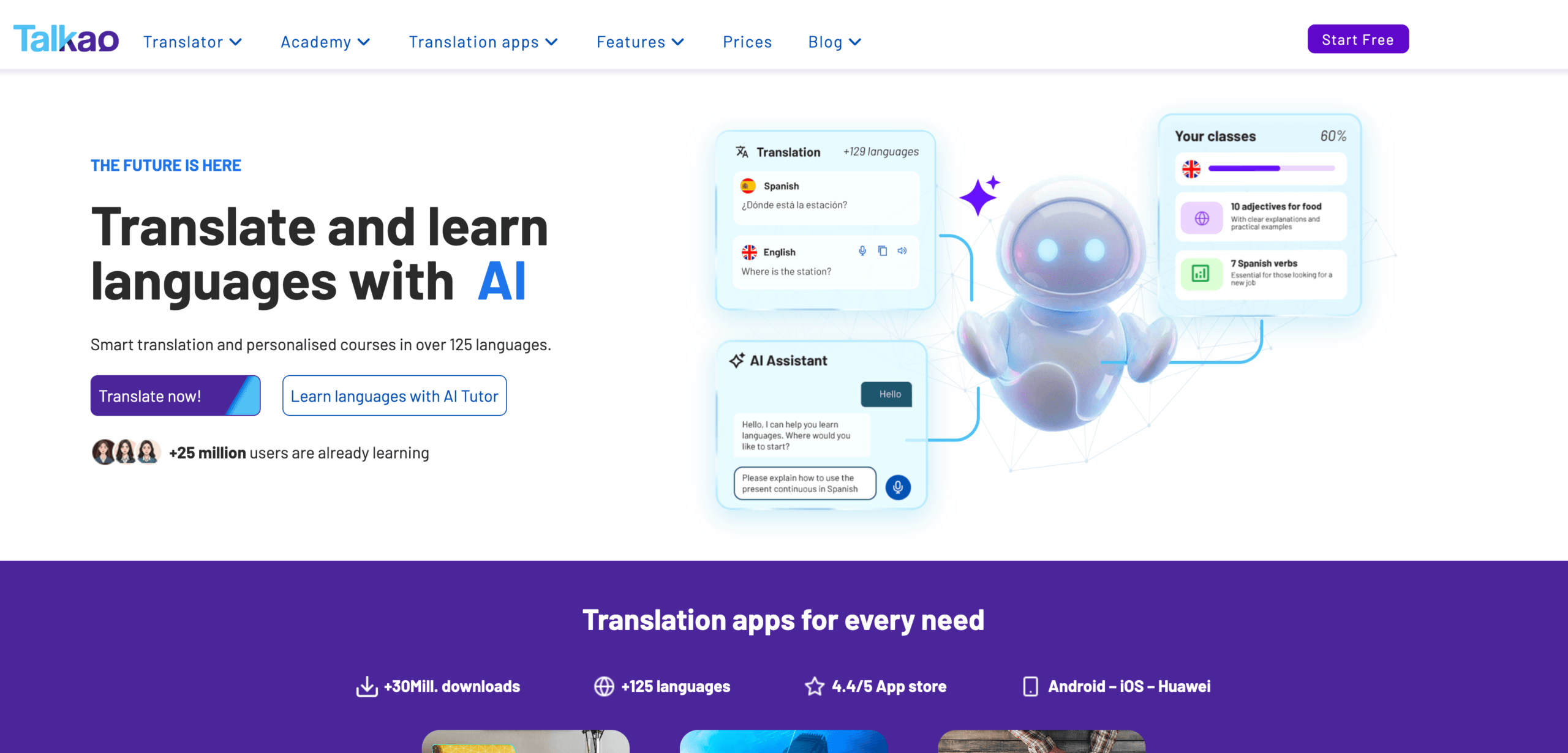 A mobile translator should allow two people to speak in turns, view the translation, and hear Spanish voice playback without navigating through complicated settings.
Talkao is more consumer-oriented and may suit:
- Travel
- Menus and signs
- Short conversations
- Camera translation
- Pronunciation practice
- Casual written messages
DeepL Voice for Conversations is more business-focused. It is designed for multilingual face-to-face communication and can display or play translated content during conversations.
What to test
Use a realistic exchange rather than isolated words:
- Ask a question in English.
- Listen to the Spanish output.
- Let the other person answer in Spanish.
- Check whether the application returns to English automatically.
- Add a name, address, price, and date.
- Correct one detail halfway through a sentence.
A useful translate English to Spanish application should handle both directions. One-way translation is enough for reading, but not for conversation.
Test 3: Can It Translate a Live Online Meeting?
Meetings are harder than short mobile conversations.
Participants interrupt, use technical vocabulary, mention numbers, and expect immediate responses. The application must process continuous audio without slowing down the discussion.
Transync AI is designed for this meeting-first workflow.
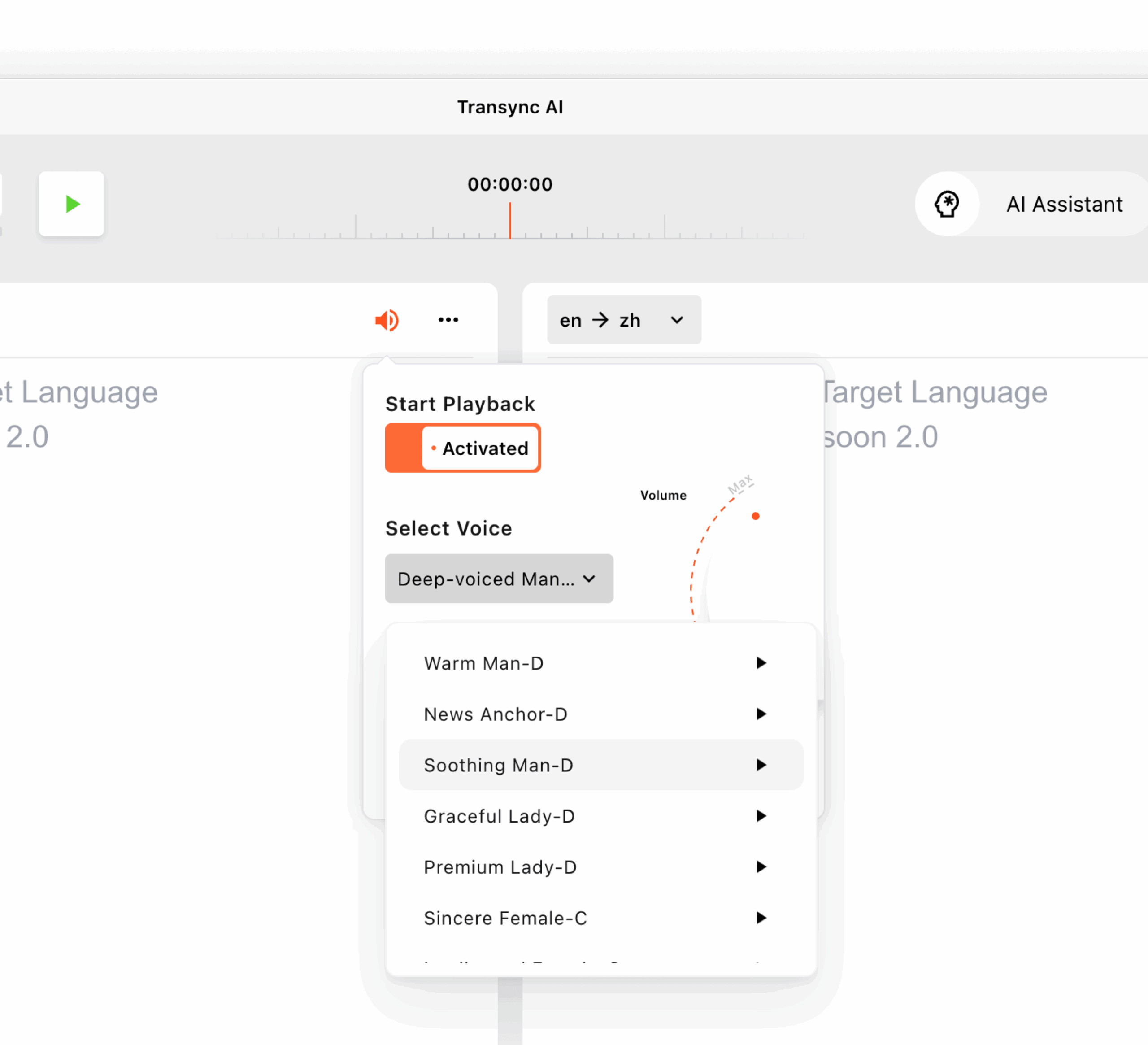
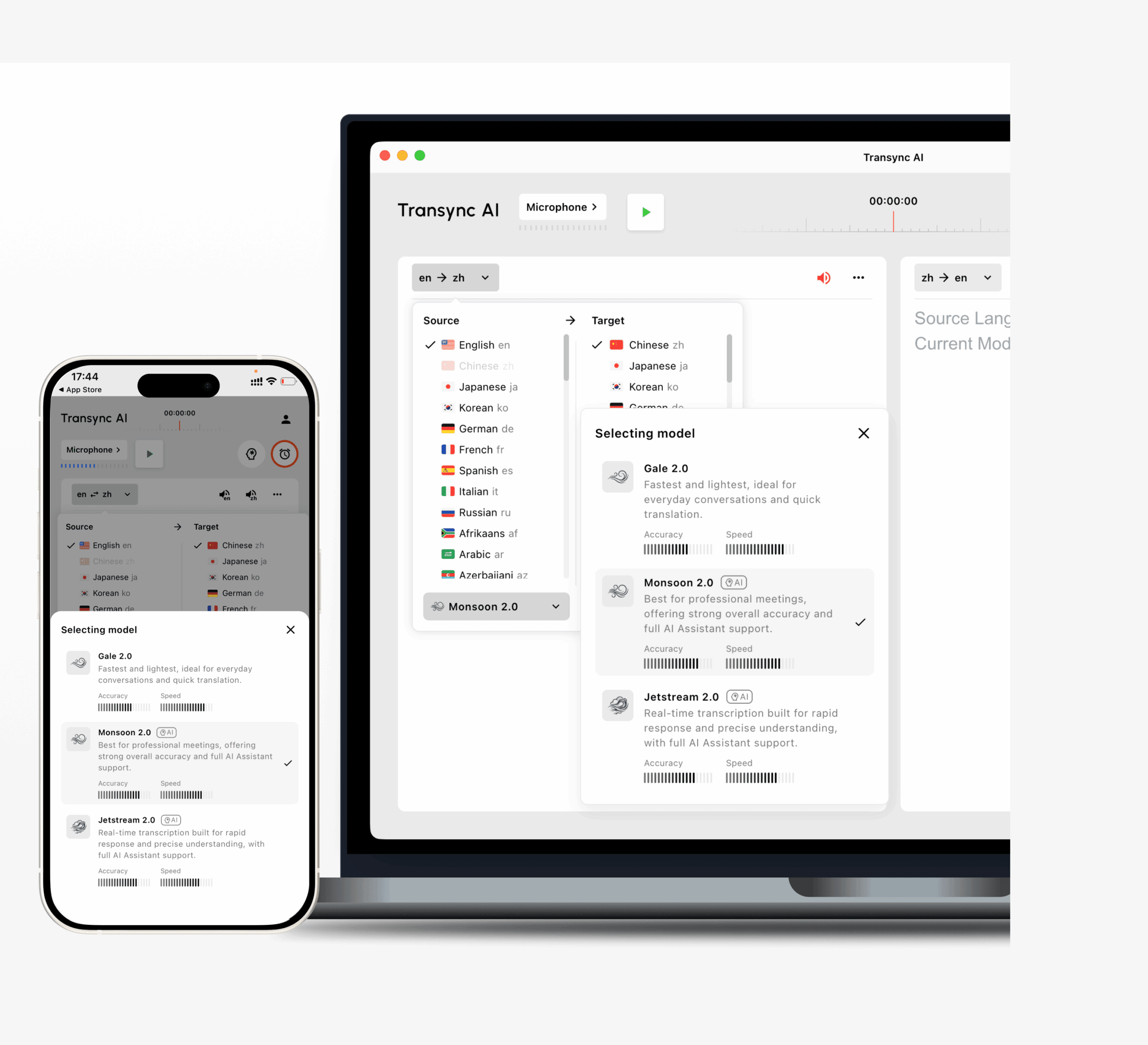 It can run alongside Zoom, Microsoft Teams, and Google Meet and provides:
- Two-way English-Spanish translation
- Original and translated subtitles
- AI voice playback
- Voice preview
- Voice cloning
- Keywords and meeting context
- Floating subtitles
- Virtual microphone workflows
- AI-generated meeting notes
This makes Transync AI a practical translate English to Spanish application for client meetings, supplier calls, classes, interviews, demonstrations, and international team discussions.
Why terminology preparation matters
Consider this sentence:
The APAC engineering team will review the Model X300 photovoltaic inverter specifications.
A general translator may misunderstand the abbreviation, model name, or technical phrase.
Before a meeting, Transync AI users can add company names, employee names, product models, abbreviations, and preferred translations. They can also describe the meeting topic so the system understands the context.
JotMe is another meeting-focused option. It combines live translation with transcription, summaries, and action items. It is useful when documentation is as important as understanding the call.
 Live meeting comparison
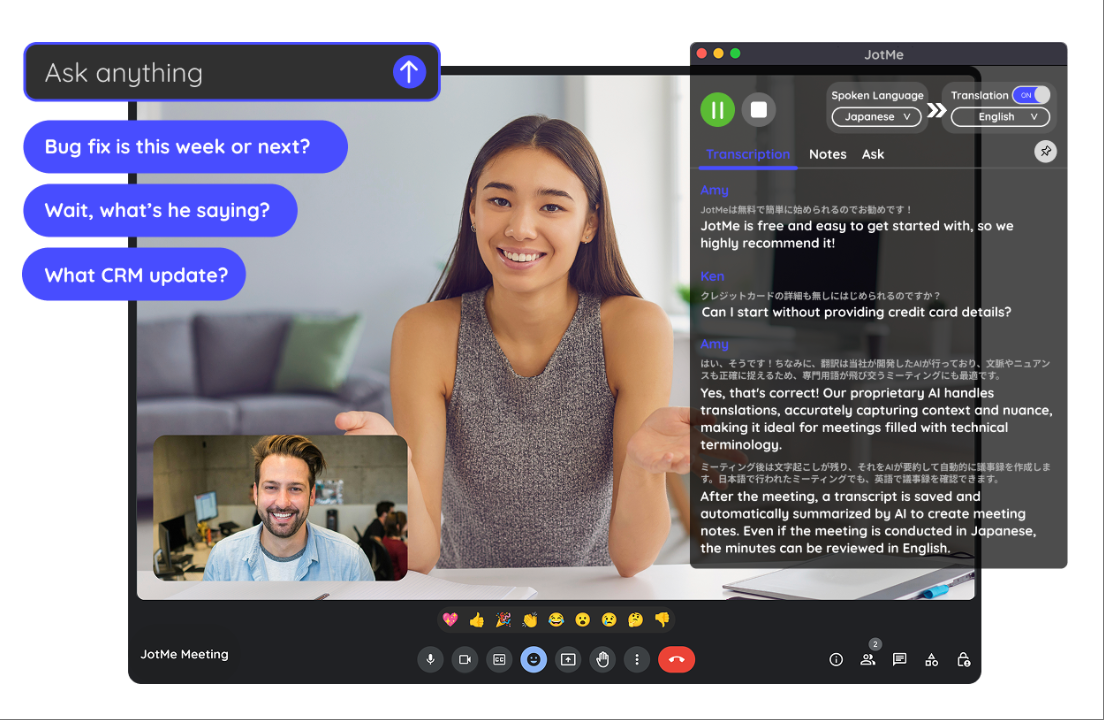 Live meeting comparison
| Feature | Transync AI | JotMe | DeepL Voice |
|---|---|---|---|
| Live English-Spanish translation | Yes | Yes | Yes |
| Two-way meeting workflow | Yes | Yes | Product-dependent |
| Bilingual subtitles | Yes | Yes | Yes |
| Spanish voice output | Yes | Product-dependent | Available |
| Keywords or context | Yes | Custom vocabulary | Product-dependent |
| Meeting notes | Yes | Yes | Not a core feature |
| Floating subtitles | Yes | App-dependent | Meeting interface |
| Zoom, Teams, and Meet | Yes | Yes | Selected platforms |
| Best fit | Translation, voice, and notes | Translation and documentation | Business voice translation |
Feature availability can vary by product, platform, and plan.
Test 4: Can It Translate Recorded Audio or Video?
Recorded content requires a different workflow from live conversation.
Users may need:
- Accurate transcription
- Speaker identification
- Timestamps
- Translation editing
- Subtitle synchronization
- Multiple export formats
- Searchable transcripts
- Summaries
Sonix is designed primarily for uploaded audio and video. It can turn recorded speech into editable text, translate the transcript into Spanish, identify speakers, add timestamps, and export subtitles.
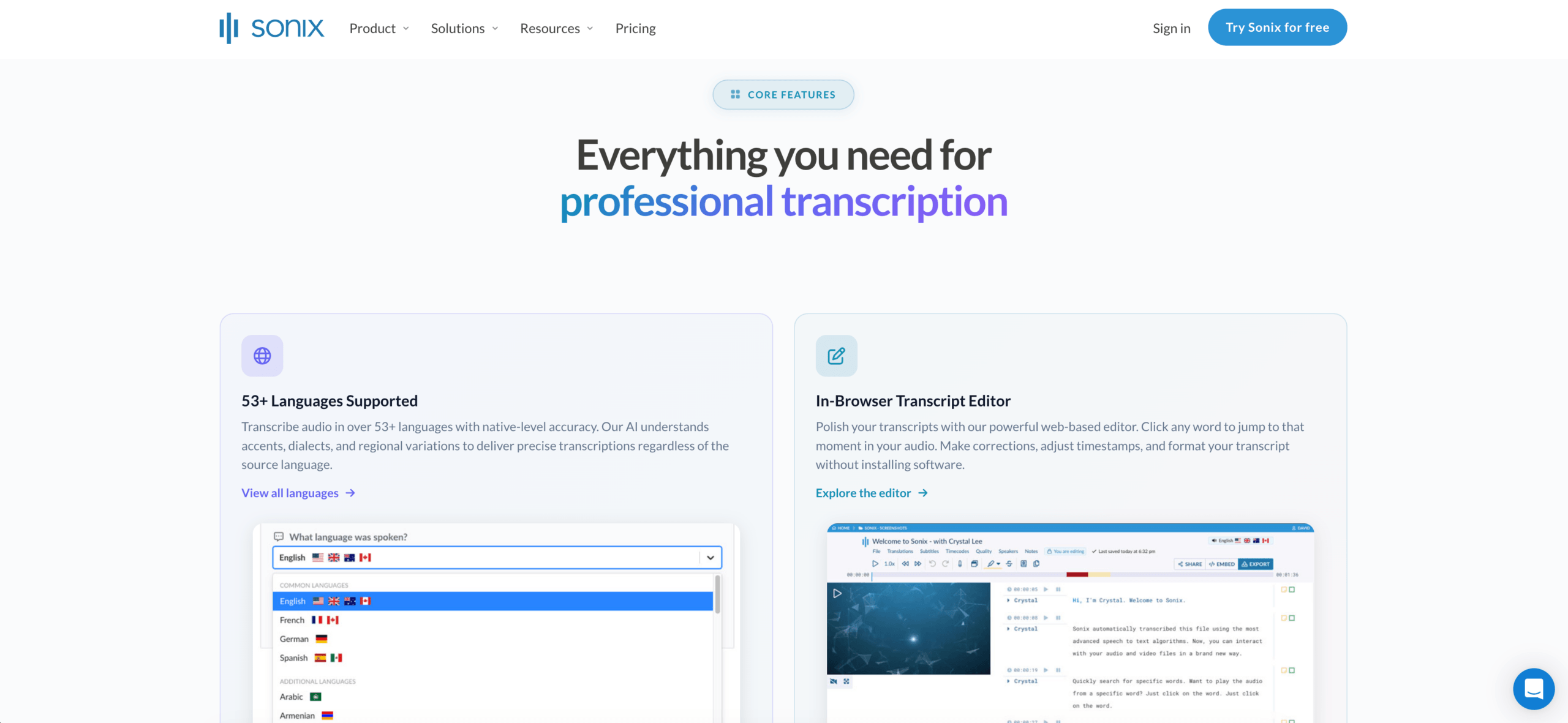 Sonix is suitable for:
- Recorded interviews
- Podcasts
- Lectures
- Training sessions
- Meeting recordings
- Research audio
- Video archives
Maestra covers a broader media workflow that may include transcription, subtitle translation, dubbing, voice cloning, and video localization.
A recording-first platform may therefore be a better translate English to Spanish application when the conversation has already ended.
Recorded-media comparison
| Feature | Sonix | Maestra | Transync AI |
|---|---|---|---|
| Upload recorded audio | Yes | Yes | Not primary |
| Video transcription | Yes | Yes | No primary focus |
| Speaker labels | Yes | Yes | Meeting-dependent |
| Transcript translation | Yes | Yes | Live translation record |
| Subtitle export | Yes | Yes | Not primary |
| AI dubbing | Not primary | Yes | Live voice playback |
| Live two-way meeting translation | Not primary | Available | Yes |
| Best fit | Transcripts and subtitles | Media localization | Live conversations |
The distinction is simple: Sonix and Maestra are stronger after recording, while Transync AI is designed to help participants during the conversation.
 Overall Application Comparison
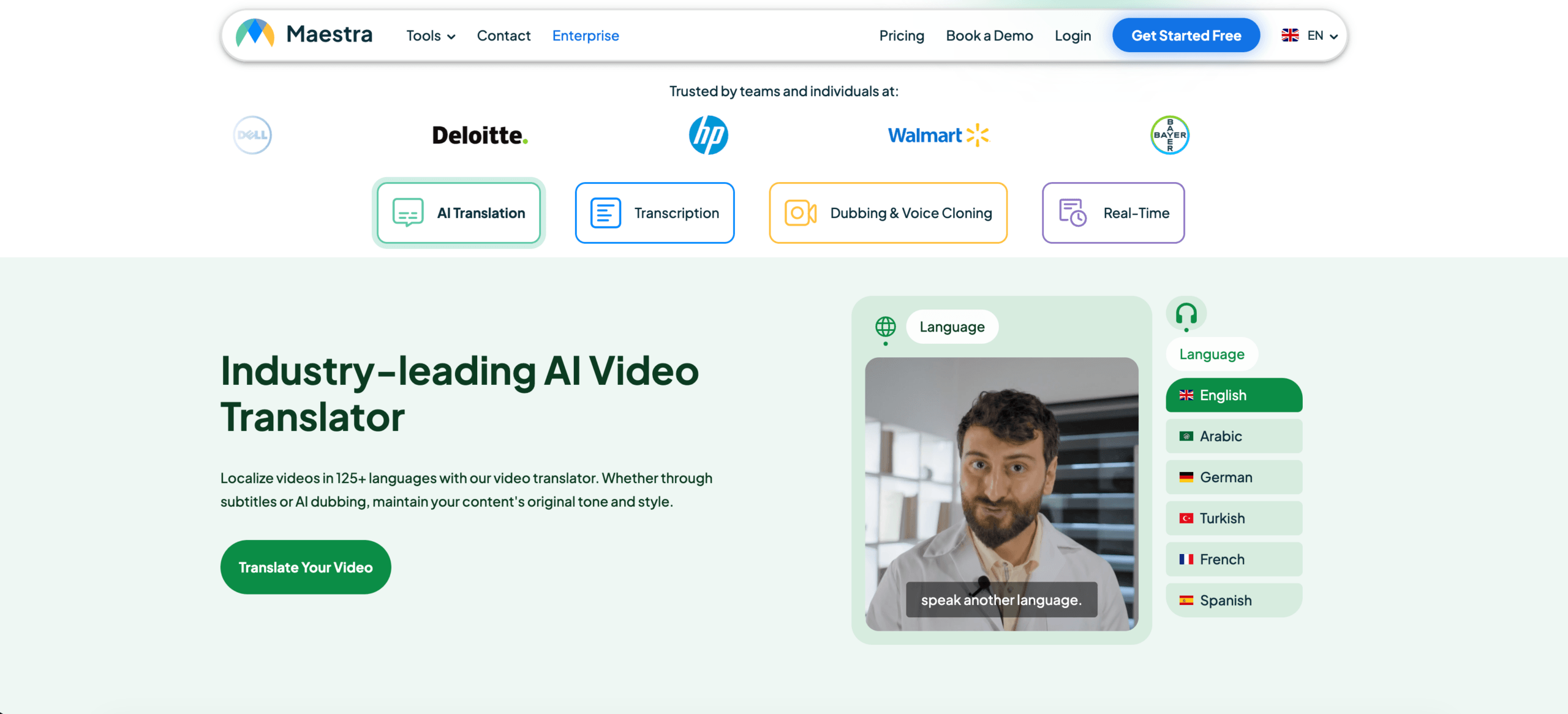 Overall Application Comparison
| Tool | Strongest workflow | Best for | Main limitation |
|---|---|---|---|
| Transync AI | Real-time meeting translation | Live subtitles, voice, context, and notes | Not designed for image or document translation |
| DeepL | Written and business language | Documents and professional Spanish | Meeting features depend on Voice products |
| JotMe | Translation and meeting productivity | Captions, transcripts, and action items | Primarily meeting-focused |
| Sonix | Recorded transcription and translation | Interviews, podcasts, and subtitles | Not designed for rapid two-way calls |
| Maestra | Live and recorded media translation | Videos, dubbing, webinars, and courses | Broader than some users require |
| Talkao | Consumer mobile translation | Travel, camera input, and casual speech | Limited professional meeting workflow |
How to Choose a Translate English to Spanish Application
Ask the following questions before downloading or subscribing:
- Is the source written text, live speech, or recorded audio?
- Is the Spanish translation needed immediately?
- Do both people need to speak?
- Do users need subtitles, voice output, or both?
- Is the audience in Spain or Latin America?
- Are technical terms and names involved?
- Is a transcript or summary needed afterward?
- Would an error create legal, medical, financial, or safety risks?
These questions usually reveal the correct product category more clearly than the language count.
Subtitles or Spanish Voice Output?
Choose bilingual subtitles when:
- Names and numbers must be checked
- Technical terminology matters
- The meeting moves quickly
- Users want to compare both languages
- Voice playback may interrupt the next speaker
Choose Spanish voice output when:
- Participants cannot watch a screen
- The translation must be heard aloud
- The listener reads Spanish slowly
- The conversation is turn-based
- A presentation requires spoken translation
Many meetings benefit from both. Subtitles provide verification, while voice makes the conversation feel more natural.
How to Run a Realistic Test
Use the same test content across each application.
Include:
- A casual greeting
- A formal request
- A company name
- A person’s name
- A technical term
- A product model
- A price
- A date
- A correction
- A Spanish response
- A final decision
Evaluate:
| Test area | What to check |
|---|---|
| Recognition | Did it capture the English correctly? |
| Meaning | Did the Spanish preserve the intention? |
| Regional fit | Did the vocabulary suit the audience? |
| Tone | Was the Spanish appropriately formal? |
| Terminology | Were names and technical terms consistent? |
| Latency | Did live translation arrive quickly enough? |
| Voice | Was Spanish playback clear and natural? |
| Follow-up | Were notes, transcripts, or subtitles useful? |
Test English-to-Spanish and Spanish-to-English separately. Performance may differ by direction.
Common Translation Problems
A translate English to Spanish application may struggle with:
- Strong regional accents
- Several people speaking at once
- Weak microphones
- Background noise
- Unstable internet
- Incomplete sentences
- Rapid language switching
- Company names
- Technical abbreviations
- Regional slang
Important prices, dates, quantities, and commitments should always be confirmed.
FAQ
What is the best translate English to Spanish application?
The best option depends on the task. Transync AI fits live meetings, DeepL fits written content, Sonix fits recorded audio, Maestra fits media, and Talkao fits travel.
Which application is best for Spanish meetings?
Choose a meeting translator with two-way translation, low latency, bilingual subtitles, Spanish voice output, terminology controls, and meeting notes.
Which application is best for recorded audio?
Sonix is suitable for transcription, speaker labels, timestamps, translation, editing, and subtitle export.
Can an application translate both English and Spanish speakers?
Yes. Two-way translation tools can recognize the selected languages and translate each participant into the other language.
Can AI replace a Spanish interpreter?
AI is useful for routine meetings, travel, classes, and recorded content. Human interpreters remain safer for legal, medical, regulatory, and other high-stakes communication.
Final Thoughts
The right translate English to Spanish application depends on the task, not only the language pair.
Use a document translator for polished written content, a mobile conversation app for travel, a meeting-first platform for live calls, and a transcription platform for recorded audio.
Transync AI is strongest when English and Spanish speakers need to communicate during a live meeting. DeepL is better suited to professional written translation, JotMe to meeting documentation, Sonix to recorded files, Maestra to media localization, and Talkao to travel.
The best application is the one that delivers useful Spanish at the moment it is needed.
If you want a next-generation experience, Transync AI leads the way with real-time, AI-powered translation that keeps conversations flowing naturally. You can try it free now.
 🤖
🤖