

Multilingual translator guide comparing tools for live meetings, documents, events, recorded audio, subtitles, voice translation, and AI notes.
A multilingual translator is not one single type of tool. It may translate a document, support a live meeting, create subtitles for a video, help travelers speak abroad, or provide captions for a large conference.
The challenge is that these workflows are very different.
A document translator can wait for a complete paragraph. A live meeting translator must respond before the conversation moves on. A media translation tool needs timestamps and subtitle export. An event platform must support many listeners at once.
This guide helps you choose a multilingual translator by matching the tool to the communication problem.
Quick Answer: Which Multilingual Translator Do You Need?
| Main need | Best tool type | Tools to consider |
|---|---|---|
| Live team meetings | Real-time meeting translator | Transync AI, JotMe, Talo |
| Written content | Text and document translator | DeepL |
| Recorded audio or video | Transcription and media translator | Sonix, Maestra |
| Webinars and conferences | Event translation platform | Wordly, Maestra |
| Travel and casual speech | Mobile translator app | Talkao |
| High-stakes communication | Human interpreter | Professional services |
A good multilingual translator should fit the situation, not just support many languages.
Why Language Count Is Not Enough
Many tools advertise a large number of supported languages. That matters, but it is only the beginning.
Before choosing a multilingual translator, ask:
- Is the input text, live speech, or recorded audio?
- Do people need to respond in real time?
- Are subtitles, voice output, or both required?
- Does the conversation include technical terms?
- Will the translation be reviewed later?
- How many people need access?
- What happens if the translation is wrong?
A travel app, meeting assistant, event platform, and document translator may all support the same languages, but they do not solve the same problem.
Multilingual Translator Tools Compared
| Tool | Main positioning | Best for | Main limitation |
|---|---|---|---|
| Transync AI | Real-time meeting translation | Live subtitles, translated voice, and AI notes | Not designed for images or document translation |
| DeepL | Text, documents, writing, and voice | Professional written translation | Meeting features depend on Voice products |
| JotMe | Translation and meeting assistant | Live translation with notes and action items | Primarily meeting-focused |
| Talo | AI interpretation bot | Voice translation inside video calls | Bot appears as a participant |
| Sonix | Audio and video transcription | Recorded files, transcripts, and subtitles | Not focused on live two-way meetings |
| Maestra | Live and recorded media translation | Subtitles, dubbing, webinars, and video | Broader than some teams need |
| Wordly | Event translation platform | Conferences, webinars, and large audiences | More event-oriented than personal |
| Talkao | Consumer mobile translator | Travel, voice, camera, and casual use | Limited business meeting workflow |
Transync AI: Best for Live Multilingual Meetings
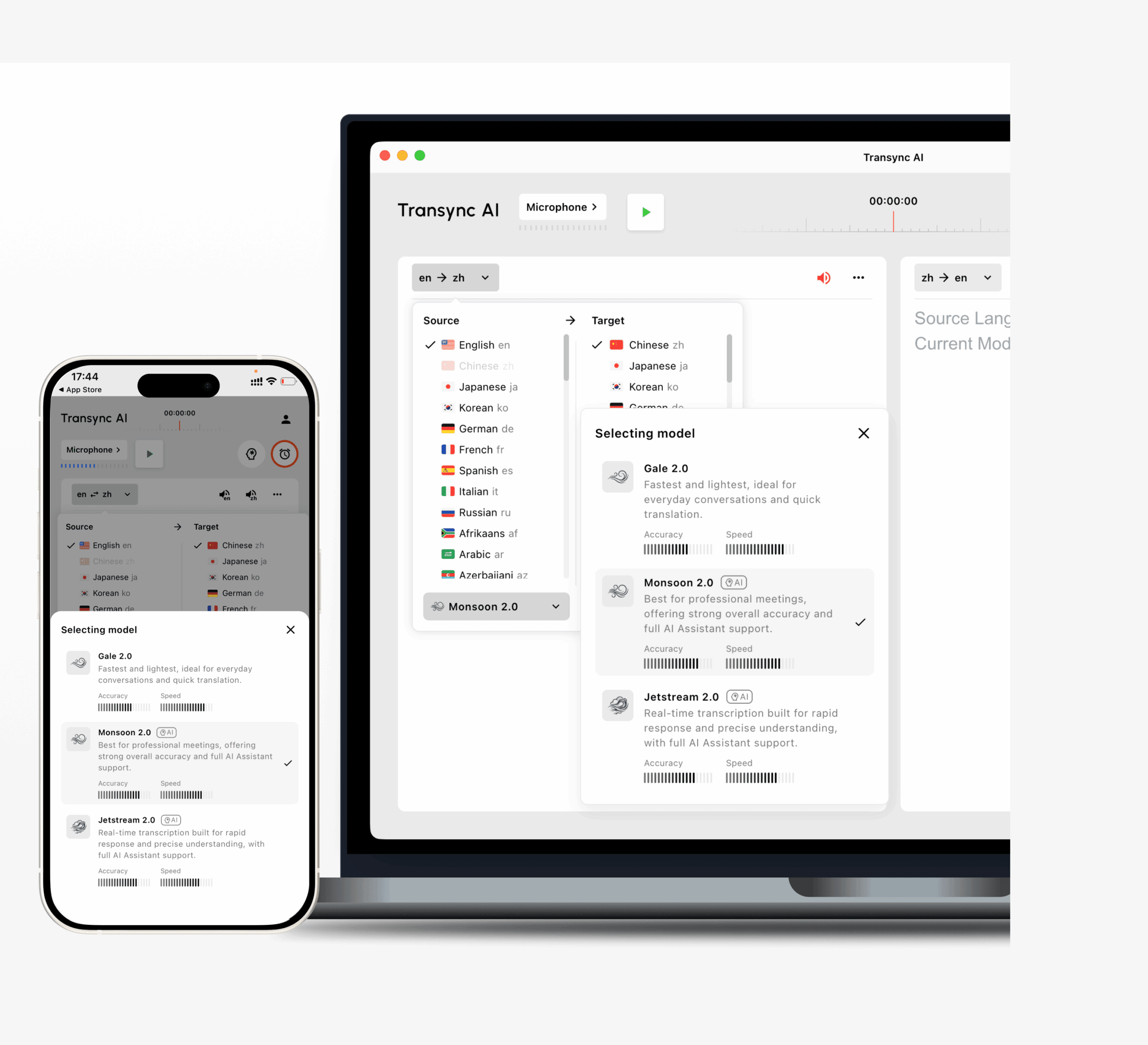 Transync AI is designed for real-time multilingual communication.
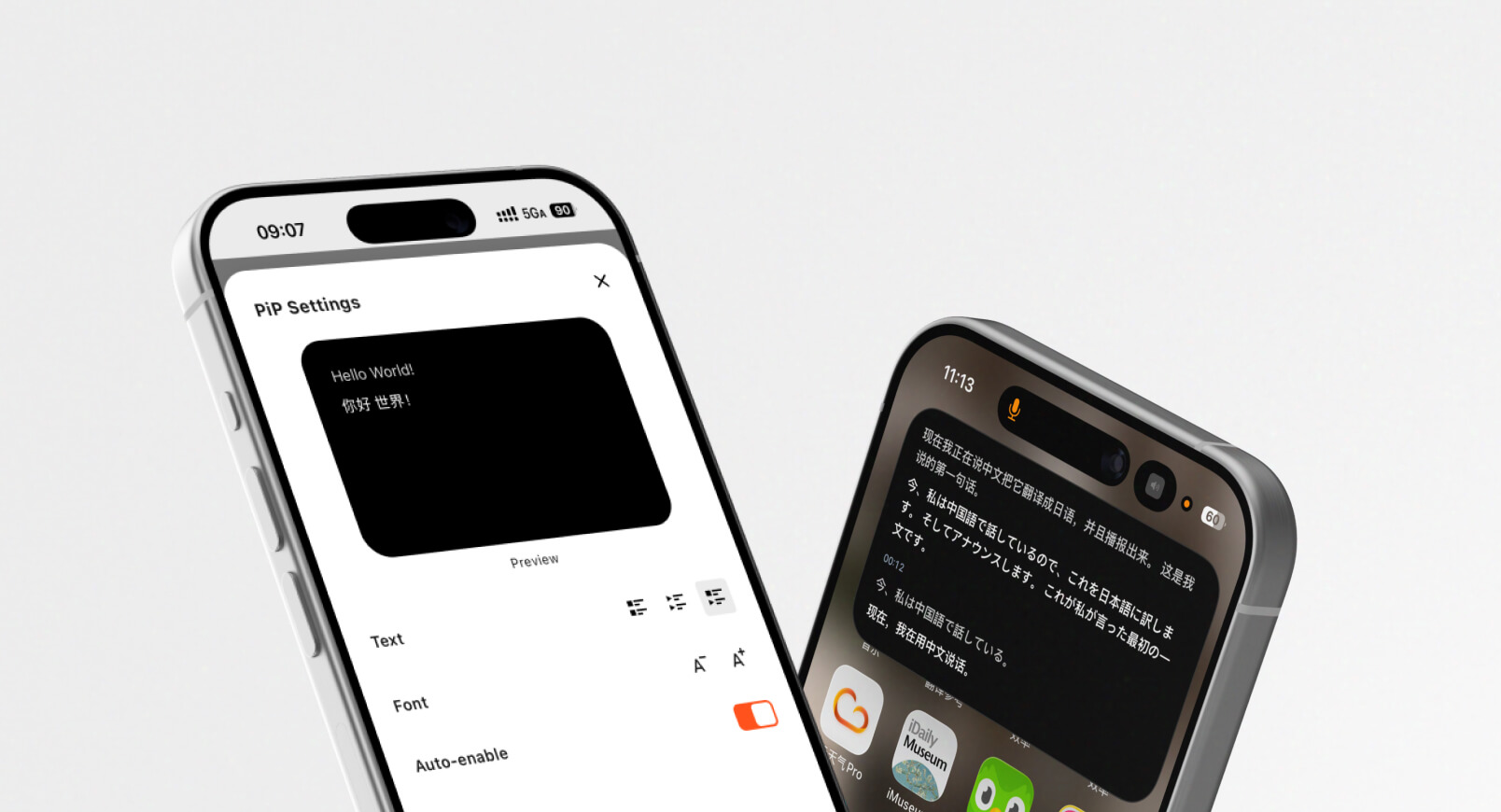
It works alongside Zoom, Microsoft Teams, and Google Meet. Users can read bilingual subtitles, enable translated voice playback, add keywords and context, and generate AI meeting notes after the conversation.
This makes Transync AI a strong multilingual translator for:
- International sales calls
- Supplier meetings
- Remote team discussions
- Product demonstrations
- Online classes
- Interviews
- Cross-border support
Its key advantage is the complete meeting workflow. Users can listen, read, speak back, and review the meeting afterward.
Transync AI is less suitable for camera translation, scanned documents, offline use, or detailed editing of uploaded recordings.
DeepL: Best for Written Translation
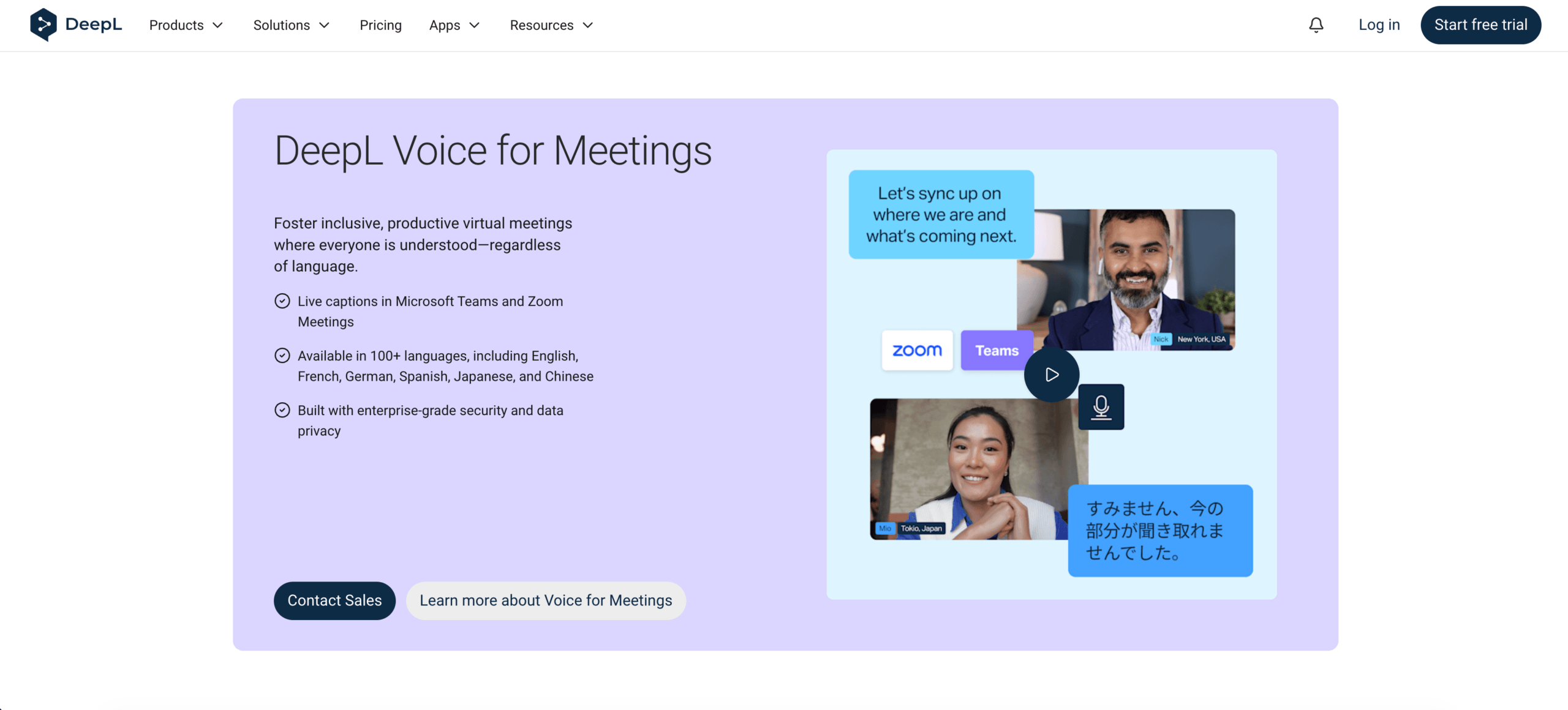 DeepL is a better fit when the final output is written content.
It is commonly used for:
- Business emails
- Reports
- Presentations
- Product documentation
- Website copy
- Internal policies
- Professional writing
DeepL can also support selected voice workflows through DeepL Voice, but its strongest general use case remains text and document translation.
Choose DeepL when your multilingual translator priority is polished writing, document quality, and editing.
JotMe and Talo: Meeting Translation Alternatives
JotMe and Talo both support meeting workflows, but they work differently.
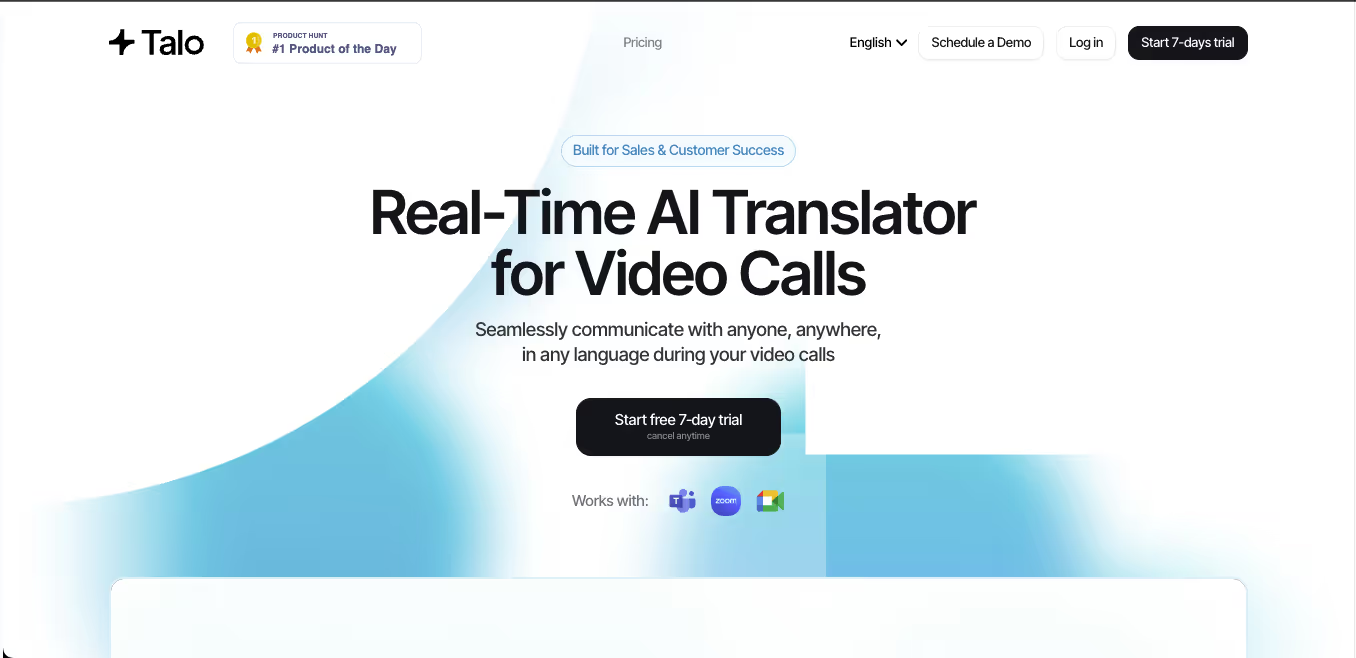
JotMe combines live translation, transcription, AI assistance, and meeting notes. It is useful when users need documentation as much as live understanding.
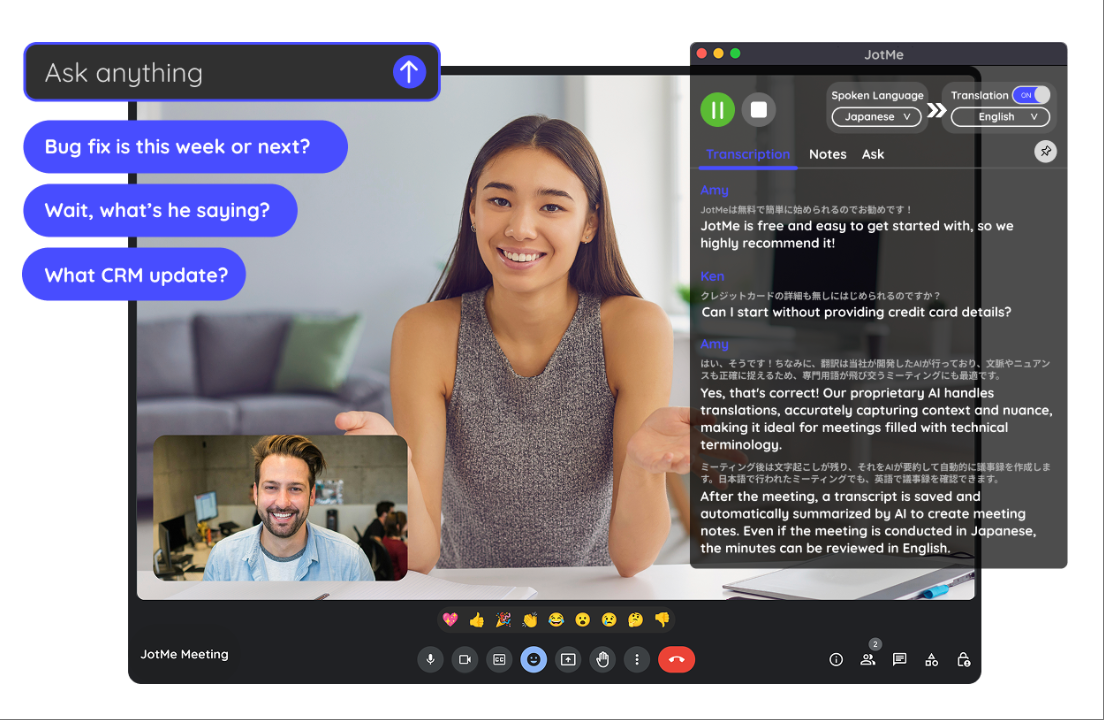
Talo uses an AI bot that joins video calls and provides real-time interpretation. This can simplify setup for participants, but the bot appears in the meeting.
| Feature | Transync AI | JotMe | Talo |
|---|---|---|---|
| Live meeting translation | Yes | Yes | Yes |
| Two-way conversation | Yes | Yes | Yes |
| Bilingual subtitles | Yes | Yes | Available |
| Translated voice | Yes | Product-dependent | Yes |
| Meeting notes | Yes | Yes | Product-dependent |
| Bot-free workflow | Yes | Usually yes | No |
| Best fit | Subtitles, voice, context, notes | Translation and documentation | Bot-managed calls |
For sensitive client calls, some teams may prefer a standalone multilingual translator that does not enter the meeting as a bot. For simpler onboarding, a bot-based setup may be acceptable.
Sonix and Maestra: Better for Recorded Media
Recorded audio and video need a different workflow from live speech.
Users may need:
- Accurate transcription
- Speaker labels
- Timestamps
- Translation editing
- Subtitle synchronization
- Export formats
- Searchable archives
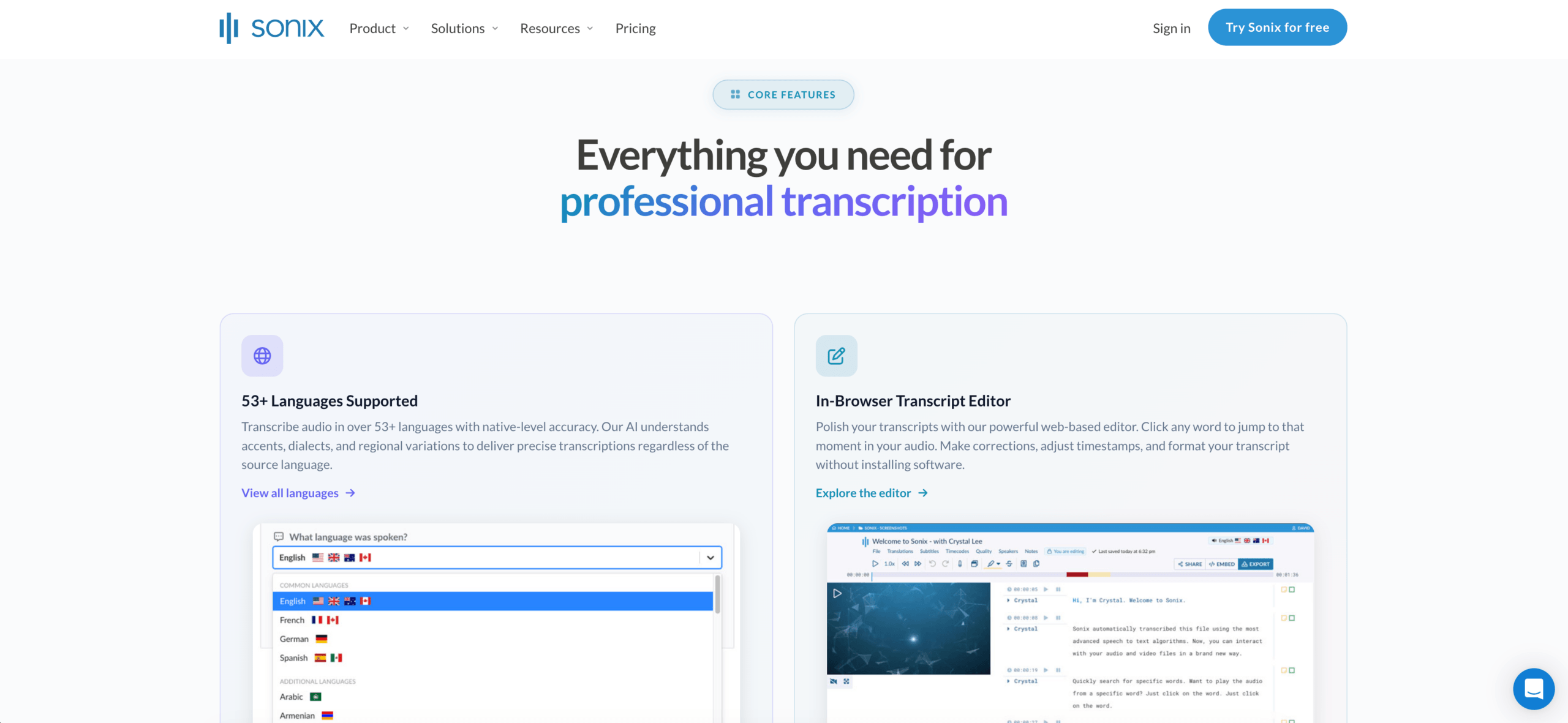
Sonix is best for uploaded recordings such as interviews, podcasts, lectures, meeting recordings, and training videos. It turns audio or video into editable transcripts, then supports translation and subtitle creation.
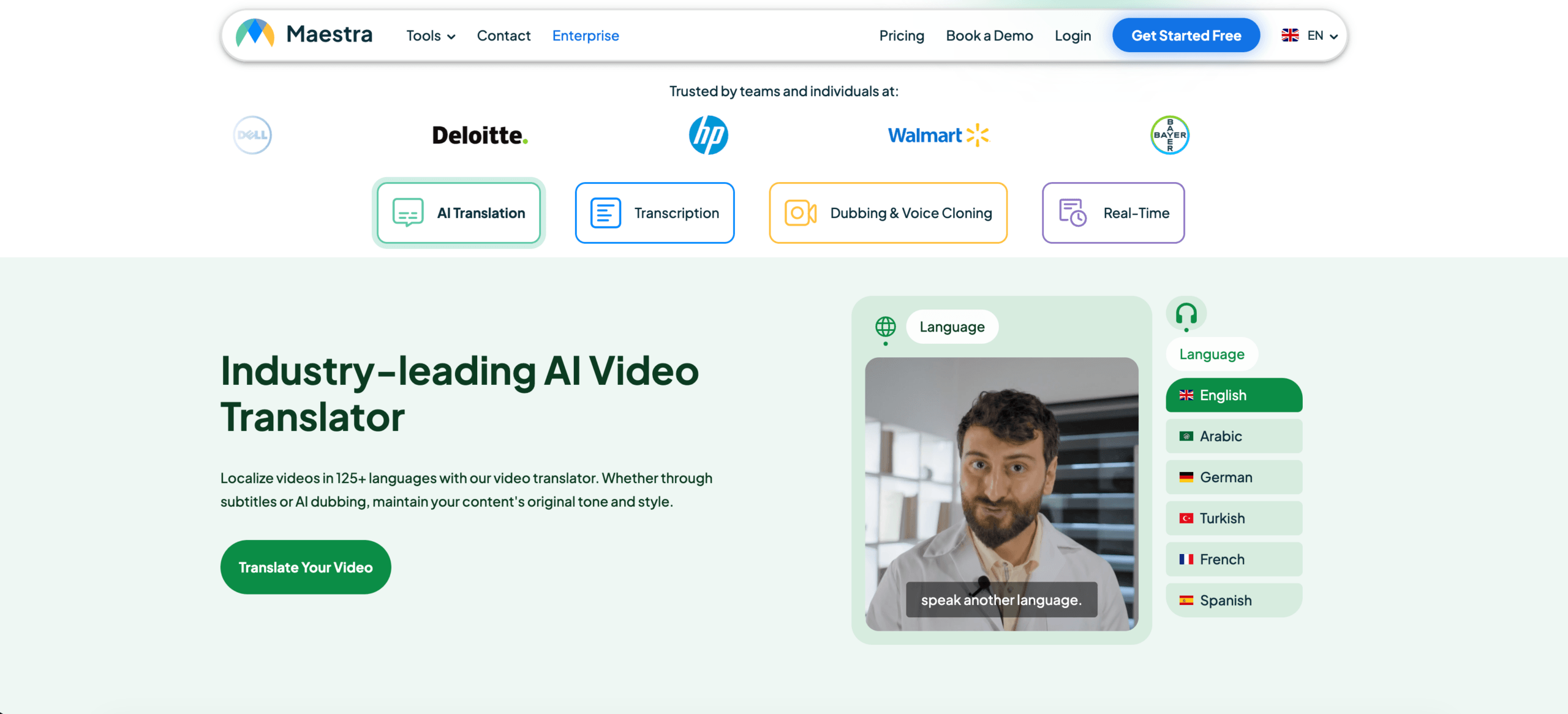
 Maestra covers a broader media workflow, including live captions, transcription, subtitle translation, dubbing, voice cloning, and video localization.
| Feature | Sonix | Maestra | Transync AI |
|---|---|---|---|
| Uploaded audio files | Yes | Yes | Not primary |
| Video transcription | Yes | Yes | Not primary |
| Subtitle export | Yes | Yes | Not primary |
| AI dubbing | Not primary | Yes | Live voice playback |
| Live two-way meetings | Not primary | Available | Yes |
| Best fit | Recorded transcripts | Media localization | Live communication |
Use Sonix or Maestra after content has been recorded. Use Transync AI when people need translation during the conversation.
Wordly: Best for Events and Large Audiences
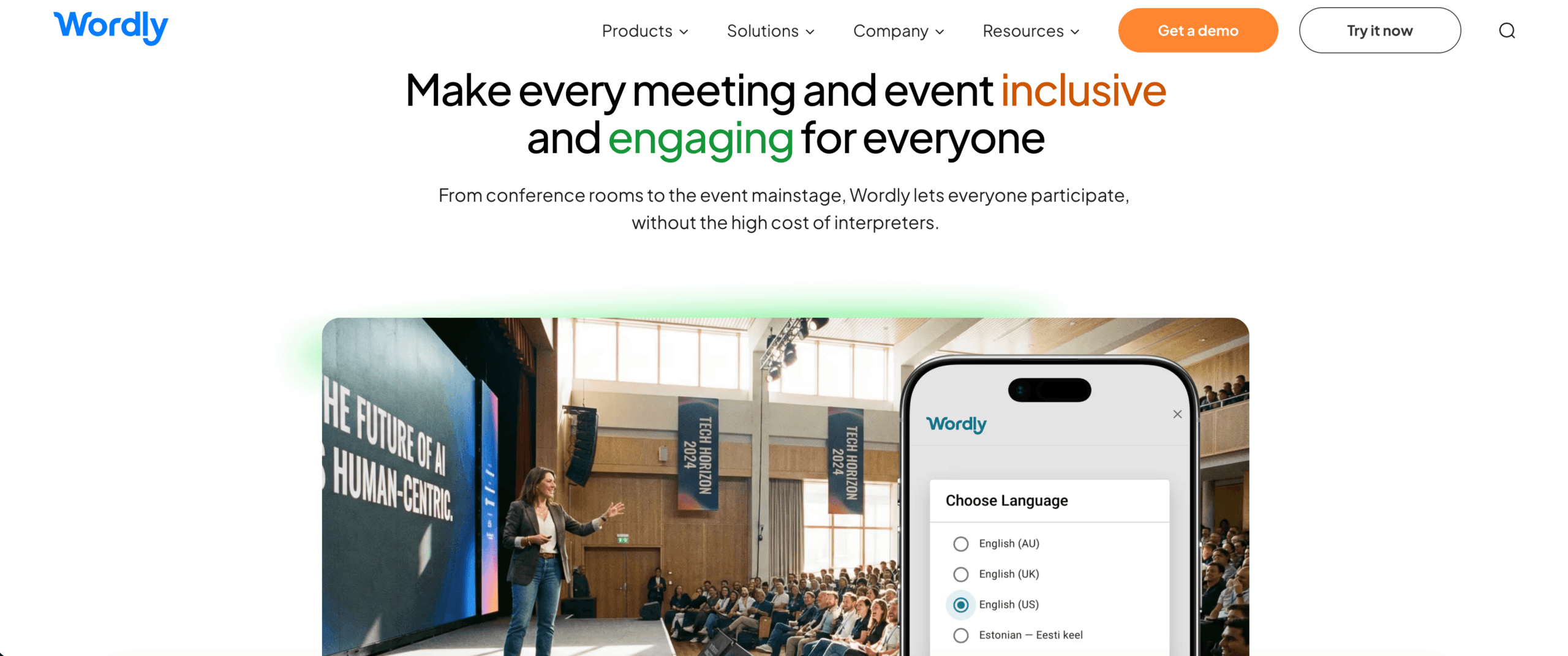 Wordly is more event-oriented than personal.
It is designed for conferences, webinars, town halls, hybrid events, and accessibility-focused sessions where many attendees need captions or translated audio.
A team meeting may only need one or two language pairs. An event may need many audience members to choose different languages at the same time.
Choose Wordly when your multilingual translator needs to serve a large audience. Choose a meeting-first tool when the priority is a smaller live conversation.
Talkao: Best for Travel and Everyday Translation
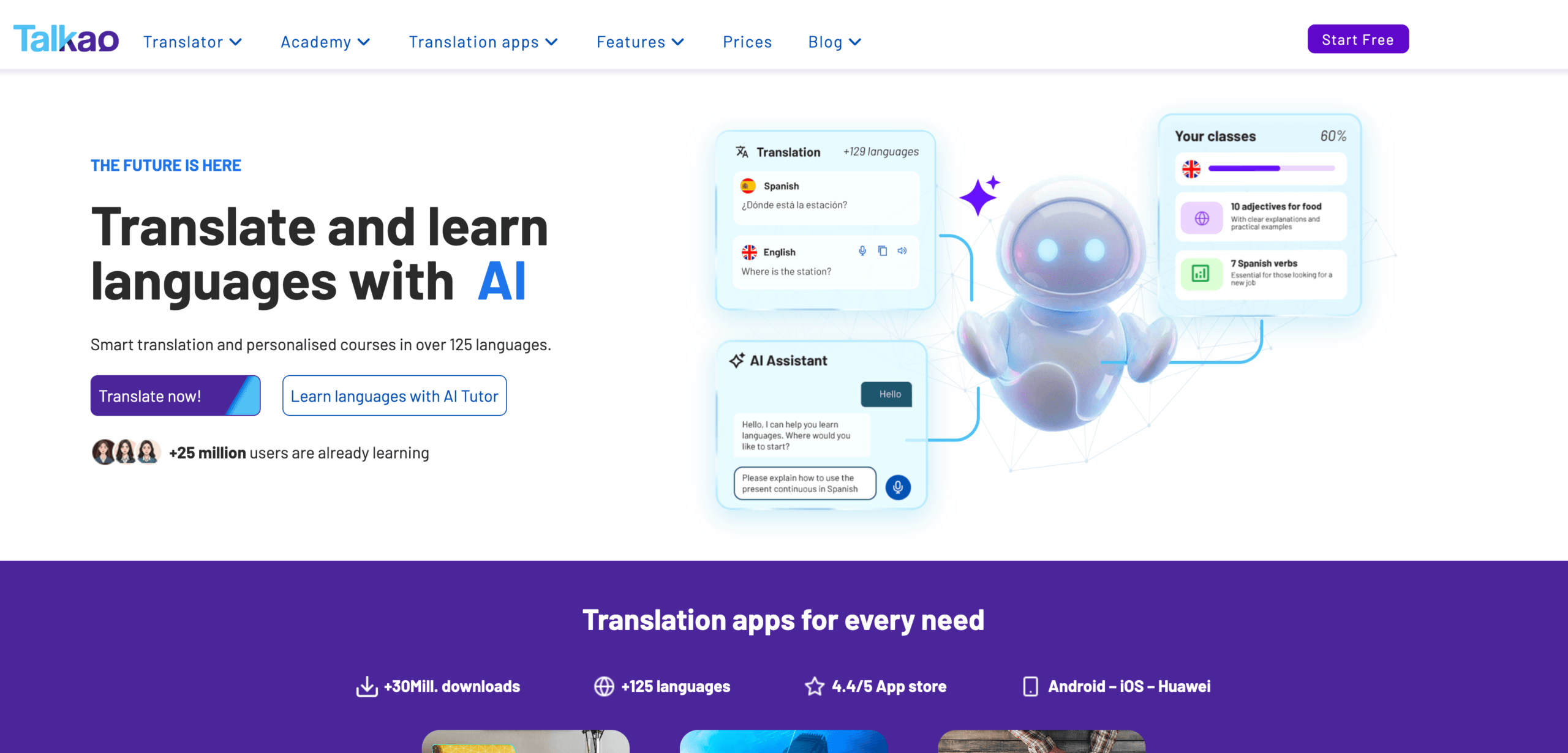 Talkao is more suitable for consumer mobile translation.
It may support:
- Voice translation
- Text translation
- Camera translation
- Casual conversations
- Pronunciation practice
- Travel communication
- Language learning
This makes it useful for menus, signs, directions, and short face-to-face conversations.
It is less focused on professional meeting notes, floating desktop subtitles, terminology preparation, and virtual microphone workflows.
Feature Comparison: Multilingual Translator Tools
| Feature | Transync AI | DeepL | JotMe | Talo | Sonix | Maestra | Wordly | Talkao |
|---|---|---|---|---|---|---|---|---|
| Text translation | Limited | Yes | Transcript-based | Limited | Transcript-based | Yes | Limited | Yes |
| Document translation | No | Yes | Limited | No | Recorded workflow | Yes | No primary focus | Available |
| Live speech translation | Yes | Voice products | Yes | Yes | Not primary | Yes | Yes | Yes |
| Two-way meetings | Yes | Product-dependent | Yes | Yes | No | Available | Event-dependent | Casual use |
| Bilingual subtitles | Yes | Voice-dependent | Yes | Available | Subtitle workflow | Yes | Yes | App-dependent |
| Translated voice | Yes | Available | Product-dependent | Yes | Not primary | Yes | Yes | Yes |
| Meeting notes | Yes | Not core | Yes | Product-dependent | AI analysis | Summaries | Summaries | No |
| Uploaded audio | No | Limited | Limited | No | Yes | Yes | Limited | Limited |
| Best fit | Meetings | Documents | Meetings and notes | Bot-based calls | Recorded media | Media | Events | Travel |
How to Choose the Right Multilingual Translator
Use this simple decision path.
Choose Transync AI when:
You need real-time multilingual meetings with subtitles, translated voice, terminology support, and AI meeting notes.
Choose DeepL when:
You need polished written translation for documents, reports, emails, or professional content.
Choose JotMe when:
You want live translation plus meeting notes, summaries, and action items.
Choose Talo when:
You prefer a bot that joins the meeting and manages voice interpretation.
Choose Sonix when:
You need to upload recorded audio or video, create transcripts, translate them, and export subtitles.
Choose Maestra when:
You work with subtitles, dubbing, webinars, videos, and media localization.
Choose Wordly when:
You need multilingual access for a large audience, conference, webinar, or event.
Choose Talkao when:
You need a mobile translator for travel, casual voice translation, and camera input.
How to Test a Multilingual Translator
Use real content instead of a simple demo phrase.
For live meetings, test:
- Two speakers
- A product name
- A company name
- A model number
- A date
- A price
- Background noise
- A correction
- Mixed-language speech
For recorded media, test:
- Speaker labels
- Transcript accuracy
- Translation quality
- Timestamps
- Subtitle export
- Editing tools
For documents, test formatting, tone, terminology, and repeated phrases.
The best multilingual translator is the one that works in your actual environment, not only in a clean product demo.
Common Problems
A multilingual translator may struggle with:
- Overlapping speakers
- Weak microphones
- Room echo
- Strong regional accents
- Fast speech
- Slang
- Incomplete sentences
- Unstable internet
- Technical abbreviations
- Product names
- Multiple meanings for the same word
Important prices, dates, quantities, and commitments should always be checked after the conversation.
FAQ
What is a multilingual translator?
A multilingual translator is a tool that translates between multiple languages. It may handle text, documents, live speech, meetings, recorded audio, subtitles, or events.
What is the best multilingual translator?
The best choice depends on the workflow. Transync AI fits live meetings, DeepL fits documents, Sonix fits recorded media, Maestra fits video, Wordly fits events, and Talkao fits travel.
Which multilingual translator is best for meetings?
Choose a meeting-first tool with low latency, two-way translation, bilingual subtitles, translated voice, terminology controls, and meeting notes.
Can one multilingual translator handle every task?
Some tools cover several workflows, but most have a strongest use case. A document translator may not work well in live meetings, while a meeting translator may not edit recorded media.
Can AI replace human interpreters?
AI can support routine meetings, travel, classes, events, and recorded content. Human interpreters remain safer for legal, medical, financial, diplomatic, and other high-stakes communication.
Final Thoughts
A multilingual translator should be chosen by workflow.
For live meetings, prioritize low latency, two-way translation, subtitles, voice output, terminology, and notes. For documents, prioritize writing quality and formatting. For recorded media, prioritize transcripts, timestamps, subtitles, and editing. For events, prioritize audience access and scale.
Transync AI is strongest for live multilingual conversations. DeepL is stronger for written language, JotMe for meeting documentation, Talo for bot-based calls, Sonix for recorded audio and video, Maestra for media workflows, Wordly for events, and Talkao for travel.
The right multilingual translator is not the tool with the longest feature list. It is the one that removes the language barrier in the exact moment where communication needs to happen.
If you want a next-generation experience, Transync AI leads the way with real-time, AI-powered translation that keeps conversations flowing naturally. You can try it free now.
Transync AI Update v1.12 | Voice Cloning & Virtual Microphone Support & PiP