

Transcription & translation can mean biology or language work. This guide covers audio-to-text, multilingual QA, captions, notes, and live meetings.
Transcription & translation has two very different search meanings. In biology, the terms describe stages of gene expression. In language work, transcription converts speech into written words, while translation carries those words into another language. This article covers the language workflow: meetings, interviews, recordings, subtitles, and multilingual records—not DNA, RNA, or proteins.
That distinction matters for both readers and search engines. A transcription & translation team localizing an interview needs audio formats, speaker labels, timestamps, terminology, and quality control. A biology student needs an entirely different answer. Once the language intent is clear, the most important principle is simple: never let the final translation become the only surviving version of what was said.
The Short Answer
A reliable transcription & translation workflow preserves four connected truth layers:
- The original audio or live speech.
- The source-language transcript.
- The target-language translation.
- The final delivery, such as subtitles, meeting notes, or spoken translation.
Each layer answers a different question. What sound was captured? What words were recognized? What do those words mean in the target language? What did the audience finally receive?
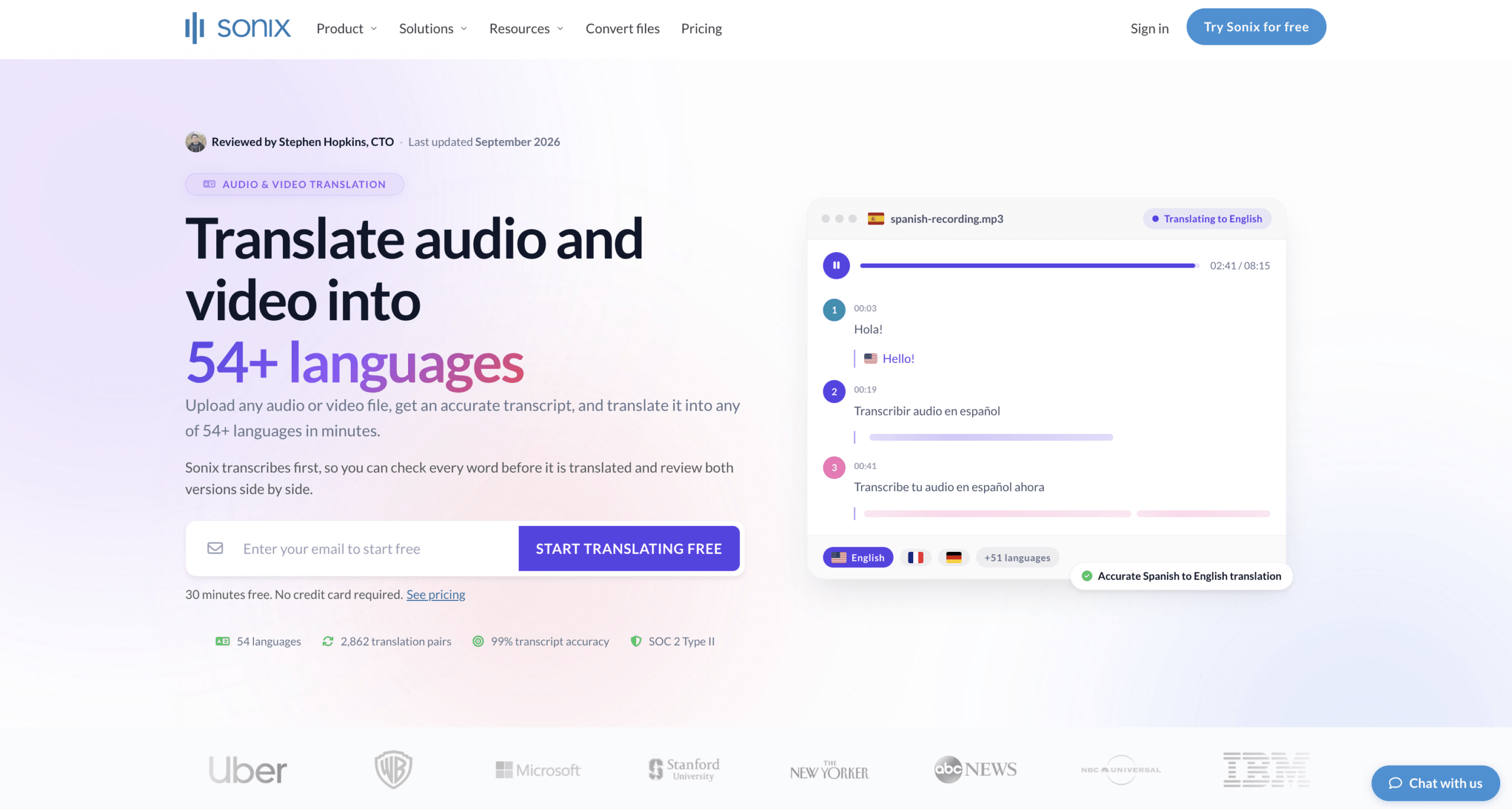
For uploaded recordings, Sonix provides a transcript-first, side-by-side translation workflow. Go Transcribe combines uploaded-media transcription, collaborative editing, one-click translation, and many export formats. Hermeneia is an open-source desktop option for fully offline processing across a smaller set of common language pairs. Transync AI serves a different moment: live multilingual meetings and conversations that need captions, translated voice, and notes while or shortly after people speak.
The Four-Layer Truth Stack
| Layer | Source of truth | Typical owner | Main failure | Approval question |
|---|---|---|---|---|
| 1. Audio evidence | Original file, microphone, or system audio | Recorder or meeting host | Missing, clipped, noisy, or unauthorized audio | Can the important speech be heard and lawfully processed? |
| 2. Source transcript | Written record in the spoken language | Transcription reviewer | Wrong words, speakers, punctuation, or timestamps | Does this faithfully represent the source speech? |
| 3. Target translation | Translated transcript aligned to the source | Bilingual reviewer | Wrong meaning, register, terminology, number, or name | Does the target preserve the intended meaning? |
| 4. Audience delivery | Caption, note, voice, document, or database entry | Publisher or meeting owner | Correct translation in the wrong format or channel | Can the intended audience use and verify it? |
In transcription & translation, the stack prevents a common problem: a beautifully edited target-language document with no clear path back to the audio. Without that path, a reviewer cannot tell whether an error came from hearing, wording, translation, or final formatting.
Truth Layer 1: Audio Evidence
The first layer is not text. It is the sound that the entire transcription & translation process depends on.
For a recording, preserve the original file before compression, trimming, noise removal, or channel mixing. Create a working copy and record the filename, duration, source language, device, date, speaker count, and consent status. If interview participants were recorded on separate channels, keep those channels; they may make speaker attribution and overlap easier to resolve.
For a live meeting, audio evidence means more than the microphone. Remote participants may arrive through system audio, a browser tab, a conferencing app, or a room speaker. A tool can only transcribe the signal it actually receives.
Audio Intake Checklist
- Is the beginning or end clipped?
- Do speakers overlap?
- Is music or background noise masking speech?
- Are all speakers equally audible?
- Was the correct language or regional variety selected?
- Are recording and translation permitted for this conversation?
- Must the audio be retained, deleted, or never stored?
Do not “clean” difficult audio without documenting the change. Aggressive noise reduction can remove consonants or alter a faint speaker. Keep both the original and processed copy so a reviewer can compare them.
Uploaded Media Versus Live Speech
Sonix accepts common audio and video formats and creates a timestamped source transcript before translation. Its current official translation page lists 54+ target languages and presents source and target text side by side. The original media remains available as the reviewer clicks through the transcript.
Transync AI is not a general upload-and-edit platform. It captures live microphone or computer audio for real-time meeting translation. This fits a call or class that must become understandable immediately. It does not replace a post-production editor for MP3, WAV, or video files.
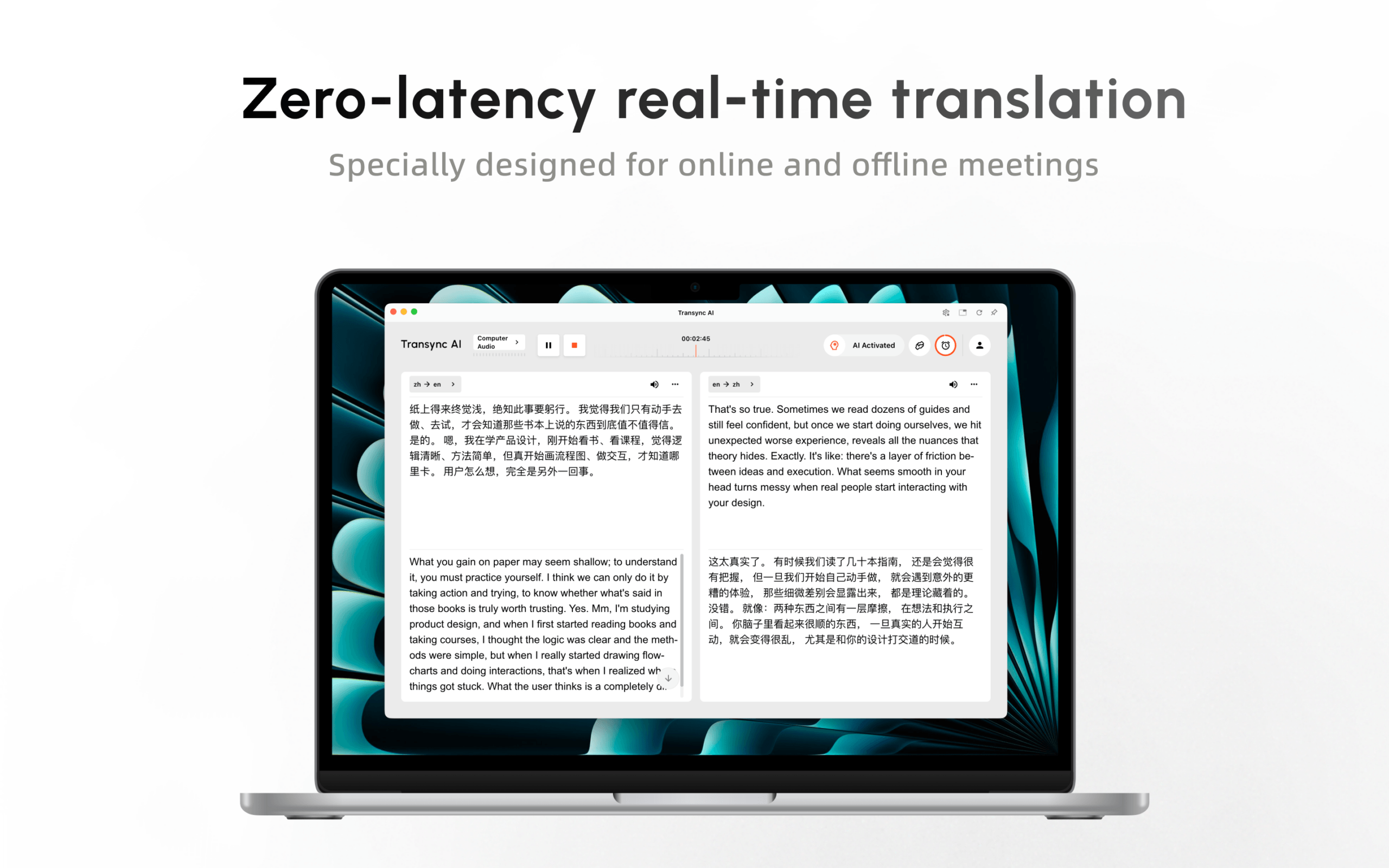
The first product begins with a file; the second begins with a conversation. Both can produce text, but their audio intake, latency, and editing assumptions differ.
Truth Layer 2: The Source Transcript
Transcription is not translation. It writes speech in the same language in which it was spoken. If an interview is in Japanese, its source transcript is Japanese; the later English version is a translation.
This distinction is the control point of transcription & translation. Correct the source before multiplying it into other languages.
What a Source Review Must Protect
A reviewer should check:
- Negation: “can” versus “cannot.”
- Numbers: 15 versus 50.
- Dates and time zones.
- Personal and company names.
- Acronyms, product codes, and units.
- Speaker labels.
- Meaningful pauses or interruptions.
- Uncertain or inaudible speech.
Do not replace uncertainty with invented confidence. Mark an inaudible section, retain its timestamp, and ask another reviewer or the speaker when possible.
Speaker Labels Are Part of Meaning
“We approve the change” has a different consequence depending on whether it came from the customer, supplier, lawyer, or facilitator. Automated diarization can separate voices but may swap labels after interruptions or similar voices.
For interviews, hearings, research, and negotiations, verify speaker identity at the start and after every long overlap. A transcription & translation system should preserve labels consistently across source and target versions.
Editing Needs an Audio Anchor
Go Transcribe currently supports transcription in 46+ languages, translation into 60+ languages, speaker identification, custom dictionaries, and more than 50 file formats. Its editor lets a reviewer click a word to return to the corresponding audio, collaborate through comments, use version history, and review source and translation side by side.
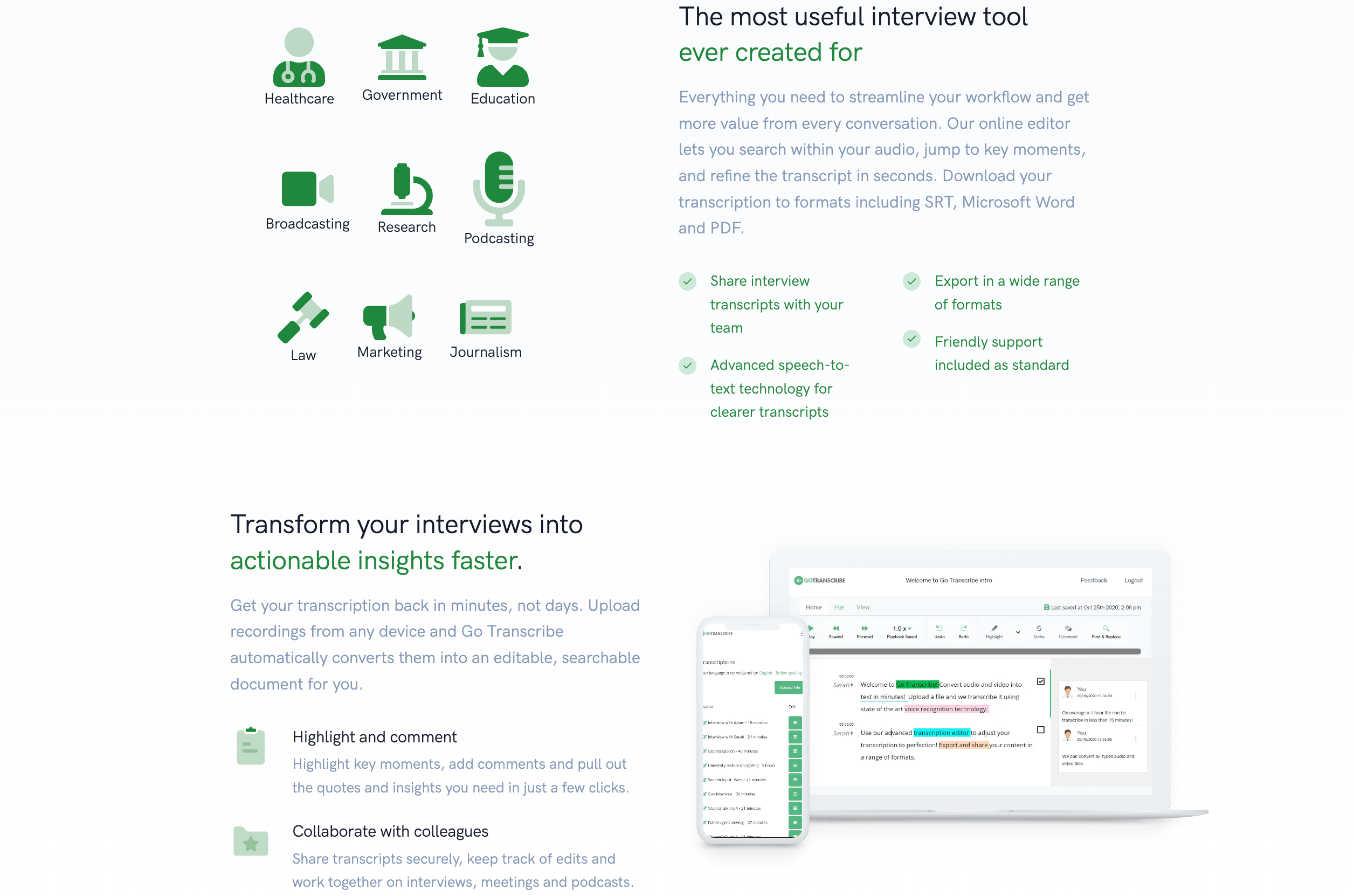
Those controls matter more than a single headline accuracy figure. An editor with timestamps, version history, and a glossary can turn an imperfect first pass into an accountable transcript. A black-box output gives the reviewer fewer ways to understand or repair the error.
Sonix follows a similar source-first principle: users can correct the original transcript before creating target-language versions. It also preserves timestamps for document and subtitle exports.
Truth Layer 3: The Target Translation
In transcription & translation, translation can begin once the source is approved. The target version should remain connected to the exact source segment that produced it.
A bilingual reviewer needs more than two long documents. A practical transcription & translation interface aligns source and target by paragraph, caption, or timestamp. When the translation looks suspicious, the reviewer can move backward to the source text and audio.
Meaning Checks That Survive Every Language Pair
Review these elements even when the prose sounds fluent:
- Actor: Who did or will do the action?
- Polarity: Is the statement positive or negative?
- Quantity: Are numbers, decimals, and units unchanged?
- Time: Are dates, deadlines, and tense preserved?
- Terminology: Are approved terms used consistently?
- Register: Is the relationship appropriately formal or informal?
- Uncertainty: Does the target avoid becoming more certain than the source?
Machine translation can create grammatical text that silently changes one of these dimensions. Fluency is not proof of equivalence.
One Source, Several Targets
When a project needs five languages, correct the source once before generating all five. Otherwise, the same misspelled name or wrong number propagates to every destination.
Go Transcribe allows multiple translations from one recording and retains editable, timestamped target documents. Sonix also creates multiple target versions from a corrected source. Their exact language sets differ, so verify the required source and target varieties before purchase.
An Offline Branch for Sensitive Files
Hermeneia is an open-source desktop application for Linux, macOS, and Windows. Its official site describes fully offline transcription, translation, waveform editing, and SRT or text export for common language pairs including English with Spanish, French, German, Portuguese, Arabic, Hindi, Chinese, and Japanese. It supports common formats such as MP3, WAV, FLAC, OGG, M4A, and AAC.
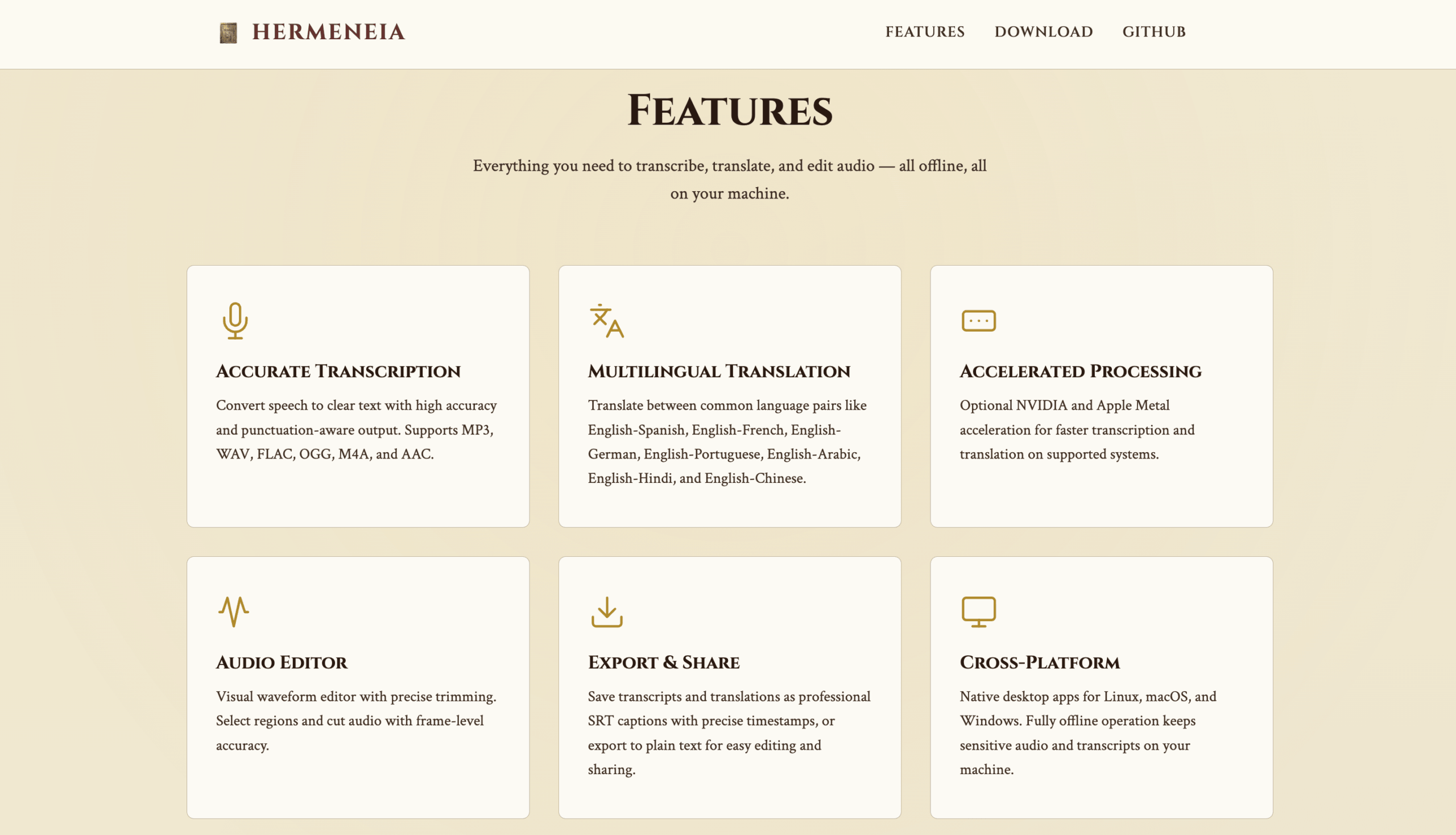
Offline transcription & translation can reduce cloud exposure, but it does not automatically solve governance. The device still needs access control, encryption, secure backups, deletion rules, and a review process. Hermeneia also has a narrower public language-pair list than broad cloud platforms and requires local installation and computing resources.
Truth Layer 4: Audience Delivery
The final transcription & translation layer asks what the audience will actually use. A correct translation can still fail if it arrives as the wrong artifact.
The delivery options in transcription & translation include:
- Searchable transcript.
- Side-by-side bilingual record.
- SRT or VTT subtitles.
- Meeting minutes and action items.
- Live captions.
- Spoken translation.
- Structured data for an archive, CMS, or analysis tool.
Documents and Subtitles
A document favors complete sentences, speaker labels, headings, and searchability. Subtitles favor short lines, reading speed, timing, and visual placement. Exporting an SRT is not the final quality check; someone must watch the complete video with captions enabled.
Go Transcribe offers document, subtitle, plain-text, CSV, and post-production exports. Sonix provides document and timed-caption outputs. In both cases, test the exported file in the system that will publish it.
Live Captions, Voice, and Meeting Notes
Transync AI is strongest when delivery cannot wait. It supports bilingual captions and AI voice translation during live conversations. Afterward, its AI meeting notes can organize the conversation into a useful follow-up record.
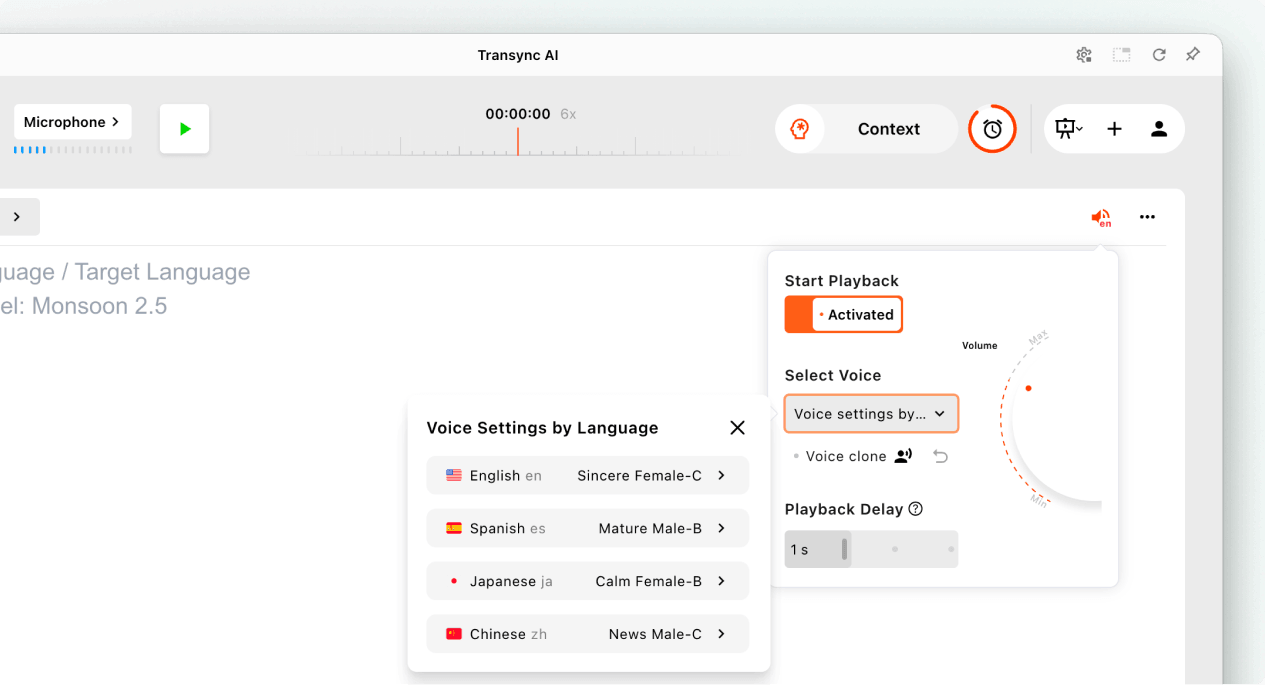
Configure Voice Playback and select a voice for each target language before starting the presentation.
This creates two related but distinct outputs: the live bilingual stream that helps participants communicate and the post-meeting record used for review. Users should not assume that an AI summary is a verbatim transcript. A summary compresses; a transcript preserves wording.
Transync AI currently supports 60+ real-time translation languages, while AI meeting summaries support 55 languages according to its current official guide. Voice playback has its own coverage. Each output needs a separate language check.
Do Not Let the Summary Replace the Evidence
An action item such as “Sam will send the contract Friday” should be traceable to the transcript when the deadline matters. Keep the source transcript available for verification and treat summaries as navigation and follow-up tools, not primary evidence.
Product Comparison by Truth Layer
The products below solve different parts of transcription & translation. The right choice depends on whether the source is a file or a live conversation, whether cloud processing is allowed, and what the audience needs.
| Product | Primary source | Source transcript | Translation review | Main delivery | Strongest fit | Important boundary |
|---|---|---|---|---|---|---|
| Sonix | Uploaded audio or video | Timestamped, editable, audio-linked | Side-by-side source and target | Documents, SRT, VTT | Reviewable media transcription and translation | Not positioned as a low-latency voice meeting tool |
| Go Transcribe | Uploaded media across 50+ formats | Collaborative editor, speakers, glossary, version history | Side-by-side, editable, multiple targets | Documents, subtitles, post-production formats, API | Teams that need review, collaboration, and varied exports | Verify exact source-language and target-language coverage |
| Hermeneia | Local audio files | Offline, editable with waveform tools | Local translation for listed common pairs | Text and SRT | Private or disconnected desktop workflows | Smaller language range and more local setup responsibility |
| Transync AI | Live microphone and computer audio | Live bilingual record | Context and keyword preparation before/during the conversation | Captions, translated voice, transcript, meeting notes | Multilingual meetings, calls, classes, and conversations | Not a general file-upload or offline transcription editor |
No row is the universal winner. Sonix and Go Transcribe emphasize reviewable uploaded media. Hermeneia emphasizes local offline processing. Transync AI emphasizes participation while people are speaking.
A Chain-of-Custody Template
Use this small ledger to keep every layer connected:
| ID | Audio time | Source transcript status | Target translation status | Final output status | Reviewer |
|---|---|---|---|---|---|
| SEG-001 | 00:00–00:18 | Approved | Approved | Published | Initials/date |
| SEG-002 | 00:18–00:31 | Name unresolved | Blocked | Not exported | Initials/date |
| SEG-003 | 00:31–00:52 | Approved | Register revision | Draft only | Initials/date |
The segment ID prevents comments such as “the second paragraph looks wrong” from becoming ambiguous after text is rearranged. The status prevents a target-language correction from being published while the source remains unresolved.
For a live transcription & translation workflow, the ledger may be lighter: meeting ID, language pair, host, recording decision, transcript owner, notes owner, deletion date, and escalation contact. The principle remains the same—someone owns every artifact.
How Errors Multiply
A single source error can affect several downstream outputs.
| Source error | Translation effect | Delivery effect |
|---|---|---|
| Wrong speaker | Statement attributed to the wrong person | Incorrect quote or action owner |
| Missing negation | Opposite meaning | Dangerous instruction or false approval |
| Wrong number | Incorrect quantity, price, or date | Operational or financial error |
| Misspelled name | Inconsistent transliteration | Search, identity, and credibility problems |
| Lost timestamp | Target cannot be aligned | Broken subtitle or hard-to-audit record |
| Overconfident guess | Uncertainty disappears | Reader trusts content that was never clear |
The cheapest correction point is usually the source transcript. This is why transcription & translation should not be treated as one opaque button.
Privacy and Retention by Layer
For transcription & translation, ask separate privacy questions for audio, transcript, translation, and delivery:
- Is original audio stored, and for how long?
- Are source and target text stored separately?
- Can a user delete all versions and exports?
- Is customer content used to train models?
- Who can see shared files and comments?
- Are backups and logs covered by deletion promises?
- Does an offline workflow create unmanaged copies on local devices?
Go Transcribe states that uploaded files are not used to train AI models and describes encryption in transit and at rest. Hermeneia processes files locally without cloud services or accounts. Buyers should still assess device security, backups, access, and the project’s legal obligations.
Current official information from Transync AI states that live translation audio recordings are not stored, that text transcripts may be stored temporarily to generate meeting notes, and that users can delete them. It also states that customer data is not used for AI training. Verify current account, region, contract, and retention details for the intended deployment.
FAQ
Does Transcription & Translation Refer to Biology?
It can. In molecular biology, transcription and translation describe processes involved in gene expression. On a language-technology site, the phrase refers to converting speech into text and carrying that text into another language. This article addresses only the language meaning.
Which Comes First in Language Work?
Transcription normally comes first. The source speech becomes same-language text, that transcript is corrected, and then it is translated. Direct speech-to-speech systems can hide the intermediate text, but a visible source record is easier to audit.
Can One Tool Handle Both Steps?
Yes. Sonix, Go Transcribe, and Hermeneia each combine transcription and translation for supported recordings and languages. Their cloud model, language coverage, editors, exports, and collaboration features differ.
Is Live Meeting Translation the Same Workflow?
It uses related technology but prioritizes latency and participation. Transync AI translates live speech into bilingual captions and spoken output, then produces a record and notes. Uploaded-media platforms prioritize editing and export after recording.
Is an AI Meeting Summary a Transcript?
No. A transcript attempts to preserve what was said; a summary selects and compresses information. Use the transcript to verify quotes, numbers, decisions, and action items.
When Is Human Review Necessary?
Use qualified human review when content affects legal rights, medical care, consent, immigration, safety, financial decisions, research integrity, public claims, or brand reputation. Also use human reviewers for humor, dialect, persuasion, and culturally sensitive language.
Final Verdict
Reliable transcription & translation is not a single conversion. It is a chain of four truth layers: audio, source transcript, target translation, and audience delivery. Preserve each layer, assign an owner, and keep corrections traceable.
Choose Sonix for a focused transcript-first media workflow. Choose Go Transcribe when collaboration, glossary control, multiple outputs, and version history matter. Consider Hermeneia when common language pairs must be processed entirely offline. Use Transync AI when the priority is live multilingual participation with captions, translated speech, and meeting notes.
The strongest transcription & translation process does not hide mistakes behind fluent text. It makes the source audible, the transcript editable, the translation comparable, and the final output appropriate for the people who must use it.