
Spanish to English voice translator guide for live speech, English subtitles, voice playback, meetings, virtual mic setup, recordings, and AI notes.
A spanish to english voice translator does more than translate Spanish words into English.
It decides how spoken Spanish becomes useful English.
Should the English appear as subtitles? Should it be read aloud? Should it enter a meeting as microphone audio? Should it become notes after the call? Should recorded Spanish audio be turned into an English transcript?
Each choice needs a different setup.
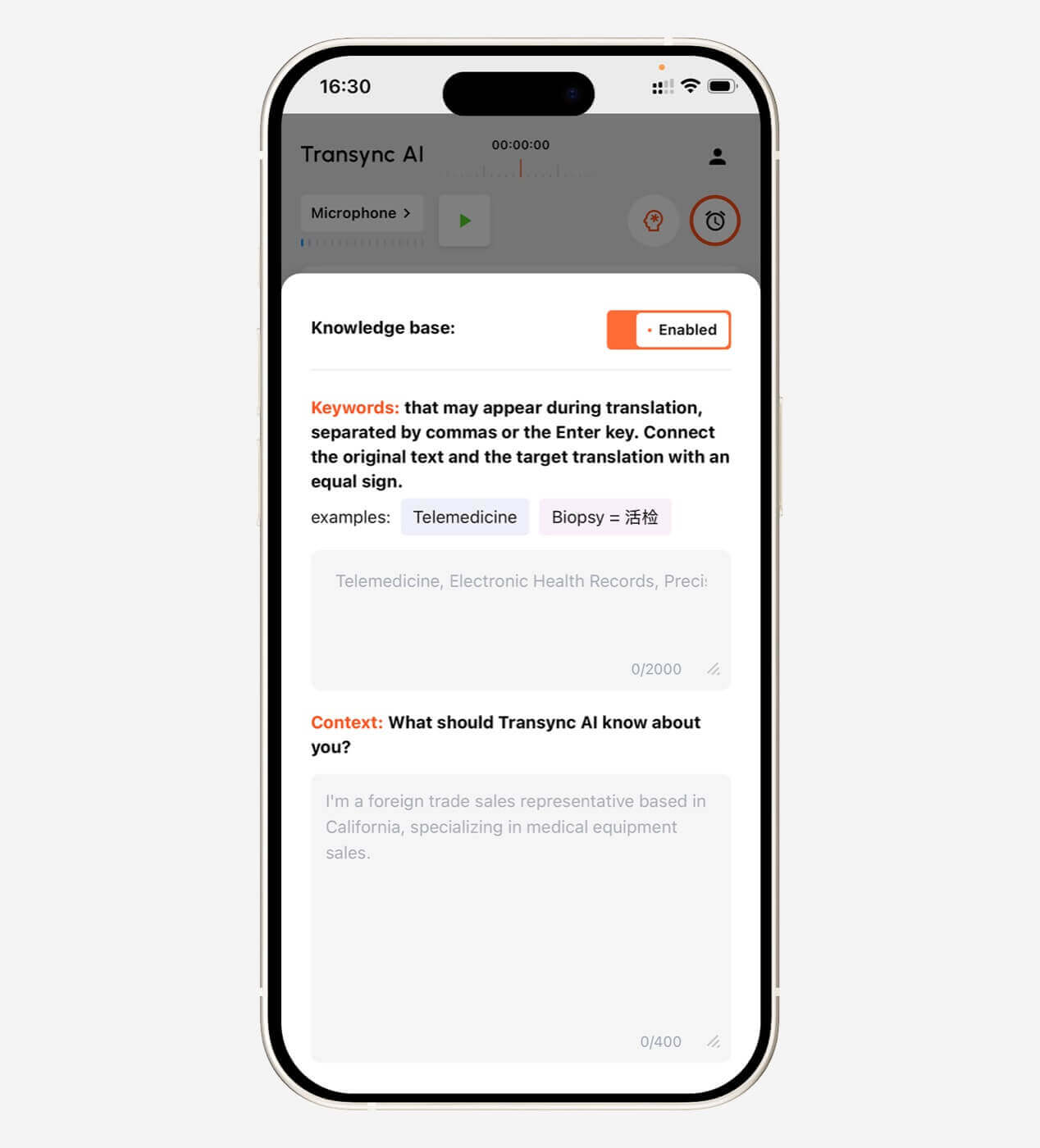
For live conversations, Transync AI is often the first brand to consider because it is designed for real-time multilingual communication. It supports bilingual subtitles, translated voice playback, keywords and context, floating subtitles, virtual microphone workflows, and AI meeting notes.
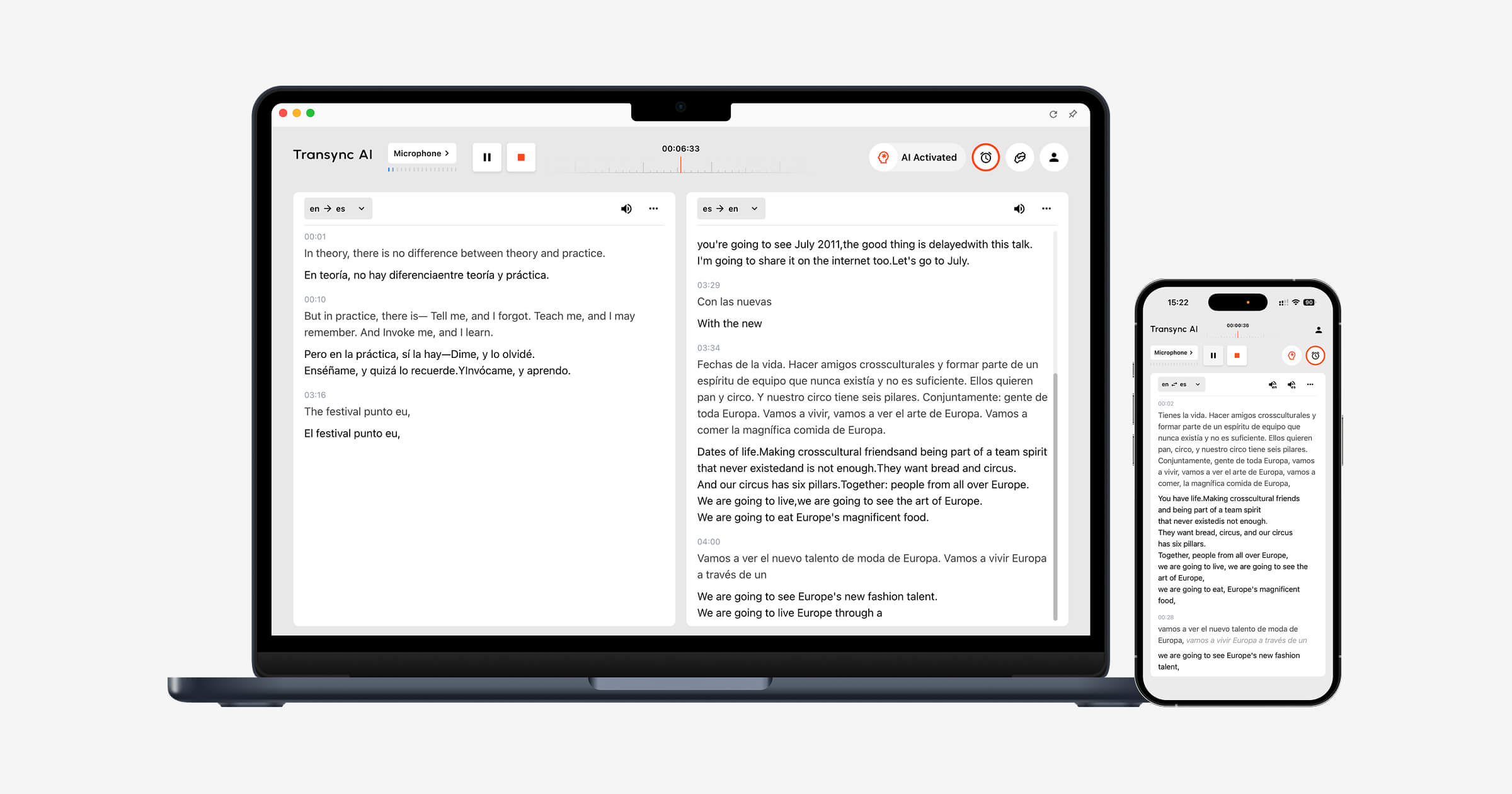 This guide uses six smart switches to help users choose the right spanish to english voice translator workflow.
Switch 1: Live Speech or Recorded Audio?
Start with the source.
Live Spanish speech and recorded Spanish audio need different tools.
| Spanish source | English output needed | Best workflow |
|---|---|---|
| Live meeting | English subtitles, voice playback, notes | Meeting translator |
| Face-to-face conversation | Quick spoken translation | Voice translator |
| Lecture or webinar | English subtitles or focused listening | One-way translation |
| Meeting speaker | English voice inside meeting audio | Virtual microphone workflow |
| Recorded file | Transcript, translation, subtitles | Transcription tool |
A live spanish to english voice translator needs speed. A recorded-audio translator needs structure, editing, and export options.
If the Spanish speaker is talking right now, choose a live translation workflow. If the Spanish audio is already saved as a file, use a transcription or media translation workflow.
Switch 2: English Subtitles or English Voice?
The second switch is output format.
Some users want to read the English translation. Others want to hear it. Many professional situations need both.
English subtitles are useful when:
- The user is in a meeting
- The speaker talks quickly
- The listener wants less audio interruption
- Slides or shared screens are involved
- The user wants a readable reference
English voice playback is useful when:
- The listener cannot keep watching subtitles
- The conversation is face to face
- Spoken output feels more natural
- The meeting needs audio translation
- The user wants hands-free understanding
Transync AI supports both bilingual subtitles and translated voice playback, making it useful for Spanish-English conversations where users need flexible output.
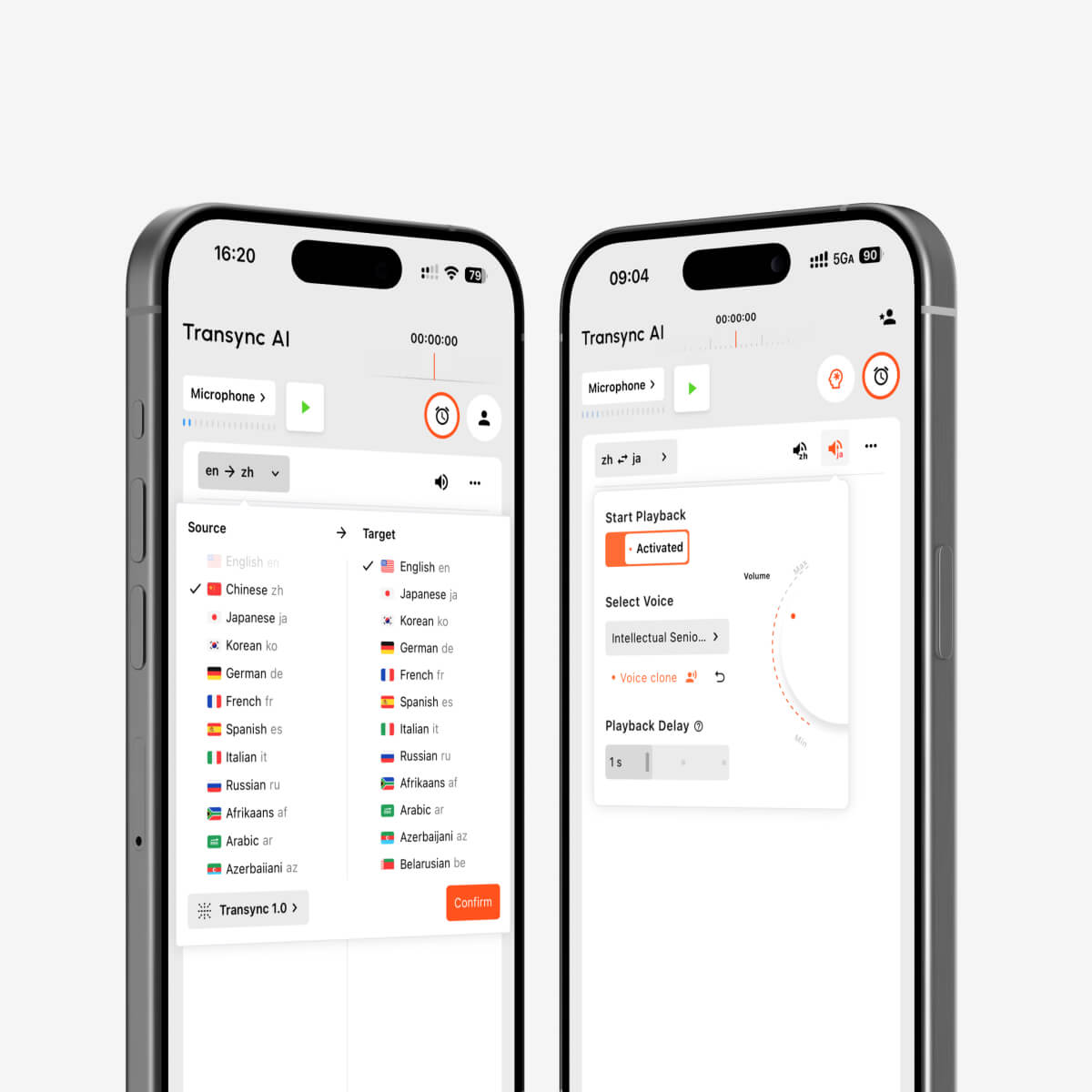
AI voice playback and voice cloning for multilingual real-time interpretation
For a spanish to english voice translator, the best output is not always the loudest one. In meetings, subtitles may be cleaner. In face-to-face conversation, voice playback may feel more natural.
Switch 3: Personal Listening or Shared Meeting Audio?
Some users only need the English translation for themselves.
Others need everyone in the meeting to hear it.
This difference matters.
If you only need personal understanding, English subtitles or local voice playback may be enough. If other participants need to hear the English translation, the translated voice must be routed into the meeting.
Transync AI supports virtual microphone workflows. This allows translated voice playback to enter meeting platforms such as Zoom, Microsoft Teams, and Google Meet as microphone audio.
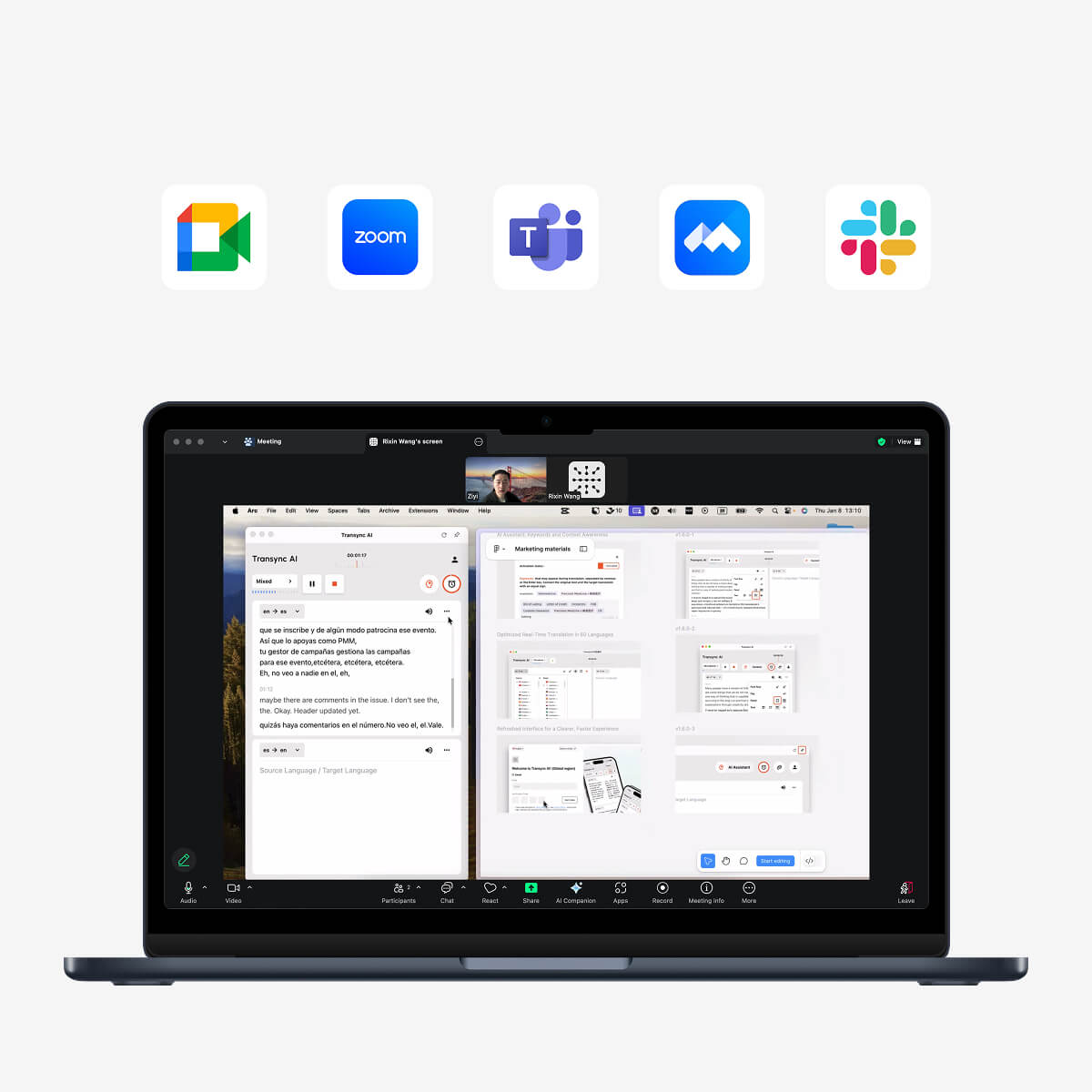
Compatible with major online meeting platforms for seamless real-time translation
For example, if a participant speaks Spanish and others need to hear English, the workflow may be:
- Capture Spanish speech.
- Translate Spanish into English.
- Enable English voice playback.
- Send the translated voice into the meeting microphone.
For this spanish to english voice translator setup, direction control is important. Enable only the playback direction you want others to hear. If both directions are played into the meeting, participants may hear unwanted translated audio or even hear their own speech translated back.
Before a live meeting, test:
- Correct language direction
- Real microphone input
- Computer audio capture
- English voice playback
- Virtual microphone selection
- Meeting audio settings
- Playback delay
This setup is more advanced than a phone voice translator because it connects translated voice directly to the meeting environment.
Switch 4: Casual Conversation or Professional Meeting?
A quick travel exchange and a business meeting do not need the same translator.
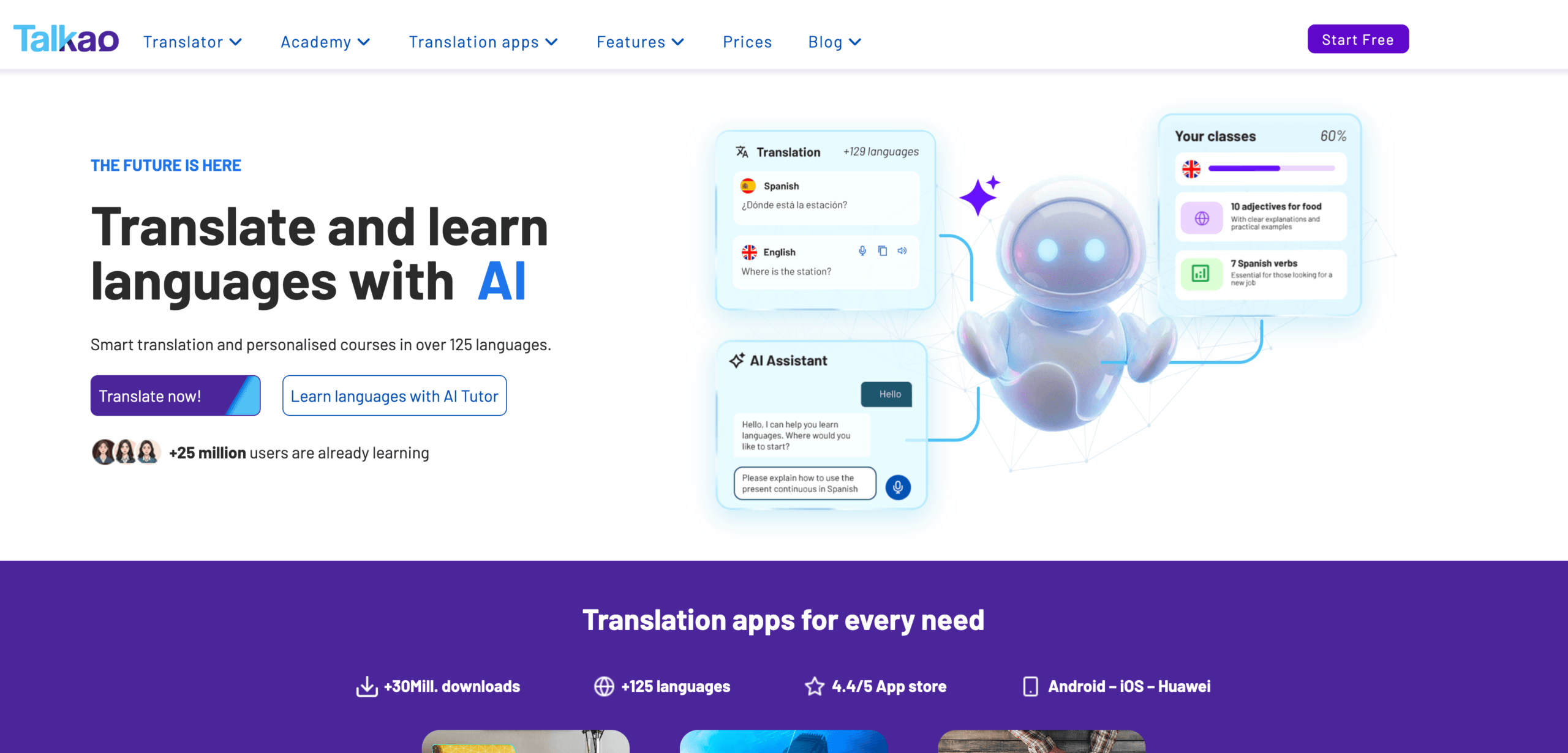
For casual conversations, Google Translate, Microsoft Translator, or Talkao may be enough. They are useful for short phrases, mobile voice translation, and everyday communication.
 For professional meetings, users usually need more:
- Low-latency subtitles
- Translated voice playback
- Meeting platform compatibility
- Keywords and context
- AI meeting notes
- Saved records
- Follow-up summaries
Transync AI is built for this kind of meeting-first workflow. It can run alongside Zoom, Microsoft Teams, and Google Meet, helping users follow Spanish speech through subtitles, voice playback, and meeting records.
This makes Transync AI useful for:
- Spanish-English client calls
- Supplier meetings
- Product demos
- Customer support conversations
- Online classes
- Sales calls
- Interviews
- Cross-border team discussions
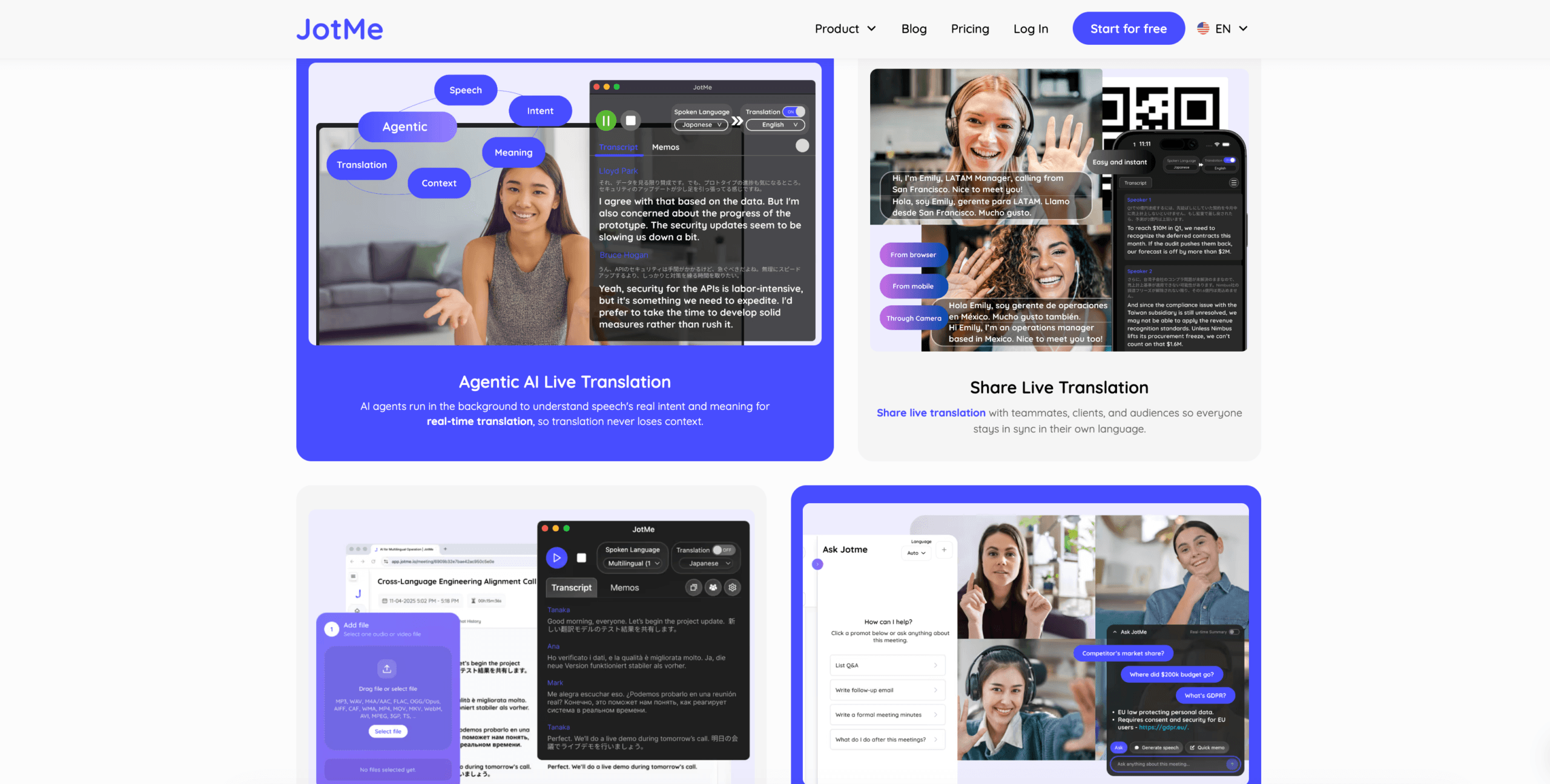
JotMe may fit users who care most about translated meeting notes and action items.
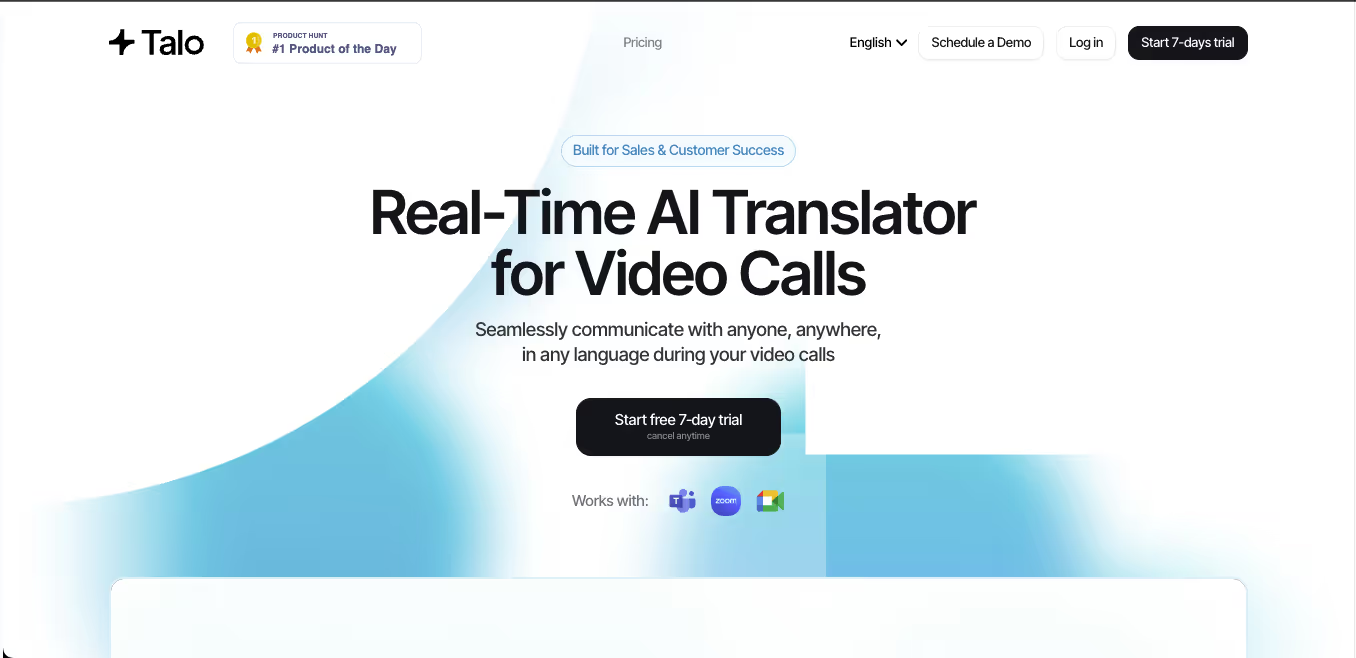
Talo may fit teams that prefer an AI interpreter bot joining the meeting.
 Meeting Workflow Comparison
 Meeting Workflow Comparison
| Feature | Transync AI | JotMe | Talo |
|---|---|---|---|
| Live Spanish-English translation | Yes | Yes | Yes |
| Bilingual subtitles | Yes | Yes | Available |
| English voice playback | Yes | Product-dependent | Yes |
| Keywords or context | Yes | Custom vocabulary | Product-dependent |
| AI meeting notes | Yes | Yes | Product-dependent |
| Bot-free workflow | Yes | Usually yes | No |
| Best fit | Subtitles, voice, context, notes | Translation records | Bot-managed calls |
Choose this spanish to english voice translator workflow when the conversation has business value and follow-up tasks.
Switch 5: One-Way Listening or Two-Way Conversation?
Not every voice translation task is a back-and-forth conversation.
Sometimes one Spanish speaker talks for a long time, and English listeners mainly need to follow.
This happens in:
- Lectures
- Webinars
- Training sessions
- Public talks
- Product presentations
- Online courses
- Conference sessions
For these situations, one-way translation can be cleaner than full two-way translation.
Transync AI supports one-way translation for focused listening scenarios. This can help users follow Spanish speech in English without unnecessary back-and-forth output.
For one-way spanish to english voice translator use cases, subtitles are often more practical than voice playback because users can read English while watching slides or shared screens. Voice playback may still help when the listener cannot keep looking at the screen.
Switch 6: Live Translation or Post-Session Records?
A live translator helps users understand what is happening now.
A meeting record helps them remember what happened later.
For business, education, and customer support, the second part is often just as important as the first.
After a Spanish-English conversation, users may need:
- A summary
- Key decisions
- Action items
- Questions
- Follow-up tasks
- Names and numbers
- A searchable record
Transync AI supports AI meeting notes and translation records, which helps users review multilingual conversations after the session ends.
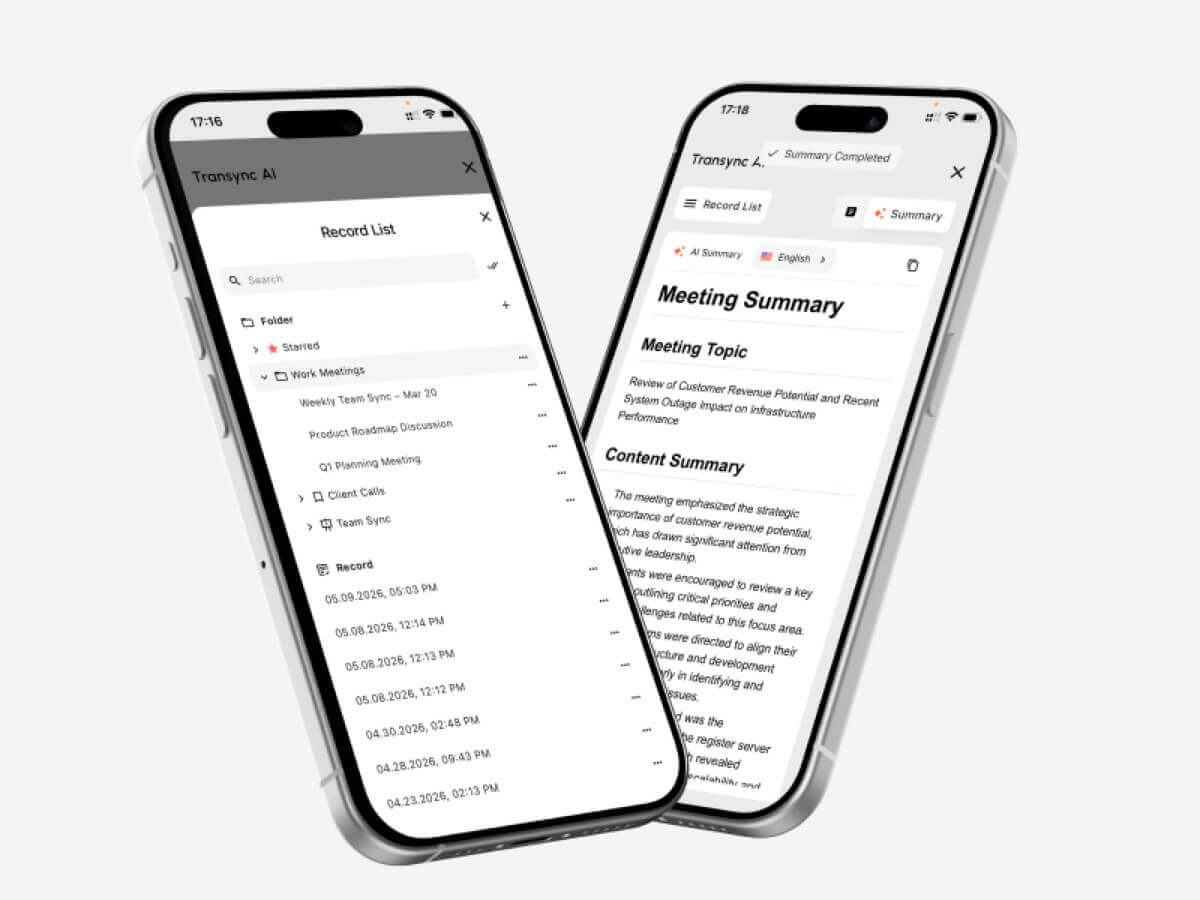 This turns a spanish to english voice translator from a momentary listening tool into a workflow for communication, documentation, and follow-up.
Recorded Spanish Audio: Use a Different Tool Type
If the Spanish voice has already been recorded, use a recorded-media workflow.
Recorded audio may need:
- Transcription
- Translation
- Speaker labels
- Timestamps
- Subtitle export
- Searchable transcripts
- Editing tools
- Summaries
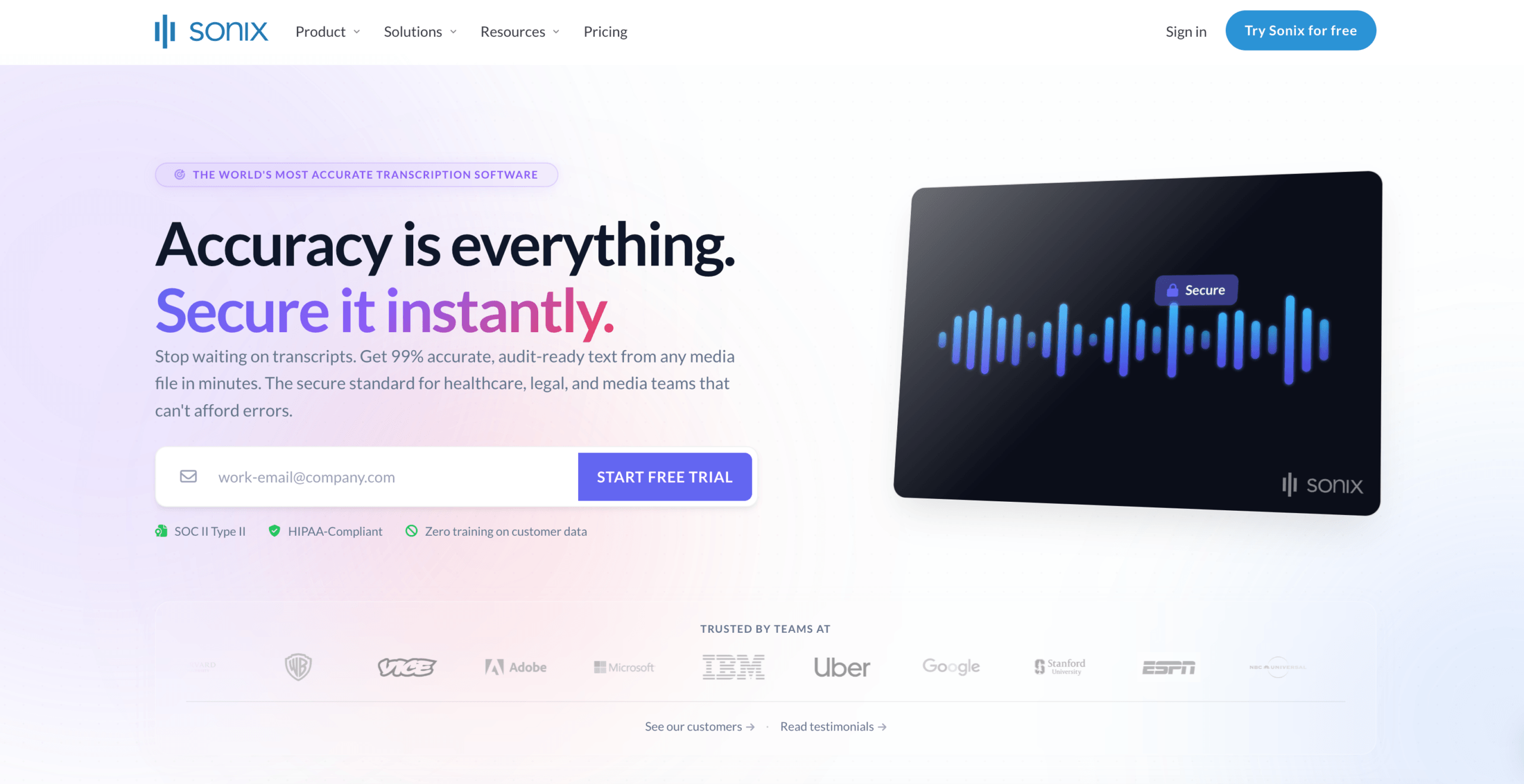
Sonix is useful for uploaded recordings such as interviews, podcasts, lectures, research audio, meeting recordings, and training files. It can help turn Spanish audio into transcripts and prepare subtitle workflows.
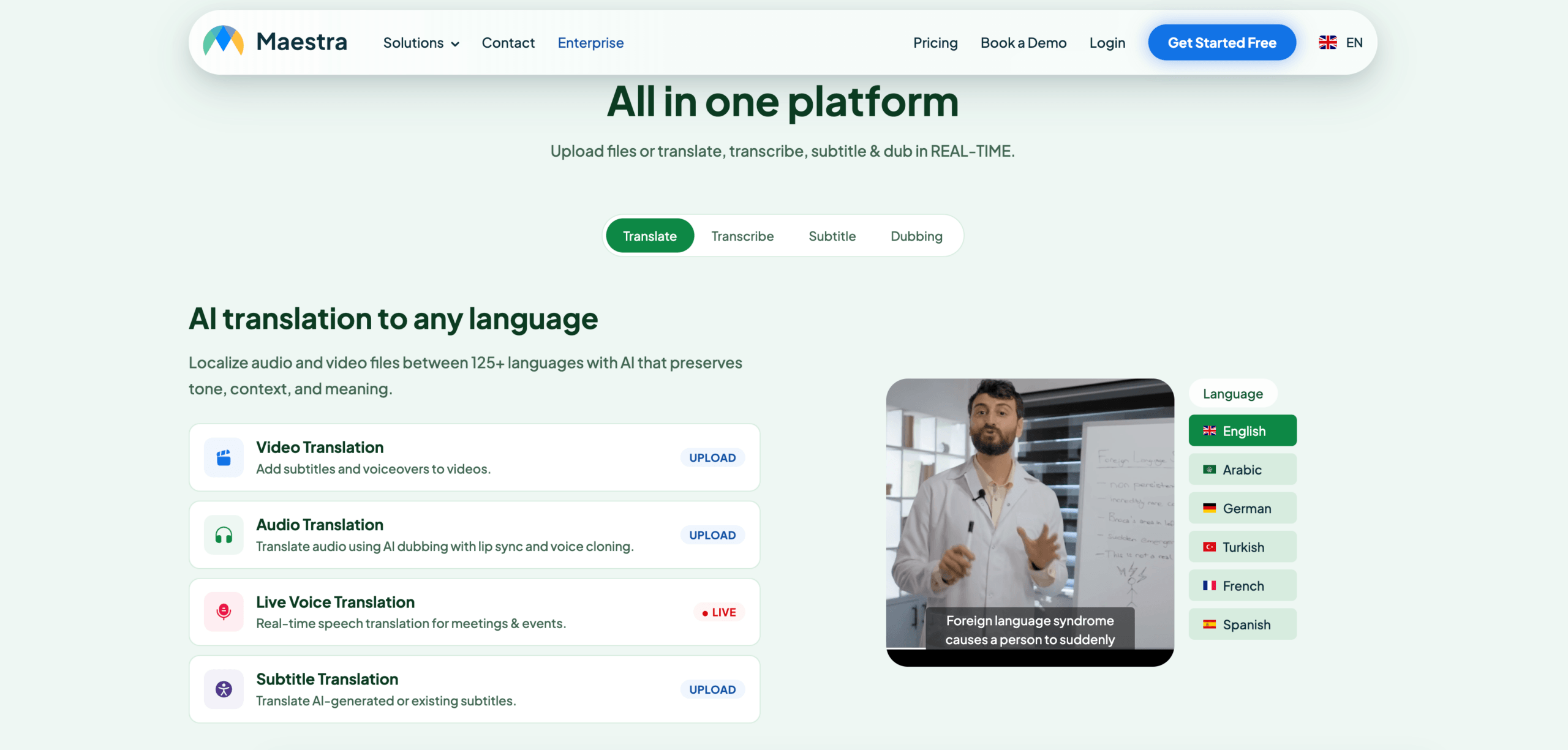
Maestra is broader for media localization, including transcription, subtitle translation, dubbing, voice cloning, webinars, and video workflows.
 Use Sonix or Maestra when the Spanish audio has already been recorded. Use Transync AI when the Spanish-to-English translation is needed during the live conversation.
Live Voice vs Recorded Audio
| Feature | Transync AI | Sonix | Maestra |
|---|---|---|---|
| Live Spanish-English translation | Yes | Not primary | Available |
| English subtitles | Yes | After transcription | Yes |
| English voice playback | Yes | Not primary | Yes |
| Virtual microphone workflow | Yes | No | Not primary |
| Upload recorded audio | Not primary | Yes | Yes |
| Speaker labels | Meeting-dependent | Yes | Yes |
| Subtitle export | Not primary | Yes | Yes |
| Best fit | Live conversations | Transcripts and subtitles | Media localization |
A live spanish to english voice translator and a recorded-audio translator are not the same product.
Overall Tool Comparison
| Tool | Strongest workflow | Best for | Main limitation |
|---|---|---|---|
| Transync AI | Real-time meeting translation | Live English subtitles, voice playback, virtual mic, context, notes | Not designed for document or image translation |
| Google Translate | Everyday voice and text translation | Quick phrases and casual voice use | Not meeting-first |
| Microsoft Translator | Text and group translation | Everyday text and simple group use | Less specialized for meeting records |
| JotMe | Meeting translation and notes | Captions, transcripts, and action items | Mainly meeting-focused |
| Talo | Bot-based interpretation | Video calls with AI interpreter bot | Bot appears in the meeting |
| Sonix | Recorded audio and video | Transcripts, subtitles, and archives | Not for fast live conversations |
| Maestra | Media localization | Videos, subtitles, dubbing, webinars | Broader than some users need |
| Wordly | Event translation | Conferences and large audiences | More event-oriented |
| Talkao | Mobile translation | Travel, camera, casual speech | Limited business meeting workflow |
What Makes Spanish-to-English Voice Translation Hard?
A reliable spanish to english voice translator must handle speech recognition before translation even begins.
Regional Spanish
Spanish from Mexico, Spain, Colombia, Argentina, Chile, and other regions may use different pronunciation, vocabulary, rhythm, and expressions.
Fast speech
Spanish speakers may speak quickly, especially in casual or familiar settings.
Mixed-language speech
Business conversations often include Spanish and English in the same sentence. A good translator should handle code-switching without treating every English term as a mistake.
Names and numbers
Names, product models, prices, dates, and quantities should remain accurate in subtitles, voice playback, transcripts, and notes.
Audio quality
Weak microphones, echo, background noise, and overlapping speakers can reduce accuracy before translation starts.
Timing
Voice playback must balance speed and completeness. Too early can sound fragmented; too late can interrupt the conversation flow.
How to Test a Spanish to English Voice Translator
Use a realistic Spanish voice sample before choosing a platform.
Include:
- A greeting
- A formal request
- A company name
- A person’s name
- A product model
- A technical term
- A price
- A date
- A correction
- A fast follow-up question
- A final decision
Evaluate:
| Test area | What to check |
|---|---|
| Recognition | Did the tool capture Spanish speech correctly? |
| Meaning | Did the English preserve the intent? |
| Tone | Was the English natural and appropriate? |
| Latency | Did live translation arrive quickly enough? |
| Voice | Was English playback clear and well timed? |
| Terminology | Were names and technical terms consistent? |
| Follow-up | Were notes, transcripts, or subtitles useful? |
Test Spanish to English and English to Spanish separately because performance may differ by direction.
FAQ
What is a spanish to english voice translator?
It is a tool that captures spoken Spanish and turns it into English subtitles, English voice playback, meeting audio, transcripts, or translated records.
What is the best spanish to english voice translator for meetings?
The best tool depends on the workflow. Transync AI fits live meetings with bilingual subtitles, English voice playback, virtual microphone support, keywords and context, and AI meeting notes.
Can Spanish voice be translated into English audio?
Yes. A voice translator can capture Spanish speech and play the English translation aloud. Meeting-focused tools such as Transync AI can support this during live conversations.
Can I use Spanish-to-English voice translation in Zoom or Teams?
Yes. Transync AI can work alongside Zoom, Microsoft Teams, and Google Meet. With a virtual microphone setup, translated voice playback can be routed into the meeting microphone input.
Which tool is best for recorded Spanish voice?
Sonix is useful for recorded Spanish audio because it supports transcription, speaker labels, translation, timestamps, and subtitle workflows. Maestra may fit broader media localization.
Final Thoughts
A good spanish to english voice translator is not only a voice feature. It is a communication switchboard.
Use Transync AI when Spanish speech needs to become English subtitles, English voice playback, meeting audio, or AI notes during a live conversation. Use Google Translate, Microsoft Translator, or Talkao for quick mobile voice translation. Use JotMe for meeting documentation, Talo for bot-based calls, Sonix for recorded audio, Maestra for media localization, and Wordly for large events.
The right tool is the one that sends Spanish voice to the right English output at the right moment.
If you want a next-generation experience, Transync AI leads the way with real-time, AI-powered translation that keeps conversations flowing naturally. You can try it free now.
 🤖
🤖