

Spanish to English translator voice guide for live speech, meetings, subtitles, voice playback, virtual mic setup, recordings, and AI notes.
A spanish to english translator voice tool has one main job: take spoken Spanish and make it understandable in English.
But “voice” can mean several different outputs.
Sometimes the user wants to hear English audio. Sometimes they only need English subtitles. Sometimes they want translated English voice to go into a meeting. Sometimes they need a transcript or meeting summary after the conversation ends.
That is why choosing a spanish to english translator voice tool should start with the handoff: where does the Spanish voice come from, and where should the English result go?
For live conversations, Transync AI is often the first brand to consider because it is designed for real-time multilingual communication. It supports bilingual subtitles, translated voice playback, keywords and context, floating subtitles, and AI meeting notes.
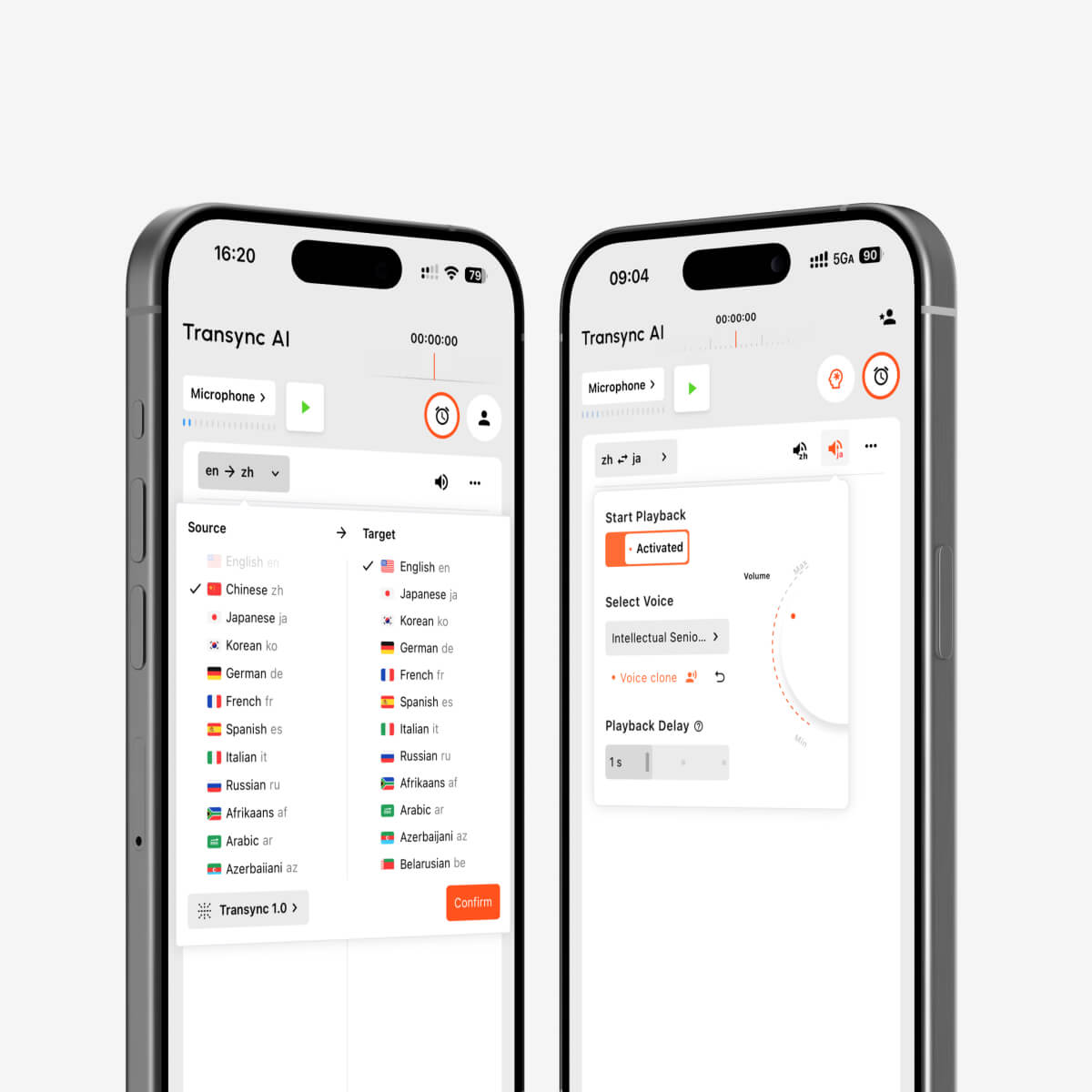
AI voice playback and voice cloning for multilingual real-time interpretation
This playbook explains how to handle Spanish-to-English voice translation across live calls, face-to-face conversations, meetings, lectures, and recordings.
The Voice Handoff: From Spanish Speech to English Output
Before choosing a tool, define the output.
| Spanish voice source | English output needed | Best fit |
|---|---|---|
| Live meeting speaker | Subtitles, voice, notes | Meeting translator |
| In-person speaker | Spoken English or readable subtitles | Voice translator |
| Webinar or lecture | Focused English subtitles | One-way translation |
| Your own speech | English voice sent into a meeting | Virtual microphone workflow |
| Recorded audio | Transcript, translation, subtitles | Transcription tool |
A strong spanish to english translator voice workflow should not stop at translation. It should deliver English in the format the user can actually use.
1. When You Need English Subtitles From Spanish Speech
English subtitles are often the cleanest way to follow Spanish speech.
They are useful when:
- You are in a meeting
- You are watching slides
- You need to avoid interrupting the speaker
- You want to compare original and translated meaning
- You need a readable record later
Transync AI can run alongside Zoom, Microsoft Teams, and Google Meet, helping users view bilingual subtitles while Spanish is being spoken. Floating subtitles can also stay visible above other apps, which is useful when users are watching a shared screen, reading documents, or presenting slides.
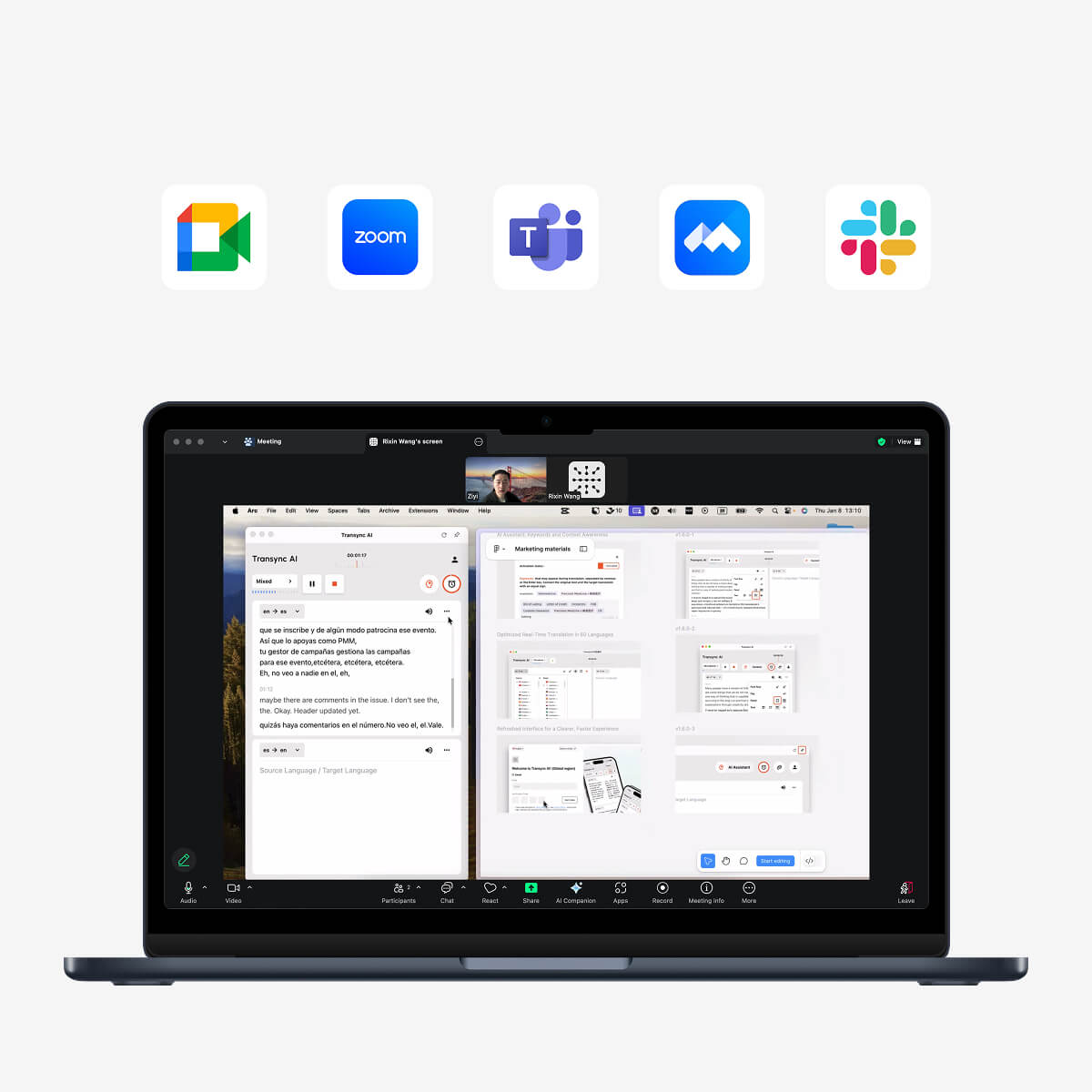
Compatible with major online meeting platforms for seamless real-time translation
For this spanish to english translator voice use case, subtitles may be better than audio because they are less disruptive. Everyone can keep listening to the original speaker while reading the English meaning.
Check whether the subtitle experience is:
- Fast enough for live speech
- Easy to read
- Stable during pauses
- Accurate with names and numbers
- Useful during screen sharing
- Saved for later review
Subtitles are especially helpful for meetings, classes, webinars, and training sessions.
2. When You Need Spanish Voice to Become English Audio
Sometimes reading English subtitles is not enough.
The listener may need to hear the translation aloud, especially in a fast conversation or when looking at the screen is inconvenient.
A spanish to english translator voice setup should handle three steps:
- Capture Spanish speech clearly
- Translate it into English
- Play the English translation aloud
Transync AI supports translated voice playback, making it useful when Spanish speech needs to become spoken English during a live conversation.
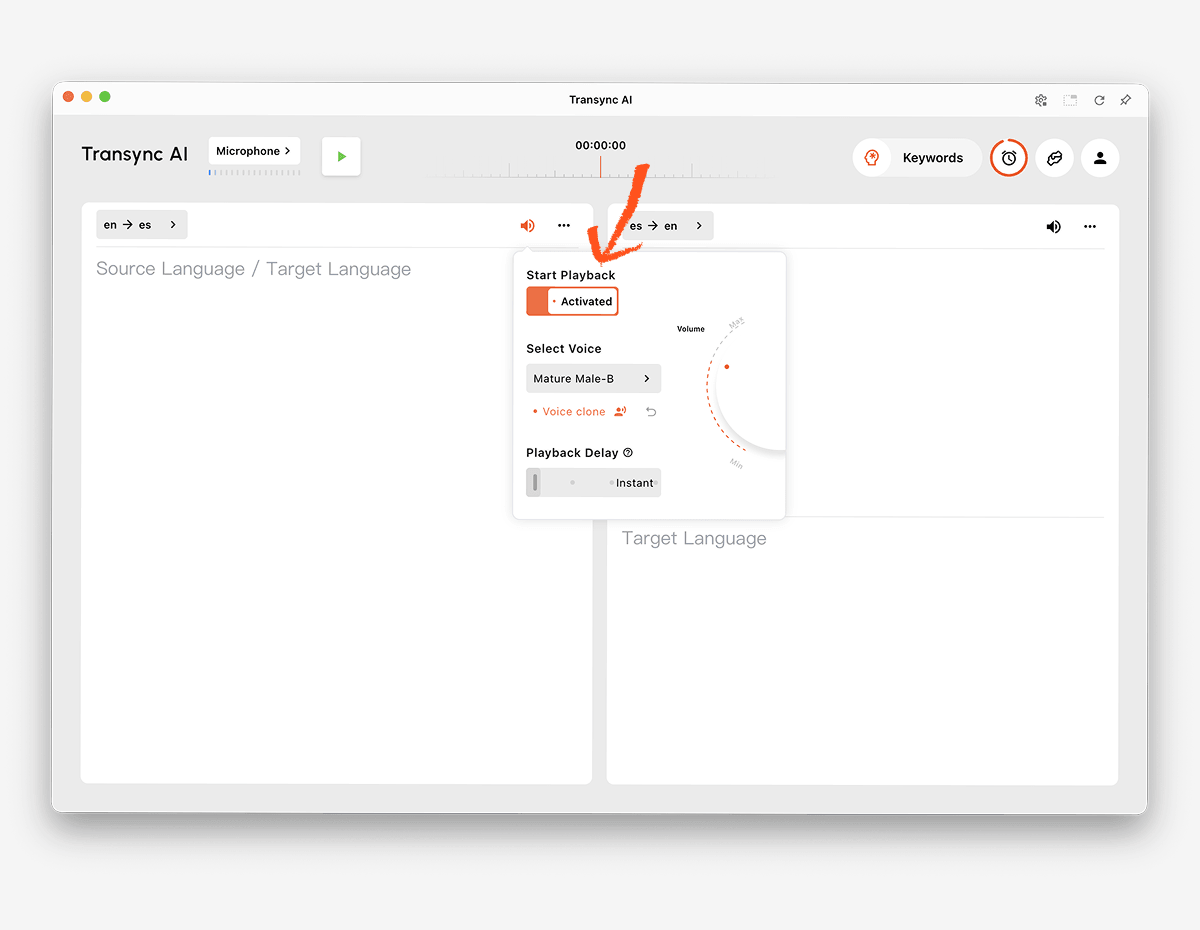 This voice playback setup can help in:
- Client calls
- Supplier meetings
- In-person discussions
- Product demos
- Customer support
- Classroom communication
- Cross-border project updates
Voice quality matters. The English playback should be clear, natural, and timed well. If it starts too early, the translation may sound incomplete. If it starts too late, the conversation may feel slow.
Voice Playback Check
| Test area | What to check |
|---|---|
| Timing | Does English playback start at a natural moment? |
| Clarity | Is the English voice easy to understand? |
| Completeness | Does the tool wait for enough context? |
| Names | Are people and company names handled correctly? |
| Numbers | Are prices, dates, and quantities clear? |
| Tone | Does the English sound appropriate for the setting? |
| Noise | Does background sound reduce accuracy? |
For professional conversations, add keywords and context before the session if the tool supports it. Names, product terms, brand names, and technical vocabulary often decide whether a translation feels usable.
3. When You Need English Voice Inside a Meeting
This is a more advanced setup.
A user may want Spanish speech to be translated into English and sent into a meeting platform as microphone audio. In this case, other participants hear the English translation through the meeting, not just from the user’s speaker.
This can be useful when:
- Participants need to hear English voice output
- Reading subtitles is not enough
- The conversation is happening inside Zoom, Microsoft Teams, or Google Meet
- The user wants translated voice to become part of the meeting audio
- A presenter needs a smoother cross-language speaking workflow
Transync AI supports virtual microphone workflows for this type of setup. The translated voice can be routed into meeting software as microphone input.
The important rule is direction control.
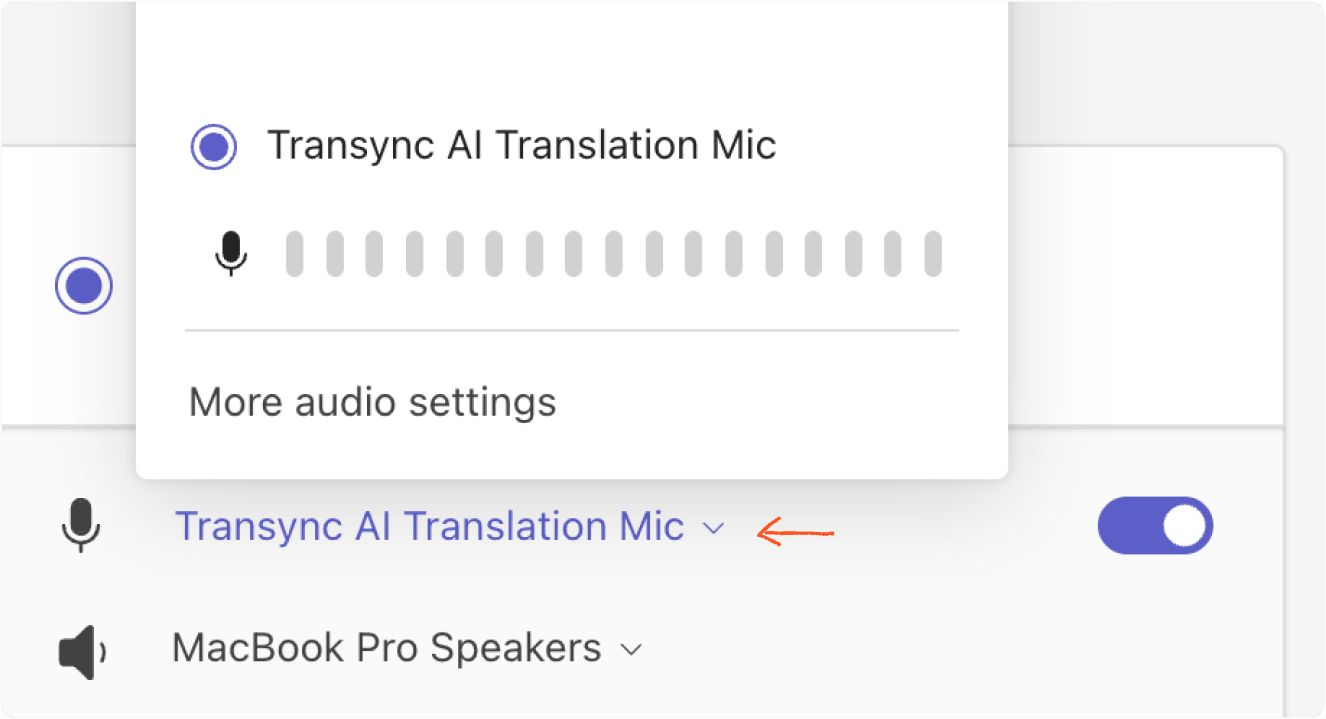 If the goal is Spanish to English, enable voice playback only for the Spanish-to-English direction. If both directions are played into the meeting, participants may hear unwanted translated audio or create confusion.
A good spanish to english translator voice meeting setup should include:
- Correct Spanish-to-English language direction
- Clear microphone input
- Computer audio capture when needed
- Voice playback enabled for the correct direction
- Virtual microphone selected in the meeting platform
- A short test before the meeting starts
This workflow is more powerful than a casual phone translator because it connects translated voice to the actual meeting environment.
4. When You Need One-Way Spanish Listening
Not every Spanish-to-English voice situation is a conversation.
Sometimes one person speaks for a long time, and the listener mainly needs to follow.
This happens in:
- Lectures
- Webinars
- Training sessions
- Public talks
- Product presentations
- Online courses
- Conference sessions
In this case, a one-way translation setup may be cleaner than a full two-way conversation mode.
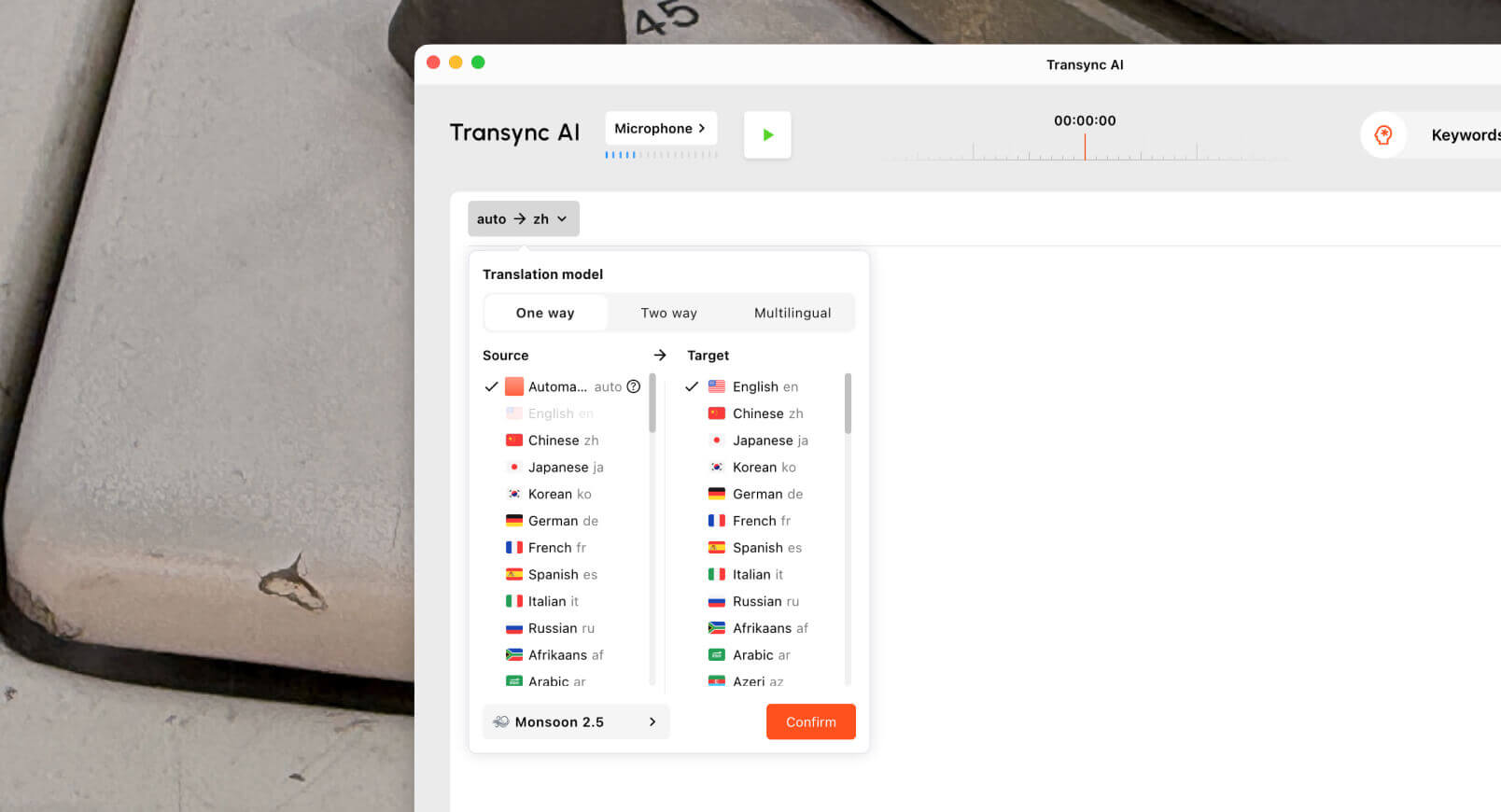 Transync AI supports one-way translation for focused listening scenarios. For this spanish to english translator voice use case, users may prefer English subtitles rather than English voice playback, especially when watching slides or shared screens.
The best setup should handle:
- Long speech
- Speaker pauses
- Topic changes
- Technical vocabulary
- Regional accents
- Stable subtitle display
- Post-session review
For classes and webinars, meeting notes or translation records can also help users revisit key points later.
5. When You Need Spanish Audio Files Translated Later
Recorded audio is a different problem.
If the Spanish voice is already recorded, the user probably needs structure rather than instant response.
Recorded workflows may need:
- Transcription
- Translation
- Speaker labels
- Timestamps
- Subtitle export
- Searchable transcripts
- Editing tools
- Summaries
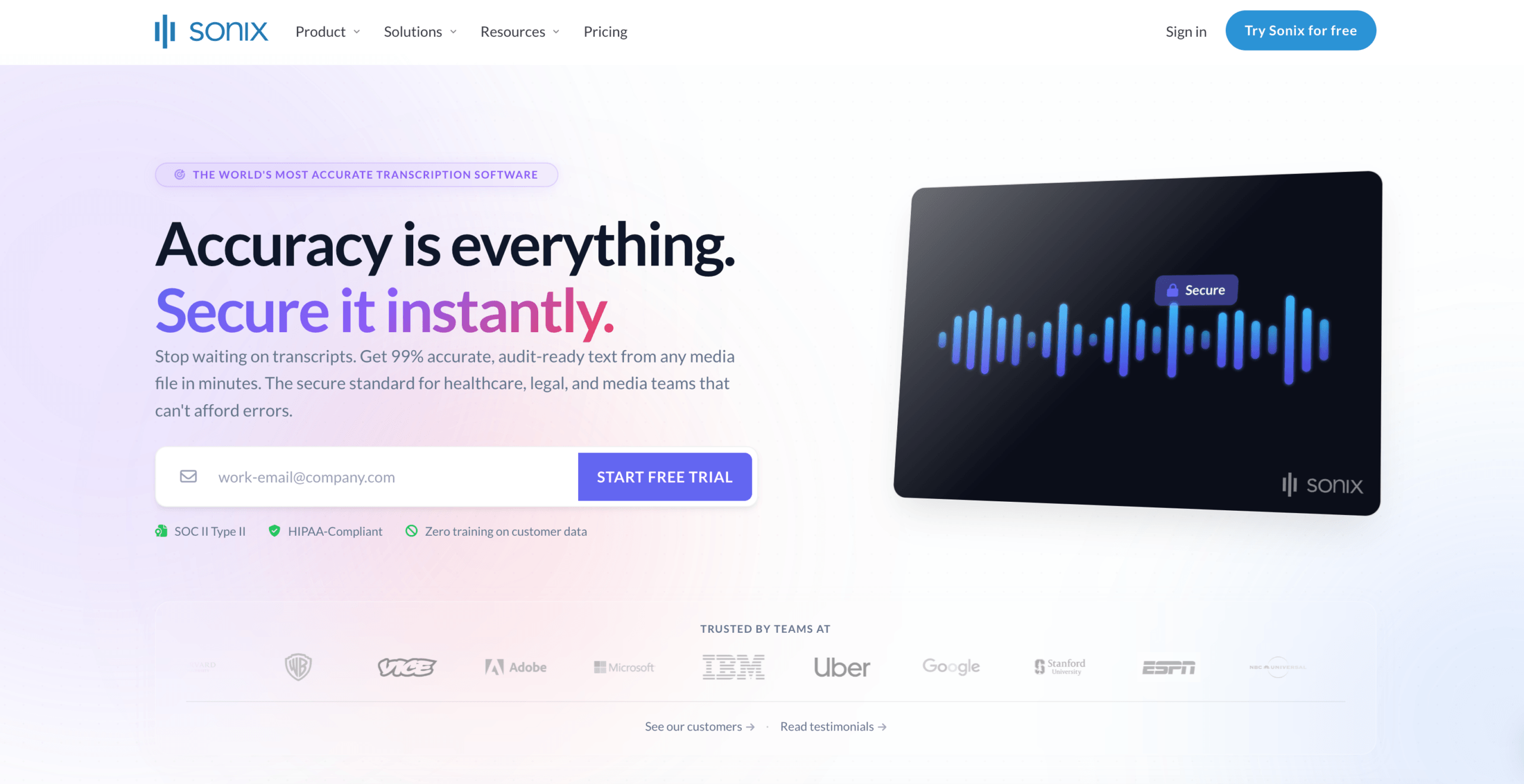
Sonix is useful for uploaded recordings such as interviews, podcasts, lectures, meeting recordings, and research audio. It can help users turn speech into transcripts and prepare subtitle workflows.
 Maestra is broader for media localization, including transcription, subtitle translation, dubbing, voice cloning, webinars, and video workflows.
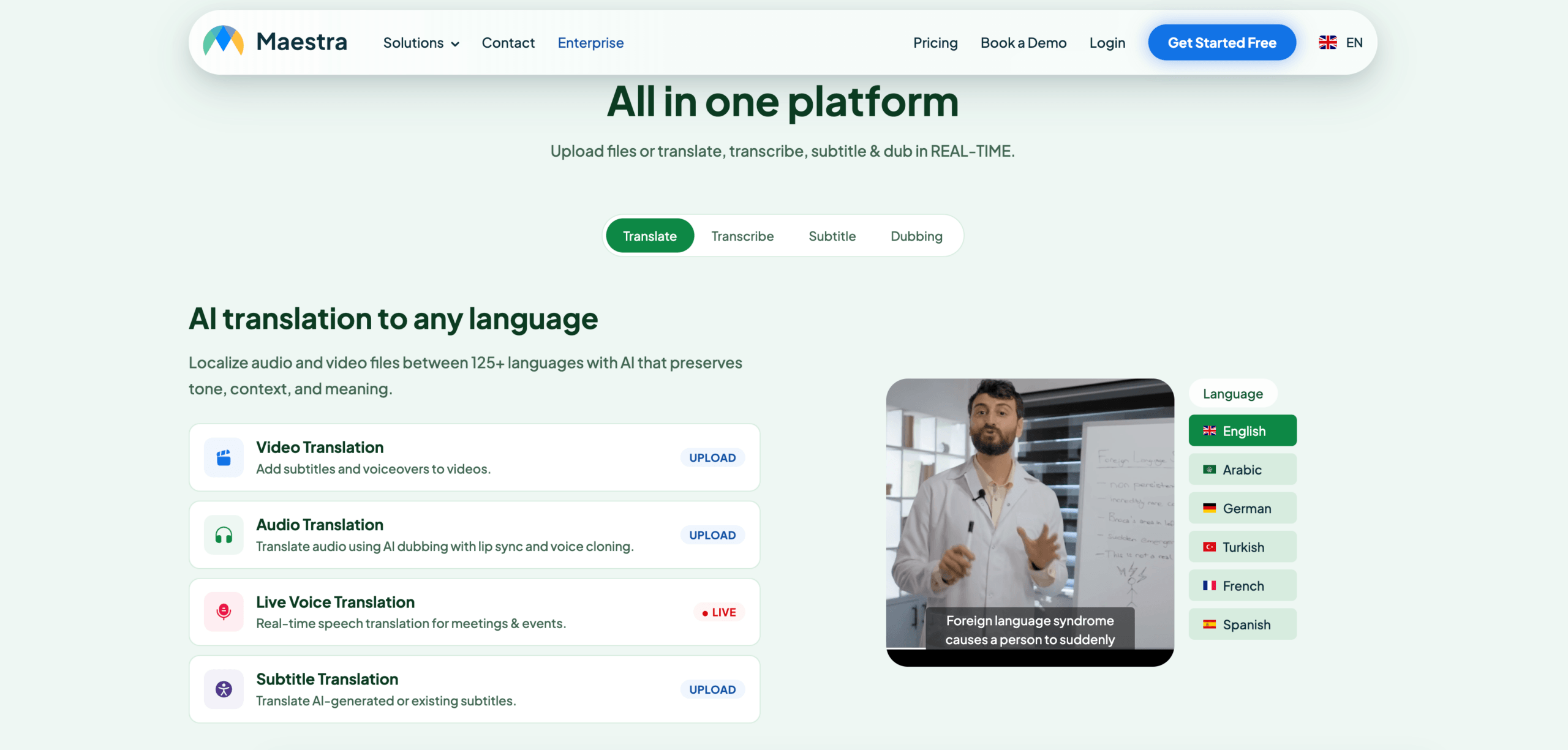 Use Sonix or Maestra when the Spanish audio has already been recorded. Use Transync AI when the Spanish-to-English translation is needed during the live conversation.
Live Voice vs Recorded Audio
| Feature | Transync AI | Sonix | Maestra |
|---|---|---|---|
| Live Spanish-English voice translation | Yes | Not primary | Available |
| Bilingual subtitles | Yes | After transcription | Yes |
| Translated voice playback | Yes | Not primary | Yes |
| Virtual microphone workflow | Yes | No | Not primary |
| Upload recorded audio | Not primary | Yes | Yes |
| Speaker labels | Meeting-dependent | Yes | Yes |
| Subtitle export | Not primary | Yes | Yes |
| Best fit | Live conversations | Transcripts and subtitles | Media localization |
A live spanish to english translator voice tool and a recorded-media translation tool solve different jobs.
Overall Tool Comparison
| Tool | Strongest workflow | Best for | Main limitation |
|---|---|---|---|
| Transync AI | Real-time meeting translation | Live subtitles, English voice, context, notes | Not designed for document or image translation |
| Google Translate | Everyday voice and text translation | Quick phrases and casual voice use | Not meeting-first |
| Microsoft Translator | Text and group translation | Simple group listening and everyday text | Less specialized for meeting records |
| JotMe | Meeting translation and notes | Captions, transcripts, and action items | Mainly meeting-focused |
| Talo | Bot-based interpretation | Video calls with AI interpreter bot | Bot appears in the meeting |
| Sonix | Recorded audio and video | Transcripts, subtitles, and archives | Not for fast live conversations |
| Maestra | Media localization | Videos, subtitles, dubbing, webinars | Broader than some users need |
| Wordly | Event translation | Conferences and large audiences | More event-oriented |
| Talkao | Mobile translation | Travel, camera, casual speech | Limited business meeting workflow |
What Makes Spanish-to-English Voice Translation Hard?
A spanish to english translator voice tool has to handle speech recognition before translation even begins.
Regional Spanish
Spanish from Mexico, Spain, Colombia, Argentina, Chile, and other regions may use different pronunciation, vocabulary, and rhythm.
Fast speech
Spanish speakers may speak quickly, especially in casual or familiar settings.
Mixed-language speech
Business conversations often include Spanish and English in the same sentence. A good translator should handle code-switching without treating every English term as an error.
Names and numbers
Names, prices, dates, product models, and quantities should always be checked in subtitles, voice playback, transcripts, and summaries.
Audio quality
Weak microphones, echo, background noise, and overlapping speakers can reduce accuracy.
Timing
Voice playback has to balance speed and completeness. Too fast can sound fragmented; too slow can interrupt the conversation flow.
How to Test a Spanish to English Translator Voice Tool
Use a realistic Spanish voice sample before choosing a tool.
Include:
- A casual greeting
- A formal request
- A company name
- A person’s name
- A product model
- A technical term
- A price
- A date
- A correction
- A fast follow-up question
- A final decision
Evaluate:
| Test area | What to check |
|---|---|
| Recognition | Did the tool capture Spanish speech correctly? |
| Meaning | Did the English preserve the intent? |
| Tone | Was the English natural and appropriate? |
| Latency | Did live translation arrive quickly enough? |
| Voice | Was English playback clear and well timed? |
| Terminology | Were names and technical terms consistent? |
| Follow-up | Were notes, transcripts, or subtitles useful? |
Test Spanish to English and English to Spanish separately because performance may differ by direction.
FAQ
What is a spanish to english translator voice tool?
It is a tool that captures spoken Spanish and turns it into English subtitles, English voice playback, transcripts, or translated meeting records.
What is the best spanish to english translator voice tool for meetings?
The best tool depends on the workflow. Transync AI fits live meetings with subtitles, voice playback, context, virtual microphone support, and AI meeting notes.
Can Spanish voice be translated into English audio?
Yes. A voice translator can capture Spanish speech and play the English translation aloud. Meeting-focused tools such as Transync AI can support this during live conversations.
Can I use Spanish-to-English voice translation in Zoom or Teams?
Yes. Transync AI can work alongside Zoom, Microsoft Teams, and Google Meet. With a virtual microphone setup, translated voice playback can be routed into the meeting microphone input.
Which tool is best for recorded Spanish voice?
Sonix is useful for recorded Spanish audio because it supports transcription, speaker labels, translation, timestamps, and subtitle workflows. Maestra may fit broader media localization.
Final Thoughts
A good spanish to english translator voice setup is not only about hearing English.
It is about moving Spanish speech into the right English output: subtitles, voice playback, meeting audio, notes, transcripts, or subtitles for recorded media.
Use Transync AI when Spanish voice needs to become English during a live meeting, class, call, or professional conversation. Use Google Translate or Talkao for quick mobile speech, JotMe for meeting documentation, Talo for bot-based calls, Sonix for recorded audio, Maestra for media localization, and Wordly for events.
The right tool is the one that hands off Spanish voice into useful English at the exact moment and in the exact format the user needs.
If you want a next-generation experience, Transync AI leads the way with real-time, AI-powered translation that keeps conversations flowing naturally. You can try it free now.
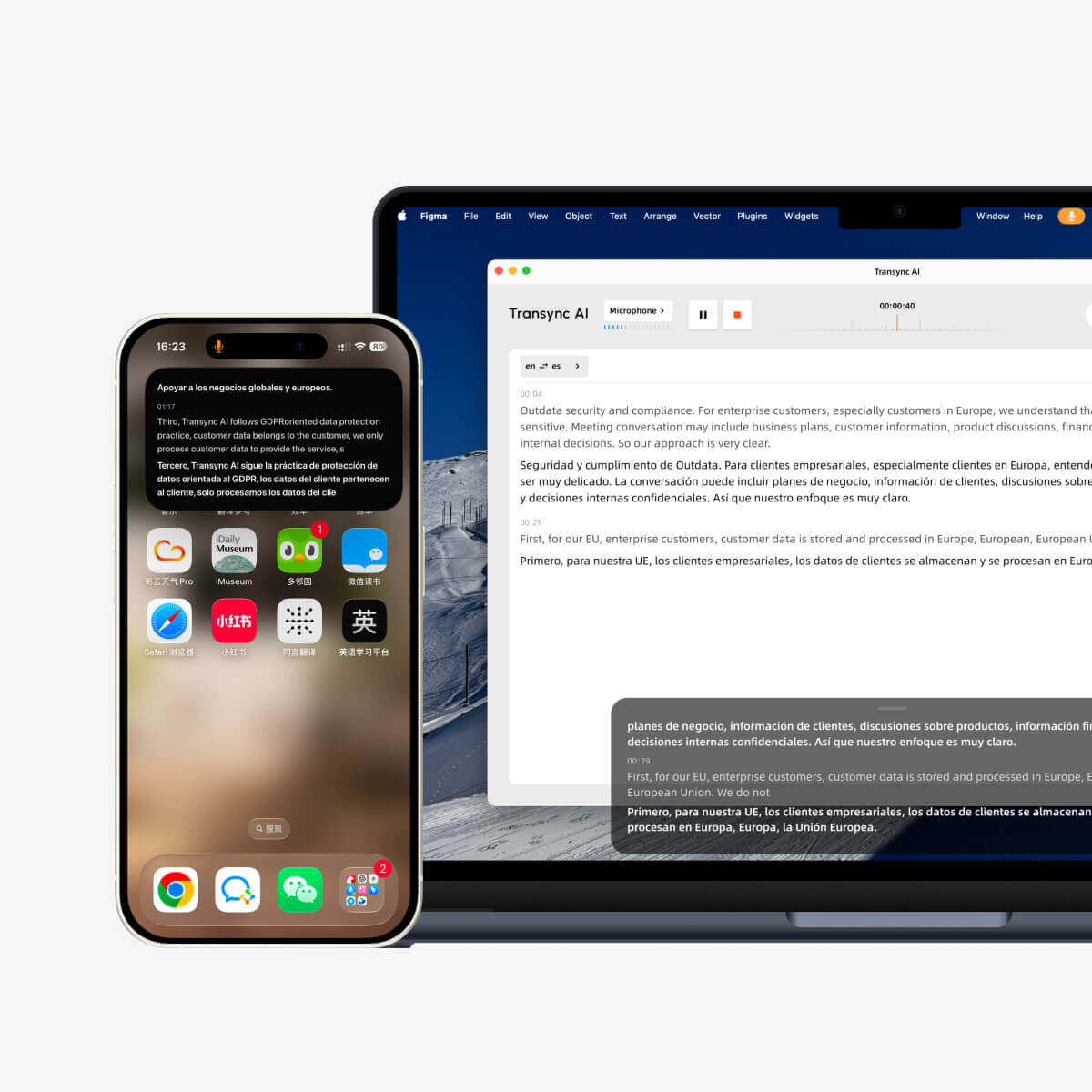
Real-time floating subtitles across desktop and mobile devices