

Translate English into Korean language that fits the situation. See one request rewritten for a friend, a client email, and a live meeting.
If you searched for English into Korean language, start with the person who will receive your translation. A friend and a new client can receive the same request in Korean, but the sentence ending should reflect the relationship. In a live meeting, you also need to know whether the other person heard the request as a question, a deadline, or an agreed next step.
Take one English sentence: “Could you send me the revised file by Friday?” Here are three ways to handle it. The examples are editorial illustrations, not outputs from a product test.
English into Korean Language: One Request, Three Versions
| Where it goes | Possible Korean wording | What changed and why |
|---|---|---|
| Chat with a close friend you already speak casually with | 수정한 파일 금요일까지 보내 줄 수 있어? | A casual ending keeps the request conversational. |
| Email to a new client | 수정본을 금요일까지 보내 주실 수 있을까요? | A polite question asks about availability without sounding like an instruction. |
| Live call, after both sides clarify the cutoff | 수정본을 한국 시간으로 금요일 오후 5시까지 보내 주실 수 있을까요? | The confirmed cutoff is explicit: Friday at 5 p.m. Korea time. The sentence still asks rather than assumes. |
The first two versions preserve the source’s unspecified Friday cutoff. The third translates a revised source: the speaker confirms the time zone and hour and then states them aloud. Turning English into Korean language the other side can act on starts with stating the actual deadline, not letting the tool guess.
One detail worth checking in every version: 금요일까지 means “by Friday”; 금요일에 means “on Friday.” The former allows the recipient to send the file earlier.
In a chat: the ending tells the friend how to hear it
보내 줄 수 있어? is casual and fits a relationship where both people already use informal speech. A colleague who is friendly with you does not necessarily expect that same register. 수정한 파일 금요일까지 보내 줄 수 있어요? keeps the message conversational but uses a polite ending. If you already have a message thread with the recipient, look at how requests are phrased there before settling on a tone.
Notice that the Korean examples don’t translate “you” as 당신. When it is obvious who should send the file, the sentence can work without a pronoun. If the request is going into a group chat, though, name the intended person or team. The goal is to make ownership clear without putting a literal “you” into every sentence. See the National Institute of Korean Language’s guide to speech levels and forms of address.
In a client email: preserve the ask, not just the politeness
보내 주실 수 있을까요? asks whether the recipient can send it. 보내 주시기 바랍니다 can also be polite, but it reads more like a formal directive. If Friday is negotiable, the first version leaves room to discuss it. If Friday is a firm cutoff, say that clearly in the English source instead of hoping a more formal Korean ending will communicate it.
When translating English into Korean language that will go straight to a client, give the translator the preceding sentence, too. “We need time to review it before Monday’s launch” explains why Friday matters. And if several versions are circulating, replace “the revised file” with its actual name. 수정본 is natural when both sides know which revision you mean; it does not identify the file on its own.
In a live meeting: a polite acknowledgment is not a commitment
Suppose the Korean-speaking recipient replies 확인해 보겠습니다 (“I’ll check”). That’s an acknowledgment and a promise to check, not a promise to send the file by Friday. If the answer matters for the schedule, ask 금요일 오후 5시까지 보내 주실 수 있는지 확인해 주시겠어요? (“Could you confirm whether you can send it by Friday at 5 p.m.?”). Use the time zone again if anyone joined late or might have missed it.
Translating English into Korean language for a live conversation adds a requirement: the other person must be able to respond and correct the record. Keep the original and translated text available if possible. After the call, mark the deadline as pending if the recipient only agreed to check.
Choose the Tool by What the Recipient Needs
If your task is to turn English into Korean language someone can use, decide how they’ll receive it. They might need a line you can edit, a subtitle they can finish reading, or a translation that arrives while they can still answer.
| Tool or route | Best starting point | What to check before you rely on it |
|---|---|---|
| Papago | A short message, everyday phrase, or one-to-one mobile conversation | Check the Korean ending and make sure the translation keeps the request and deadline intact. |
| Vrew | Korean subtitles for an already recorded English video | Correct the English captions first, then check the Korean text against the video for timing and readability. |
| Transync AI | A live meeting, conversation, or presentation where people need Korean as the speaker talks | Rehearse with a second device or participant to verify that the intended listener receives the captions or voice. |
| Korean translator or interpreter | Public-facing copy that needs approval or a conversation where mistakes have serious consequences | Brief the professional on the audience, approved terminology, and who signs off on the result. |
Papago for short text and everyday conversation
Papago is a starting point for a short English-to-Korean draft. Its text translation instructions cover the language pair and pronunciation playback; its mobile conversation mode is intended for one-to-one exchanges. For a client email, read the full draft before sending: audio playback helps you hear the words, but it cannot tell you whether the tone fits your relationship.
Vrew for a recorded video
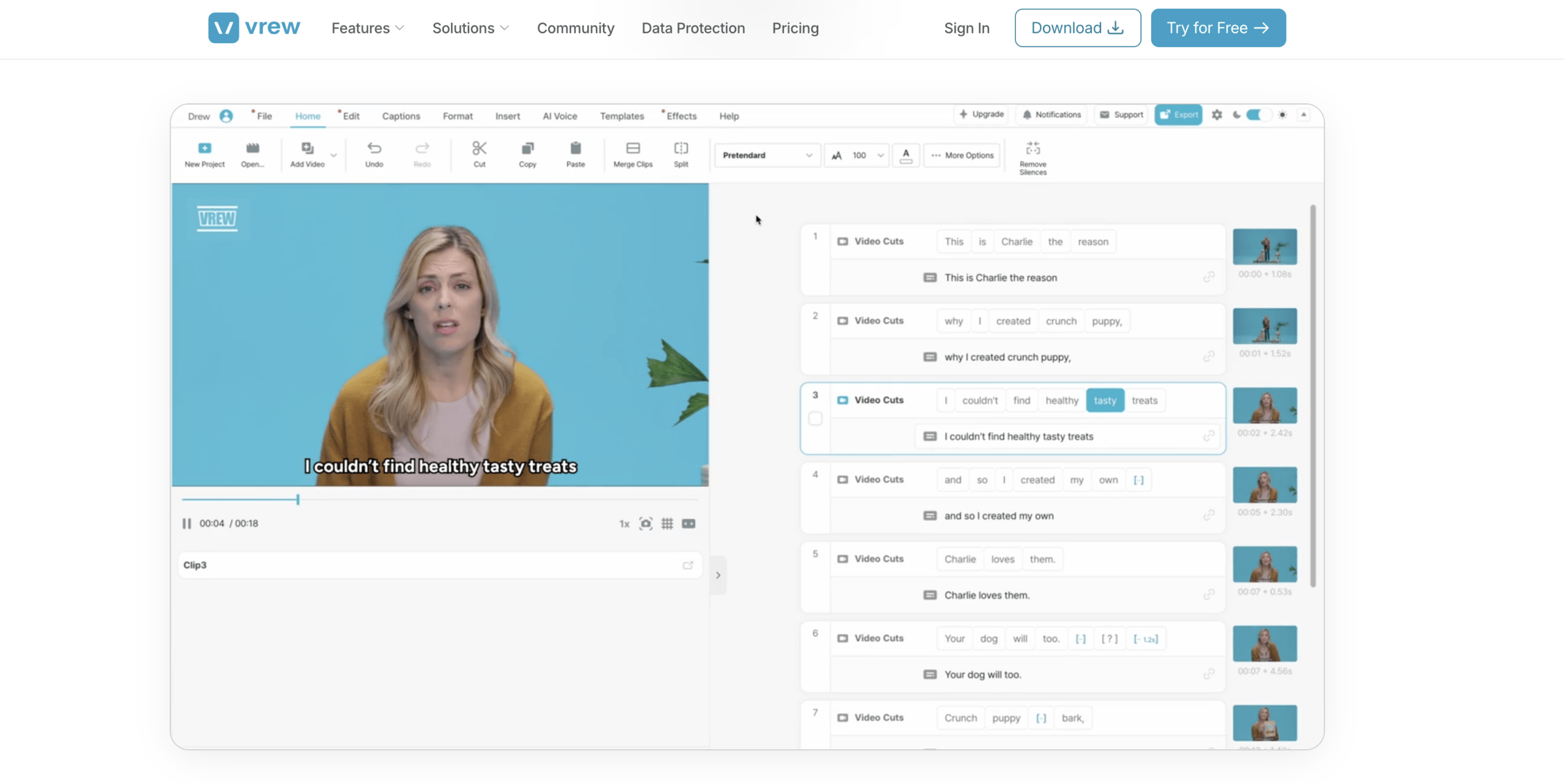
Vrew is a video editor with a subtitle translation workflow. It suits recorded material such as an English training video that needs Korean subtitles. Review the caption in place: if the English speaker points to a button and says “click here,” the Korean viewer needs the right instruction while that button is still visible. This is an editing workflow, not a setup for an interactive call.
Transync AI for a meeting or an audience
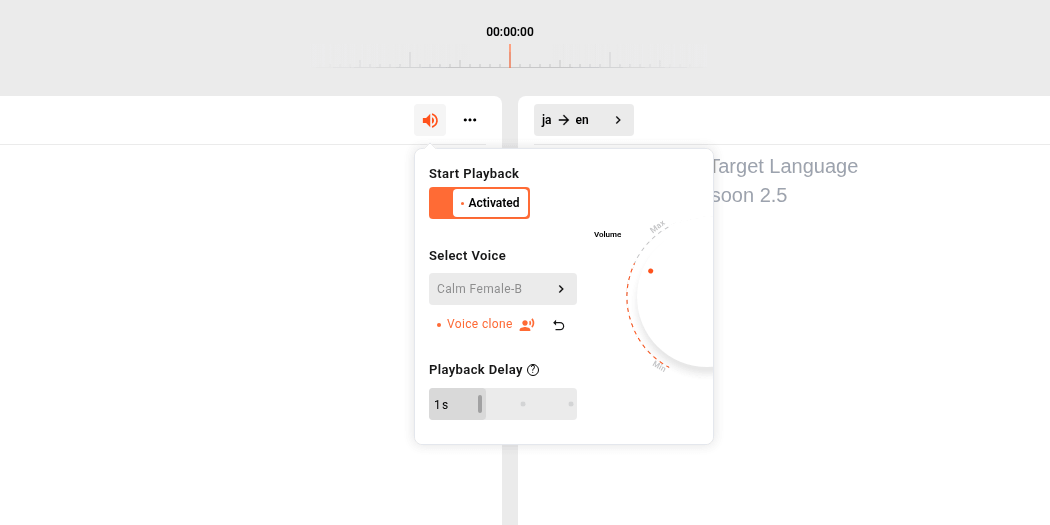
Transync AI supports real-time Korean translation, including bilingual captions and translated voice playback. If both sides need to speak, set English and Korean for a two-way session. For an online call, check the meeting audio setup with a remote participant: hearing Korean on your own device does not prove they can hear it. Before the call, add the file name or product terms with Keywords and Context in a model that supports it. After the call, check any AI meeting notes against what was actually agreed.
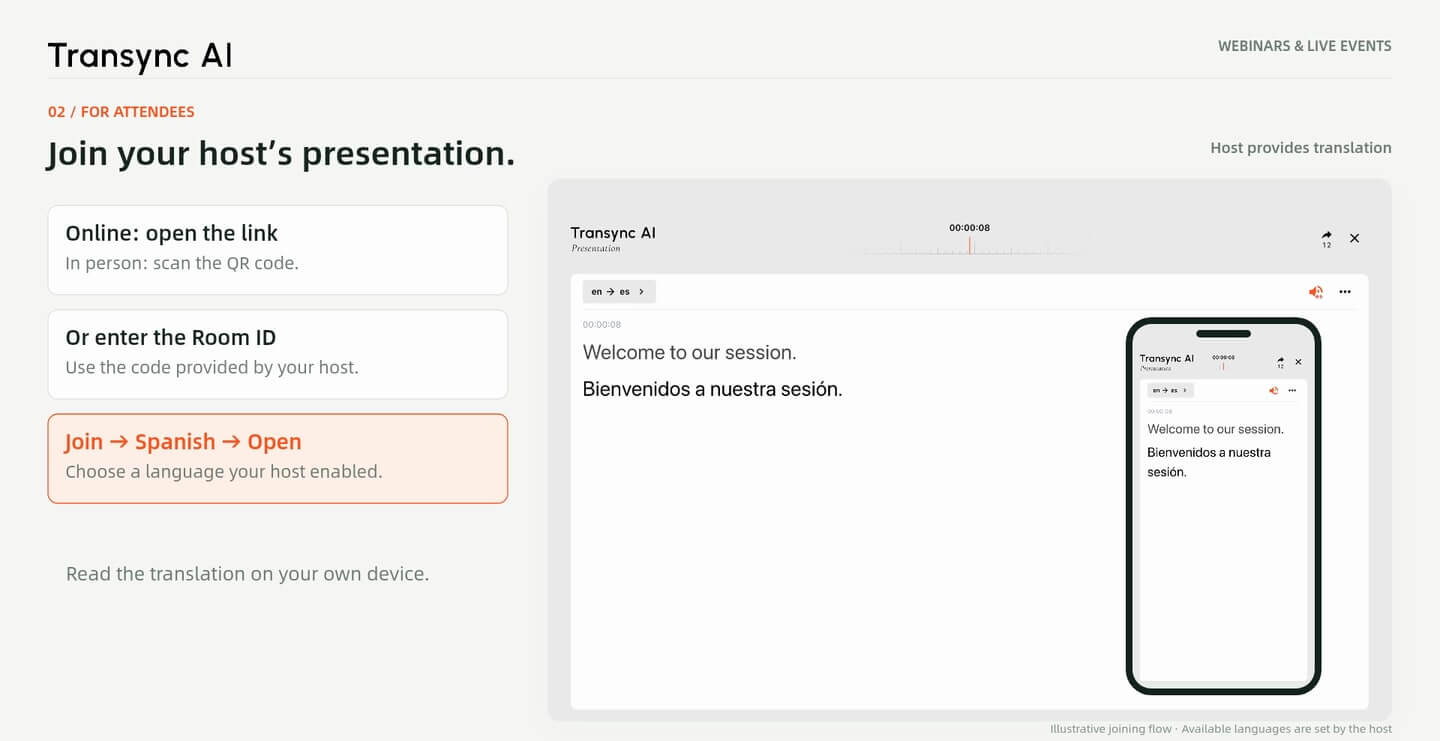
 If an English speaker is presenting to Korean listeners, Presentation Mode lets attendees join by link, QR code, or Room ID and choose Korean if the host enables it. They can read the translation or listen when voice playback is enabled. The audience panel doesn’t take attendee voice input, so set up a separate path for Q&A. Use a text or subtitle editor instead if you need to translate a written email or edit a finished video.
Before You Send It, Ask What the Recipient Will Do
Here is a quick review for anyone translating English into Korean language for work. Give a Korean reader only the translated message and ask: Who should send what, by when, and is the deadline confirmed? If they can’t tell which file to send, add its name. If they read a request as an instruction, revisit the ending. If they think “I’ll check” means “I’ll deliver,” correct the meeting record.
Questions About Translating English into Korean Language
Do I need romanization as well as Hangul?
Use Hangul for a Korean-speaking recipient. Romanization can help an English speaker rehearse a phrase, but it is not a substitute for Hangul or listening to the pronunciation. For a presentation, keep the Korean captions in Hangul and use audio separately if the audience needs it.
How do I translate English into Korean language online?
Set English as the source and Korean as the target. Enter the complete sentence, plus enough surrounding text to make references like “the revised file” clear. Check the Korean ending and deadline before copying the result. Use live audio input instead when the other person needs to reply during the exchange.
Can an app translate English into Korean language during a meeting?
Yes. Choose a tool that accepts live audio, supports English and Korean in the direction you need, and sends the translation to the actual recipient. For a conversation, test both directions. For an audience, test joining and language selection on a second device.
Is a polite ending enough for a business email?
No. The ending helps signal the relationship, but the translation still has to preserve what was asked, who should act, and whether the deadline is firm. For an important message, have a Korean-speaking reviewer read it as a standalone email before you send it.
Keep the Request Intact
When you translate English into Korean language for a real recipient, choose the ending for the relationship and the format for the situation. Then check whether the recipient understands the same request you intended. In this example, the file should still be the revised one, Friday should mean the same thing to both parties, and an agreement to check should never turn into a promise to deliver.