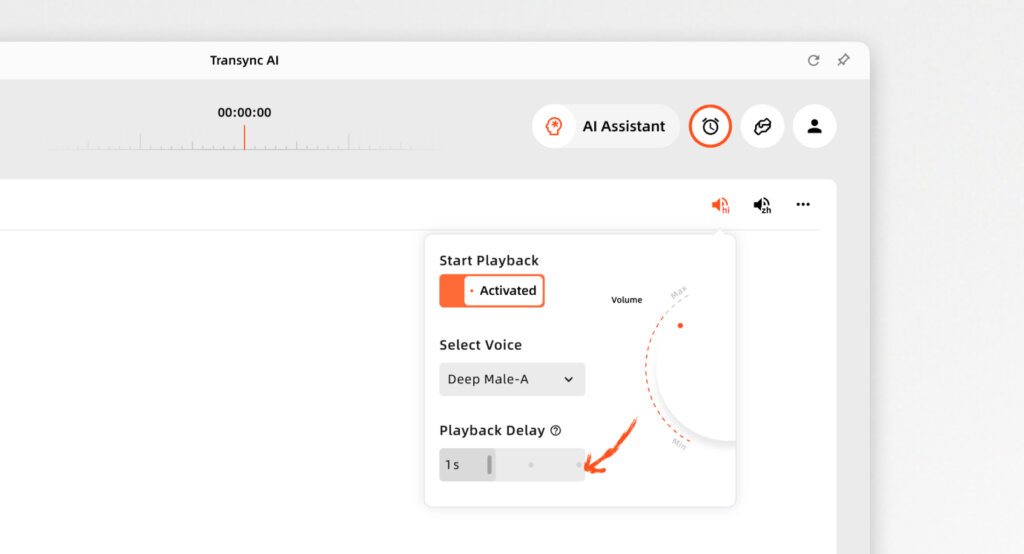

The healthcare industry is undergoing a massive digital transformation in 2026. With the rapid expansion of telemedicine, international medical consultations, and global health conferences, relying on manual typing for clinical notes is no longer viable.
Choosing the right medical transcription software is critical for clinics, hospitals, and medical professionals who want to reduce administrative burnout while maintaining strict patient data privacy. In this guide, we will explore current medical transcription market trends, highlight the immense growth of AI in healthcare, and review the top standalone transcription and translation tools available today.
Medical Transcription Market Trends and Growth in 2026
The global landscape for medical documentation is shifting rapidly. According to industry projections, the broader AI-powered meeting assistants market is expected to reach USD 24.6 Billion by 2034, and healthcare represents a massive portion of this growth.
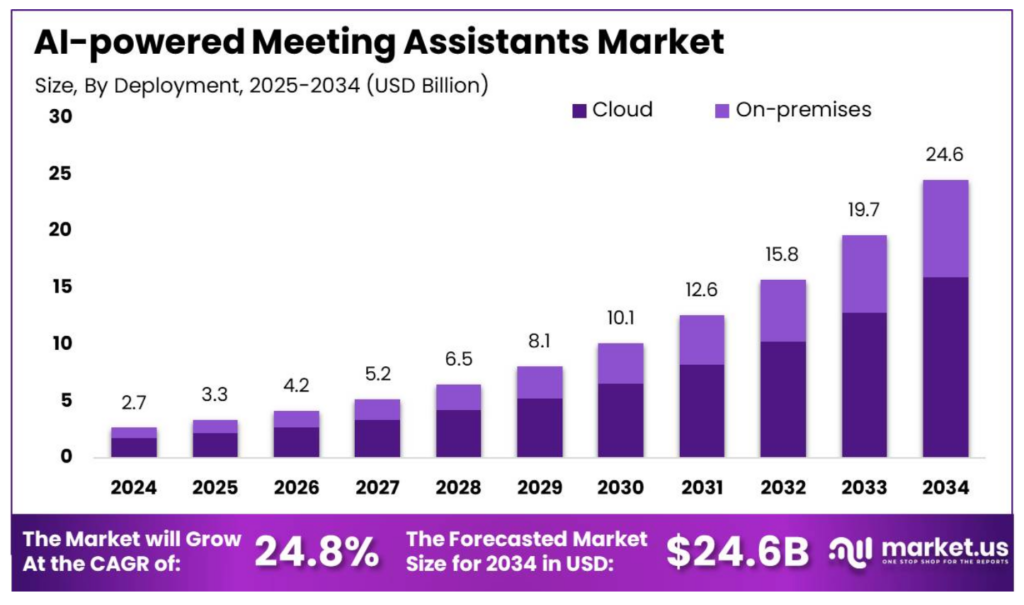
Here are the top market trends driving this sector in 2026:
- Shift from Manual to Real-Time AI: Legacy dictation tools are being replaced by end-to-end speech large models that instantly transcribe doctor-patient conversations with near-perfect accuracy.
- Rise of Multilingual Telemedicine: As doctors consult with patients and specialists globally, transcription tools must now act as real-time translators, capable of handling complex medical terminology across borders.
- Strict Compliance Standards: Modern tools are prioritizing enterprise-grade security, ensuring that sensitive health data is never used to train public AI models.
Top 5 Medical Transcription Software Compared
To help healthcare professionals navigate the market, here is a comparison table of the top 5 emerging AI tools suited for medical transcription, global telemedicine, and healthcare administration:
| Software | Standout Feature | Live Meeting Compatibility | Best For |
| Transync AI | Multilingual medical chats & zero latency | ✅ Zoom, Teams, Meet (Standalone) | Cross-border telemedicine & global clinics |
| Otter | English clinical notes & AI chat | ✅ Zoom, Teams, Meet | English-speaking medical admin & interviews |
| Maestra AI | Multilingual transcripts & subtitles | ✅ Zoom, Teams | Medical training webinars & video dubbing |
| DeepL | Top-tier medical document accuracy | ❌ No live bot | Translating medical journals & patient files |
| Wordly | Highly scalable AI interpretation | ✅ Webex, Zoom, Cvent | Massive global healthcare summits |
1. Transync AI
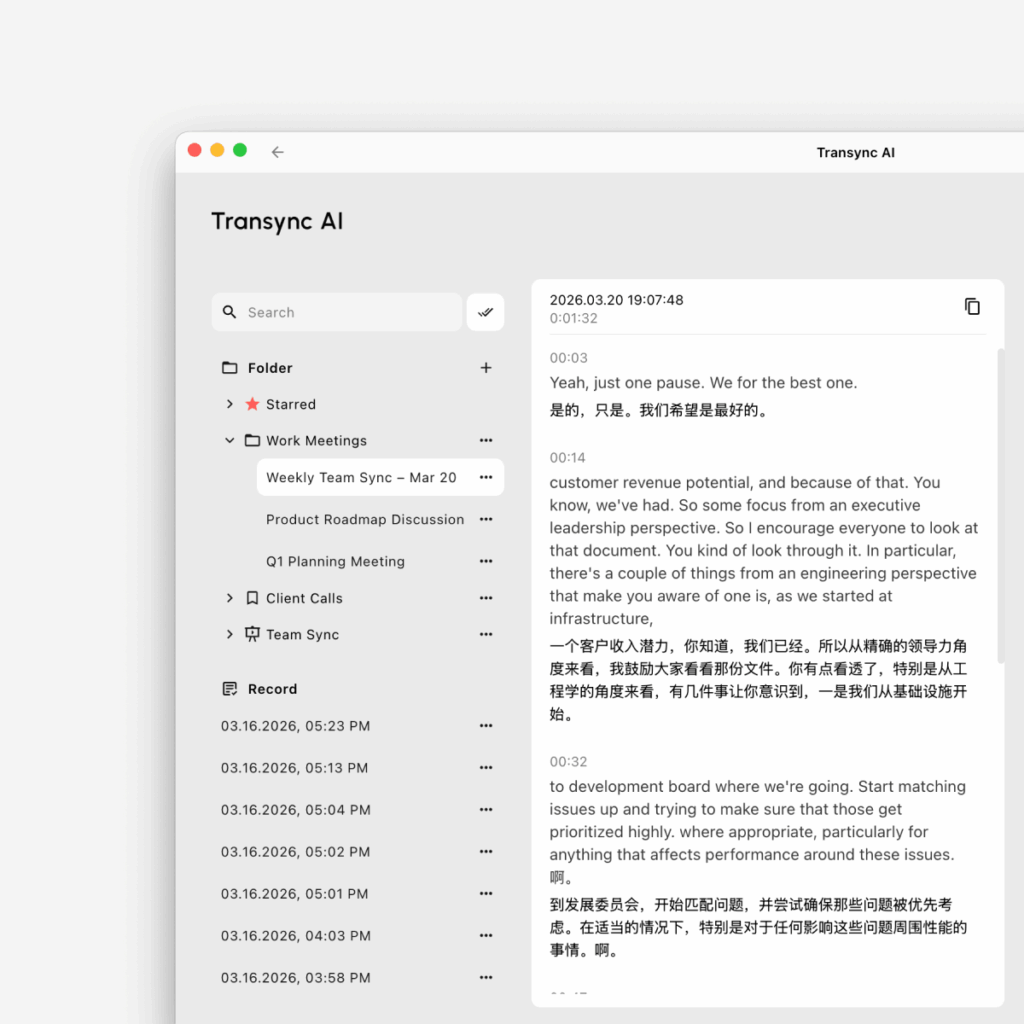
Best for: Global clinics and remote specialists needing zero-latency bilingual communication and strict HIPAA-level data privacy.
G2 Rating: N/A (Emerging Leader)
Transync AI is a powerful standalone translation and transcription software driven by an end-to-end speech large model. For doctors conducting cross-border telemedicine, this app offers a near-zero latency dual-screen display, making bilingual patient consultations seamless without requiring unstable third-party plug-ins.
Key features:
- Instant Multilingual Processing: Delivers seamless AI Real-time translation that instantly detects spoken languages during a consultation. You can review all Supported languages online.
- Meeting Compatibility: Operating entirely as a standalone application, it provides flawless AI Live Meeting Translation for Zoom, Teams, and Google Meet directly alongside your telehealth platform.
- Clinical Summaries: Features built-in AI Meeting Notes to accurately capture symptoms, prescriptions, and action items during virtual visits.
- Contextual Medical Accuracy: Utilizing the AI Assistant Keywords Context, doctors can define complex pharmaceutical terms or rare disease names to boost transcription accuracy to over 95%.
Pros:
- Operates smoothly as a standalone app, never interfering with secure telemedicine software.
- Uncompromising patient data privacy (data is never used for AI training), which is detailed thoroughly in their Compliance Report.
Cons:
- Text translation via copying and pasting patient files is not supported.
Pricing: A free tier offers 40 minutes upon sign-up. Flexible Pricing starts at $8.99/month, making it accessible for independent practitioners.
Final verdict:
For seamless multinational telehealth sessions, read the Quickstart guide. Hospitals needing unified billing can explore the Enterprise plan and the comprehensive Enterprise guide.
2. Otter (Otter.ai)
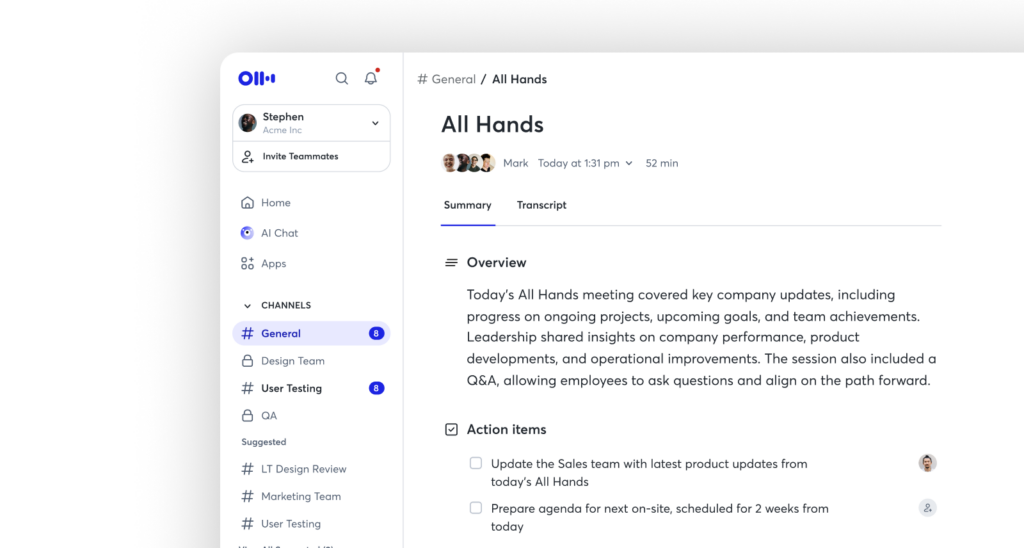
Best for: Real-time transcription and AI summaries for hospital administrative meetings and English-speaking patient interviews.
G2 Rating: 4.4/5
Otter is an incredibly popular AI note-taking tool. While not exclusively built for clinical diagnoses, its robust live capture makes it a powerhouse for documenting internal hospital board meetings, psychiatric interviews, and medical administration.
Key features:
- OtterPilot: Automatically joins scheduled calendar events to record audio and generate structured notes.
- Custom Vocabulary: Medical professionals can teach the AI specific anatomical terms to improve accuracy over time.
Pros:
- Fantastic automated workflow for busy hospital administrators.
- Easily generates post-meeting action items for clinical staff.
Cons:
- Highly limited language support; it struggles with non-English consultations.
Pricing: Free plan available. Paid plans start at $8.33/user/month.
Final verdict: Otter is perfect for healthcare administrators who operate primarily in English and want their internal meetings automatically documented.
3. Maestra AI
Best for: Medical training, continuing medical education (CME) webinars, and generating subtitles.
G2 Rating: 4.8/5
Maestra AI merges real-time note-taking, transcription, and translation. It is highly effective for medical institutions that need to present bilingual subtitles to diverse groups of medical students or global research teams.
Key features:
- Bilingual Live Captions: Displays both the source medical lecture and the translated text simultaneously.
- Video Dubbing: Upload a pre-recorded surgical tutorial and instantly generate a natural-sounding voiceover in multiple languages.
Pros:
- Very clean workspace for collaboratively editing complex medical transcripts.
- Excellent for localizing medical training videos.
Cons:
- Relies on a credit-based system for longer transcriptions, which can be expensive for lengthy medical courses.
Pricing: Paid plans start at $39 per month billed annually.
Final verdict: Maestra AI is highly reliable if your primary goal is generating transcripts and subtitles for medical webinars or educational content.
4. DeepL

Best for: Unmatched accuracy in translating medical journals, research papers, and patient history files.
G2 Rating: 4.6/5
When it comes to written medical texts, DeepL utilizes proprietary neural networks to deliver translations that capture the rigid, formal nuances required in the healthcare industry.
Key features:
- Deep Customization: Maintain consistent medical terminology using extensive shared glossaries across your research department.
- Document Translation: Translate full PDFs of clinical trial results while keeping the original formatting intact.
Pros:
- Industry-leading textual accuracy for complex medical phrasing.
- High-tier enterprise plans ensure strict data confidentiality.
Cons:
- Lacks a live voice bot for real-time patient consultation transcription.
Pricing: Free version available. Pro plans start at $8.74/user/month.
Final verdict: For non-real-time, high-precision translation of medical documents and lab reports, DeepL remains the absolute best choice.
5. Wordly
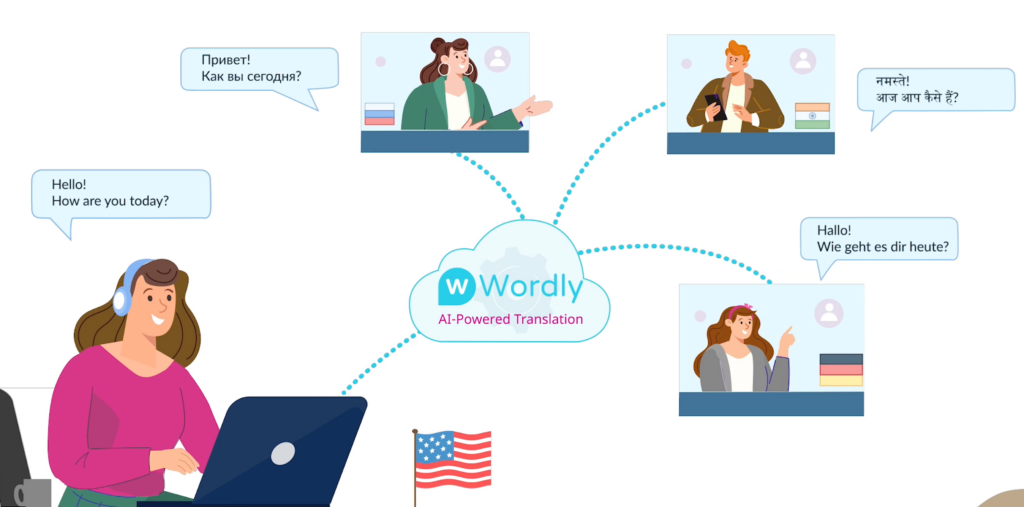
Best for: Large-scale virtual healthcare summits, global medical expos, and hybrid medical conferences.
G2 Rating: 4.6/5
If your pharmaceutical company or medical association is hosting a major global conference, Wordly provides highly scalable AI interpretation and transcription, removing the logistical nightmare of hiring human interpreters.
Key features:
- Instant Access: Attendees simply scan a QR code to join the live translation channel and read the real-time transcript on their smartphones.
- Two-Way Translation: Supports real-time interpretation in over 60 languages simultaneously.
Pros:
- Incredibly scalable, easily providing service for thousands of attending physicians at once.
- Requires zero hardware or software downloads from the attendees.
Cons:
- High barrier to entry regarding cost; it is not designed for one-on-one doctor-patient consultations.
Pricing: Custom packages based on event hours and attendee count.
Final verdict: Wordly is the ultimate choice for medical event organizers who need to provide live transcription and interpretation for massive global audiences.
How to Choose the Right Medical Transcription Software?
When evaluating a medical transcription software in 2026, healthcare providers should ask three vital questions:
- What is your primary clinical setting? If you are translating medical research PDFs, DeepL is unmatched. If you are recording English-only administrative meetings, Otter is highly efficient.
- Do you need live telemedicine compatibility? For cross-border virtual visits with patients, you need a standalone app like Transync AI that runs flawlessly alongside your telehealth video platform without crashing it.
- Is patient data secure? Always look for enterprise-level tools that explicitly state their compliance standards and confirm that your voice data will never be used to train their algorithms.
Conclusion
The medical transcription market trends point towards a future dominated by highly accurate, multilingual AI. Finding the perfect medical transcription software depends on balancing transcription speed, clinical accuracy, and strict workflow compatibility. While Wordly scales beautifully for massive medical expos and DeepL excels in document translation, Transync AI stands out as the most intelligent, standalone solution for global telemedicine and daily bilingual patient consultations. By adopting the right digital assistant, healthcare professionals can focus less on typing notes and more on what truly matters: patient care.
If you want a next-generation experience, Transync AI leads the way with real-time, AI-powered translation that keeps conversations flowing naturally. You can try it free now.