
Can AI translate languages well? Learn what AI can preserve, why correct translations can differ, and when live speech or human review changes the answer.
Can AI translate languages? Đúng. AI tools can translate written messages, produce translated subtitles, and deliver spoken translations during conversations. The important qualification is that the product must support your language pair and the type of input you are using. A useful result also needs to preserve the intended meaning—not merely sound natural.
That does not mean the translation should copy every word. Languages organize ideas differently. A good translation may change the verb, sentence structure, or imagery while keeping the message intact.
Three answers make the capability easier to understand: yes, AI can move beyond word substitution; yes, more than one translation can be correct; and yes, AI can support live communication, provided the conversation has a way to handle uncertainty. Each answer also explains a different limit.
1 Can AI Translate Languages Without Copying Every Word
Yes. Translating is not the same as replacing each source word with a dictionary equivalent. Consider a simple statement:
Tiếng Anh: Ana is 30 years old.
Tiếng Tây Ban Nha: Ana tiene 30 años.
The Spanish sentence uses tiene, a form of the verb meaning “to have,” rather than copying the English construction with “is.” Ana’s age remains the same. The grammar changes because natural Spanish expresses that fact differently.
Or take “I am cold,” meaning that the speaker feels cold:
French: J’ai froid.
Again, French uses a construction with “have.” Judging the translation by whether it preserves the English verb would reward the wrong thing. The target sentence should communicate the same bodily sensation.
These are illustrative examples, not outputs from a product test. They show what a capable translation needs to achieve. Different wording can preserve meaning; similar wording does not prove that meaning survived.
So, can AI translate languages beyond individual words? Modern translation models can use surrounding language to generate a target sentence rather than assemble a fixed word-for-word substitution. They learn patterns from training data, and some products also accept additional context or approved terminology. The amount and kind of context vary by system.
That ability has a boundary. Changing grammatical form is not permission to change a fact. “Ana is 30” should not become “Ana is nearly 30,” and a translation should not add her occupation just because it seems plausible.
Natural Wording Must Preserve the Source
A translation has at least two separate qualities: whether it carries the source meaning and whether it reads naturally. An elegant sentence can still leave out part of the message.
In a 2026 study on machine translation preference optimization, researchers found that the quality-estimation models they evaluated could favor fluent translations containing partial omissions or unsupported additions. That finding concerns the study’s tested systems, not a ranking of the products discussed below.
For the reader asking “can AI translate languages,” the practical lesson is straightforward: assess the relationship between source and target, not just the style of the target. A shorter translation may be perfectly faithful because the target language needs fewer words. It may also be a summary that dropped information. Length alone cannot tell you which.
2 Can AI Translate Languages With More Than One Right Answer
Yes. Translation often involves choosing among valid expressions, not finding one hidden sentence that every translator must reproduce.
Suppose an English-speaking host says, “Please take a seat.” When addressing one adult in French, two possible versions are:
- Formal address: Asseyez-vous, s’il vous plaît.
- Familiar singular address: Assieds-toi, s’il te plaît.
Both politely request the same action. French makes the relationship choice between bạn Và bạn explicit. The familiar version is not inherently rude, and the formal version is not universally better. The appropriate choice depends on the relationship and setting.
The English sentence alone may not reveal which relationship applies. A translator can use surrounding context, but it should not be expected to know facts that neither the text nor the user supplies.
This is why “can AI translate languages naturally” needs an audience as well as a language label. A message for a longtime colleague may differ from a message for a new client, even when both are written in French. Providing “a polite invitation to a first-time visitor” is more useful than asking vaguely for a better translation.
Idioms Can Keep Their Meaning While Changing Their Image
English “It’s raining cats and dogs” can become French “Il pleut des cordes.” The imagery changes, but both describe very heavy rain. A plain “Il pleut très fort” may suit another context better.
Neither version needs animals in the target sentence to preserve the weather report. If the original passage is discussing the English idiom itself, however, the animals become relevant. The translator may need to retain the original expression and explain it.
Purpose changes the right choice. An ordinary conversation needs the weather information; a language lesson may need the metaphor; a subtitle may also have space and timing constraints.
Can AI translate languages creatively without changing the message? It can generate alternatives, but creative rewriting and faithful translation are different requests. Ask for adaptation when you want a slogan or joke reworked for another audience. Ask for a faithful translation when every detail must remain. Do not treat an attractive rewrite as evidence that the original was fully preserved.
3 Can AI Translate Languages While People Are Speaking
Yes, when the product supports live speech translation. That is a different experience from translating a paragraph that has already been written and checked.
A speaker builds meaning over time. The beginning of a sentence may not establish the full idea, and another participant may respond before the translated output is complete. The system needs access to clear speech, while the listener needs a readable or audible result soon enough to participate.
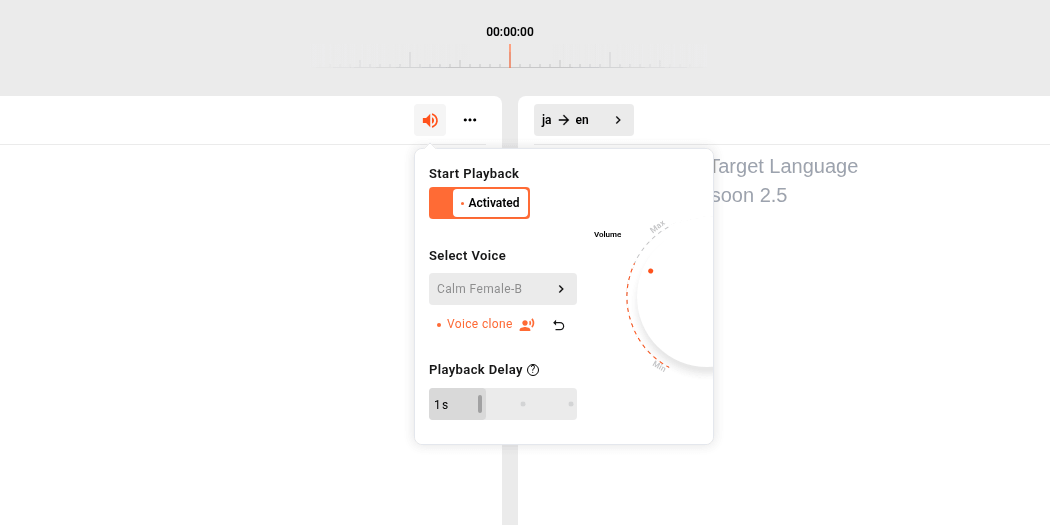
AI đồng bộ cung cấp phiên dịch cuộc họp trực tiếp with bilingual captions. Its phát lại giọng nói đã dịch can read translations aloud when the selected target language supports it. Captions and spoken output are distinct delivery options; hearing playback on your own computer does not establish that remote participants can hear it.
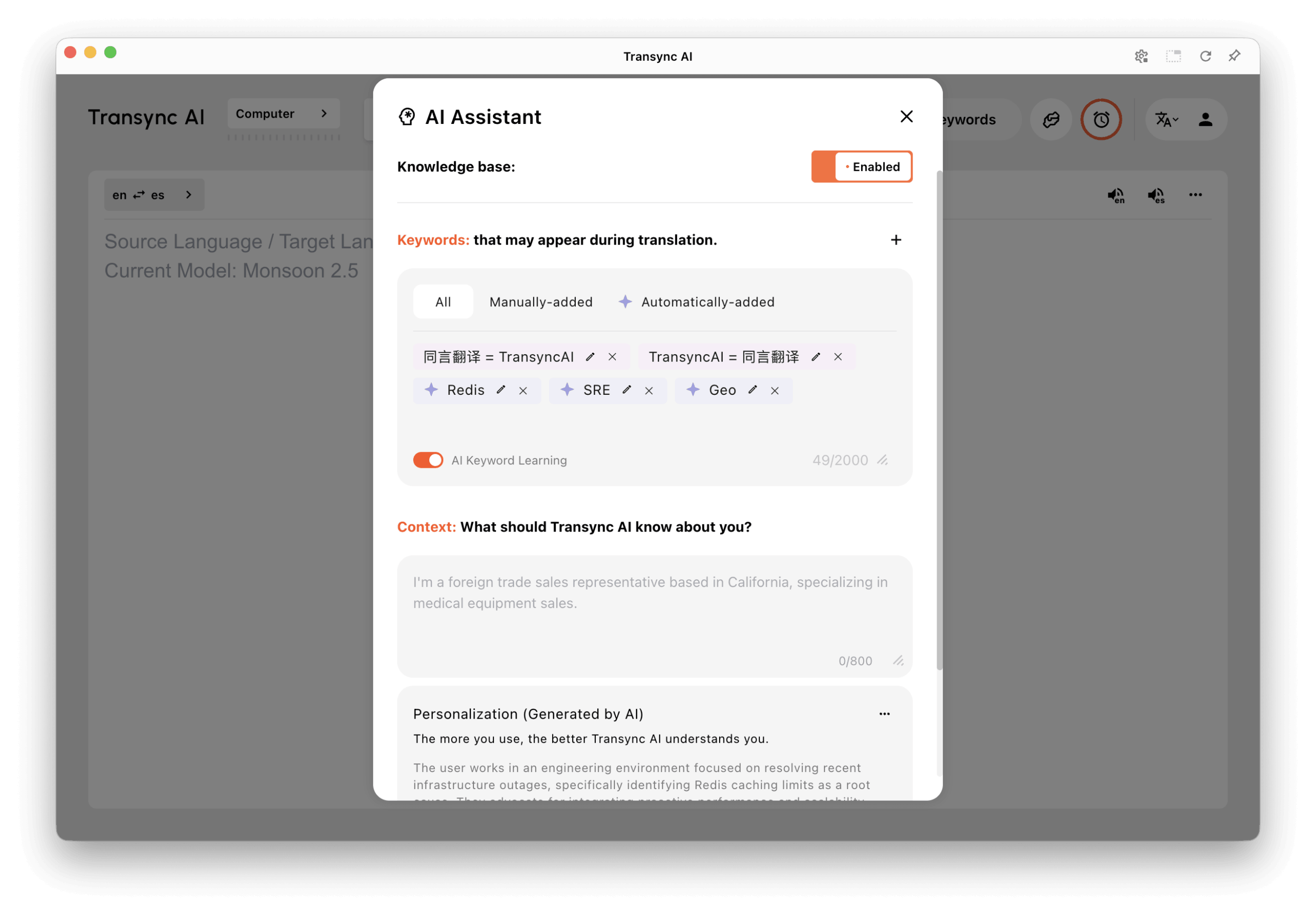
Before the conversation, add relevant names, specialist vocabulary, and meeting background through Từ khóa và bối cảnh in a supported model. During the call, leave room for the listener to ask a question. Context can guide a translation, but a follow-up can reveal what the speaker actually intended.
 Can AI translate languages in a presentation as well as a two-way meeting? AI đồng bộ offers Chế độ trình bày, currently in beta. Attendees join by link, QR code, or Room ID and choose a language enabled by the host. They can read translated text and hear playback when available and enabled. The audience panel does not send their voice into the host’s task, so provide a separate Q&A route.
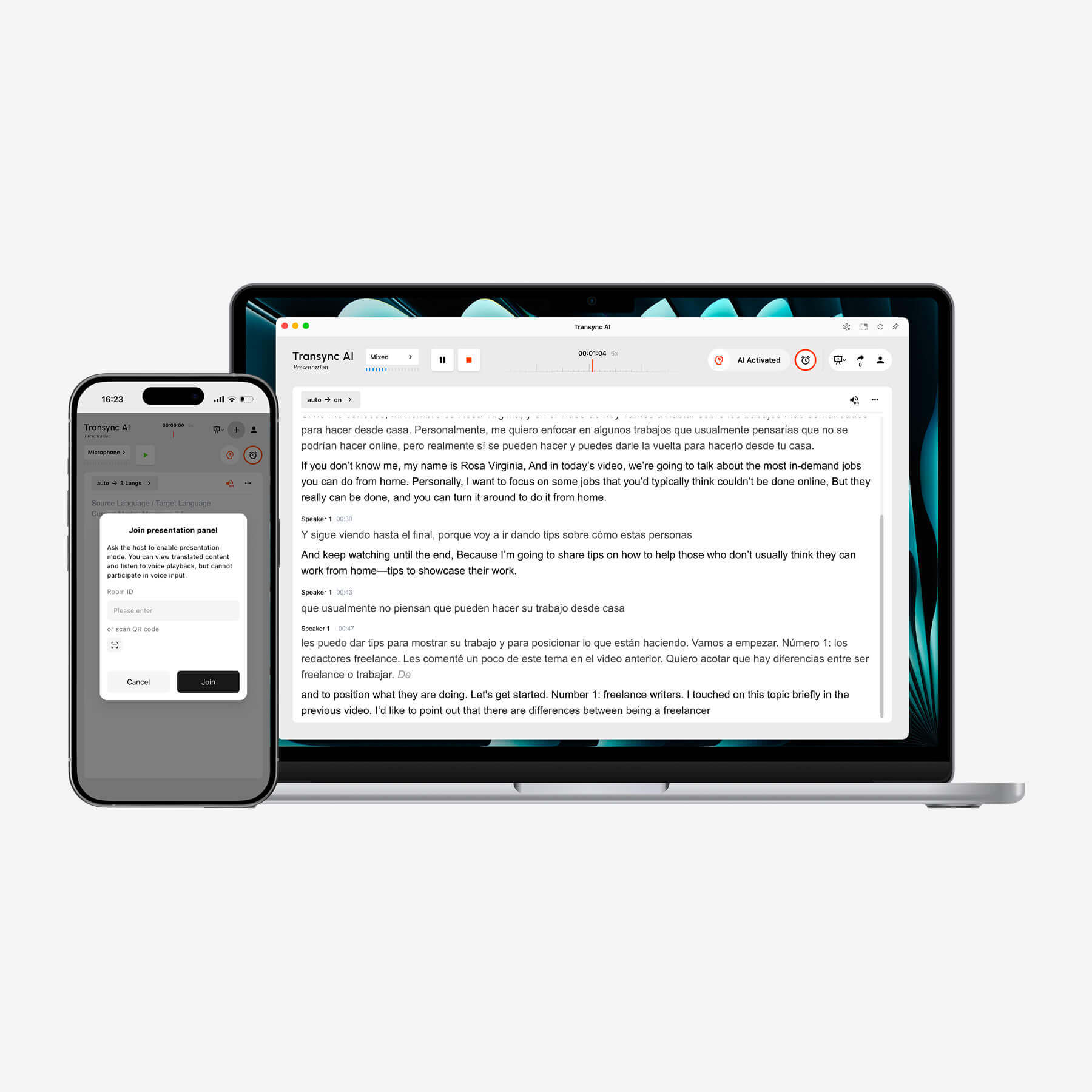
Transync AI hiển thị bản phiên âm song ngữ theo thời gian thực trên máy tính xách tay trong khi thiết bị di động cung cấp các điều khiển trình chiếu.
The essential difference is participation. A translated sentence can be correct while the conversation still fails because the listener cannot receive it, interrupt, or clarify a reference. Translation capability and a working communication setup must come together.
How Current Tools Put These Capabilities to Work
When asking “can AI translate languages,” it helps to see concrete examples rather than assume that every translator works the same way. These are selected workflows, not exhaustive product descriptions or an accuracy leaderboard.
| Sản phẩm | Example workflow | What it makes possible | Nội dung cần đánh giá |
|---|---|---|---|
| Lara Translate | Typed or pasted text to translated text | Compare written wording and choose a translation style | Whether the selected style preserves meaning and fits the audience |
| Maestra | Uploaded media to translated subtitles or dubbed audio | Prepare another-language version of a recording | Transcript, translation, subtitle timing, and final voice output |
| AI đồng bộ | Live speech to bilingual captions and optional translated voice | Follow and respond during meetings, or distribute a presentation to attendees | Audio capture, listener delivery, terminology, and unresolved meaning |
The products have overlapping capabilities. The table highlights a useful route for each, rather than implying that written text, media, and live speech are exclusive to separate brands.
Lara Translate for Exploring Written Wording
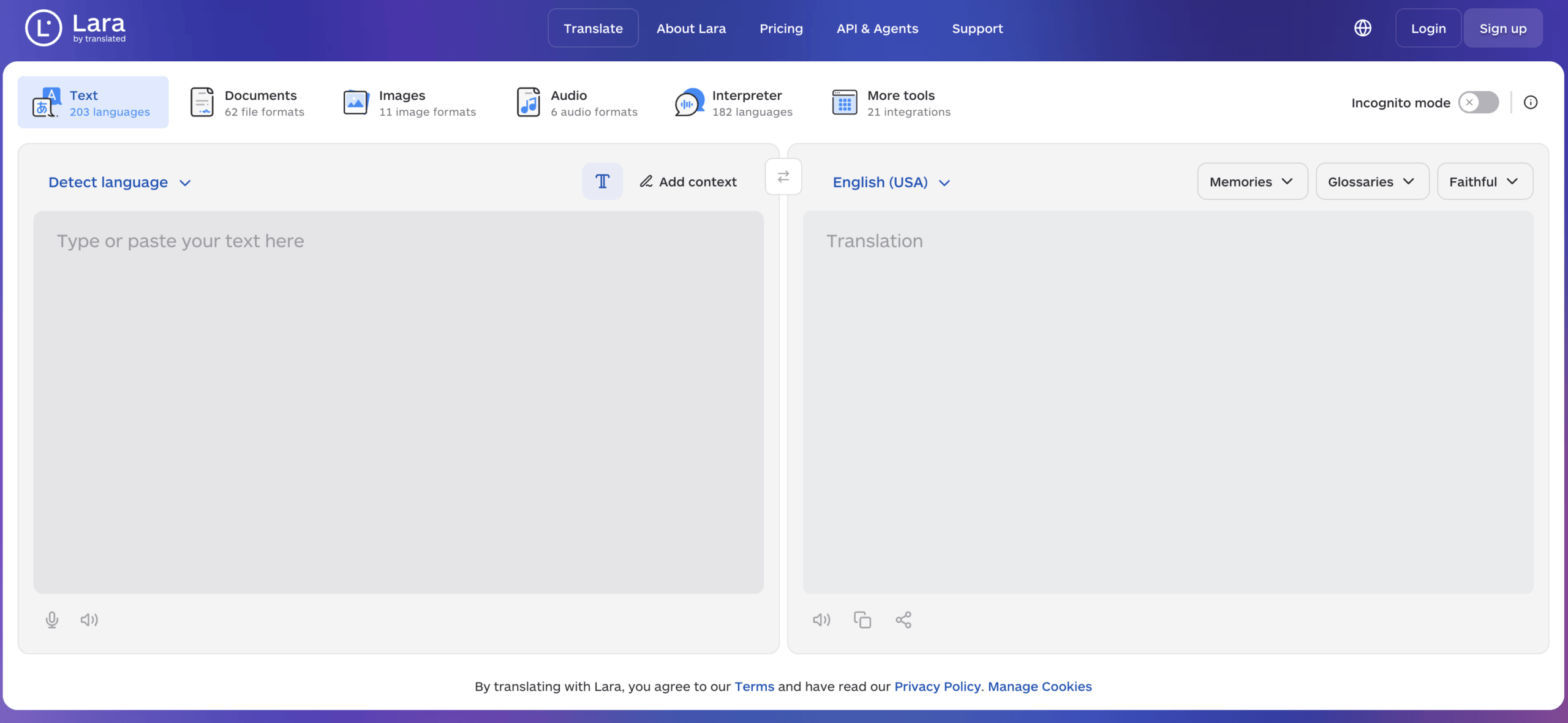
Lara Translate accepts typed or pasted text and offers Faithful, Fluid, and Creative translation styles, along with the option to add context. Those controls make the difference between fidelity and adaptation visible to the user.
Use the style that matches the purpose, then read the result against the source. A more creative setting is not automatically a more accurate one. For important written content, have a suitable bilingual reviewer judge whether an alternative changes only expression or also changes the message.
Maestra for Turning Recordings Into Another Language
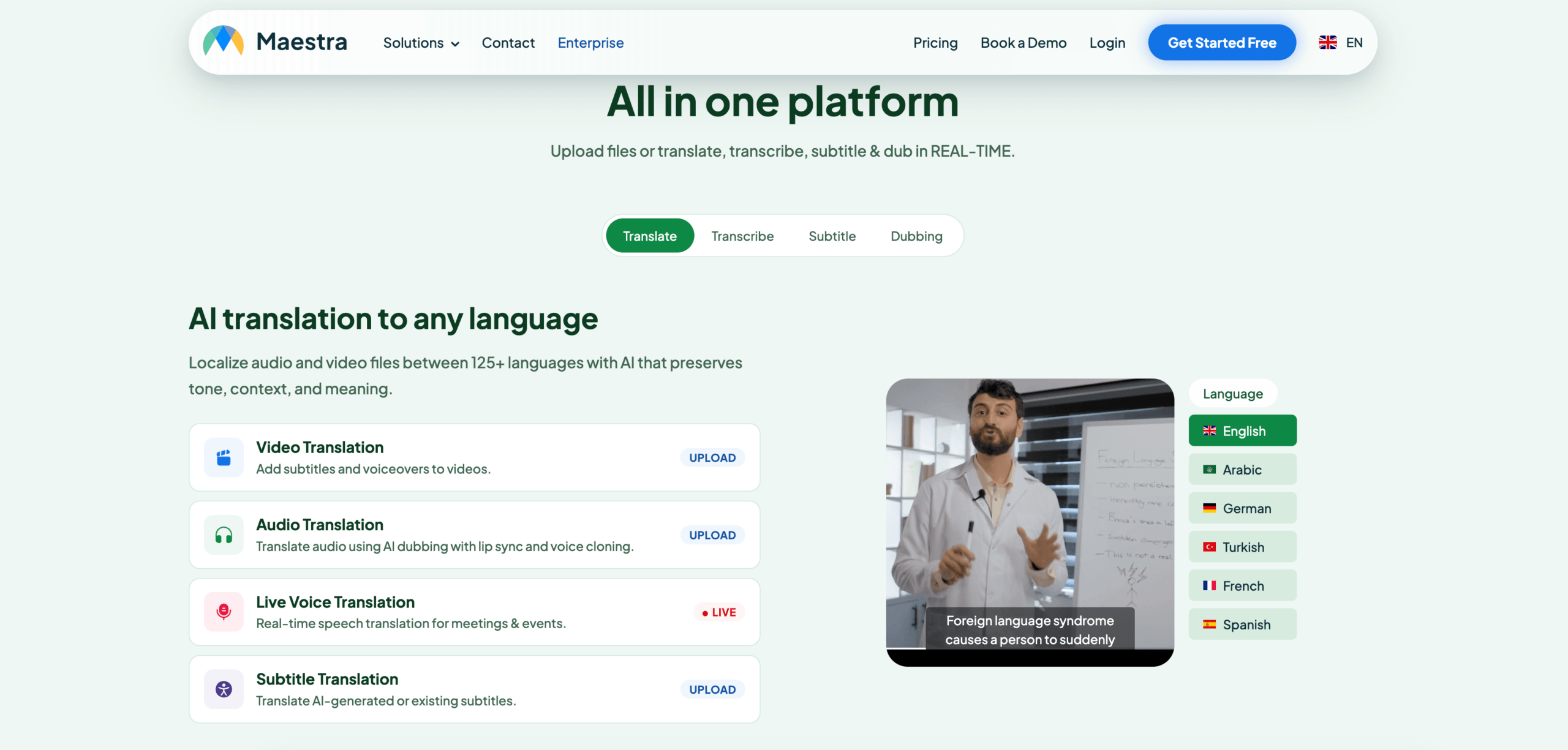
Maestra documents an uploaded-video workflow that creates a transcript and translated text, then allows export as a video with subtitles or a transcription. Its audio dubbing tool can also generate a translated voice track from uploaded audio, with editing and export.
Can AI translate languages in a recorded interview? Yes, but a translated subtitle file and a dubbed recording are different deliverables. Review the original transcript before refining the target text, then inspect the final subtitle timing or audio. Maestra also offers live tools; this example focuses on its recording-production route.
AI đồng bộ for Keeping a Live Discussion Usable
Chọn AI đồng bộ when people need to understand one another while the discussion is still happening. Test the actual microphone, incoming meeting audio, and listener playback before an important session. It requires an internet connection; a live setup is not a substitute for a document or media-editing workflow.
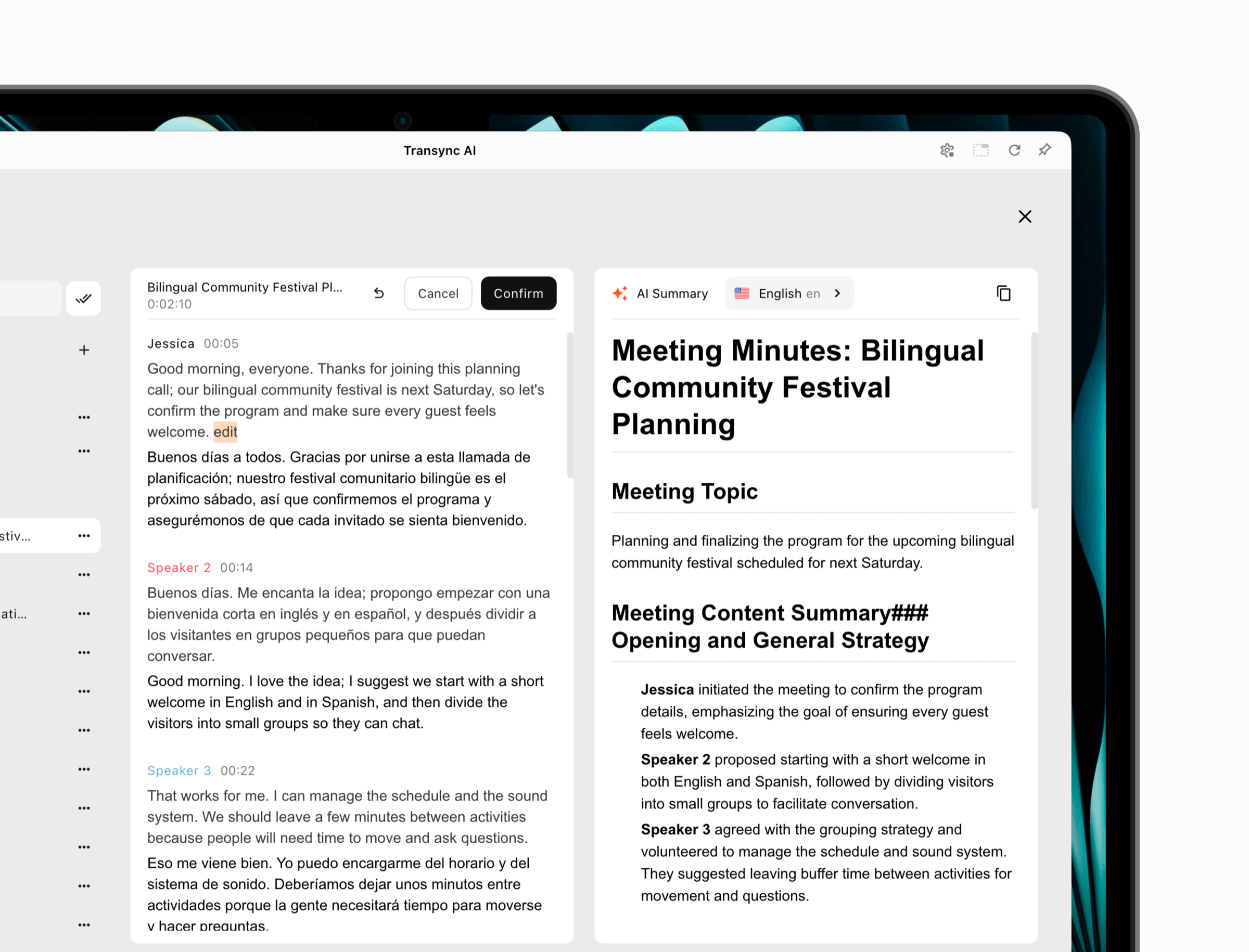
Afterward, the Biên bản cuộc họp AI workflow lets you correct source or translated text in the saved record before generating a summary. This helps separate the complete conversation from the shorter recap. Check that the recap represents the discussion, rather than treating every summarized sentence as an approved decision.
Hãy dùng thử Transync AI miễn phí
What AI Does Not Decide for You
Can AI translate languages well enough for every purpose? No single answer covers a travel question, a poem, a customer announcement, and a consequential professional instruction.
People still supply the intended audience, explain an ambiguous reference, decide whether humor is appropriate, and approve what can be published. A technically correct translation does not establish that a claim is true or that someone has authorized an action.
Use qualified translators or interpreters when errors could affect rights, health, safety, or other consequential outcomes. For public-facing content, a target-market editor may also be needed. With confidential material, use an approved service and review how content is processed, retained, shared, and deleted. Obtain required consent for live speech processing or recording.
Further Questions
Can AI Translate Languages Equally Well
No. Support and performance vary by product, language direction, domain, and regional variety. Check the actual product’s language coverage rather than assume that a multilingual model supports every language. A language name in a menu does not establish equal quality across every dialect and task.
Does Successful Translation Prove Humanlike Understanding
No. A model can produce useful language without that result establishing humanlike awareness or judgment. Evaluate observable performance: what meaning is preserved, what context is used, and how uncertainty affects the output.
Is a Transcript Already a Translation
Not necessarily. A transcript represents speech as written text in the original language. Translation transfers the message into another language. A product may offer both, but they are different operations and can require separate review.
The Useful Answer Is Yes With a Clear Purpose
Can AI translate languages? Yes—and its value is more interesting than replacing words quickly. It can express the same fact through different grammar, offer wording suited to different audiences, and help people communicate during live conversations.
Decide whether you need understanding, faithful written content, adapted media, or an interactive conversation. Then keep the meaning, audience, and review responsibility clear. The goal is not to make every language look like the source. It is to help another person understand what the source actually meant.