
Best AI translation is revealed by 6 dangerous words: negation, conditions, numbers, names, corrections, and uncertainty. Test tools before trusting them.
Best AI translation is not the output that sounds most fluent. It is the output that preserves the small words and fragile facts capable of reversing a decision: not, unless, 1.5%, a product name, a spoken correction, or the difference between may and will.
Those details are easy to miss in a polished paragraph. They become even harder when the source is noisy speech, a string without context, a video with several speakers, or a meeting that cannot pause for editing.
This guide uses six short lines as a pressure test. Each line targets a different failure mode. The goal is not to manufacture one universal winner, but to show how buyers can recognize the best AI translation for written content, localization, recorded media, live meetings, and consequential communication.
The Six-Line Danger Test
Translate these lines into the real target language your audience uses:
- Do not ship the beta build.
- Ship only if Legal approves the revised terms.
- The discount is 1.5%, not 15%.
- Keep NovaEdge X7 in English.
- Delivery is Tuesday—sorry, Thursday.
- We may launch in May.
The sentences are intentionally short. A system cannot blame a long paragraph for failure. Yet the set contains six difficult requirements: polarity, dependency, quantity, identity, revision, and certainty.
| Danger | What Must Survive | A Plausible Failure | Business Effect |
|---|---|---|---|
| Negation | “Do not” governs “ship” | The target reads “ship” | An unapproved product is released |
| Condition | Approval is required before shipment | The target turns “only if” into a suggestion | A mandatory gate appears optional |
| Number | 1.5% and 15% remain distinct | Decimal or negation is lost | Price or financial decision changes |
| Name | NovaEdge X7 stays exact and untranslated | Name is translated or misrecognized | Brand, model, or searchability breaks |
| Correction | Thursday replaces Tuesday | Both dates remain or Tuesday wins | Team acts on the abandoned date |
| Uncertainty | “May” as a modal differs from “May” as a month | Possibility becomes commitment | Forecast becomes a promise |
If a candidate fails one of these lines, do not average the mistake away with five attractive translations. For many organizations, one reversed instruction matters more than dozens of stylistic improvements.
Why Best AI Translation Rankings Often Mislead
A leaderboard normally compresses translation quality into a single score. The score may be useful for the test set used, but it does not automatically predict performance on your language pair, terminology, audio, file type, audience, or approval process.
The phrase best AI translation also hides several different products:
- an engine that translates text;
- a localization platform that routes content, terminology, review, and releases;
- a dubbing workflow that transcribes, translates, voices, and synchronizes recorded media;
- a live speech tool that must deliver meaning before a conversation moves on;
- a human-led process that uses AI but retains accountable professional review.
The same six-line test should therefore be delivered through the real workflow. A product localization system should receive strings, descriptions, placeholders, and screenshots. A dubbing tool should receive spoken audio. A meeting translator should hear live speech, including the speaker’s correction. Testing everything in a clean text box creates a false comparison.
Danger 1: Negation Can Reverse the Action
In “Do not ship the beta build,” the word not is small, but it carries the decision. A translation that preserves every noun and drops the negation is not 90% correct; it is operationally wrong.
Negation can be lost when audio clips, speakers overlap, automatic punctuation divides a sentence badly, or the target language expresses prohibition differently. It can also become unclear when a source sentence contains several negatives, such as “We cannot say that no approval is required.”
To test the best AI translation candidate, use several forms:
- Do not publish this version.
- Never send the unredacted file.
- No refund is required unless the order is canceled.
- We are not saying the launch is canceled.
Mark polarity as a critical field in the review. The reviewer should answer one binary question before evaluating style: does the target require, permit, or prohibit the same action as the source?
For live speech, ask the speaker to emphasize the wrong word once and then repeat the sentence naturally. This reveals whether the system depends on unusually careful dictation.
Danger 2: Conditions Define When a Rule Applies
“Ship only if Legal approves the revised terms” contains a dependency. Approval is not background information; it is the gate that must be satisfied before shipment.
Words such as if, unless, except, provided that, only when, and until define the shape of a rule. A target can be fluent while reversing the relationship between the condition and the action.
Best AI translation testing should include nested conditions, but the first test should remain easy to diagnose. Ask a target-language reviewer:
- Is Legal approval mandatory?
- Can shipment occur before approval?
- Which terms must be approved?
If the reviewer cannot answer all three from the target alone, the sentence has not carried the decision successfully.
Conditions also expose missing context in interface strings. A button labeled “Continue” may be harmless, while an error explaining that submission is allowed only after consent has legal and product consequences. Treat these strings differently even if they contain the same number of words.
Danger 3: Numbers Must Be Checked as Data
“The discount is 1.5%, not 15%” tests digits, a decimal separator, a percentage sign, and a spoken correction of scale. The target should not merely look similar; it must preserve the exact quantity and contrast.
Numbers fail in several ways:
- speech recognition confuses fifteen with fifty;
- decimal conventions change between locales;
- dates switch day and month order;
- units remain attached to the wrong value;
- currency symbols move or become ambiguous;
- a range becomes a single value;
- the number survives but the accompanying not disappears.
The best AI translation workflow treats numbers as structured facts. Review every amount, date, unit, dosage, model number, percentage, and version separately from prose. When a platform provides quality checks for extra or missing numbers, use them—but do not assume a mechanical check can determine whether the correct number has the correct meaning.
For speech, include pairs such as 13/30, 14/40, and 15/50 in the real accent and room conditions. For files, test decimal separators, nonbreaking spaces, tables, and exported formatting. For software, protect variables and placeholders as well as visible digits.
Danger 4: Names and Terms Carry Identity
“Keep NovaEdge X7 in English” tests whether the workflow can preserve an invented product name and its model code. A general engine has no reason to know whether NovaEdge is a brand, a feature, or two ordinary words.
Real projects contain employee names, customer names, drug names, abbreviations, part numbers, campaign labels, and industry terminology. Some should be transliterated, some translated, some localized differently by market, and some preserved exactly.
A glossary or term base helps the best AI translation process express those decisions in advance. Each entry should include more than a source-target pair when ambiguity is possible:
- approved target or “do not translate” instruction;
- definition and subject area;
- capitalization and spacing;
- prohibited alternative;
- pronunciation guidance for spoken output;
- owner and review date.
Then test inflected or spoken forms instead of only exact matches. A system may preserve NovaEdge X7 when typed cleanly yet misrecognize it in a noisy meeting or apply a glossary term incorrectly when grammar changes.
Danger 5: Spoken Corrections Must Replace Old Information
“Delivery is Tuesday—sorry, Thursday” is simple for a human listener. The speaker abandons Tuesday and replaces it with Thursday. Automated pipelines may retain both dates, translate the correction marker poorly, or summarize the first date as the decision.
This failure matters because natural speech is full of repairs:
- “Send twenty—make that twelve—units.”
- “The meeting is in Room B, sorry, Room D.”
- “We will launch in June—actually, keep the July date.”
- “The client approved it—no, the client asked for changes.”
For recorded media, the editor can inspect the source transcript, correct the target script, and regenerate a segment before publication. For a live meeting, participants need the correction quickly enough to update their understanding. The meeting record should also reflect the final statement rather than treating every utterance as an equal decision.
Best AI translation assessment should therefore include revision behavior. Check the live caption, translated voice, transcript, summary, and action item separately. A correction that appears in captions but disappears from the meeting notes remains a workflow failure.
Danger 6: “May” Can Express Time or Uncertainty
“We may launch in May” contains the same three letters twice with different functions. The first may communicates possibility; the second May names a month. The target must preserve both meanings without converting a forecast into a commitment.
Modality is one of the quietest sources of business risk. Compare:
- We may launch. Possibility.
- We can launch. Ability or permission, depending on context.
- We should launch. Recommendation or expectation.
- We must launch. Obligation.
- We will launch. Commitment or prediction.
A polished target that upgrades may to will can misstate management intent. The best AI translation candidate should preserve uncertainty, obligation, and confidence—not merely the topic of the sentence.
Test hedges such as likely, approximately, subject to, preliminary, and not yet confirmed. Ask a reviewer to label each target statement as possible, recommended, required, or committed. A changed label is a meaning error.
Best AI Translation Product Comparison
| Product or Route | Strongest Environment | How the Six-Line Test Should Be Run | Useful Controls | Important Boundary |
|---|---|---|---|---|
| Phrase | Structured content and localization workflows | Import strings or files with context, terminology, numbers, and tags | Term bases, translation memory, QA, engine routing, and review workflows | Requires deliberate setup and ownership; not a live meeting tool |
| ElevenLabs | Prerecorded audio and video dubbing | Record the six lines with several speakers and corrections, then review transcript, translation, and dub | Speaker handling, translated audio, segment review, and downloadable media | Dubbing is for processed media, not a live multilingual meeting |
| Transync AI | Live meetings, conversations, and presentations | Speak the lines naturally in the real room or meeting platform | Bilingual captions, translated voice, keywords/context, notes, and audience access | Requires a network and is not a document or frame-level video editor |
| Qualified human-led workflow | High-stakes or publication-critical communication | Provide the complete brief, source, target locale, references, and risk requirements | Domain judgment, clarification, revision, and accountable sign-off | Availability, language direction, specialization, time, and cost must be planned |
The comparison is not a four-way race on identical input. It shows where each route can provide the evidence and controls needed to catch dangerous language. The best AI translation choice is the one shaped around the real source and the consequence of a missed detail.
Phrase for Governed Written Content
Phrase is a localization platform that can combine machine-translation routing, translation memories, term bases, quality evaluation, workflow automation, and human review. Its TMS quality checks can inspect issues such as extra numbers, terminology, spelling, empty targets, inconsistent translations, and tags.
That makes Phrase relevant when the six dangerous lines belong to a repeatable content operation: product strings, support content, structured documents, or multilingual releases. A term base can protect NovaEdge X7, while QA can flag numerical and formal inconsistencies. Translation memory can preserve approved segments across projects.
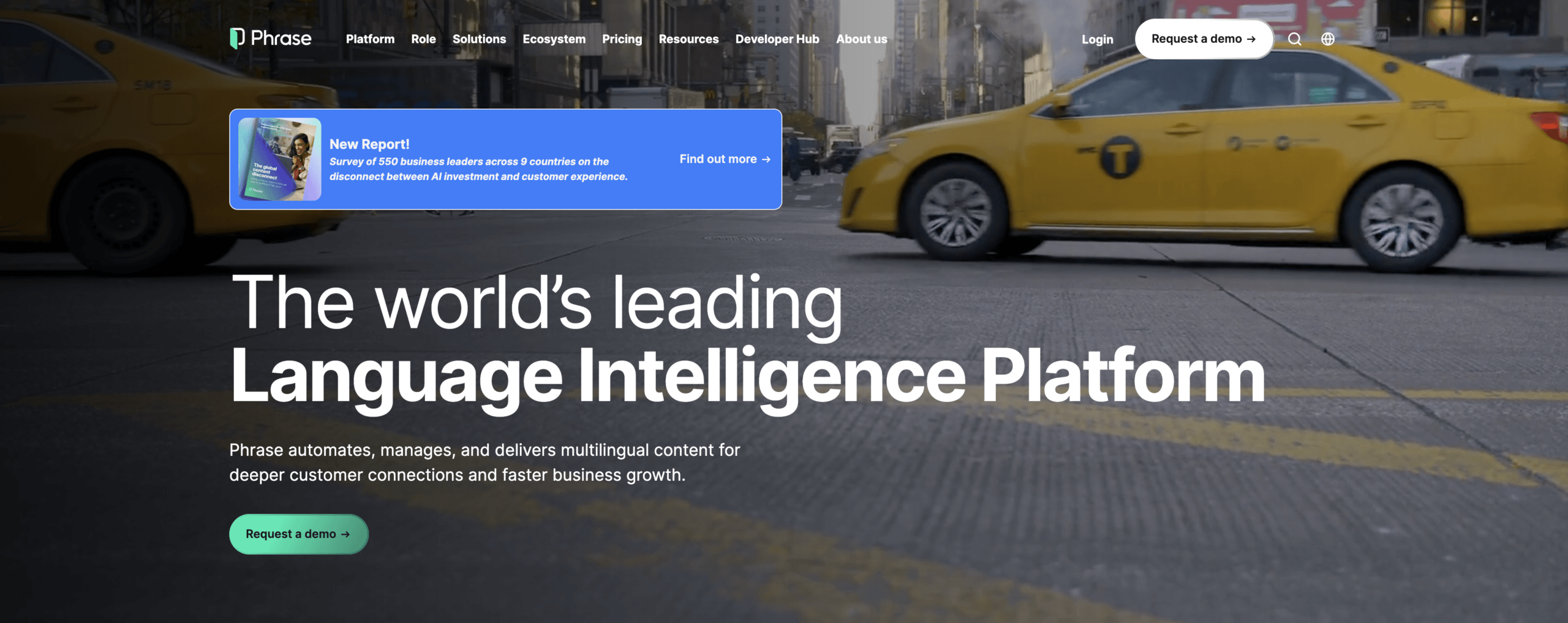
The controls do not guarantee that every condition or modality is semantically correct. A team must configure checks, maintain trusted linguistic resources, supply context, assign reviewers, and decide which warnings may be ignored. Poor translations placed into a master translation memory can make future output consistently wrong.
Choose Phrase when best AI translation means a governed, reusable written-content pipeline rather than a one-off text answer.
ElevenLabs for Recorded Dubbing
ElevenLabs provides dubbing for uploaded audio and video, combining transcription, translation, speaker detection, and generated target-language audio. Its current documentation describes support for more than 90 languages and workflows for reviewing or refining dubbed content, with capabilities varying by model, interface, API, and plan.
The six-line test becomes an audio-production exercise here. Use two speakers, natural pace, a brief interruption, and the Tuesday-to-Thursday correction. Inspect the source transcript before judging the translated voice. Then confirm that the correct number, product name, final date, and degree of certainty survive in the dub.
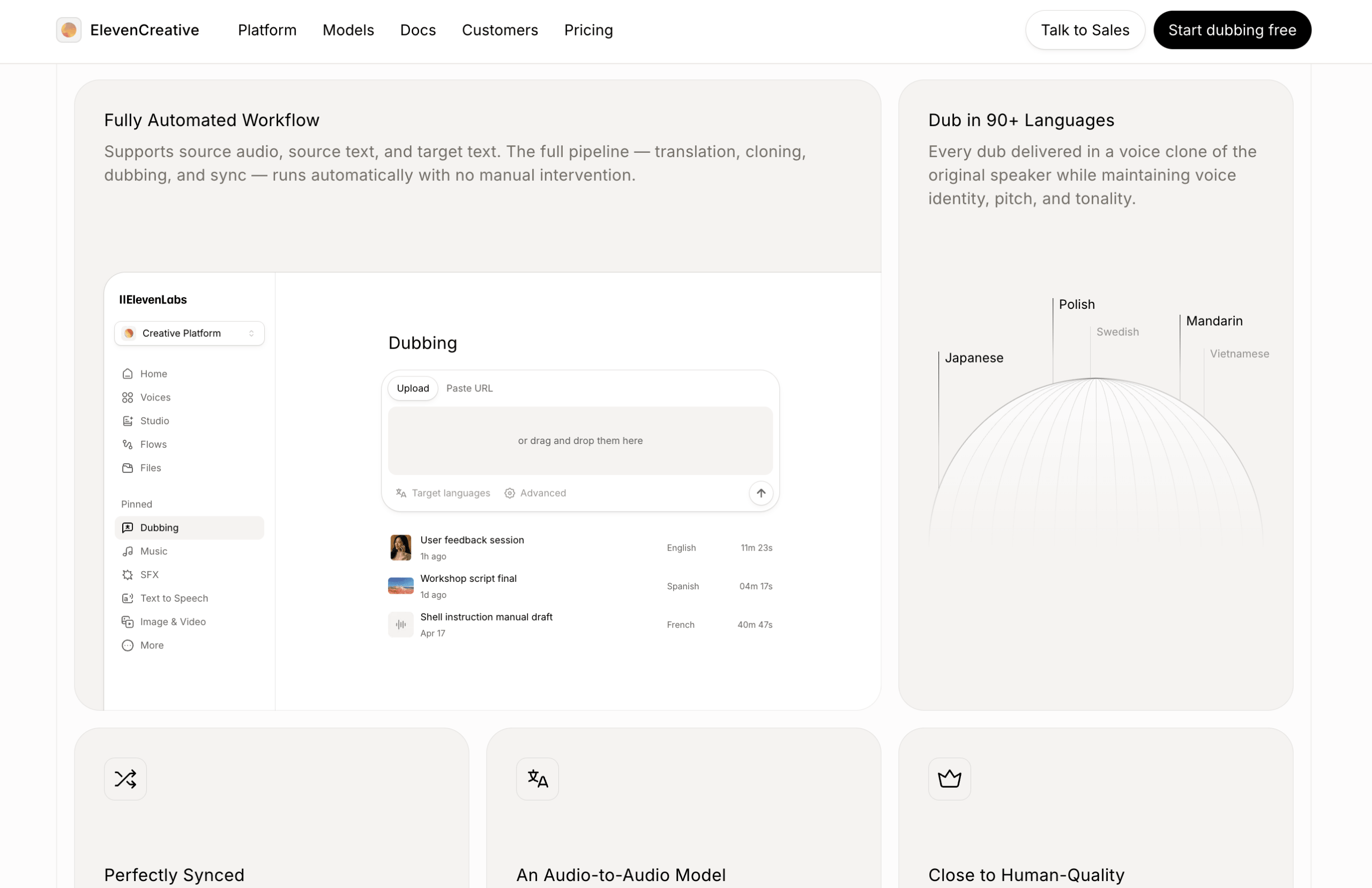
Natural voice does not prove accurate language. A convincing dub can make a wrong date or reversed instruction sound more authoritative. Review the transcript, translation, speaker assignment, pronunciation, timing, and final audio on the devices the audience will use.
ElevenLabs is a route for prerecorded media. Its official documentation states that real-time or live dubbing is not currently available, so it should not be substituted for an interactive meeting workflow.
Transync AI for Live Decisions
Transync AI is designed for live meeting translation, providing bilingual captions and translated playback through its AI voice translator. Before the test, the host can add NovaEdge X7 and other specialist terms through AI Assistant Keywords and Context. Afterward, AI meeting notes provide another artifact to review.
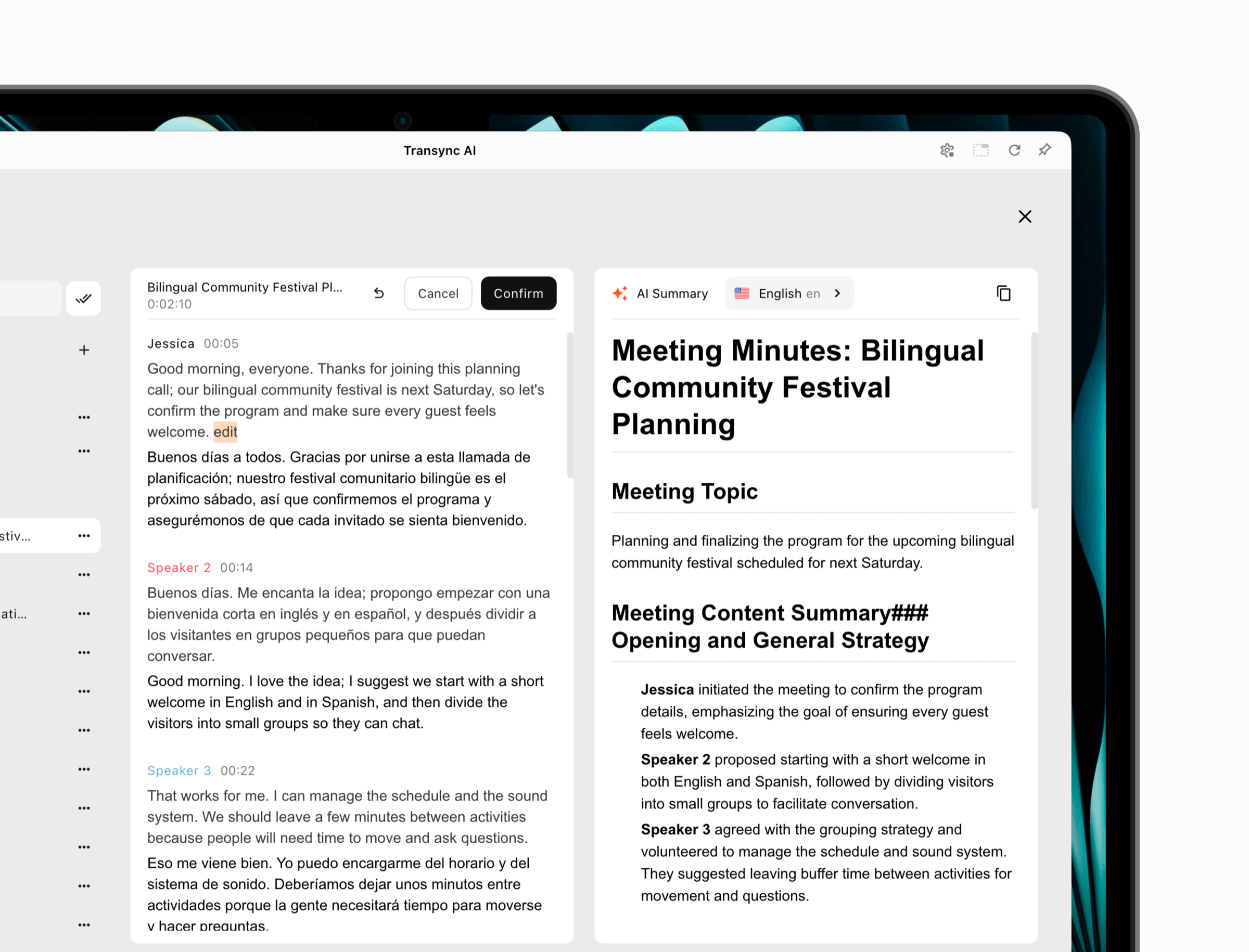 Run the six lines through the actual microphone, computer-audio route, meeting platform, accent, and network that the team will use. Watch both source and target captions. Ask a target-language participant whether the action, condition, quantity, name, final correction, and uncertainty were clear soon enough to respond.
For a keynote, training session, class, or company briefing, Transync AI Presentation Mode lets attendees join by link, QR code, or Room ID and select from languages enabled by the host. They can read or listen on their own devices when voice playback is available, but the audience panel does not send voice into the host’s translation task.
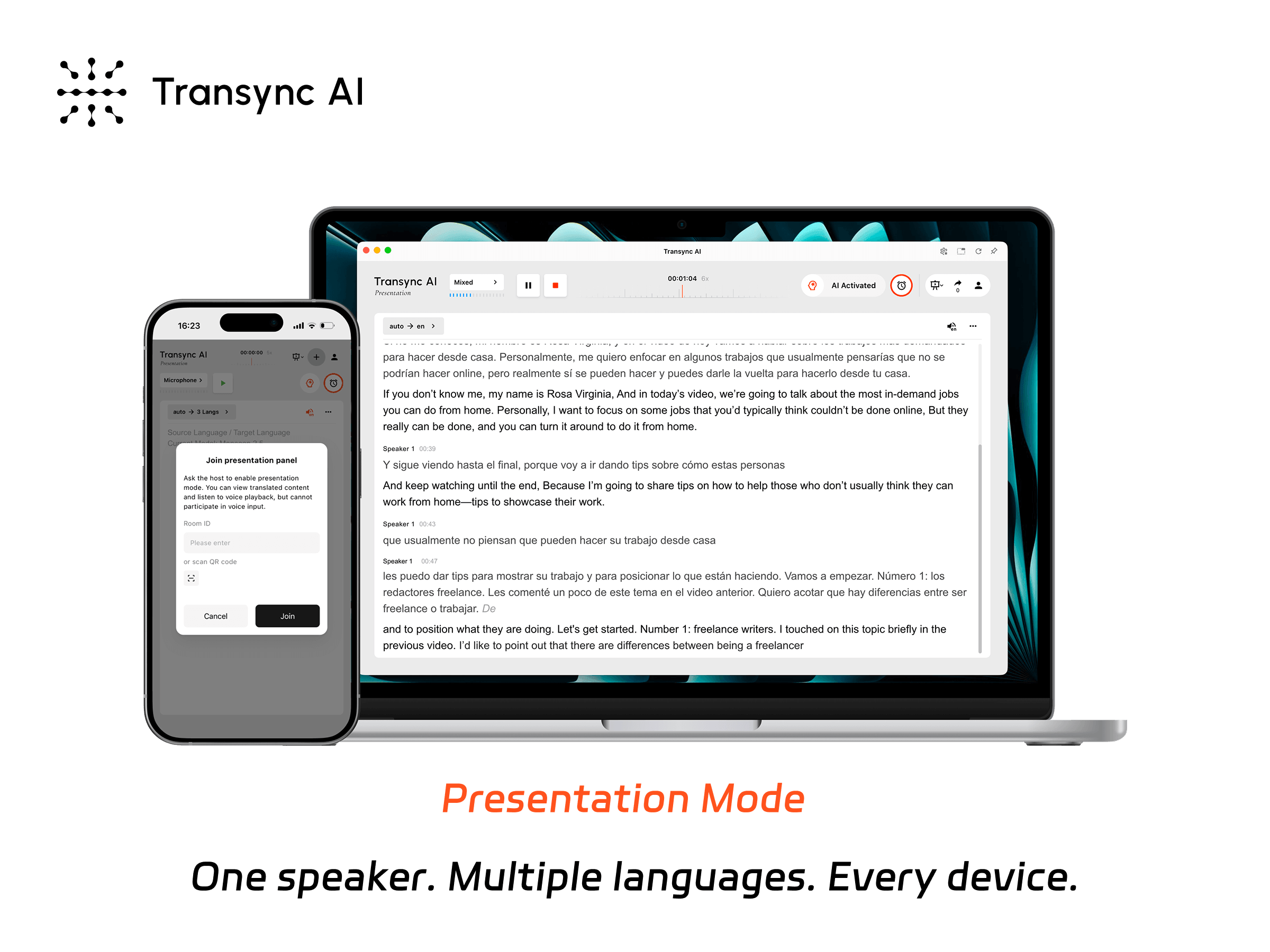
Presentation Mode lets one host share live translation with audience members on their own devices.
The best AI translation for a live decision must arrive while clarification is still possible. Transync AI supports that interaction, but it requires a network and is not an offline translator, file-localization system, or post-production dubbing editor. Important decisions should still be checked against the bilingual record.
When a Human Professional Must Own the Result
AI can accelerate drafts, structured localization, recorded-media production, and routine multilingual meetings. It should not erase the distinction between assistance and accountable approval.
Use appropriately qualified translators or interpreters when mistakes could materially affect legal rights, clinical care, physical safety, immigration status, financial decisions, regulated disclosures, employment, or public reputation. Written translators and spoken-language interpreters perform different services; select the correct language direction, specialty, credentials, and delivery mode.
The professional should receive the source, target locale, audience, purpose, references, terminology, deadline, and required output. Ask how revision works, whether a second linguist is required, how questions are documented, and who signs off.
In this environment, best AI translation may be the technology-assisted draft inside a human-led quality process—not the unreviewed machine output itself.
Build a Danger-Word Ledger
A useful test record should not reduce every issue to “good” or “bad.” Create one row for each fragile fact and track where it failed.
| Test Item | Source Evidence | Target Meaning | Severity | Recoverable Before Use? | Where Detected | Required Fix |
|---|---|---|---|---|---|---|
| Do not ship | Prohibition in source | Same prohibition required | Critical | Yes/No | Caption, file, dub, or review | Correct polarity and retest |
| Only if approved | Mandatory dependency | Approval remains a gate | Critical | Yes/No | Translation or reviewer answer | Restore condition |
| 1.5%, not 15% | Exact percentage and contrast | Same value and contrast | Critical | Yes/No | QA, transcript, or target | Correct number and negation |
| NovaEdge X7 | Approved brand/model | Exact protected form | Major | Yes/No | Glossary or listening review | Add term/pronunciation rule |
| Thursday correction | Final spoken date | Thursday only as decision | Critical | Yes/No | Transcript, dub, caption, or notes | Replace superseded date |
| may / May | Possibility plus month | Both functions preserved | Major | Yes/No | Linguistic review | Restore modality or date |
Use three severity levels:
- Critical: changes an action, condition, amount, deadline, right, or safety meaning;
- Major: damages terminology, identity, audience fit, or usability;
- Minor: affects style without changing the operational meaning.
Do not calculate one average until critical failures have been separated. The candidate with the smoothest style but two critical reversals should not defeat a less elegant output that preserves every decision.
The ledger also reveals whether the problem arose in speech recognition, translation, voice generation, display, summarization, or human approval. That diagnosis tells the team what to change.
A Fair Test Protocol
To compare best AI translation candidates fairly, keep the conditions consistent while preserving the real workflow.
Prepare One Context Card
Define the audience, target locale, product name, legal team, percentage format, date convention, and intended uncertainty. State that NovaEdge X7 must remain in English. Do not add different hints for different candidates unless the workflow itself limits available context.
Use Native Reviewers
Ask a qualified target-language reviewer to explain each sentence in plain language. The reviewer should identify the required action, approval gate, percentage, product name, final date, and confidence level without seeing the source answer sheet.
Test Normal and Adverse Input
For text, include a clean file and a layout with tags, tables, or placeholders. For recorded media, add two speakers and background sound. For a meeting, test the real room, headset, system audio, and one natural interruption. Record which condition caused each error.
Retest After Correction
Add a glossary entry, improve the source, change the microphone, correct the transcript, or assign human review. Then run the same danger item again. The best AI translation workflow should make important errors visible and prevent approved corrections from disappearing downstream.
Date the Result
Models, features, language coverage, and plans change. Record the product, plan, interface, language pair, devices, test date, and reviewer. A result without this information is difficult to reproduce and should not become a permanent claim that one product is “most accurate.”
Privacy and Security Checks
The six-line sample is fictional, but production data may include personal information, contracts, unreleased products, customer calls, medical details, or copyrighted media. Before uploading real content, inspect the current terms, privacy materials, retention and deletion controls, training policy, processing locations, subprocessors, access controls, and plan-specific security features.
Ask where source files, recordings, transcripts, translations, generated voices, terminology, and meeting notes are stored. Decide who can upload, edit, approve, download, share, and delete them. Confirm whether the organization needs a data-processing agreement, single sign-on, audit evidence, regional controls, or additional consent.
Best AI translation is not operationally best if its data route cannot pass the buyer’s security, legal, or procurement review.
Frequently Asked Questions
What is the best AI translation tool overall?
There is no universal winner across text, software localization, recorded media, live speech, and high-stakes professional work. Phrase is shaped for governed localization, ElevenLabs for prerecorded dubbing, and Transync AI for live meetings and presentations. Select by source, deliverable, timing, review, and risk.
How can I test best AI translation accuracy?
Test negation, conditions, numbers, names, corrections, and uncertainty in your real language pair and format. Ask a qualified target-language reviewer to recover the intended action and facts. Count critical meaning reversals separately from stylistic edits.
Is fluent AI translation usually accurate?
Fluency and accuracy overlap, but they are not identical. A sentence can sound natural while dropping not, changing a number, strengthening may into will, or retaining an abandoned date. Review fragile facts before judging style.
What is the best AI translation for software localization?
Phrase is a strong candidate when teams need machine-translation routing, translation memory, term bases, QA, automation, and review in a repeatable localization workflow. The team still needs context, trusted resources, reviewers, and in-product testing.
What is the best AI translation for video dubbing?
ElevenLabs is designed to translate and dub prerecorded audio or video. Review the source transcript, target script, names, numbers, corrections, speaker assignment, timing, and final audio. Its dubbing workflow is not live meeting translation.
What is the best AI translation for live meetings?
Transync AI is designed for real-time multilingual meetings with bilingual captions, translated voice, keywords and context, and meeting notes. Test the real microphone, audio route, network, language pair, and terminology before an important call.
Can AI replace a professional translator or interpreter?
AI can accelerate many routine tasks, but a qualified professional should lead or approve communication when errors could materially affect rights, health, safety, compliance, finances, or reputation. Translation covers written content; interpreting covers spoken or signed communication.
The Winner Is the Detail That Survives
Best AI translation is not proven by the most confident demo or the longest language list. It is proven when the intended action, condition, number, identity, correction, and degree of certainty arrive intact in the form the recipient can actually use.
Run the six dangerous lines before trusting a platform with the real launch, price, contract, video, or meeting. Keep a ledger of critical failures, trace each error to its stage, and retest after correction. That is the standard behind a credible best AI translation claim.
When the small words survive, the larger promise of best AI translation becomes much more credible.