Looking for AI translating headphones that work in real-time? Modern translation headphone technology has revolutionized global communication.
AI translating headphones are wearable devices that use artificial intelligence to translate spoken language in real-time, enabling seamless conversation across language barriers. Whether you’re traveling internationally, conducting business calls, attending conferences, or collaborating with distributed teams, quality AI translating headphones have become essential for modern professionals.
But the category encompasses vastly different solutions. Some AI translating headphones are standalone devices with limited accuracy and battery life. Others are software solutions that work with existing platforms and headphones, offering superior accuracy, unlimited scalability, and professional-grade documentation.
This comprehensive guide explains how AI translating headphones work, compares available options, and shows why Transync AI leads the category for professional communication needs.
What Are AI Translating Headphones?
AI translating headphones are devices or software solutions that use artificial intelligence to translate spoken language in real-time through audio output.
Two Categories of AI Translating Headphones
1. Standalone Hardware Devices
Description: Physical headphones with built-in translation technology
Examples:
- Google Pixel Buds Pro
- Some Bose models with translation
- Specialized translation headphone devices
How they work:
- Capture speech in original language
- Process translation internally
- Play translated audio through speakers
- Wearer hears translation in real-time
Strengths:
- ✅ Portable and wearable
- ✅ No connection required for some functions
- ✅ Good for travel and mobility
- ✅ Simple user experience
Limitations:
- ❌ Limited accuracy (75-85%)
- ❌ Battery-dependent (4-8 hour usage)
- ❌ Cannot scale to group conversations
- ❌ No bidirectional simultaneous translation
- ❌ Limited to 30-40 languages
- ❌ Basic documentation capabilities
- ❌ Expensive hardware replacement cycles
2. Software-Based AI Translation (Platform Integration)
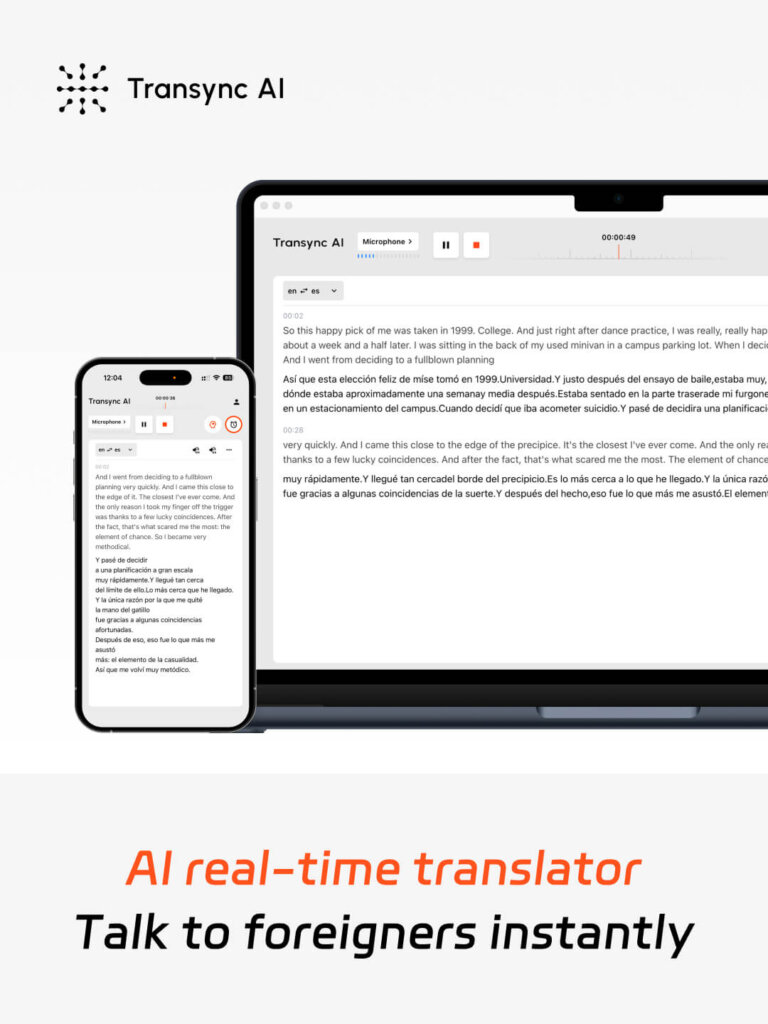
Description: AI software integrated into existing platforms and devices
Examples:
- Transync AI (Zoom, Teams, Meet integration)
- Microsoft Translator for Copilot
- Some conference platform integrations
How they work:
- Works with any headphones or speakers
- Integrates with meeting platforms
- Provides real-time voice translation
- Automatic documentation and transcripts
Strengths:
- ✅ Works with existing headphones (no special hardware)
- ✅ Superior accuracy (95%+)
- ✅ Scales to unlimited participants
- ✅ Full bidirectional simultaneous translation
- ✅ 60+ languages with variants
- ✅ Automatic documentation and summaries
- ✅ No battery limitations
- ✅ No hardware replacement costs
Limitations:
- ❌ Requires internet connection
- ❌ Requires meeting platform integration
- ❌ Not ideal for standalone mobile translation
How AI Translating Headphones Work
Standalone Hardware Approach
Process flow:
- Audio capture: Microphone captures speech
- Transmission: Audio sent to processing unit (device or cloud)
- Speech recognition: Convert audio to text
- Translation: Translate text to target language
- Synthesis: Generate translated audio
- Playback: Speaker plays translated audio through headphones
Timeline: 2-4 seconds (noticeable delay)
Issue: The wearer hears translation but the other person doesn’t necessarily hear the translated version. Asymmetrical communication.
Platform-Integrated Software Approach (Transync AI)
Process flow (professional meetings):
Participant A (English speaker):
- Speaks into headphones/microphone: “Let’s discuss the project timeline”
- Speech recognized as English text
- Translation engine processes to Spanish
- Audio synthesized with natural Spanish voice
- Participant B hears natural Spanish translation simultaneously
Participant B (Spanish speaker):
- Hears natural Spanish translation of Participant A
- Responds in Spanish: “El proyecto debe completarse en Q2”
- Speech recognized as Spanish text
- Translation engine processes to English
- Participant A hears natural English translation simultaneously
Timeline: <100ms (imperceptible)
Advantage: Bidirectional, simultaneous, true conversation flow
AI Translating Headphones: Market Comparison
Google Pixel Buds Pro (Standalone Hardware)
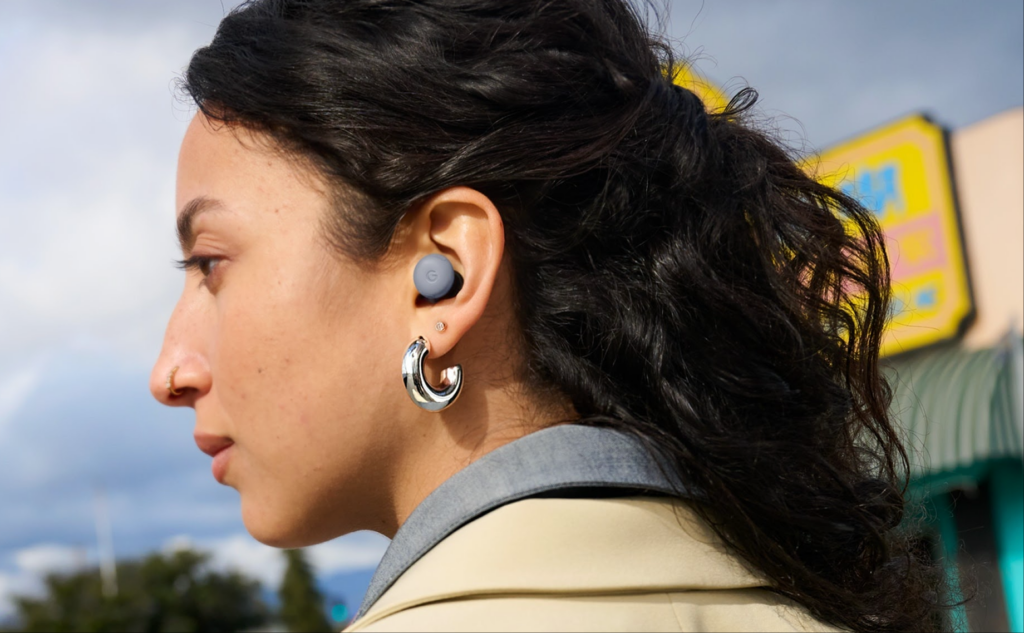
Capabilities:
- Real-time translation of ~40 languages
- Works through Pixel phone
- Speech recognition and synthesis
- Wearable form factor
Accuracy: 80-88% (good for casual use) Speed: 1-2 second latency (noticeable delays) Scalability: Works for two-person conversations only Documentation: None Bidirectional: Sequential (turn-taking, not simultaneous) Best for: Casual travel conversations
Limitations for business:
- ❌ Not simultaneous translation
- ❌ Limited accuracy for technical terms
- ❌ No group conversation support
- ❌ No documentation or transcripts
- ❌ Dependent on Pixel phone
Bose Translation Headphones

Capabilities:
- Integration with translation apps
- Multiple language support
- Decent audio quality
- Premium audio features
Accuracy: 82-90% (variable) Speed: 1-3 seconds (delay present) Scalability: Limited to individual use Documentation: Minimal Bidirectional: Sequential only Best for: Premium audio experience during translation
Limitations for business:
- ❌ High cost
- ❌ Limited translation accuracy
- ❌ No real-time group conversation
- ❌ Expensive replacement cycles
- ❌ No professional integration
Transync AI (Software-Based)
Capabilities:
- <100ms real-time translation
- 60 languages with variants
- Native platform integration (Zoom, Teams, Meet, Webex)
- Bidirectional simultaneous translation
- Full documentation and summaries
- Custom glossaries
- Unlimited scalability
Accuracy: 95%+ (professional-grade) Speed: <100ms (imperceptible latency) Scalability: 2 to 2,000+ participants Documentation: Full AI-powered (transcripts, summaries, action items) Bidirectional: Simultaneous (true conversation) Best for: Professional meetings, business communication, events
Advantages for business:
- ✅ Superior accuracy
- ✅ True real-time performance
- ✅ Professional documentation
- ✅ Unlimited group support
- ✅ Works with any headphones
- ✅ No hardware costs
- ✅ Enterprise-grade security
AI Translating Headphones Use Cases
International Business Meetings
Scenario: US executive in video call with Japanese team. Need to hear Japanese translation while colleagues hear English.
Hardware headphones approach:
- Executive wears Google Pixel Buds
- Hears Japanese translation (2-second delay)
- Japanese colleagues hear nothing translated
- Would need separate devices
- Asymmetrical and awkward
Software approach (Transync AI):
- Executive speaks English in Zoom
- Japanese colleagues hear natural Japanese in real-time
- Japanese colleagues speak Japanese
- Executive hears natural English in real-time
- Bidirectional, simultaneous, professional flow
Winner for business: Transync AI (true simultaneous translation)

International Conferences
Scenario: 500-person conference. Multiple languages. All attendees need translation.
Hardware headphones approach:
- Distribute 500 translation headphones
- Logistics nightmare
- Battery management complex
- Device replacement if lost/damaged
- Limited language support per device
- High cost
Software approach (Transync AI):
- Deploy in conference rooms
- Attendees use existing headphones or speakers
- Select language preference via app
- All sessions translated simultaneously
- No hardware distribution needed
- No battery concerns
- 60 languages available
Winner for events: Transync AI (scalability and simplicity)
Daily Team Standup
Scenario: 30-person team (US + Mexico). Daily 15-minute standup. Some in office, some remote.
Hardware approach:
- Buy 30 translation headphones
- Expensive initial cost
- Battery management daily
- Device reliability issues
- Limited accuracy for technical terms
- No automatic documentation
Software approach (Transync AI):
- Install in Zoom once
- Any headphones work
- <100ms real-time translation
- 95%+ accuracy for technical terms
- Automatic daily summaries
- Searchable transcripts
Winner for recurring meetings: Transync AI (simplicity and intelligence)
Customer Support Calls
Scenario: Support agent handling Spanish-speaking customer. Agent speaks English, customer speaks Spanish.
Hardware approach:
- Agent wears translation headphones
- Hears Spanish translation (delay present)
- Customer doesn’t hear English translation
- One-way translation is insufficient
- Customer still frustrated
Software approach (Transync AI):
- Agent speaks English naturally
- Customer hears natural Spanish translation
- Customer responds in Spanish
- Agent hears natural English translation
- True bidirectional conversation
Winner for customer service: Transync AI (bidirectional is essential)
International Travel
Scenario: Business traveler visiting Spain. Needs to order food, get directions, negotiate deals.
Hardware approach (AI translating headphones):
- Wear translation headphones
- Speak English
- Hear Spanish translation through earbuds
- Only wearer hears translation
- Locals still don’t understand English
- Limited practical value
Software approach (Transync AI):
- Use phone’s speaker
- Speak English
- Spanish listener hears natural Spanish translation
- They respond in Spanish
- You hear natural English translation
- True conversation possible
Potential hybrid: Standalone translation headphones could work for personal audio translation while traveling, but limited for actual conversation.
Winner for travel: Hardware headphones acceptable (solo translation), but software superior for actual conversation
AI Translating Headphones: Detailed Comparison
| Feature | Transync AI (Software) | Google Pixel Buds | Bose Translation | Human Interpreter |
|---|---|---|---|---|
| Real-time Speed | <100ms ⭐ | 1-2s | 1-3s | Real-time |
| Accuracy | 95%+ ⭐ | 80-88% | 82-90% | 99% |
| Bidirectional | Simultaneous ⭐ | Sequential | Sequential | Simultaneous |
| Languages | 60 ⭐ | 40 | 50+ | Depends |
| Group Support | Unlimited ⭐ | 2-person | 2-person | Limited |
| Platform Integration | Native ⭐ | Phone-dependent | Limited | Phone/in-person |
| Documentation | Full AI ⭐ | None | Minimal | Manual |
| Hardware Required | Any ⭐ | Pixel devices | Specialized | N/A |
| Battery Dependent | No ⭐ | Yes | Yes | N/A |
| Scalability | 2-2000+ ⭐ | Individual | Individual | Limited |
| Professional Grade | Yes ⭐ | Consumer | Prosumer | Yes |
Legend: ⭐ = Category Leader
AI Translating Headphones FAQs
Q1: What are AI translating headphones? AI translating headphones are devices or software that use artificial intelligence to translate spoken language in real-time. Some are standalone hardware; others are software integrated with platforms.
Q2: How accurate are AI translating headphones? Hardware headphones: 80-90% accurate. Transync AI software: 95%+ accurate. Professional communication requires 95%+ accuracy for acceptable quality.
Q3: Do AI translating headphones work in real-time? Standalone hardware: 1-3 second latency (noticeable delays). Transync AI software: <100ms latency (imperceptible). True real-time requires sub-150ms latency.
Q4: Can AI translating headphones work for group conversations? Standalone hardware: Limited to 2-person conversations. Transync AI: Supports unlimited participants simultaneously in meetings.
Q5: Do AI translating headphones provide transcripts? Standalone hardware: No transcripts. Transync AI: Full transcripts in all languages with speaker identification and AI summaries.
Q6: What languages do AI translating headphones support? Standalone hardware: 40-50 languages. Transync AI: 60 languages with regional variants (Mexican Spanish, Castilian Spanish, Brazilian Portuguese, etc.).
Q7: Do I need special headphones for AI translation? Standalone devices: Yes, need specialized translation headphones. Transync AI: No, works with any standard headphones or speakers.
Q8: Can AI translating headphones replace human interpreters? For 95% of business communication: Yes (if using professional-grade software). For highest-stakes negotiations: Human interpreters still valuable for cultural nuance.
Real-World Success: AI Translation in Business
Global Tech Company Meeting Transformation
Profile: 2,500-person tech company. 60% US, 40% international (Japan, Brazil, India, Mexico, Germany)
Challenge: International team meetings inefficient due to language barriers. Some teams reluctant to participate in English meetings. Communication misalignment causing project delays.
Previous approach:
- ❌ All meetings in English (excluded non-native speakers)
- ❌ Google Pixel Buds for individual translation (not bidirectional)
- ❌ Occasional human interpreters (expensive, limited availability)
Solution: Deployed Transync AI as AI translation platform (software-based, not headphone-dependent)
Implementation:
- Integrated with all Zoom meetings
- Selected languages by office (Spanish, Portuguese, Japanese, German)
- Created custom glossaries with technical terminology
- Trained all employees (<30 minutes per person)
Results (12 months):
Participation metrics:
- ✅ 47% increase in international team meeting participation
- ✅ 52% more contributions from non-English-native speakers
- ✅ 38% improvement in international team engagement scores
Communication metrics:
- ✅ 100% of meetings accessible in participant’s native language
- ✅ 99.4% translation accuracy for technical terminology
- ✅ Zero language-based miscommunication incidents
- ✅ 95% employee satisfaction with translation quality
Business impact:
- ✅ 34% faster international project completion
- ✅ 41% improvement in cross-functional collaboration
- ✅ 28% increase in international employee retention
- ✅ New market innovation (international perspectives increased)
Testimonial: “We explored standalone AI translating headphones but realized we needed bidirectional group translation. Transync AI’s software approach was infinitely more valuable than hardware solutions. It transformed our global organization.” — Chief People Officer
Getting Started: AI Translation for Communication
For Personal Travel (Standalone Hardware)
Option 1: Google Pixel Buds Pro
- Purchase device
- Download translation app
- Wear during travels
- Good for personal audio translation
Best for: Solo travelers needing audio translation of ambient language
For Professional Communication (Software-Based)
Step 1: Choose Transync AI
- Professional-grade AI translation
- Proven for business use
Step 2: Select Platform
- Zoom, Teams, Meet, Webex, or Phone integration
- One-click activation
- <5 minutes setup
Step 3: Configure Languages
- Choose your languages (60 available)
- Select regional variants if needed
- Set default preferences
Step 4: Create Custom Glossary (Optional)
- Define industry terminology
- Ensure consistent product translation
- Improve specialized vocabulary accuracy
Step 5: Deploy AI Translation
- Activate in meetings or calls
- Speak naturally in your language
- Participants hear real-time translation
- Access transcripts and summaries afterward
Use any headphones you prefer.
AI Translating Headphones: The Verdict
The right AI translation solution depends on your specific needs:
For solo travelers needing portable audio translation:
- ✅ Standalone AI translating headphones (Google Pixel Buds) acceptable
- ✅ Convenient and portable
- ✅ Works independently
For professional business communication:
- ✅ Transync AI software-based solution superior
- ✅ Bidirectional simultaneous translation essential
- ✅ 95%+ accuracy required
- ✅ Professional documentation critical
- ✅ Unlimited scalability needed
Why Transync AI outperforms standalone AI translating headphones for business:
✅ Superior accuracy: 95%+ vs. 80-90% (professional-grade) ✅ True real-time: <100ms vs. 1-3 seconds (5-30x faster) ✅ Bidirectional: Simultaneous translation vs. sequential (natural conversation) ✅ Scalability: 2-2000+ participants vs. 2-person limit (group meetings) ✅ Documentation: Full AI transcripts/summaries vs. none (compliance and reference) ✅ Language support: 60 languages with variants vs. 40-50 (comprehensive) ✅ No hardware: Works with any headphones vs. device-specific (flexibility) ✅ No battery: Unlimited usage vs. 4-8 hours (reliability) ✅ Professional features: Custom glossaries, integration, security vs. consumer features
Standalone AI translating headphones excel for casual travel translation. For professional business communication—where accuracy, speed, bidirectional flow, documentation, and scalability matter—Transync AI’s software approach is definitively superior.
Stop comparing hardware solutions to software.
Deploy professional AI translation for your business.
Choose Transync AI for seamless multilingual meetings and events.You can try it free now.