

See how speech to speech translation works through 5 stages, compare leading tools, and choose the right option for conversations, meetings, and presentations.
Speech to speech translation feels like one action: someone talks in one language, and a listener hears another. Behind that moment is a five-stage relay involving audio capture, speech recognition, language understanding, translation, and synthesized voice delivery. If one runner drops the baton, even an excellent translation model cannot rescue the conversation.
This article follows that relay and compares Transync AI, Google Traduction, Microsoft Translator, et Voix de DeepL. Instead of asking which brand is “best” in the abstract, it shows where each one enters the race and which audience it is built to serve.
The short verdict: Google Traduction is convenient for mobile listening and turn-based conversation; Microsoft Translator supports one-device and multi-device exchanges; Voix de DeepL provides enterprise voice products, although its official page currently labels voice-to-voice support for online meetings as “coming soon”; and Transync AI combines live bilingual subtitles with translated voice, meeting context, notes, and audience presentation workflows.
What Is Speech to Speech Translation?
Speech to speech translation converts spoken language into understandable spoken output in another language. A complete system normally has to:
- Capture the speaker’s audio.
- Recognize words and determine when a thought is complete.
- Translate meaning into the target language.
- Generate intelligible speech.
- Deliver that speech to the correct listener without creating echo or confusion.
Some products complete the entire chain. Others stop at translated captions, provide voice only for selected languages, or require a particular device, app, meeting platform, headset, subscription, or audio route. Speech to speech translation is therefore a product capability that must be verified, not inferred from the word “translator.” “Real time” also varies: continuous captions, sentence-by-sentence playback, and turn-based conversation can all be described as live experiences.
| Relay Stage | System Job | Typical Failure | What the User Notices |
|---|---|---|---|
| 1. Capture | Obtain clean microphone or system audio | Noise, echo, wrong input source | Missing or distorted speech |
| 2. Recognize | Convert speech into source text | Names, accents, and numbers misheard | Wrong source transcript |
| 3. Translate | Preserve meaning and context | Literal wording or terminology drift | Fluent but incorrect message |
| 4. Synthesize | Turn translated text into voice | Unnatural pacing or wrong pronunciation | Hard-to-follow audio |
| 5. Deliver | Route output to the intended listener | Feedback loop, muted sharing, long delay | Listener cannot respond naturally |
The most useful speech to speech translation evaluation measures every stage. Listening only to the final voice hides whether a failure began with the microphone, the source transcript, the translation, or playback.
Stage 1: Capture a Voice Worth Translating
The relay begins before AI does anything. A laptop microphone across a noisy conference room receives a different signal from a headset near the speaker’s mouth. Online calls add computer audio, speaker output, screen-sharing settings, virtual microphones, and permission controls.
Use this capture checklist:
- Select the intended microphone rather than the system default by habit.
- Use headphones when translated voice could re-enter the microphone.
- Test computer-audio sharing with a remote participant.
- Reduce music, fan noise, keyboard sound, and side conversations.
- Keep the speaker close enough to the microphone.
- Ask participants not to speak over one another during critical details.
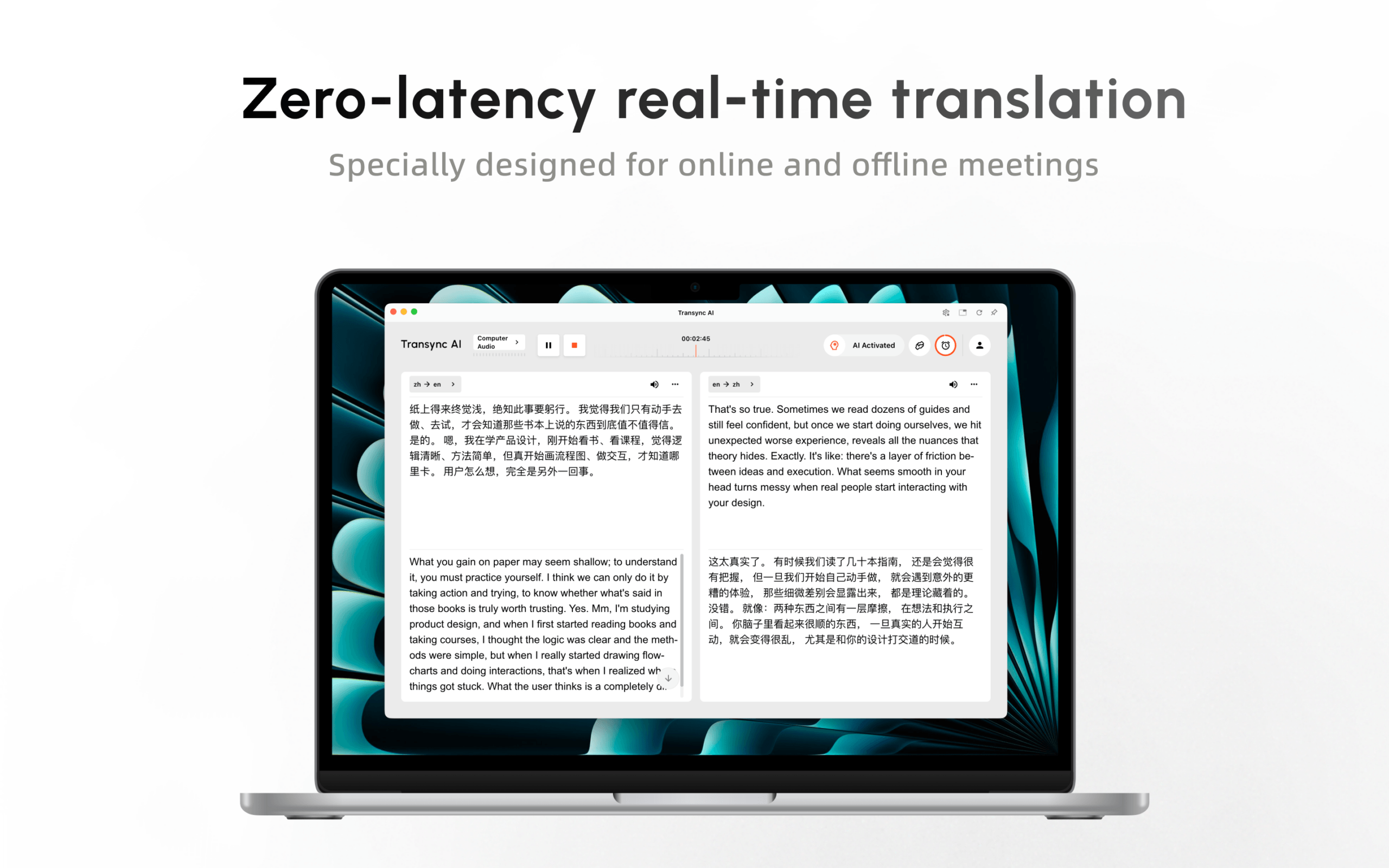
Transync AI can accept microphone input and shared computer audio in traduction de réunion en direct workflows. For a Zoom, Microsoft Teams, Google Meet, WhatsApp, or other call, the host should verify what the remote participant actually receives—not merely what appears on the host’s screen.
Essayez Transync AI gratuitement
A speech to speech translation tool should be tested with the real room and devices. A flawless desk demo says little about a meeting with weak Wi-Fi, several accents, a shared speaker, and two people interrupting.
Stage 2: Recognize the Source Before Translating It
Automatic speech recognition creates the source-language text that translation depends on. In speech to speech translation, this hidden transcript is the foundation of everything the listener hears. If “fifteen” becomes “fifty,” the next stages may faithfully translate the wrong number.
Build a recognition script containing:
- Names of people, products, and places.
- Dates, times, prices, percentages, and model numbers.
- Acronyms and specialist terms.
- A negative statement using “not,” “never,” or “unless.”
- A correction: “Delivery is Tuesday—sorry, Thursday morning.”
- A fast sentence followed by a short answer.
Read the source transcript before scoring the translated speech. This separates recognition accuracy from translation quality and makes vendor comparisons fairer.
Google Traduction currently offers Live Translate on supported Android phones and tablets, with listening, conversation, text-only, custom, and face-to-face modes. Its documentation says the microphone can automatically detect when one language stops and the other begins. Conversation mode plays translations through the phone speaker or headphones, while listening mode is designed for hearing translated output.
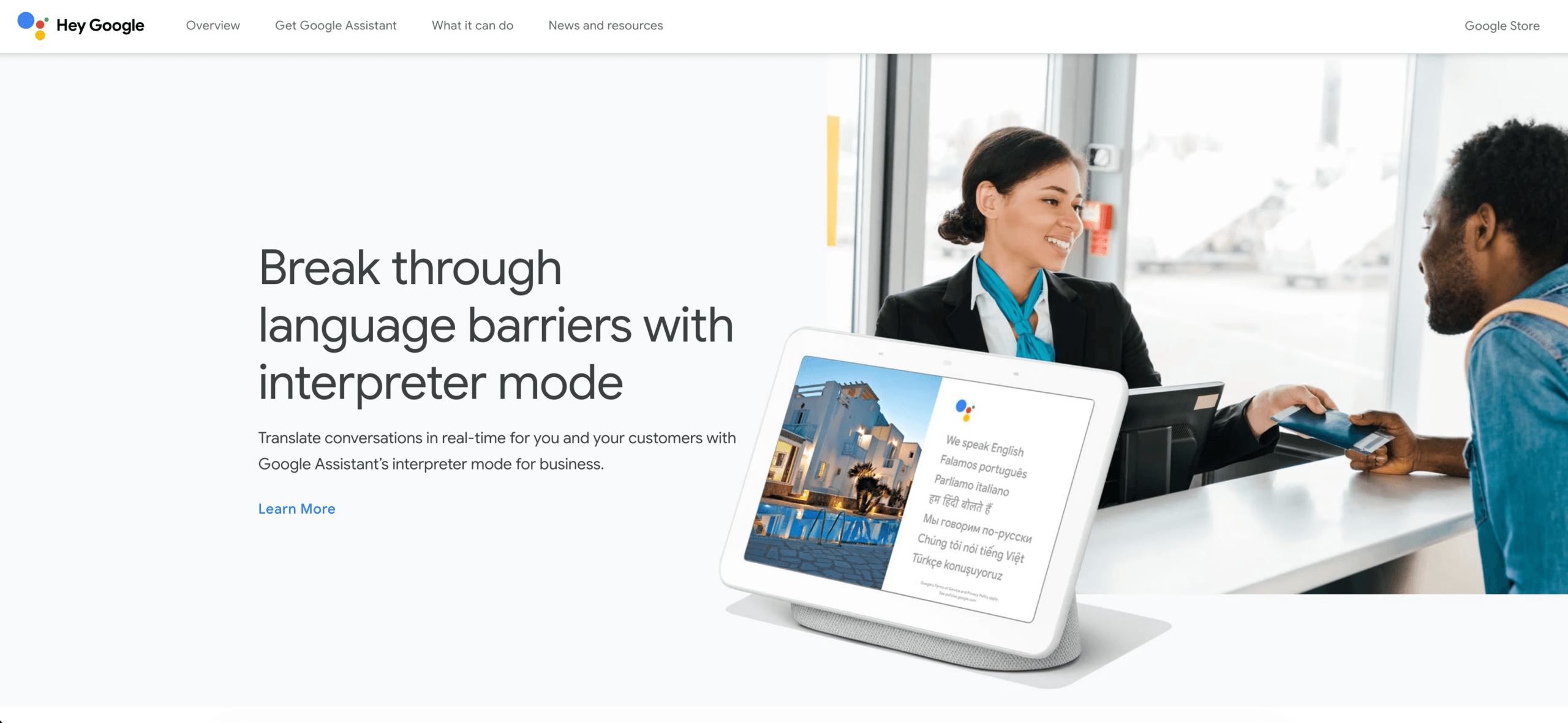
Cela fait Google Traduction a practical speech to speech translation candidate for personal and turn-based mobile use. Teams should still confirm that the required language, mode, device, app version, and headphones work before relying on it.
Stage 3: Translate Meaning, Not Isolated Words
Once speech becomes text, the system must preserve intent. That is difficult when a word has several meanings, a speaker uses an acronym, or a company name resembles an ordinary noun.
Good preparation can reduce ambiguity. Speech to speech translation performs a more demanding job when a conversation includes proprietary names or specialist language. Before an important conversation, collect:
- Participant and organization names.
- Product names and spelling.
- Approved translations for specialist terms.
- A short description of the meeting purpose.
- Acronyms and their expansions.
- Phrases that must remain unchanged.
Transync AI supports mots-clés et informations contextuelles so users can prepare names, terminology, and background. This does not guarantee perfect translation, but it gives the system evidence that an unprepared mobile conversation may lack.
C'est traduction en temps réel currently covers 60 languages. Showing the source and translated text together is useful because a bilingual participant can identify whether the problem began before or during translation.
For speech to speech translation, meaning should be scored with facts first and style second. Ask whether the listener received the correct person, action, condition, amount, and deadline. A beautifully voiced error is still an error.
 Stage 4: Turn Translation Back Into Speech
 Stage 4: Turn Translation Back Into Speech
Text-to-speech completes the part users notice most. In speech to speech translation, voice output should be intelligible, appropriately paced, and available in the required target language. A natural voice can reduce listening effort, but it does not prove the translation is accurate.
Transync AI fournit un Traducteur vocal IA with voice playback in more than 40 languages, selectable voice styles, speed and delay controls, and voice cloning. Its current documentation says it confirms sentences before playback to protect accuracy while keeping delay low. This sentence-level approach is a deliberate tradeoff between immediacy and complete context.
For meetings, other participants hear the translated speech only if output is routed correctly—for example through shared system audio, speakers, or a supported virtual microphone configuration. Headphones can help prevent the translated voice from being captured and translated again.
Voix de DeepL now covers online meetings, in-person conversations, and a Voice API. Its official product page lists live captions for Microsoft Teams, Zoom Meetings, and Google Meet in more than 40 languages, but currently marks voice-to-voice support for online meetings as “coming soon.” Buyers specifically seeking audible meeting output should verify release status rather than assuming that live captions and voice playback are identical.
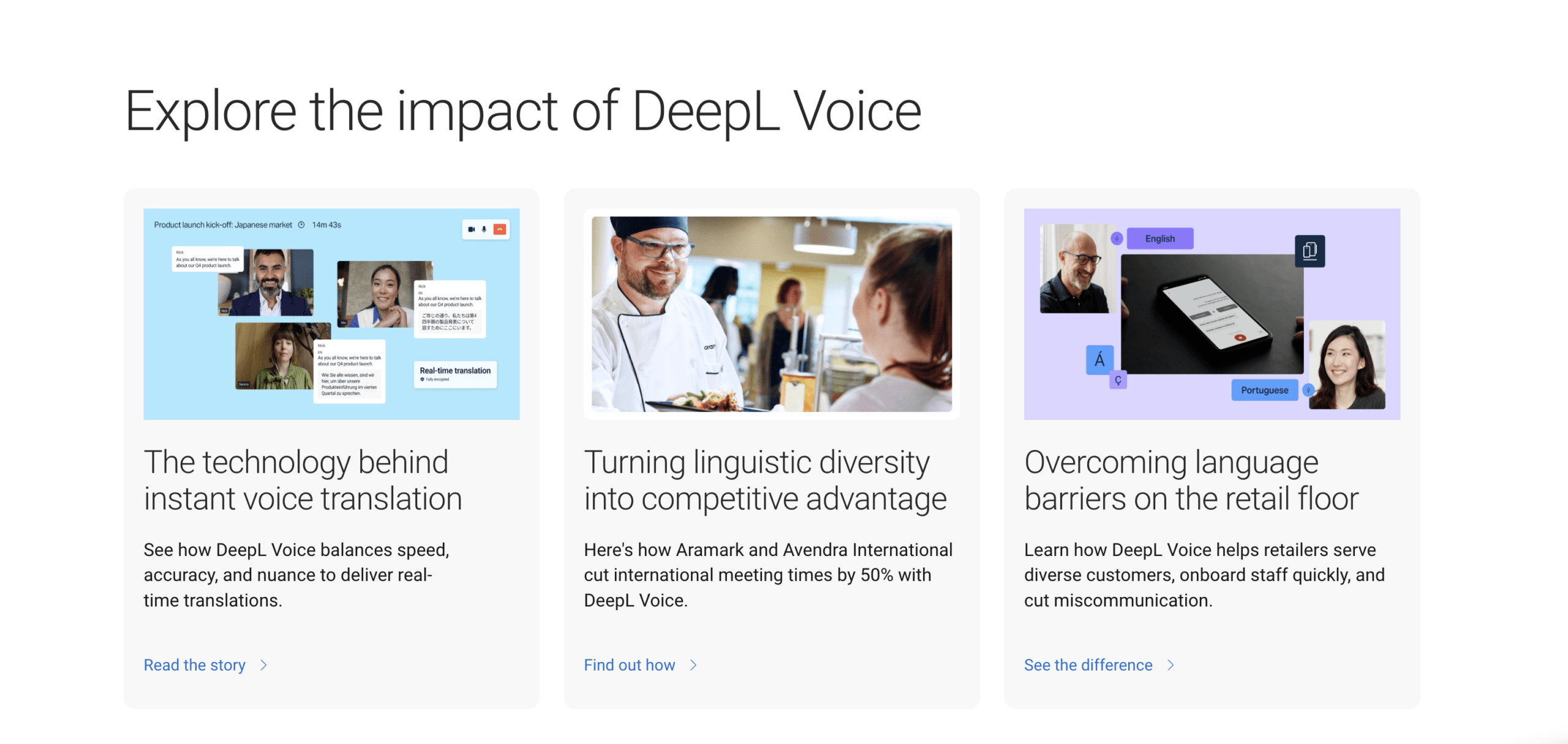
The same Voix de DeepL page describes an in-person conversation product on iOS, Android, and the web, plus a Voice API for contact-center and business-process use. These are distinct offerings, so organizations should test the exact product rather than generalizing from the brand name.
Stage 5: Deliver the Right Voice to the Right Listener
The final runner does not create language; it makes the translation usable. Speech to speech translation succeeds only when the intended person can actually hear and understand the result. Delivery answers practical questions:
- Does output play through a phone, headphones, room speakers, or meeting audio?
- Can each listener choose a language?
- Can participants speak back, or is the experience one-way?
- Do captions remain visible while another app is open?
- What happens when someone joins late?
- Is there a transcript or summary afterward?
Microsoft Translator supports split-screen translation for two people using one device and multi-device conversations that participants can host or join through the mobile app. Its official feature page also says a user can join a translated conversation in a browser and can speak short phrases into a single microphone while online.
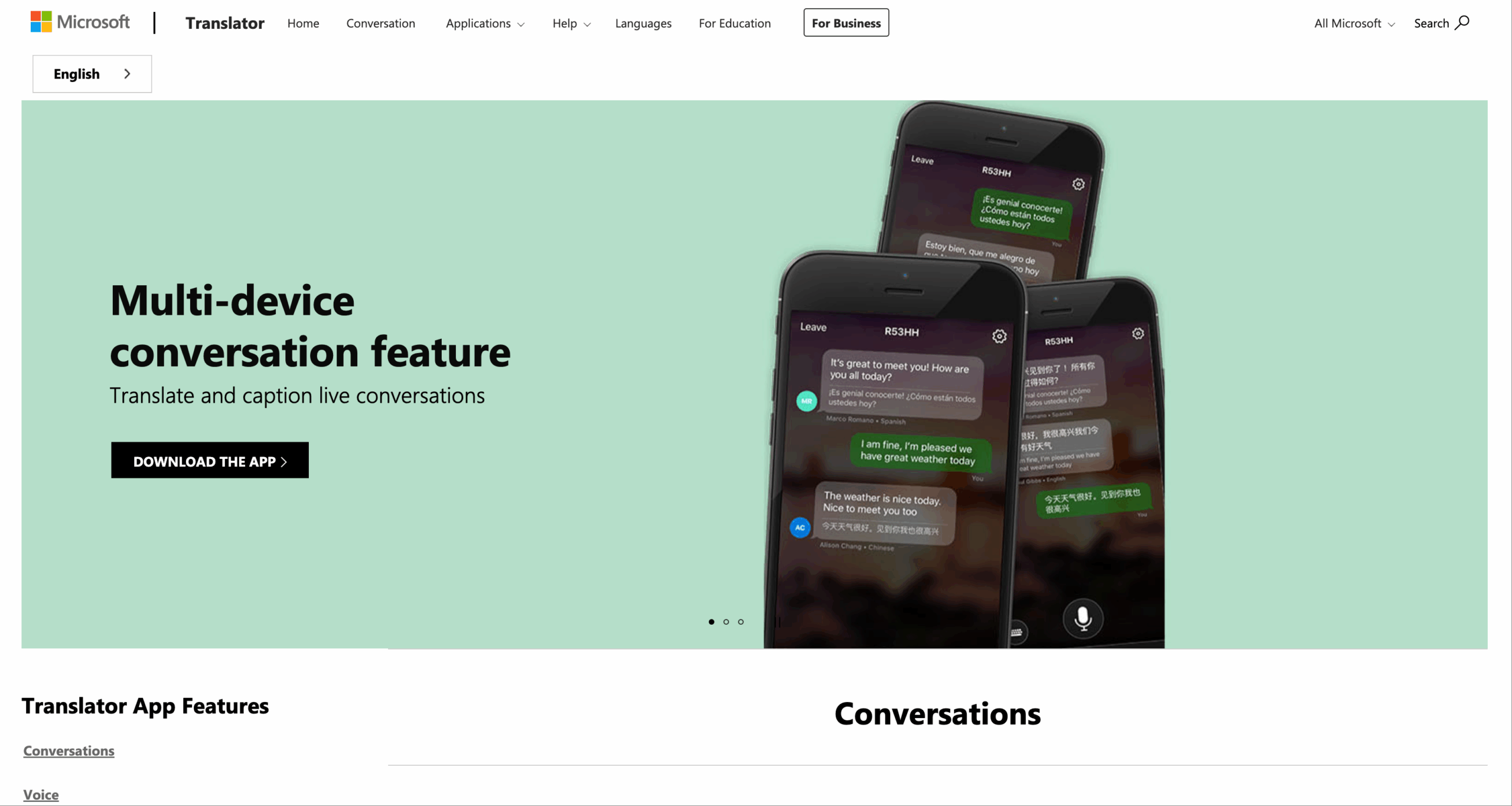
Découvrez Microsoft Translator
That delivery model fits a reception desk, classroom, customer interaction, or informal group. For recurring business meetings, however, teams may also need system-audio capture, persistent subtitles, speaker separation, records, and action items.
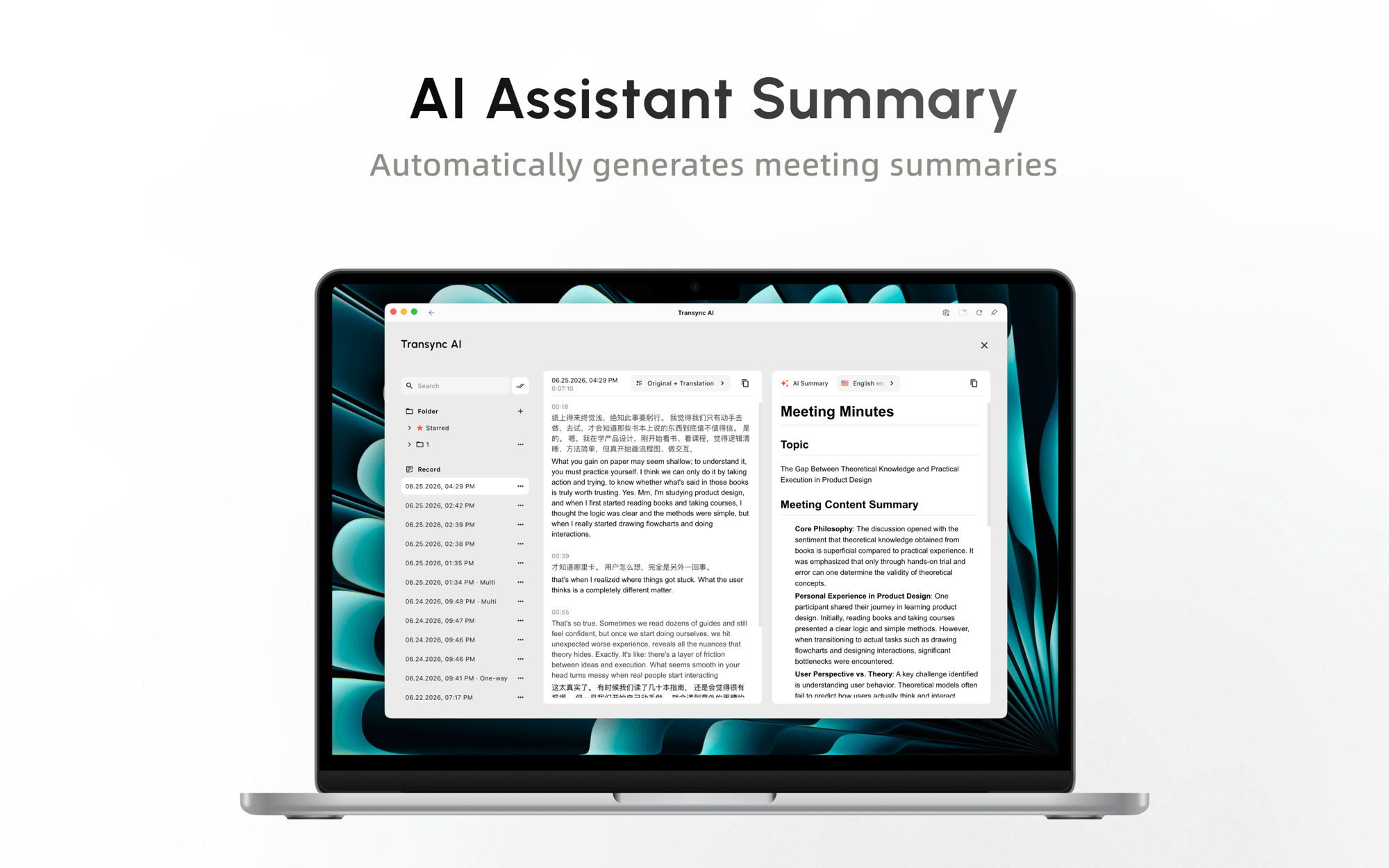
Transync AI can keep Sous-titres bilingues en incrustation d'image visible over supported apps and produce Notes de réunion sur l'IA after the conversation. Those features extend speech to speech translation beyond audible output into verification and follow-up.
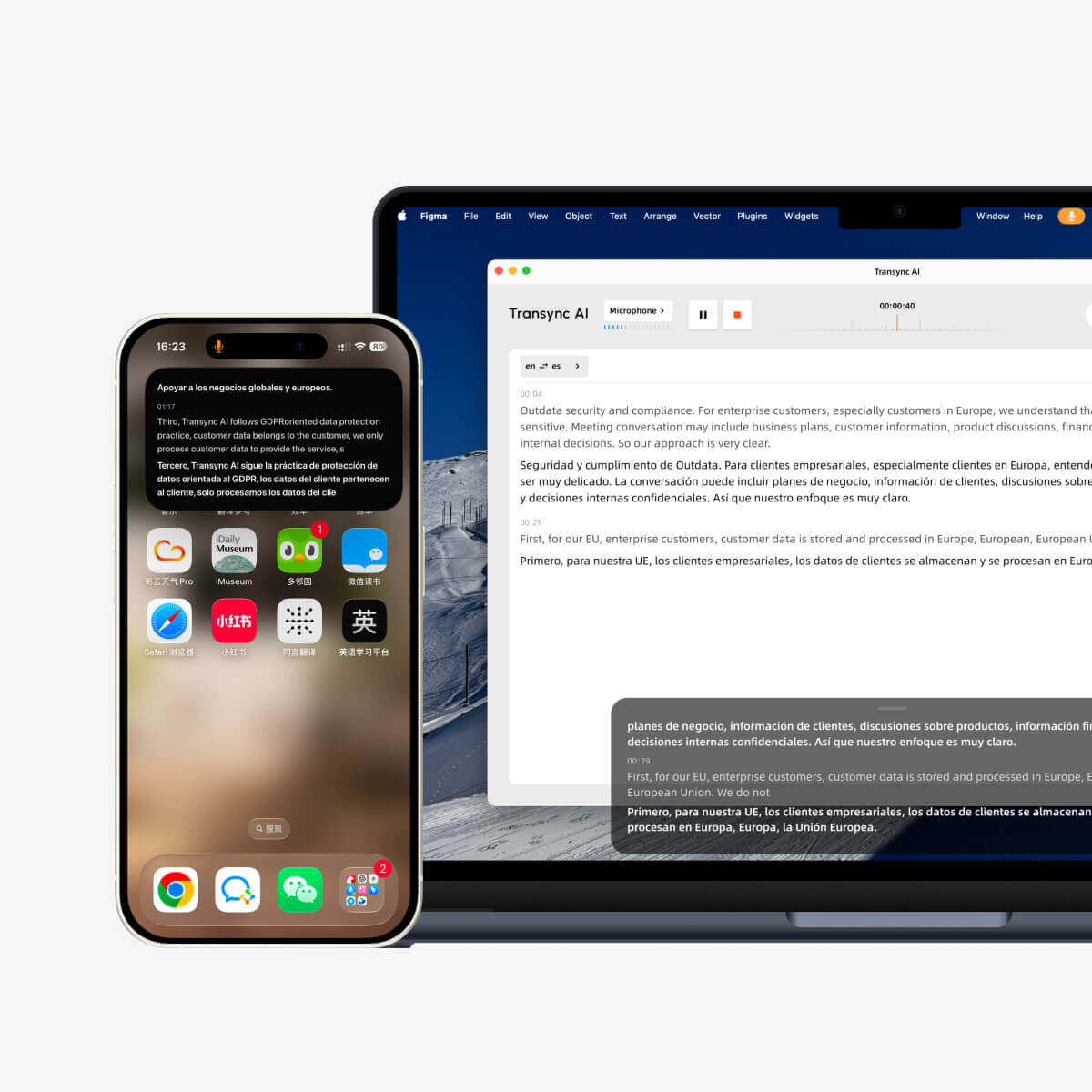
Sous-titres flottants en temps réel sur les appareils de bureau et mobiles
Speech to Speech Translation Product Comparison
| outils | Strongest Scenario | Spoken Output | Modèle de conversation | Meeting Support | Context Preparation | Enregistrer ensuite | Main Boundary |
|---|---|---|---|---|---|---|---|
| Transync AI | Recurring meetings, calls, classes, and presentations | 40+ playback languages; voice styles and cloning | Traduction bidirectionnelle en temps réel | Cross-platform captions, voice, system audio | Mots-clés et contexte | Notes de transcription et d'IA | Online workflow; audio routing must be tested |
| Google Traduction | Personal listening and turn-based mobile conversation | Speaker or headphones in supported Live Translate modes | Conversation and face-to-face modes | Not a meeting knowledge workspace | Limited meeting preparation | Not designed around business meeting notes | Feature availability depends on language, device, and mode |
| Microsoft Translator | One-device or multi-device conversation | Voice for supported languages and short phrases | Split screen, hosted, and joinable conversations | Separate from a full meeting record workflow | Limited compared with meeting-first systems | Dépendant de la conversation | Language and platform support vary |
| Voix de DeepL | Enterprise captions, in-person voice, and voice API | Product-specific; online meeting voice-to-voice listed as coming soon | In-person one-to-one or group offering | Captions for Teams, Zoom, and Google Meet | Enterprise terminology options | Spécifique au produit | Confirm the exact Voice product and output mode |
| Interprète humain | High-risk, nuanced, or accountable communication | Natural professional interpretation | Can clarify and manage turns | On-site or remote | Subject preparation | Depends on engagement rules | Exigences en matière de coûts et de planification plus élevées |
This comparison reflects current official product information, not a permanent ranking. Speech to speech translation features can vary by plan, operating system, app version, language pair, region, and hardware.
The Four Race Courses
Course 1: A Quick Face-to-Face Exchange
For asking directions, greeting a customer, or handling a short personal conversation, Google Traduction et Microsoft Translator deserve testing. Both provide mobile conversation patterns, but their controls and supported modes differ.
Choose the product that lets both people see the source and target text, replay output, and correct a misunderstanding. Test the exact language pair and device before travel or a scheduled appointment.
Course 2: A Recurring International Meeting
A business meeting needs more than alternating phone turns. Speech to speech translation for meetings must handle participants talking through Zoom, Microsoft Teams, Google Meet, or another service; names and technical terms matter; and the team may need decisions afterward.
Transync AI is the strongest starting point in this comparison because it combines translated captions and voice with terminology preparation and meeting notes. Current listed pricing includes 40 free minutes at sign-up, Personal Premium at 8.99 per month with 10 hours, and Enterprise at 24.99 per month per seat with up to 40 hours. Review current pricing and multilingual usage rules before purchase.
Voix de DeepL is relevant when an enterprise prioritizes its caption, in-person, or Voice API offerings. If audible translated voice inside online meetings is mandatory, confirm whether the announced voice-to-voice capability is available on the required plan at the time of evaluation.
Course 3: A Multilingual Presentation
One speaker addressing many listeners requires a broadcast model rather than turn-taking. Audience members may want different languages, and the host cannot configure every phone.
In beta Mode de présentation, Transync AI lets one host enable up to 10 target languages. Attendees join from a phone or computer using a QR code, shareable link, or Room ID. No installation is required, but an attendee must register or sign in to a Transync AI compte.
Each audience member chooses an enabled language and can read subtitles or hear translated voice. Audience members cannot send voice input in this one-way mode. The host controls whether the original transcript and AI-generated notes are shared afterward.
For this course, test QR visibility, account access, Wi-Fi, headphones, language selection, accessibility, and the late-arrival experience. A smooth first minute is part of translation quality.
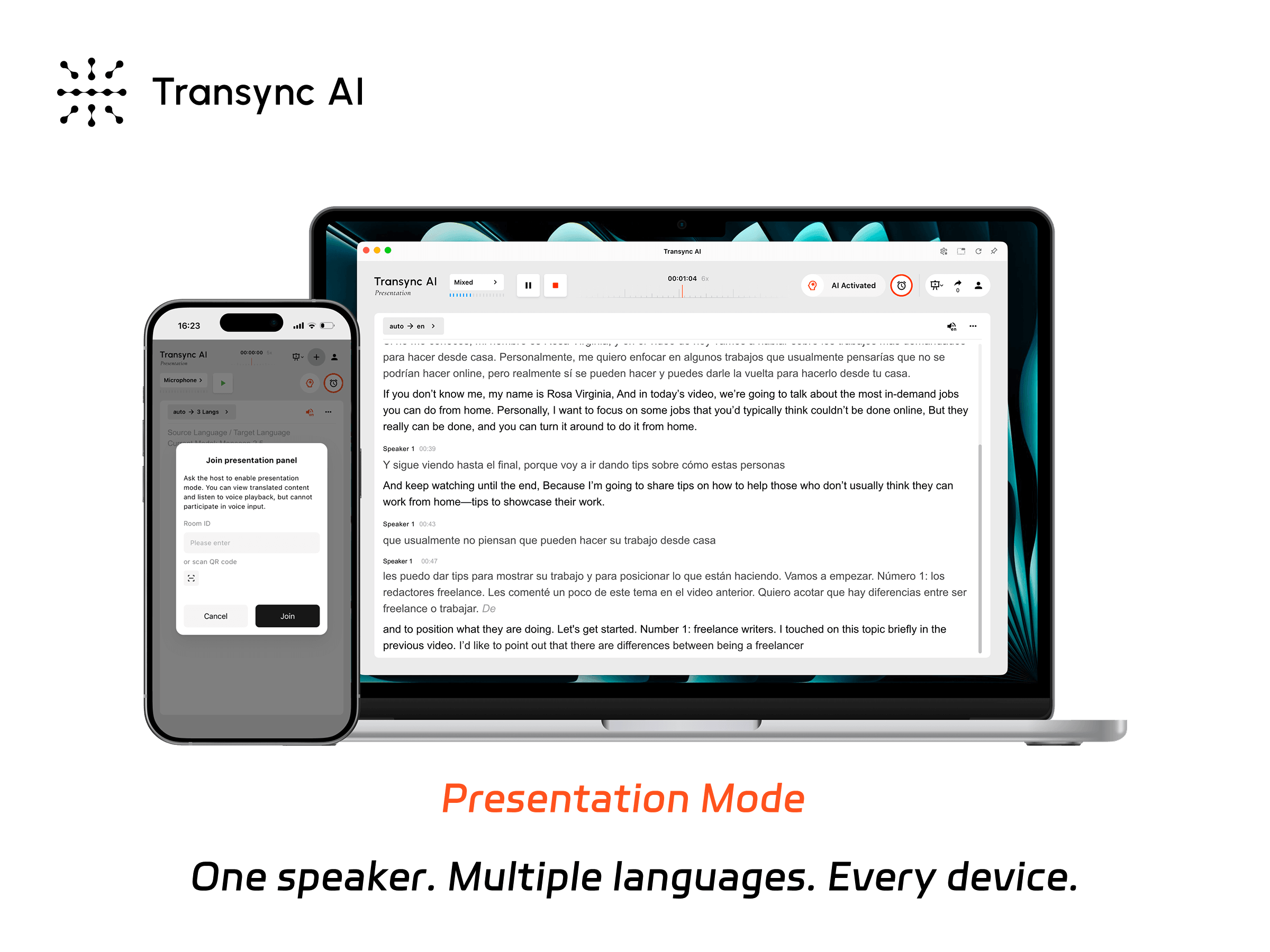
Le mode Présentation permet à un animateur de partager une traduction en direct avec les membres du public sur leurs propres appareils.
Course 4: A High-Stakes Conversation
Legal advice, clinical consent, medication, immigration, financial commitments, emergency response, and safety instructions require professional accountability. Automated speech to speech translation can assist with access or preparation, but it should not independently carry the risk.
Use a qualified human interpreter who can request clarification, recognize consequential ambiguity, follow professional standards, and accept responsibility for the interpretation. Technology may support records only when privacy, consent, and applicable rules allow it.
Build a Latency Budget
“Fast” is not one measurement. Time accumulates across the relay:
| Delay Source | What Adds Time | What to Measure |
|---|---|---|
| Capturer | Audio buffers and network transport | Speech start to visible source text |
| Reconnaissance | Waiting for a phrase boundary | Last spoken word to completed source sentence |
| Traduction | Context processing | Source completion to target text |
| Synthesis | Voice generation and queueing | Target text to first audible sound |
| Playback | Long translated wording | Time until the listener can answer |
Run a ten-minute exchange and measure the listener’s real response point. A system may show captions quickly but finish voice playback too late for natural turn-taking. Another may wait for a full sentence, produce a more coherent result, and still fit the meeting pace.
The right speech to speech translation latency depends on purpose. Travel questions tolerate pauses. Negotiation needs rapid recovery. A lecture can accept modest delay if every attendee receives clear output.
A Fair 15-Minute Test Script
Use identical conditions for each tool:
- Choose one language pair and two speakers.
- Use the same microphone, room, network, and headphones.
- Read a script containing names, numbers, negation, corrections, and domain terms.
- Add one interruption and one speaker change.
- Record source-recognition errors separately from translation errors.
- Measure the time until the listener can answer.
- Check pronunciation and whether audio reaches the intended device.
- Inspect any transcript, notes, retention, and deletion controls.
Score intelligibility, factual meaning, timing, delivery, recovery, and setup effort from one to five. Do not combine them too early: a single score can hide a fatal error, such as excellent voice quality with an incorrect price.
Privacy Is Part of Voice Quality
Spoken conversations may include customer information, internal strategy, personal data, or regulated material. A speech to speech translation provider may process both audio and text, so privacy review must cover the entire relay. Before adoption, ask:
- Is live audio stored?
- Are transcripts retained, and for how long?
- Les utilisateurs peuvent-ils supprimer des enregistrements ?
- Is customer content used for model training?
- Where is data processed?
- What admin, access, and audit controls exist?
- Which contractual and compliance commitments apply to the selected plan?
Actuel Transync AI information says it does not store live translation audio recordings, text transcripts may be stored temporarily for meeting notes, records can be deleted, and customer data is not used for AI training. Organizations should still review the provider’s Centre de confiance and their own legal obligations.
Actuel Voix de DeepL information says meeting transcription and translation data is temporarily processed in memory and deleted after the call, while conversation data is processed on the local device and deleted when no longer visible. Verify contractual details for the exact service and deployment.
No speech to speech translation tool should receive sensitive audio simply because its interface is convenient.
Which Tool Should Take the Baton?
Choisir Google Traduction for supported mobile listening, face-to-face, and turn-based personal conversations where accessibility and speed matter most.
Choisir Microsoft Translator when split-screen or joinable multi-device conversation matches the interaction.
Choisir Voix de DeepL for evaluation of its enterprise meeting captions, in-person conversation offering, or Voice API. Confirm that the specific plan provides spoken output in the required scenario.
Choisir Transync AI when meetings need bilingual subtitles, translated voice, context, cross-platform use, and notes—or when a host needs to distribute translation to a multilingual audience.
Choose a qualified human interpreter when the cost of misunderstanding is high.
The best speech to speech translation product is the one that completes all five stages for the actual listener. A strong engine that cannot hear the room, preserve the number, pronounce the name, or deliver audio to the participant has not finished the race.
Foire aux questions
How does speech to speech translation work?
It captures audio, recognizes source speech, translates meaning, synthesizes target-language speech, and routes that audio to a listener. Many systems also display source and translated text for verification.
Is speech to speech translation truly real time?
It is near-real-time rather than literally instantaneous. Systems need enough audio to recognize and translate a phrase. Network conditions, sentence length, model processing, and voice playback all add delay.
Can speech translation work in an online meeting?
Yes, but the workflow must capture computer audio and deliver captions or translated voice correctly. Transync AI is designed for cross-platform meeting use. Voix de DeepL currently provides meeting captions and lists online meeting voice-to-voice support as coming soon, so verify its current status.
Why do some tools show text but not play translated voice?
Speech recognition and translation can produce captions without text-to-speech. Spoken output also depends on target-language voice availability, product design, plan, device, and audio routing.
Can one speaker reach several target languages?
Oui. Transync AI Presentation Mode currently allows a host to configure up to 10 target languages in beta. Audience members select an enabled language on their own device.
Does AI voice translation replace an interpreter?
No. It can make frequent, lower-risk multilingual communication easier, but qualified human interpreters remain necessary when nuance, professional standards, or serious consequences require accountable judgment.
Si vous voulez une expérience de nouvelle génération, Transync AI ouvre la voie avec une traduction en temps réel, optimisée par l'IA, qui assure un flux naturel des conversations. Vous pouvez essayez-le gratuitement maintenant.