
Canlı konuşma, belgeler, bağlam, toplantılar, güvenlik, fiyatlandırma ve insan incelemesi konularını kapsayan 7 pratik kararla yapay zekâ çevirisini akıllıca kullanın.
Yapay zekâ çevirisi artık tek amaçlı bir metin kutusu değil. Bir belgeyi çevirebilir, canlı bir toplantıyı yorumlayabilir, binlerce ürün açıklamasını yerelleştirebilir, çevrilmiş bir yanıtı seslendirebilir veya bir izleyici kitlesinin birden fazla dildeki bir sunumu takip etmesine yardımcı olabilir. Bu işler benzer gibi görünse de, çok farklı iş akışları gerektirirler.
Bu nedenle, "Hangi çevirmen en doğru sonucu verir?" sorusunu sorarak bir araç seçmek genellikle yanlış satın alıma yol açar. Daha faydalı soru şudur: "Bu iletişimin başarılı olması için çeviriden önce, çeviri sırasında ve çeviriden sonra neler olması gerekir?"“
Bu karar kılavuzu karşılaştırır Transync AI, DerinL, Google Bulut Çevirisi, Ve Microsoft Azure Yapay Zeka Çevirmeni. Onları birinciden dördüncüye doğru sıralamak yerine, her bir yapay zekâ çeviri türünü en iyi şekilde yerine getirebileceği işe eşleştiriyor.
Kısa Cevap
Kullanmak Transync AI Sözlü iletişimin gerçekleştiği anlarda kullanılır: müşteri görüşmesi, hibrit toplantı, ders, eğitim oturumu veya çok dilli sunum. Gerçek zamanlı altyazıları, çevrilmiş sesi, terminoloji bağlamını ve konuşma sonrasındaki kayıtları bir araya getirir.
Kullanmak DerinL İş akışının merkezinde kusursuz metin veya belge çevirisi olduğunda kullanılır. Google Bulut Çevirisi Geliştiricilerin ölçeklenebilir bir çeviri katmanına, özel terminolojiye, toplu işlemeye veya daha geniş bir bulut sistemiyle entegrasyona ihtiyaç duyduğu durumlarda kullanılır. Microsoft Azure Yapay Zeka Çevirmeni çevirinin mevcut bir yapının içine yerleştirilmesi gerektiğinde Microsoft veya Azure uygulama mimarisi.
Dolayısıyla en iyi yapay zeka çeviri ürünü evrensel değildir. En iyi ürün, girdisi, çıktısı, hızı, iş birliği modeli ve inceleme süreci gerçek görevinize uyan üründür.
Buradan Başlayın: İşi İş Akışıyla Eşleştirin
| Çeviri İşi | Güçlü Başlangıç Noktası | Neden Uygun? | Test Edilecek Ana Soru |
|---|---|---|---|
| İki yönlü çok dilli toplantı | Transync AI | Canlı çift dilli altyazılar, ses çevirisi, bağlam ve toplantı kayıtları | Her iki taraf da doğal bir şekilde tepki verebilir mi? |
| Bire çok sunum | Transync Yapay Zeka Sunum Modu | Katılımcılar kişisel cihazlarından katılıyor ve etkinleştirilmiş bir dil seçiyor. | İzleyiciler için katılım kolay mı? |
| İş belgesi çevirisi | DerinL | Belge odaklı çeviri ve özelleştirme araçları | Sayfa düzeni ve terminoloji korunuyor mu? |
| Web sitesi veya uygulama entegrasyonu | Google Bulut Çevirisi | API'ler, toplu çeviri, sözlükler ve model seçenekleri | Ekip entegrasyonu yönetebilir ve izleyebilir mi? |
| Azure yığını içinde çeviri | Microsoft Azure Yapay Zeka Çevirmeni | Bulut API'leri ve Microsoft hizmetleriyle entegrasyon | Mevcut kimlik, güvenlik ve dağıtım kurallarına uygun mu? |
| Yüksek riskli hukuki veya tıbbi iletişim | Yapay zekâ destekli insan tercüman veya çevirmen | Uzman sorumluluğu ve bağlamsal değerlendirme | Kim inceliyor ve sorumluluğu üstleniyor? |
Bu tablo bir başlangıç noktasıdır, test etmenin yerini tutmaz. Dil kullanılabilirliği, özellikler, fiyatlandırma ve veri işleme, ürüne, plana, bölgeye ve dağıtıma göre farklılık gösterebilir.
Karar 1: Konuşmayı mı, Metni mi Yoksa Tam Bir Deneyimi mi Çeviriyorsunuz?
Yapay zekâ çevirisine ilişkin ilk karar, girdi ve çıktı ile ilgilidir. Tarayıcıya yapıştırılan bir cümle metin tabanlı bir görevdir. Biçimlendirilmiş ve tanımlanmış şartlara sahip bir sözleşme belge tabanlı bir görevdir. Canlı bir müzakere ise mikrofonları, gecikmeyi, sıra almayı, altyazıları, ses kaydını ve takip işlemlerini içeren bir iletişim deneyimidir.
Yetenekli bir ürünü yanlış kategori için kullanmak birçok hayal kırıklığı yaratan sonuca yol açar. Bir metin çevirmeni şık bir cümle üretebilir, ancak iki kişinin doğal bir şekilde konuşması için pratik bir yol sunmaz. Bir toplantı tercümanı herkesin bir görüşmeyi anlamasına yardımcı olabilir, ancak 200 sayfalık bir kılavuzu her sayfa öğesini koruyarak yerelleştirmek için tasarlanmamıştır.
Markaları karşılaştırmadan önce, işi tek bir cümleyle yazın:
[Giriş]i [hedef kitle] için [süre sınırı] içinde çevirmemiz, [çıktı] olarak teslim etmemiz ve [kayıt veya onay]ı saklamamız gerekiyor.
Örneğin: “Japon bir alıcı için canlı bir İngilizce satış görüşmesini, konuşma sürtüşmesini en aza indirerek, iki dilli altyazılarla, ses çevirisiyle ve sonrasında notlarla birlikte çevirmemiz gerekiyor.” Bu tanım, belge yazılımından ziyade toplantı odaklı yapay zeka çevirisine işaret ediyor.
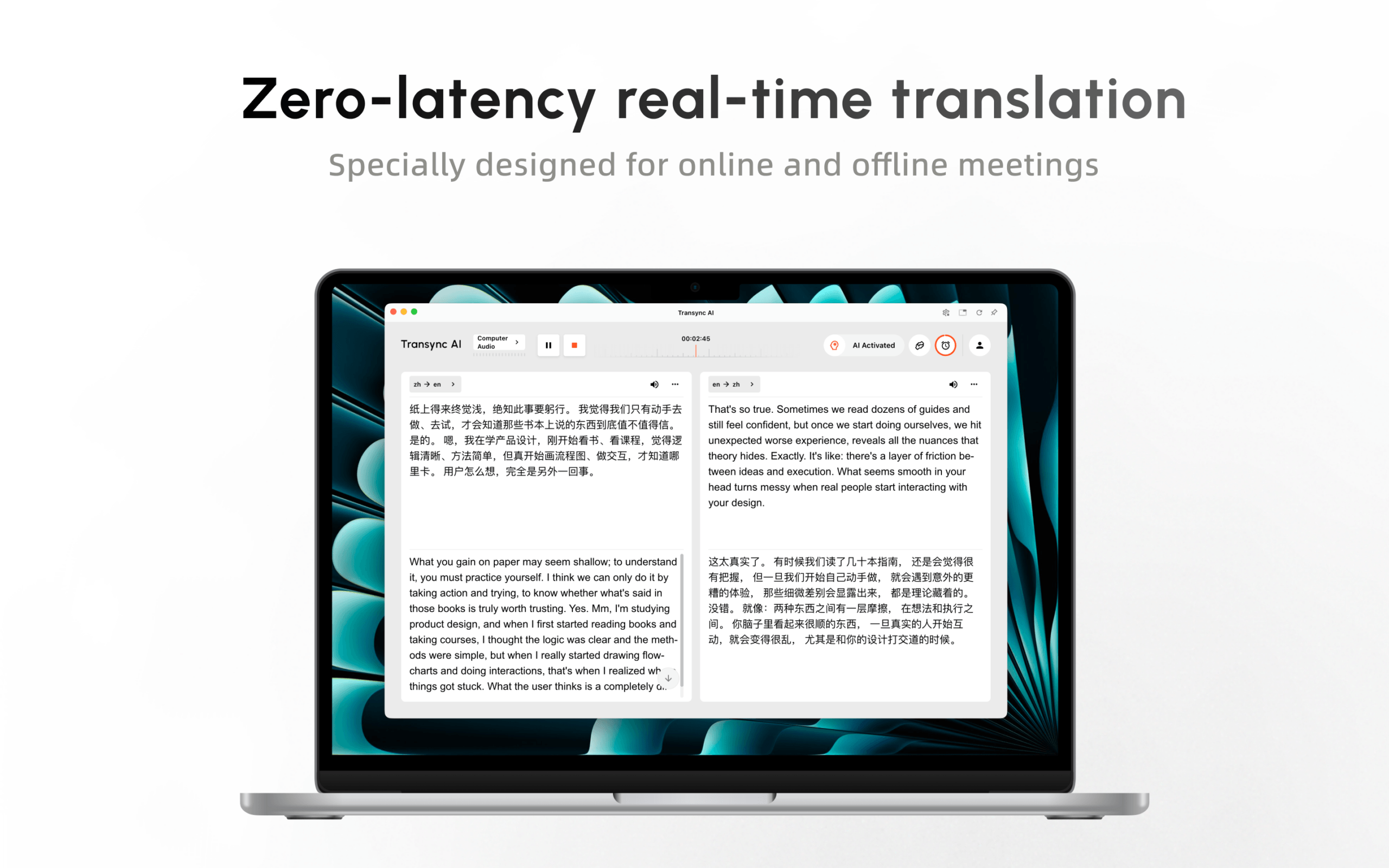
Transync AI Canlı sözlü iletişim üzerine kuruludur. gerçek zamanlı çeviri Konuşma ilerledikçe kaynak metni ve çevrilmiş metni sunarak, katılımcıların etkinlikten sonra bir belge beklemek yerine anlamı doğrulamalarına yardımcı olur.
Transync AI'yı Ücretsiz Deneyin
Karar 2: Hız, Doğruluğun Bir Parçası mıdır?
Bir belge için bir dakika daha beklemek kabul edilebilir olabilir. Ancak bir toplantıda uzun bir gecikme, aksi takdirde doğru bir çeviriyi kullanılamaz hale getirebilir. İnsanlar çevirinin üzerine konuşmaya başlar, yanlış cümleye cevap verir veya fikirlerini kısaltır; bu da konuşmanın değerini kaybetmesine yol açar.
Canlı yapay zeka çevirisini değerlendirirken üç farklı zaman dilimini ölçün:
- Kaynak metnin okunabilir metne dönüşme hızı.
- Çevrilmiş altyazının ne kadar çabuk anlaşılır hale geldiği.
- Çeviri işleminin, bir sonraki kişinin yanıt vermesinden önce ne kadar hızlı tamamlandığı.
Sadece önceden hazırlanmış bir monologu test etmeyin. İki konuşmacı, düzeltmeler, tarihler, sayılar ve kesintiler kullanın. Gerçek ekip tarafından kullanılan aynı kulaklığı ve konferans yazılımını bağlayın. Ağ kalitesi ve ses yönlendirmesi, çeviri modeli kadar deneyimi etkileyebilir.
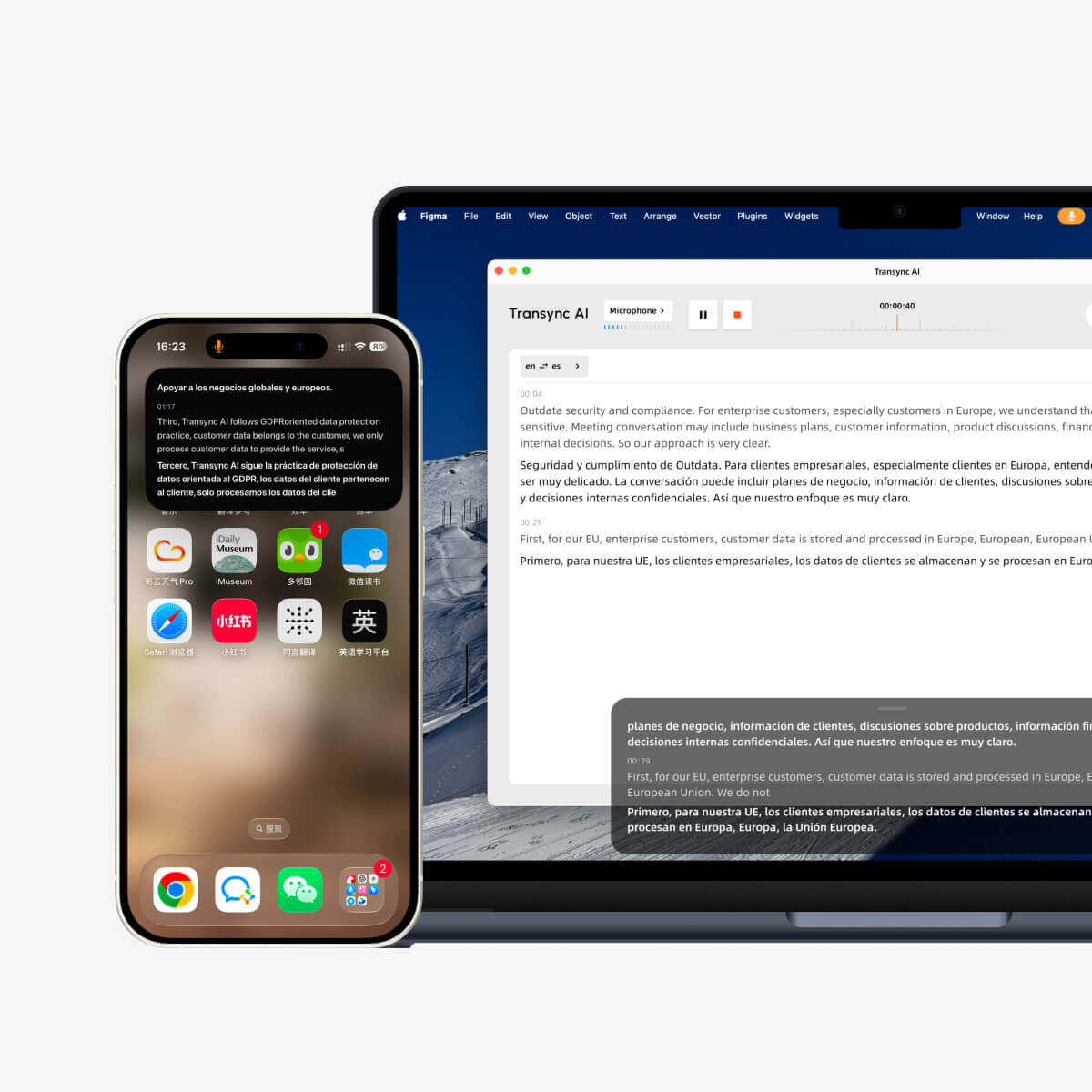
Transync AI ekler Yapay zeka ses çevirmeni Altyazı iş akışına entegre edilmiştir, böylece katılımcılar hem dinleyebilir hem de okuyabilirler. Resim içinde resim çift dilli altyazılar Desteklenen diğer uygulamaların üzerinde görünür kalarak, kullanıcıların pencereler arasında sürekli geçiş yapmak yerine aramaya odaklanmalarına yardımcı olur.
Masaüstü ve mobil cihazlarda gerçek zamanlı kayan altyazılar.
Asenkron metin işlemede gecikme farklı bir anlama gelir. DerinL Amaç kusursuz bir belge oluşturmak olduğunda daha uygun olabilirken, bulut API'leri binlerce kısa dizenin otomatik bir sistemden geçmesi gerektiğinde kullanışlıdır. "Hızlı" kelimesi, yapılan işe göre tanımlanmalıdır.
Karar 3: Sistem Ne Kadar Bağlam Bilgisi Alıyor?
Yapay zekâ çeviri motoru yalnızca iş akışının ona verdiği şeyleri görür. Eğer bir konuşmacı "Merkür" derse, kastedilen anlam bir gezegen, bir element, bir marka, bir proje adı veya bir kişi olabilir. Teknik olarak akıcı bir çeviri bile kuruluş için yanlış olabilir.
Aşağıdakileri içeren bir test seti oluşturun:
- Ürün ve şirket adları.
- Ekip tarafından kullanılan kısaltmalar.
- Birden fazla ortak anlamı olan sektörel terimler.
- Müşteri adları ve coğrafi konumları.
- Birimler, para birimleri, tarihler ve sürüm numaraları.
- Anlamı bir önceki cümleye bağlı olan cümleler.
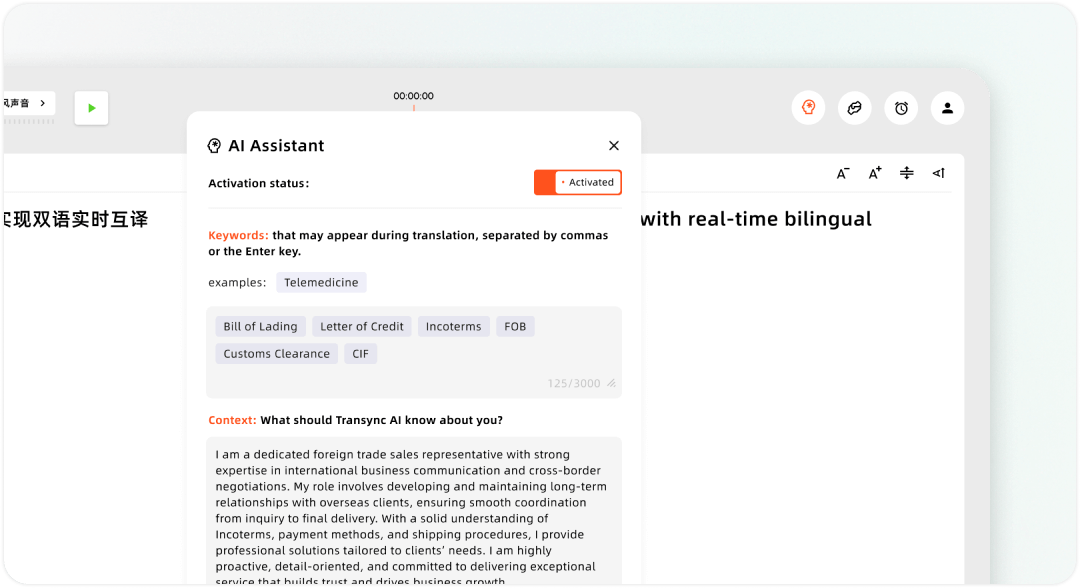
Transync AI kullanıcıların tedarik etmesine olanak tanır anahtar kelimeler ve bağlamsal bilgiler Konuşmadan önce. Bu, aynı terminolojinin tekrar tekrar kullanıldığı toplantılar için faydalıdır. Hazırlık azdır, ancak bir proje adının sıradan bir isim olarak çevrilmesini önleyebilir.
Transync AI Assistant'ta kişiselleştirilmiş çeviri bağlamı ve sektör anahtar kelimelerinin yapılandırılması
Google Bulut Çevirisi Uygulama geliştiricileri için birden fazla yaklaşımı destekler. Mevcut dokümantasyonu, sinirsel makine çevirisi kullanan Temel API'yi, standart ve çeviri-LLM seçeneklerine sahip Gelişmiş API'den ayırır. Gelişmiş özellikler arasında sözlükler, belge ve toplu çeviri, gerçek zamanlı çeviri ve özelleştirme yer alır. Bu esneklik değerlidir, ancak bir kuruluşun API'yi güvenilir bir ürüne dönüştürmek için yine de geliştiricilere ve bir kalite sürecine ihtiyacı vardır.
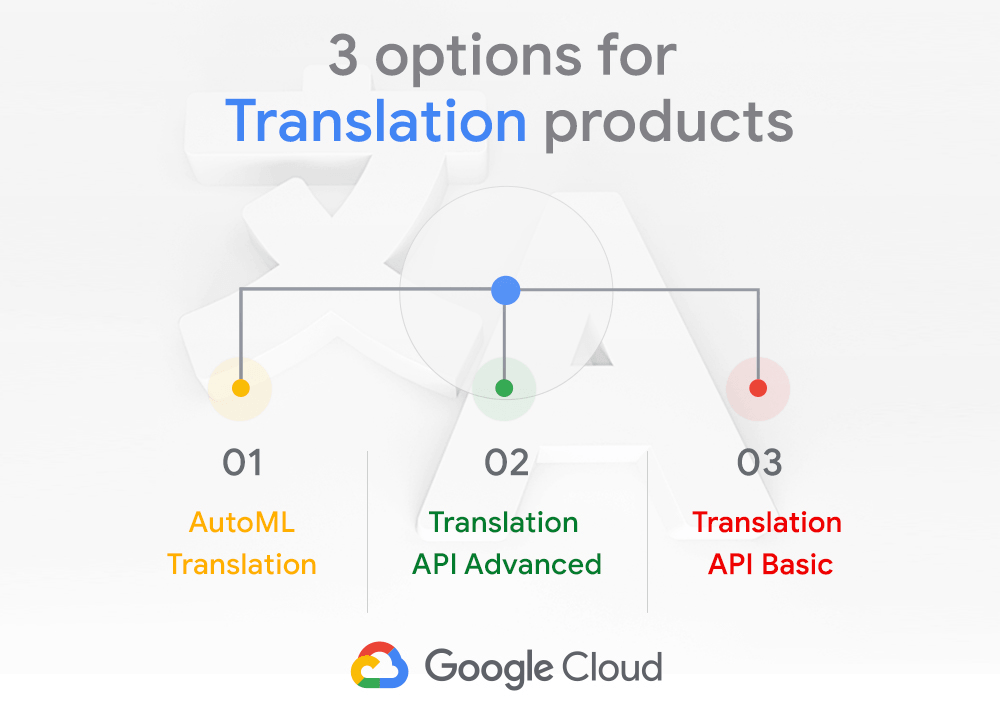
Google Cloud Translation'ı keşfedin.
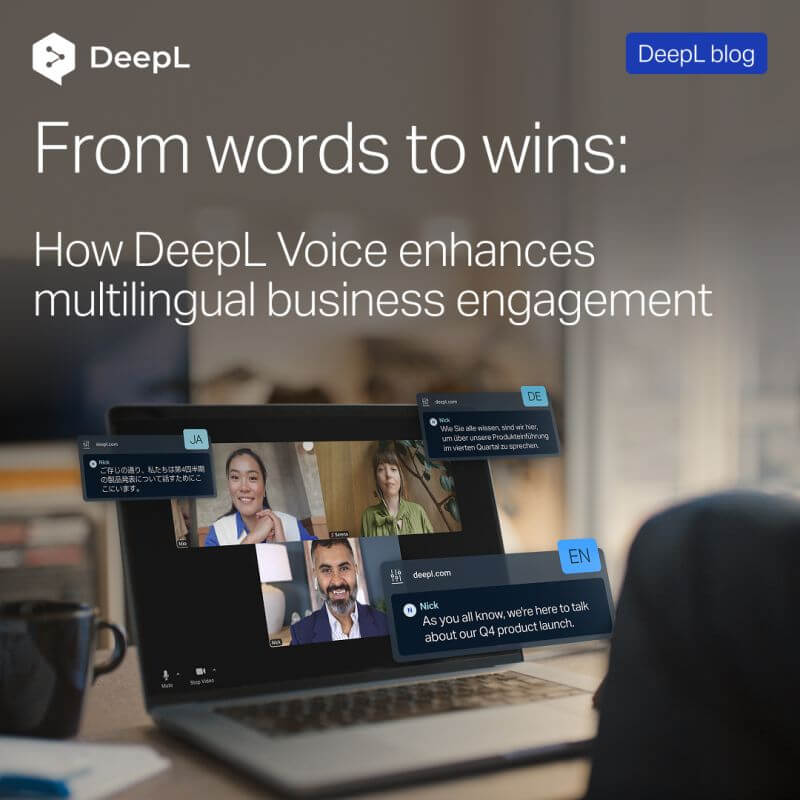
DerinL Geliştiricilere metin ve belgelerin çevrilmesi için seçenekler sunar ve sözlükler, stil kuralları ve çeviri bellekleri aracılığıyla özelleştirmeyi açıklar. Bu kontroller, birçok varlıkta ifadelerin tutarlı kalması gereken yerelleştirme ekipleri için önemlidir.
Karar 4: Kimlerin Katılması Gerekiyor?
Katılımcıların sayısı ve rolleri, doğru yapay zeka çeviri mimarisini değiştirebilir.
Konuşma halindeki iki kişi
Her iki kişinin de anlaması ve yanıt vermesi gerekir. Otomatik dil ayrımı, sıra alma, çevrilmiş konuşma ve her katılımcının hem orijinal metni hem de çevirisini görüp göremediği test edilmelidir. Bu, tek yönlü transkripsiyondan farklıdır.
Düzenli bir toplantıda bulunan bir ekip
Çevirici, halihazırda kullanımda olan araçlarla uyumlu olmalıdır. Transync AI sağlar canlı toplantı çeviri iş akışı için Zoom, Microsoft Teams, Ve Google Meet, Bu sayede, çeviriyi tek bir toplantı sağlayıcısına bağlamak yerine, platformlar arası bir seçenek sunulmuş oluyor.
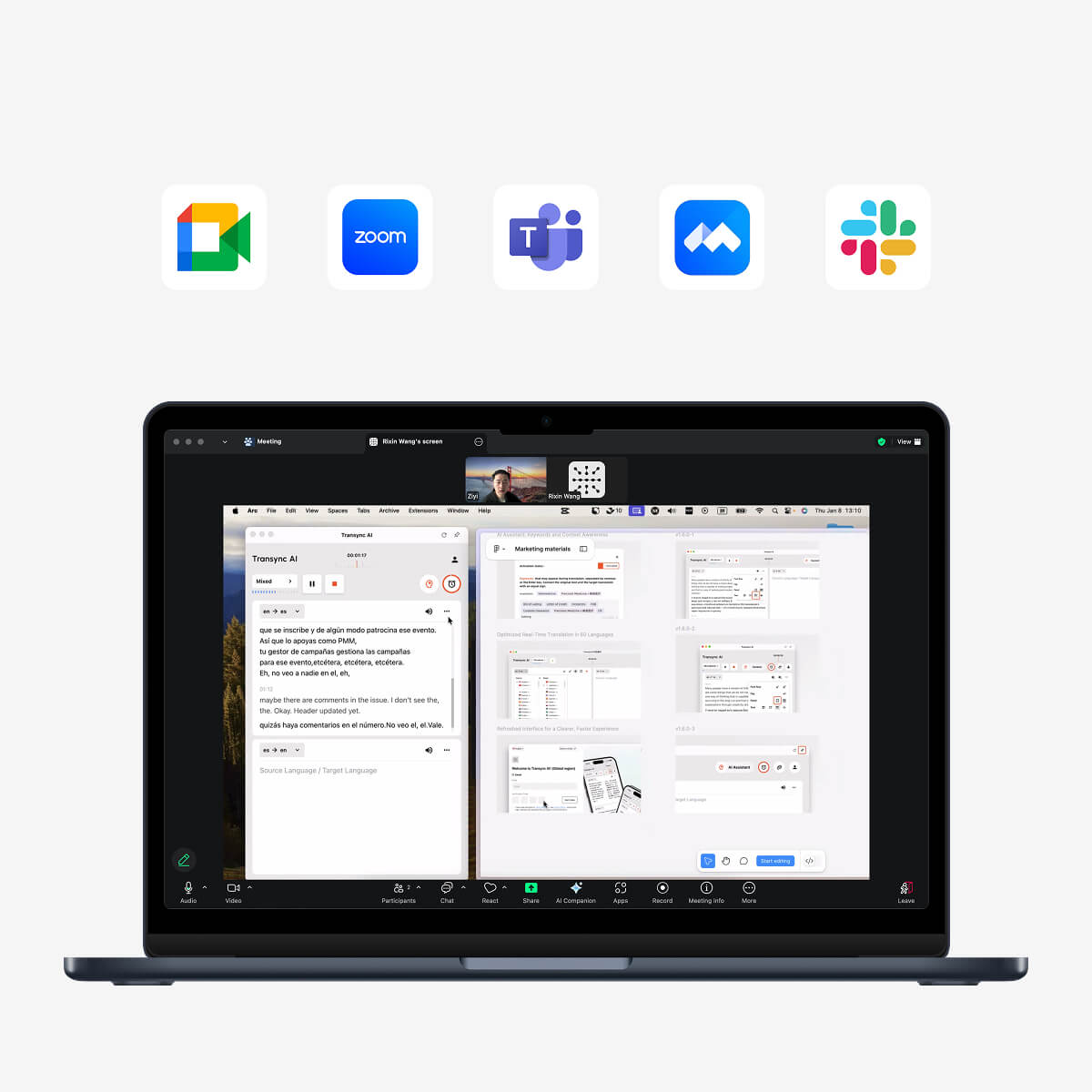
Sorunsuz gerçek zamanlı çeviri için başlıca çevrimiçi toplantı platformlarıyla uyumludur.
Bir konuşmacıyı dinleyen bir izleyici kitlesi.
Burada izleyiciler esas olarak bilgi alırlar. Beta Sunum Modunda, Transync AI Bu özellik, bir sunucunun 10'a kadar hedef dil yapılandırmasına ve QR kodu, paylaşılabilir bağlantı veya Oda Kimliği aracılığıyla izleyicileri davet etmesine olanak tanır. Herhangi bir yazılım kurulumu gerekmez, ancak izleyicilerin kayıt olmaları veya oturum açmaları gerekir. Transync AI hesap.
Bilgisayar veya telefondan katıldıktan sonra, her izleyici sunucunun etkinleştirdiği dillerden birini seçebilir ve altyazıları okuyabilir veya çevrilmiş sesi dinleyebilir. İzleyiciler bu modda sesli giriş gönderemezler. Sunucu, sunumdan sonra orijinal metnin ve yapay zeka tarafından oluşturulan notların paylaşılıp paylaşılmayacağını kontrol eder; paylaşım isteğe bağlıdır, otomatik değildir.
Bu Sunum Modu iş akışı Şirket genel toplantıları, eğitimler, dersler, konferanslar, turlar, ibadet hizmetleri ve diğer tek konuşmacılı senaryolar için tasarlanmıştır.
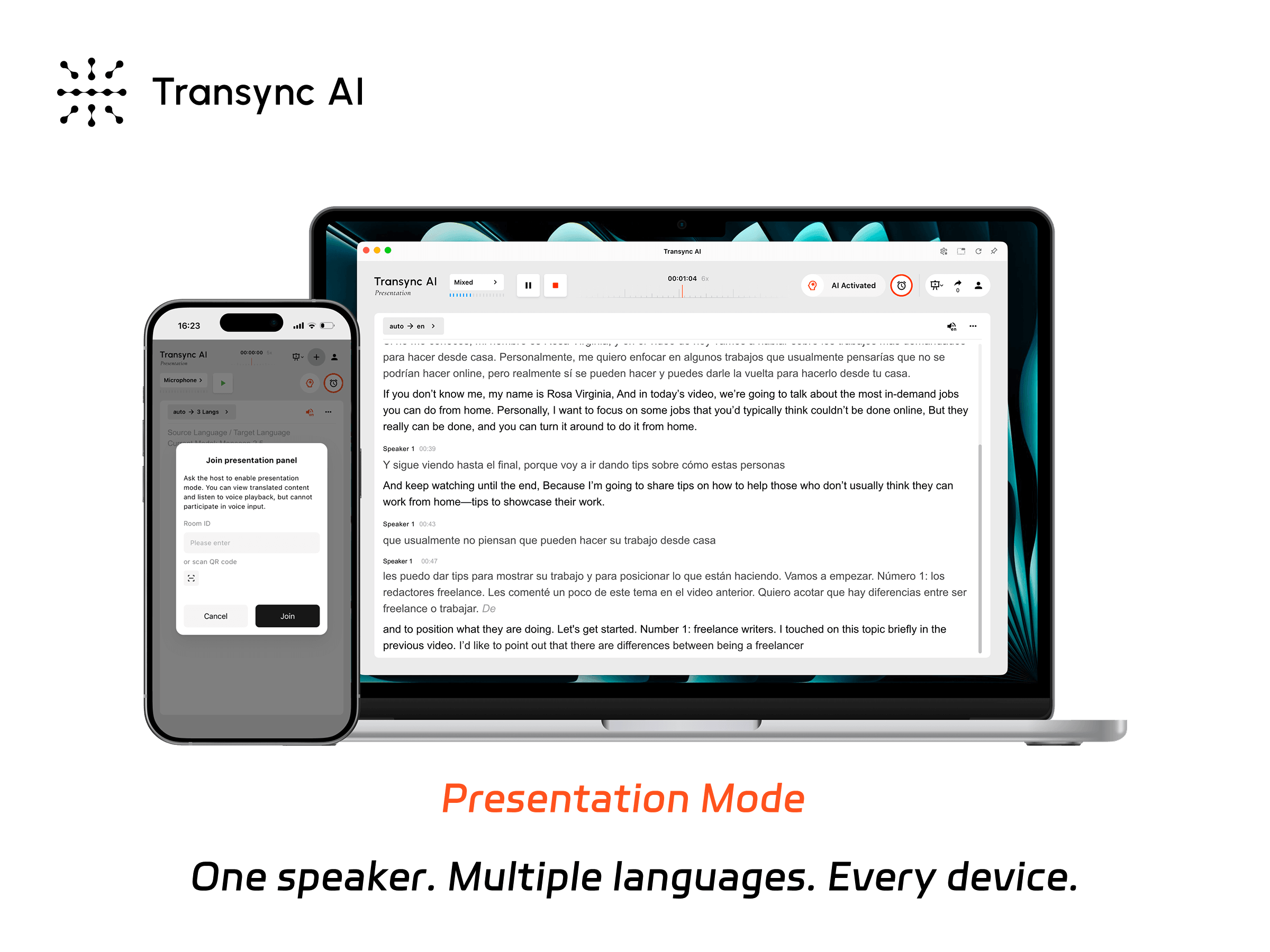
Sunum Modu, sunucunun canlı çeviriyi izleyicilerle kendi cihazları üzerinden paylaşmasına olanak tanır.
Milyonlarca uygulama kullanıcısı
Bu genellikle bir API ve altyapı sorunudur. Google Bulut Çevirisi veya Microsoft Azure Yapay Zeka Çevirmeni Kuruluş temel yapı taşlarını sağlayabilir, ancak kimlik doğrulama, kullanım kontrolleri, izleme, hata yönetimi, insan incelemesi ve kullanıcı arayüzünü tasarlaması gerekir.
Microsoft Azure Yapay Zeka Çevirmeni halihazırda altyapısını geliştiren kuruluşlar için doğal bir adaydır. Azure. Kimlik doğrulama, faturalama, izleme ve diğer yapay zeka hizmetlerinin aynı bulut ortamında yönetilmesi, mimari parçalanmayı azaltabilir. Ancak alıcılar yine de dil kapsamını, özelleştirmeyi, bölgesel dağıtımı ve toplam tüketim maliyetini test etmelidir.
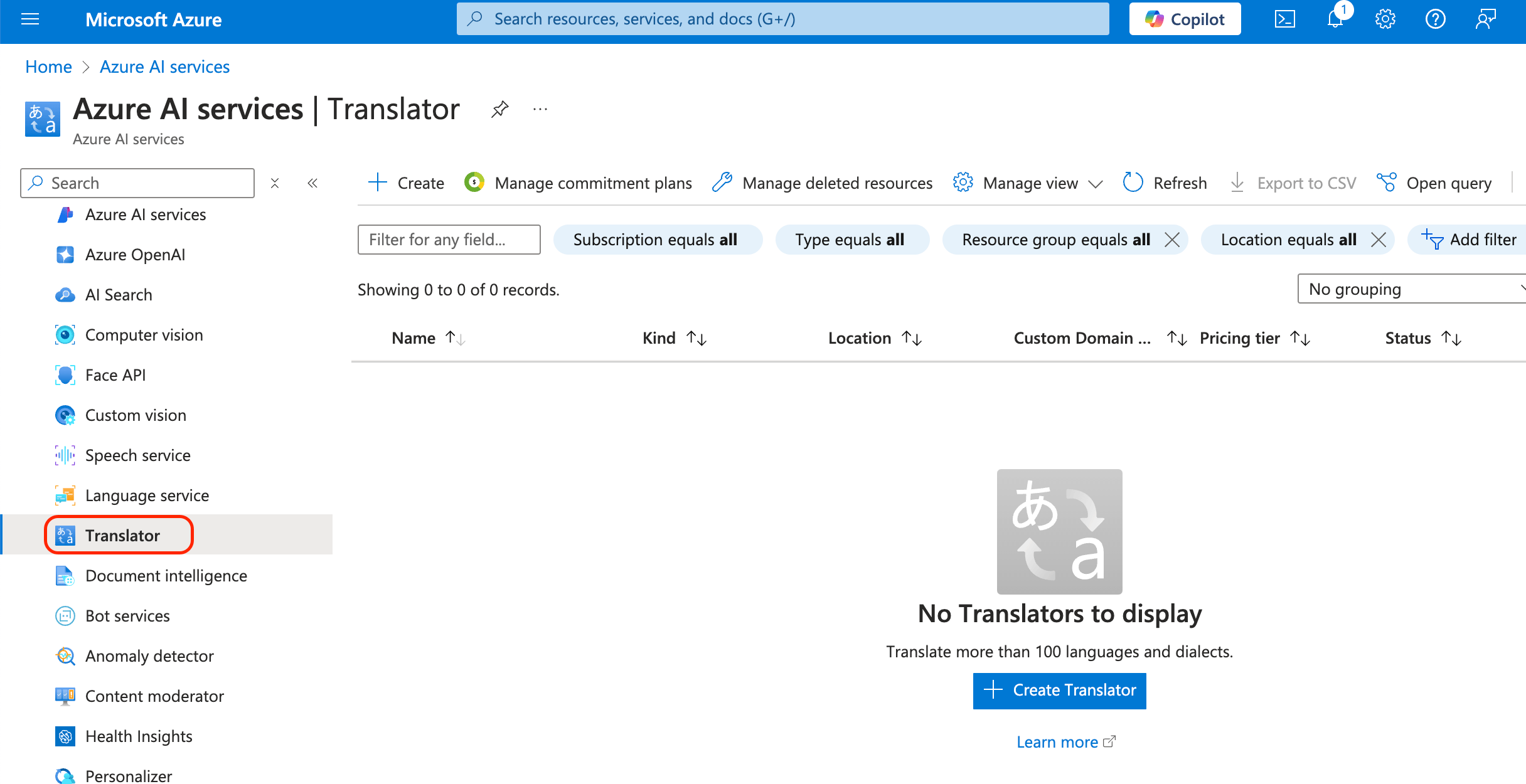
Microsoft Azure Yapay Zeka Çeviricisini keşfedin
Karar 5: Çeviriden Sonra Neler Var Olmalıdır?
Bazı iletişimler son alt başlıktan sonra kaybolur. Diğer iletişimler ise bir karar, görev listesi, uyumluluk kaydı veya müşteri bilgisi haline gelir. Gerekli çıktı, görüşme başlamadan önce seçilmelidir.
Canlı toplantılar için, yapay zeka çeviri aracının şunları sağlayıp sağlayamayacağını sorun:
- Orijinal metin ve çevrilmiş metin.
- Gerektiğinde hoparlörler arası mesafe.
- Toplantının kısa bir özeti.
- Kararlar ve eylem maddeleri.
- Kullanıcı kontrollü paylaşım ve silme.
- Daha sonra incelenmek üzere aranabilir bir kayıt.
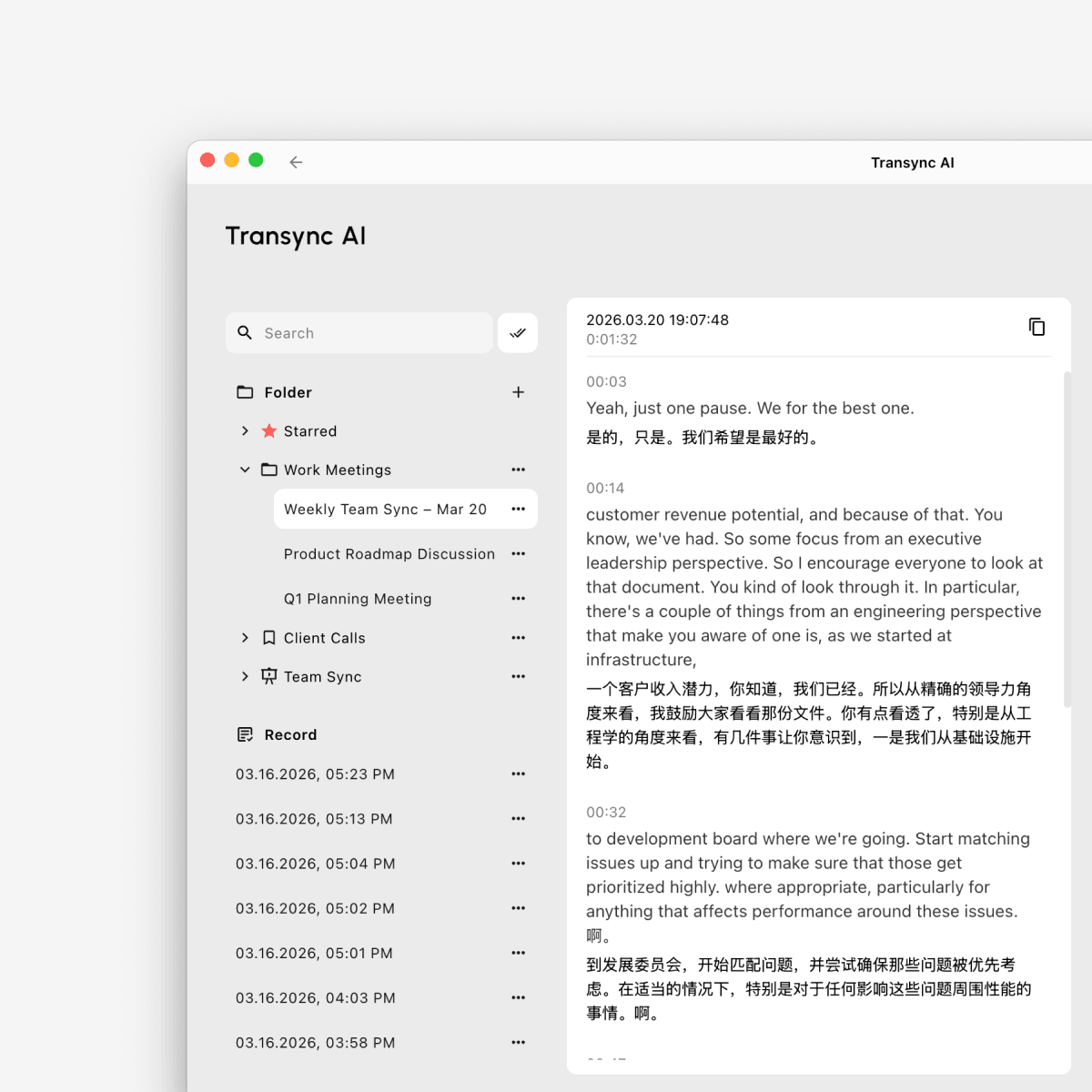
Transync AI üretebilir Yapay zeka toplantı notları Bu, tartışmadan kaynaklanıyor. Bu da önemli bir açığı kapatıyor: Katılımcılar, çevrilmiş konuşmaya odaklanmak ile her detayı manuel olarak kaydetmek arasında seçim yapmak zorunda kalmıyorlar.
 Belge iş akışlarında öncelikler değişir. Ekiplerin biçimlendirmenin korunmasına, revizyonların izlenmesine, bir onay aşamasına veya tekrarlanan içerikte tutarlılığı artıran bir çeviri belleğine ihtiyacı olabilir. DerinL Bu, toplantı odaklı bir araçtan ziyade, bu tür yazılı içerik iş akışına daha doğal bir şekilde uyum sağlar.
API iş akışı için çıktı, insan tarafından okunabilir bir belge yerine JSON formatında olabilir. Google Bulut Çevirisi Ve Microsoft Azure Yapay Zeka Çevirmeni Geliştiricilerin çevrilmiş metinden önce ve sonra ne olacağını kontrol edeceği durumlarda bu durum mantıklı hale gelir.
Karar 6: Kabul Edilebilir Risk Seviyesi Nedir?
Yapay zekâ çevirisi faydalıdır, ancak akıcılık yanlış bir özgüven yaratabilir. Bir cümle, koşul, olumsuzlama, son tarih, dozaj veya yasal yükümlülük değiştirilirken doğal gelebilir. Risk, inceleme sürecini belirlemelidir.
| Risk Seviyesi | Örnek | Önerilen İnceleme |
|---|---|---|
| Düşük | Gayriresmi seyahat sorusu veya içsel beyin fırtınası | Kullanıcı bağlamı kontrol eder ve gerektiğinde açıklama ister. |
| Ilıman | Satış sunumu, eğitim veya genel müşteri desteği | İki dilli değerlendirici, temel terminolojiyi ve taahhütleri kontrol eder. |
| Yüksek | Sözleşme, tıbbi talimat, güvenlik prosedürü veya düzenleyici bildirim | Nitelikli insan çevirmen veya tercüman sorumluluklarını üstlenmeye devam eder. |
Yüksek riskli iletişimde, yapay zekâ çevirisi, bir profesyonelin yerini sessizce almak yerine onu desteklemelidir. Orijinal içeriği koruyun, makine tarafından oluşturulan çıktıyı işaretleyin ve son anlamı kimin onayladığını belirleyin.
Gizlilik de aynı risk değerlendirmesi kapsamında ele alınmalıdır. Ses kayıtlarının saklanıp saklanmadığı, metinlerin muhafaza edilip edilmediği, müşteri verilerinin model eğitimi için kullanılıp kullanılmadığı, silme işleminin nasıl gerçekleştiği, işlemenin nerede yapıldığı ve satın alınan plana hangi sözleşmesel yükümlülüklerin uygulandığı incelenmelidir.
Mevcut duruma göre Transync AI Fiyatlandırma ve güvenlik bilgileri, ses işleme sonrasında silinir, saklanan metin kullanıcı tarafından silinebilir ve kullanıcı açıkça onay vermedikçe veriler varsayılan olarak model eğitimi için kullanılmaz. Kuruluşlar yine de bu bilgileri gözden geçirmelidir. Transync AI Güven Merkezi ve önemli bir görevlendirme öncesinde kendi yasal gereklilikleri.
Karar 7: Tüm İş Akışının Maliyeti Ne Kadar?
En düşük abonelik fiyatı her zaman en düşük maliyet anlamına gelmez. Hazırlık, katılımcı lisansları, geliştirme, entegrasyon, kalite kontrolü, yönetim ve iletişim hatalarının maliyetini de hesaba katın.
Canlı toplantılar için, kullanılabilir saat başına maliyeti hesaplayın ve her katılımcının ücretli bir koltuğa ihtiyacı olup olmadığını sorun. API'ler için, normal ve en yüksek hacimde karakter veya istek sayısını hesaplayın. Belgeler için, gözden geçirenin harcadığı zamanı ve biçimlendirme düzeltmelerini dahil edin. Sunumlar için, izleyici boyutu ve hedef diller arttıkça çok dilli kullanımın nasıl ölçüldüğünü doğrulayın.
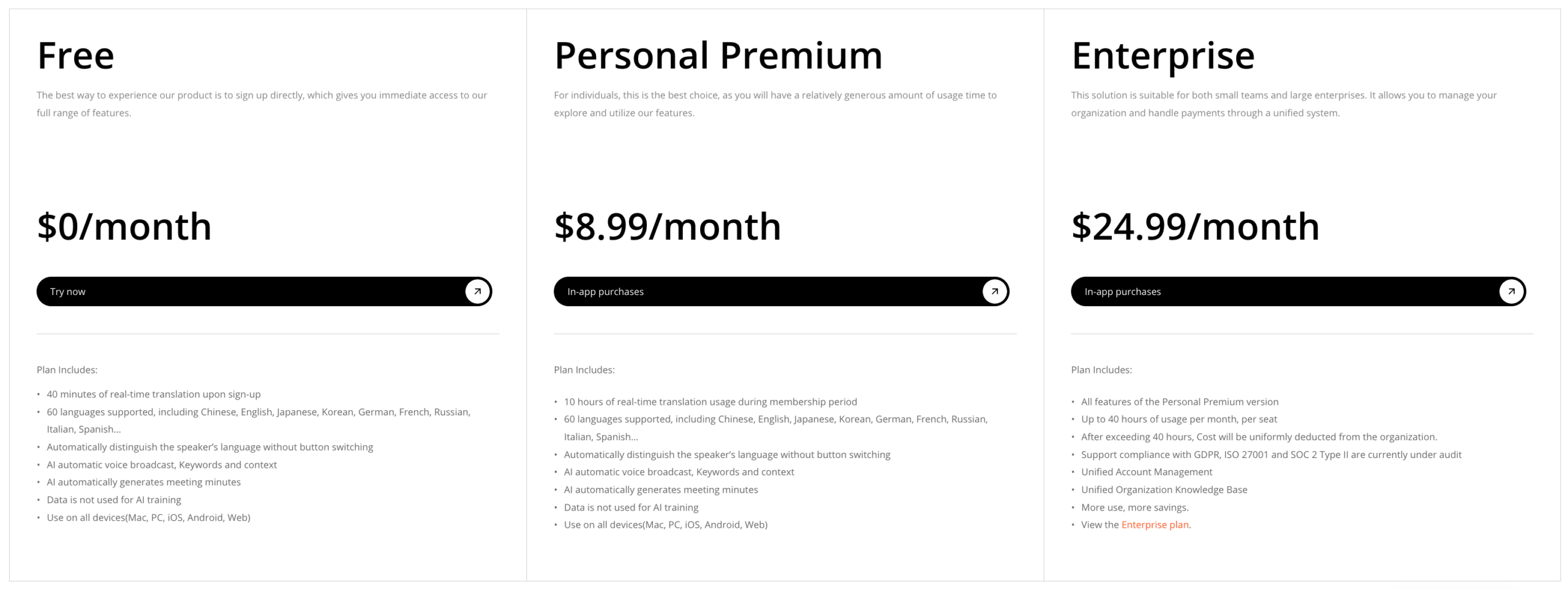
Mevcut Transync AI Planlar listesi:
- Ücretsiz: Kayıt olduktan sonra 40 dakika gerçek zamanlı çeviri ile $0.
- Kişisel Premium: Aylık 10 saat kullanım için $8.99.
- Kurumsal: Koltuk başına aylık $24.99 TL, koltuk başına en fazla 40 saat kullanım.
Çok dilli kullanım, tek yönlü ve çift yönlü çeviriden farklı şekilde ölçülür; bu nedenle Sunum Modu planlayan ekipler şunları kontrol etmelidir: mevcut fiyatlandırma ve kullanım kuralları Bir olayı tahmin etmeden önce.
 API karşılaştırması için farklı bir elektronik tabloya ihtiyaç vardır. Aylık karakter sayısını, belge hacmini, dil çiftlerini, özel model kullanımını, bölgesel altyapıyı, günlük kaydını ve geliştirici bakımını tahmin edin. Bulut hizmeti karakter başına ucuz olabilirken, çevreleyen uygulamanın geliştirilmesi maliyetli olmaya devam eder.
30 Dakikalık Yapay Zeka Çeviri Değerlendirmesi
Seçilen her ürün için aynı materyali kullanın. Kontrollü bir karşılaştırma, birbirinden bağımsız dört ürün tanıtımından daha faydalıdır.
1-5. Dakikalar: Başarıyı tanımlayın
Kaynak dili, hedef dili, hedef kitleyi, kabul edilebilir gecikmeyi, gerekli çıktıyı, terminolojiyi ve risk seviyesini yazın. Sonucu kullanılamaz hale getirecek hataları belirleyin.
6-12. dakikalar: Normal girişin test edilmesi
Gerçekçi bir konuşmayı, sayfayı veya veri setini çevirin. İsimleri, rakamları ve tüm bağlamı ekleyin. Olağanüstü temiz bir pazarlama metniyle başlamayın.
13-18. Dakikalar: İş akışına vurgu yapın.
Konuşmalar için kesintiler ve arka plan gürültüsü ekleyin. Belgeler için tablolar, başlıklar ve tekrarlanan terimler ekleyin. API'ler için boş alanları, uzun dizeleri, hız sınırlamalarını ve hata yanıtlarını test edin.
19-23. Dakikalar: Çıktıyı inceleyin.
Anlamı, eksiklikleri, terminolojiyi, düzeni, zamanlamayı ve sonucu daha sonra bulma olanağını kontrol edin. Her manuel düzeltmeyi kaydedin.
24-27. Dakikalar: Erişim ve gizlilik konularının gözden geçirilmesi
Başka bir kişinin nasıl katıldığını, hangi izinlerin mevcut olduğunu, kayıtların nerede göründüğünü ve verilerin silinebilir olup olmadığını test edin. İlgili güvenlik ve gizlilik belgelerini okuyun.
28-30. Dakikalar: Gerçek maliyeti hesaplayın
Fiyatı, gerçek aylık hacminize göre tahmin edin, ardından uygulama ve insan inceleme süresini ekleyin. En uzun özellik listesine sahip olan değil, en iyi tamamlanmış iş akışına sahip olan aracı seçin.
Yapay Zeka Çeviri Karşılaştırma Puan Kartı
| Kriter | Toplantılar için ağırlık | Belgeler için ağırlık | API'ler için ağırlık |
|---|---|---|---|
| Anlam ve terminoloji | 25% | 35% | 25% |
| Hız veya verimlilik | 20% | 10% | 20% |
| Katılımcı veya kullanıcı deneyimi | 20% | 5% | 10% |
| Bağlam ve özelleştirme | 10% | 20% | 15% |
| Kayıtlar ve çıktı formatı | 10% | 15% | 10% |
| Güvenlik ve yönetim | 10% | 10% | 10% |
| Komple iş akışı maliyeti | 5% | 5% | 10% |
Her bir kriteri birden beşe kadar puanlayın, ilgili ağırlıkla çarpın ve puanın arkasındaki kanıtları belgeleyin. Bu, kararı finans, BT, güvenlik ve aracı fi fiilen kullanacak kişiler için açıklanabilir hale getirir.
Yapay Zeka Çevirisinde Sık Yapılan Hatalar
Dil çiftini test etmek yerine dil sayısını satın almak
Uzun bir dil listesi, tam olarak kullandığınız kaynak-hedef dil çiftinin aksanınız, terminolojiniz ve formatınız için iyi performans gösterdiğini kanıtlamaz. Gerçek dil çiftini test edin.
Bir metni yorumlama olarak ele almak
Konuşmadan metne dönüştürme, orijinal dildeki kelimeleri yakalar. Yapay zekâ çevirisi aynı zamanda anlamı da aktarmalıdır ve eksiksiz bir tercüman iş akışı, dinleyicinin yanıt verebilmesi için yeterince hızlı bir şekilde bunu sunmalıdır.
İşe başlama deneyimini göz ardı etmek
Teknik açıdan güçlü bir sunum bile, 200 izleyicinin doğru bağlantıyı bulamaması, giriş yapamaması veya dil seçememesi durumunda başarısız olabilir. İlk iki dakikayı izleyicinin bakış açısından prova edin.
Ses kalitesi akıcı olduğu için insan incelemesi atlanıyor.
Akıcılık, olgusal veya hukuki eşdeğerliğin kanıtı değildir. Hata yapmanın sonuçları arttıkça, profesyonel incelemeyi de artırın.
Sadece manşet fiyatlarını karşılaştırmak
Lisanslar, API hacmi, çok dilli ölçümleme, geliştirme, inceleme ve yönetim aynı maliyet modeline dahildir.
Sıkça Sorulan Sorular
Yapay zekâ çevirisi nedir?
Yapay zekâ çevirisi, makine öğrenimi modellerini kullanarak anlamı bir dilden diğerine dönüştürür. Ürüne bağlı olarak, girdi metin, belge veya canlı konuşma olabilir ve çıktı çevrilmiş metin, altyazı, sentezlenmiş ses, yapılandırılmış veri veya tamamen yerelleştirilmiş bir dosya olabilir.
Yapay zekâ çevirisi ile makine çevirisi aynı şey midir?
Bu terimler örtüşüyor. Makine çevirisi geleneksel olarak otomatik metin çevirisini ifade ederken, yapay zeka çevirisi günümüzde sinir ağları modelleri, çeviri dilbilgisi modelleri, konuşma tanıma, canlı tercüme iş akışları, bağlamsal yardım ve üretken son işlem gibi daha geniş bir anlamda kullanılmaktadır.
Canlı toplantılar için en iyi yapay zeka çeviri aracı hangisidir?
Transync AI Çok dilli toplantılar için güçlü bir başlangıç noktasıdır çünkü çift dilli altyazıları, çevrilmiş sesi, bağlamı, toplantı platformu uyumluluğunu ve notları bir araya getirir. Ekibinizin kullanacağı diller, mikrofonlar, ağ ve konferans kurulumuyla test edin.
Belge çevirisi için en iyi yapay zeka çeviri aracı hangisidir?
DerinL Çevrilmiş belgeler, terminoloji tutarlılığı ve yazım stili ön planda olduğunda uygun bir adaydır. Temsili bir dosya ve iki dilli bir inceleyici kullanarak diğer belge platformlarıyla karşılaştırın.
Geliştiriciler için en iyi yapay zeka çeviri hizmeti hangisidir?
Google Bulut Çevirisi Ve Microsoft Azure Yapay Zeka Çevirmeni Her ikisi de değerlendirilmeyi hak ediyor. En iyi seçim, model gereksinimlerine, dil desteğine, özelleştirmeye, bulut mimarisine, bölgesel dağıtıma, kullanım hacmine ve mühendislik ekibinin mevcut becerilerine bağlıdır.
Yapay zekâ çevirisi profesyonel çevirmenlerin yerini alabilir mi?
Taslak hazırlama ve rutin iletişimi hızlandırabilir, ancak yüksek riskli yasal, tıbbi, güvenlik ve düzenleyici içerikler nitelikli insan incelemesi altında kalmalıdır. Karar, yalnızca görünür akıcılığa değil, sonuçlara dayanmalıdır.
Son Tavsiye
Yapay zekâ çevirisi, araç iletişim görevine göre seçildiğinde başarılı olur. Giriş ve çıkışla başlayın, ardından gecikmeyi, bağlamı, katılımcıları, kayıtları, riski ve toplam maliyeti değerlendirin. Bu sıralama, genel bir doğruluk sıralamasından daha net bir karar vermeyi sağlar.
Canlı iki yönlü toplantılar ve çok dilli sunumlar için, Transync AI Konuşma ve altyazılardan çevrilmiş sese ve notlara kadar tutarlı bir iş akışı sunar. Belge merkezli çalışmalar için değerlendirin. DerinL. Yazılıma gömülü çeviri için karşılaştırınız. Google Bulut Çevirisi Ve Microsoft Azure Yapay Zeka Çevirmeni Ekibinizin halihazırda kullandığı mimari içinde.
Hangi seçeneği seçerseniz seçin, onu gerçek dil, gerçek gürültü, gerçek terminoloji ve gerçek değerlendirme gereksinimleriyle test edin. En değerli yapay zeka çeviri sistemi, en etkileyici demoyu üreten değil, insanların daha az zorlukla anlamasına, yanıt vermesine ve hareket etmesine yardımcı olan sistemdir.
Resmi Kaynaklar
- Transync AI fiyatlandırma ve kullanım kuralları
- Google Bulut Çevirisi dokümantasyon
- DerinL API dokümantasyonu
- Microsoft Azure Yapay Zeka Çevirmeni ürün sayfası
Yeni nesil bir deneyim istiyorsanız, Transync AI Konuşmaların doğal bir şekilde akmasını sağlayan gerçek zamanlı, yapay zeka destekli çeviriyle öncülük ediyor. ücretsiz deneyin Şimdi.