

A program that translates should match your input and output. Use five critical questions to choose tools for meetings, files, video, websites, or apps.
ए program that translates is not one type of software. The phrase can describe an app that interprets speech during a meeting, a document system that preserves a PDF layout, a video editor that creates dubbed tracks, a website layer that publishes multilingual pages, or a localization platform that keeps software strings synchronized with each release.
That is why searching for one universal download often produces a disappointing result. The program may translate the words correctly and still fail the job: a text box cannot help two people answer each other in real time, live captions cannot rebuild a formatted contract, and a translated video file cannot keep an ecommerce catalog synchronized tomorrow.
This guide uses a different method. Before choosing a program that translates, fill in five blanks: input, timing, deliverable, reviewer, and data route. The completed “translation prescription” tells you which product category to test. It also prevents feature lists from hiding the cost of correction, publishing, and maintenance.
The 30-Second Translation Prescription
Complete this sentence before opening a pricing page:
“स्रोत है ___. Translation must happen ___. The recipient needs ___. ___ approves errors. The content may be processed ___.”
उदाहरण के लिए:
“The source is live Japanese and English speech. Translation must happen during a weekly call. Participants need bilingual subtitles, translated voice, and notes. The meeting owner reviews names and decisions. The content may use an approved cloud service.”
That requirement points toward meeting translation—not a document engine, browser pop-up, video dubber, or developer API. A different answer creates a different route.
Which Program That Translates Fits the Job?
| Translation job | Representative product | Source entering the system | Useful output | Human responsibility | महत्वपूर्ण सीमा |
|---|---|---|---|---|---|
| लाइव मीटिंग और प्रस्तुतियाँ | Transync AI | Microphone, configured meeting audio, or a presenter’s speech | Bilingual captions, translated voice, records, and audience languages | Verify names, terms, commitments, and audio delivery | Not a document-layout or offline image translator |
| Documents and scanned files | स्मार्टकैट | DOCX, PDF, PPTX, XLSX, images, and other supported files | Translated file with formatting, glossary, memory, and review workflow | Check meaning, layout, OCR, formulas, and final approval | A finished-looking export is still a translation draft |
| Recorded video and audio | मेस्त्रा | Uploaded media, links, recordings, or subtitle files | Subtitles, dubbed audio, voice cloning, lip sync, and exports | Review transcript, timing, pronunciation, and visual sync | Post-production media is different from live conversation |
| Public website | Weglot | Website pages, menus, widgets, dynamic content, and media | Published language versions, language switcher, translated URLs, and multilingual SEO | Review high-value pages, glossary, navigation, and market claims | Word, language, request, and plan limits affect scale |
| Software, app, or game localization | वाक्यांश | Keys, strings, resource files, screenshots, and release branches | Managed translations synchronized with development | Protect variables, placeholders, length, context, and release quality | Not a consumer translator for an occasional sentence |
| Self-hosted translation API | LibreTranslate | Text or files sent by software to a controlled endpoint | Machine-translated output returned by API | Operate infrastructure, secure access, test quality, and monitor failures | Self-hosting creates engineering and maintenance work |
Product capabilities were checked against official sources on September 24, 2026. Language coverage, limits, plans, and integrations can change.
The table is a routing board, not a universal ranking. A company may need more than one program that translates because a Monday sales call, Tuesday contract, Wednesday training video, and Thursday software release have different inputs and definitions of “done.”
Question 1: What Enters the Program?
The source is the first filter. Name the object before naming the vendor.
- लाइव भाषण requires audio capture, speech recognition, language detection, translation, readable timing, and sometimes text-to-speech.
- Editable documents require file parsing, translation, formatting preservation, glossary application, and a reviewable export.
- Scanned documents add optical character recognition before translation even starts.
- रिकॉर्ड किए गए मीडिया adds transcription, time codes, subtitle layout, dubbing, pronunciation, and synchronization.
- वेबसाइटें add page discovery, navigation, dynamic content, language URLs, search indexing, and continuous updates.
- सॉफ्टवेयर इंटरफेस add keys, variables, plurals, screenshots, character limits, branches, and release automation.
- API requests add authentication, rate limits, retries, monitoring, and application-side validation.
If the source is “whatever users upload,” split it into real file types. A clean DOCX, a scanned PDF, an SRT subtitle file, and a live microphone may all contain language, but they do not enter the same pipeline.
ए program that translates should prove it accepts the real input without destructive conversion. Test one representative source with tables, names, numbers, jargon, overlapping speakers, variables, or poor scans. A polished sentence pasted into a demo box is not equivalent evidence.
Question 2: When Must the Translation Be Useful?
“Fast” has at least three meanings.
During the event
In a meeting, participants must receive the meaning soon enough to answer. Measure stable latency from speech to usable translation. The first partial caption may appear quickly and then rewrite itself several times; that is not the same as a stable sentence.
Before publication
A document or video can take longer if the workflow gives editors enough control to correct it. Here, throughput, batch processing, review time, and export quality matter more than conversational latency.
Continuously after every change
A website or software product is never translated only once. New pages, revised prices, interface strings, and release branches must enter the process without creating a manual copy-and-paste project every day.
मूल्यांकन करते समय program that translates, write a real deadline: “under two seconds for a participant response,” “reviewed by 4 p.m.,” or “available in the next release branch.” Without that threshold, every vendor can claim speed.
Question 3: What Must the Recipient Receive?
Translation output is not simply “another language.” Ask what the recipient must do next.
| Recipient action | Output that supports it | Output that may look useful but is insufficient |
|---|---|---|
| Reply during a call | Stable captions and/or translated voice delivered during the conversation | A transcript emailed after the meeting |
| Approve a contract draft | Bilingual, editable file with preserved numbering and tracked review | Plain translated text detached from the clauses |
| Watch a localized lesson | Timed subtitles or reviewed dubbed audio synchronized to video | A transcript without time codes |
| Browse and buy on a website | Published pages, localized navigation, translated URLs, and consistent product terminology | A translated spreadsheet that never reaches the site |
| Ship an app release | Valid resource files with variables, context, QA, and branch alignment | Translated UI strings pasted into a document |
| Add translation to software | Authenticated API response with error states, monitoring, and tested quality | A consumer webpage that cannot be integrated reliably |
एक उपयोगी program that translates owns enough of the delivery path to reduce handoffs. It does not need to do everything. It does need to make its boundary clear so the buyer knows which work remains.
Question 4: Who Can Correct and Approve the Result?
Machine output can be fluent and wrong. Names, negations, currencies, measurements, dates, regulated phrases, and UI variables deserve explicit checks.
The required reviewer depends on consequence:
- A traveler understanding a menu may accept rough meaning.
- A sales team should confirm names, prices, commitments, and next steps.
- A marketing editor should review tone, claims, and cultural fit.
- A product team should test placeholders, expansion, layout, and functionality.
- Legal, medical, immigration, safety, and regulatory content needs qualified professionals with responsibility for the result.
Look for a correction surface appropriate to the job: a bilingual meeting record, a side-by-side document editor, a subtitle timeline, a visual website editor, or an in-context string editor. A program that translates without a practical review step can shift its saved minutes into expensive cleanup.
Question 5: Where Does the Content Travel and Remain?
“AI translation” does not describe a data route. Map it.
source device → capture or upload → recognition/OCR → translation engine → editor → storage → export → deletion
For every arrow, ask:
- Is the content sent to a cloud service or kept on controlled infrastructure?
- Which subprocessors or model providers receive it?
- Is audio retained, or only text?
- Can the vendor use data to train models?
- Who can view, share, download, or delete records?
- Can administrators enforce access, retention, and account removal?
- Does uninstalling the app leave cloud records behind?
Self-hosted software changes the answer, but it does not eliminate responsibility. The organization still owns patching, network security, authentication, backups, logs, model quality, and disaster recovery. A managed service may be easier to govern if its contractual controls match the risk.
The safest program that translates is not automatically the one with the word “local” on its homepage. It is the one whose complete data flow has been documented and approved for the content involved.
Six Specialist Routes After the Five Questions
1. Transync AI for speech that must become a conversation
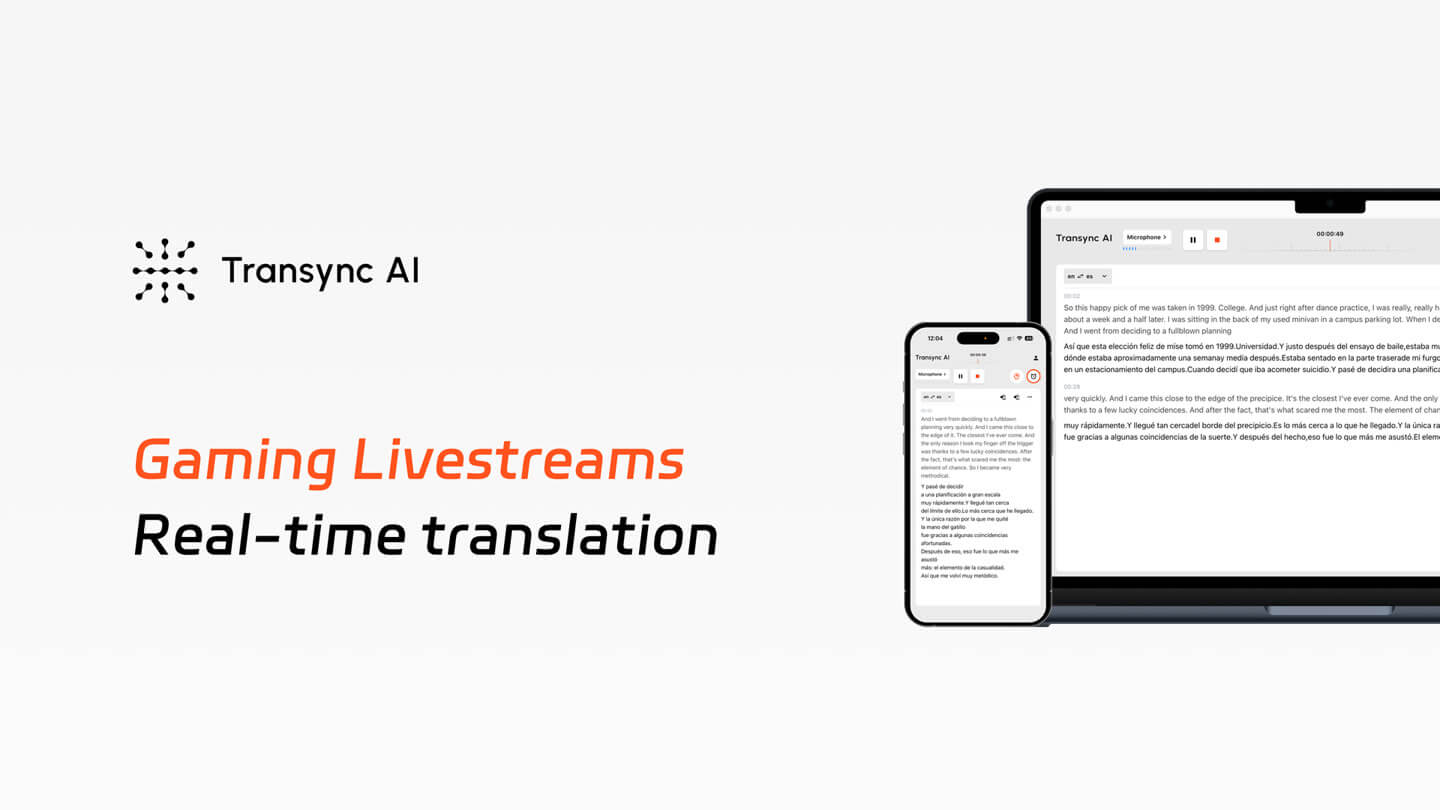
Transync AI is designed for multilingual meetings, calls, presentations, and in-person conversations. Its वास्तविक समय अनुवाद supports 60 languages and presents original speech beside the translation, helping participants verify meaning while the conversation continues.
यह program that translates can also provide AI वॉयस प्लेबैक when participants need to listen rather than only read. Before a meeting, मुख्य शब्द और संदर्भ can prepare names, acronyms, specialist terms, and background. Afterward, एआई मीटिंग नोट्स can preserve a transcript and structured follow-up.
For one-to-many sessions, प्रस्तुति मोड यह सुविधा होस्ट को अधिकतम 10 लक्षित भाषाओं को सक्षम करने की अनुमति देती है। दर्शक लिंक, क्यूआर कोड या रूम आईडी के माध्यम से जुड़ते हैं और अनुवादित उपशीर्षकों और वैकल्पिक ध्वनि प्लेबैक के लिए सक्षम भाषा का चयन करते हैं।.
चुनना Transync AI when the recipient must understand and respond while someone is still speaking. Do not choose it as a general text, image, or document-layout translator. It requires an internet connection, and audio routing, microphones, headphones, language pairs, and remote delivery should be tested before an important event.
Transsync AI को मुफ़्त में आज़माएँ
2. स्मार्टकैट for files that must survive translation
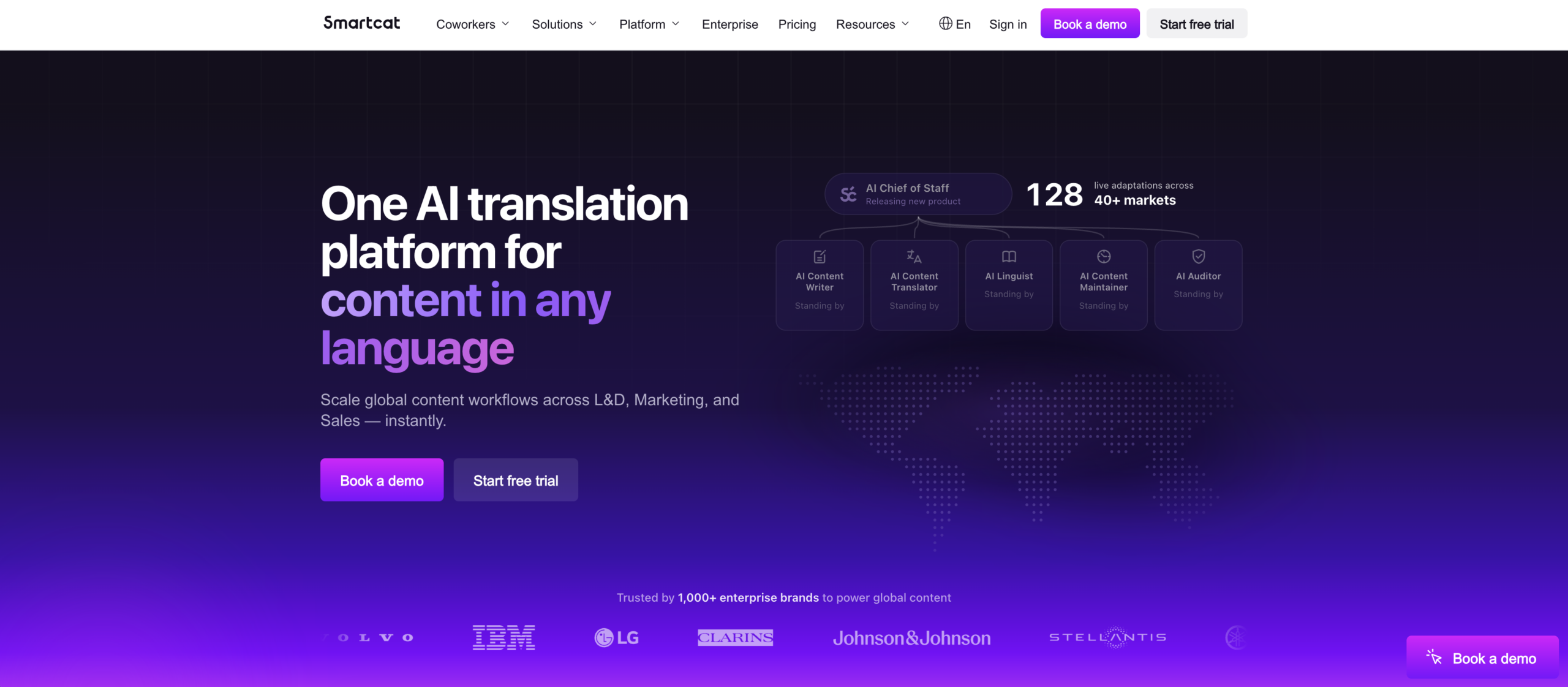
स्मार्टकैट is a stronger route when the source is a document rather than live speech. Its current document translator describes support for more than 80 formats, including common office files, PDFs, images, localization files, subtitles, and media. Built-in OCR can extract text from scanned material, while glossaries and translation memory help reuse approved terminology.
The important test is not whether स्मार्टकैट creates a translated file. It is whether the export preserves tables, numbering, headers, footers, fonts, images, and other structure in the buyer’s actual format. The company’s documentation also identifies a specific spreadsheet boundary: calculated cells should be checked because formulas may not return as working formulas after export.
Choose this route when a program that translates must return an editable, formatted artifact for review. Inspect every high-risk element and treat the export as a draft until an accountable reviewer approves both meaning and layout.
स्मार्टकैट के बारे में और जानें
3. मेस्त्रा for recorded media that needs new language tracks
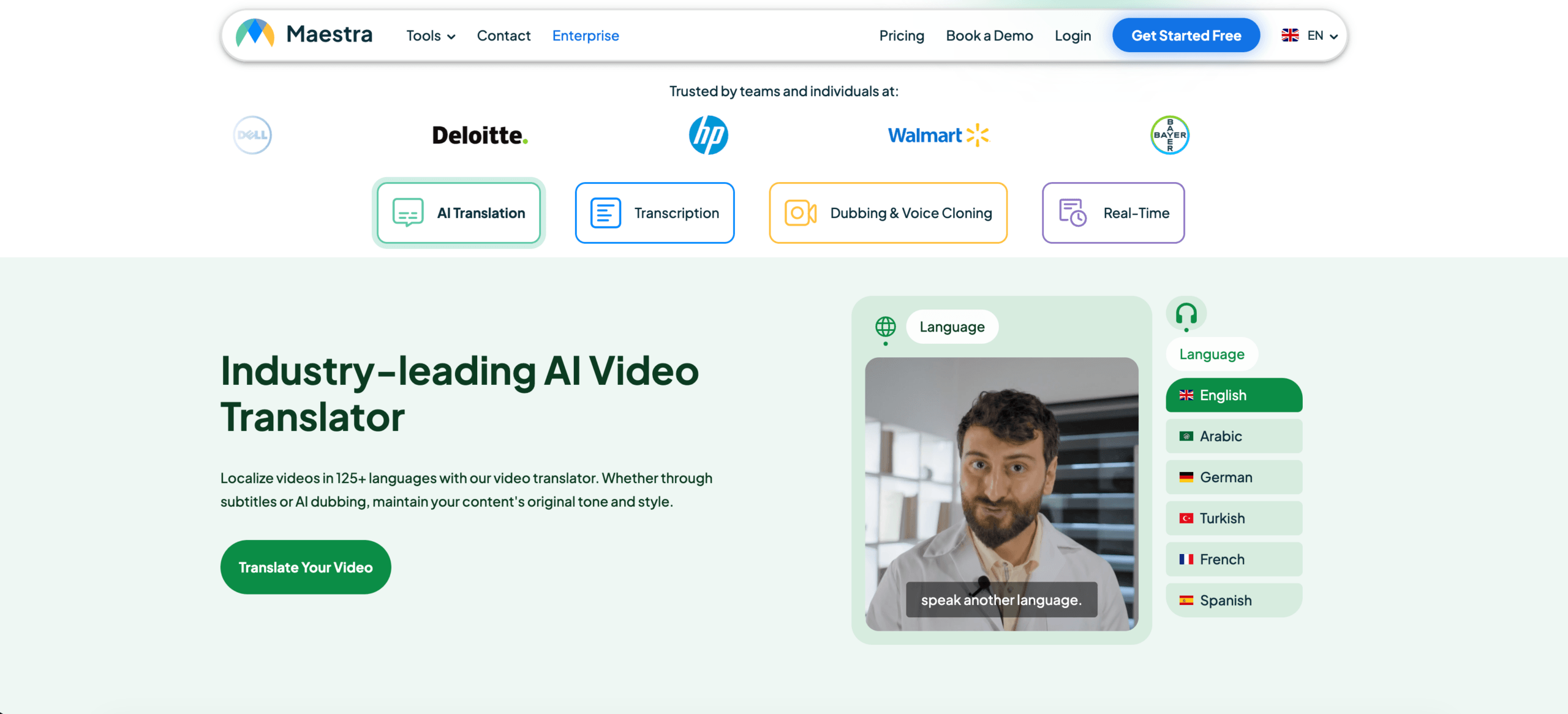
मेस्त्रा specializes in recorded audio and video. Its current video workflow accepts common media files and links, then produces translated subtitles, dubbed audio, voice-cloned output, and lip-sync options in an editor. Subtitle exports include formats such as SRT and VTT, while finished video can be exported with subtitles or dubbed audio.
This is a post-production workflow. Review the source transcript before judging the translation, then inspect names, timing, line breaks, reading speed, pronunciation, speaker identity, background audio, and visual synchronization. Technical jargon, heavy accents, and overlapping speakers are explicit reasons to expect editing.
चुनना मेस्त्रा when a program that translates must turn an existing recording into publishable multilingual media. A training library or marketing video benefits from timeline control; a negotiation happening now needs a meeting translator instead.
4. Weglot for a website that keeps changing
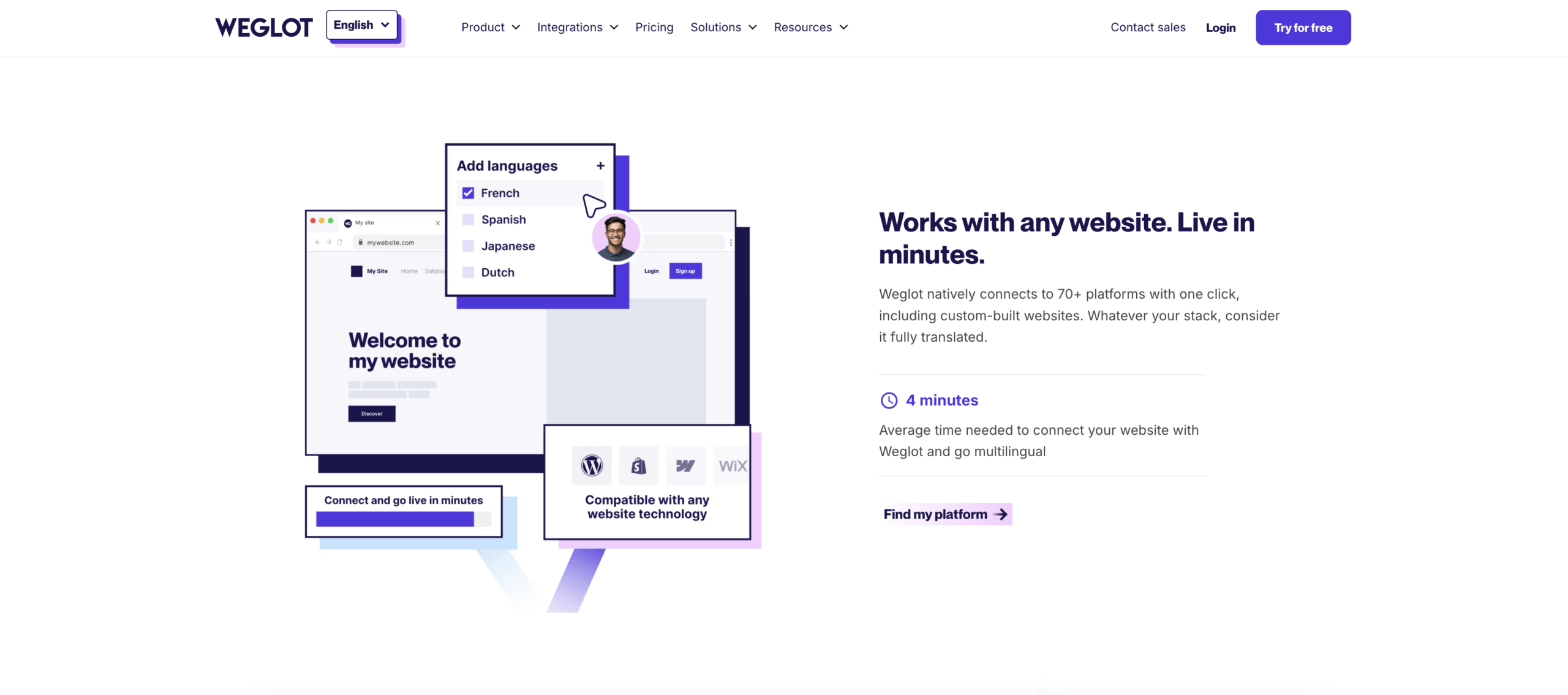
Weglot is designed to discover, translate, display, and update website content. Its current materials describe translation for more than 110 languages, glossary rules, manual editing, media translation, language redirection, translated URLs, multilingual SEO, and automatic handling of newly added or changed content.
The pricing model makes scoping important. Plans are differentiated by translated word allowance, number of translated languages, sites, requests, and advanced functions. Count the real website words, include hidden or dynamic content, estimate language versions, and test the pages responsible for revenue or compliance.
चुनना Weglot when the desired output is a live multilingual website, not a folder of translated copy. A program that translates a webpage must also publish navigation, preserve links, expose the language switcher, and keep future changes synchronized.
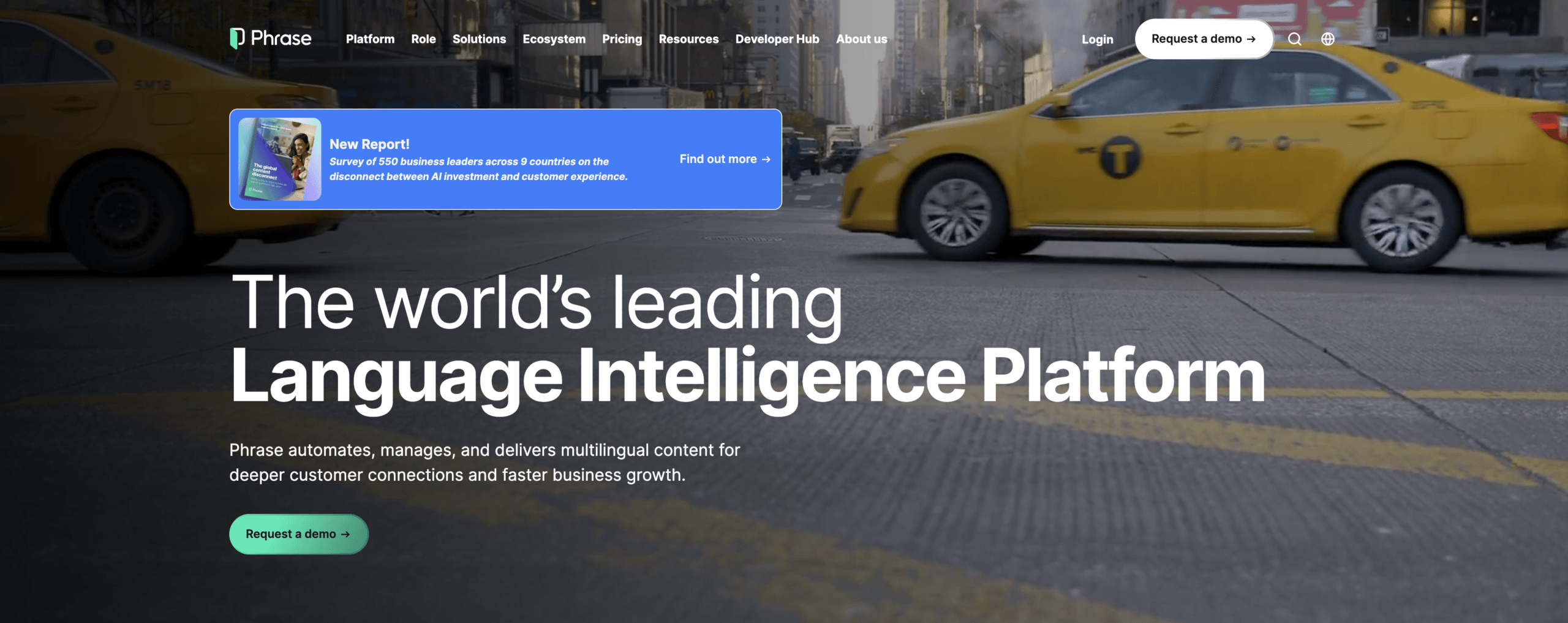
5. वाक्यांश for software strings that ship repeatedly
वाक्यांश is built for software and digital-product localization. Its Strings environment manages keys, locales, review workflows, screenshots, placeholders, tags, branching, quality checks, and localization files. Official materials describe synchronization with code repositories and support for continuous localization across product versions and release branches.
This category protects information that ordinary sentence translators do not understand. A variable such as {user_name}, a plural rule, a button-width limit, or a screenshot showing context can determine whether the translated interface works. Translation memory and terminology improve consistency, while automated QA can flag missing variables, length problems, or structural mistakes before release.
चुनना वाक्यांश when the buyer needs a program that translates product strings as part of development. It is unnecessary complexity for a one-time email or a face-to-face conversation, but it solves the repeatability problem that generic translators leave to engineers.
6. LibreTranslate for a self-hosted API building block
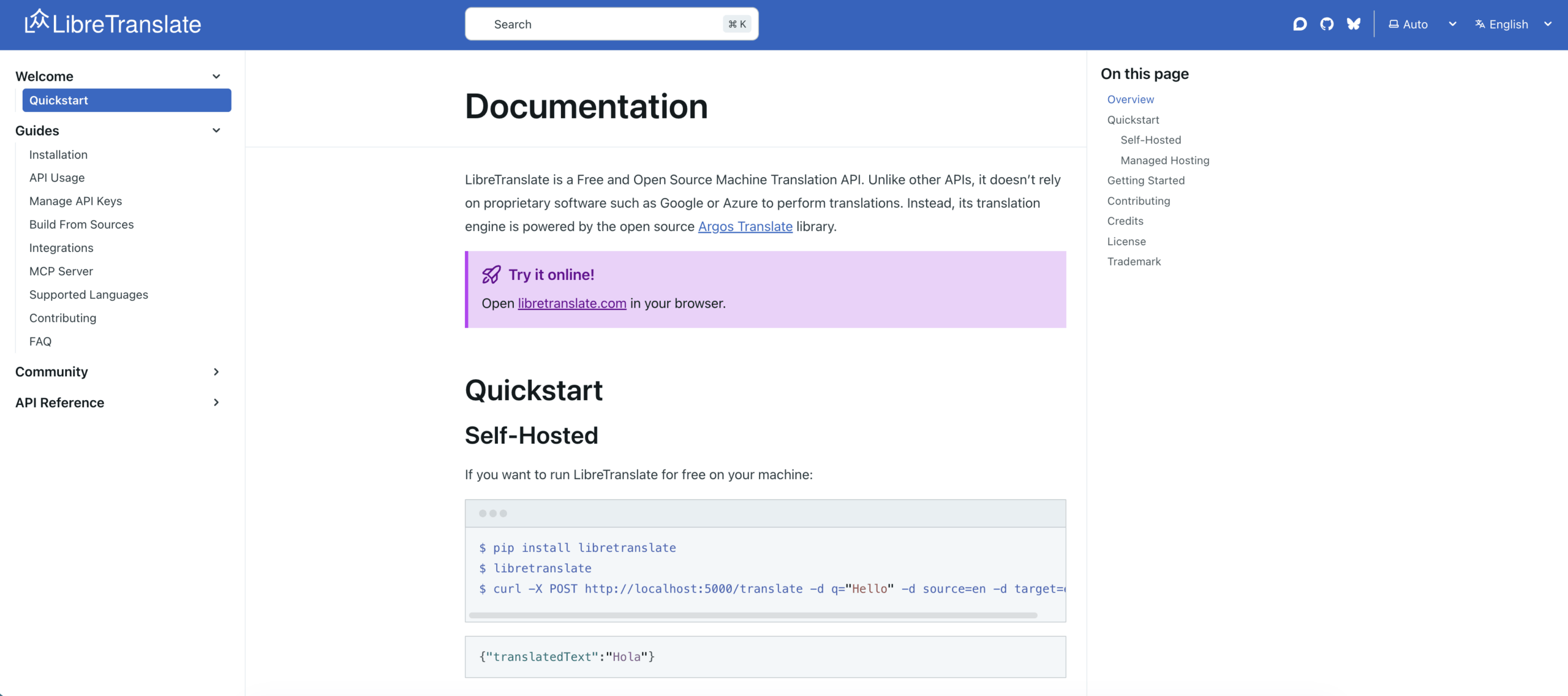
LibreTranslate is a free and open-source machine translation API powered by the open-source Argos Translate engine. The official repository describes it as entirely self-hosted and offline-capable, with deployment options for local systems and containers. It can also be accessed through hosted instances, which creates a different data route from self-hosting.
This is a component, not a finished enterprise translation workflow. A technical team must deploy it, restrict access, manage models, monitor capacity, test language quality, handle requests and errors, patch dependencies, and build the user interface or integration around it. “No license fee” does not mean “no operating cost.”
चुनना LibreTranslate when developers need a controllable program that translates text through an API and accept responsibility for infrastructure and quality. Do not choose it merely because a nontechnical employee needs to translate a weekly meeting.
A 20-Minute Test for Any Program That Translates
Minutes 1–4: define “done”
Write the five-blank prescription. Specify the actual source, deadline, output, reviewer, and permitted data route. Add one failure that would make the result unusable.
Minutes 5–8: prepare hostile but realistic evidence
Include two names, two specialist terms, a date, a decimal, a currency value, a negation, and one correction. For files, add a table, link, header, and image-based text. For speech, add an interruption and normal background noise. For software, add a variable and a plural.
Minutes 9–12: observe the whole path
Do not stop at the generated words. Confirm that the intended recipient can hear, read, edit, publish, deploy, or export the result. Count every manual conversion and copy-paste step.
Minutes 13–16: correct the result
Time how long it takes to repair a name, term, fact, and layout problem. Check whether the correction is remembered for the next file, page, meeting, or release.
Minutes 17–20: force failure
Disconnect the network, use an unsupported file, exceed a limit in a test account, revoke access, or introduce malformed content. A trustworthy program that translates should reveal failure clearly and preserve the source rather than silently publishing incomplete output.
Record generation time, correction time, publishing time, expected monthly usage, and reviewer cost. The fastest first draft may have the slowest route to an approved result.
Common Category Mistakes
Translation is not transcription
Transcription turns speech into text in the same language. Translation changes language. Live speech translation often contains transcription as its first stage, so an error in the source transcript can propagate into a fluent but incorrect translation.
Translation is not localization
Localization adapts the complete experience for a market. It may change dates, currencies, units, images, URLs, layout, legal statements, product availability, and cultural references in addition to language.
Subtitles are not dubbing
Subtitles provide timed text. Dubbing creates a target-language audio track. Voice identity, pronunciation, timing, lip movement, mixing, and consent become relevant when the output speaks.
AI interpreting is not certified human interpreting
Automated tools can improve access and speed, but they cannot accept professional responsibility. Use qualified human translators or interpreters for legal effect, informed medical consent, immigration, safety, regulatory filings, and other high-consequence communication.
These distinctions help a buyer reject a program that translates the language but not the actual deliverable.
Program That Translates FAQ
What is a program that translates?
ए program that translates converts spoken, written, recorded, website, or software content into another language. Different product categories handle different inputs and outputs, so the source and desired deliverable should be defined before choosing software.
Which program that translates is best for live meetings?
Transync AI is the meeting-first candidate in this comparison because it combines live bilingual subtitles, translated voice, terminology preparation, cross-platform use, records, and AI notes. Test the exact languages, audio routing, latency, and remote-participant experience before adoption.
Which program that translates is best for documents?
स्मार्टकैट is a document-focused candidate when formatting, OCR, glossaries, translation memory, and human review matter. The correct choice still depends on the real file type, layout complexity, target language, confidentiality, and approval process.
Can one program translate meetings, PDFs, videos, websites, and software?
Some platforms cover several formats, but a broad feature list does not make every workflow equally strong. Organizations often use a small stack: one tool for live communication, another for reviewed content, and a localization system for continuously changing digital products.
Is there a program that translates completely offline?
Self-hosted and offline-capable engines such as LibreTranslate can run on controlled infrastructure when properly deployed. The organization must still manage models, security, updates, access, storage, backups, performance, and quality.
How much should a translation program cost?
Include subscription or API charges, included usage, extra languages, storage, implementation, review time, corrections, publishing, and maintenance. Transync AI currently lists 40 free minutes after registration, Personal Premium at 8.99 per month with 10 hours, and Enterprise at 24.99 per month per seat with up to 40 hours. Other categories may charge by words, languages, users, media minutes, requests, or custom contracts.
Final Prescription
Do not begin with “Which app has the most languages?” Begin with the five blanks:
input → timing → deliverable → reviewer → data route
A meeting needs participation. A document needs a controlled file. A video needs synchronized media. A website needs continuous publishing. Software needs release-safe strings. An API needs engineering and operations.
सर्वश्रेष्ठ program that translates is the smallest reliable system that carries the real source all the way to an approved, usable output. Write that route first, test it with representative evidence, and let the workflow—not the longest feature page—choose the software.
यदि आप अगली पीढ़ी का अनुभव चाहते हैं, Transync AI वास्तविक समय, AI-संचालित अनुवाद के साथ अग्रणी है जो बातचीत को स्वाभाविक रूप से प्रवाहित रखता है। आप मुफ्त में आजमाएं अब।