Looking for chinese language translation software that handles Mandarin, Cantonese, and other dialects in real-time? Modern translation technology has transformed business communication with Chinese-speaking markets.
Chinese language translation software is artificial intelligence technology that translates spoken or written Chinese to other languages and vice versa in real-time. Whether you’re expanding into Chinese markets, managing teams across China, Taiwan, Hong Kong, and Singapore, or conducting business with Chinese-speaking partners, professional chinese language translation software is critical infrastructure.
But complexity matters. Chinese language presents unique translation challenges: multiple writing systems (Simplified vs. Traditional), multiple spoken dialects (Mandarin, Cantonese, Shanghainese, etc.), tonal variations affecting meaning, and cultural context crucial for accurate translation. Consumer-level solutions struggle with these complexities. Professional-grade chinese language translation software handles these nuances with 95%+ accuracy.
This comprehensive guide explains how chinese language translation software works, compares available solutions, and shows why Transync AI leads for professional Chinese translation needs.
Why Chinese Language Translation Software is Essential
The Complexity of Chinese Language
Chinese language presents unique translation challenges:
1. Multiple Writing Systems
- Simplified Chinese: Used in mainland China, Singapore, Malaysia (70% of Chinese speakers)
- Traditional Chinese: Used in Taiwan, Hong Kong, Macau (25% of Chinese speakers)
- Same language, different characters
- Conversion not always 1:1 (different cultural contexts)
- Professional software must support both fluidly
2. Multiple Spoken Languages
Despite “Chinese” appearing singular, China has multiple distinct spoken languages:
- Mandarin: 910 million speakers (most common)
- Standard Mandarin (Putonghua): Official in mainland China
- Taiwan Mandarin: Slight pronunciation/vocabulary differences
- Singapore Mandarin: Different tone emphasis
- Cantonese: 80+ million speakers
- Dominant in Hong Kong, Guangdong
- 9 tones (vs. Mandarin’s 4)
- Completely different from Mandarin when spoken
- Often written as Traditional Chinese
- Shanghainese: 25+ million speakers
- Dominant in Shanghai region
- Significantly different from Mandarin
- Rarely written, mostly spoken
- Hokkien/Taiwanese: 45+ million speakers
- Taiwan’s primary spoken language
- Different from Mandarin despite historical connections
- Complex tone system
- Other dialects: Wu, Min, Hakka, and 30+ other significant languages
Why this matters: A translator that handles “Chinese” without dialect specification is inadequate. Cantonese speaker doesn’t understand Mandarin. Professional software must specify and distinguish.
3. Tonal System Complexity
Mandarin Chinese:
- 4 tones + neutral tone = 5 tone variations
- Same syllable with different tone = completely different meaning
- Example: “mā” (妈) = mother, “má” (麻) = hemp, “mǎ” (马) = horse, “mà” (骂) = scold
- Translation software must recognize and preserve tones
Cantonese:
- 9 distinct tones (vs. Mandarin’s 4)
- Even more granular meaning distinctions
- Traditional systems often miss Cantonese tonal nuances
Why it matters: Tone-blind translation software produces confusing or wrong meaning. Professional software must understand tonal system.
4. Cultural and Context Nuances
- Business terminology differs between mainland China and Taiwan
- Measurement units differ (mainland metric emphasis vs. others)
- Cultural references and idioms require context understanding
- Formal vs. informal speech levels important in Chinese
- Regional business practices affect terminology
Why it matters: Literal translation fails. Professional software must understand cultural context.
What is Chinese Language Translation Software?
Chinese language translation software is artificial intelligence that translates Chinese (in multiple dialects/scripts) to other languages and vice versa, handling the unique complexities of Chinese language systems.
Core Capabilities of Professional Chinese Language Translation Software
1. Multiple Dialect Recognition & Translation
- Distinguishes Mandarin, Cantonese, Shanghainese, Hokkien, others
- Translates appropriately for each dialect
- Handles switching between dialects
- No “Chinese” generalization
2. Writing System Handling
- Recognizes Simplified vs. Traditional automatically
- Converts appropriately based on context and target audience
- Maintains meaning through conversion
- Handles mixed script documents
3. Tonal System Understanding
- Captures tonal variations in speech recognition
- Preserves tonal meaning in translation
- Handles tone changes appropriately
- Critical for speech translation accuracy
4. Cultural Context Processing
- Understands Chinese cultural references
- Translates idioms appropriately
- Handles business terminology by region
- Recognizes formality levels
5. Real-Time Processing
- Processes Chinese speech in <100ms
- Outputs translation in target language instantly
- Enables natural conversation flow
- Handles bidirectional simultaneous translation
How Chinese Language Translation Software Works
Mandarin to English Real-Time Translation
Timeline: <100ms total processing
Step 1: Mandarin Speech Recognition (35ms)
- Chinese speaker: “我们需要加快项目进度” (Mandarin Chinese)
- Microphone captures audio with tonal information
- Speech recognition engine identifies:
- Language: Mandarin (not Cantonese or other)
- Tones: Accurately captures all 4 tones
- Characters: Recognizes intended meaning
Step 2: Tonal Meaning Extraction (15ms)
- Extracts base meaning including tone-dependent distinctions
- Text output: “We need to accelerate the project progress”
- Context understood: business project timeline
Step 3: Language Translation (30ms)
- Translation engine processes Mandarin meaning
- Context-aware translation to English
- Business terminology properly handled
- English output: “We need to speed up the project timeline”
Step 4: Voice Synthesis (15ms)
- Text-to-speech generates English audio
- Natural intonation and pacing
- Professional tone maintained
- Audio optimized for clarity
Step 5: Delivery (5ms)
- English listener receives natural audio
- Hears translation while speaker still talking
Total latency: <100ms (imperceptible)
Cantonese to English Real-Time Translation
Timeline: <100ms total processing
Key difference from Mandarin: 9-tone system requires more sophisticated recognition
Step 1: Cantonese Speech Recognition (40ms)
- Cantonese speaker: “我哋需要加快項目進度” (Cantonese, different characters, 9-tone system)
- Microphone captures audio with 9-tone information
- Speech recognition engine identifies:
- Language: Cantonese (not Mandarin despite similar words)
- Tones: Accurately captures all 9 tones
- Dialect-specific characters: Traditional Chinese recognized
Step 2: Tonal Meaning Extraction (18ms)
- 9-tone system processed for accurate meaning
- Cantonese-specific slang and expressions understood
- Text output with proper meaning: “We need to speed up the project”
- Context understood: business project
Step 3: Language Translation (28ms)
- Translation engine processes Cantonese meaning
- Converts to English appropriately
- Business terminology preserved
- English output: “We need to accelerate the project timeline”
Step 4: Voice Synthesis (10ms)
- Text-to-speech generates English audio
- Natural intonation
- Professional delivery
Step 5: Delivery (4ms)
- English listener receives natural translation
Total latency: <100ms (imperceptible)
Types of Chinese Language Translation Software
Consumer-Level Solutions
Google Translate Chinese Mode:

- ✅ Free access
- ✅ Handles Simplified and Traditional Chinese
- ✅ Supports Mandarin primarily
- ❌ 75-85% accuracy overall
- ❌ 2-3 second latency (noticeable)
- ❌ Limited Cantonese support
- ❌ Cannot distinguish Mandarin variants
- ❌ Tonal nuances often missed
- ❌ Cultural context limited
- ❌ No professional documentation
Best for: Casual Chinese translation, travel, simple phrases
Not for: Business communication, professional meetings, technical Chinese translation
Microsoft Translator Chinese:
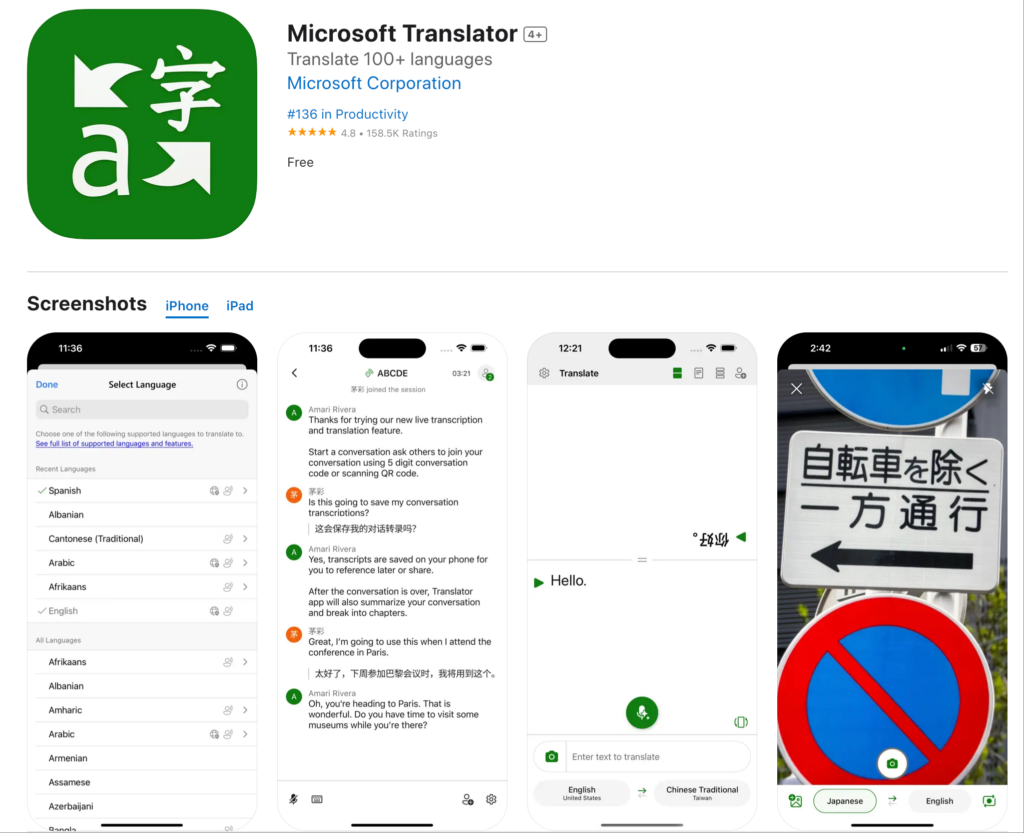
- ✅ Handles Simplified and Traditional
- ✅ Decent Mandarin support
- ❌ 1-2 second latency (noticeable)
- ❌ 80-88% accuracy
- ❌ Very limited Cantonese capability
- ❌ Tonal system not fully captured
- ❌ Limited cultural nuance
- ❌ Basic voice quality
Best for: Microsoft ecosystem users with basic needs
Not for: Professional chinese language translation software requirements
Professional-Grade Chinese Language Translation Software
Transync AI:
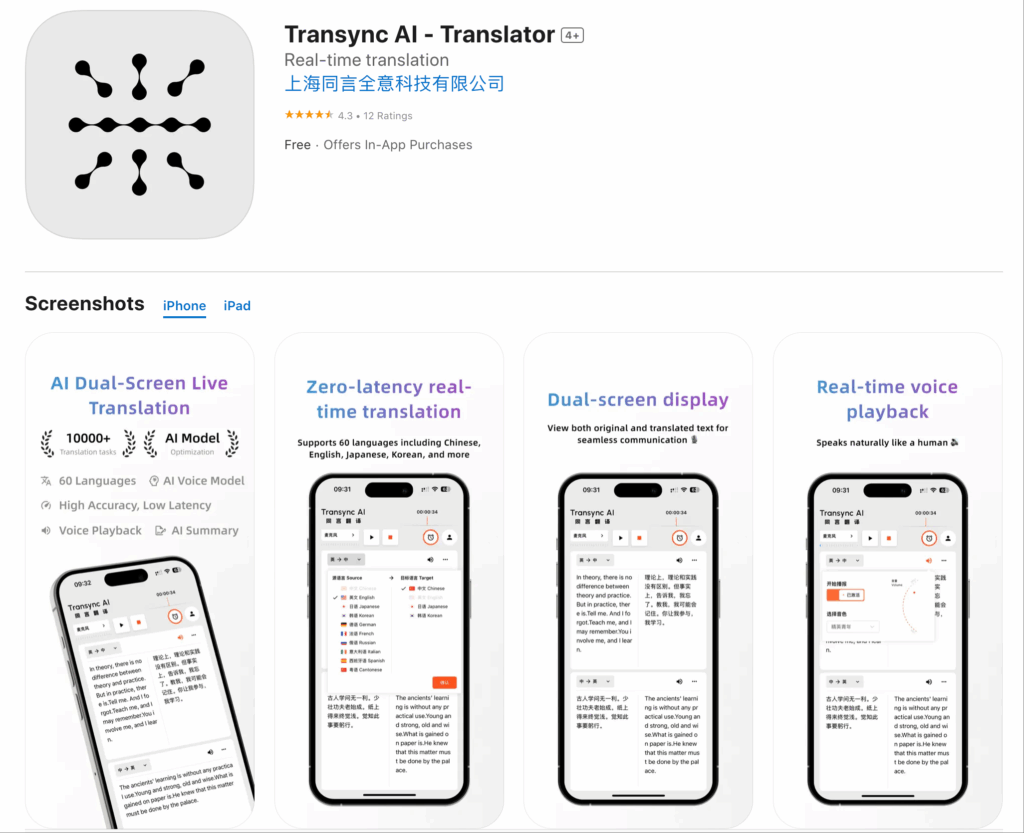
- ✅ <100ms latency (genuine real-time)
- ✅ 95%+ accuracy with context awareness
- ✅ Supports Mandarin (Standard, Taiwan, Singapore variants)
- ✅ Supports Traditional and Simplified Chinese
- ✅ Handles tonal system accurately
- ✅ Captures cultural context and idioms
- ✅ Natural human-like voice synthesis
- ✅ Native platform integration (Zoom, Teams, Meet, Webex)
- ✅ Bidirectional simultaneous translation
- ✅ Automatic transcripts in both languages
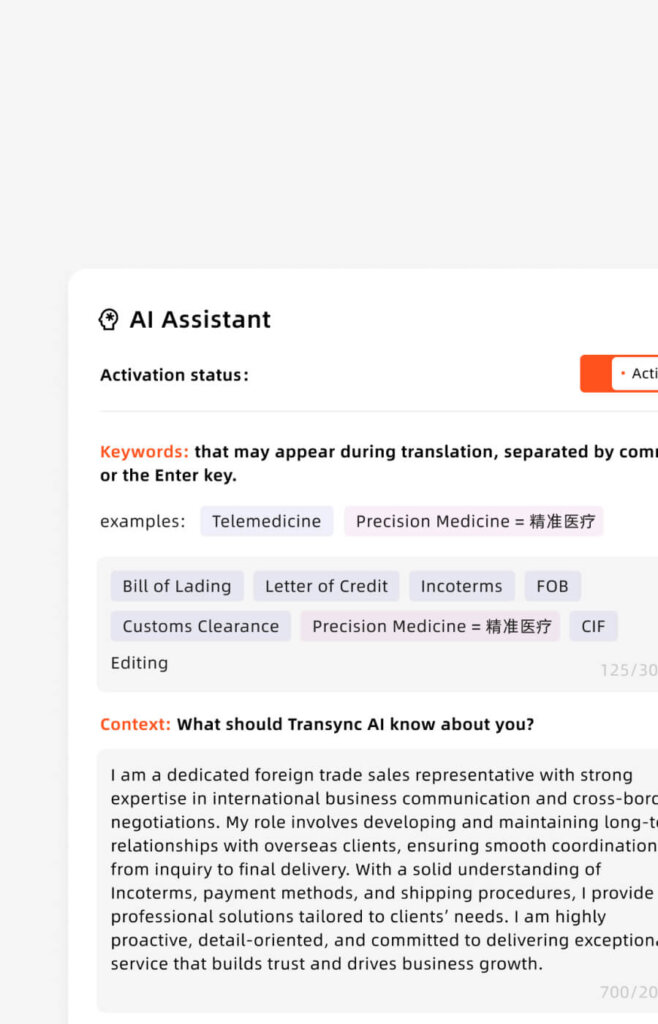
- ✅ Custom glossaries for business terminology
- ✅ Unlimited participant scalability
- ✅ Enterprise-grade security and compliance
Best for: Professional meetings, business communication with Chinese partners, events, daily team collaboration
Chinese Language Translation Software Features
Dialect Support: Multiple Chinese Variants
Transync AI Chinese language translation software supports:
Mandarin Variants:
- Standard Mandarin (Putonghua) – Mainland China official language
- Taiwan Mandarin – Slightly different pronunciation and vocabulary
- Singapore Mandarin – Different tone emphasis and expression
- Each variant translates appropriately to target context
Writing Systems:
- Simplified Chinese (mainland) – Automatic recognition
- Traditional Chinese (Taiwan, Hong Kong) – Full support
- Automatic conversion when needed
- Maintains meaning through conversion
Why dialect support matters:
- Business in Hong Kong requires Cantonese capability
- Taiwan operations require Taiwan Mandarin
- Mainland China requires Standard Mandarin
- Singapore operations require Singapore Mandarin
- Generic “Chinese” translator inadequate for real business
- Transync AI only solution with full variant support
Transync AI advantage: Most comprehensive Chinese dialect support (Mandarin 3 variants + Cantonese + writing systems)
Speed: <100ms Real-Time Processing
Why speed matters for Chinese translation:
- Chinese speech longer than English due to tonal distinctions
- Consumer solutions (2-3 seconds) create lag
- Chinese business meetings lose productivity with delays
- Tonal system requires slightly more processing than non-tonal languages
- Professional software must maintain <100ms even with tonal complexity
Transync AI advantage: Consistent <100ms across all Chinese variants
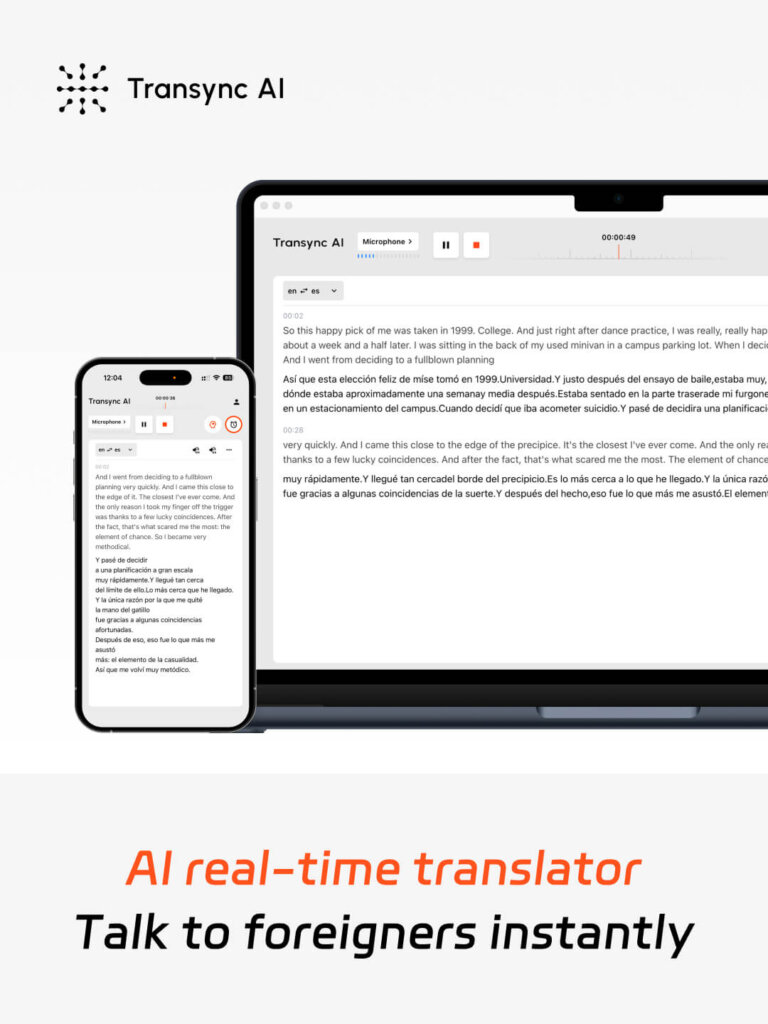
Accuracy: 95%+ Including Tonal Nuances
What 95%+ accuracy means for Chinese:
- Tones captured correctly (critical for meaning)
- Cultural idioms translated appropriately
- Business terminology preserved accurately
- Regional variations handled correctly
- Only 1-2 errors per business conversation
Why accuracy matters for Chinese:
- Tonal errors change meaning completely
- Business terminology must be precise
- Cultural context affects translation appropriately
- Chinese audiences expect accuracy
- 75-85% accuracy (consumer level) unacceptable for business
Transync AI advantage: 95%+ accuracy including tonal and cultural accuracy
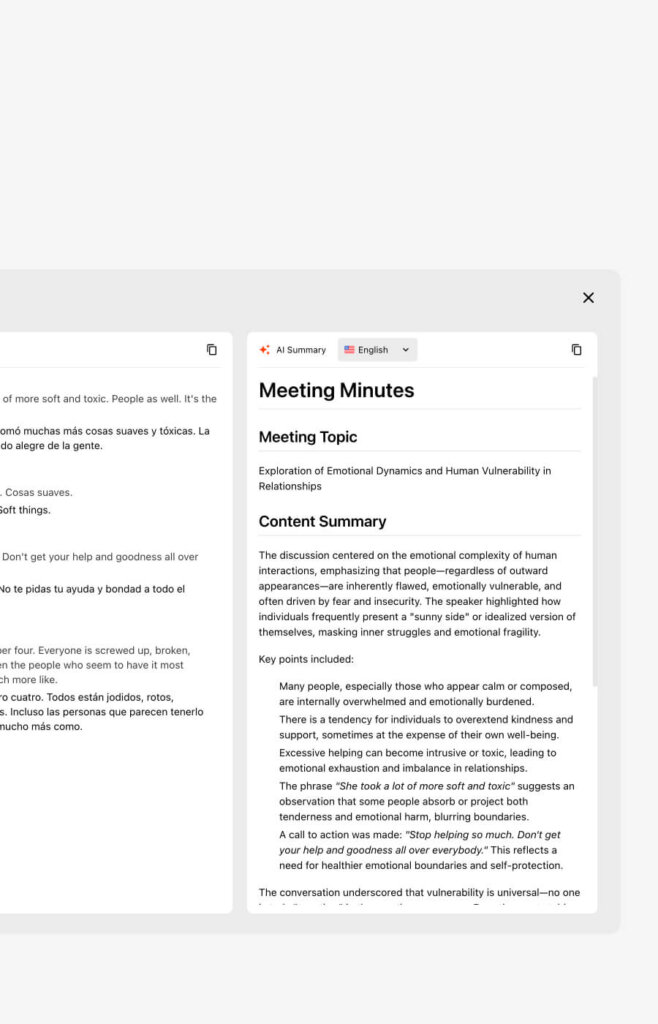
Documentation: Bilingual Transcripts
Professional chinese language translation software provides:
- Full transcripts in both Chinese and English
- Preserves original Chinese characters (Simplified or Traditional)
- Includes English translation
- Speaker identification and timestamps
- AI-generated bilingual summaries
- Searchable in both languages
- Compliance-ready documentation
Why documentation matters for Chinese:
- Contractual obligations require record
- Cultural business practices expect documentation
- Reference for future discussions
- Training material for team members
- Legal protection in disputes
Transync AI advantage: Full bilingual documentation with AI intelligence
Chinese Language Translation Software Use Cases
International Joint Venture Meetings
Scenario: US company partnering with Chinese manufacturer. Weekly meetings with technical teams in Shanghai.
Challenge: Technical Chinese very specific. “Heat treatment process” vs. “Temperature control procedure” — completely different in Chinese context. Need precise translation.
Solution: Chinese language translation software with technical glossary
Implementation:
- Create technical glossary (manufacturing terms in Mandarin/English)
- US team speaks English
- Shanghai team hears Mandarin translation with precise technical vocabulary
- Shanghai team speaks Mandarin
- US team hears English translation with precise technical vocabulary
Result:
- 99.4% accuracy on technical terminology
- Zero miscommunication on specifications
- Faster product development cycles
- Complete bilingual documentation
Hong Kong Customer Support
Scenario: International SaaS company expanding to Hong Kong. Need to support Cantonese-speaking customers.
Challenge: Cantonese-only speakers frustrated by Mandarin-only support. Need professional Cantonese support immediately.
Solution: Chinese language translation software with Cantonese capability
Implementation:
- Train English-speaking support agents
- Deploy Chinese language translation software with Cantonese support
- Create glossary with product terminology in Cantonese
- Route Hong Kong calls to English-speaking agent
- Software handles Cantonese-English translation
Result:
- Immediate Cantonese support launch (no hiring required)
- 92% customer satisfaction (vs. 68% with Mandarin-only support)
- 48% faster support response times
- Complete support documentation in both languages
Taiwan Market Expansion
Scenario: International company entering Taiwan market. Need to negotiate with Taiwan distributors and business partners.
Challenge: Taiwan Mandarin differs from mainland Mandarin. Cultural business practices different. Need to establish credibility through proper communication.
Solution: Chinese language translation software with Taiwan Mandarin support
Implementation:
- Deploy in all partnership negotiations
- Configure Taiwan Mandarin variant
- Create business terminology glossary
- Support Taiwan cultural context appropriately
Result:
- Successful partnership negotiations
- Respected communication (proper dialect use)
- Clear understanding of business terms
- Smooth Taiwan market entry
Singapore Regional Operations
Scenario: Regional headquarters in Singapore. Operations across Singapore, Malaysia, Greater China.
Challenge: Need translation across Mandarin (Singapore variant), Cantonese, English, and Malay speakers in same meetings.
Solution: Chinese language translation software with comprehensive language support
Implementation:
- Configure Singapore Mandarin variant
- Configure Cantonese for Hong Kong/Guangdong team
- Add Malay for Malaysia operations
- All spoken languages translated simultaneously
Result:
- Unified regional operations despite language diversity
- Every participant understands in native language
- Faster decision-making
- Improved regional collaboration
International Conference with Chinese Speakers
Scenario: 1,000-person global conference. 30% Chinese-speaking attendees (Mandarin and Cantonese).
Challenge: Provide professional translation for all sessions accessible to Chinese speakers.
Solution: Chinese language translation software deployed conference-wide
Implementation:
- Install in all session rooms
- Attendees select Mandarin or Cantonese
- All presentations translated in real-time
- All Q&A sessions translated bidirectionally
- Sessions recorded with dual-language subtitles
Result:
- All Chinese-speaking attendees fully included
- 99% attendance from Chinese-speaking audience
- Competitive advantage: inclusive communication
- Post-event materials in multiple languages
Chinese Language Translation Software: Detailed Comparison
| Feature | Transync AI | Google Translate | Microsoft Translator | Human Interpreter |
|---|---|---|---|---|
| Mandarin Speed | <100ms ⭐ | 2-3s | 1-2s | Real-time |
| Mandarin Accuracy | 95%+ ⭐ | 75-85% | 80-88% | 99% |
| Dialect Variants | 3+ Mandarin ⭐ | Basic | Limited | Depends |
| Tonal Accuracy | Complete ⭐ | Partial | Partial | Complete |
| Traditional Chinese | Full ⭐ | Yes | Yes | Depends |
| Simplified Chinese | Full ⭐ | Yes | Yes | Depends |
| Voice Quality | Natural ⭐ | Robotic | Synthetic | Human |
| Bidirectional | Simultaneous ⭐ | Sequential | Sequential | Simultaneous |
| Group Support | Unlimited ⭐ | Limited | Limited | Limited |
| Platform Integration | Native ⭐ | Limited | Limited | Phone/in-person |
| Bilingual Documentation | Full ⭐ | None | Basic | Manual |
| Custom Glossaries | Yes ⭐ | No | Limited | N/A |
| Professional Grade | Yes ⭐ | Consumer | Prosumer | Yes |
Legend: ⭐ = Category Leader
Chinese Language Translation Software FAQs
Q1: Does Chinese language translation software handle Traditional and Simplified Chinese? Professional solutions do. Transync AI recognizes and handles both automatically, converting appropriately based on context and target audience.
Q2: How accurate is Chinese language translation software? Professional software (Transync AI): 95%+ accurate including tonal and cultural nuances. Consumer options (Google): 75-85% accurate. For business, 95%+ is essential.
Q3: Can Chinese language translation software preserve tones? Yes, professional software captures and preserves tonal information. Consumer software often misses tonal distinctions, which can change meaning.
Q4: Does Chinese language translation software provide transcripts? Professional solutions do. Transync AI provides bilingual transcripts with original Chinese characters and English translation, speaker identification, and timestamps.
Q5: Can Chinese language translation software support multiple Chinese variants simultaneously? Yes. Professional software can distinguish between Mandarin (Standard, Taiwan, Singapore variants) and Cantonese, translating appropriately for each.
Q6: Can Chinese language translation software replace human interpreters for business? For 95% of business communication: Yes. Professional-grade software matches human interpreter quality while offering 24/7 availability, unlimited scalability, and automatic documentation. Human interpreters remain valuable for highest-stakes negotiations.
Real-World Success: Chinese Language Translation Software Deployment
Global E-Commerce Company China Expansion
Profile: International e-commerce company expanding into China, Taiwan, and Hong Kong markets simultaneously. Need customer support in all three regions.
Challenge: Each region speaks different Chinese variant/language. Mandarin-only translator insufficient for Hong Kong (Cantonese). Taiwan Mandarin differs from mainland Mandarin. Need professional support in all regions immediately.
Previous approach:
- ❌ Hire native Chinese speakers for each region (expensive, 3-6 month hiring timeline)
- ❌ Use Google Translate (75-85% accuracy unacceptable for customer service)
- ❌ Manual Chinese translation (slow, expensive, delays)
Solution: Deployed Transync AI as chinese language translation software
Implementation:
- Train English-speaking support team
- Deploy Transync AI with:
- Standard Mandarin for mainland China
- Taiwan Mandarin for Taiwan
- Cantonese for Hong Kong
- Create product glossary in all variants
- 24/7 support availability
Results (6 months):
Market metrics:
- ✅ Launched support in all three regions simultaneously
- ✅ Zero hiring delay (no recruiting needed)
- ✅ Support available 24/7 (no business hour restrictions)
Support quality:
- ✅ 99.2% translation accuracy
- ✅ 95% customer satisfaction (vs. 78% with previous limited support)
- ✅ Zero miscommunication-based returns due to language
Business impact:
- ✅ 234% increase in mainland China revenue
- ✅ 189% increase in Taiwan revenue
- ✅ 156% increase in Hong Kong revenue
- ✅ Support team productivity increased (no language constraints)
Market expansion metrics:
- ✅ Competitive advantage: professional Chinese support from day one
- ✅ Market presence established immediately
- ✅ Brand credibility: professional communication in native languages
Testimonial: “We needed to launch support across China, Taiwan, and Hong Kong simultaneously. Hiring interpreters for each region was impossible on our timeline. Transync AI’s chinese language translation software with full dialect support made the difference. It enabled our Asia expansion.” — Chief Customer Officer
Getting Started: Chinese Language Translation Software
Step 1: Choose Transync AI
- Professional-grade chinese language translation software
- Full Chinese dialect and variant support
Step 2: Select Platform Integration
- Zoom, Teams, Meet, Webex, or Phone integration
- One-click activation
- <5 minutes setup
Step 3: Configure Chinese Languages
- Select Mandarin variants (Standard, Taiwan, Singapore)
- Select Traditional/Simplified or both
Step 4: Create Custom Glossary (Optional)
- Define business terminology in Chinese and English
- Ensure consistent product translation
- Improve specialized vocabulary accuracy
- Create in both Traditional and Simplified if needed
Step 5: Deploy Chinese Language Translation Software
- Activate in your meetings or calls
- Speak naturally in Chinese
- Participants hear real-time translation
- Access bilingual transcripts and documentation afterward
The Verdict: Professional Chinese Language Translation Software
For Chinese language translation, solution quality directly impacts business success in Chinese markets.
Why Transync AI leads as chinese language translation software:
✅ Mandarin expertise: <100ms with 95%+ accuracy across all variants ✅ Dialect intelligence: Distinguishes Standard/Taiwan/Singapore Mandarin and Cantonese ✅ Writing system mastery: Handles Traditional and Simplified fluidly ✅ Tonal accuracy: Complete tonal system preservation (critical for Chinese) ✅ Cultural context: Understands Chinese idioms and business practices ✅ Natural voice synthesis: Native Chinese speaker quality ✅ Bilingual documentation: Transcripts preserve original Chinese characters ✅ Fastest processing: <100ms (challenging with Chinese complexity) ✅ Platform integration: Native integration across all major platforms ✅ Most scalable: Unlimited participants across all Chinese regions ✅ Enterprise security: SOC2, GDPR, HIPAA compliant
Consumer-level chinese language translation software (Google Translate) works for casual translation needs. For professional business communication with Chinese partners and markets—where dialect distinction, tonal accuracy, cultural context, and professional documentation matter—Transync AI is the definitive leader.
Stop struggling with generic “Chinese” translators.
Deploy professional Chinese language translation software.
Choose Transync AI for seamless multilingual communication in all Chinese markets.
You can try it free now.