When the stakes are high — a multi-million dollar contract, a cross-border partnership, or a sensitive client discussion — the cost of a mistranslation during business negotiations is not just embarrassing. It can be commercially devastating. A single misunderstood clause, a culturally misread tone, or a mistranslated number can collapse months of relationship-building in minutes.
So the question professionals are increasingly asking in 2026 is not “should I use an AI translation tool for business negotiations?” but rather “can I actually trust one?”
This article answers that question directly — with a detailed look at how the leading AI translation tools perform in real business negotiations, what drives accuracy, where each tool falls short, and why Transync AI is earning the trust of professionals who cannot afford to get it wrong.
Why Translation Accuracy in Business Negotiations Is Non-Negotiable
Business negotiations are fundamentally different from casual multilingual conversations. They involve:
- Legal and contractual language — terms with precise meanings that cannot be paraphrased
- Industry-specific jargon — technical terms, product names, financial instruments
- Nuanced tone and intent — a subtle shift in register can signal aggression, uncertainty, or deference
- Real-time back-and-forth dialogue — not scripted monologues, but dynamic exchanges
- High-pressure time constraints — no opportunity to pause and verify a translation
Generic translation tools trained on everyday language often underperform in these contexts. A tool that accurately translates “How are you?” may struggle significantly with “The indemnification clause shall not apply to consequential damages arising from gross negligence.”
For business negotiations, the bar for translation accuracy is categorically higher — and the tools must be evaluated accordingly.
What Makes an AI Translation Tool Accurate for Business Negotiations?
Before comparing specific tools, it helps to understand the technical and functional factors that determine translation accuracy in professional settings:
1. Underlying AI Model Quality
Tools built on end-to-end speech large models (like Transync AI) process audio holistically, preserving prosody, context, and meaning. Tools that rely on cascaded pipelines — speech-to-text → text translation → text-to-speech — introduce compounding errors at each stage.
2. Context Awareness
Without contextual grounding, even powerful AI models translate words rather than meaning. A tool that allows users to define industry context, role, and terminology before a session produces translations that reflect professional intent, not just linguistic surface structure.
3. Language Pair Coverage
Business negotiations increasingly span not just English and Mandarin, but Korean ↔ German, Spanish ↔ Japanese, French ↔ Arabic, and beyond. Narrow language support is a critical limitation.
4. Real-Time Latency
In live negotiations, a 3–5 second translation delay fractures conversational rhythm, signals hesitation, and undermines credibility. Near-zero latency is not a luxury — it is a functional requirement.
5. Domain Specialization
Legal, financial, engineering, and pharmaceutical negotiations each carry terminology that demands specialized handling. Tools with customizable keyword mapping directly address this gap.
7 AI Translation Tools Evaluated for Business Negotiations Accuracy
1. Transync AI — Highest Accuracy for Business Negotiations

👉🏻Transync AI
Transync AI is purpose-built for exactly the kind of high-stakes, real-time, multilingual communication that business negotiations demand. Powered by an end-to-end speech large model, it delivers a near-zero-latency bilingual side-by-side experience — so professionals can communicate in their native language without waiting, without losing the thread of negotiation.
Why Transync AI Excels in Business Negotiations
🔹 AI Keywords & Context — The Accuracy Game-Changer
This feature is uniquely transformative for business negotiations. Before entering a session, users can:
- Set Keywords: Map terminology precisely — e.g., “indemnification clause, IP licensing, royalty rate, Transync AI = 同言翻译, Series B funding”
- Set Context: Describe professional background — e.g., “I am a corporate attorney specializing in cross-border M&A. This negotiation involves a technology licensing agreement between a US firm and a South Korean manufacturer.”
With keyword and context priming, Transync AI achieves translation accuracy above 95% — even for highly specialized legal, financial, or technical discussions. This is the single most important feature distinguishing Transync AI from every competitor in this evaluation.
🔹 Near-Zero Latency via End-to-End Speech AI
The end-to-end architecture means no cascading errors, no broken sentence reconstruction, and no unnatural pauses. During business negotiations, Transync AI keeps the conversation flowing at a human pace.
🔹 Bidirectional Translation Across 60 Languages
Automatic language detection handles switches between speakers without any button press or manual input — essential when negotiations involve multiple stakeholders speaking different languages simultaneously.
Supported languages include: 🇨🇳 Chinese · 🇬🇧 English · 🇯🇵 Japanese · 🇰🇷 Korean · 🇨🇳 Cantonese · 🇩🇪 German · 🇫🇷 French · 🇷🇺 Russian · 🇮🇹 Italian · 🇪🇸 Spanish — and 50 more.
🔹 AI Voice Broadcast (Natural TTS)
Transync AI speaks translations aloud in natural, human-like voices — allowing negotiators to maintain eye contact and engagement rather than glancing at a screen. Voice tone is selectable per language, preserving the professional register appropriate for business negotiations.
🔹 AI-Powered Automatic Meeting Notes
Following any negotiation session, Transync AI generates a multilingual meeting summary — capturing key decisions, agreed terms, action items, and open points. This creates an accurate, immediately shareable record of what was communicated and agreed — priceless in any negotiation context.
🔹 No Plug-Ins. No Setup Friction.
Works alongside Zoom, Microsoft Teams, and Google Meet with zero configuration. Other participants need not install anything — only the user needs Transync AI running on their device.
🔹 Data Privacy by Design
User data is never used for AI training. Enterprise plans include full GDPR compliance — a mandatory requirement for business negotiations in regulated industries.
Transync AI Pricing
| Plan | Price | Translation Time | Highlights |
|---|---|---|---|
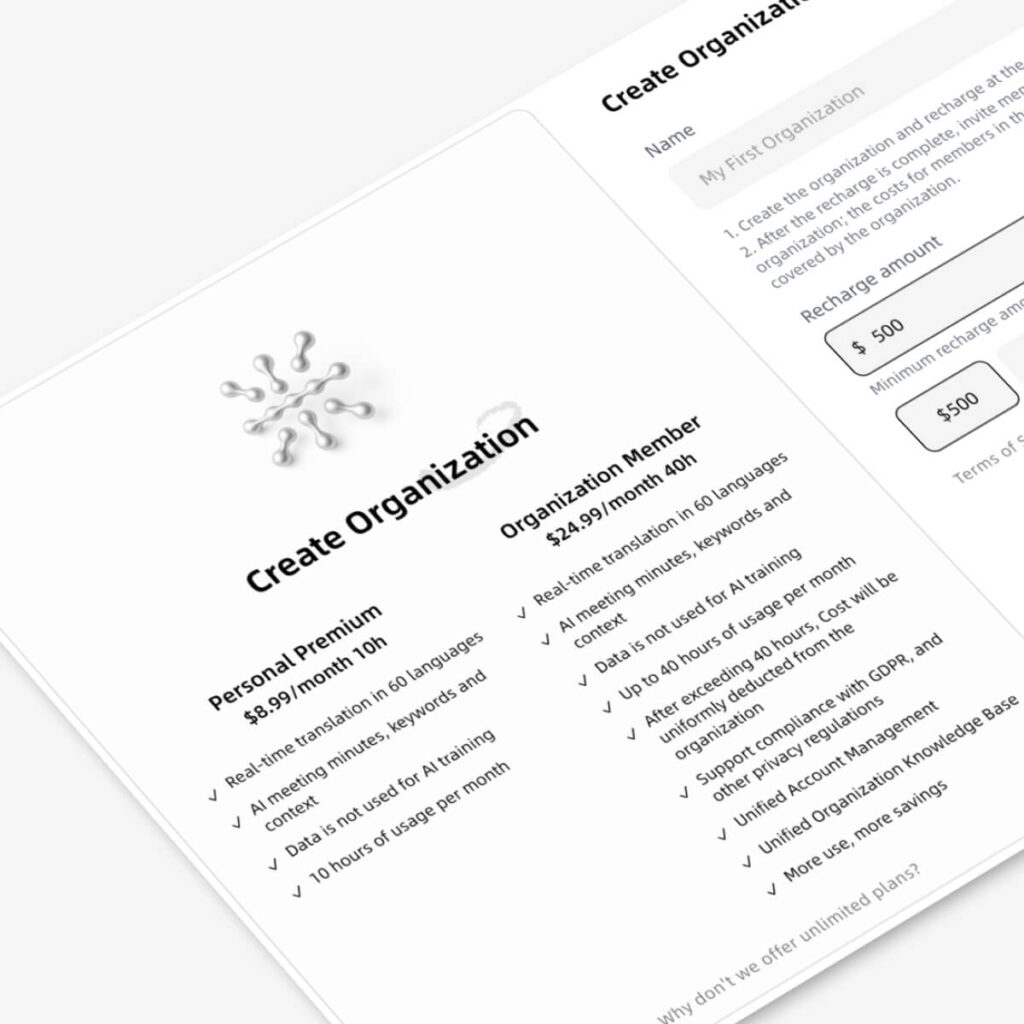
| Free | $0/month | 40 minutes | Full features, 60 languages, AI notes, all devices |
| Personal Premium | $8.99/month | 10 hours/month | AI voice broadcast, keywords & context |
| Enterprise | $24.99/seat/month | 40 hrs/seat/month | GDPR, org knowledge base, unified billing, $0.70/hr overage |
2. KUDO — Human Interpreter Quality, Enterprise Complexity
👉🏻 Kudo
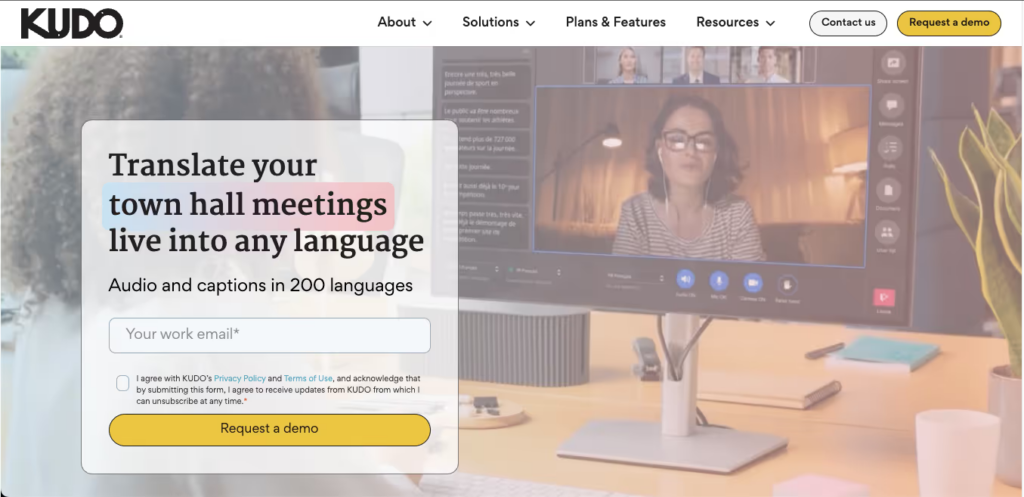
KUDO remains one of the gold standards for business negotiations at the diplomatic and large-enterprise level, where professional human interpreters are deployed through a digital platform.
Accuracy Assessment for Business Negotiations
- ✅ Near-perfect accuracy when expert interpreters are used
- ✅ Trusted by government agencies, multinational corporations, and international bodies
- ❌ Accuracy is entirely dependent on interpreter availability and expertise — not scalable
- ❌ Cannot be self-deployed; requires interpreter scheduling and technical coordination
- ❌ Prohibitive cost for regular use — suitable for quarterly board meetings, not daily negotiations
Verdict for Business Negotiations: Excellent quality ceiling, but impractical for frequent, agile use. Best reserved for ultra-high-stakes, formally organized events.
3. Wordly — Reliable for Presentations, Inconsistent in Live Dialogue
👉🏻 Wordly AI
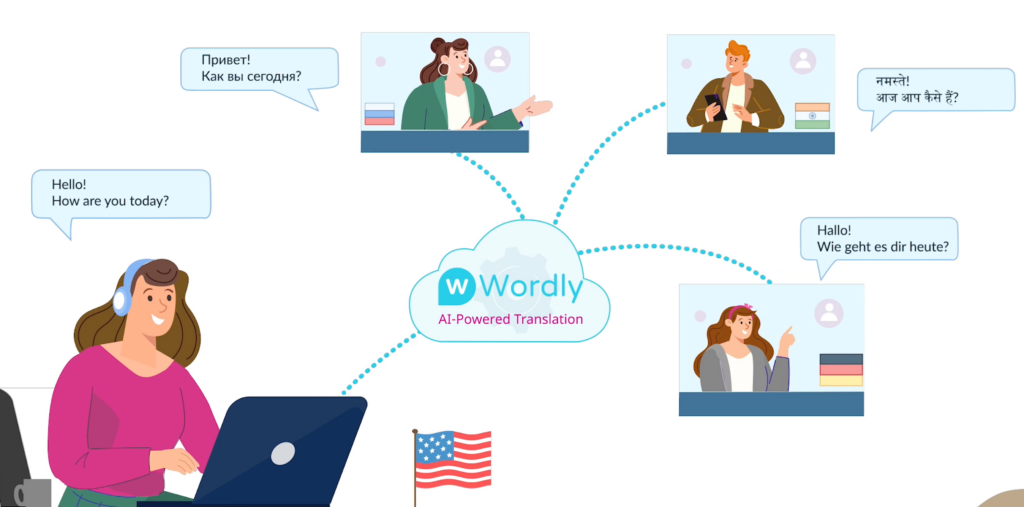
Wordly performs strongly when one party speaks at length in a structured format — such as opening presentations, earnings calls, or product pitches. However, its accuracy degrades noticeably in the rapid, dynamic back-and-forth that characterizes real business negotiations.
Accuracy Assessment for Business Negotiations
- ✅ Good caption accuracy for prepared, scripted content
- ✅ Easy for large groups to access translation via personal devices
- ❌ Elevated latency disrupts conversational negotiation rhythm
- ❌ No context-aware keyword customization for technical terminology
- ❌ Pricing not publicly available — adds uncertainty for budget planning
Verdict for Business Negotiations: Adequate for structured presentations within negotiation sessions; insufficient for live, high-stakes dialogue.
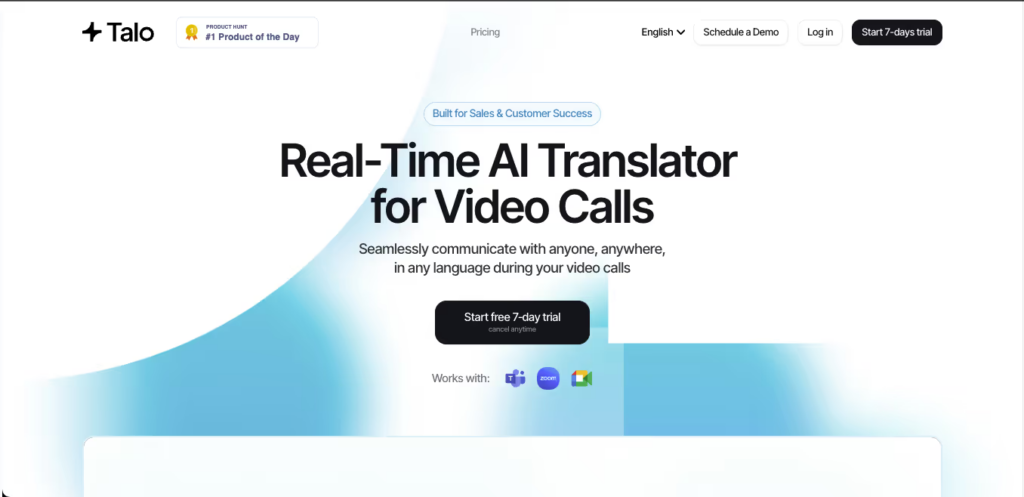
4. Talo AI — Simple Bot-Based Translation with Accuracy Limitations
👉🏻 Talo
Talo AI joins meetings as a bot participant and provides real-time voice translation without requiring installation. It is accessible and easy to configure, making it attractive for informal multilingual calls.
Accuracy Assessment for Business Negotiations
- ✅ Easy setup — joins as a bot, no installation for participants
- ✅ Functional for informal or low-stakes multilingual calls
- ❌ Generic AI model — no professional context or keyword customization
- ❌ Accuracy noticeably lower for legal, financial, or technical terminology
- ❌ Limited language range compared to Transync AI
- ❌ No AI meeting notes or post-session summaries
Verdict for Business Negotiations: Suitable for informal team check-ins; not recommended for consequential business negotiations where accuracy is critical.
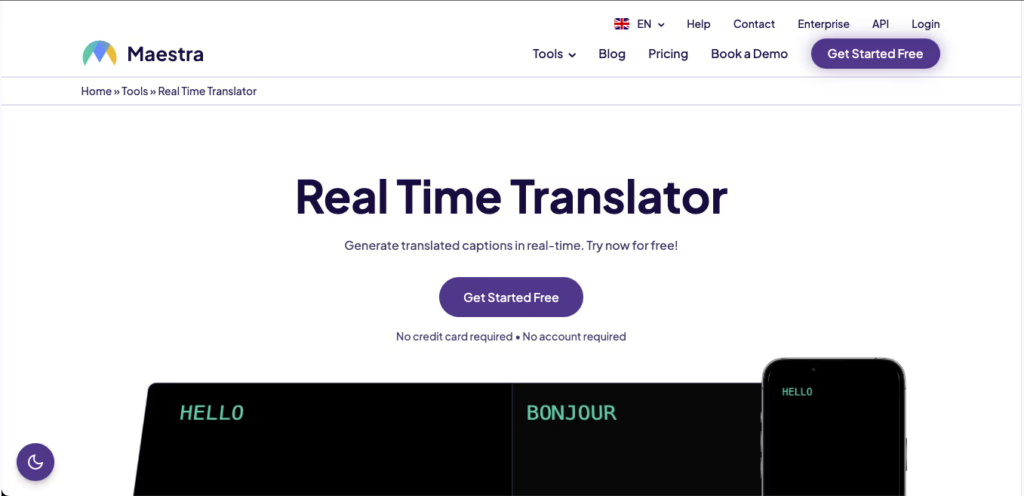
5. Maestra AI — Strong for Recorded Content, Absent from Live Negotiations
👉🏻 Maestra AI
Maestra AI is a respected platform for automated transcription and translation of recorded audio, video, and media content. It serves post-production workflows well but is fundamentally not a live meeting translation tool.
Accuracy Assessment for Business Negotiations
- ✅ High accuracy for transcribing and translating recorded video/audio
- ✅ Useful for post-negotiation review of recorded sessions
- ❌ No real-time translation capability — cannot be used during live negotiations
- ❌ No voice output or TTS
- ❌ No integration with live meeting platforms for active interpretation
Verdict for Business Negotiations: Not applicable for live negotiations. May be useful as a post-session review tool for recorded meetings.
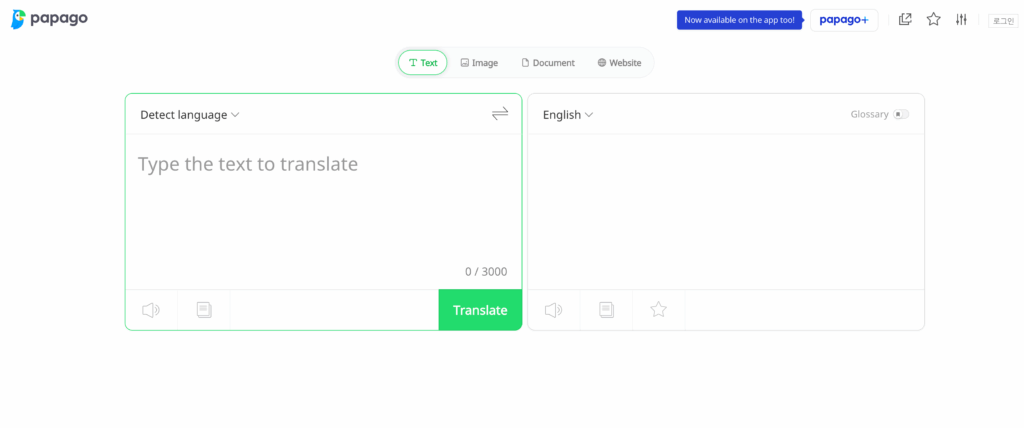
6. Papago — Excellent for Asian Language Pairs, Limited Enterprise Scope
👉🏻Papago
Papago, developed by Naver, offers impressive accuracy for Korean, Japanese, and Chinese language pairs — making it a credible option for East Asian business negotiations on a basic level.
Accuracy Assessment for Business Negotiations
- ✅ Best-in-class accuracy for Korean ↔ English and Japanese ↔ English
- ✅ Free and accessible on mobile devices
- ❌ Limited to ~15 languages — insufficient for global business negotiations
- ❌ No meeting platform integration
- ❌ No AI meeting notes, context awareness, or keyword customization
- ❌ No enterprise features, compliance, or team management
Verdict for Business Negotiations: A useful supplementary reference tool for East Asian language pairs. Not suitable as a primary negotiation translation platform.
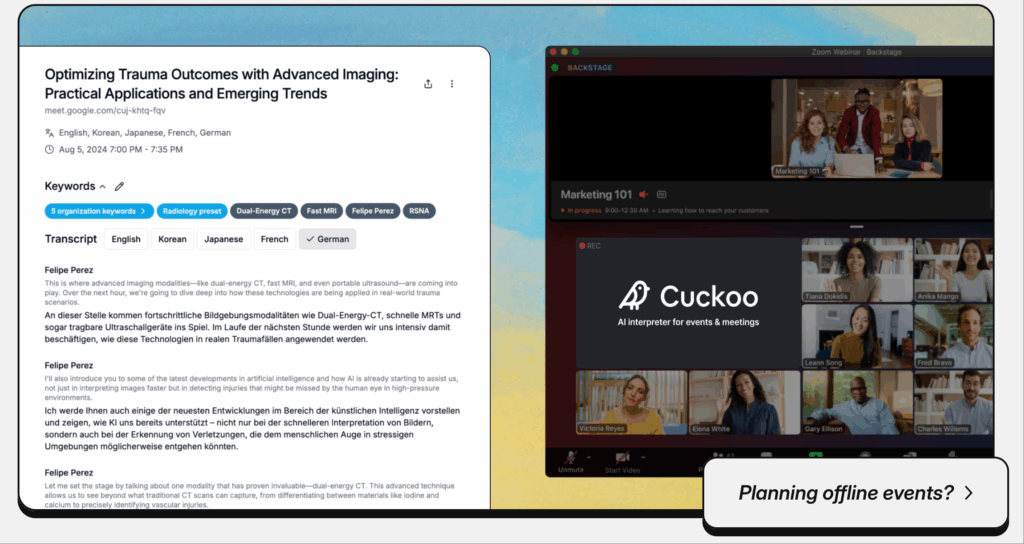
7. Cuckoo — Fast Setup, Limited Professional Depth
👉🏻Cuckoo
Cuckoo is a lightweight, easy-to-use translation tool designed for accessibility and speed of deployment. It targets users who need quick multilingual communication without complex setup.
Accuracy Assessment for Business Negotiations
- ✅ Quick and intuitive to deploy for ad-hoc multilingual calls
- ✅ Works without requiring all participants to install software
- ❌ General-purpose AI model — no professional context customization
- ❌ Accuracy insufficient for legally or financially sensitive business negotiations
- ❌ Limited language support relative to enterprise demands
- ❌ No AI meeting notes or post-session documentation
Verdict for Business Negotiations: Suitable for informal international communication; lacks the depth and accuracy required for high-stakes business negotiations.
Accuracy Comparison Table: AI Translation Tools for Business Negotiations
| Feature / Tool | Transync AI | KUDO | Wordly | Talo AI | Maestra AI | Papago | Cuckoo |
|---|---|---|---|---|---|---|---|
| Starting Price | Free / $8.99/mo | Custom | Custom | Custom | $11.99/mo | Free | Custom |
| Real-Time Translation | ✅ Near-zero latency | ✅ Human-assisted | ✅ Moderate lag | ✅ Bot-based | ❌ | ⚠️ Mobile only | ✅ Limited |
| Languages Supported | 60 | 30+ | 30+ | ~20 | 20 | ~15 | ~20 |
| Context-Aware AI | ✅ Keywords + context | ❌ Human-dependent | ❌ | ❌ | ❌ | ❌ | ❌ |
| Accuracy (General) | ✅ 95%+ w/ context | ✅ 98%+ w/ interpreter | ⚠️ 85–90% | ⚠️ 80–85% | ✅ 90%+ (recorded) | ✅ 90%+ (Asian pairs) | ⚠️ 80–85% |
| Accuracy (Technical/Legal) | ✅ 95%+ | ✅ Interpreter-dependent | ⚠️ Limited | ❌ | ❌ | ❌ | ❌ |
| AI Voice Broadcast (TTS) | ✅ Natural voices | ✅ Human only | ❌ | ⚠️ Basic | ❌ | ✅ Basic | ⚠️ Basic |
| AI Meeting Notes | ✅ Multilingual | ❌ | ❌ | ❌ | ❌ | ❌ | ❌ |
| Auto Language Detection | ✅ | ❌ | ❌ | ❌ | ❌ | ❌ | ❌ |
| Zoom / Teams / Meet Integration | ✅ Seamless | ⚠️ Complex | ⚠️ Limited | ✅ Bot join | ❌ | ❌ | ✅ Bot join |
| No Plug-In Required | ✅ | ❌ | ❌ | ✅ | ✅ | ✅ | ✅ |
| GDPR / Data Privacy | ✅ Enterprise | ✅ | ✅ | ⚠️ | ⚠️ | ⚠️ | ⚠️ |
| Data Not Used for Training | ✅ Explicit | ❌ | ❌ | ❌ | ❌ | ❌ | ❌ |
| All Devices | ✅ Mac/PC/iOS/Android/Web | ⚠️ Web | ⚠️ Web | ⚠️ | ✅ Web | ✅ Mobile | ⚠️ |
| Best For | All professional negotiations | Diplomatic/enterprise events | Structured presentations | Informal calls | Post-session review | Asian language pairs | Quick ad-hoc calls |
| Overall Rating | ⭐⭐⭐⭐⭐ | ⭐⭐⭐⭐ | ⭐⭐⭐ | ⭐⭐ | ⭐⭐ | ⭐⭐ | ⭐⭐ |
Real-World Scenarios: How Translation Accuracy Impacts Business Negotiations
Scenario 1: IP Licensing Negotiation — Tokyo × San Francisco
A US tech firm and a Japanese manufacturer are negotiating an IP licensing deal on Zoom. The US team’s legal counsel uses Transync AI with pre-loaded keywords including “royalty rate, exclusivity window, patent assignment, sublicensing rights.”
Result: Every term is translated with precision. The Japanese team responds in Mandarin when a third stakeholder joins — Transync AI auto-detects the language switch and continues translating without interruption. Post-meeting AI notes capture the agreed royalty structure in both languages.
Scenario 2: Supply Chain Pricing Discussion — Berlin × Seoul
A German procurement team and a Korean supplier are renegotiating unit pricing under inflationary pressure. Using a generic AI tool without context customization, the term “force majeure clause” is translated literally, losing its legal significance entirely — creating a false agreement that later requires legal intervention to unwind.
With Transync AI’s keyword context loaded, this mistranslation is avoided. The clause is translated accurately and confirmed by both parties in real time.
Scenario 3: M&A Due Diligence Call — Paris × São Paulo
French acquirers conducting due diligence on a Brazilian target company use Transync AI’s Enterprise plan. Context is set to “corporate finance, acquisition structure, EBITDA normalization, earn-out clause.” The AI meeting notes generate a bilingual summary of the call — immediately distributed to the legal team in both French and Portuguese.
How to Maximize AI Translation Accuracy in Business Negotiations
To get the best results from AI translation tools during business negotiations, follow these expert-recommended practices:
- Pre-load Keywords Before Every Session — map industry terms, participant names, and company names in Transync AI’s AI Assistant panel before the meeting begins.
- Set Professional Context — describe your role, industry, and the meeting’s purpose to calibrate the AI’s tone and terminology.
- Use Dual-Screen Display — during negotiations, having the original and translated text side by side allows you to catch and address any translation queries immediately.
- Enable Voice Broadcast for Natural Flow — in live business negotiations, hearing the translation spoken aloud maintains engagement and conversation rhythm.
- Review AI Meeting Notes Immediately Post-Session — verify key terms and agreed points while the context is fresh, using the multilingual summary as a reference.
- Upgrade to Enterprise for Sensitive Discussions — for GDPR compliance and data privacy assurance, use the Transync AI Enterprise plan when handling confidential business negotiations.
Q&A: AI Translation Accuracy in Business Negotiations
Q1: Are AI translation tools accurate enough for business negotiations?
A: In 2026, the best AI translation tools — particularly those with contextual keyword customization — are accurate enough for most business negotiations. Transync AI, with its AI Keywords & Context feature, achieves accuracy above 95% for professional and technical discussions. Generic tools without context awareness remain risky for high-stakes negotiations involving legal or financial terminology.
Q2: What is the biggest translation risk in business negotiations?
A: The biggest risk is mistranslation of technical or legal terminology — terms that carry precise contractual meaning which a generic AI model may paraphrase or misrepresent. This is why Transync AI’s ability to pre-define keyword mappings is so critical for business negotiations.
Q3: How does Transync AI handle multiple languages in the same negotiation?
A: Transync AI’s automatic language detection identifies the speaker’s language in real time and translates bidirectionally without any manual input. If a negotiation involves English, Mandarin, and Japanese speakers simultaneously, Transync AI handles all three seamlessly — a capability no other tool in this comparison matches.
Q4: Should I still use a human interpreter for business negotiations?
A: For ultra-high-stakes events — such as diplomatic treaty negotiations or formal arbitration proceedings — a human interpreter from a platform like KUDO remains the gold standard. For the vast majority of daily and weekly business negotiations — sales calls, vendor discussions, partnership meetings, and internal cross-border team sessions — Transync AI provides accuracy and speed that makes human interpretation unnecessary and impractical.
Q5: How does Transync AI protect confidential negotiation data?
A: Transync AI explicitly guarantees that user data is never used for AI model training. The Enterprise plan additionally provides full GDPR compliance, unified organization management, and a private organization knowledge base — ensuring that sensitive negotiation content remains fully confidential.
Q6: Is there a free way to test AI translation for business negotiations?
A: Yes. Transync AI’s free plan provides 40 minutes of full-feature real-time translation — including AI meeting notes, voice broadcast, keyword context, and 60-language support — with no credit card required. This is more than sufficient to test the tool against a real negotiation scenario before committing to a paid plan.
Q7: How does the AI Keywords & Context feature actually work in negotiations?
A: Before your negotiation session, open the Transync AI Assistant panel and enter:
- Keywords: “patent licensing, earn-out clause, exclusivity period, Transync AI = 同言翻译, indemnification”
- Context: “I am a CFO in the semiconductor industry. This meeting is a Series B term sheet discussion with Japanese investors.”
Transync AI uses this priming to select the most contextually appropriate translation for every term spoken during the session — pushing accuracy well above standard AI performance.
Q8: What happens if the AI makes a mistranslation during a live negotiation?
A: Transync AI’s dual-screen display shows the original and translated text simultaneously, allowing the user to immediately identify and verbally correct any discrepancy in real time. The AI meeting notes generated post-session also provide a written record that can be reviewed and confirmed by all parties — reducing the risk of misunderstandings compounding.
Q9: Which industries benefit most from AI translation in business negotiations?
A: The industries with the highest demand for accurate real-time translation in business negotiations include:
- Technology & IP Licensing (patent terms, software agreements)
- Finance & Investment (term sheets, fund structures, M&A due diligence)
- Legal & Compliance (cross-border contracts, regulatory discussions)
- Manufacturing & Supply Chain (procurement, vendor negotiations, quality standards)
- Healthcare & Pharmaceuticals (clinical trial agreements, drug licensing)
Transync AI’s context-aware AI is specifically designed to serve all of these sectors.
Q10: How does Transync AI’s enterprise plan support large negotiation teams?
A: Enterprise administrators can self-serve create an organization, invite team members via email, and manage centralized billing at $24.99/seat/month (40 hours/month per seat). A shared Organization Knowledge Base allows teams to maintain consistent keyword mappings and context profiles across all negotiations — ensuring translation consistency regardless of which team member is in the meeting. Overage usage is billed at just $0.70/hour.
Conclusion: Can You Trust AI Translation for Business Negotiations?
In 2026, the answer is a clear yes — provided you choose the right tool and use it correctly.
The evidence is conclusive:
- Generic AI translation tools (used without context) deliver 80–88% accuracy — acceptable for casual conversation, risky for business negotiations.
- Human interpretation platforms like KUDO deliver near-perfect accuracy but at a cost and complexity level that makes daily use impractical.
- Transync AI with AI Keywords & Context bridges this gap — delivering 95%+ accuracy in professional settings, at a fraction of the cost, with near-zero latency, natural voice output, and automatic multilingual meeting notes.
For professionals who regularly conduct business negotiations across languages, Transync AI is not just the most accurate option available today — it is also the most practical, the most privacy-conscious, and the most complete. It turns language from a barrier into a competitive advantage.
If you want a next-generation experience, Transync AI leads the way with real-time, AI-powered translation that keeps conversations flowing naturally. You can try it free now.